Fermented Blueberries — health benefits and uses
Fermenting berries preserves them and layers live cultures onto their antioxidants.
The Short Answer
Fermented blueberries are blueberries preserved through lacto-fermentation, resulting in a tangy, fizzy fruit with reduced sugar and increased probiotic potential. This process enhances the bioaccessibility of antioxidants like anthocyanins and phenolic acids.
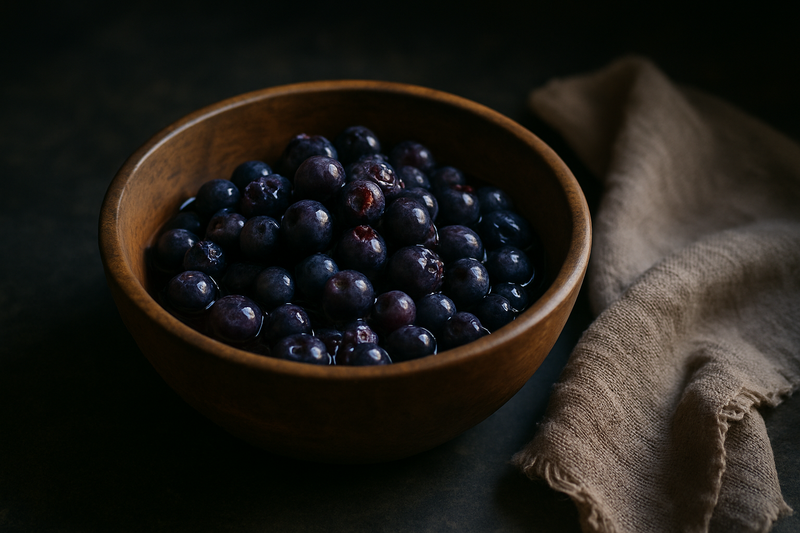
Fermented Blueberries · Photograph
Discover the fermented blueberries health benefits backed by emerging research, including gut health support, antioxidant activity, and reduced sugar content. Learn how lacto-fermentation changes blueberry nutrition, who should use caution, and the best ways to add fizzy fermented blueberries to oats, yogurt alternatives, and more.
Key Nutrients
% Daily Value based on 2,000 cal diet
Key active compounds
- Anthocyanins (malvidin, delphinidin glycosides): The blue-purple pigment flavonoids concentrated in blueberry skins. They provide antioxidant activity and may support vascular health. Fermentation reduces their total amount by roughly 20–30%, but can increase how much is absorbed during digestion.
- Phenolic acids (chlorogenic acid, caffeic acid): Non-flavonoid polyphenols that contribute to antioxidant capacity and may help modulate glucose metabolism. Fermentation — especially of blueberry pomace (the pressed skin and pulp) — has been shown to increase phenolic acid levels and their in vitro bioaccessibility.
- Flavonols (quercetin, myricetin): A class of flavonoids with antioxidant and anti-inflammatory properties. Fermentation can shift their relative abundance and improve their release during digestion.
- Proanthocyanidins (condensed tannins): Found in skins and seeds, these may exert antioxidant and gut-modulating effects. Fermentation may partially break larger molecules into more accessible forms, though blueberry-specific data are still limited.
- Organic acids (lactic acid, acetic acid): Produced by lactic acid bacteria during fermentation. They lower the pH, create the tangy flavor and fizz, may inhibit some harmful microbes, and could support certain beneficial gut bacteria with regular use.
- Lactic acid bacteria (LAB): The live microorganisms that drive the fermentation. Common species include Lactobacillus plantarum. Whether they survive digestion in meaningful numbers depends on the batch, storage, and individual gut conditions.
Prep and pairing ideas
Lacto-fermented blueberry topping (basic method):
- Rinse 1 cup of fresh or thawed blueberries.
- Dissolve ½ teaspoon of non-iodized salt in ½ cup of filtered water to make a brine (iodized salt can inhibit bacteria).
- Pack berries into a clean jar, pour brine over them, leaving 2 cm of headspace.
- Press berries below the brine with a small weight or folded cabbage leaf.
- Cover loosely (or use an airlock lid) and leave at room temperature (18–22°C / 65–72°F) for 2–4 days until lightly bubbly and tangy.
- Seal, refrigerate, and use within 1–2 weeks.
Three practical pairings:
- On unsweetened oat porridge: The tartness of fermented blueberries cuts through the creaminess of oats naturally, and you get a fiber-and-prebiotic (fibers that feed beneficial gut bacteria) combination in one bowl. The contrast in temperature — warm oats, cold fizzy berries — is a nice textural feature.
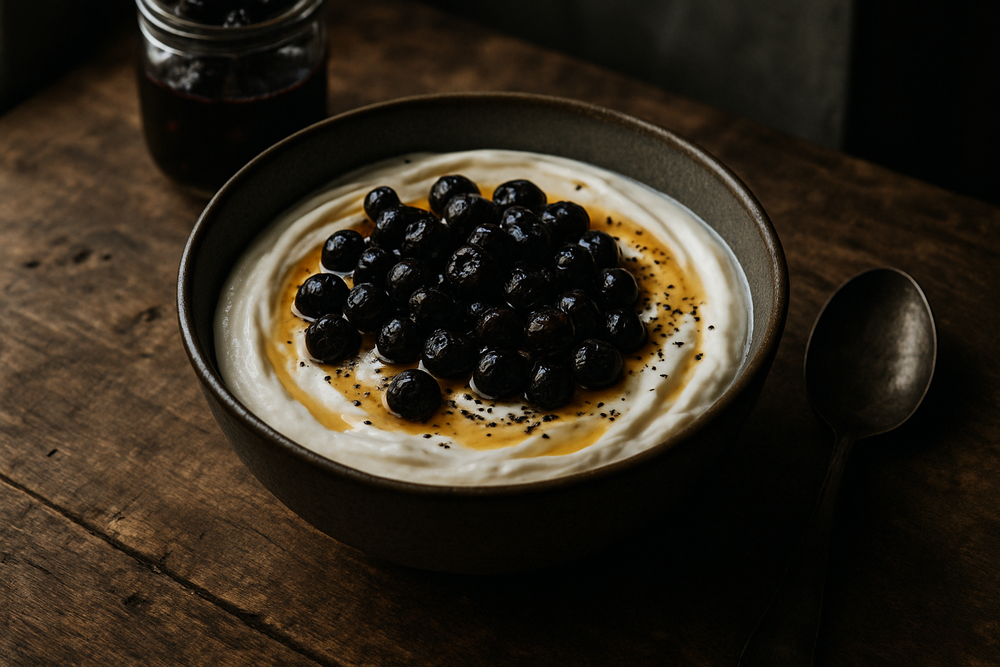
- On coconut or cashew yogurt alternative: Fermented blueberries on a plant-based yogurt stacks two sources of live cultures. The berry brine can also serve as a light dressing if you drizzle a teaspoon over the top.
- Stirred into overnight oats or chia pudding: Add 2–3 tablespoons of fermented blueberries and a splash of brine to overnight oats just before serving (not during soaking, as acidity can affect texture). The brine acts like a mild shrub — a drinking vinegar style condiment — and adds a complex, sour note.
Bottom line
Fermented blueberries are a low-effort, food-first way to combine the well-studied benefits of blueberries with the emerging benefits of lacto-fermentation. They bring live bacteria, organic acids, fiber, and a shifted polyphenol profile into a small, versatile topping that works well on oats, yogurt alternatives, and salads.
The honest caveat: human clinical evidence specific to fermented blueberries is still limited. Most of what we know comes from fresh blueberry trials, small human studies, animal models, and laboratory experiments. The direction of the evidence is encouraging, but fermented blueberries are best understood as a nutritious, tasty addition to a varied plant-rich diet — not a standalone intervention.
Make them properly (clean equipment, refrigerate promptly, consume within 1–2 weeks), start slowly if you are new to fermented foods, and check in with a healthcare provider if you have any of the caution flags listed above.
How Fermented Blueberries Compares
| Compared with | What's different |
|---|---|
| Fermented Blueberries vs. Fresh Blueberries | Lower sugar content and higher acidity with a distinct fizzy texture compared to raw fruit. |
| Fermented Blueberries vs. Blueberry Jam | Lower sugar and higher probiotic potential than sugar-macerated jams or preserves. |
Health Benefits
Things to Know
Histamine intolerance: Fermented foods can contain biogenic amines (natural compounds like histamine and tyramine produced during fermentation). If you experience headaches, flushing, or hives from fermented foods, introduce fermented blueberries slowly or avoid them.
Irritable bowel syndrome (IBS): Organic acids and increased microbial content may trigger symptoms in sensitive individuals, even though reduced sugar content could theoretically help some people.
Immunocompromised individuals: Home ferments carry a theoretical hygiene risk. If you are on chemotherapy, immunosuppressants, or have a compromised immune system, discuss unpasteurized fermented foods with your care team before adding them.
Pregnancy: General guidance is to be cautious with unpasteurized, home-fermented foods. Well-prepared, refrigerated small servings with clean technique may be lower risk, but check with your midwife or doctor.
Warfarin (blood thinner) users: Blueberries provide a modest amount of vitamin K. Consistent intake matters more than avoidance, but erratic large servings could theoretically affect INR (a measure of blood clotting time). Keep intake consistent and let your provider know.
Antidiabetic medications: Any mild blood sugar effects from fermented blueberries are unlikely to be dramatic, but if you adjust medication, monitor glucose levels when changing dietary patterns.
MAOIs (monoamine oxidase inhibitors): Fermented foods can contain low levels of tyramine. Fermented blueberries alone are unlikely to reach problematic levels, but if you take MAOIs, discuss total fermented food intake with your prescriber.
Acid reflux: The increased acidity of fermented blueberries may aggravate symptoms for some people, especially in larger amounts.
Start low, go slow: As with any new fermented food, begin with 1–2 tablespoons per day to assess tolerance before increasing.
Prep Ideas
- — Rinse 1 cup of fresh or thawed blueberries.
- — Dissolve ½ teaspoon of non-iodized salt in ½ cup of filtered water to make a brine (iodized salt can inhibit bacteria).
- — Pack berries into a clean jar, pour brine over them, leaving 2 cm of headspace.
- — Press berries below the brine with a small weight or folded cabbage leaf.
- — Cover loosely (or use an airlock lid) and leave at room temperature (18–22°C / 65–72°F) for 2–4 days until lightly bubbly and tangy.
- — Seal, refrigerate, and use within 1–2 weeks.
- — On unsweetened oat porridge: The tartness of fermented blueberries cuts through the creaminess of oats naturally, and you get a fiber-and-prebiotic (fibers that feed beneficial gut bacteria) combination in one bowl. The contrast in temperature — warm oats, cold fizzy berries — is a nice textural feature.
- — On coconut or cashew yogurt alternative: Fermented blueberries on a plant-based yogurt stacks two sources of live cultures. The berry brine can also serve as a light dressing if you drizzle a teaspoon over the top.
- — Stirred into overnight oats or chia pudding: Add 2–3 tablespoons of fermented blueberries and a splash of brine to overnight oats just before serving (not during soaking, as acidity can affect texture). The brine acts like a mild shrub — a drinking vinegar style condiment — and adds a complex, sour note.
Glossary
Shop This Ingredient
Stock your pantry with quality fermented blueberries.
Buy on AmazonAs an Amazon Associate, Plantopedia earns from qualifying purchases. This costs you nothing extra and helps us keep the encyclopedia free.
Frequently Asked Questions
Heart and circulation There are no large cardiovascular outcome trials specifically using fermented blueberries. The most relevant human evidence still comes from fresh or mixed berry studies, which associate regular intake with modest improvements in blood pressure, endothelial function (how well blood vessels relax and contract), and lipid profiles. A small human study using blueberry fermented with Lactobacillus plantarum measured immune and blood cell parameters rather than direct heart outcomes, so heart-related findings remain indirect. Animal studies using probiotic-fermented blueberry juice in high-fat diet-fed mice showed reductions in LDL cholesterol and improvements in insulin resistance, but mouse results do not reliably predict human outcomes. Digestive health and microbiome Fermented blueberries bring a combination of live bacteria, organic acids, and potentially more bioaccessible polyphenols to your gut. Solid-state fermentation of blueberry pomace with selected microbial strains has been shown in laboratory settings to increase the in vitro (test-tube) bioaccessibility of phenolic acids, flavonoids, and anthocyanins. Some consumer-focused observations suggest fermented blueberries may be better tolerated than fresh by people reducing sugars, because lactic acid bacteria consume some of the fruit's natural sugars during the process. However, these observations are not yet confirmed by controlled human trials, so the digestive benefit angle remains promising but preliminary. Blood sugar and metabolism No robust human trials have tested fermented blueberries specifically for glycemic control (blood sugar regulation). Human data on fresh blueberries show modest improvements in insulin sensitivity in some studies. In an animal model of diet-induced obesity, probiotic-fermented blueberry juice significantly reduced hyperglycemia (high blood sugar) and improved insulin resistance compared with fresh blueberry juice, and also favorably shifted gut microbiota composition. These findings are interesting, but the jump from mice to people is significant. If you take blood sugar medications, do not adjust your regimen based on adding fermented blueberries — speak with your healthcare provider first. Inflammation and immune support A small human study found that regular intake of blueberry fermented with Lactobacillus plantarum led to changes in immune cell profiles and markers related to inflammation, suggesting a possible immunomodulatory (immune-regulating) effect. Sample size was modest and endpoints were surrogate markers rather than clinical inflammatory conditions, so this is encouraging but not conclusive. Multiple in vitro (cell culture) and animal studies show fermented blueberry preparations reducing pro-inflammatory cytokines (signaling proteins that drive inflammation) and enhancing antioxidant defenses. The proposed mechanism: altered polyphenol profiles plus fermentation-derived metabolites interact with immune pathways more effectively than the fresh fruit alone.
Whole berries, lacto-fermented in brine or their own juice are the most practical whole-food option. They retain fiber and most micronutrients, develop a pleasant tangy fizz in a few days at room temperature followed by refrigeration, and keep anthocyanin degradation relatively modest with a short ferment (3–5 days). Fermented blueberry juice has been used in research studies and may deliver higher phenolic bioaccessibility, but you lose fiber and anthocyanin loss is typically greater than with whole-berry fermentation. Fermented blueberry pomace powder (made from the pressed skins and seeds) shows impressive results in laboratory settings for increasing total phenolics and antioxidant activity, but it is primarily a research ingredient and not yet widely available as a standardized product. Fermented blueberry extracts or concentrates are used in mechanistic studies but lack established dosing for everyday use. For most people, whole berries fermented at home and used as a topping is both the most accessible and the most food-first aligned approach.
Fermenting at home from fresh or frozen berries is the most common approach and gives you the most control over salt, starter culture, and fermentation time. Frozen berries work well — freezing actually breaks down cell walls slightly, which can speed fermentation. Looking for ready-made fermented blueberries? The market is still niche. Check labels for: Live or active cultures listed in the ingredients No added preservatives (preservatives can inhibit live bacteria) Refrigerated storage (shelf-stable jarred versions are likely pasteurized and may not contain live cultures) Short ingredient lists: blueberries, water, salt, and optionally a starter culture Avoid products where "fermented" is used loosely to mean vinegar-pickled — vinegar pickling is acidification, not lacto-fermentation, and does not produce live LAB cultures in the same way. Salt level tip: Home lacto-ferments typically use 1–2% salt by weight of brine. If you are on a low-sodium diet, this is a relevant consideration, though the total sodium per small serving remains modest.
There is no clinically established dose for fermented blueberries specifically. Available human research and traditional fermented-food practices suggest a reasonable starting range of 50–100 g per day (roughly 2–4 tablespoons of whole berries), with some studies using up to 200 g or 100–200 mL of fermented blueberry beverage. Because this is a fermented food rather than a supplement, it is easier to think in culinary terms: Beginner: 1–2 tablespoons per meal as a topping, 4–5 days per week. Regular use: 3–4 tablespoons (about ½ cup) daily, as part of a varied fermented-food routine. Upper range: Evidence does not suggest benefit from exceeding 1 cup (150 g) per day, and higher amounts may increase sodium intake if brine-fermented. Start at the lower end to assess digestive tolerance, and increase gradually over 1–2 weeks. If you experience bloating, gas, or discomfort, reduce the amount and try again more slowly. If gut health is your primary goal and you want personalized guidance, exploring Plantopedia's gut health and digestion resources can help you build a broader food-first strategy.
Quick Answers
Common questions, answered in a line.
Fermentation reduces total anthocyanins by about 20–30%, but it can increase how much of these antioxidants are actually absorbed during digestion. While the total volume drops, the process may improve the bioaccessibility of key compounds like phenolic acids and flavonols.
You can make fermented blueberries by packing fresh berries into a jar with a salt brine and letting them sit at room temperature for 2 to 4 days. Use a ratio of ½ teaspoon non-iodized salt to ½ cup filtered water, ensuring the berries stay submerged until they become bubbly and tangy.
If you have a histamine intolerance, you should introduce fermented blueberries slowly or avoid them entirely, as fermentation produces biogenic amines. These compounds, such as histamine and tyramine, can trigger headaches, flushing, or hives in sensitive individuals.
Fermented blueberries pair well with unsweetened oat porridge, coconut or cashew yogurt alternatives, and chia pudding. The tart, fizzy berries provide a flavor contrast to creamy textures, and the leftover brine can be used as a light dressing or a sour, shrub-like condiment.
Yes, people taking Warfarin should keep their fermented blueberry intake consistent because the berries provide a modest amount of vitamin K. While you don't need to avoid them, erratic large servings could theoretically affect INR levels and blood clotting time.
Lacto-fermented blueberries should be sealed, refrigerated, and consumed within 1 to 2 weeks for the best quality and safety. Always ensure you use clean equipment during preparation and refrigerate the jar promptly after the initial room-temperature fermentation.
Fermented blueberries contain organic acids and live lactic acid bacteria, such as Lactobacillus plantarum, which may support beneficial gut bacteria. However, individuals with IBS should use caution, as the increased microbial content and acidity may trigger symptoms in sensitive digestive systems.
For Readers in the USA
Local context — sourcing, seasonality, and regional notes.
Peak blueberry season in the U.S. runs from April through late September, moving from Southern states like Florida and Georgia up to the Pacific Northwest and Maine. Fermenting berries at the height of their local harvest ensures the highest natural yeast content and nutrient density.
While major chains like Whole Foods or Sprouts occasionally carry fermented fruit, you are most likely to find them at local farmers markets or specialty health food stores featuring regional "micro-fermeries." Because they are a niche refrigerated product, many U.S. consumers prefer making them at home using organic berries found at Costco or Trader Joe's.
The USDA Organic seal ensures blueberries were grown without synthetic fertilizers or pesticides, which is preferred for fermentation to avoid disrupting the delicate lactic acid bacteria. If buying conventional, the FDA recommends thorough washing under cool running water to reduce pesticide residues before beginning the brine process.
High-bush blueberries are the standard variety found in most U.S. grocery stores, while the smaller "Wild Blueberries" (the official state fruit of Maine) offer a more intense flavor and higher antioxidant concentration for fermenting. Both varieties respond well to lacto-fermentation, though wild berries may ferment slightly faster due to their higher surface-area-to-juice ratio.
AI Clinical Review
- Clearly explains lacto‑fermentation (lower pH, reduced free sugars, addition of live lactic acid bacteria) and how this differs from vinegar pickling.
- Accurately notes that total anthocyanins may decline while some polyphenols become more bioaccessible, and that fiber and most micronutrients are retained in whole‑berry ferments.
- Appropriately frames human evidence as limited, with most support coming from fresh‑berry trials, small human studies, and animal/in vitro work.
- Offers practical guidance on short fermentation times, refrigeration, and realistic shelf‑life, which align with safe home‑ferment practices.
- Cardiometabolic benefits (blood pressure, lipids, insulin sensitivity) are largely extrapolated; fermented‑blueberry–specific human outcome trials are sparse.
- “Probiotic” effects are plausible but not standardized—live microbe counts, strain identity, and survival through digestion vary by method and storage.
- Claims about improved polyphenol absorption are based mainly on lab models; human bioavailability data after fermentation remain limited and strain‑/process‑dependent.
- Optimal dose and best form (whole berries vs juice vs pomace/extract) for health outcomes have not been established in clinical trials.
- A practical intake is 2–4 tablespoons (about 50–100 g) daily; increase gradually to assess tolerance. More isn’t clearly better and may raise sodium if brined.
- Use within 1–2 weeks once refrigerated; keep berries submerged and discard if you see mold or smell off odors.
- Some people should check in with a clinician first: those who are immunocompromised or pregnant (due to unpasteurized foods), on warfarin (vitamin K consistency matters), on MAOIs (tyramine), or with histamine intolerance, significant reflux, or sensitive IBS.
- Product/form matters: choose true lacto‑ferments with live cultures (not vinegar‑pickled). Whole‑berry ferments preserve fiber; juices/extracts may concentrate certain compounds but lack fiber and are not standardized for dosing.
Slightly effervescent; refrigerate and consume promptly.
References
- USDA FoodData Central — blueberry nutrition data (fdc.nal.usda.gov)
- Potential health benefits of fermented blueberry: a review of current scientific evidence (sciencedirect.com)
- Anti-inflammatory and immunomodulatory properties of fermented blueberry — review (pmc.ncbi.nlm.nih.gov)
- Human trial: intake of blueberry fermented by Lactobacillus plantarum and immune parameters (pmc.ncbi.nlm.nih.gov)
- Probiotic-fermented blueberry juice prevents obesity and hyperglycemia in high-fat diet-fed mice (pubs.rsc.org)
- Effects of six microbial strains on polyphenol profiles and bioaccessibility of blueberry pomace via solid-state fermentation (pmc.ncbi.nlm.nih.gov)
- Effect of fermentation and sterilization on anthocyanins in blueberry puree (pubmed.ncbi.nlm.nih.gov)
- A review of factors affecting anthocyanin bioavailability (pmc.ncbi.nlm.nih.gov)
- What happens to your gut health when you eat fermented blueberries — Verywell Health overview (verywellhealth.com)
- Health benefits of fermented blueberries — FoodMarble explainer (foodmarble.com)
Know Your Numbers
Eating healthy is a start. Now get to know your biomarkers.
Food changes bloodwork — inflammation, lipids, blood sugar and nutrient status all respond to what you eat. 59 markers from $59.
- Results in 7–10 days at 2,000+ Quest sites
- Licensed provider reviews every result
- One flat price, no membership, HSA/FSA eligible
Educational information only, not medical advice. Panels are ordered and reviewed through our licensed partner; Plantopedia may earn a commission.