Fermented Turmeric Paste — health benefits and uses
Combines turmeric's traditional anti-inflammatory reputation with live cultures.
The Short Answer
Fermented turmeric paste is a postbiotic food that enhances the bioavailability of curcumin through microbial breakdown. It provides 1.5 mg of iron per teaspoon and is best consumed with black pepper and fats to maximize nutrient absorption.

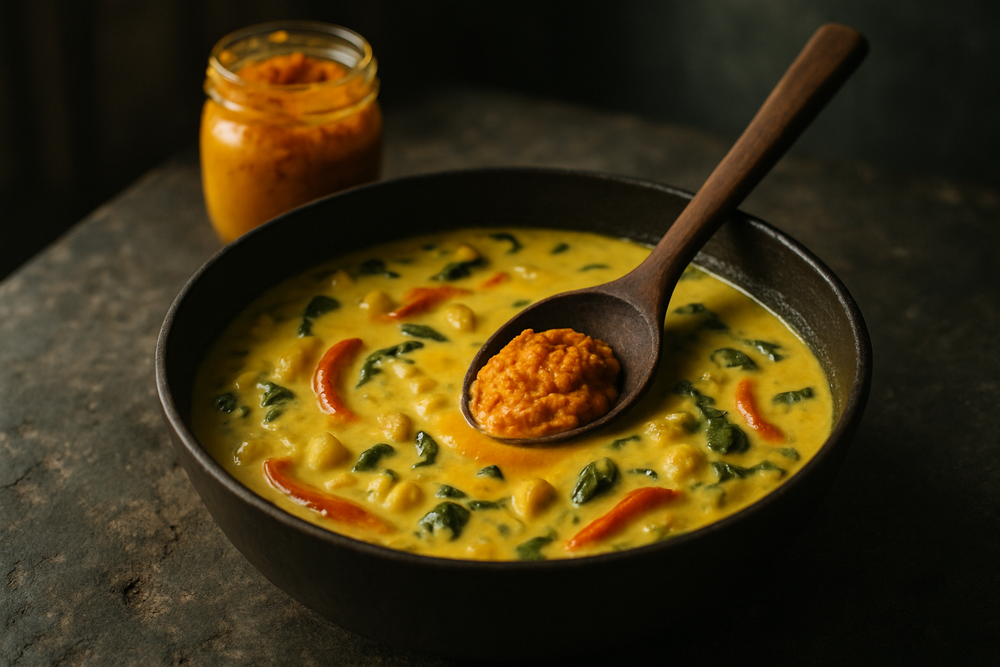
Fermented Turmeric Paste · Photograph
Discover the science-backed health benefits of fermented turmeric paste, from gut health and inflammation support to liver function. Learn how to use it daily, what the research says, and who should exercise caution.
Key Nutrients
% Daily Value based on 2,000 cal diet
Key active compounds in fermented turmeric paste
- Curcumin (curcuminoids): The primary polyphenols (plant compounds with antioxidant and anti-inflammatory properties) in turmeric. The curcuminoid family includes curcumin, demethoxycurcumin, and bisdemethoxycurcumin. Fermentation appears to increase their concentration and make them more biologically active.
- Turmerones (ar-turmerone and related sesquiterpenes): Aromatic compounds in turmeric's essential oil with reported anti-inflammatory and possibly neuroactive (affecting the nervous system) properties. Fermentation may influence how they interact with other compounds.
- Phenolic acids and flavonoids: Plant polyphenols such as ferulic acid and caffeic acid that contribute to antioxidant capacity. Fermented turmeric shows higher total phenolic and flavonoid content than the non-fermented root.
- Postbiotic metabolites: Bioactive compounds produced during fermentation itself — including lactic acid, short-chain organic acids, and small peptides. These can influence gut pH (acidity level), microbial balance, and immune signaling even in the absence of live bacteria.
Prep and pairing ideas
Fermented turmeric paste is versatile and far more interesting than ground powder. Here are some practical ways to work it in:
Everyday uses:
- Whisk ½ teaspoon into a simple vinaigrette with olive oil, lemon, and a pinch of black pepper for a golden salad dressing
- Stir 1 teaspoon into warm oat milk, coconut milk, or herbal tea for a tangy golden latte (a fermented twist on a golden milk drink)
- Blend into hummus or white bean dip for color, flavor, and a fermented note
- Mix into grain bowls, lentil soups, or cauliflower rice during the last minute of cooking — long cooking can degrade some heat-sensitive compounds, so add toward the end
Common pairings and why they work:
- Black pepper — Piperine in black pepper significantly enhances curcumin absorption. Add a crack of black pepper whenever you use fermented turmeric paste.
- Healthy fats (olive oil, avocado, coconut) — Curcumin is fat-soluble (dissolves in fat, not water), so pairing it with a fat source helps your body absorb more of it.
- Ginger — Shares anti-inflammatory compounds with turmeric, and the flavors are naturally complementary. Combine in dressings, teas, or marinades for a synergistic effect.
Myths vs. facts
Myth: Fermented turmeric paste is a probiotic food. Fact: Fermented turmeric paste is typically a postbiotic food — meaning that by the time it reaches your plate, the live bacteria that did the fermenting may no longer be active. The real benefit comes from the compounds the bacteria produced (organic acids, enhanced curcuminoids, peptides), not from live cultures reaching your gut. Some products do preserve live cultures, but many do not.
Myth: More turmeric paste equals more anti-inflammatory benefit. Fact: Curcumin absorption plateaus and large amounts can cause GI upset, reflux, or interact with medications. A modest daily amount with fat and black pepper is likely more effective than megadosing.
Myth: Fermented turmeric paste can detox the liver. Fact: The liver detoxifies itself — it does not need external "detoxing." What fermented turmeric may do, based on human trial data, is support healthy liver enzyme levels and reduce markers of hepatic stress in people with mild liver enzyme elevation. That is a meaningful distinction.
Bottom line
Fermented turmeric paste is one of the more scientifically interesting functional condiments available. Fermentation genuinely appears to upgrade turmeric's existing strengths — boosting curcuminoid content, antioxidant activity, and antimicrobial potency — while adding a new layer of postbiotic compounds. The most robust human evidence points to liver enzyme and lipid improvements; anti-inflammatory, gut health, and metabolic benefits are biologically plausible and supported by lab and animal research, but await further human trials.
For most healthy adults, using ½ to 1 teaspoon of fermented turmeric paste in daily cooking is a low-risk, potentially high-reward addition to a varied, plant-forward diet. People on blood thinners, those with gallbladder issues, or anyone considering high-dose supplement forms should talk to their healthcare provider first.
It will stain everything it touches. Fair warning — and honestly, worth it.
Curious how fermented turmeric fits into a broader anti-inflammatory food pattern? Explore Plantopedia's inflammation and recovery goals.
How Fermented Turmeric Paste Compares
| Compared with | What's different |
|---|---|
| Fermented Turmeric Paste vs. Turmeric Powder | Lacks the fermentation-enhanced bioavailability and tangy postbiotic organic acids. |
| Fermented Turmeric Paste vs. Sauerkraut | Contains live active cultures, whereas fermented turmeric is primarily valued for its postbiotics. |
| Fermented Turmeric Paste vs. Fresh Turmeric Root | Focuses on fresh essential oils rather than the lactic acid-modified curcuminoids found in paste. |
Health Benefits
Things to Know
Blood thinners: Turmeric — including fermented forms — may have mild anticoagulant (blood-thinning) effects. People taking warfarin, DOACs (direct oral anticoagulants such as apixaban or rivaroxaban), aspirin, or clopidogrel should use caution with large or concentrated amounts and consult their prescriber. Culinary paste in small amounts is generally lower risk than supplements.
Gallbladder and bile duct conditions: Turmeric stimulates bile flow; people with gallstones or bile duct obstruction should moderate intake and seek medical guidance.
GI sensitivity: Those with gastroesophageal reflux disease (GERD), peptic ulcers, or generally sensitive stomachs may experience increased reflux or irritation with large amounts of turmeric paste. Start small.
Pregnancy and breastfeeding: Culinary amounts are widely considered acceptable, but concentrated fermented turmeric extracts or supplements should be used only under medical guidance.
Zingiberaceae allergy: Turmeric belongs to the same plant family as ginger. People with known allergies to this family should avoid fermented turmeric products.
Blood sugar medications: Fermented turmeric may theoretically enhance the glucose-lowering effects of insulin, metformin, or sulfonylureas based on animal data. Monitor accordingly if you use high-dose products.
Staining: Fermented turmeric paste stains skin, fabrics, countertops, and teeth readily. Use silicone utensils, wear an apron, and rinse immediately after spills.
Drug-metabolizing enzymes: At high doses, curcumin and related compounds can interact with liver enzymes that process certain medications including some chemotherapy agents. Patients on complex drug regimens should check with a specialist.
Prep Ideas
- — Whisk ½ teaspoon into a simple vinaigrette with olive oil, lemon, and a pinch of black pepper for a golden salad dressing
- — Stir 1 teaspoon into warm oat milk, coconut milk, or herbal tea for a tangy golden latte (a fermented twist on a golden milk drink)
- — Blend into hummus or white bean dip for color, flavor, and a fermented note
- — Mix into grain bowls, lentil soups, or cauliflower rice during the last minute of cooking — long cooking can degrade some heat-sensitive compounds, so add toward the end
- — Black pepper — Piperine in black pepper significantly enhances curcumin absorption. Add a crack of black pepper whenever you use fermented turmeric paste.
- — Healthy fats (olive oil, avocado, coconut) — Curcumin is fat-soluble (dissolves in fat, not water), so pairing it with a fat source helps your body absorb more of it.
- — Ginger — Shares anti-inflammatory compounds with turmeric, and the flavors are naturally complementary. Combine in dressings, teas, or marinades for a synergistic effect.
Glossary
Shop This Ingredient
Stock your pantry with quality fermented turmeric paste.
Buy on AmazonAs an Amazon Associate, Plantopedia earns from qualifying purchases. This costs you nothing extra and helps us keep the encyclopedia free.
Frequently Asked Questions
Heart and circulation The most direct human evidence comes from a 12-week randomized, double-blind, placebo-controlled trial in adults with mildly elevated alanine aminotransferase (ALT — a liver enzyme that rises when the liver is under stress). Participants taking fermented turmeric powder saw significant improvements in liver enzymes and also favorable changes in their lipid profile, including lower triglycerides (blood fats) and better HDL/LDL ratios. This suggests indirect cardiovascular benefits, since elevated liver inflammation and poor lipid balance are both risk factors for heart disease. No human trials have yet directly tested fermented turmeric paste for blood pressure, arterial stiffness, or cardiovascular events. Lab and animal studies show that fermented turmeric can modulate lipid metabolism and reduce inflammatory markers involved in atherosclerosis (plaque buildup in arteries), but these findings need human confirmation before strong claims can be made. Digestive health and microbiome No controlled human trials have directly tested fermented turmeric paste for digestion or gut microbiome outcomes — this is an important gap. What exists is a body of in vitro (lab-based, outside a living organism) and animal research showing that fermented turmeric: Has stronger antimicrobial action against gut pathogens than unfermented turmeric May help support gut barrier function (the lining that keeps harmful substances from leaking into the bloodstream) Contributes postbiotic metabolites that can modulate microbial balance and reduce inflammatory signaling in the gut These findings are promising and scientifically plausible, but using fermented turmeric paste as a gut-health strategy should be seen as a complementary food choice rather than a proven treatment for any digestive condition. Blood sugar and metabolism Animal research using high-fat diet models found that Lactobacillus-fermented turmeric reduced weight gain, visceral fat (the fat around organs), and plasma metabolic markers including improved insulin sensitivity (how well cells respond to insulin). Combined with the enhanced polyphenol content observed after fermentation, these findings raise the possibility of blood sugar and metabolic benefits — but no human trials have yet evaluated fermented turmeric paste specifically for fasting glucose, HbA1c (a three-month average blood sugar measure), or insulin resistance. This area remains speculative pending human data. Inflammation and recovery This is arguably where the mechanistic case for fermented turmeric paste is strongest, even if human clinical data on inflammatory markers are still limited. Multiple cell-based studies show that Lactobacillus-fermented turmeric suppresses pro-inflammatory mediators (signaling molecules that drive inflammation) including TNF-α and Toll-like receptor-4 in laboratory-simulated inflammatory conditions. An animal osteoarthritis model using turmeric fermentation liquid found reduced oxidative stress and inflammatory markers with apparent joint-protective effects. The 12-week human liver trial indirectly supports reduced hepatic (liver) inflammation, but systemic (whole-body) inflammatory markers such as CRP (C-reactive protein, a common inflammation indicator measured in blood tests) were not the primary focus. Overall: strong mechanistic and animal support, emerging human evidence, and a reasonable rationale for including fermented turmeric paste as part of an anti-inflammatory food pattern. Liver support This is where the human evidence is clearest. The double-blind, placebo-controlled clinical trial mentioned above found that 3 g per day of fermented turmeric powder for 12 weeks significantly reduced ALT and AST levels (both markers of liver cell stress) in adults with mild hepatic injury, with good tolerability and no severe adverse events. A separate clinical trial registry entry confirms this design. While this evidence applies to a concentrated powder form rather than a culinary paste, it is the strongest human-level signal for fermented turmeric as a functional food ingredient.
The short answer: it may be more potent than regular turmeric for several reasons, but "better" depends on how you use it. Lab and animal studies consistently show that fermenting turmeric increases curcuminoid concentration, boosts antioxidant and anti-inflammatory activity, and adds postbiotic compounds not present in raw or dried turmeric. The fermentation process also appears to break down some of the plant cell matrix, potentially making beneficial compounds more accessible during digestion. That said, regular turmeric with black pepper (which contains piperine, a compound that can enhance curcumin absorption by up to 2,000% according to some lab estimates) has a much longer track record of human research. Fermented turmeric paste is the newer, more exciting option — but also the one with fewer large human trials behind it. For culinary use, fermented turmeric paste offers genuine added value over plain powder. For medicinal-level dosing, the evidence base is still developing.
Research context matters here. The most rigorous human trial used 3 g per day of fermented turmeric powder (roughly the equivalent of 1 teaspoon of paste) for 12 weeks in adults with mild liver enzyme elevation, with no serious adverse effects. For culinary use as a general wellness habit: Start with ½ teaspoon (about 1.5 g) per day and see how your digestive system responds 1 to 2 teaspoons (3 to 6 g) per day is a common practical range in functional food literature Supplement capsules standardized to fermented turmeric are typically dosed at 500–1,500 mg per day; follow label guidance and prefer products from reputable manufacturers Because curcuminoid content is not standardized across homemade or artisan pastes, it is more practical to think in terms of paste volume (grams or teaspoons) rather than exact curcumin milligrams. Always pair with a little fat and black pepper to maximize what your body can absorb. Note for people with health conditions: If you are using fermented turmeric for a specific health goal rather than general culinary enjoyment, discuss dosing with a healthcare provider who can assess your individual situation.
The inflammation-aware food enthusiast Already eating a broadly anti-inflammatory diet (lots of vegetables, legumes, whole grains) Wants a flavorful, functional upgrade to dressings and warm drinks Not on blood thinners; healthy digestive system Comfortable with the fact that the human evidence is still emerging The adult with mildly elevated liver enzymes Has been told by a doctor that ALT or AST are a little high, often related to fatty liver or lifestyle factors Interested in food-first strategies alongside dietary and lifestyle changes Can use the clinical trial data as a reasonable rationale, while understanding it was done with a standardized powder, not a homemade paste Should inform their doctor they are adding a concentrated turmeric product
Quick Answers
Common questions, answered in a line.
Pair fermented turmeric paste with black pepper and healthy fats like olive oil, avocado, or coconut. Black pepper contains piperine, which significantly enhances curcumin absorption, while healthy fats are necessary because curcumin is fat-soluble rather than water-soluble.
Fermented turmeric paste is considered a postbiotic food because the benefits come from compounds created during fermentation rather than live bacteria. While the original bacteria may no longer be active, the resulting organic acids and enhanced curcuminoids provide the health benefits.
Fermented turmeric paste contains curcuminoids, turmerones, phenolic acids, flavonoids, and postbiotic metabolites like lactic acid. Fermentation increases the concentration and biological activity of these primary polyphenols and antioxidants compared to the non-fermented root.
You can stir fermented turmeric paste into vinaigrettes, blend it into hummus, mix it into golden lattes, or add it to soups and grain bowls. For the best results, add the paste during the last minute of cooking to prevent heat from degrading its sensitive compounds.
People taking blood thinners, those with gallbladder issues or gallstones, and individuals with Zingiberaceae (ginger family) allergies should exercise caution. It may also interact with blood sugar medications or cause irritation for those with GERD or peptic ulcers.
Fermented turmeric paste does not "detox" the liver, but it can support healthy liver enzyme levels and reduce markers of hepatic stress. While the liver detoxifies itself naturally, human trials suggest this paste can support overall liver function in those with mild enzyme elevation.
Fermented turmeric paste will readily stain skin, fabrics, countertops, and teeth due to its strong pigments. To prevent permanent marks, it is recommended to use silicone utensils, wear an apron, and rinse any spills or surfaces immediately after contact.
For Readers in the USA
Local context — sourcing, seasonality, and regional notes.
You can find fermented turmeric paste at major US natural grocers like Whole Foods Market, Sprouts Farmers Market, and Erewhon, as well as through online retailers like Thrive Market. Many health food stores stock it in the refrigerated functional food section or the shelf-stable condiment aisle depending on the brand's processing method.
While the raw roots are imported year-round from Florida, Hawaii, and overseas, most US-made fermented turmeric pastes follow USDA Organic guidelines to ensure they are free from synthetic pesticides. Look for the USDA Organic seal on domestic brands like New Chapter or Garden of Life to ensure the product meets federal organic certification standards.
Domestic fresh turmeric, the base for the paste, is primarily grown in Hawaii and Florida, with the peak harvest season running from early winter through spring. While imported turmeric is available year-round in the US, domestic artisanal producers often ferment their batches shortly after the winter harvest to capture the highest concentration of active compounds.
AI Clinical Review
- Gives a clear, accurate definition of fermented turmeric paste and explains that most benefits likely come from postbiotic compounds rather than live “probiotics.”
- Correctly notes that fermentation can increase curcuminoids and antioxidant activity in lab testing, which is consistent with in vitro findings.
- Highlights the strongest human signal to date: a small, 12‑week randomized trial of fermented turmeric powder showing improved liver enzymes and lipids in adults with mildly elevated ALT/AST.
- Offers practical absorption tips (pair with fat and a crack of black pepper) and realistic culinary doses for everyday use.
- Most claims for gut-microbiome, anti-inflammatory, and metabolic effects are based on cell or animal studies; robust human trials are still limited.
- The clinical trial used a standardized fermented turmeric powder in a specific population; results may not generalize to healthy adults, other conditions, or to homemade pastes.
- It’s not yet proven in humans that fermentation alone improves curcumin bioavailability more than pepper-enhanced or formulated curcumin products.
- Antimicrobial effects are demonstrated in the lab; real‑world impacts on the gut ecosystem (including beneficial microbes) haven’t been clarified.
- Dose: Culinary amounts of about ½–2 tsp daily are reasonable; start low if you’re reflux‑prone. Powder, paste, and supplements are not dose‑equivalent because curcuminoid content varies.
- Interactions/cautions: Use caution and speak with a clinician if you take anticoagulants/antiplatelets, have gallstones or bile duct disease, active ulcers/GERD, diabetes medications, or complex drug regimens (possible liver‑enzyme interactions). Pregnancy/breastfeeding: stick to culinary amounts.
- Quality and safety: Choose reputable products and practice clean fermentation; turmeric products have occasionally been contaminated with heavy metals. Refrigerate paste and discard if it smells off or shows mold.
- Absorption helpers: Pair with a fat source and a pinch of black pepper, but remember piperine can also affect how some medicines are metabolized.
Stains readily; those on blood thinners should moderate turmeric.
References
- USDA FoodData Central — turmeric, ground (fdc.nal.usda.gov)
- Human RCT: fermented turmeric powder improves liver enzymes and lipid profiles (12 weeks, double-blind) (pmc.ncbi.nlm.nih.gov)
- ClinicalTrials.gov registration for fermented turmeric liver trial (NCT01634256) (clinicaltrials.gov)
- Review: phytochemical properties and functional characteristics of fermented turmeric (pmc.ncbi.nlm.nih.gov)
- Animal study: Lactobacillus-fermented turmeric reduces obesity-related metabolic parameters (pmc.ncbi.nlm.nih.gov)
- Lab study: Lactobacillus fermentation enhances anti-inflammatory potential of turmeric (jmb.or.kr)
- Lab study: antioxidant and antimicrobial effects of fermented Curcuma longa (thieme-connect.com)
- Animal study: antioxidant and anti-inflammatory effects of turmeric fermentation liquid in knee osteoarthritis rat model (tandfonline.com)
- Review: fermented turmeric exhibits higher curcuminoid content and improved anti-inflammatory activity (sciopen.com)
- Safety reference: turmeric and blood thinner interactions (healicus.com)
Know Your Numbers
Eating healthy is a start. Now get to know your biomarkers.
Food changes bloodwork — inflammation, lipids, blood sugar and nutrient status all respond to what you eat. 59 markers from $59.
- Results in 7–10 days at 2,000+ Quest sites
- Licensed provider reviews every result
- One flat price, no membership, HSA/FSA eligible
Educational information only, not medical advice. Panels are ordered and reviewed through our licensed partner; Plantopedia may earn a commission.