Fruit Scrap Vinegar — health benefits and uses
A frugal folk practice turning fruit scraps into a living, mother-rich vinegar.
The Short Answer
Fruit scrap vinegar is a zero-waste condiment containing acetic acid and fruit-derived antioxidants like quercetin. While it offers similar blood sugar and digestive benefits to commercial vinegar, its homemade nature provides a milder flavor and live

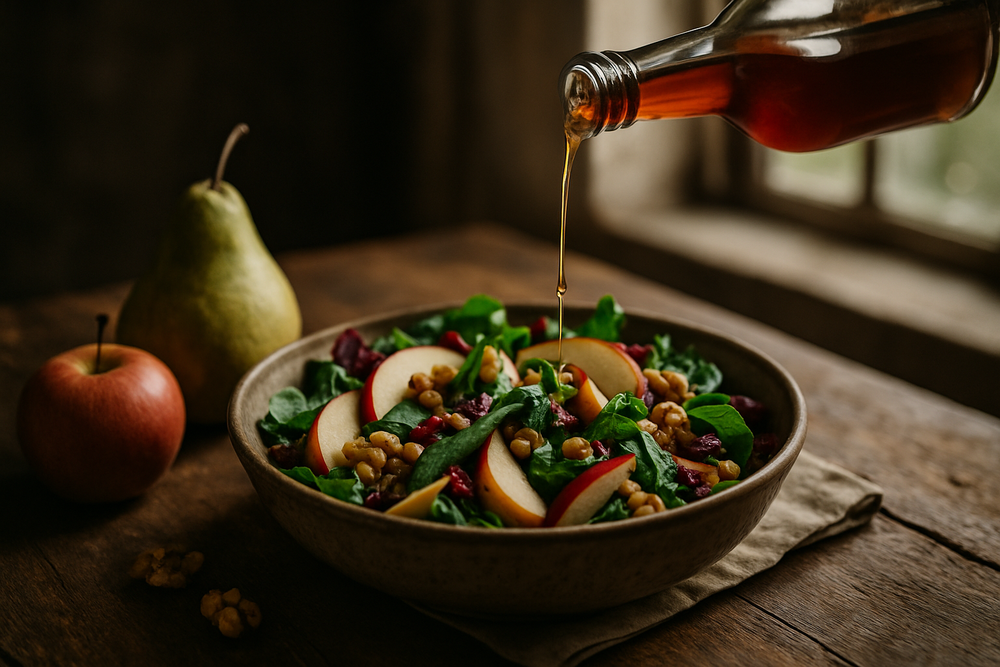
Fruit Scrap Vinegar · Photograph
Discover the fruit scrap vinegar health benefits and how to use it in everyday cooking. Learn how apple and pear peels ferment into a gut-friendly, zero-waste raw vinegar — plus safety tips, blood sugar research, and simple dressing ideas.
Key Nutrients
% Daily Value based on 2,000 cal diet
Key active compounds in fruit scrap vinegar
- Acetic acid — The primary organic acid formed when Acetobacter bacteria oxidise ethanol (alcohol) during fermentation. This is the compound responsible for vinegar's sharp taste and is the most studied contributor to its effects on blood sugar, gastric emptying (the rate at which food leaves the stomach), and cholesterol.
- Phenolic acids (e.g., chlorogenic acid) — Polyphenolic antioxidants naturally present in apple and pear peels that partially survive and transform during fermentation. They may scavenge free radicals and support vascular function, though their quantity in homemade scrap vinegar has not been formally measured.
- Flavonoids (e.g., quercetin and its derivatives) — Plant pigments concentrated in fruit skins. They leach into the liquid during fermentation and contribute to the overall antioxidant capacity of the vinegar, likely in small but meaningful amounts.
- Fermentation metabolites (malic acid, lactic acid, citric acid, and others) — A mix of organic acids produced as yeast and bacteria work through the fruit sugars. They give fruit scrap vinegar a more complex, rounded flavour than commercial white vinegar and contribute mild antimicrobial properties.
- Live acetic acid bacteria (the "mother") — The gelatinous, web-like culture visible in raw, unfiltered vinegar. It contains living Acetobacter and associated organisms. Whether these confer probiotic benefits in the gut has not been established in controlled human studies.
Prep and pairing ideas
Classic herb vinaigrette Whisk 1 tablespoon fruit scrap vinegar with 2 tablespoons extra-virgin olive oil, half a teaspoon of Dijon mustard, a pinch of salt, and fresh thyme. Use on leafy greens or roasted root vegetables. The fat in the dressing slows carbohydrate absorption further, complementing the vinegar's glycaemic effect.
Quick pickled slaws Toss shredded cabbage, carrot, and apple slices with 2 tablespoons fruit scrap vinegar, a pinch of salt, and a tiny drizzle of maple syrup. Rest for 20 minutes. Serve alongside grain bowls, tacos, or lentil dishes. The vinegar acts as the acidulant and replaces any need for added sugar in the dressing.
Grain bowl finish A half-tablespoon splash of fruit scrap vinegar over a warm bowl of farro, chickpeas, and roasted squash lifts the flavour and integrates the vinegar into the meal — consistent with the way clinical studies delivered their doses.
Bottom line
Fruit scrap vinegar is a genuinely clever use of apple and pear trimmings — turning kitchen waste into a functional, flavourful condiment that costs nothing and reduces food waste. Its acetic acid content places it in the same category as commercial apple cider vinegar, and the human trial evidence on that front is modestly encouraging: small but consistent reductions in post-meal blood glucose spikes, modest improvements in cholesterol and triglycerides, and possible digestive support, all within culinary dose ranges.
What fruit scrap vinegar is not is a cure, a supplement, or a substitute for medical treatment. The evidence base is built on small, short studies of commercial vinegar — not the homemade version — and effect sizes are modest. Its greatest strength may be the simplest one: it makes salads, slaws, and grain bowls taste better, which means you eat more of them. That habit alone is worth something.
How Fruit Scrap Vinegar Compares
| Compared with | What's different |
|---|---|
| Fruit Scrap Vinegar vs. Apple Cider Vinegar | Milder, less acidic flavor with more complex fruity notes from residual fermentation metabolites. |
| Fruit Scrap Vinegar vs. Distilled White Vinegar | Contains live acetic acid bacteria and plant polyphenols, whereas white vinegar is distilled. |
Health Benefits
Things to Know
Dilute always.: Undiluted vinegar — homemade or commercial — can erode dental enamel and irritate the lining of the esophagus and stomach. Use a straw if drinking it in water, and rinse your mouth with plain water afterward.
Diabetes and glucose-lowering medications.: Vinegar can modestly lower post-meal blood glucose. If you use insulin, sulfonylureas, or other glucose-lowering medications, this additive effect could increase hypoglycaemia (low blood sugar) risk. Let your clinician know if you start using vinegar regularly.
Gastroparesis and reflux.: Vinegar slows gastric emptying. For anyone with delayed stomach emptying, chronic GERD, or peptic ulcer disease, it may worsen upper GI symptoms.
Potassium and kidney concerns.: Very high chronic vinegar intake (well above culinary amounts) has been associated in case reports with low potassium levels (hypokalaemia) and bone changes. Culinary doses are unlikely to cause this, but people with chronic kidney disease or those on diuretics should be cautious.
Pregnancy and breastfeeding.: Culinary amounts in food are generally considered safe, but supplemental doses of home-fermented vinegar lack safety data. Stick to small culinary quantities.
Immunocompromised individuals.: Raw, home-fermented products carry a theoretical risk from unintended microbial contamination. Anyone on chemotherapy, immunosuppressive medications, or with a compromised immune system should use commercially produced, pasteurised vinegar instead.
Homemade fermentation safety.: Always ensure fermentation reaches full acidity before consuming. A sharp, clean vinegar smell and taste indicates success. Discard any batch showing mold (fuzzy growth, not the gelatinous mother), sliminess, or unusual odours.
Dental enamel erosion.: Rinse with water after consumption; do not brush teeth immediately after, as this can worsen erosion.
Glossary
Shop This Ingredient
Stock your pantry with quality fruit scrap vinegar.
Buy on AmazonAs an Amazon Associate, Plantopedia earns from qualifying purchases. This costs you nothing extra and helps us keep the encyclopedia free.
Frequently Asked Questions
Blood sugar and metabolism This is where the evidence is strongest. Multiple small randomised crossover trials — in healthy adults, people with insulin resistance, and those with type 2 diabetes — show that consuming roughly 10–20 mL (2–4 teaspoons) of vinegar with or just before a high-carbohydrate meal can reduce the postprandial blood glucose spike (the rise in blood sugar after eating) by approximately 20% compared with a placebo. The mechanism appears to involve acetic acid slowing gastric emptying and inhibiting salivary and pancreatic amylase — the enzymes that break starch into glucose. A meta-analysis of randomised controlled trials (RCTs) found that regular vinegar intake significantly reduced fasting blood glucose and HbA1c (a three-month average of blood sugar levels), though effect sizes were modest and study durations were short. One trial found that two tablespoons of apple cider vinegar diluted in water at bedtime modestly lowered morning fasting glucose in adults with well-controlled type 2 diabetes. Not all trials show a benefit — at least one found no significant effect on 90-minute postprandial glucose — so results are promising but not conclusive. Fruit scrap vinegar has not been directly studied, but if it reaches a similar acidity (around 4–6% acetic acid), its short-term effects on post-meal glucose are expected to be comparable. Heart and circulation Several RCTs and meta-analyses of apple cider vinegar and other vinegars report small but statistically significant reductions in total cholesterol, LDL cholesterol (sometimes called "bad" cholesterol), and triglycerides (a type of blood fat), along with modest rises in HDL cholesterol ("good" cholesterol), particularly in people with type 2 diabetes or other cardiometabolic risk factors. A systematic review of cardiometabolic risk factors found that vinegar was associated with improvements in both glycaemic and lipid indices across a range of participants. These are encouraging findings, but the effect sizes are small, studies are short (usually 4–12 weeks), and sample sizes are typically under 100 people. Vinegar should not be used as a primary treatment for high cholesterol or heart disease. Digestive health and microbiome Vinegar's ability to slow gastric emptying may enhance early satiety (the feeling of fullness) when taken with meals, though this effect is inconsistent across studies. Raw, unfiltered fruit scrap vinegar contains live acetic acid bacteria, and many people report reduced bloating or improved digestion when using small amounts with meals. However, there are no controlled human trials specifically confirming probiotic effects from raw fruit scrap or apple cider vinegar. The same gastric-slowing effect that may help satiety can worsen symptoms in anyone with gastroparesis (delayed stomach emptying) or chronic reflux. Inflammation and recovery Some vinegar trials have measured C-reactive protein (CRP), a marker of systemic inflammation, and found occasional modest reductions — particularly in people with metabolic syndrome or type 2 diabetes. However, inflammation markers were not primary endpoints in most studies and reporting was incomplete. The working hypothesis is that any anti-inflammatory effect is indirect: better blood sugar and lipid control reduces the low-grade chronic inflammation linked to metabolic disease. Apple and pear peel polyphenols may add a small antioxidant contribution, but this hasn't been measured in fruit scrap vinegar specifically. Hormones and cycle health A small body of preliminary research has explored vinegar's effects in people with polycystic ovary syndrome (PCOS), a hormonal condition linked to insulin resistance. Very small, uncontrolled studies suggest daily vinegar intake may improve insulin sensitivity and support return of ovulatory cycles. These studies are too small and too poorly controlled to draw clinical conclusions. Any hormonal benefit is most likely mediated through improved insulin sensitivity rather than a direct effect on hormone-producing glands.
As a salad dressing base (preferred) Human studies on vinegar's glycaemic and cardiometabolic effects often administered vinegar mixed into meals — exactly how you'd use it in a dressing or marinade. One to two tablespoons of fruit scrap vinegar whisked with olive oil, mustard, and herbs over a large salad or slaw sits comfortably within studied dose ranges and delivers the acid as part of a full meal, which is likely when the starch-slowing effect is most active. Diluted in water (studied but less pleasant) Trials frequently used 10–20 mL of vinegar stirred into a large glass of water (at least 200–250 mL) and drunk just before or with a meal. This works, but undiluted shots straight from a bottle are not recommended — they can cause esophageal irritation and dental enamel erosion. Splashed onto cooked dishes A small splash over roasted vegetables, grain bowls, or beans adds brightness and delivers a similar culinary dose. As a tonic at bedtime One trial used two tablespoons diluted in water at bedtime to modestly lower waking glucose. This is a valid option for people exploring glycaemic support, but always diluted and always away from medications that could interact.
The zero-waste home cook Already peels apples or pears for cooking and looks for ways to use every part of the ingredient. Wants a flavorful, cost-free condiment that replaces store-bought dressings containing added sugar or refined oils. Values the sustainability aspect as much as the health angle, and enjoys the process of fermenting something at home. The blood sugar-aware eater Has been advised to reduce post-meal glucose spikes, manage insulin resistance, or follow a lower-glycaemic diet. Regularly eats starchy meals (grains, legumes, root vegetables) where vinegar's starch-slowing mechanism is most active. Prefers food-based approaches to metabolic wellness and wants a low-effort, evidence-supported habit to layer into meals.
Human studies typically use 5–30 mL (one to two tablespoons) per day, standardised to approximately 4–6% acetic acid, taken with or just before meals. For homemade fruit scrap vinegar, start at the lower end — around one teaspoon (5 mL) per day — because the acidity of a home batch is not standardised. If it tastes strongly vinegary and has fully fermented, its acidity is likely comparable to commercial vinegar, and you can work up to one to two tablespoons per day used across meals. Practical starting guide: Week 1: ½–1 teaspoon in a salad dressing once daily. Week 2–3: Scale to 1 tablespoon per day if there are no GI complaints. Ceiling: Most studied effects are seen at 1–2 tablespoons per day. Higher amounts do not appear to provide additional benefit and increase the risk of side effects. Never take straight shots. Always dilute in water (at least a large glass) or use as part of a food. If you are using vinegar specifically around meals for glycaemic support, timing matters: consume it with or just before a carbohydrate-containing meal, not on an empty stomach.
Quick Answers
Common questions, answered in a line.
Acetic acid is the primary active compound in fruit scrap vinegar, responsible for its sharp taste and its effects on blood sugar and cholesterol. It is formed when Acetobacter bacteria oxidize ethanol during the fermentation of apple and pear peels.
The "mother" in fruit scrap vinegar is a gelatinous, web-like culture that contains living Acetobacter bacteria and associated organisms. It is visible in raw, unfiltered vinegar, though its specific probiotic benefits for human gut health have not yet been established in controlled studies.
You should always dilute fruit scrap vinegar because undiluted vinegar can erode dental enamel and irritate the lining of the esophagus and stomach. It is recommended to use a straw if drinking it in water and to rinse your mouth with plain water afterward to protect your teeth.
Fruit scrap vinegar may lower post-meal blood glucose spikes and improve cholesterol and triglyceride levels due to its acetic acid content. Research suggests it may also support digestion by slowing gastric emptying, though these effects are based on modest culinary doses.
People with gastroparesis, chronic GERD, or peptic ulcer disease should be cautious, as fruit scrap vinegar slows gastric emptying and may worsen upper GI symptoms. Additionally, those who are immunocompromised should avoid raw home-fermented products due to the risk of microbial contamination.
A successful batch of fruit scrap vinegar should have a sharp, clean vinegar smell and taste, and may contain a gelatinous "mother." You must discard any batch that shows fuzzy mold growth, sliminess, or unusual odors, as these are signs of spoilage or contamination.
Fruit scrap vinegar contains phenolic acids like chlorogenic acid and flavonoids such as quercetin, which are plant antioxidants concentrated in fruit skins. These compounds leach into the liquid during fermentation and may help scavenge free radicals and support vascular function.
For Readers in the USA
Local context — sourcing, seasonality, and regional notes.
Apples and pears, the main ingredients for fruit scrap vinegar, are harvested across the U.S. from late summer through late fall, typically peaking between August and November. Regions like the Pacific Northwest, Michigan, and New York provide a steady supply of scraps during these months for home fermentation projects.
To ensure your fruit scrap vinegar is free from synthetic pesticides, look for the USDA Organic seal on the whole fruit you purchase at retailers like Whole Foods, Sprouts, or local cooperatives. Using organic scraps is highly recommended for fermentation because the skins are the primary source of both the fruit's nutrients and potential chemical residues.
While you won't find "scrap vinegar" in most stores, you can buy high-quality raw, unfiltered apple cider vinegar with the "mother" at major U.S. chains like Kroger, Safeway, and Walmart to use as a starter culture. These commercial versions serve as a reliable baseline if your home ferment isn't ready or if you want to ensure a specific acidity level for pickling.
AI Clinical Review
- Clearly explains how fruit scrap vinegar is made and why acetic acid is the main active component, aligning with research on apple cider and other acetic acid vinegars.
- Accurately characterizes the blood sugar data as modest but promising, with the most consistent benefits seen when vinegar is taken with or just before starchy meals.
- Notes small improvements in cholesterol and triglycerides in short studies and frames vinegar as an adjunct to an overall healthy diet, not a treatment.
- Appropriately flags that raw, unfiltered vinegar may contain live bacteria but that probiotic benefits in humans have not been shown.
- There are no clinical trials on homemade fruit scrap vinegar itself; claims are extrapolated from studies on standardized commercial vinegars.
- Existing glycemic and lipid studies are short in duration, small in size, and heterogeneous in methods, so effect sizes should be viewed as modest and not guaranteed.
- Microbiome and digestive claims remain largely anecdotal; vinegar microbes are not the same strains used in studied probiotic supplements.
- Early signals around inflammation and PCOS are based on limited or uncontrolled research and need larger randomized trials.
- Dose and form: most studies use about 5–30 mL per day (1–2 tablespoons) with meals or diluted in water; avoid undiluted shots and rinse the mouth afterward to protect dental enamel.
- Medication interactions: because vinegar can lower post‑meal glucose, people using insulin or sulfonylureas should monitor for hypoglycemia and discuss regular use with a clinician.
- GI conditions: vinegar can slow stomach emptying and may aggravate symptoms in gastroparesis, frequent reflux, or active ulcers.
- Safety and standardization: home batches vary in acidity and composition; discard any batch with mold or off odors. People who are immunocompromised or with chronic kidney disease (or on potassium‑affecting diuretics) should be cautious and may prefer pasteurized commercial vinegar.
Ensure a healthy vinegar mother forms; discard if moldy.
References
- USDA FoodData Central — Vinegar, cider (nutrition reference) (batchbase.com.au)
- Systematic review and meta-analysis: apple cider vinegar effects on glycaemic control and insulin parameters (pmc.ncbi.nlm.nih.gov)
- Meta-analysis: vinegar attenuates postprandial glucose and insulin responses (sciencedirect.com)
- Systematic review: vinegar consumption and cardiometabolic risk factors (RCTs) (sciencedirect.com)
- RCT: vinegar improves insulin sensitivity to a high-carbohydrate meal in subjects with insulin resistance or type 2 diabetes (diabetesjournals.org)
- RCT: vinegar ingestion at bedtime moderates waking glucose in adults with well-controlled type 2 diabetes (diabetesjournals.org)
- Human trial: antiglycaemic properties of vinegar in healthy adults (pubmed.ncbi.nlm.nih.gov)
- Clinical trial: effect of apple cider vinegar on postprandial blood glucose in type 2 diabetes (jbums.org)
- Clinical trial: improvement of glycaemic indices and lipid profile in type 2 diabetes with apple cider vinegar (pubmed.ncbi.nlm.nih.gov)
Know Your Numbers
Eating healthy is a start. Now get to know your biomarkers.
Food changes bloodwork — inflammation, lipids, blood sugar and nutrient status all respond to what you eat. 59 markers from $59.
- Results in 7–10 days at 2,000+ Quest sites
- Licensed provider reviews every result
- One flat price, no membership, HSA/FSA eligible
Educational information only, not medical advice. Panels are ordered and reviewed through our licensed partner; Plantopedia may earn a commission.