Finger Lime — health benefits and uses
An Australian native bushfood harvested by Aboriginal communities.
The Short Answer
Finger lime, often called citrus caviar, is a low-calorie fruit containing roughly 7.3 mg of vitamin C per 50g serving. Its juice is encapsulated in tiny pearls that provide a tart, acidic burst when bitten, making it a popular garnish for seafood and
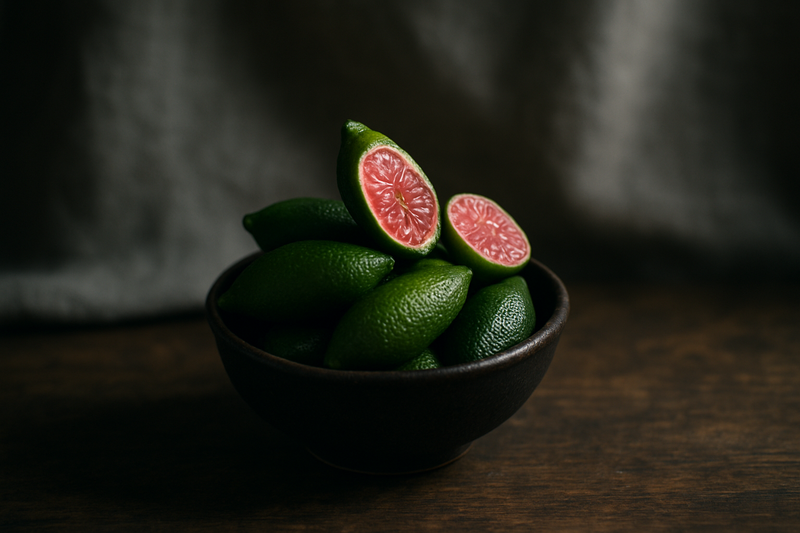
Finger Lime · Photograph
Discover finger lime health benefits, nutrition facts, and practical ways to use citrus caviar pearls on seafood, salads, and desserts. Learn about vitamin C, antioxidants, and safe daily use in this evidence-aligned guide.
Key Nutrients
% Daily Value based on 2,000 cal diet
Key active compounds in finger lime
The potential health-related activity of finger lime comes largely from the following plant compounds:
- Vitamin C — A water-soluble antioxidant (a molecule that neutralizes damaging free radicals in the body) that supports immune function and collagen production. Finger lime provides roughly 29–45 mg per 100 g of fruit.
- Polyphenols — A broad family of plant compounds defined by having multiple phenol groups in their structure. They are associated with antioxidant capacity and protection against chronic disease in population research.
- Flavonoids — A subgroup of polyphenols particularly abundant in citrus. This includes flavanones and flavones linked to vascular protection in mechanistic and epidemiologic (population-level) studies.
- Anthocyanins — Pigmented flavonoids that give some finger lime cultivars their distinctive red or pink hue. Associated with antioxidant and anti-inflammatory activity in laboratory models.
- Limonoids and citrus terpenes — Aromatic bioactive compounds including limonene, which contribute to the fruit's distinctive scent and may have antioxidant and chemoprotective (cell-protective) properties in preclinical (lab and animal) research.
Prep and pairing ideas
Finger lime requires almost no preparation. Here is a simple approach:
- Slice crosswise near the middle of the fruit, then gently squeeze each half over your dish. The pearls release easily.
- Use immediately. Cut pearls oxidize and lose their visual appeal within an hour or two.
- Store uncut fruit in the refrigerator for up to two weeks, or freeze whole fruit for several months.
Three practical pairings and why they work:
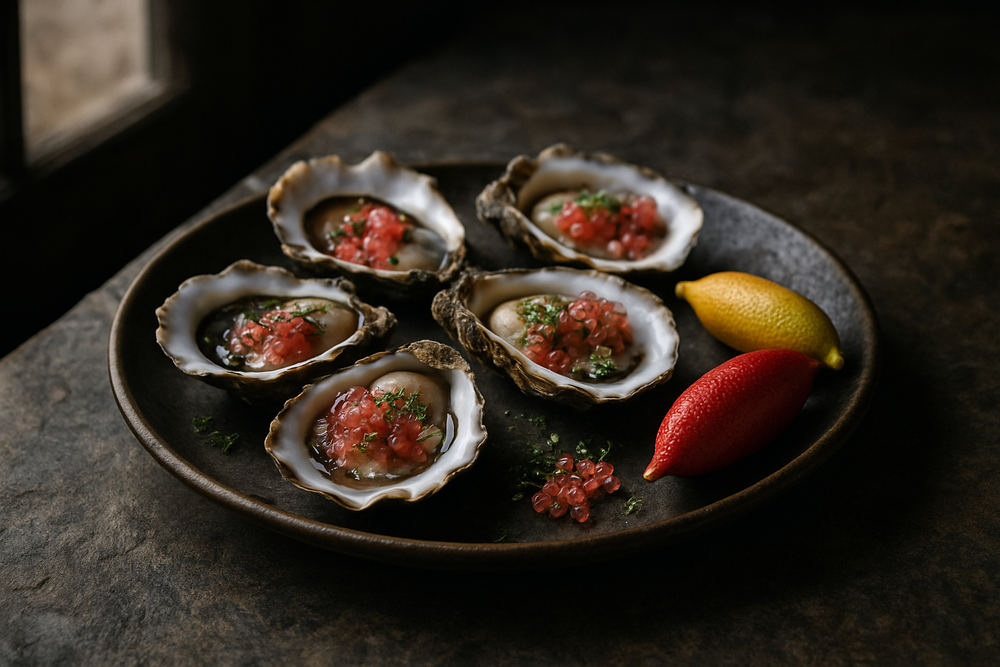
- Oysters or ceviche. The acidity of the pearls acts like a classic mignonette (a sauce of vinegar, shallots, and pepper) or lime squeeze, cutting through the briny richness of shellfish. You get a clean, bright hit of citrus without overwhelming the seafood's natural flavor.
- Avocado toast or grain bowls. A tablespoon of pearls adds a burst of vitamin C and tartness that balances the creaminess of avocado and the earthiness of grains like farro or brown rice. The textural contrast is also genuinely satisfying.
- Desserts with coconut or mango. Tropical flavors are natural partners. Scatter pearls over a coconut panna cotta, mango sorbet, or chia pudding just before serving for color, acidity, and a pop of fresh flavor that lifts the whole dish.
Bottom line
Finger lime is a genuinely interesting whole-food ingredient: low in calories, rich in vitamin C and antioxidant polyphenols, visually stunning, and versatile enough to work on everything from oysters to grain bowls. The science on this specific fruit is still early — most of the health benefit evidence comes from its known nutrients and phytochemicals rather than human trials on finger lime itself. That said, there is no credible downside to using it as a garnish in a varied, fruit-rich diet, and it can make eating more fruit feel less like a chore and more like a small luxury.
If you are looking for ways to add more whole plant foods and citrus variety to your meals, finger lime is a low-barrier, high-reward place to start.
Explore more ingredient guides aligned with your health goals at Plantopedia's goals hub.
How Finger Lime Compares
| Compared with | What's different |
|---|---|
| Finger Lime vs. Key Lime | Features juice-filled 'pearls' that pop rather than pulp and juice that flows. |
| Finger Lime vs. Lemon | Higher in vitamin C and contains unique anthocyanins not found in standard lemons. |
Health Benefits
Things to Know
Acidity and digestive conditions.: The pearls are acidic, similar to conventional lime. If you have gastroesophageal reflux disease (GERD — a condition where stomach acid flows back into the esophagus), peptic ulcers, or acid-sensitive digestion, you may find even small amounts uncomfortable. Start with a few pearls and notice how you feel.
Citrus allergy and oral allergy syndrome.: People allergic to citrus fruits or with oral allergy syndrome (a cross-reactive immune response causing tingling or swelling in the mouth) may react to finger lime similarly to other citrus. If you have a known citrus allergy, consult your healthcare provider before trying it.
Dental enamel.: Frequent exposure to acidic citrus can contribute to enamel erosion (wearing of the protective outer layer of teeth) over time. Rinsing your mouth with water after eating citrus is a simple protective habit.
Medication interactions.: Unlike grapefruit, finger lime is not known to significantly inhibit cytochrome P450 enzymes (liver enzymes that process many medications) at culinary doses. No specific drug interactions unique to finger lime have been documented. However, if you take acid-sensitive medications (some antibiotics, bisphosphonates, certain antacids), follow standard guidance to avoid taking them alongside acidic foods.
Iron absorption.: Vitamin C, even in small amounts, can modestly enhance non-heme iron absorption (the form of iron found in plant foods). This is usually beneficial but worth knowing if you have a condition involving iron overload such as hemochromatosis.
Kidney disease.: Finger lime contributes only small amounts of potassium per serving, but those on medically restricted, very low-potassium diets should track all dietary sources.
Pregnancy.: Finger lime is safe as a food during pregnancy at normal culinary amounts. There is no specific safety concern, though concentrated extracts or supplements have no human safety data in pregnancy.
Prep Ideas
- — Slice crosswise near the middle of the fruit, then gently squeeze each half over your dish. The pearls release easily.
- — Use immediately. Cut pearls oxidize and lose their visual appeal within an hour or two.
- — Store uncut fruit in the refrigerator for up to two weeks, or freeze whole fruit for several months.
- — Oysters or ceviche. The acidity of the pearls acts like a classic mignonette (a sauce of vinegar, shallots, and pepper) or lime squeeze, cutting through the briny richness of shellfish. You get a clean, bright hit of citrus without overwhelming the seafood's natural flavor.
- — Avocado toast or grain bowls. A tablespoon of pearls adds a burst of vitamin C and tartness that balances the creaminess of avocado and the earthiness of grains like farro or brown rice. The textural contrast is also genuinely satisfying.
- — Desserts with coconut or mango. Tropical flavors are natural partners. Scatter pearls over a coconut panna cotta, mango sorbet, or chia pudding just before serving for color, acidity, and a pop of fresh flavor that lifts the whole dish.
Glossary
Shop This Ingredient
Stock your pantry with quality finger lime.
Buy on AmazonAs an Amazon Associate, Plantopedia earns from qualifying purchases. This costs you nothing extra and helps us keep the encyclopedia free.
Frequently Asked Questions
The honest answer is that dedicated clinical trials (studies in humans) on finger lime as a standalone ingredient do not yet exist. The benefits described below are supported by finger lime's known nutrient and phytochemical profile, cross-referenced with human evidence for those same compounds from broader nutrition research. "Emerging" evidence means promising lab or population data, not confirmed human trials. Heart and circulation Finger lime is very low in calories, contains no saturated fat, and provides small amounts of fiber, potassium, and vitamin C — all nutrients associated with cardiovascular health in large population studies. Adequate vitamin C intake from fruits and vegetables is consistently linked to lower cardiovascular risk in human cohort studies, though this evidence comes from overall dietary patterns rather than finger lime specifically. Phytochemical analysis suggests finger lime has meaningful antioxidant capacity and flavonoids that may support vascular function by reducing oxidative stress (cellular damage caused by free radicals), but these findings come from laboratory models rather than human trials. At typical garnish amounts of 1–3 fruits per meal, any direct heart-health contribution is likely small and best seen as additive within a fruit-rich diet. Digestive health and microbiome Each finger lime provides roughly 0.6 g of dietary fiber. Human evidence for fruit fiber supporting bowel regularity and gut-microbiome diversity is strong, though no clinical trials have tested finger lime in isolation. The pearls also add water content to dishes, which supports hydration and may contribute to satiety (the feeling of fullness). Because typical servings are small, the fiber benefit is modest — part of the broader picture of eating a variety of whole plant foods rather than a standalone effect. Blood sugar and metabolism Finger lime is exceptionally low in sugar (around 1–1.7 g per 100 g) and calories, making it a garnish that can add flavor and visual appeal without meaningfully spiking blood glucose (blood sugar). Research on whole fruit consumption and glycemic control generally shows that replacing refined sweets with whole fruit supports more stable blood sugar over time, though this evidence does not come from studies on finger lime specifically. Its polyphenols may theoretically support metabolic health by reducing oxidative stress, but this remains preclinical. Inflammation and recovery No human intervention trials have examined finger lime for inflammatory markers. However, vitamin C and fruit-derived polyphenols are shown in human studies to support antioxidant defenses and modulate inflammatory signaling when consumed as part of a diet rich in fruits and vegetables. A 2023 phytochemical review highlighted finger lime's potent antioxidant capacity and suggested roles in reducing oxidative stress, though these findings are largely based on in vitro (test tube and cell culture) models. Finger lime is best viewed as one more antioxidant-rich fruit in a varied diet rather than an anti-inflammatory treatment.
Fresh whole finger lime (recommended starting point) The most common and nutritionally complete form. Slice the fruit crosswise and squeeze the pearls onto your dish. You preserve all the fiber, water, vitamin C, and flavor compounds. Fresh finger limes are available at specialty grocers, farmers' markets, and some supermarkets, particularly in Australia, parts of the US, and the UK. Frozen finger lime pearls or whole fruit Commercially available and a practical option for off-season use. Freezing preserves texture and vitamin C remarkably well with minimal processing. Frozen pearls can be measured straight from the bag and used as a direct substitute for fresh. Juice and culinary preparations Using finger lime in sauces, dressings, or marmalades reduces fiber content but maintains much of the vitamin C and flavor compounds. This is a good option if you want the tartness distributed throughout a dish rather than in concentrated bursts. Powdered or extract forms Occasionally found in specialty products, but there is no published human clinical dosing data for concentrated finger lime extracts. Treat these as culinary flavorings rather than therapeutic supplements.
The adventurous home cook looking to eat more fruit variety Finger lime offers a genuinely new sensory experience — the "pop" of pearls adds texture, not just flavor. Easy to incorporate without changing the entire recipe: just finish your dish with a squeeze of pearls. Helps meet the general dietary recommendation of eating a wide range of different colored fruits and vegetables. The health-conscious eater managing blood sugar or calorie intake At around 7 calories per fruit, finger lime adds visual drama and vitamin C to meals without meaningful calorie load. Its low sugar content makes it a smart choice when you want citrus brightness on a dish without the sweetness of orange or mango. Pairs well with lean proteins and greens without tipping macronutrient targets.
There is no formally established recommended intake for finger lime specifically. Based on its typical culinary use and the available safety data, a practical daily range is: As a garnish: 1–3 whole finger limes (roughly 25–75 g total, yielding about 1–3 tablespoons of pearls) per meal or per day. Start low if you are new to acidic citrus: Begin with the pearls from half a fruit to assess your digestive tolerance, especially if you are prone to acid reflux. There is no known upper limit for healthy adults eating finger lime as a food, but eating very large quantities of any acidic citrus daily would not offer proportionally greater benefit and could irritate tooth enamel or the digestive tract. Whole food use is preferable to concentrated extracts, for which there are no human dosing studies. Think of finger lime as a flavorful micronutrient upgrade to meals you are already eating, not a supplement to take on a schedule.
Quick Answers
Common questions, answered in a line.
Finger lime is rich in vitamin C, polyphenols, flavonoids, anthocyanins, and limonoids. These compounds are associated with antioxidant capacity, immune function support, collagen production, and potential vascular protection.
To use finger lime, slice the fruit crosswise near the middle and gently squeeze each half to release the citrus pearls. These pearls should be used immediately, as they can oxidize and lose their visual appeal within an hour or two.
Finger lime pairs exceptionally well with oysters, ceviche, avocado toast, grain bowls, and tropical desserts like coconut panna cotta or mango sorbet. The acidity of the pearls cuts through rich flavors and provides a satisfying textural contrast.
Whole finger limes can be stored in the refrigerator for up to two weeks or frozen for several months. However, once the fruit is cut and the pearls are exposed, they should be consumed quickly to prevent oxidation.
Finger lime may cause discomfort for individuals with GERD, peptic ulcers, or acid-sensitive digestion due to its acidity. Those with citrus allergies or oral allergy syndrome should also exercise caution or consult a healthcare provider.
Finger lime is generally considered safe to consume as a food during pregnancy in normal culinary amounts. There is currently no human safety data regarding the use of concentrated finger lime extracts or supplements during pregnancy.
Unlike grapefruit, finger lime is not known to significantly inhibit the liver enzymes that process many medications at culinary doses. However, it is recommended to avoid eating acidic foods alongside specific acid-sensitive medications like certain antibiotics or antacids.
For Readers in the USA
Local context — sourcing, seasonality, and regional notes.
In the United States, finger limes are primarily grown in California and Florida, where the subtropical climate mimics their native Australian habitat. Smaller commercial harvests also emerge from Hawaii and parts of coastal Texas to supply local specialty markets.
The peak season for fresh American-grown finger limes typically runs from late summer through winter, generally spanning July to January. Availability may fluctuate slightly depending on the specific cultivar and whether the fruit is sourced from California or Florida groves.
You can find finger limes at high-end grocery chains like Whole Foods Market, specialty retailers like Gelson's or Wegmans, and through direct-to-consumer online produce shipping services. During the harvest season, they are also frequently sold at local farmers markets in Southern California and Central Florida.
The USDA does not have specific grading standards for finger limes, but consumers can look for the USDA Organic seal to ensure the fruit was produced without synthetic fertilizers or pesticides. Because they are a specialty citrus, the FDA classifies them under general fruit safety guidelines, recommending they be washed thoroughly before slicing.
AI Clinical Review
- Clearly frames finger lime as a low‑calorie, whole‑food garnish that contributes vitamin C, polyphenols, and small amounts of fiber without overpromising benefits.
- Transparently notes that most health claims are extrapolated from broader citrus research and nutrients, with no finger‑lime–specific human trials to date.
- Offers practical, realistic use guidance (about 1–3 fruits as a garnish) and prioritizes whole forms like fresh or frozen pearls.
- Sensible safety points around reflux, citrus allergy, dental enamel, and the lack of known grapefruit‑like drug interactions at culinary amounts.
- There are no randomized human studies testing finger lime for outcomes like heart health, inflammation, or glycemic control; current support is preclinical (lab/animal) or observational for citrus nutrients.
- Lab‑measured “antioxidant capacity” does not necessarily predict meaningful health effects at the small culinary doses typically used.
- Nutrient content likely varies by cultivar, ripeness, and handling; more standardized composition data per typical serving would improve accuracy of % Daily Value estimates.
- Statements about very low sugar and minimal blood‑glucose impact are plausible but not directly tested in people using finger lime specifically.
- Practical intake: 1–3 small fruits (about 1–3 tablespoons of pearls) per meal or per day is a reasonable culinary range; more mainly increases acid exposure without proven added benefit.
- Form matters: choose fresh or frozen whole pearls for complete nutrients; treat powders/extracts as flavorings—there’s no human dosing or safety data for concentrated products.
- Who should check in with a clinician: those with GERD/ulcers or acid sensitivity, confirmed citrus allergy/oral‑allergy syndrome, significant enamel erosion, iron overload (hemochromatosis), or advanced kidney disease on potassium restriction.
- Medication timing: if you take acid‑sensitive medications (for example, certain antibiotics or bisphosphonates), avoid taking them alongside acidic foods; when unsure, ask your pharmacist or clinician.
Acidic pearls; used as a garnish rather than eaten in bulk.
References
- USDA MyPlate — Fruit group guidance (myplate.gov)
- USDA FoodData Central — Citrus fruit nutritional composition (fdc.nal.usda.gov)
- Fruitspedia — Finger lime nutrition and culinary overview (fruitspedia.com)
- Naturally Native Australia — Finger lime benefits and nutritional value (naturallynative.au)
- The Spruce Eats — What are finger limes? Nutrition and uses (thespruceeats.com)
- Toneop — Finger lime: a healthy citrus fruit overview (toneop.com)
- NutriScan — Finger lime caviar calories and nutrition (nutriscan.app)
- Tandfonline (2023 phytochemical review) — Phytochemicals in finger lime and their potential health-promoting properties (tandfonline.com)
- Superfoodly — Australian finger lime nutritional analysis (superfoodly.com)
- Gardenia.net — Citrus australasica botanical and nutritional profile (gardenia.net)
Know Your Numbers
Eating healthy is a start. Now get to know your biomarkers.
Food changes bloodwork — inflammation, lipids, blood sugar and nutrient status all respond to what you eat. 59 markers from $59.
- Results in 7–10 days at 2,000+ Quest sites
- Licensed provider reviews every result
- One flat price, no membership, HSA/FSA eligible
Educational information only, not medical advice. Panels are ordered and reviewed through our licensed partner; Plantopedia may earn a commission.