Fufu — health benefits and uses
A communal staple eaten by hand across West and Central Africa.
The Short Answer
Fufu is a West African staple made from cassava and plantain that provides 76g of carbohydrates and 1,097mg of potassium per cup. It is a dense source of energy that also contains resistant starch, which supports gut health and helps moderate blood sugar
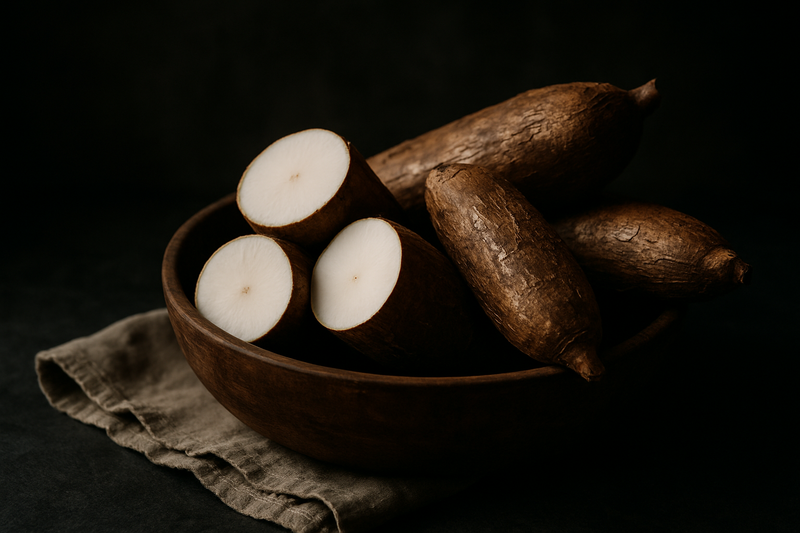
Fufu · Photograph
Discover the real fufu health benefits, nutrition facts, and side effects of this pillowy West African staple made from cassava and plantain. Learn about calories per serving, resistant starch, blood sugar impact, and how to eat fufu safely as part of a balanced diet.
Key Nutrients
% Daily Value based on 2,000 cal diet
Key active compounds and phytochemicals in fufu
- Resistant starch — A fraction of starch that escapes digestion in the small intestine and travels to the colon, where gut bacteria ferment it. Fermented cassava fufu can contain roughly 2.5–4 g of resistant starch per 100 g (dry weight), which may help blunt blood sugar spikes and feed beneficial microbiota. Instant fufu mixes may have far less.
- Phenolic compounds (from plantain) — Naturally occurring plant antioxidants found in the plantain component. These may contribute to antioxidant capacity and vascular health, though most supporting data come from plantain research rather than fufu-specific studies.
- Carotenoids (from yellow plantain) — Pigment compounds including beta-carotene, which the body can convert to vitamin A. Their presence in fufu depends on how ripe and how much plantain is used; riper, yellower plantains contribute more.
- Cyanogenic glycosides (a safety consideration, not a benefit) — Raw cassava contains these naturally occurring compounds, which can release hydrogen cyanide if not properly neutralized. Correct processing (peeling, soaking, fermenting, and thorough cooking) destroys them. See the safety section below.
Prep and pairing ideas
Fufu is almost always eaten with soup — the soup is not a side dish, it is the main flavor event. The fufu acts as a vehicle. Here are three practical pairings and why they work nutritionally:
1. Fufu + egusi soup (ground melon seed soup with leafy greens) Egusi seeds add plant protein and healthy fats, while leafy greens (bitter leaf, spinach, or ugu) contribute iron, calcium, and folate. This pairing creates a more nutritionally complete meal than fufu alone and adds protein to flatten the blood sugar response.
2. Fufu + light pepper soup (lean fish or chicken-based) A broth-forward pepper soup is low in fat and calories, letting the fufu's carbohydrate content be the meal's main energy source without adding excess saturated fat. Fish versions boost omega-3 intake alongside the fufu's resistant starch.
3. Fufu + okra soup (with tomatoes and vegetables) Okra is rich in soluble fiber (particularly a gel-like compound called mucilage), which further slows carbohydrate digestion and supports gut health. The tomato base adds lycopene and vitamin C, and the combination creates a lower overall glycemic response than fufu with a richer meat-and-palm-oil stew.
General prep tip: For maximum resistant starch in fresh fufu, allow the cooked and pounded fufu to cool slightly before serving — cooling starchy foods promotes the formation of retrograded resistant starch, a well-established phenomenon in starchy staple research.
Bottom line
Fufu is a deeply traditional, culturally rich, and nutritionally legitimate whole-food starch staple. Made properly from cassava and plantain, it delivers complex carbohydrates, meaningful potassium, modest fiber, vitamin C, and — in its fermented forms — a useful dose of resistant starch. It is naturally gluten-free and cholesterol-free, and can fit into balanced diets across a wide range of health goals.
Is fufu healthy? The honest answer is: it depends on the portion, the preparation, and the soup it is eaten with. A small-to-medium ball of traditionally made fufu alongside a vegetable and lean-protein soup is a nutritious, satisfying meal. A massive ball paired with a palm oil–heavy, salted meat stew eaten daily in large quantities is a different nutritional story entirely.
The one non-negotiable: cassava must be properly processed. Thorough peeling, soaking or fermentation, and complete cooking are essential steps that remove naturally occurring cyanogenic compounds. Skip them at genuine risk.
For people managing diabetes, kidney disease, or weight, portion awareness and soup composition matter as much as the fufu itself. For everyone else, fufu eaten in culturally appropriate, balanced portions is a worthy staple to add to any plant-forward kitchen.
How Fufu Compares
| Compared with | What's different |
|---|---|
| Fufu vs. Garri (Eba) | Fufu is pounded and dough-like, whereas Garri is granulated and has a more acidic, sour flavor profile. |
| Fufu vs. Pounded Yam | Fufu is made from cassava and plantain, while Pounded Yam is made exclusively from boiled yams. |
Health Benefits
Things to Know
Cassava must be properly processed.: Raw cassava contains cyanogenic glycosides — compounds that release hydrogen cyanide when improperly prepared. Always peel deeply (removing the outer bark and the inner pinkish layer), and either ferment, soak in water for 24–48 hours, or buy pre-processed flour from a reputable source. Then cook thoroughly. Bitter cassava varieties carry higher concentrations and require extra care.
High carbohydrate load.: A single fufu ball can contain 75–150 g of carbohydrate depending on size. People with diabetes, insulin resistance, or prediabetes should count fufu as their primary starch for the meal and keep the ball size modest.
Potassium monitoring for kidney disease.: Fufu can contain over 1,000 mg of potassium per cup. People with chronic kidney disease (CKD) stages 3–5, or those taking potassium-sparing diuretics, ACE inhibitors, or ARBs (medications that reduce potassium excretion), should discuss appropriate fufu portions with their nephrologist or dietitian.
Drug interactions to note:
Antidiabetic medications (insulin, sulfonylureas, SGLT2 inhibitors): high-carb meals like fufu may affect dose timing; ask your care team.
Potassium-sparing diuretics and ACE inhibitors/ARBs: high dietary potassium from fufu may raise serum potassium levels in those with impaired kidney function.
Gluten-free, but watch for cross-contamination.: Cassava and plantain are naturally gluten-free. If you have celiac disease, verify that your fufu flour was processed in a dedicated gluten-free facility.
Pregnancy.: Fufu made from properly processed cassava is generally safe in pregnancy in typical food amounts. The key safety step is ensuring thorough cooking to eliminate any residual cyanogenic compounds.
Caloric density for weight management.: Fufu is energy-dense. People monitoring calorie intake may find it easy to overconsume large balls unconsciously; measuring or using smaller portions alongside a large vegetable-forward soup is a practical strategy.
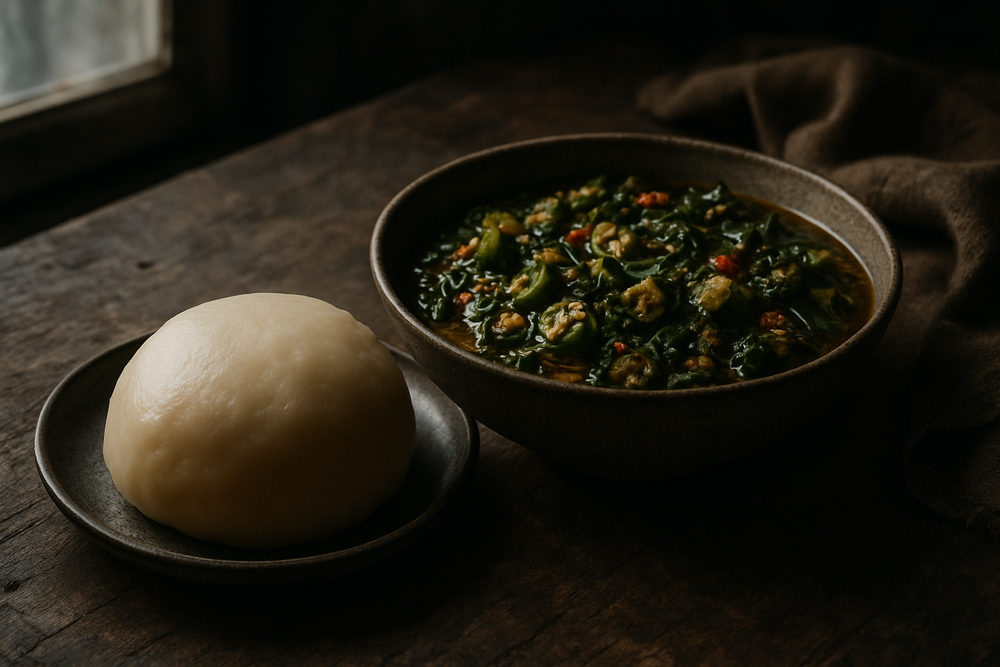
Shop This Ingredient
Stock your pantry with quality fufu.
Buy on AmazonAs an Amazon Associate, Plantopedia earns from qualifying purchases. This costs you nothing extra and helps us keep the encyclopedia free.
Frequently Asked Questions
Research specifically on fufu is limited — most clinical evidence comes from cassava and plantain studies individually or from resistant starch research broadly. Benefits described below reflect the best available evidence and are best understood as "supported by composition data and related research" rather than proven by large fufu-specific trials. Heart and circulation Fufu's cardiovascular credentials come mainly from what it lacks: it is very low in saturated fat and contains zero cholesterol. Its potassium content — over 1,000 mg per cup in some preparations — is particularly relevant, since potassium helps counterbalance sodium's blood-pressure-raising effects. Diets higher in potassium are consistently associated with better blood pressure management in the nutrition literature. Keep in mind, though, that the accompanying soup can significantly alter the overall meal's sodium, fat, and calorie load, so the full heart health picture depends on the whole bowl, not just the fufu. Digestive health and microbiome Fufu's fiber content (around 7 g per cooked cup) already puts it ahead of many refined starch staples. But the more distinctive digestive asset is its resistant starch — especially in traditionally fermented cassava versions. Resistant starch acts as a prebiotic (food for beneficial gut bacteria), and human research on resistant starch in general shows it can increase production of short-chain fatty acids (SCFAs), which are molecules produced when gut bacteria ferment fiber-like compounds; SCFAs support colon cell health, regularity, and a balanced gut microbiome. There are no randomized controlled trials (RCTs) testing fufu directly for digestive outcomes, but the mechanism is well-established and the composition supports it. Blood sugar and metabolism Fufu and blood sugar for diabetics is one of the most common questions people have — and the answer is nuanced. Cassava-based fufu has a reported glycemic index (GI — a scale from 0 to 100 reflecting how fast a food raises blood glucose) in the range of 31–55, which falls in the low to medium range. For context, white bread scores around 70–75. The lower GI is partly due to resistant starch slowing glucose absorption. However, portion size matters enormously: one large fufu ball can easily hit 500+ calories and 100+ g of carbohydrate, which will affect blood glucose regardless of GI. Pairing fufu with protein-rich and vegetable-dense soups can further flatten the glucose response. People managing diabetes or prediabetes should work with their care team on portion sizing rather than assuming fufu is freely safe in unlimited amounts. Inflammation and recovery This is the least evidence-supported area. No human trials have directly linked fufu intake to reduced inflammatory markers. Any potential benefit is extrapolated from broader research showing that resistant starch and higher-fiber diets can modestly reduce gut-derived inflammation by improving the microbiome and SCFA production. The net anti-inflammatory impact of a fufu-centered meal will depend largely on the soup and protein choices alongside it.
The form you choose affects both nutrition and safety in meaningful ways. Freshly pounded cassava-and-plantain fufu is the classic preparation. Peeled cassava and ripe plantain are boiled until soft, then pounded (traditionally in a large mortar) or blended until smooth and cohesive. This method retains plantain's carotenoids and vitamin C best, and the resistant starch content depends on whether the cassava component is fermented before pounding. Fermented cassava fufu (akpu in Nigeria, for example) involves soaking raw cassava in water for several days before processing. Fermentation is a double win: it substantially reduces cyanogenic compounds, making the cassava safer, and it increases resistant starch content to approximately 2.5–4 g per 100 g dry weight. The trade-off is a tangier, more pungent flavor that is beloved in traditional cuisine but takes getting used to. Dry fufu flour (cassava, cocoyam, or mixed-root) is the most practical option for diaspora households and global cooks. Mixed with boiling water and stirred vigorously, it produces a consistent result in minutes. Nutrient composition varies by brand, but resistant starch is generally lower than in fermented fresh fufu. Check labels for sodium additions and avoid blends with unexplained thickeners. Instant fufu mixes are the most convenient but nutritionally the most variable. Some analyses suggest resistant starch levels below 0.5 g per 100 g — a fraction of the traditionally fermented version. Sodium content can also be higher than home preparations. Bottom line on form: If gut health and blood sugar management are priorities, traditionally fermented cassava fufu or well-made fresh fufu wins on resistant starch. For everyday convenience, a quality cassava flour is a reasonable second choice.
| Type | Best for | What to look for | | --- | --- | --- | | Fresh cassava + plantain | Traditional texture; highest resistant starch potential | Firm, uncracked cassava; yellow-ripe plantain with some black spotting | | Frozen pre-peeled cassava | Convenience without sacrificing quality | No additives listed; freeze-by date current | | Cassava or fufu flour | Quick weeknight meals; diaspora households | Ingredient list: cassava flour only (or named root blend); low sodium | | Instant fufu mix | Fastest prep | Avoid mixes with gums, artificial flavor, or excess sodium; check for cross-contamination if celiac | Look for cassava flour that lists a single ingredient. Avoid any product that smells musty (a sign of poor storage, which can affect both flavor and safety in dried cassava products).
There is no single official serving size for fufu, but practical and clinical nutrition guidance frames it around total daily carbohydrate needs and energy balance. Typical traditional portion: 1–2 balls per meal, roughly 1–2 cups cooked (240–480 g), providing approximately 374–800 kcal. In communities where fufu is a daily staple, it may anchor one or two meals a day. A practical starting framework: For most adults managing weight or blood sugar: 1 small-to-medium ball (approximately 1 cup cooked, 240 g) per meal, paired with a large, vegetable-rich, moderate-protein soup. For very physically active individuals with higher calorie needs, a larger portion may be appropriate. For people with diabetes: work with a registered dietitian to fit fufu into your carbohydrate budget for the meal; a smaller ball (½–¾ cup) may be a more practical starting point. Start low if fufu is new to your gut. The resistant starch and fiber content can cause gas and bloating if your gut bacteria are not yet accustomed to it. Introduce fufu gradually, especially if switching from a low-fiber diet. If you are exploring ways to balance your starchy staples with your health goals, browse Plantopedia's goals section for curated guidance on whole-food carbohydrate sources.
Quick Answers
Common questions, answered in a line.
Fermented cassava fufu contains roughly 2.5–4 g of resistant starch per 100 g (dry weight), which helps feed beneficial gut bacteria. The fermentation process used in traditional preparation also helps neutralize cyanogenic glycosides found in raw cassava.
Raw cassava contains cyanogenic glycosides that can release hydrogen cyanide, so it must be peeled, soaked or fermented, and cooked thoroughly to be safe. These traditional processing steps are essential to neutralize naturally occurring toxins before consumption.
People with diabetes should treat fufu as their primary starch for the meal and maintain modest portions, as a single ball can contain 75–150 g of carbohydrates. Pairing fufu with protein-rich egusi or fiber-filled okra soup can help flatten the blood sugar response.
People with chronic kidney disease should monitor their fufu intake because it can contain over 1,000 mg of potassium per cup. High potassium levels can be a concern for those with impaired kidney function or those taking certain blood pressure medications like ACE inhibitors.
Fufu is naturally gluten-free because it is traditionally made from cassava and plantain. However, individuals with celiac disease should check that commercially produced fufu flour was processed in a dedicated gluten-free facility to avoid cross-contamination.
Fufu is a calorie-dense food, so weight-conscious individuals should use smaller portions and pair it with vegetable-forward soups. Choosing soups like okra, which is high in fiber, can help increase satiety and slow down carbohydrate digestion.
Allowing cooked fufu to cool slightly before serving promotes the formation of retrograded resistant starch. This simple step can help lower the meal's glycemic impact and provide more fuel for healthy gut microbiota.
For Readers in the USA
Local context — sourcing, seasonality, and regional notes.
You can find fufu flour and frozen cassava pulp at major U.S. retailers like Walmart and Whole Foods, as well as specialized African and international markets.
While tropical cassava and plantains aren't grown in most of the U.S., Florida and Puerto Rico produce small amounts of these crops for domestic markets.
The FDA regulates imported cassava and fufu flours to ensure they meet safety standards for cyanide levels and proper labeling for American consumers.
In the U.S., fufu is a centerpiece of West African restaurant culture, particularly in cities with large Nigerian and Ghanaian communities like Houston, Atlanta, and New York.
AI Clinical Review
- Clearly presents fufu as a naturally gluten‑free, whole‑food starch and explains that nutrition and glycemic impact hinge on portion size and the soup it’s paired with.
- Accurately highlights resistant starch (a carb that behaves like fiber and feeds gut bacteria) and notes that fermentation/cooling can increase it, supporting a gentler post‑meal glucose rise and gut health.
- Emphasizes cassava safety steps—peeling, soaking/fermenting, and thorough cooking—to reduce cyanogenic compounds; this is essential and evidence‑based.
- Flags meaningful potassium content and low saturated fat/cholesterol, positioning fufu appropriately among other staple starches.
- Most health claims are extrapolated from cassava, plantain, and resistant‑starch studies; there are few fufu‑specific human trials testing outcomes like blood sugar, microbiome changes, or inflammation.
- Reported glycemic index (GI; how fast a food raises blood sugar) and resistant‑starch values vary widely by cultivar, fermentation time, cooling, and whether instant flours are used—so individual glucose responses can differ.
- Micronutrient figures (e.g., potassium, vitamin C) depend heavily on cassava‑to‑plantain ratios and cooking losses; real‑world values may be lower or higher than a single database entry suggests.
- Safety first: never eat raw or undercooked cassava; if buying flour, choose reputable brands and follow directions. Fermentation/soaking plus thorough cooking are non‑negotiable steps.
- Portion guidance: as a starting point, about 1 cup cooked (~240 g) can serve as the starch portion for many adults; people with diabetes should individualize (often ½–1 cup) and pair with protein and vegetables—work with your care team.
- Potassium caution: those with chronic kidney disease or on ACE inhibitors/ARBs or potassium‑sparing diuretics should discuss appropriate portions with a clinician.
- Form matters: traditionally fermented fufu generally offers more resistant starch; instant mixes may be higher in sodium and lower in resistant starch. If new to resistant starch, increase gradually to limit gas/bloating.
Cook thoroughly; cassava must be properly processed to remove cyanogenic compounds.
References
- USDA FoodData Central — cassava, plantain, and cassava flour nutrient profiles (fdc.nal.usda.gov)
- USDA MyPlate — guidance on grains and starchy staples (myplate.gov)
- Prospre ingredient profile — fufu macros and potassium per cup cooked (prospre.io)
- Nutriscan — fufu calories and nutrition analysis (nutriscan.app)
- Didiye — fufu calories, weight loss, and portion guidance (didiye.app)
- PMC/NCBI — nutritional composition of fufu analog flour from cassava and cocoyam (peer-reviewed) (pmc.ncbi.nlm.nih.gov)
- Verdiet — nutritional values per 100 g of fufu (macros and micronutrients) (verdiet.com)
- FitNigerian — fufu nutrition facts summary (fitnigerian.com)
- Wikipedia — Fufu: cultural history, preparation methods, and regional variants (en.wikipedia.org)
Know Your Numbers
Eating healthy is a start. Now get to know your biomarkers.
Food changes bloodwork — inflammation, lipids, blood sugar and nutrient status all respond to what you eat. 59 markers from $59.
- Results in 7–10 days at 2,000+ Quest sites
- Licensed provider reviews every result
- One flat price, no membership, HSA/FSA eligible
Educational information only, not medical advice. Panels are ordered and reviewed through our licensed partner; Plantopedia may earn a commission.