Galangal — health benefits and uses
Flavor-first apothecary angle; use food amounts rather than supplement claims
The Short Answer
Galangal is a pungent root spice used in Southeast Asian cuisine, prized for its piney, citrusy flavor and high concentration of the antioxidant galangin. While it looks like ginger, it is much firmer and provides a distinct peppery heat rather than ginger's

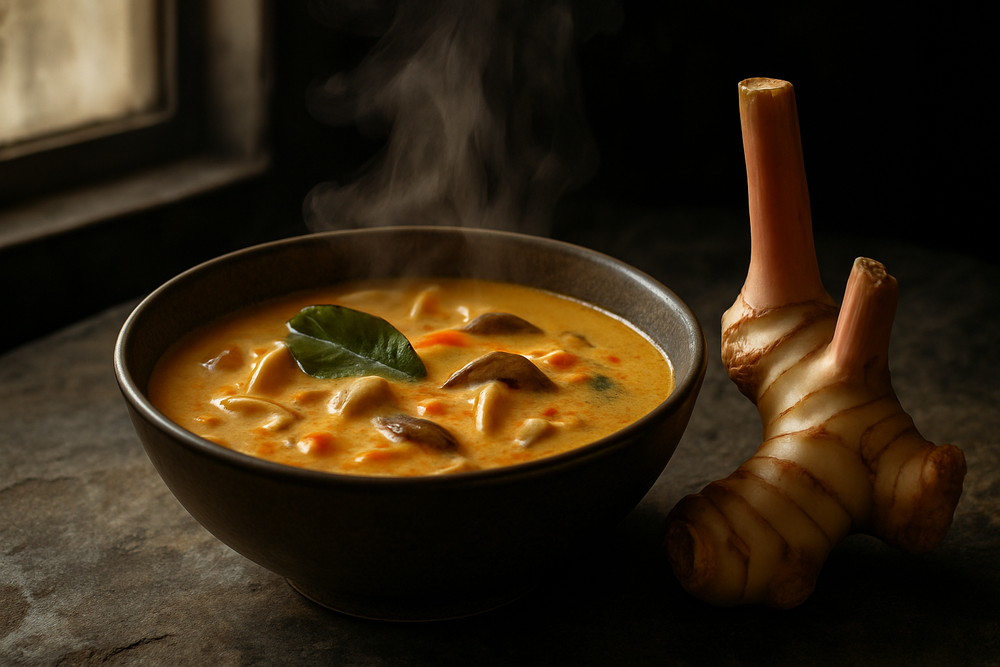
Galangal · Photograph
Galangal is one of those ingredients that quietly defines the flavor of an entire culinary tradition. If you have ever tasted a bowl of Tom Kha Gai — Thai coconut soup — and noticed a flavor that was simultaneously peppery, piney, and faintly floral, that was galangal at work. It belongs to the Alpinia galanga species (also called greater galangal or Siamese ginger), a member of the Zingiberaceae family, which also includes ginger and turmeric.
Key Nutrients
% Daily Value based on 2,000 cal diet
Key active compounds
- Galangin — A flavonol (a type of flavonoid, or plant pigment compound) that is one of galangal's most researched phytochemicals. Laboratory studies have explored its antioxidant and antimicrobial properties, though human-specific data remain limited.
- Cineole-rich essential oils — Volatile aromatic compounds responsible for galangal's signature camphor-like, citrusy warmth. These also show antimicrobial activity in food-science settings, which historically made galangal useful as a natural flavoring and mild preservative in fermented and cooked dishes.
- Phenolic acids and related polyphenols — A broad class of plant defence chemicals (secondary metabolites) common across spices and herbs. They contribute to galangal's antioxidant capacity and are thought to modulate inflammatory pathways in experimental models, though how much this translates to everyday culinary intake is still being studied.
- Terpene hydrocarbons — Additional aromatic compounds in the essential oil fraction that contribute to the piney, resinous depth of galangal's flavor profile.
Prep and pairing ideas
Galangal does the most work when it has time and heat to release its aromatic oils.
Basic prep steps:
- Peel the outer skin with a spoon edge or vegetable peeler (the skin is thin).
- Slice into coins (2–4 mm thick) for soups and broths, or slice and then crush for curry pastes.
- For a broth, add slices early and simmer for at least 15–20 minutes. Remove before serving if you prefer (the texture is fibrous and most people do not eat the slices whole).
Common pairings
- Galangal + lemongrass + kaffir lime leaf — The aromatic trinity of Thai cooking. Together they create the flavor backbone of Tom Kha and Tom Yum soups. The citrusy brightness of lemongrass and lime leaf balances galangal's resinous depth perfectly.
- Galangal + coconut milk + turmeric — A golden, warming combination common in Indonesian and Malaysian curries. Turmeric adds earthiness and color, coconut milk rounds out galangal's sharpness, and the result is a deeply comforting, anti-oxidant-rich dish base.
- Galangal + garlic + chili in a stir-fry paste — Pounded together with shallots, this forms the flavor foundation of Balinese and Indonesian spice pastes (called bumbu). The heat from chili amplifies galangal's pungency in a way that gives slow-cooked dishes a dynamic, layered heat.
Bottom line
Galangal is a genuinely interesting aromatic root — one that has shaped the flavor profile of some of the world's most beloved cuisines for over a thousand years. Its phytochemical profile, particularly galangin and its aromatic essential oils, makes it a worthy addition to a plant-forward, food-as-medicine kitchen mindset. The evidence for specific health benefits in humans is still emerging and often limited to traditional use or laboratory studies, so it is best positioned as a flavorful, antioxidant-contributing culinary spice rather than a supplement or treatment.
Use it to build depth in soups, curries, and spice pastes. Pair it with lemongrass and coconut milk. Add it to a warming broth when the weather turns. Let
How Galangal Compares
| Compared with | What's different |
|---|---|
| Galangal vs. Ginger | Pungent and spicy with a sweet finish, whereas galangal is piney, citrusy, and much harder in texture. |
| Galangal vs. Turmeric | Bright yellow with an earthy, bitter flavor, while galangal provides a peppery, camphor-like aroma. |
Health Benefits
Things to Know
Culinary use is generally safe: for most adults. Galangal has been consumed in Southeast Asian cuisines for centuries without widespread reports of harm.
GI sensitivity: Large amounts of pungent, aromatic spices — including galangal — may cause stomach discomfort in people with active ulcers, acid reflux, or sensitive digestion. Start with small amounts.
Pregnancy: Culinary use in recipes is generally considered acceptable, but concentrated preparations, supplements, or medicinal-dose products have not been well studied during pregnancy or breastfeeding. When in doubt, check with your midwife or physician.
Food allergy and spice sensitivity: If you have a history of spice allergies or reactions to ginger-family plants, introduce galangal gradually. Cross-reactivity is possible but not well documented.
Medication interactions: No specific, well-documented drug–galangal interactions have been established at normal culinary intakes. Theoretical interactions with anticoagulants (blood thinners), antiplatelet agents, or blood-sugar-lowering medications are sometimes discussed based on general herbal pharmacology, but direct clinical evidence specific to galangal is lacking. If you take chronic medications, speak with your healthcare provider before using any concentrated galangal extract or supplement beyond normal cooking.
Children: Modest culinary use in family dishes is generally fine. High-dose or medicinal galangal products have not been studied rigorously in young children.
Not a supplement guide: This page covers culinary use only. If you are considering concentrated galangal products or capsules, that falls outside the scope of this guide.
Prep Ideas
- — Peel the outer skin with a spoon edge or vegetable peeler (the skin is thin).
- — Slice into coins (2–4 mm thick) for soups and broths, or slice and then crush for curry pastes.
- — For a broth, add slices early and simmer for at least 15–20 minutes. Remove before serving if you prefer (the texture is fibrous and most people do not eat the slices whole).
- — Galangal + lemongrass + kaffir lime leaf — The aromatic trinity of Thai cooking. Together they create the flavor backbone of Tom Kha and Tom Yum soups. The citrusy brightness of lemongrass and lime leaf balances galangal's resinous depth perfectly.
- — Galangal + coconut milk + turmeric — A golden, warming combination common in Indonesian and Malaysian curries. Turmeric adds earthiness and color, coconut milk rounds out galangal's sharpness, and the result is a deeply comforting, anti-oxidant-rich dish base.
- — Galangal + garlic + chili in a stir-fry paste — Pounded together with shallots, this forms the flavor foundation of Balinese and Indonesian spice pastes (called bumbu). The heat from chili amplifies galangal's pungency in a way that gives slow-cooked dishes a dynamic, layered heat.
Shop This Ingredient
Stock your pantry with quality galangal.
Buy on AmazonAs an Amazon Associate, Plantopedia earns from qualifying purchases. This costs you nothing extra and helps us keep the encyclopedia free.
Frequently Asked Questions
Digestive health and gut comfort In ethnobotanical traditions — the study of how cultures use plants — galangal is one of the most commonly cited digestive botanicals in Southeast Asia. It has been used to ease bloating, nausea, stomach cramps, and loss of appetite. Modern culinary nutrition sources often echo these uses, but it is important to note that well-controlled human clinical trials specifically on culinary-dose galangal are scarce. Most of the data comes from traditional use records, in vitro (test-tube) studies, or research combining multiple herbs. Used in warming soups and broths, galangal may contribute to digestive comfort as part of a balanced diet — but it should not be relied on to treat gastrointestinal disease. Inflammation and recovery Galangal's galangin content and its broader polyphenol profile give it measurable antioxidant activity in laboratory settings. Antioxidants help neutralize free radicals (unstable molecules that can damage cells). Research on ginger-family spices broadly suggests anti-inflammatory potential, and galangal is sometimes included in this conversation. However, there are no large randomized controlled trials (the gold standard in medical evidence) demonstrating that galangal reduces inflammatory markers in humans at normal culinary amounts. As a flavorful part of a diverse, plant-forward diet, it can contribute modestly to overall antioxidant intake. Heart health and circulation Some educational and commercial sources suggest that galangin and related phenolics may support cardiovascular health, drawing on preclinical data and the broader literature on polyphenol-rich spices. Practically speaking, galangal is best viewed as a flavorful seasoning for heart-healthy dishes — vegetable-rich soups, legume curries, and tofu stews — rather than a direct cardiometabolic intervention. No robust human trials have linked culinary galangal use to improved blood pressure, cholesterol, or other cardiovascular outcomes. Blood sugar and metabolism Ginger-family spices are a popular area of research for glucose (blood sugar) metabolism, and galangal is sometimes mentioned alongside turmeric and ginger in this context. Specific human clinical data on galangal's effects on blood sugar are very limited, and any glucose-related effects remain largely speculative — extrapolated from laboratory models or from other spices in the same botanical family, not from direct galangal trials in people. Anyone managing diabetes should not adjust medications based on galangal use. Antimicrobial and respiratory support (traditional framing) Traditional use across Thailand, Indonesia, and parts of India has included galangal in preparations for coughs, congestion, and general immune support. In vitro studies have shown antifungal and antibacterial activity for galangal extracts. These findings are interesting but do not yet translate to clinically proven effects in humans. In a modern, evidence-aware kitchen, galangal fits naturally into soothing, warming broths when you are feeling run down — as a comforting culinary companion, not a replacement for medical care.
The answer depends on the dish and what you can source — not on any medical hierarchy of forms. | Form | Best used for | Notes | |---|---|---| | Fresh rhizome | Thai soups, coconut curries, curry pastes | Brightest, most complex flavor; slice thinly or crush before adding | | Dried slices / chips | Long-simmered stocks, braises, slow-cooked stews | Simmer longer than fresh; not typically eaten whole | | Ground / powdered | Spice rubs, dry blends, marinades | More concentrated; start with ¼ to ½ tsp and adjust | | Curry pastes | Stir-fry bases, noodle soups, rice dishes | Galangal is pre-pounded with other aromatics; convenient and very flavorful | | Infusions / decoctions | Traditional herbal drinks, warming broths | Folk practice; not clinically standardized | Flavor tip: Fresh galangal has a sharper, more resinous bite than dried. If substituting dried for fresh, use roughly half the quantity by weight and simmer longer to extract flavor.
Galangal is potent — a little goes a long way, especially in its dried or powdered form. General culinary guidance (not therapeutic dosing): Fresh rhizome in soups or curries: 2–8 g per serving (roughly 2–5 thin slices) is typical in traditional Southeast Asian recipes. This is enough to build flavor without overwhelming a dish. Dried slices: Use roughly half the quantity you would use fresh, and allow longer simmering time. Ground / powdered: Start with ¼ teaspoon (approximately 0.5–1 g) per dish and adjust upward. It is much more concentrated than fresh. Curry pastes: Follow the recipe; galangal is one component among many aromatics and is already calibrated for balance. Start low principle: If you are new to galangal, begin with a smaller amount in a forgiving dish like a vegetable broth or coconut soup. Its flavor intensifies the longer it simmers, so you can always add more but cannot take it back. Not a supplement dose: These are culinary estimates. This guide does not provide therapeutic dosing guidance for extracts or capsules.
Quick Answers
Common questions, answered in a line.
Galangal is a member of the Zingiberaceae plant family, which also includes ginger and turmeric.
Galangal has a distinct flavor profile that is simultaneously peppery, piney, and faintly floral with citrusy, camphor-like warmth.
To prepare galangal, peel the thin outer skin with a spoon or vegetable peeler, then slice it into coins for broths or crush it for curry pastes.
Galangal contains several key active compounds including the flavonol galangin, cineole-rich essential oils, phenolic acids, and terpene hydrocarbons.
Galangal pairs perfectly with lemongrass and kaffir lime leaf, as well as coconut milk, turmeric, garlic, and chili.
Culinary use of galangal is generally considered safe during pregnancy, but concentrated supplements or medicinal doses have not been well studied and should be discussed with a doctor.
While no specific drug interactions are well-documented at culinary levels, those on blood thinners or blood-sugar medications should consult a provider before using concentrated galangal extracts.
For Readers in the USA
Local context — sourcing, seasonality, and regional notes.
You can find fresh galangal at major nationwide retailers like H-Mart, 99 Ranch Market, and some Whole Foods Market locations, as well as local Southeast Asian grocers. While less common in conventional supermarkets like Kroger or Safeway, many shoppers order high-quality dried or powdered versions through online spice purveyors.
Fresh galangal is primarily grown in USDA hardiness zones 9-11, making tropical regions of Hawaii, Southern Florida, and parts of Southern California the main US production hubs. Because it requires a long, frost-free growing season, most commercial galangal found in the US is imported from Southeast Asia or grown in specialized domestic greenhouses.
In the U.S., you may see galangal labeled as "Siamese Ginger," "Greater Galangal," or even "Lesser Galangal," though the latter is a distinct, more pungent variety. Some specialty ethnic markets also use the Indonesian name "Laos" or the Thai name "Kha" on shelf tags and packaging.
AI Clinical Review
- Positions galangal as a culinary aromatic with interesting phytochemicals rather than a treatment, which aligns with the limited human research to date.
- Accurately notes that most evidence (antioxidant, antimicrobial, anti‑inflammatory signals) comes from lab or animal studies, not well‑controlled human trials.
- Identifies key compounds (for example, galangin and cineole‑rich essential oils) and keeps expectations realistic about their relevance at kitchen doses.
- Provides practical culinary dosing ranges and form comparisons (fresh vs. dried vs. powdered) that reflect how the root is used in traditional dishes.
- Digestive comfort, anti‑inflammatory, cardiometabolic, and glycemic effects are not confirmed in randomized human studies at culinary amounts; optimal dose and frequency remain unclear.
- Antimicrobial findings are largely in vitro (test‑tube) and don’t establish effectiveness for infections or immunity in people.
- Nutrient contributions at typical servings are minimal; any health value is more likely from phytochemicals within an overall plant‑forward diet, which is hard to quantify.
- “Galangal” can refer to different species (e.g., Alpinia galanga vs. Kaempferia galanga); phytochemical profiles and study results are not interchangeable.
- Culinary use in small amounts is generally safe for most adults. Start with modest quantities if you have reflux, ulcers, or a sensitive GI tract.
- Pregnancy and lactation: stick to food amounts; avoid concentrated extracts or supplements unless your clinician agrees, as high‑dose safety data are lacking.
- Potential interactions are theoretical but prudent to consider with anticoagulants/antiplatelets and diabetes medications—especially if using beyond normal cooking amounts.
- Possible cross‑reactivity for those with allergies to ginger/turmeric family plants; introduce gradually and stop if reactions occur.
Use culinary framing; avoid treatment claims or supplement-dose guidance.
References
- PubMed — Potential Neuroprotective Effects of Alpinia officinarum Hance (Galangal): A Review (pubmed.ncbi.nlm.nih.gov)
- PMC, National Library of Medicine — A Review on the Pharmacological Activities and Phytochemicals of Alpinia officinarum (Galangal) Extracts Derived from Bioassay-Guided Fractionation and Isolation (pmc.ncbi.nlm.nih.gov)
- PMC, National Library of Medicine — Revealing the Reversal Effect of Galangal (Alpinia galanga L.) Extract Against Oxidative Stress in Metastatic Breast Cancer Cells and Normal Fibroblast Cells Intended as a Co- Chemotherapeut (pmc.ncbi.nlm.nih.gov)
- USDA FoodData Central — USDA FoodData Central (fdc.nal.usda.gov)
- PMC, National Library of Medicine — Kaempferia galanga L.: Progresses in Phytochemistry, Pharmacology, Toxicology and Ethnomedicinal Uses (pmc.ncbi.nlm.nih.gov)
- PubMed — Cytotoxicity, apoptosis and DNA damage induced by Alpinia galanga rhizome extract (pubmed.ncbi.nlm.nih.gov)
Know Your Numbers
Eating healthy is a start. Now get to know your biomarkers.
Food changes bloodwork — inflammation, lipids, blood sugar and nutrient status all respond to what you eat. 59 markers from $59.
- Results in 7–10 days at 2,000+ Quest sites
- Licensed provider reviews every result
- One flat price, no membership, HSA/FSA eligible
Educational information only, not medical advice. Panels are ordered and reviewed through our licensed partner; Plantopedia may earn a commission.