Garri (Fermented Cassava Granules) — health benefits and uses
A West African dietary cornerstone; fermentation both preserves and detoxifies the root.
The Short Answer
Garri is a fermented cassava staple providing 87g of carbohydrates and 330 calories per cup. It contains resistant starch that supports gut health and, when properly processed through fermentation and roasting, is safe to consume.
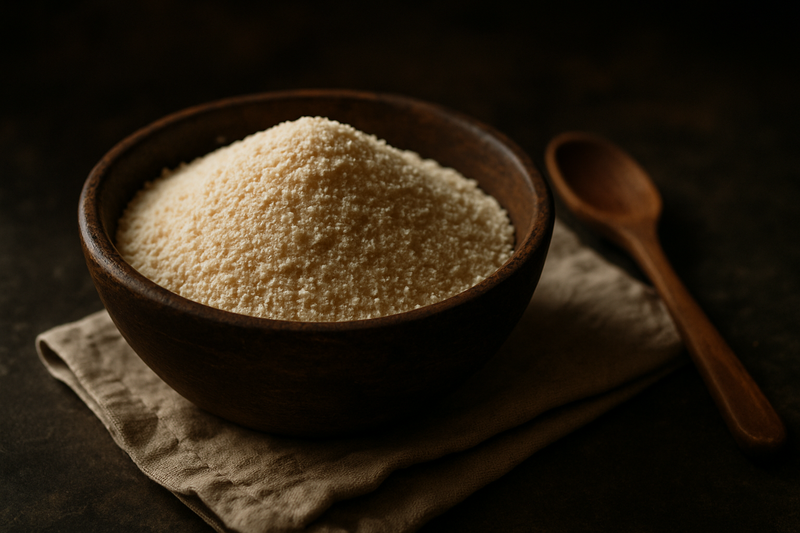
Garri (Fermented Cassava Granules) · Photograph
Discover the garri health benefits, nutrition facts, and side effects of this West African fermented cassava staple. Learn how to eat garri safely, how it affects blood sugar and digestion, and how to build a balanced meal around it.
Key Nutrients
% Daily Value based on 2,000 cal diet
Key active compounds in garri
- Resistant starch (RS2 and RS3): Starch fractions that survive digestion in the small intestine and travel to the colon, where gut bacteria ferment them into short-chain fatty acids (SCFAs). SCFAs like butyrate feed colon cells and support gut barrier integrity. Fermentation and roasting during garri production generate both RS2 (native granule structure) and RS3 (retrograded starch that forms as garri cools).
- Slowly digestible starch: A starch fraction that breaks down more gradually than rapidly digestible starch, producing a more moderate rise in blood glucose — though this effect can be overwhelmed by large portion sizes.
- Cyanogenic glycosides (linamarin): Naturally occurring plant defense compounds in raw cassava that release hydrogen cyanide when broken down by enzymes. Proper peeling, fermentation, pressing, and high-heat roasting removes almost all residual cyanide, making commercially processed garri safe for healthy adults in normal serving sizes. Improperly processed cassava retains dangerous levels.
- Fermentation-derived organic acids (lactic acid): Produced by lactic acid bacteria during the fermentation step, these lower the pH of the product, inhibit some harmful microbes, and contribute to garri's characteristic slightly sour taste.
- Carotenoids (yellow garri only): Pigments from red palm oil added during roasting of yellow garri. These provide small amounts of provitamin A activity and act as antioxidants. The exact amount depends heavily on how much palm oil was used.
- Dietary fiber: A modest amount — roughly 2 g per 100 g dry garri in most analyses — that contributes to gut transit time and feeds beneficial bacteria, though garri is not a high-fiber food compared with whole grains or legumes.
Prep and pairing ideas
The traditional wisdom around garri is actually very good nutritional advice: eat it with something.
Soaked garri with groundnuts and coconut milk Soak 50–75 g dry white garri in cold water for 5 minutes. Drain to your preferred consistency. Add a handful of roasted groundnuts (peanuts), a splash of coconut milk, and a little sugar or honey if desired. The groundnuts add protein, healthy fats, and niacin; the fat also slows carbohydrate digestion and blunts the glucose response.
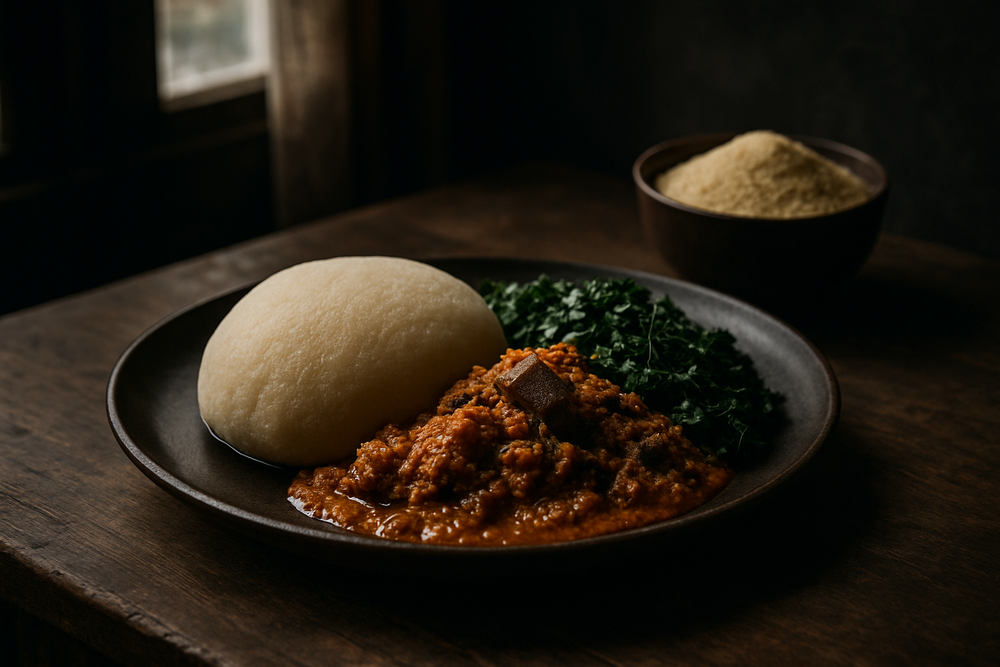
Eba with egusi and leafy greens soup Make eba by stirring dry garri into boiling water until a smooth, pliable dough forms (about 80 g dry garri per portion). Serve with a homemade egusi (melon seed) soup loaded with bitter leaf, spinach, or ugu (pumpkin leaf) and tomatoes. Egusi is protein- and fat-rich, and the leafy vegetables add iron, folate, and vitamins A and C. This is probably the most nutritionally complete traditional garri meal.
Garri porridge with cowpeas and tomato stew Cook a thick cowpea (black-eyed pea) tomato stew with onions, peppers, and a tablespoon of palm oil. Serve over a small bowl of soaked garri or a modest portion of eba. Cowpeas dramatically increase the protein, fiber, and micronutrient content of the meal, and the combination provides complementary amino acids for plant-based diets.
Bottom line
Garri is not empty carbohydrates — but it is also not a superfood. It is an affordable, culturally important, fermented starchy root that provides fast energy, a modest amount of resistant starch for gut health, and small quantities of minerals. Its greatest nutritional strength is what surrounds it: West African cooking tradition naturally pairs garri with vegetable soups, legumes, and sometimes fish or palm oil, which together create a nutritionally complete meal pattern.
The real risks are not in garri itself but in how it is produced and how it dominates the diet. Always choose garri from a reliable, properly processed source to avoid cyanide and aflatoxin exposure. Always pair it with protein- and vegetable-rich accompaniments. And pay attention to portion sizes if you are managing blood sugar or body weight.
Used wisely, garri fits comfortably into a whole-food plant-based diet — it just needs good company on the plate.
Explore more: If you are building plant-forward meals around traditional staples, browse the Plantopedia energy and digestion goals hub for ingredient guides, meal-pairing ideas, and balanced eating frameworks.
How Garri (Fermented Cassava Granules) Compares
| Compared with | What's different |
|---|---|
| Garri (Fermented Cassava Granules) vs. Amala | Made from yam flour rather than cassava, offering a sweeter taste and smoother texture. |
| Garri (Fermented Cassava Granules) vs. Cassava Flour (Fufu) | Lacks the fermentation step, resulting in a milder flavor and lower resistant starch content. |
| Garri (Fermented Cassava Granules) vs. Yellow Garri | White garri is plain; yellow garri is fried with palm oil, adding provitamin A and antioxidants. |
Health Benefits
Things to Know
Cyanide risk from poorly processed cassava: Raw cassava contains cyanogenic glycosides that break down into hydrogen cyanide. Properly made garri (full fermentation, pressing, and high-heat roasting) removes nearly all residual cyanide. Buy from reputable suppliers, and avoid garri with no processing information or that smells unusually bitter. Chronic exposure to low-level cyanide — often seen in food-insecure communities relying heavily on poorly processed cassava — has been linked to tropical ataxic neuropathy (nerve damage causing muscle weakness and walking difficulty) and goiter (thyroid enlargement).
Aflatoxin risk from poor storage: Garri can develop mold and accumulate aflatoxins (toxic compounds produced by certain molds) if stored in damp conditions. Store in a sealed, dry container; do not use garri that smells musty or shows discoloration.
Diabetes and blood sugar: Large servings of garri — especially thick eba — can substantially raise blood glucose. Individuals using insulin, sulfonylureas, or metformin should monitor their glucose response, control portions carefully, and always pair garri with fiber- and protein-rich accompaniments.
Thyroid conditions: Chronic high cassava intake with low iodine intake has been linked to thyroid problems in some populations. If you have a thyroid condition or take levothyroxine, discuss cassava-heavy diet patterns with your doctor.
Pregnancy: Pregnant women should ensure their garri comes from a fully and properly processed source. Chronic cyanide exposure from improperly processed cassava products is associated with neurological and thyroid risks, which are of greater concern during pregnancy.
Children in lower-resource settings: Diets dominated by garri without adequate protein and micronutrient-rich foods can contribute to protein-energy malnutrition and growth impairment. Eba should always be served with legume- or vegetable-based soups.
Weight management: Garri is energy-dense and easy to overconsume, especially as thick eba. A 100 g dry serving is 363 calories before any soup or accompaniment. People managing weight should be mindful of dry garri portion sizes.
Glossary
Shop This Ingredient
Stock your pantry with quality garri (fermented cassava granules).
Buy on AmazonAs an Amazon Associate, Plantopedia earns from qualifying purchases. This costs you nothing extra and helps us keep the encyclopedia free.
Frequently Asked Questions
Heart and circulation Garri is naturally cholesterol-free and very low in saturated fat, which are both favorable from a cardiometabolic standpoint. It provides modest amounts of potassium (about 235 mg per 100 g), which supports healthy blood pressure regulation. That said, there are no human clinical trials linking garri intake directly to improved cardiovascular outcomes. If consumed in very large quantities without enough vegetables, legumes, and healthy fats, the high refined carbohydrate load can raise blood triglyceride levels in people who are carbohydrate-sensitive. Any heart-health advantage comes not from garri alone but from the overall dietary pattern — replacing ultra-processed snacks with traditional garri-based meals built around vegetable soups and beans is likely favorable, but garri itself is not a heart-protective food. Digestive health and microbiome This is where garri's fermentation background matters most. The resistant starch and slowly digestible starch produced during fermentation and roasting reach the colon partially intact, where gut bacteria ferment them into SCFAs, particularly butyrate. Butyrate is the primary fuel for the cells lining your colon and is associated in research studies (not garri-specific) with reduced intestinal inflammation, improved gut barrier function, and a more diverse microbiome. The modest fiber content also adds some stool bulk and supports regularity, though garri's fiber level is low compared with whole grains or legumes. Evidence for these digestive benefits is extrapolated from broader resistant starch research — there are no garri-specific gut microbiome trials in humans. Still, choosing traditionally fermented garri over plain cassava starch or flour does appear to provide a slightly more gut-friendly starch profile. Blood sugar and metabolism Garri's starch mix — part rapidly digestible, part slowly digestible, part resistant — means it may produce a less dramatic post-meal blood glucose spike than pure refined starch, at least in moderate portions. Laboratory analysis of garri starch fractions has confirmed the presence of slowly digestible and resistant starch, but controlled human trials specifically testing garri's glycemic index or glycemic response have not been published. In practice, blood sugar impact is strongly driven by portion size and what garri is eaten with. A small bowl of soaked garri eaten with peanuts and vegetables will behave differently in your body than a large mound of thick eba with minimal vegetables. The garri and blood sugar control story is therefore mostly about context: pair it well, manage portions, and monitor your personal response. Inflammation and recovery There is no direct human clinical evidence that garri reduces systemic inflammation. Mechanistic research on resistant starch suggests that increased SCFA production from colonic fermentation may help modulate inflammatory pathways and support gut barrier integrity, which in turn can reduce low-grade inflammation — but these data come from studies on other starchy foods, not garri specifically. Any anti-inflammatory effect from garri would be indirect and modest.
Both white and yellow garri start from the same cassava process. The difference is that yellow garri is made with red palm oil added during the roasting step, while white garri is roasted without it. White garri is the leaner choice: very low in fat, virtually no saturated fat, and fewer calories per gram. It is closer to a neutral starch canvas. The trade-off is that it provides almost no fat-soluble nutrients. Yellow garri gains a small amount of fat from the palm oil, which also carries carotenoids — including beta-carotene, a precursor to vitamin A. In populations at risk of vitamin A deficiency, yellow garri made with quality palm oil can be a meaningful source. The palm oil adds saturated fat, but in typical serving sizes, this is modest. From a whole-food plant-based perspective, yellow garri prepared with a small amount of traditional palm oil sits within the boundaries of a minimally processed food pattern. Neither form is dramatically superior overall; your choice might depend on whether you are prioritizing lower calories (white) or a small boost of carotenoids (yellow). Fortified or blended garri — mixed with soy flour or micronutrient powders — exists in some commercial contexts and can offer meaningfully better protein and micronutrient profiles than traditional garri. Check the label for protein content as a guide.
The busy person on a plant-forward budget Garri soaked in water with groundnuts (peanuts) is ready in under two minutes, requires no cooking equipment, and costs very little — making it genuinely accessible. Pairing dry garri with a handful of roasted peanuts or cowpeas adds protein and healthy fats, converting a carbohydrate snack into a more balanced mini-meal. For students, shift workers, or anyone meal-prepping on a tight budget, garri-based meals built around bean soups and leafy vegetable stews are nutritionally solid, affordable, and satisfying. The athlete or active person needing fast carbohydrate energy Garri's rapidly available carbohydrates can help top up glycogen (the stored form of carbohydrate in muscles and liver) before or after exercise. A moderate bowl of eba alongside an egusi or bean soup provides a reasonable training-day carbohydrate load without the ultra-processed ingredients found in many sports foods. Yellow garri adds a small amount of fat to slow gastric emptying slightly, which some people find better for sustained energy; white garri is faster-digesting and may suit immediate post-workout refueling.
There is no standardized therapeutic dose for garri because it is a staple food, not a supplement. The following general ranges reflect traditional use and nutrition considerations: Typical adult portion sizes: Soaked garri: 50–75 g dry weight per serving (about 180–270 calories before additions) Eba: 75–100 g dry weight per serving (about 270–360 calories), paired with soup General guidance: Starting with smaller portions (50 g dry) and pairing every serving with vegetables, legumes, or a protein source is a good habit regardless of your health goals. Most adults in good health can include garri once or twice a day as their starch base within a balanced diet without concern, provided processing quality is reliable. If you are managing blood sugar, begin with 50 g dry portions, eat it with fiber and protein, and check how your glucose responds before increasing. There is no upper limit established in formal guidelines, but diets where garri accounts for the majority of calories — with limited protein and micronutrient variety — carry nutritional risk over time. A practical rule: If garri is on your plate, the rest of your bowl should be more colorful than it is. Half a plate of leafy greens, tomatoes, and legumes with a moderate portion of eba is a genuinely balanced meal.
Quick Answers
Common questions, answered in a line.
Garri is generally safe to eat if it has been properly peeled, fermented, pressed, and roasted at high temperatures. These processing steps remove almost all naturally occurring cyanogenic glycosides, which can otherwise release dangerous hydrogen cyanide.
Garri promotes gut health by providing resistant starch (RS2 and RS3), which travels to the colon to feed beneficial bacteria. These bacteria ferment the starch into short-chain fatty acids like butyrate, which support the integrity of the gut barrier.
Garri can cause a significant rise in blood glucose if eaten in large portions, though it contains slowly digestible starch that breaks down more gradually than rapid starches. To manage blood sugar, it should always be paired with fiber-rich vegetables and protein.
Yellow garri contains small amounts of provitamin A and antioxidants because it is roasted with red palm oil. White garri does not contain these added carotenoids, though both provide similar levels of energy and resistant starch.
You should avoid eating garri that has not been fully fermented and roasted, as improperly processed cassava may retain dangerous levels of cyanide. Additionally, do not consume garri that smells musty or shows discoloration, as this indicates mold and potential aflatoxin contamination.
To make garri a balanced meal, pair it with protein-rich foods like roasted groundnuts, cowpeas, or egusi (melon seed) soup. Adding leafy greens like spinach or bitter leaf provides essential vitamins and minerals that the starchy granules lack.
Garri is an energy-dense food, containing approximately 363 calories per 100g dry serving. Because it is easy to overconsume, especially when prepared as a thick dough (eba), portion control is essential for those managing their weight.
For Readers in the USA
Local context — sourcing, seasonality, and regional notes.
You can typically find garri at international grocery stores, West African specialty markets, and major online retailers like Amazon. While not yet common in standard U.S. supermarkets like Kroger or Safeway, it is increasingly available in the "International" aisle of shops in major metropolitan hubs like Houston, Atlanta, and New York City.
In the U.S., look for garri brands that are FDA-registered for import and clearly labeled with nutritional facts and country of origin. While there is no specific USDA organic standard just for garri, many shoppers prefer brands that specify "no additives" or those that use "non-GMO cassava" to ensure a higher quality product.
Garri is widely available year-round in the United States because it is a shelf-stable, processed dry good imported primarily from West Africa. Because the cassava is fermented and roasted before being packaged, its availability does not fluctuate with U.S. growing seasons, making it a reliable pantry staple.
In the U.S., you will most commonly see Nigerian, Ghanaian, or Togolese varieties, often categorized as White Garri, Yellow Garri (with palm oil), or Ijebu Garri (known for a finer grain and sharper sour taste). While cassava is grown in Florida and Puerto Rico, almost all garri sold in U.S. markets is imported to ensure the traditional fermentation profile.
AI Clinical Review
- Clear, accurate explanation of how garri is made and why fermentation plus high-heat roasting meaningfully lowers cassava’s natural cyanide content.
- Positions garri appropriately as an energy-dense staple that’s low in protein and most micronutrients, with practical pairing advice (legumes, leafy vegetables, healthy fats) to build a balanced meal.
- Sensible overview of starch types: “resistant starch” (starch that reaches the colon and feeds gut microbes) and “slowly digestible starch,” and how traditional processing can increase these fractions.
- Balanced safety discussion highlighting sourcing, processing quality, and storage to limit cyanide and aflatoxin exposure, plus realistic portion ranges (about 50–100 g dry per serving).
- Garri-specific clinical trials are scarce. Most gut and metabolic benefits are extrapolated from research on resistant starch in other foods, not from randomized studies of garri itself.
- The glycemic impact likely varies by portion size and preparation (e.g., soaked garri vs. hot eba, serving temperature), but standardized glycemic index/load data for garri are limited.
- The resistant starch and fiber content can vary widely with cassava variety, fermentation duration, roasting conditions, and cooling, so individual products may not match averages.
- Yellow garri’s contribution to vitamin A status depends on how much and what quality red palm oil is used; it should not be relied on as a sole source of provitamin A.
- Safety and sourcing: choose properly processed garri from reputable producers; avoid products that smell unusually bitter or musty, and store in a sealed, dry container to reduce mold (aflatoxin) risk.
- Portions: for most adults, 50–100 g dry garri per meal is a reasonable range; it is calorie-dense, so pair with fiber, protein, and vegetables to support satiety and stable blood glucose.
- Who should be cautious: people with diabetes (monitor post-meal glucose and consider starting at 50–75 g dry), those with thyroid disorders or low iodine intake, pregnant individuals, and children in settings with limited dietary diversity.
- Preparation nuances: letting cooked starches cool can modestly increase “retrograded” resistant starch (RS3); this may slightly blunt glucose rise for some people, but effects are variable and should be guided by personal glucose monitoring where relevant.
Ensure it is from properly processed cassava; largely starch, so pair with legumes and vegetables.
References
- USDA FoodData Central — White Garri nutrition data (fdc.nal.usda.gov)
- Systematic review of garri nutritional composition from Nigerian studies (opastpublishers.com)
- Starch digestibility and resistant starch fractions in garri — LAUJET laboratory analysis (laujet.com)
- Cyanide and aflatoxin loads in processed cassava (garri) — observational study, Imo State, Nigeria (semanticscholar.org)
- FAO/WHO Codex discussion paper on mycotoxins in gari and other cassava products (fao.org)
- Cassava cyanide toxicity and health implications — scientific review (isca.me)
- Calorie and macronutrient profile of garri and eba — BeHealthyAfrica consumer nutrition article (behealthyafrica.com)
- The garri debate: tradition, nutrition, and toxicology — expert commentary (linkedin.com)
- Gymsquare: Is garri good for weight loss? Nigerian Food Composition Table–based analysis (gymsquare.ng)
- Nutrition facts for garri — Prospre ingredient database (prospre.io)
Know Your Numbers
Eating healthy is a start. Now get to know your biomarkers.
Food changes bloodwork — inflammation, lipids, blood sugar and nutrient status all respond to what you eat. 59 markers from $59.
- Results in 7–10 days at 2,000+ Quest sites
- Licensed provider reviews every result
- One flat price, no membership, HSA/FSA eligible
Educational information only, not medical advice. Panels are ordered and reviewed through our licensed partner; Plantopedia may earn a commission.