Ginger Bug — health benefits and uses
The ancestor of old-fashioned ginger beer, kept as a household digestive brew.
The Short Answer
A ginger bug is a wild-fermented starter culture made from fresh ginger, sugar, and water used to naturally carbonate homemade sodas. It contains roughly 5.5 million CFU of probiotic lactic acid bacteria per milliliter, which may support gut health.
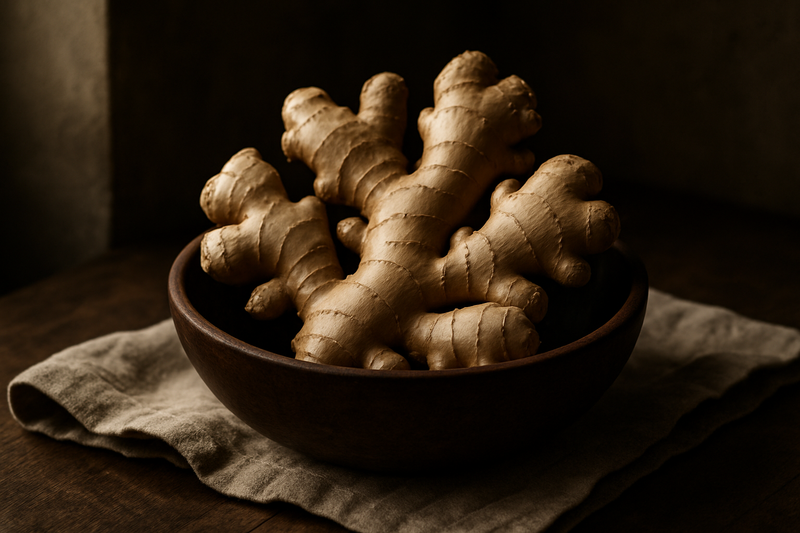
Ginger Bug · Photograph
Discover the ginger bug benefits for gut health, how this wild-fermented starter works, what the science says about its probiotics and anti-inflammatory compounds, and how to use it safely in homemade soda.
Key Nutrients
% Daily Value based on 2,000 cal diet
Key Active Compounds in Ginger Bug
Gingerols — Phenolic compounds (plant-based molecules with antioxidant properties) that give fresh ginger its characteristic bite. Fermentation can increase both their concentration and how readily the body absorbs them.
Shogaols — Formed when gingerols lose a water molecule during processing or fermentation. Research suggests shogaols have potent antioxidant and anti-inflammatory activity and that their levels rise during fermentation.
Flavonoids and polyphenols — A broad class of plant-derived antioxidant compounds. Total flavonoid and polyphenol content has been measured as significantly higher in fermented ginger preparations than in raw ginger.
Organic acids (mainly lactic acid) — Produced by lactic acid bacteria (LAB) as they ferment sugar. These acids lower the pH of the drink, help preserve it, and may support a healthy gut environment by creating conditions that favor beneficial bacteria.
Lactic acid bacteria (LAB) — Microorganisms such as Lactobacillus species that naturally colonize the ginger skin and ferment the sugars present. Microbiological analysis of active ginger bug has found LAB counts of approximately 5.5 × 10⁶ colony-forming units (CFU) per milliliter — a meaningful probiotic load.
Wild yeasts — Yeasts native to the ginger skin and surrounding environment that produce CO₂ (carbonation) and small amounts of alcohol during fermentation. Counts of roughly 1 × 10³ CFU/mL have been reported. These yeasts can also synthesize trace amounts of B vitamins such as thiamin (B1) and pyridoxine (B6).
Prep and Pairing Ideas
Making ginger bug soda is a two-stage process: building the starter, then using it to carbonate a beverage.
Building the starter: Combine 1 tablespoon of grated or finely chopped fresh ginger (skin on — the wild yeasts live there), 1 tablespoon of sugar, and 1 cup of unchlorinated water in a clean jar. Stir, cover loosely, and repeat the feeding every 24 hours. After 5–7 days at room temperature (ideally 70–75°F / 21–24°C) you should have an actively bubbling starter with a pleasantly tangy, gingery smell.
Using the starter for soda: Strain 2–4 tablespoons of active starter into 500–750 ml of cooled sweetened ginger tea or fruit juice. Funnel into a sealed bottle, leave at room temperature for 24–48 hours (burping daily), then refrigerate and drink within a week.
Three practical pairings that work well:
- Ginger bug + hibiscus tea: The tartness of hibiscus balances the sweetness of the soda base, adds polyphenol content, and creates a beautiful ruby-colored drink. Brew strong, cool completely, add starter, bottle, and ferment.
- Ginger bug + turmeric and black pepper: Adds curcumin (turmeric's active compound) to the anti-inflammatory profile. A pinch of black pepper boosts curcumin absorption. Use as a warm-season tonic.
- Ginger bug + apple juice (low-sugar): A crowd-pleasing "apple ginger fizz" that works well for people easing into fermented drinks. Use 100% cloudy apple juice for extra polyphenols, and ferment only 24 hours for a lighter carbonation.
Buying Guide: Choosing the Best Ginger for Your Bug
Since ginger bug is homemade, the "buying" decision is really about selecting the right ginger and understanding what to avoid.
Fresh, organic, unpeeled ginger is the gold standard. The wild yeasts and bacteria that populate a healthy bug live on the ginger skin. Conventionally grown ginger may be treated with antifungal or antimicrobial agents that slow or prevent fermentation. If you can only find conventional ginger, scrub it well but do not peel it, and accept that your bug may take a few extra days to activate.
Mature vs. young (baby) ginger: Mature ginger (the beige-skinned, fibrous rhizome most stores carry) has higher gingerol and shogaol content. Young ginger (thin, pinkish skin, less fibrous) is milder and slightly sweeter — good for flavor, slightly less potent in active compounds. Either works as a starter.
Avoid dried or powdered ginger: Dried ginger cannot inoculate a ferment — the live microorganisms on the skin are destroyed during drying. Ground ginger is useful in cooking but will not start a bug.
Sugar choice: Plain white cane sugar is easiest for the microbes to consume. Raw sugar, coconut sugar, and light brown sugar also work. Avoid honey (antimicrobial), stevia, or artificial sweeteners — they will not feed the ferment.
Water: Chlorinated tap water can inhibit fermentation. Use filtered water, spring water, or tap water left to stand uncovered for an hour to off-gas the chlorine before using.
Label tip for store-bought ginger bug sodas (if you find them): Look for "live cultures," "unpasteurized," or "naturally fermented" on the label. A bottle that has never been refrigerated and shows no carbonation when opened likely has no live cultures left.
Bottom Line
A ginger bug is one of the most accessible wild-fermented foods you can make at home, and the science gives reasonable support to its core claims. The combination of live lactic acid bacteria, wild yeasts, and fermentation-enhanced ginger phytochemicals makes it a genuinely functional food, not just a novelty fizzy drink.
The honest caveat is that most of the supporting evidence comes from studies on ginger in general or fermented foods in general — not from controlled human trials on ginger bug beverages specifically. The effects that are documented tend to be modest, and they depend heavily on how the soda is made, how much you drink, and what it replaces in your diet.
For most healthy adults, a daily small glass of well-made ginger bug soda is a low-risk, potentially gut-supportive addition to a varied, plant-rich diet. Approach it the same way you would any fermented food: start small, observe how your body responds, keep your equipment clean, and respect the safety rules around pressurized fermentation.
How Ginger Bug Compares
| Compared with | What's different |
|---|---|
| Ginger Bug vs. Kombucha | Made with a specific SCOBY disk, whereas ginger bug uses wild microbes from ginger skin. |
| Ginger Bug vs. Water Kefir | Uses rehydrated sugar-water grains rather than fresh grated ginger to initiate fermentation. |
| Ginger Bug vs. Ginger Beer | A finished beverage made with commercial yeast, while a bug is a continuous starter culture. |
Health Benefits
Things to Know
Burp your bottles.: This is not optional. CO₂ builds up rapidly in sealed bottles during secondary fermentation. Open (burp) bottles once or twice a day to release pressure. Thick glass flip-top bottles or plastic soda bottles (which you can squeeze to check firmness) are safer than thin glass.
Hygiene matters.: This is an unpasteurized, wild-fermented product. Use clean equipment, clean hands, and fresh ginger. Visible mold (not just a kahm yeast — a thin white film — but fuzzy colored growth) means discard and start again.
Immunocompromised individuals: should consult a doctor before consuming any home-fermented unpasteurized product containing live microorganisms.
Pregnancy: Limited safety data exists for wild-fermented drinks in pregnancy. Moderate culinary amounts of ginger are generally considered acceptable, but full ginger bug sodas are another matter. Get guidance from your midwife or doctor.
Histamine intolerance: Fermented foods are naturally high in histamine. If you react to wine, aged cheese, or vinegar, introduce ginger bug soda cautiously and watch for symptoms such as headaches, flushing, or hives.
Diabetes / blood sugar management: The sugar content of ginger bug soda is variable and can be meaningful. Ferment longer (48–72 hours in the bottle) to reduce residual sugar, use lower-sugar base liquids, and monitor your blood glucose.
Anticoagulants (blood thinners such as warfarin): Ginger at higher doses may modestly affect bleeding risk. Culinary amounts in soda are generally low, but heavy daily use warrants a conversation with your prescriber.
GERD / acid reflux medications: Carbonation and acidity can worsen reflux symptoms in some people. Try flat, lightly fermented preparations if this is a concern.
Children: Small amounts of ginger bug soda (well-diluted, low-sugar) are generally considered safe for older children, but the sugar content, carbonation, and trace alcohol from fermentation make it less appropriate for very young children. Consult your pediatrician.
Prep Ideas
- — **Ginger bug + hibiscus tea:** The tartness of hibiscus balances the sweetness of the soda base, adds polyphenol content, and creates a beautiful ruby-colored drink. Brew strong, cool completely, add starter, bottle, and ferment.
- — **Ginger bug + turmeric and black pepper:** Adds curcumin (turmeric's active compound) to the anti-inflammatory profile. A pinch of black pepper boosts curcumin absorption. Use as a warm-season tonic.
- — **Ginger bug + apple juice (low-sugar):** A crowd-pleasing "apple ginger fizz" that works well for people easing into fermented drinks. Use 100% cloudy apple juice for extra polyphenols, and ferment only 24 hours for a lighter carbonation.
Shop This Ingredient
Stock your pantry with quality ginger bug.
Buy on AmazonAs an Amazon Associate, Plantopedia earns from qualifying purchases. This costs you nothing extra and helps us keep the encyclopedia free.
Frequently Asked Questions
This is the question most people come here to answer, so let's be direct: the evidence is promising but still early, and most of it is indirect. Digestive health and the microbiome Ginger bug introduces live LAB and wild yeasts into your digestive tract, which is the definition of a probiotic food. The broader literature on fermented foods — from yogurt to kimchi to kefir — consistently links regular consumption to improvements in gut microbiome diversity and digestive comfort. Ginger bug likely works through similar mechanisms. Direct evidence is thinner. One human clinical trial gave healthy adults ginger root powder (not fermented ginger bug) and found measurable changes in gut bacterial composition, though overall diversity, bowel function, and GI symptoms did not significantly differ from placebo. That is a useful caution against over-claiming: even ginger itself, in a controlled dose, showed modest effects on digestion in healthy people. For people with bloating, sluggish digestion, or recovering gut function, a small daily portion of ginger bug soda may offer gentle support — but start with a small amount (around 60 ml) and increase slowly. Heart and circulation No direct human trials link ginger bug beverages to blood pressure, cholesterol, or hard cardiovascular outcomes. The indirect pathway goes: fermentation increases polyphenols → polyphenols reduce inflammation → lower chronic inflammation is associated with reduced cardiovascular risk. This is a plausible chain, but it is not the same as evidence. If you have cardiovascular concerns, ginger bug soda is at best a small piece of a broader dietary strategy. Blood sugar and metabolism This is where ginger bug's sugar content complicates things. Animal studies show fermented ginger preparations can lower blood glucose, and one report on fermented ginger drinks noted roughly 23% better glucose control in diabetic individuals who replaced sugary sodas with a probiotic ginger alternative. The key phrase is "replaced sugary sodas." If you add ginger bug soda on top of your current intake, the residual sugar may offset any benefit. If you use it to crowd out a habitual can of cola, the swap may well help. Anyone managing diabetes or blood sugar issues should check the sugar content of their specific recipe, ferment longer to reduce residual sugar, and monitor blood glucose when introducing a new fermented drink. Inflammation and recovery Fermented ginger preparations have been reported to contain substantially higher concentrations of bioavailable anti-inflammatory compounds than unfermented ginger tea. One report cited up to 340% more bioavailable anti-inflammatory compounds compared with regular ginger tea, alongside increases in beneficial gut bacteria. However, the study parameters behind that specific claim are not fully published, so treat it as directionally interesting rather than definitive. The more robust finding is that fermentation consistently boosts total polyphenol and flavonoid content in ginger, and these compounds are associated with reduced markers of oxidative stress. Whether this translates to meaningful reductions in joint pain or inflammatory conditions in regular ginger bug drinkers has not been tested in a controlled human trial.
Ginger bug is uniquely a homemade product — there is no commercial "ginger bug" you can buy in a bottle. Here are the main forms it takes: Active ginger bug starter (2–4 tbsp added to 500–750 ml liquid): The core preparation. This is what you make at home over 5–7 days and then use as a living yeast and bacteria inoculum. The starter itself is the most probiotic-dense form, as the finished soda continues fermenting and the microbial count shifts. Naturally carbonated ginger soda: Active starter added to sweetened ginger tea or fruit juice, then sealed and fermented for 1–3 days at room temperature. This is the most common end product. Probiotic content is real but variable. Fermented ginger tonics and lemonades: Ginger bug used to ferment ginger-lemon or herbal blends. A good option if you want to reduce the sugar further by using less sweet base liquids. Fermented ginger brine: A more concentrated use, where the ginger bug liquid is used as a splash in other drinks or additional ferments. Lower volume, higher probiotic density. For the best probiotic activity, use a starter that is visibly bubbly and has been fed in the last 12–24 hours. A sluggish or neglected starter has fewer live cultures and produces weaker carbonation.
There is no clinically established dose for ginger bug beverages. The practical guidance from fermentation practitioners and the general probiotic literature points to a sensible starting approach: Start low: Begin with about 60–120 ml (¼ to ½ cup) per day. This allows your gut microbiome to adjust without causing bloating, gas, or loose stools that can accompany a sudden large intake of any fermented food. Maintenance range: Once well tolerated, 120–240 ml (½ to 1 cup) once or twice a day is a common amount. This corresponds to roughly 2–4 tablespoons of active starter's worth of probiotic benefit in a finished soda. Upper limit considerations: There is no hard maximum for healthy adults, but more is not necessarily better. Higher volumes mean more sugar intake, more carbonation (which can cause bloating in some people), and a trace amount of alcohol that increases with longer fermentation and larger portions. Refrigeration slows fermentation and reduces ongoing sugar consumption by microbes, so a bottle moved to the fridge will remain more stable in sugar content and alcohol level than one left at room temperature. If you notice persistent bloating, diarrhea, or unusual symptoms, reduce your intake and consider whether the ferment was contaminated or whether the amount simply doesn't suit your digestion.
Quick Answers
Common questions, answered in a line.
A ginger bug is a wild-fermented starter made from fresh ginger, sugar, and water used to create naturally carbonated sodas. It relies on the beneficial bacteria and wild yeasts naturally found on ginger skin to ferment sugars into carbon dioxide and organic acids.
Yes, active ginger bug contains a meaningful probiotic load of approximately 5.5 × 10⁶ colony-forming units (CFU) per milliliter of lactic acid bacteria. These beneficial microbes, such as Lactobacillus species, help create a healthy gut environment by favoring beneficial bacteria.
You should use fresh, organic, unpeeled ginger to ensure the wild yeasts and bacteria necessary for fermentation are present on the skin. Avoid using dried or powdered ginger, as these processing methods destroy the live microorganisms needed to inoculate the ferment.
It typically takes 5 to 7 days for a ginger bug to become active when kept at room temperature between 70–75°F. You will know it is ready when the starter is actively bubbling and develops a pleasantly tangy, gingery aroma.
White cane sugar is the easiest fuel for the microbes, though raw sugar, coconut sugar, and light brown sugar are also effective. You must avoid honey due to its antimicrobial properties, as well as artificial sweeteners like stevia which cannot feed the fermentation process.
Fermentation increases the concentration and bioavailability of gingerols and shogaols, which are plant-based molecules with potent antioxidant and anti-inflammatory properties. These compounds help protect the body against oxidative stress and support overall health.
To prevent pressure buildup and potential bottle explosions, you must "burp" your bottles once or twice daily during the secondary fermentation stage. Using thick glass flip-top bottles or plastic soda bottles allows you to safely manage the CO2 produced by the wild yeasts.
For Readers in the USA
Local context — sourcing, seasonality, and regional notes.
You can find organic ginger suitable for a ginger bug at major US retailers like Whole Foods Market, Sprouts Farmers Market, and many local food cooperatives. These stores typically stock organic rhizomes year-round, which are essential because conventional ginger in the US is often irradiated, a process that can kill the wild yeast needed for fermentation.
While fresh ginger is imported year-round to the US from Hawaii, Brazil, and Peru, domestic "baby ginger" is typically harvested in the late summer and fall. Look for domestically grown young ginger at farmers markets in USDA zones 8 and higher, such as in Florida or California, between August and October for a milder fermentation flavor.
The USDA organic seal ensures that the ginger was grown without synthetic fertilizers or pesticides and has not been irradiated. For a ginger bug, this certification is a helpful indicator that the natural bacteria and wild yeasts on the ginger skin are still alive and capable of initiating fermentation.
Yes, many municipal water systems in the US use chloramine or chlorine to treat tap water, which can stall or kill the beneficial microbes in your ginger bug. To ensure success, most American home fermenters use a charcoal water filter (like a Brita or Pur) or buy bottled spring water to avoid these sanitizing agents.
AI Clinical Review
- Clearly explains what a ginger bug is (a wild, unpasteurized ferment of ginger, sugar, and water) and why it naturally carbonates drinks.
- Appropriately frames health claims as mostly extrapolated from research on fermented foods and ginger, not from trials of ginger bug itself.
- Notes real-world variability in microbes and sugar across batches, and gives practical, safety‑minded fermentation guidance (cleanliness, burping bottles).
- Highlights groups who should be cautious (pregnancy, immunocompromised, diabetes; those sensitive to histamine or reflux) and mentions trace alcohol/carbonation as potential issues.
- Points out that fermentation may increase ginger polyphenols (gingerols/shogaols), aligning with lab findings on fermented ginger preparations.
- There are no robust human clinical trials on ginger bug beverages for digestion, metabolic health, or cardiovascular risk; most evidence is indirect.
- Probiotic effects are strain‑ and dose‑specific; wild ferments aren’t standardized, and CFU counts/species in home batches likely differ from small lab reports.
- Claims of large increases in “anti‑inflammatory compounds” need peer‑reviewed confirmation and human bioavailability data.
- Benefits for blood sugar depend on residual sugar and whether ginger bug replaces (rather than adds to) sugary drinks; net metabolic impact remains uncertain.
- Practical intake: start with about 60–120 ml (¼–½ cup) daily and, if tolerated, up to 120–240 ml once or twice a day; more is not necessarily better due to sugar, gas, and trace alcohol.
- For diabetes or low‑sugar needs: ferment longer, choose lower‑sugar bases, and monitor glucose; use as a substitute for regular soda, not an add‑on.
- This is an unpasteurized product—use clean equipment, discard if moldy or off‑smelling, and “burp” bottles to prevent dangerous pressure build‑up.
- Extra caution for pregnancy, immunocompromised individuals, those on anticoagulants, with histamine intolerance, or significant reflux; children should have small, diluted amounts with pediatric guidance.
Wild ferment; keep clean and burp jars to avoid over-pressurization.
References
- USDA FoodData Central — ginger and fermented beverage reference data (fdc.nal.usda.gov)
- Effect of ginger root powder on gut bacteria composition in healthy adults — human RCT, PubMed (pubmed.ncbi.nlm.nih.gov)
- Is fermented ginger good for you? Probiotics, sugar, and more — Science Insights overview (scienceinsights.org)
- Microbial counts (LAB and yeast CFU/mL) in ginger bug starter — Untidar journal microbiology study (jurnal.untidar.ac.id)
- Ginger fermentation for health and flavor: compound changes during fermentation — Number Analytics (numberanalytics.com)
- What is a ginger bug and is it good for your gut? — EatingWell (eatingwell.com)
- Fermented ginger drink contains more anti-inflammatory compounds than regular tea — research report summary (journee-mondiale.com)
- Mineral composition of ginger bug beverages — Journal of Health Systems Research (ssaapublications.com)
- Fermented ginger: digestion and immunity overview — Hermetica Superfoods (hermeticasuperfoods.com)
- NIH National Center for Complementary and Integrative Health — ginger safety and evidence summary (nccih.nih.gov)
Know Your Numbers
Eating healthy is a start. Now get to know your biomarkers.
Food changes bloodwork — inflammation, lipids, blood sugar and nutrient status all respond to what you eat. 59 markers from $59.
- Results in 7–10 days at 2,000+ Quest sites
- Licensed provider reviews every result
- One flat price, no membership, HSA/FSA eligible
Educational information only, not medical advice. Panels are ordered and reviewed through our licensed partner; Plantopedia may earn a commission.
Filed Under
Health Goals This Supports
Related Ingredients
- Fermented Mango Pickle (Aam ka Achar)
Also supports Energy
- Sikhye (Fermented Rice Punch)
Also supports Energy
- Fermented Celeriac
Also supports Energy
- Fermented Cranberry Relish
Also supports Energy
- Fermented Daikon (Takuan)
Also supports Energy
- Fermented Escabeche (Pickled Jalapeños & Vegetables)
Also supports Energy