Haricots Verts — health benefits and uses
A refined French market bean prized for delicacy and quick cooking.
The Short Answer
Haricots verts are a slender French variety of green bean that contains 43 mcg of vitamin K and 31 calories per cup. They are harvested earlier than traditional green beans, resulting in a more tender texture and faster cooking time.
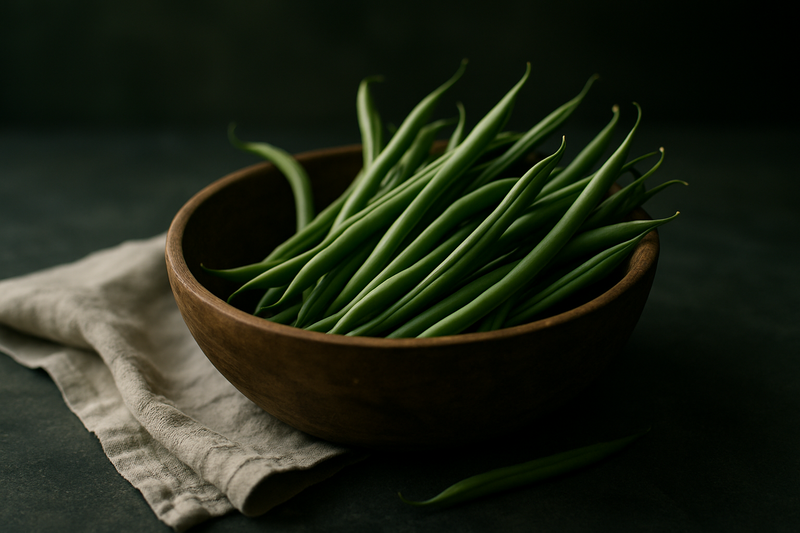
Haricots Verts · Photograph
Discover haricots verts health benefits and nutrition in one clear guide. Learn how these slim French green beans support heart health, digestion, and blood sugar, plus safe prep tips, calories, fiber, vitamin K, and how much to eat each day.
Key Nutrients
% Daily Value based on 2,000 cal diet
Key active compounds
- Phylloquinone (vitamin K1): The main dietary form of vitamin K, abundant in green vegetables. Critical for blood-clotting proteins and bone-building enzymes.
- Ascorbic acid (vitamin C): A water-soluble antioxidant that supports immune function, collagen production (the structural protein in skin, tendons, and blood vessels), and iron absorption from plant foods.
- Folate (vitamin B9): Essential for DNA synthesis and red blood cell formation; particularly important during early pregnancy to support neural tube development.
- Beta-carotene: An orange-colored carotenoid that your body converts to vitamin A. Supports vision, immune defenses, and the integrity of skin and mucosal linings.
- Lutein and zeaxanthin: Yellow-green carotenoids concentrated in the eye's macula (the central part of the retina responsible for sharp vision). Associated with eye health in broader dietary research.
- Dietary fiber: A mix of soluble fiber (which can help lower LDL, or "bad," cholesterol) and insoluble fiber (which adds bulk to stool and feeds beneficial gut bacteria).
- Potassium and magnesium: Electrolytes and minerals that help regulate blood pressure and muscle function.
Prep and pairing ideas
Haricots verts are one of the most versatile quick-cooking vegetables in the kitchen. Here are three practical pairings that also make nutritional sense:
1. Haricots verts + almonds + lemon A classic French bistro combination. The almonds add healthy monounsaturated fats, protein, and vitamin E, which enhance the absorption of the fat-soluble carotenoids and vitamin K in the beans. Toast sliced almonds in a dry pan, toss with blanched beans, lemon zest, and a pinch of sea salt.
2. Haricots verts + salmon or sardines + Dijon mustard An omega-3-rich protein alongside the beans creates a nutrient-complete light meal. The fat from the fish further improves absorption of fat-soluble vitamins. A simple Dijon-lemon vinaigrette ties it together and adds flavor without adding significant calories.
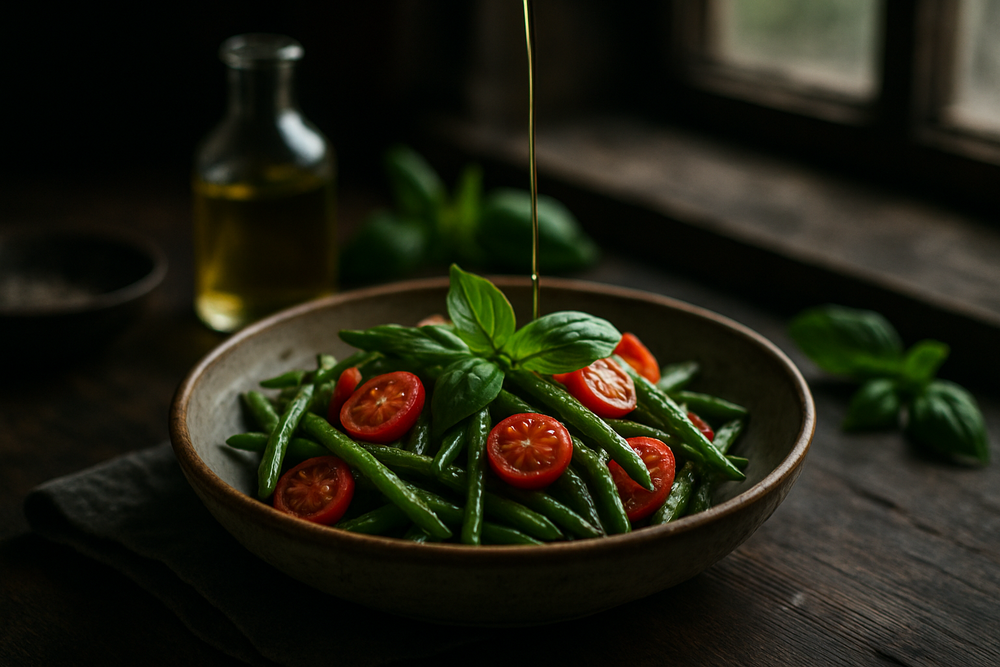
3. Haricots verts + cherry tomatoes + fresh basil Tomatoes contribute lycopene (a red carotenoid associated with heart and prostate health) and additional vitamin C. A little olive oil in the dressing makes the fat-soluble pigments from both vegetables more bioavailable (easier for the body to absorb). This combination works warm or at room temperature as a salad.
Bottom line
Haricots verts are a genuinely nutritious, low-calorie whole food that fits comfortably into nearly any balanced eating pattern. Their combination of vitamin K, vitamin C, folate, fiber, and carotenoids supports heart health, digestion, stable blood sugar, and bone integrity — though most of the evidence connecting these nutrients to health outcomes comes from studies of overall dietary patterns and individual nutrients rather than from trials of haricots verts specifically. That is not a flaw unique to green beans; it is simply how nutritional science works for most whole foods.
The practical takeaway: blanch them, dress them simply, eat them regularly, and vary them with other colorful vegetables. They are one of the easiest, most affordable ways to add nutrient density to a meal without adding meaningful calories. If you are on warfarin or have kidney disease, a quick conversation with your clinician about portion sizes is all you need to eat them safely.
How Haricots Verts Compares
| Compared with | What's different |
|---|---|
| Haricots Verts vs. Standard Green Beans | Thinner and more tender, they cook faster and are never stringy. |
| Haricots Verts vs. Edamame | Significantly lower in protein and calories, acting more like a vegetable than a pulse. |
Health Benefits
Things to Know
Warfarin (Coumadin) and other vitamin K antagonists: Green beans are a notable source of vitamin K, which directly affects how well this class of blood thinner works. You do not need to avoid them, but keep your intake consistent week to week and inform your prescribing clinician about your typical vegetable habits. Sudden large changes in vitamin K intake can alter your INR (a blood test that monitors clotting time).
Kidney disease: People advised to limit dietary potassium should account for the potassium in vegetables including haricots verts. Discuss portion sizes with your dietitian.
Legume allergy or oral allergy syndrome: People allergic to other legumes or with oral allergy syndrome (itching or tingling in the mouth triggered by certain raw plant foods) may react to raw green beans. Cooking typically reduces the proteins that trigger oral allergy syndrome. If you notice symptoms, see an allergist.
High-fiber sensitivity: If you are new to eating fiber-rich vegetables or have irritable bowel syndrome (IBS), increase intake gradually. Start with a half-cup serving and monitor your response. Unlike dried beans, most people tolerate haricots verts well, but individual responses vary.
Pregnancy: Folate in haricots verts is beneficial, but prenatal folate needs are high enough that food alone is usually insufficient — continue any prenatal supplement recommended by your healthcare provider.
Raw consumption in large amounts: Snapping off a few raw beans to taste-test is fine for most healthy adults. Eating large quantities of raw green beans regularly is not recommended because raw beans may contain residual lectins and are harder to digest.
Glossary
Shop This Ingredient
Stock your pantry with quality haricots verts.
Buy on AmazonAs an Amazon Associate, Plantopedia earns from qualifying purchases. This costs you nothing extra and helps us keep the encyclopedia free.
Frequently Asked Questions
Heart and circulation Haricots verts bring together several nutrients that nutrition science links to cardiovascular health. Their soluble fiber may help lower LDL cholesterol when eaten as part of a consistently high-fiber diet. Potassium and magnesium help keep blood pressure in a healthy range by counterbalancing the effects of sodium. Folate supports the metabolism of homocysteine, an amino acid that, when elevated, is associated with higher cardiovascular risk. No randomized clinical trial has isolated haricots verts specifically as a heart intervention, so benefits here are inferred from their nutrient profile and from large observational studies showing that people who eat more vegetables and legumes tend to have lower rates of heart disease. That is meaningful but not the same as proof that the beans themselves are responsible. Digestive health and microbiome One cup of raw haricots verts delivers roughly 2.7 g of dietary fiber, rising to about 4 g per cup when cooked. Human studies consistently show that adequate fiber intake supports stool bulk, reduces constipation, and feeds beneficial gut bacteria (the community of microorganisms in the large intestine, sometimes called the microbiome). Haricots verts are generally easier on the gut than dried beans because their fiber density is lower and their water content is much higher — good news if you find lentils or chickpeas cause noticeable gas. Blood sugar and metabolism With a very low glycemic index (15), minimal net carbohydrates, and meaningful fiber, haricots verts are a textbook low-glycemic vegetable. Fiber slows the pace at which glucose enters the bloodstream after a meal, smoothing out post-meal blood sugar spikes. They work especially well when paired with a protein source and a whole grain, helping reduce the overall glycemic impact of the full meal. Direct clinical trials testing haricots verts on blood sugar outcomes are limited; these benefits are extrapolated from well-established research on low-GI vegetables and dietary fiber broadly. Inflammation and recovery The vitamin C, beta-carotene, lutein, and zeaxanthin in haricots verts all function as antioxidants — molecules that neutralize free radicals (unstable molecules produced by normal metabolism and environmental stress) before they can damage cells. Chronic oxidative stress contributes to low-grade inflammation, which underlies many chronic diseases. Dietary patterns rich in colorful vegetables are consistently linked to lower inflammatory markers in human studies, though haricots verts specifically have not been the subject of anti-inflammatory trials. Bone health and other benefits Vitamin K activates proteins needed for bone mineralization (the process by which calcium is deposited into bone tissue). Adequate vitamin K intake is associated with better bone density and lower fracture risk in observational studies and some intervention trials — though those trials typically used supplements rather than whole foods. Folate is critical during pregnancy for neural tube development. The extremely low calorie density of haricots verts (31 kcal per cup) combined with their fiber and water content also makes them useful for people managing their weight, since they add significant volume and satiety to a meal without adding many calories.
The French kitchen has this right: blanch and shock. Bring a large pot of lightly salted water to a rolling boil. Drop in trimmed haricots verts and cook for 2–4 minutes until bright green and just tender with a little bite (the culinary term is al dente). Immediately transfer to a bowl of ice water for 1–2 minutes to halt the cooking. This step locks in the vivid color, crisp-tender texture, and heat-sensitive nutrients like vitamin C. Drain and pat dry. Toss with shallots, a squeeze of lemon, a tiny drizzle of olive oil, and salt. Why this matters nutritionally: Light, fast cooking reduces any residual lectins (proteins in raw legumes that in very large amounts can irritate the gut) and makes the fiber more digestible, while preserving most of the vitamin K, folate, and carotenoids. Steaming achieves similar results with even less nutrient loss. Boiling in a large volume of water leaches some water-soluble vitamins (C and folate) into the cooking liquid — use less water or steam when possible. Frozen haricots verts are blanched before freezing and retain most of their minerals, fiber, and fat-soluble vitamins; they are a perfectly nutritious convenience option. Canned green beans are higher in sodium — rinsing and draining the beans before use can reduce sodium content by roughly 40 percent.
There is no officially established specific daily dose for haricots verts as a therapeutic food. Guidance comes instead from general vegetable recommendations and practical nutrition patterns. General framework: Most nutrition authorities recommend 2–3 cups of vegetables per day for adults (amounts vary by calorie needs and guideline). A typical serving of haricots verts is ½ to 1 cup (75–100 g) raw or about 1 cup cooked (125 g), and eating this 3–5 times per week is consistent with a varied, plant-forward diet. Some people include 1–2 cups of green beans as a primary vegetable at a meal several times a week without any known concern. Start low if you are new to fiber-rich vegetables: Begin with a half-cup serving cooked and observe how your digestion responds over a few days before increasing. This is especially relevant for people with IBS or those moving from a low-fiber diet. For vitamin K consistency (warfarin users): The key is not to avoid green beans but to eat a similar amount each week. A consistent pattern — say, a half-cup to one cup two or three times a week — is far safer than swinging between zero and three cups depending on the week.
Quick Answers
Common questions, answered in a line.
Haricots verts are an excellent source of vitamin K1, vitamin C, folate (B9), and vitamin A (via beta-carotene). They also provide essential minerals like potassium and magnesium, alongside dietary fiber and eye-supporting carotenoids like lutein and zeaxanthin.
Haricots verts support heart health, bone integrity, and digestion while helping to maintain stable blood sugar levels. Their fiber content helps lower "bad" LDL cholesterol, while antioxidants like vitamin C and beta-carotene support immune function and skin health.
You can eat haricots verts if you take warfarin, but you must keep your intake consistent from week to week. Because these beans are a notable source of vitamin K, sudden changes in how much you eat can affect how your blood-thinning medication works.
It is best to cook haricots verts rather than eating them raw in large quantities to ensure they are easier to digest. Cooking also helps reduce the proteins that may trigger oral allergy syndrome and neutralizes residual lectins found in raw beans.
To improve the absorption of the fat-soluble vitamin K and carotenoids in haricots verts, pair them with healthy fats like almonds, olive oil, or fatty fish. Adding vitamin C-rich foods like lemon or tomatoes further helps your body absorb iron from the beans.
Haricots verts are beneficial during pregnancy because they provide folate (vitamin B9), which is essential for DNA synthesis and neural tube development. However, they should complement, not replace, the prenatal supplements recommended by your healthcare provider.
People with kidney disease who are advised to limit potassium should monitor their portion sizes of haricots verts. It is recommended to discuss your typical vegetable intake with a dietitian to ensure it fits within your specific dietary restrictions.
For Readers in the USA
Local context — sourcing, seasonality, and regional notes.
In the United States, haricots verts are widely available at major grocery chains like Trader Joe’s, Whole Foods Market, and Safeway, often found in the refrigerated produce section. While traditional green beans are common at farmers markets, specialty growers often sell these slender French varieties during their peak summer season.
While available year-round in most U.S. supermarkets due to imports from Mexico and Guatemala, domestic haricots verts are in peak season from May through October. High-quality American crops are primarily grown in states like Florida, Wisconsin, and California, providing the freshest options during the warmer months.
Look for the USDA Organic seal if you want to ensure your haricots verts were grown without synthetic pesticides or fertilizers. The USDA regulates these labeling standards, and choosing organic can be a priority for consumers looking to minimize their environmental footprint and exposure to agricultural chemicals.
In American culinary culture, haricots verts are often distinguished from standard "string beans" by their thinner diameter and are a staple in upscale bistro-style cooking. They are frequently used as a sophisticated substitute in the classic American Green Bean Casserole or served blanched in Nicoise salads.
AI Clinical Review
- Accurately presents haricots verts as a low-calorie, non-starchy vegetable that provides fiber plus key micronutrients (vitamins K and C, folate, potassium) in meaningful amounts per cup.
- Explains cooking methods well: brief blanching/steaming preserves heat‑sensitive nutrients and improves digestibility; frozen is nutritionally solid; canned options can be higher in sodium and benefit from rinsing.
- Frames potential heart, digestive, and blood‑sugar benefits appropriately as deriving from overall dietary patterns and nutrient profiles rather than from trials on green beans alone.
- Gives clear, practical guidance for people on warfarin: maintain consistent vitamin K intake rather than avoiding green beans entirely.
- The cited glycemic index (~15) reflects limited testing and can vary by method and portion size; for non‑starchy vegetables, real‑world glycemic impact is typically small but context (full meal composition) matters.
- Antioxidant/anti‑inflammatory language is based mainly on observational data and studies of nutrients broadly; direct intervention trials with green beans are sparse, so effect sizes for this specific food are uncertain.
- Bone health inferences from vitamin K intake are plausible, but most trials use supplements, not foods; translating supplement outcomes to a specific vegetable should be done cautiously.
- Typical portions of 1/2–1 cup cooked (about 75–125 g) several times per week fit within general goals of 2–3 cups vegetables per day; more is fine if tolerated and balanced with variety.
- Warfarin users should keep week‑to‑week portions steady and coordinate any diet changes with their clinician, as vitamin K intake can alter INR.
- People with chronic kidney disease or on potassium‑restricted plans should count the roughly 200 mg potassium per cup raw (higher per cooked cup); boiling and discarding the water can reduce potassium further.
- Those with legume allergies or oral‑allergy‑type symptoms may react to raw pods; cooking typically reduces triggers. Individuals with IBS or low fiber intakes may prefer gradual increases to assess tolerance.
- If choosing canned green beans, look for no‑salt‑added options or rinse before eating to lower sodium meaningfully (often around 30–40%).
Cook lightly before eating; snap off stem ends.
References
- USDA FoodData Central — Beans, snap, green, raw (NDB 11052): Primary nutrition data source for calories, fiber, vitamins, and minerals. (fdc.nal.usda.gov)
- Harvard T.H. Chan School of Public Health — Legumes and Pulses (The Nutrition Source): Overview of legume health benefits, fiber, and cardiovascular evidence. (nutritionsource.hsph.harvard.edu)
- Medical News Today — Green beans: Health benefits, uses, and possible risks: Consumer-facing summary of green bean nutrition and safety. (medicalnewstoday.com)
- Cleveland Clinic — The Health Benefits of Green Beans: Clinical health-focused review of green bean nutrients and evidence. (health.clevelandclinic.org)
- WebMD — Health Benefits of Green Beans: Summary of nutritional benefits and safety notes for general audiences. (webmd.com)
- Healthline — Green Beans Nutrition Facts and Health Benefits: Evidence-aligned breakdown of nutrients and benefit claims. (healthline.com)
- PMC / NCBI — Improving the Health Benefits of Snap Bean: Genome-Wide Association Studies (PMC6835575): Peer-reviewed research on snap bean phytochemical composition and nutritional traits. (pmc.ncbi.nlm.nih.gov)
- USDA SNAP-Ed Seasonal Produce Guide — Green Beans: Public health resource on green bean selection, storage, and nutritional highlights. (snaped.fns.usda.gov)
- NIH Office of Dietary Supplements — Vitamin K Fact Sheet: Safety and interaction data for vitamin K, including implications for anticoagulant users. (ods.od.nih.gov)
Know Your Numbers
Eating healthy is a start. Now get to know your biomarkers.
Food changes bloodwork — inflammation, lipids, blood sugar and nutrient status all respond to what you eat. 59 markers from $59.
- Results in 7–10 days at 2,000+ Quest sites
- Licensed provider reviews every result
- One flat price, no membership, HSA/FSA eligible
Educational information only, not medical advice. Panels are ordered and reviewed through our licensed partner; Plantopedia may earn a commission.