Hemp Hearts — health benefits and uses
Fat, texture, and satiety angle; clarify strict WFPB vs flexible plant-based use
The Short Answer
Hemp hearts are highly nutritious, providing 9.5g of complete protein and 210mg of magnesium per 3-tablespoon serving. These hulled seeds offer a mild, nutty flavor and a rich source of essential omega-3 and omega-6 fatty acids without requiring grinding or

Hemp Hearts · Photograph
Hemp hearts are one of the quieter powerhouses in the seed world — small, soft, and easy to sprinkle on almost anything. They are the hulled inner kernels of the hemp plant (Cannabis sativa), the same species as cannabis but bred and processed so that they contain little to no THC (the psychoactive compound in marijuana) or CBD. What they do contain is a concentrated mix of healthy fats, complete plant protein, and a range of minerals that can meaningfully fill gaps in a plant-based diet.
Key Nutrients
% Daily Value based on 2,000 cal diet
Key active compounds in hemp hearts
- Linoleic acid (LA) — The dominant omega-6 polyunsaturated fat (polyunsaturated means the fat molecule has multiple double bonds, making it more flexible and heart-friendly than saturated fat). LA is essential, meaning your body cannot make it and must get it from food.
- Alpha-linolenic acid (ALA) — The plant form of omega-3 fat. ALA is a precursor to longer-chain omega-3s (EPA and DHA) found in oily fish, though conversion in the body is modest. Hemp hearts have a notably good omega-6 to omega-3 ratio compared with most Western diets.
- Gamma-linolenic acid (GLA) — A rarer omega-6 derivative with potential anti-inflammatory properties. Present in smaller amounts in hemp hearts and hemp seed oil.
- Tocopherols — A family of vitamin E compounds that act as antioxidants (molecules that neutralize cell-damaging free radicals), particularly protecting the fragile polyunsaturated fats in the seed.
- Phytosterols — Plant-based compounds structurally similar to cholesterol that may compete with dietary cholesterol for absorption in the gut.
- Sativamides and bioactive peptides — Specialized compounds and protein fragments identified in hemp seeds with antioxidant, antihypertensive (blood pressure–lowering), and antimicrobial properties in lab studies. Their impact at typical food intakes in humans has not yet been confirmed.
- Edestin and albumin — The two main proteins in hemp hearts, both considered highly digestible compared with many plant protein sources.
Prep and pairing ideas
Hemp hearts are one of the most low-effort seeds to use because they require no grinding, soaking, or cooking. Their flavor is mild and nutty — closer to a sunflower seed than a strong flax or chia taste.
Three practical ways to use them:
- Stir into oatmeal or overnight oats. A tablespoon of hemp hearts adds ~3.3 g of protein and healthy fats to your morning bowl without changing the texture much. This pairing also slows the glycemic release of the oats.
- Blend into smoothies. Hemp hearts blend smooth without the gel that chia seeds create. They add creaminess, protein, and fats that help carry fat-soluble nutrients (like beta-carotene from spinach or mango) into the body more effectively.
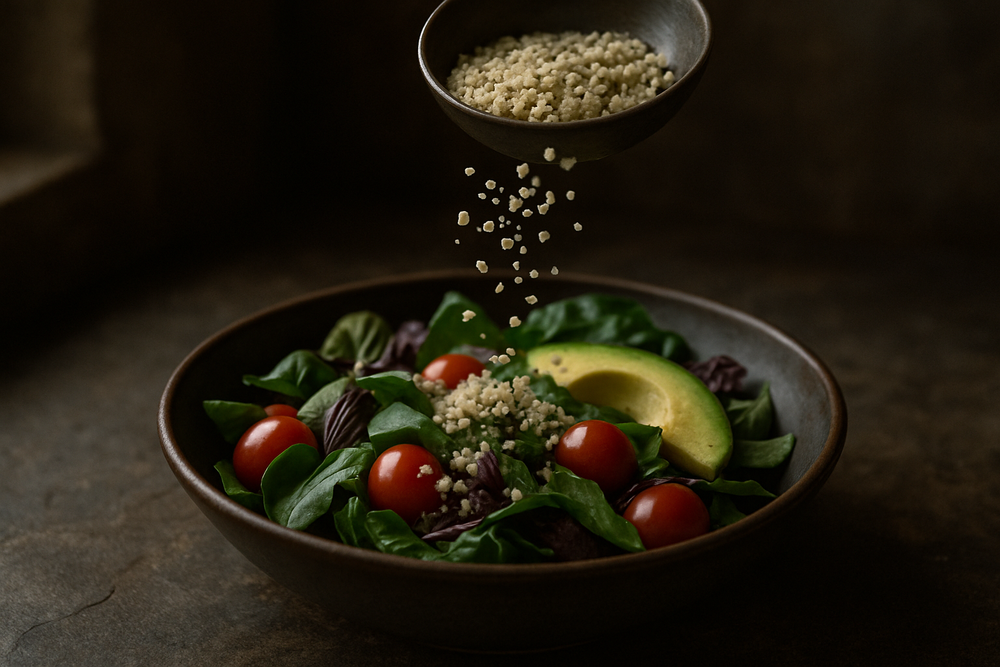
- Sprinkle on salads or grain bowls. Hemp hearts work like a seed-crouton hybrid — a gentle crunch with protein. Pairing them with dark leafy greens (spinach, kale, arugula) combines their iron content with vitamin C from the greens, which enhances non-heme iron absorption (the form of iron from plants, which is absorbed less efficiently than iron from meat).
Storage tip: Store hemp hearts in an a
How Hemp Hearts Compares
| Compared with | What's different |
|---|---|
| Hemp Hearts vs. Flax Seeds | Hemp is a complete protein and softer in texture, while flax requires grinding for nutrient absorption. |
| Hemp Hearts vs. Chia Seeds | Hemp is higher in protein and creamier, whereas chia forms a gel when mixed with liquid. |
| Hemp Hearts vs. Sunflower Seeds | Hemp hearts are richer in omega-3s and minerals, while sunflower seeds are firmer and higher in vitamin E. |
Health Benefits
Things to Know
Calorie density is real.: Three tablespoons provide ~166 calories. It is easy to pour a large mound without realizing it. Use a measuring spoon until you develop an eye for portion sizes.
Drug interactions — important ones:
Anticoagulants and antiplatelets (warfarin, DOACs, aspirin, clopidogrel): hemp seeds may have mild blood-thinning effects and could theoretically increase bleeding risk. Talk to your prescribing clinician before making hemp hearts a daily habit.
Cardiac glycosides (digoxin): hemp may influence heart rate; combined use could contribute to an excessively slow heart rate (bradycardia).
Diuretics (particularly potassium-wasting loop diuretics): hemp seeds may enhance diuretic effects and could contribute to low potassium (hypokalemia) at high intakes.
Pregnancy and breastfeeding: Evidence on safety in these groups is insufficient. Food-level use (1 tablespoon occasionally) is generally considered low risk, but supplemental amounts or hemp seed oil are best avoided until more data are available.
Seed allergies: Hemp allergy is uncommon but possible, especially in people with existing tree nut or seed allergies. Introduce hemp hearts gradually.
Low-fat therapeutic diets: If you follow a medically supervised low-fat plant-based plan (for example, for heart disease reversal), count hemp hearts toward your daily fat budget and keep portions small.
Start low, go slow: If you are new to seeds generally, start with 1 teaspoon and work up over one to two weeks to minimize GI adjustment symptoms.
Prep Ideas
- — Stir into oatmeal or overnight oats. A tablespoon of hemp hearts adds ~3.3 g of protein and healthy fats to your morning bowl without changing the texture much. This pairing also slows the glycemic release of the oats.
- — Blend into smoothies. Hemp hearts blend smooth without the gel that chia seeds create. They add creaminess, protein, and fats that help carry fat-soluble nutrients (like beta-carotene from spinach or mango) into the body more effectively.
- — Sprinkle on salads or grain bowls. Hemp hearts work like a seed-crouton hybrid — a gentle crunch with protein. Pairing them with dark leafy greens (spinach, kale, arugula) combines their iron content with vitamin C from the greens, which enhances non-heme iron absorption (the form of iron from plants, which is absorbed less efficiently than iron from meat).
Shop This Ingredient
Stock your pantry with quality hemp hearts.
Buy on AmazonAs an Amazon Associate, Plantopedia earns from qualifying purchases. This costs you nothing extra and helps us keep the encyclopedia free.
Frequently Asked Questions
It is important to separate what is well-established from what is still early-stage. Most benefits associated with hemp hearts are emerging — supported by their nutrient profile and general seed research, but not yet confirmed by large-scale human clinical trials specifically using hemp hearts as the tested food. Heart health and circulation Hemp hearts contain a favorable balance of unsaturated fats and a relatively low amount of saturated fat. The omega-6 to omega-3 ratio of approximately 2 to 3 to 1 is considered heart-healthy compared with the 15 to 20 to 1 ratio typical of most Western diets. Broad population and intervention studies on nuts and seeds consistently link higher intake of these foods — unsalted, in reasonable portions — with lower LDL (low-density lipoprotein, sometimes called "bad" cholesterol) and reduced cardiovascular risk. Hemp hearts also contain arginine-rich protein, which may support nitric oxide production (a molecule that helps blood vessels relax and dilate), and phytosterols that can modestly reduce cholesterol absorption in the gut. The honest caveat: Hemp-specific randomized controlled trials (RCTs — the gold-standard study design) are limited. Most cardiovascular benefits are inferred from hemp hearts' fatty acid profile and analogy to other seeds. For people with existing heart disease or high cholesterol, hemp hearts work best as part of a broader pattern — not as a standalone fix. Digestive health and the gut Because the hull is removed, hemp hearts are gentler on the gut and easier to chew than whole hemp seeds. People with sensitive digestion or difficulty chewing sometimes tolerate them better than tougher seeds. That said, the fiber content is low (1.2 g per serving versus 5 g for chia or 2.8 g for ground flax). Hemp hearts will not meaningfully improve constipation or feed the gut microbiome (the community of beneficial bacteria living in the large intestine) the way higher-fiber seeds will. Think of them as a fat-and-protein addition to a meal rather than a fiber booster. Large amounts — especially eaten quickly or without adequate water — can cause bloating, nausea, or loose stools in some people. Blood sugar and metabolism Hemp hearts are low in available carbohydrates and high in fat and protein, which means they have a minimal direct effect on blood sugar when eaten in normal portions. Adding a tablespoon or two to a carbohydrate-rich meal (like oatmeal or a smoothie) may help slow gastric emptying (the rate at which food leaves the stomach), blunting the post-meal glucose spike. This effect is well-supported for nuts and seeds in general. There are no well-controlled human trials testing hemp hearts specifically on fasting glucose or HbA1c (a three-month average blood sugar marker). For people managing blood sugar, the strategy that makes sense is using small portions of hemp hearts to upgrade already blood-sugar-friendly meals, not to counterbalance high-sugar foods. Hormones and cycle health Some sources note that GLA — present in small amounts in hemp hearts — has been studied in the context of menopausal symptoms and PMS. However, most of that research uses concentrated GLA supplements (like evening primrose oil) at doses far higher than you would get from a few tablespoons of hemp hearts. There are currently no robust hemp-specific RCTs for hormonal health. For anyone considering hemp hearts as a gentle dietary support during perimenopause or the menstrual cycle, moderate food-level use (1 to 3 tablespoons daily as part of a plant-rich diet) is reasonable. It should not replace clinically tested treatments for significant symptoms. Inflammation and recovery The GLA in hemp hearts, combined with the favorable omega-6 to omega-3 ratio, gives them a theoretical anti-inflammatory edge over seeds and oils that are very high in omega-6 alone. Tocopherols and bioactive peptides identified in hemp seeds also show antioxidant activity in lab studies. In practice, any anti-inflammatory benefit at typical food intakes is best viewed as one piece of a broader dietary pattern — alongside abundant vegetables, legumes, and other whole plant foods — rather than as a targeted anti-inflammatory dose.
| Form | Processing level | Fiber | Protein | WFPB fit | Best use | |---|---|---|---|---|---| | Hemp hearts (hulled seeds) | Minimal | Low | High | ✅ Yes, moderate portions | Topping, mix-in, smoothie | | Whole hemp seeds | Minimal | Higher | High | ✅ Preferred for fiber | Baking, grinding | | Hemp seed oil (extracted) | More processed | None | None | ⚠️ Limit or avoid on strict WFPB | Finishing drizzle only | | Hemp protein powder | Highly processed | Some | Very high | ⚠️ Use situationally | Protein supplementation | For strict WFPB eaters: Hemp hearts are the practical sweet spot — minimally processed, whole-food matrix largely intact. Extracted hemp seed oil is more processed, calorie-dense, and lacks the protein and fiber of the seed. Most strict WFPB frameworks recommend minimizing or avoiding extracted oils, even from healthy sources, and relying on whole or minimally processed seeds instead.
Quick Answers
Common questions, answered in a line.
Hemp hearts are the hulled inner kernels of the Cannabis sativa plant that have been processed to contain little to no THC or CBD. These small, soft seeds provide a concentrated source of healthy fats, complete plant protein, and essential minerals.
Hemp hearts provide approximately 166 calories per three-tablespoon serving, making them a calorie-dense food. Because it is easy to over-pour, it is recommended to use a measuring spoon until you are comfortable with portion sizes.
Hemp hearts may interact with anticoagulants like warfarin or aspirin, cardiac glycosides such as digoxin, and certain diuretics. These seeds may have mild blood-thinning effects or influence heart rate, so you should consult a clinician before making them a daily habit.
You can eat hemp hearts raw by sprinkling them on salads, stirring them into oatmeal, or blending them into smoothies. They are a low-effort superfood because they require no grinding, soaking, or cooking before consumption.
Hemp hearts contain alpha-linolenic acid (ALA), which is the plant-based precursor to the omega-3 fats EPA and DHA. They are noted for having a beneficial omega-6 to omega-3 ratio compared to the typical Western diet.
Hemp hearts contain edestin and albumin, two main proteins that are considered highly digestible compared to many other plant-based protein sources. A single tablespoon added to a meal provides approximately 3.3 grams of complete protein.
For Readers in the USA
Local context — sourcing, seasonality, and regional notes.
Hemp heartbeat production in the U.S. is centered in Northern states like Montana, North Dakota, and Colorado, where the climate supports large-scale industrial hemp cultivation. While Canada remains a top importer, American production has surged since the 2018 Farm Bill legalized hemp.
You can find hemp hearts in the baking, health food, or cereal aisles of major U.S. retailers like Whole Foods Market, Costco, Trader Joe’s, and Kroger. Most stores stock popular domestic brands like Manitoba Harvest or Nutiva, often next to chia and flax seeds.
The FDA classifies hemp hearts as "Generally Recognized as Safe" (GRAS), meaning they are legally allowed in the American food supply and contain no psychoactive THC. Per government standards, hemp must contain less than 0.3% THC to be sold as food in the United States.
U.S. consumers often look for the USDA Organic seal on hemp hearts to ensure they were grown without synthetic pesticides or fertilizers, which is common in health-focused retail. Organic hemp is widely available in the U.S. and is often preferred due to hemp's nature as a bioaccumulator.
AI Clinical Review
- Clear on the nutrient profile: a 3-tablespoon (≈30 g) serving provides roughly 10 g complete plant protein, mostly unsaturated fats, and meaningful minerals (iron, magnesium, zinc).
- Accurately frames the omega-6:omega-3 balance (~2–3:1) as favorable and aligns potential heart benefits with what we see for nuts and seeds generally, not as a stand‑alone cure.
- Notes the real tradeoff of hulled seeds: hemp hearts are easy to digest but low in fiber compared with chia or ground flax—so they’re best as a protein/fat add‑on rather than a fiber booster.
- Sensibly distinguishes forms (hearts vs whole seed, oil, protein powder) and why minimally processed hearts fit better in whole‑food patterns than extracted oil.
- Human randomized controlled trials (RCTs) testing hemp hearts specifically on cholesterol, blood sugar (HbA1c), blood pressure, or inflammation are sparse; most expected benefits are inferred from their fatty‑acid profile and broader seed research.
- GLA (gamma‑linolenic acid) findings for PMS/menopausal symptoms mainly come from higher‑dose oil supplements; typical food portions of hemp hearts provide far less GLA, so effects at meal-level intakes are uncertain.
- Lab-identified bioactive peptides/specialized compounds are promising, but their clinical relevance at customary servings hasn’t been established.
- Portion and calories: 1–3 tablespoons per day is a practical range for most adults; about 160–170 kcal per 3 tablespoons—helpful for satiety but easy to overpour.
- Medication and condition cautions: theoretical interactions (e.g., with anticoagulants/antiplatelets, digoxin, or certain diuretics) are not well studied at food doses; if you take these or have cardiovascular/renal conditions, check with your clinician before daily use.
- Pregnancy/lactation: food-level amounts are generally considered low risk, but avoid high‑dose oils or supplements unless cleared with your provider due to limited data.
- Storage and tolerance: because the fats are delicate, keep hemp hearts sealed and refrigerated after opening to prevent rancidity; introduce gradually if you’re new to seeds to minimize bloating or loose stools.
Flag strict WFPB limitations for extracted oils and highly processed fat products.
References
- PMC, National Library of Medicine — Dietary hempseed and cardiovascular health: nutritional composition, mechanisms and comparison with other seeds (pmc.ncbi.nlm.nih.gov)
- PMC, National Library of Medicine — The cardiac and haemostatic effects of dietary hempseed (pmc.ncbi.nlm.nih.gov)
- PMC, National Library of Medicine — The seed of industrial hemp (Cannabis sativa L.): Nutritional Quality and Potential Functionality for Human Health and Nutrition (pmc.ncbi.nlm.nih.gov)
Know Your Numbers
Eating healthy is a start. Now get to know your biomarkers.
Food changes bloodwork — inflammation, lipids, blood sugar and nutrient status all respond to what you eat. 59 markers from $59.
- Results in 7–10 days at 2,000+ Quest sites
- Licensed provider reviews every result
- One flat price, no membership, HSA/FSA eligible
Educational information only, not medical advice. Panels are ordered and reviewed through our licensed partner; Plantopedia may earn a commission.