Jicama — health benefits and uses
Traditional cooling, thirst-quenching food in Mexican cuisine.
The Short Answer
Jicama is a crisp, low-calorie root vegetable known for its high prebiotic fiber content, providing 6.4 grams of fiber and 44% of the DV for Vitamin C per cup.
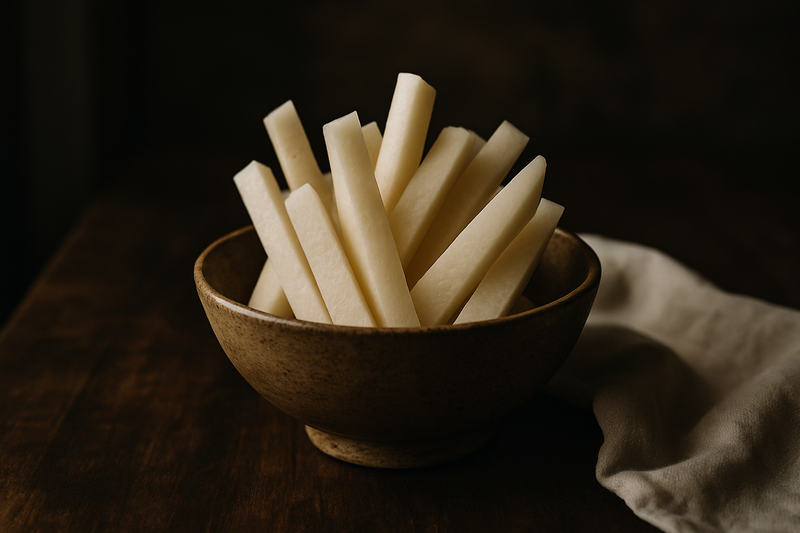
Jicama · Photograph
Discover jicama health benefits and nutrition facts: this low-calorie Mexican root is packed with prebiotic fiber, vitamin C, and water, making it a smart addition for digestion, blood sugar, and weight management. Learn how to eat it, who should take care, and what the evidence actually says.
Key Nutrients
% Daily Value based on 2,000 cal diet
Key active compounds
- Inulin — A soluble, non-digestible fiber (a type called a prebiotic polysaccharide) that passes through the small intestine intact and is fermented by bacteria in the colon, promoting beneficial microbes like Bifidobacteria.
- Fructooligosaccharides (FOS) — Short chains of fructose-based sugars that act similarly to inulin as prebiotic fibers; found naturally in jicama, chicory, and garlic.
- Vitamin C — A water-soluble antioxidant vitamin that protects cells from oxidative damage (damage caused by unstable molecules called free radicals), supports collagen production, and helps the immune system function.
- Flavonoids (minor amounts) — Polyphenolic plant compounds with antioxidant and mild anti-inflammatory properties; present in small quantities in jicama, adding to its overall antioxidant profile.
Prep and pairing ideas
Jicama is one of the easier vegetables to prepare — the main task is peeling its thick, papery brown skin with a vegetable peeler or knife to expose the clean white flesh beneath.
Classic lime and chili sticks: Cut peeled jicama into thin matchsticks or wedges, squeeze fresh lime juice over them, and dust with chili powder or Tajín (a Mexican chili-lime seasoning). This is the street-food classic and genuinely one of the best ways to eat it — zero cooking required.
Jicama slaw: Shred or julienne (cut into thin strips) jicama and toss with shredded red cabbage, carrot, cilantro, lime juice, and a pinch of salt. The crunch holds up for hours, making it a great make-ahead side dish or taco topping. Jicama pairs naturally with cabbage because their mild flavors complement each other and their textures work similarly in slaws.
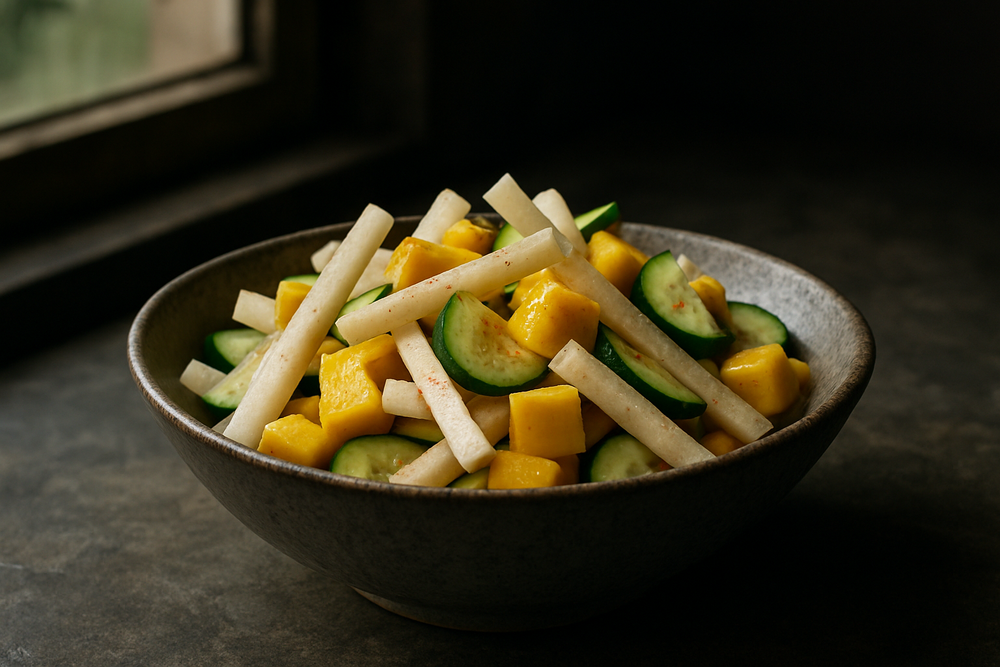
Jicama and mango salad: Cube jicama and combine with diced mango, cucumber, red onion, jalapeño, and lime. The jicama's neutral crunch balances mango's sweetness while adding fiber that slows the sugar absorption from the fruit — a practical pairing beyond the flavor.
Stir-fry addition: Add thin jicama slices to a vegetable stir-fry in the last 2 minutes of cooking. It stays pleasantly crisp where water chestnut would go soft, and it absorbs the flavors of sauces well.
Jicama "fries": Cut into thick wedges, toss lightly with olive oil and smoked paprika, and roast at 200°C / 400°F for 25–30 minutes. They will not go as crispy as potato fries but work well as a lower-starch alternative.
Bottom line
Jicama is a genuinely useful whole food that earns its place in a plant-based diet through practical, everyday nutrition: very low in calories, high in water, rich in prebiotic fiber, and a solid source of vitamin C. The evidence base is strongest for its role in digestive health (via prebiotic fibers) and as a low-calorie, low-GI food that supports weight management and blood sugar stability — though most of this evidence comes from research on its key nutrients rather than jicama-specific clinical trials.
It is easy to eat, requires no cooking, and fits naturally into snacking, salads, and slaws. The one non-negotiable safety rule is simple: eat only the root, and keep the seeds, pods, and plant parts away from children and out of your kitchen. Within those parameters, jicama is a low-risk, high-reward addition to most people's vegetable rotation.
Looking to build a diet around foods that support gut health and steady energy? Explore our [/goals] section for ingredient-matched eating plans.
How Jicama Compares
| Compared with | What's different |
|---|---|
| Jicama vs. Water chestnut | Jicama is sweeter and crispier, whereas water chestnut is starchier and holds its crunch better when boiled. |
| Jicama vs. Potato | Jicama is much lower in starch and calories, with a mild apple-like crunch compared to a floury texture. |
| Jicama vs. Daikon radish | Jicama has a neutral, watery sweetness while daikon is pungent, peppery, and softer when cooked. |
Health Benefits
Things to Know
Only eat the root.: The seeds, pods, leaves, and vines of the jicama plant contain rotenone — a natural insecticidal compound — and are considered toxic for humans. Always buy prepared jicama root only, and keep the plant's above-ground parts away from children.
Start slow with fiber.: If you are not used to eating much fiber, add jicama gradually (start with ½ cup) to avoid gas and bloating. Your gut bacteria need time to adjust.
IBS and FODMAP sensitivity.: Jicama's inulin and FOS are high-FODMAP fibers. People following a low-FODMAP diet for IBS should be cautious and may need to limit portion sizes or avoid it during a FODMAP elimination phase.
Diabetes and blood sugar medications.: Jicama's low GI and high fiber are generally helpful for blood sugar management, but count its carbohydrates (roughly 5 g net per cup) within your overall dietary plan. If you use insulin or oral hypoglycemic medications, monitor how dietary changes affect your readings.
Kidney disease.: Jicama adds modest potassium (~195 mg per cup). For individuals on potassium-restricted diets due to chronic kidney disease, cumulative intake from all vegetables matters — discuss with your dietitian.
Potassium-altering medications.: Those on potassium-sparing diuretics or ACE inhibitors managing blood pressure should note jicama's potassium contribution alongside other high-potassium foods.
Medication absorption.: High-fiber meals can theoretically slow the absorption of some oral medications. If you take time-sensitive medications, spacing them from very high-fiber meals is a general precaution, though typical jicama portions are unlikely to cause meaningful issues.
Pregnancy and children.: The root itself is safe; the key caution is ensuring seeds, pods, and plant parts never enter the food supply or the reach of children.
Glossary
Shop This Ingredient
Stock your pantry with quality jicama.
Buy on AmazonAs an Amazon Associate, Plantopedia earns from qualifying purchases. This costs you nothing extra and helps us keep the encyclopedia free.
Frequently Asked Questions
Heart and circulation Jicama brings three nutrients that broader cardiovascular research has consistently linked to heart health: dietary fiber, potassium, and vitamin C. Soluble fiber can help lower LDL (low-density lipoprotein, often called "bad") cholesterol by binding to cholesterol-containing bile acids in the gut and carrying them out of the body. Potassium helps regulate blood pressure by counteracting the effects of sodium. Vitamin C supports the integrity of blood vessel walls. At 195 mg of potassium and 6.4 g of fiber per cup, jicama can contribute meaningfully to these daily targets when eaten regularly. That said, there are no large randomized controlled trials (studies where participants are randomly assigned to eat jicama or not) that have tested jicama specifically on heart disease outcomes, so benefits here are inferred from its nutrient composition rather than direct evidence. Digestive health and microbiome This is where jicama arguably has its strongest nutritional story. Its inulin and fructooligosaccharides (FOS) are classified as prebiotic fibers — meaning they are not digested by human enzymes but instead feed beneficial bacteria in the colon. Human studies on inulin-type prebiotics (not always from jicama specifically) show improvements in stool frequency, stool consistency, and populations of helpful bacteria like Bifidobacteria. Jicama fits neatly into this picture given its fiber content, though dedicated clinical trials using jicama as the sole test food are limited. The benefit is well supported for prebiotic fibers as a class; jicama is a practical, food-first way to get them. One important note: fermentable fibers like inulin and FOS can cause gas, bloating, or cramping in some people, especially if eaten in large amounts quickly or by those with irritable bowel syndrome (IBS) or sensitivity to FODMAPs (a group of fermentable carbohydrates that can trigger gut symptoms in sensitive individuals). Start with smaller servings and increase gradually. Blood sugar and metabolism Jicama is considered a low glycemic index (GI) food — meaning it causes a slower, more gradual rise in blood glucose compared with high-starch foods like white potato or white bread. With roughly 11.5 g of total carbohydrates per cup, of which about 6.4 g is fiber, the net digestible carbohydrate content is only around 5 g per serving. Its fiber also slows glucose absorption in the small intestine. Most specific human glycemic data come from studies of isolated prebiotic fibers rather than jicama itself, so benefits for blood sugar are mechanistically sound but extrapolated from its nutrient profile rather than proven in dedicated jicama trials. Still, for people managing diabetes or watching carbohydrate intake, jicama compares very favorably with potato (see the buying guide below). Inflammation and recovery Jicama's vitamin C content — roughly 30% of the daily reference intake per cup — makes it a useful contributor to antioxidant status. Vitamin C neutralizes free radicals, helps regenerate other antioxidants like vitamin E, and plays a role in reducing oxidative stress, which is a driver of chronic low-grade inflammation. Its minor flavonoids add a small additional antioxidant effect. Direct clinical trials measuring inflammatory biomarkers after jicama consumption are not well documented, so the anti-inflammatory angle is best framed as: jicama is a good food-source of antioxidants in a diet that cumulatively supports lower inflammation — not a standalone anti-inflammatory treatment.
Raw is the default and the best-studied form. Peeling and slicing jicama into sticks or cubes preserves its full vitamin C content (vitamin C is heat-sensitive and water-soluble, so cooking and boiling reduce it) and keeps the prebiotic fibers intact. Raw jicama also maintains its signature crunch, which is a big part of its appeal as a snack. Lightly stir-frying or sautéing jicama is a reasonable option and preserves most of its fiber, though some vitamin C is lost. Roasted "jicama fries" are a popular lower-carb alternative to potato fries, and while the texture changes (it stays firmer than potato), the fiber benefits remain largely intact. Avoid boiling jicama in large amounts of water for extended periods, as this leaches out water-soluble nutrients. Supplements or functional food products using jicama-derived inulin exist but have very limited clinical evidence specific to jicama as a source; most prebiotic supplement research uses chicory-derived inulin instead. Bottom line on form: Fresh, raw jicama sticks eaten peeled are your best nutritional bet and the most practical everyday option.
There is no official recommended daily amount for jicama. Based on typical dietary use and the research on prebiotic fiber intake, a practical range is ½ cup to 2 cups (approximately 65–260 g) per day for most adults. ½ cup (65 g): A conservative starting point if you are new to high-fiber vegetables or have a sensitive gut. Provides about 3 g of fiber and 25 calories. 1 cup (130 g): A natural serving size as a snack or salad component. Provides 6.4 g of fiber and 49 calories. This is the amount supported by most nutrition analyses. 2 cups (260 g): Appropriate for active adults used to high-fiber diets, contributing roughly 13 g of fiber across the day. At this level, sensitive individuals may notice some gas or bloating. Human studies on prebiotic fibers like inulin and FOS often use doses of 5–20 g per day to see measurable microbiome effects. A 1–2 cup serving of jicama contributes meaningfully toward the lower end of that range from food, which is a comfortable and sustainable approach. Start low and build. If jicama is new to you, begin with ½ cup a few times a week and increase as your digestion adapts. Most people tolerate 1 cup without issue once their gut adjusts.
The snacker trying to cut back on processed food Reaches for chips, crackers, or pretzels out of habit when bored or stressed. Needs a crunchy, satisfying option that does not spike blood sugar or add refined starch. Jicama sticks with lime and chili deliver the crunch and the flavor hit with a fraction of the calories and with actual fiber — not empty energy. The person managing blood sugar or following a lower-carb pattern Actively watching net carbohydrate intake for blood sugar control, type 2 diabetes management, or insulin sensitivity. Misses the texture of potato or starchy vegetables. Jicama offers 5 g net carbs per cup versus 26 g for a medium potato — a substantial difference that still allows a satisfying serving of something solid and filling.
Quick Answers
Common questions, answered in a line.
The only safe part of the jicama plant to eat is the root; all above-ground parts like seeds, pods, leaves, and vines are toxic to humans. These parts contain rotenone, a natural insecticidal compound, and should be kept away from children and the kitchen.
Jicama is a smart choice for blood sugar management because it is a low-GI food that is high in fiber and water. Its prebiotic fiber, specifically inulin and fructooligosaccharides, helps slow sugar absorption and supports overall metabolic stability.
Jicama is an excellent food for weight management because it is very low in calories, high in water content, and rich in filling prebiotic fiber. These attributes help you feel full longer while keeping your overall caloric intake low.
Jicama supports digestive health primarily through its high content of inulin and fructooligosaccharides (FOS). These are prebiotic fibers that pass through the small intestine to be fermented by beneficial bacteria in the colon, such as Bifidobacteria.
You can eat jicama raw by peeling the thick, papery brown skin to reveal the white flesh, which can then be sliced into sticks or cubes. Popular ways to serve it include dusting it with chili powder and lime juice, or tossing it into fresh slaws and salads.
People with IBS or those following a low-FODMAP diet should be cautious with jicama because its inulin and FOS fibers are considered high-FODMAP. It is recommended to limit portion sizes or avoid it during the elimination phase to prevent gas and bloating.
Jicama contains vitamin C and minor amounts of flavonoids, both of which provide antioxidant properties. These compounds help protect your cells from oxidative damage caused by free radicals and support a healthy immune system.
For Readers in the USA
Local context — sourcing, seasonality, and regional notes.
Most major U.S. grocery chains like Whole Foods, Trader Joe's, Kroger, and Publix carry jicama year-round in the produce section, often near other root vegetables or tropical fruits. You can also find it at Mexican markets (mercados) and Asian grocery stores, where it is sometimes sold pre-peeled and sliced for convenience.
While native to Mexico, jicama is grown commercially in the warmest parts of the United States, specifically in Southern California, Florida, and Hawaii. Because it requires a long, frost-free growing season of about nine months, most jicama found in U.S. supermarkets is imported from Mexico to ensure year-round availability.
When buying jicama in the U.S., look for the USDA Organic seal if you want to ensure it was grown without synthetic pesticides, though the thick, inedible skin provides a natural barrier for the edible flesh. The FDA recommends washing the outer skin thoroughly before peeling to prevent cross-contamination from soil or bacteria to the knife and inner flesh.
In the U.S., jicama is most culturally celebrated in Southwest and Tex-Mex cuisine, frequently served as a refreshing street snack seasoned with Tajín and lime. It has also gained popularity nationwide as a gluten-free "tortilla" alternative, with many U.S. health food stores selling thinly sliced jicama wraps.
AI Clinical Review
- Jicama is correctly presented as a low-calorie, high-water, high-fiber root; about 1 cup (~130 g) provides ~49 kcal and ~6 g fiber, much of it prebiotic (inulin/FOS).
- The strongest benefits are framed around digestive support and gentler blood-sugar rises, which aligns with evidence for inulin-type fibers and low–glycemic-load foods.
- Vitamin C content (~30% DV per cup) and small amounts of polyphenols are accurately positioned as supportive antioxidants, not cures.
- Safety is emphasized appropriately: only the peeled root is edible; seeds, pods, leaves, and vines contain toxic compounds (e.g., rotenone).
- Few human trials test jicama itself on outcomes like cholesterol, glycemic control, or inflammation; most benefits are inferred from its nutrients and prebiotic fibers.
- Reported glycemic index/load can vary with preparation and portion, and individual glucose responses differ; data specific to jicama are limited.
- The exact inulin/FOS dose from typical servings and the magnitude of microbiome changes remain under-quantified compared with purified prebiotic studies.
- Anti-inflammatory claims largely reflect vitamin C’s general role; trials measuring biomarker changes after jicama intake are sparse.
- A practical range of ½–2 cups per day works for most; increase gradually to reduce gas/bloating, especially if you have IBS or follow a low-FODMAP plan.
- Raw, peeled jicama retains vitamin C best; light sauté/roasting preserves fiber but heat (and especially boiling) reduces vitamin C.
- If you manage diabetes, still count the ~5 g net carbs per cup and monitor your own readings; medication users (insulin/oral agents) may need adjustments with dietary changes.
- People with chronic kidney disease or those on ACE inhibitors/potassium-sparing diuretics should factor in jicama’s modest potassium and discuss totals with a clinician.
Only the root is edible; the vines, seeds, and pods are toxic.
References
- USDA FoodData Central — Yambean (jicama), raw, FDC ID 170073: full nutrient data per 100 g and per serving (fdc.nal.usda.gov)
- Cleveland Clinic — Jicama: Nutrition Facts and Benefits: overview of jicama's nutrients and safety considerations (health.clevelandclinic.org)
- Medical News Today — Jicama: Health benefits, nutrition, and diet tips: summary of digestive, blood sugar, and antioxidant evidence (medicalnewstoday.com)
- Healthline — 8 Health and Nutrition Benefits of Jicama: evidence-based overview including prebiotic fiber data (healthline.com)
- WebMD — Jicama: Health Benefits and Nutrition: consumer-friendly safety and benefit summary (webmd.com)
- Vively — Why jicama deserves a spot in your low GI diet: discussion of glycemic index and blood sugar context (vively.com.au)
- Pull Up Your Plants — Jícama: A Toxic Plant with Tasty Roots: detailed explanation of which plant parts are toxic and why (pullupyourplants.com)
- PH Labs — Let's Get to the Root of Why Jicama Is So Good: prebiotic fiber and vitamin C contribution overview (phlabs.org)
- Scholar UNAND — Jicama rich in fructooligosaccharides including inulin (scholarly introduction PDF on FOS content): (scholar.unand.ac.id)
- MyPlate / USDA — Eat Healthy: Vegetables: federal guidance on vegetable intake and public health context (myplate.gov)
Know Your Numbers
Eating healthy is a start. Now get to know your biomarkers.
Food changes bloodwork — inflammation, lipids, blood sugar and nutrient status all respond to what you eat. 59 markers from $59.
- Results in 7–10 days at 2,000+ Quest sites
- Licensed provider reviews every result
- One flat price, no membership, HSA/FSA eligible
Educational information only, not medical advice. Panels are ordered and reviewed through our licensed partner; Plantopedia may earn a commission.