Kaffir Lime — health benefits and uses
A cornerstone aromatic in Southeast Asian cooking and traditional tonics.
The Short Answer
Kaffir lime is primarily used for its aromatic leaves and bumpy rind, which contain essential oils like citronellal that provide a distinct floral-citrus flavor to Thai curries and soups.
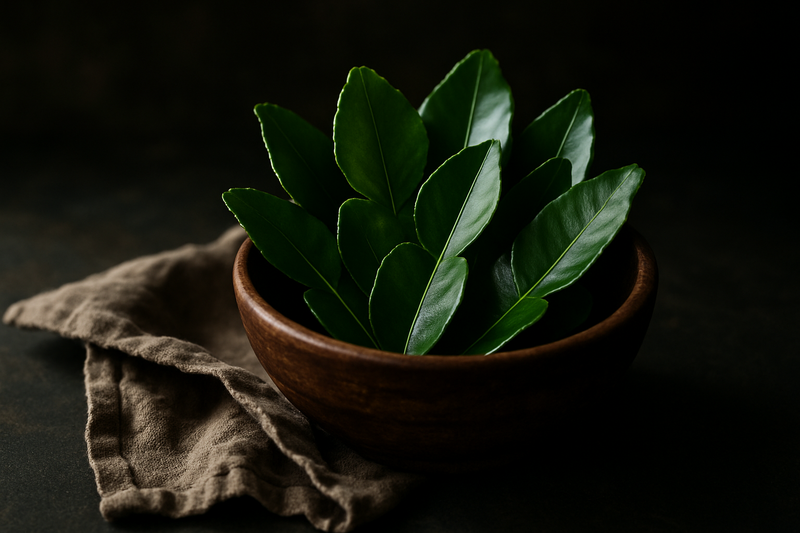
Kaffir Lime · Photograph
Discover the kaffir lime health benefits and how to use it — from fragrant leaves in Thai curries to zesty rind in curry pastes. Learn what the science says, safe daily amounts, who should take care, and practical prep tips for this aromatic citrus herb.
Key Nutrients
% Daily Value based on 2,000 cal diet
Key active compounds
The aromatic power of kaffir lime comes from two overlapping chemical families:
Essential-oil terpenes (volatile, fragrance-giving molecules found mainly in the rind and leaves):
- Citronellal — the dominant compound in leaf essential oil; lemony, antimicrobial, and anti-inflammatory in lab studies
- β-Pinene — a piney monoterpene (small fragrant molecule) with antioxidant and antimicrobial properties
- Sabinene — adds the spicy-citrus edge; shows antimicrobial activity in vitro (in cell experiments)
- Citronellol — a floral-citrus alcohol linked to antioxidant effects
- γ-Terpinene — antioxidant-active; found in both peel and pulp
- Terpinen-4-ol — antimicrobial and antioxidant; also the key active in tea tree oil
- Linalool — floral, calming-adjacent in aromatherapy research
Flavonoids and polyphenols (plant pigments with antioxidant activity, found mainly in peel extracts):
- Hesperidin and neohesperidin — citrus flavanone glycosides (sugar-bound plant pigments) linked to vascular and metabolic support in animal studies
- Naringin and naringenin — antioxidant flavanones that may influence glucose and lipid metabolism
- Diosmin — a vascular-protective flavonoid common in citrus peels
- Epicatechin and kaempferol — polyphenols adding to overall antioxidant capacity
Prep and pairing ideas
Three everyday ways to use kaffir lime:
- Thai green or red curry — Add 3–4 whole leaves to the simmering curry base alongside lemongrass and galangal. The leaves infuse the coconut milk with a floral citrus depth. Remove before serving, or leave in for guests to push aside (they are chewy and tough when whole). Pair with tofu, tempeh, or chickpeas for a protein-rich plant-based meal.
- Tom Kha soup — Roughly tear 2–3 leaves and drop into the broth with galangal and lemongrass. Kaffir lime leaves, galangal, and lemongrass form a classic Thai aromatic trio — each amplifies the others' fragrance and reputed anti-inflammatory properties.
- Zest in curry paste — Finely grate the bumpy rind into a homemade green curry paste alongside fresh chilli, coriander root, shallots, garlic, and cumin. The zest provides bitterness and oil that the leaves alone cannot. Start with ½ teaspoon per paste batch and adjust to taste — it is powerful.
Storage tip: Fresh leaves freeze beautifully. Seal in an airtight bag and freeze for up to 6 months with almost no loss of flavour. This is far superior to dried leaves for cooking.
Buying guide
Fresh vs frozen vs dried vs supplement — what to choose:
- Fresh leaves: The gold standard for flavour and phytochemical content. Look for deep green, glossy double leaves without yellowing or browning. Available at Asian grocery stores, some farmers' markets, and a growing number of mainstream supermarkets. Check they smell strongly aromatic when gently torn — if they have little scent, the oils have degraded.
- Frozen leaves: Nearly as good as fresh. A reliable choice when you cannot get to a specialist grocer regularly. No additives needed; the freezing process preserves essential oils well.
- Dried leaves: Convenient but significantly less aromatic. Use roughly double the amount called for in a recipe compared with fresh. Best for slow-cooked dishes or teas where intensity matters less. Check the pack for a production date — dried leaves older than 12 months may have lost most of their volatile oils.
- Dried/frozen zest: Less common but useful. Avoid zest products with added sugar or preservatives.
- Supplements and extracts: Not recommended for unsupervised use. There are no standardised doses, no regulatory-approved health claims, and the evidence base remains preclinical. If you see kaffir lime extract sold alongside therapeutic claims, treat them sceptically.
- Label tip: In many English-language markets, look for "makrut lime leaves" — this is the preferred alternative name used by many culinary writers and is increasingly common on packaging.
Bottom line
Kaffir lime is a remarkable aromatic herb whose leaves and bumpy rind deliver intense flavour alongside a genuinely interesting array of antioxidant terpenes and flavonoids. The science is promising — particularly for anti-inflammatory, metabolic, and mood-supporting effects — but most of it is still in the early (preclinical) phase. The one well-designed human study supports inhaled use for alertness and mood; the digestive, heart, and blood-sugar benefits need human trials to confirm.
For most people, the most practical and evidence-consistent approach is simply to cook with kaffir lime more often. Add the leaves to your next Thai curry. Grate a little zest into a paste. Steep a leaf in hot water after dinner. At culinary doses, this aromatic citrus herb is low risk, high flavour, and firmly in the spirit of food as medicine.
Explore more: Looking for a complete meal plan that puts aromatic herbs like kaffir lime to work? Browse our evidence-based health goals section to find ingredient guides matched to what you want to support.
How Kaffir Lime Compares
| Compared with | What's different |
|---|---|
| Kaffir Lime vs. Persian Lime | Kaffir lime is prized for its bumpy, aromatic rind and leaves; Persians limes for their juice. |
| Kaffir Lime vs. Key Lime | Kaffir lime has a floral, soapy aroma; Key lime is tarter and used primarily for its juice. |
Health Benefits
Things to Know
Pregnancy and breastfeeding: Culinary amounts in food are generally considered safe. Concentrated extracts and essential oils lack adequate safety data — avoid beyond normal cooking use.
Children: Keep essential oils out of reach. Concentrated oral preparations are not appropriate for children.
Reflux, gastritis, or ulcers: The very sour juice and strong peel decoctions may worsen symptoms. Stick to mild preparations and take them after food, not on an empty stomach.
Citrus allergy or fragrance sensitivity: The peel oil contains multiple fragrance allergens (linalool, citronellol). Patch-test any topical product. If cooking with fresh leaves triggers itching, nasal symptoms, or skin reactions, stop use.
Asthma or reactive airways: Strong citrus aromas from essential oils or heavy cooking use could trigger bronchospasm in sensitive individuals. Start with low exposure.
Diabetes medication: Animal evidence suggests blood-glucose-lowering effects from concentrated extracts. If you take insulin, sulfonylureas, or metformin, discuss any supplemental (non-culinary) use with your doctor, as there is a theoretical risk of additive hypoglycaemia (low blood sugar).
Blood pressure or cholesterol medication: Preclinical evidence of antihypertensive and lipid-lowering effects means high-dose extracts could theoretically have additive effects with statins or antihypertensive drugs. Culinary use is not a concern; supplements warrant professional oversight.
Essential oil — never ingest: This applies to all culinary essential oils. Kaffir lime essential oil is for inhalation or diluted topical use only.

Prep Ideas
- — Thai green or red curry — Add 3–4 whole leaves to the simmering curry base alongside lemongrass and galangal. The leaves infuse the coconut milk with a floral citrus depth. Remove before serving, or leave in for guests to push aside (they are chewy and tough when whole). Pair with tofu, tempeh, or chickpeas for a protein-rich plant-based meal.
- — Tom Kha soup — Roughly tear 2–3 leaves and drop into the broth with galangal and lemongrass. Kaffir lime leaves, galangal, and lemongrass form a classic Thai aromatic trio — each amplifies the others' fragrance and reputed anti-inflammatory properties.
- — Zest in curry paste — Finely grate the bumpy rind into a homemade green curry paste alongside fresh chilli, coriander root, shallots, garlic, and cumin. The zest provides bitterness and oil that the leaves alone cannot. Start with ½ teaspoon per paste batch and adjust to taste — it is powerful.
Glossary
Shop This Ingredient
Stock your pantry with quality kaffir lime.
Buy on AmazonAs an Amazon Associate, Plantopedia earns from qualifying purchases. This costs you nothing extra and helps us keep the encyclopedia free.
Frequently Asked Questions
Kaffir lime (Citrus hystrix), also called makrut lime, is a bumpy-skinned Southeast Asian citrus whose double-lobed leaves and aromatic rind are the edible prize — not the flesh or juice. Regular limes (Persian or key limes) are grown for their juice, which is mild and clean-tasting. Kaffir lime's essential oils are far more intense and floral, making it a distinct culinary herb rather than a substitute citrus fruit.
For most healthy adults, using 2–6 kaffir lime leaves daily in cooking or as a mild tea is considered low risk and consistent with normal herb use. The leaves are chewy and tough, so they are typically removed from cooked dishes or sliced very finely. People with citrus allergies, reflux, asthma, or those who are pregnant or breastfeeding should stick to small culinary amounts and check with a health professional before consuming concentrated preparations.
Culinary guidance — not a clinical prescription — suggests 2–4 fresh leaves per dish, or 4–8 leaves spread across meals in a day. For a leaf infusion (tea), 1–2 leaves per 250 mL cup, up to 1–2 cups after meals, is a reasonable food-like approach. There is no established therapeutic dose; if you are looking to use extracts for health purposes rather than flavour, speak with a qualified practitioner first.
Kaffir lime leaves contain antioxidant terpenes (citronellal, linalool, β-pinene) and flavonoids (hesperidin, naringin) that show anti-inflammatory, antimicrobial, and metabolic effects in cell and animal research. One human study found that inhaling the essential oil improved alertness and mood. Evidence for digestive comfort, heart health, and blood-sugar support exists at the preclinical level but has not yet been confirmed in large human trials.
At normal culinary doses — leaves in a curry, a strip of zest in a soup — kaffir lime is unlikely to cause problems and fits well within a whole-food plant-based diet. However, concentrated extracts have shown blood-glucose-lowering and blood-pressure-lowering effects in animal models, which raises a theoretical risk of additive effects with antidiabetic or antihypertensive medications. If you have diabetes or a cardiovascular condition and want to use kaffir lime beyond cooking, discuss it with your doctor or dietitian first.
Standard culinary use — a few leaves in a Thai dish — is generally considered safe during pregnancy in the same way other common culinary herbs are. There is insufficient safety data for concentrated extracts, strong decoctions, or essential oil use during pregnancy or breastfeeding, so these should be avoided. If in doubt, check with a midwife or obstetrician.
Add 3–4 whole or roughly torn leaves to the simmering liquid of a curry or soup (alongside lemongrass and galangal for the classic Thai aromatic base). Let them infuse for 10–20 minutes, then remove before serving — they are tough to chew whole. If you want to eat the leaves, slice them very finely across the spine before adding. For the strongest flavour in curry paste, grate ½–1 teaspoon of the bumpy rind directly into the paste.
Quick Answers
Common questions, answered in a line.
You should choose fresh kaffir lime leaves as the gold standard because they contain the highest levels of flavor and phytochemicals. Look for deep green, glossy double leaves that smell strongly aromatic when torn; if fresh is unavailable, frozen leaves are the next best choice.
You can store fresh kaffir lime leaves by sealing them in an airtight bag and placing them in the freezer for up to six months. This method is superior to drying because it preserves the essential oils and flavor with almost no loss of quality.
Kaffir lime contains active essential-oil terpenes like citronellal, β-pinene, and sabinene, alongside antioxidant flavonoids such as hesperidin and naringin. These compounds are linked to antimicrobial, anti-inflammatory, and metabolic support in various laboratory and animal studies.
You should use roughly double the amount of dried kaffir lime leaves compared to fresh leaves called for in a recipe. While convenient, dried leaves are significantly less aromatic than fresh or frozen versions and are best suited for slow-cooked dishes or teas.
Kaffir lime rind contains powerful essential oils and provides a bitterness that the leaves alone cannot offer. To use it, finely grate the bumpy zest into curry pastes, starting with just half a teaspoon per batch due to its intense potency.
People with citrus allergies or fragrance sensitivities should use caution as the peel oil contains allergens like linalool and citronellol. Additionally, those with asthma should be careful, as strong citrus aromas from heavy cooking or oils could trigger breathing difficulties.
For Readers in the USA
Local context — sourcing, seasonality, and regional notes.
You can buy fresh or frozen makrut lime leaves at H Mart, 99 Ranch Market, and local Asian grocers, or order them online from specialty produce retailers. While major chains like Whole Foods or Wegmans occasionally carry them, they are most reliably found in the refrigerated or freezer sections of stores specializing in Southeast Asian ingredients.
In the US, kaffir lime trees are primarily grown in USDA Plant Hardiness Zones 9–11, including parts of California, Florida, Texas, and Arizona. Because the trees are sensitive to frost, gardeners in northern states typically grow them in pots to be moved indoors during winter months.
In the US, you will increasingly see these labeled as "makrut lime leaves" due to the traditional name being a racial slur in certain regions, such as South Africa. Most American culinary publications and major retailers have transitioned to using "makrut" to ensure the ingredient is marketed respectfully.
The FDA regulates kaffir lime leaves as a food ingredient, and while there is no specific "organic" requirement, you should look for the USDA Organic seal if you want to ensure the leaves were grown without synthetic pesticides. Always wash fresh leaves thoroughly under cold water before adding them to your dishes to remove any surface residues.
AI Clinical Review
- Clearly explains that makrut/kaffir lime is used mainly for its aromatic leaves and rind, and frames it appropriately as a culinary herb rather than a juice fruit.
- Accurately notes that most health findings are preclinical (cell/animal), with the strongest human data limited to inhaled essential oil improving mood/alertness.
- Provides practical, food-level use ranges (a few leaves per dish; small amounts of zest; mild infusions) that are reasonable and low risk for most adults.
- Emphasizes that concentrated extracts and undiluted essential oils are not substitutes for prescribed treatment and carry more safety considerations.
- Cardiometabolic effects (blood pressure, cholesterol, blood sugar) are based mainly on animal studies using concentrated extracts; there are no robust human trials confirming clinical benefit yet.
- Digestive comfort claims are grounded in traditional use; controlled human studies validating carminative or antispasmodic effects are limited.
- Anti-inflammatory signals come from lab models; how these translate to symptom relief in conditions like arthritis or IBD is uncertain and dose-dependent.
- Aromatherapy findings are from small, short-term studies with subjective outcomes; replication and larger trials would strengthen confidence.
- Typical culinary amounts are generally safe. Avoid ingesting essential oils; if using aromatically, keep exposures modest and discontinue if respiratory irritation occurs, especially in asthma.
- If pregnant, breastfeeding, or preparing food for children, stick to normal culinary use and avoid concentrated extracts and essential oils due to limited safety data.
- People on diabetes or blood pressure medications should be cautious with non-culinary extracts because of theoretical additive effects; consult a clinician first.
- For guidance: 2–4 leaves per dish (often 4–8 leaves across a day), 1–2 leaves per 250 mL cup for a mild infusion (up to 1–2 cups/day), and about ½–1 tsp zest per recipe. Fresh or frozen leaves retain aroma better than dried, which may help with consistent culinary outcomes.
The fruit is mostly zest and rind; not eaten as flesh.
References
- USDA MyPlate: Fruits overview — general dietary fruit guidance (myplate.gov)
- USDA FoodData Central — nutrient composition reference for citrus fruits (fdc.nal.usda.gov)
- Systematic review: Anti-inflammatory effects of Citrus hystrix DC — reviews cell and animal evidence for inflammatory marker reductions; no large human trials yet (pubmed.ncbi.nlm.nih.gov)
- Comprehensive review: Potential therapeutic effects of Citrus hystrix DC and its constituents — covers antidiabetic, antihypertensive, antihyperlipidaemic, and antioxidant preclinical data (pmc.ncbi.nlm.nih.gov)
- Human study: Stimulating effect of Citrus hystrix essential oil inhalation — controlled trial showing improved alertness, vigour, and mood in human participants (agris.fao.org)
- Chemical, aroma and pro-health characteristics of kaffir lime — compositional and phytochemical analysis including flavonoid profile (pmc.ncbi.nlm.nih.gov)
- Kaffir lime peel and pulp as cosmetic raw materials: antioxidant and phytochemical profile — analytical study identifying terpene and polyphenol content in peel and pulp (chem.pg.edu.pl)
- **Antioxidant potential and phytochemical profile of **Citrus hystrix — documents hesperidin, neohesperidin, naringin, diosmin, and other flavonoids in peel extracts (jssm.umt.edu.my)
- Makrut Lime Leaves: Everything You Need to Know (Hot Thai Kitchen) — practical culinary reference for forms, use, and storage (hot-thai-kitchen.com)
- Kaffir lime leaves benefits, uses, dosage, and risks — herbal safety and practical dosage guidance (vitalibrary.com)
Know Your Numbers
Eating healthy is a start. Now get to know your biomarkers.
Food changes bloodwork — inflammation, lipids, blood sugar and nutrient status all respond to what you eat. 59 markers from $59.
- Results in 7–10 days at 2,000+ Quest sites
- Licensed provider reviews every result
- One flat price, no membership, HSA/FSA eligible
Educational information only, not medical advice. Panels are ordered and reviewed through our licensed partner; Plantopedia may earn a commission.