Kersting's Groundnut — health benefits and uses
A traditional Sahelian legume grown for resilient, nutritious harvests.
The Short Answer
Kersting's groundnut is a nutrient-dense West African legume providing 19.4g of protein and 15mg of iron per 100g serving. It is best prepared by soaking overnight and boiling for 60–90 minutes to ensure tenderness and optimal nutrient absorption.

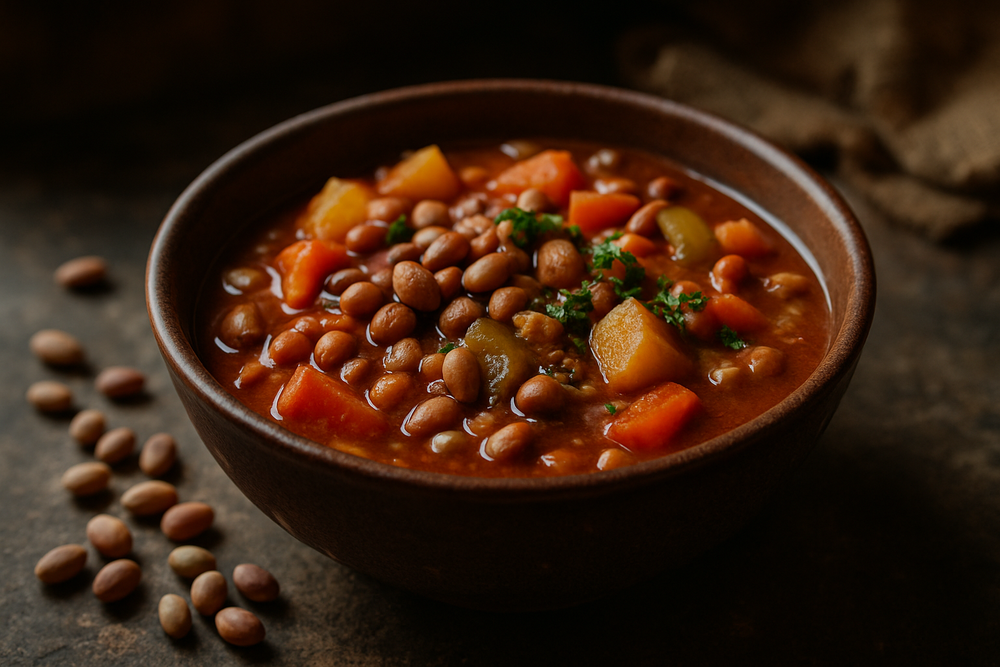
Kersting's Groundnut · Photograph
Discover Kersting's groundnut nutrition and health benefits — a dense, protein-rich West African pulse packed with iron, fiber, and B vitamins. Learn how to cook it safely, how it compares to Bambara groundnut, and what the research actually says.
Key Nutrients
% Daily Value based on 2,000 cal diet
Key active compounds
- Protein and essential amino acids — Approximately 19–25% crude protein; rich in arginine, histidine, and phenylalanine; total essential amino acids estimated at roughly 42% of total protein, meeting FAO/WHO reference patterns for school-age children.
- Complex carbohydrates and resistant starch — Around 57–81% carbohydrates (dry weight varies by study and accession), mostly starch with a slower digestion profile when eaten as whole boiled seeds.
- Dietary fiber — Approximately 5.5 g per 100 g dry seeds; contributes to satiety and supports gut regularity.
- Tannins — Polyphenolic compounds (plant-derived molecules with multiple ring structures) that act partly as antioxidants and partly as antinutrients by binding proteins and minerals. Boiling markedly reduces them.
- Phytate (phytic acid) — A phosphorus-storage compound in seeds that can bind iron, zinc, and calcium, reducing how much you absorb. Soaking and boiling lower phytate levels significantly.
- Haemagglutinins (lectins) — Proteins in raw legumes that bind to carbohydrate structures on cell surfaces. When legumes are thoroughly cooked, these are inactivated and are no longer a concern.
- Bioactive peptides and arginine-rich protein fractions — Protein fragments released during digestion that may carry antioxidant or vascular activity; studied in vitro (in laboratory cell or test-tube settings) but not yet in human trials.
- Phenolic antioxidants — When Kersting's groundnut flour is combined with other plant ingredients (e.g., lemon pomace), the total antioxidant capacity of the food product increases, suggesting the seeds contribute phenolic compounds to composite foods.
Prep and pairing ideas
Basic boiled Kersting's groundnut Rinse seeds, soak in cold water overnight, discard soaking water, cover with fresh water by 5 cm, and bring to a boil. Reduce heat and simmer for 60–90 minutes until completely tender. Season with salt, a little oil, and aromatics (onion, garlic, ginger work well).
Three practical pairings:
- With tomatoes and dark leafy greens (e.g., spinach or amaranth leaves) The vitamin C in tomatoes and the oxalic acid reduction from lightly cooking the greens both support non-heme iron absorption from the seeds. This is one of the most nutritionally strategic combinations you can make with this legume.
- With millet or sorghum porridge Stirring Kersting's groundnut flour into whole-grain porridge raises the protein and iron content of a low-cost staple breakfast — the food-science research basis for its use in composite flours. The amino acid profile of the legume complements the grain's lysine-limited protein.
- With orange juice or a squeeze of lemon Serving boiled seeds with a small glass of orange juice or a squeeze of fresh lemon over the dish can boost non-heme iron absorption by up to 2–3 times, according to general legume and iron-absorption research. Simple, practical, evidence-informed.
Troubleshooting
Gas and bloating This is the most common complaint with any pulse. Kersting's groundnut is no exception. Strategies that help: discard soaking water before cooking, cook with a small piece of dried ginger or kombu seaweed, chew thoroughly, and build portion size up gradually over two weeks. Symptoms usually improve as your gut microbiome adapts.
Seeds remain hard after cooking Older dried seeds or those stored improperly can take significantly longer to soften. If seeds are still hard after 90 minutes, they may have been stored for more than one year. Try a pressure cooker (15–20 minutes at full pressure), which also more effectively reduces antinutrients. Do not eat if still hard — undercooked seeds carry a lectin risk.
Finding Kersting's groundnut outside West Africa This is genuinely difficult. Specialty African food shops in major cities (London, New York, Paris) may carry it occasionally under local names such as "geocarpa groundnut." Online suppliers catering to West African diaspora communities are your best bet. When you do find it, buy a small quantity first to check freshness, then store in an airtight container in a cool, dry place for up to one year.
Bottom line
Kersting's groundnut is a genuinely impressive traditional pulse that has been quietly sustaining West African communities for generations without attracting the global attention it arguably deserves. Its combination of high plant protein (19–25%), very low fat, meaningful fiber, and exceptional iron content places it firmly among the most nutrient-dense whole legumes available. The evidence base is primarily compositional rather than clinical — large human trials simply haven't happened yet — so stated health benefits are best understood as informed inferences from its nutrient profile and from the extensive research on legumes as a food category.
What is well established: cook it thoroughly, pair it with vitamin C-rich foods to maximize iron uptake, introduce it gradually to your diet, and flag its mineral content to your healthcare provider if you manage kidney disease or iron overload conditions. As an underutilized, climate-resilient crop with strong nutritional credentials, it is also a small act of dietary biodiversity — and that matters too.
Curious how Kersting's groundnut fits into your broader health goals? Explore our plant-protein and mineral intake guides to see how pulses like this one can anchor a nutrient-dense, whole-food approach to eating.
How Kersting's Groundnut Compares
| Compared with | What's different |
|---|---|
| Kersting's Groundnut vs. Bambara Groundnut | Kersting's has a higher protein content and a milder, less nutty flavor profile. |
| Kersting's Groundnut vs. Peanut (Groundnut) | Kersting's groundnut is significantly lower in fat (approx 1%) compared to the peanut's 49%. |
Health Benefits
Things to Know
Always cook thoroughly.: Raw or undercooked seeds contain lectins (haemagglutinins) that can cause nausea, vomiting, and gastrointestinal distress. Boil until completely soft — no exceptions.
Legume allergy or peanut allergy.: If you have a diagnosed allergy to legumes, groundnuts (peanuts), or the broader bean family, speak with an allergist before trying Kersting's groundnut; cross-reactivity is possible.
Iron overload conditions.: The seeds are exceptionally high in iron. Individuals with hemochromatosis (a genetic condition causing the body to absorb too much iron) or other iron overload disorders should discuss intake with their doctor before eating Kersting's groundnut regularly.
Chronic kidney disease (CKD).: Each 100 g dry seed provides around 392 mg of phosphorus — a significant amount. People on phosphorus-restricted diets should count this carefully and consult their dietitian.
Potassium and phosphorus-restricted medications.: If you take ACE inhibitors, ARBs, or phosphate binders, flag the mineral content to your prescriber.
Medication timing.: High-fiber foods can slow the absorption of some oral medications. As a general precaution, take medications at least one hour before or two hours after a high-fiber meal.
Introduce gradually.: Start with a small serving (roughly 30–40 g cooked) and increase over one to two weeks to allow your gut microbiome to adapt and reduce gas and bloating.
Children.: Ensure seeds are very well boiled and mashed or finely chopped for young children to avoid choking hazards.
Pregnancy.: The high folate content of legumes in general is beneficial during pregnancy, but there is no specific human safety data on Kersting's groundnut during pregnancy; ensure it is always thoroughly cooked.
Prep Ideas
- — With tomatoes and dark leafy greens (e.g., spinach or amaranth leaves) The vitamin C in tomatoes and the oxalic acid reduction from lightly cooking the greens both support non-heme iron absorption from the seeds. This is one of the most nutritionally strategic combinations you can make with this legume.
- — With millet or sorghum porridge Stirring Kersting's groundnut flour into whole-grain porridge raises the protein and iron content of a low-cost staple breakfast — the food-science research basis for its use in composite flours. The amino acid profile of the legume complements the grain's lysine-limited protein.
- — With orange juice or a squeeze of lemon Serving boiled seeds with a small glass of orange juice or a squeeze of fresh lemon over the dish can boost non-heme iron absorption by up to 2–3 times, according to general legume and iron-absorption research. Simple, practical, evidence-informed.
Shop This Ingredient
Stock your pantry with quality kersting's groundnut.
Buy on AmazonAs an Amazon Associate, Plantopedia earns from qualifying purchases. This costs you nothing extra and helps us keep the encyclopedia free.
Frequently Asked Questions
Keep in mind: virtually all evidence below is compositional or inferred from legume research. No large-scale human clinical trials have yet tested Kersting's groundnut specifically. Heart and circulation Kersting's groundnut has no dedicated cardiovascular trials, but its nutritional profile aligns well with the food patterns linked to heart health in the broader legume literature. It is very low in saturated fat, supplies meaningful dietary fiber, and offers substantial plant protein — three characteristics Harvard's Nutrition Source identifies as characteristic of heart-supportive legumes. Its arginine-rich protein profile is theoretically interesting because arginine is a precursor to nitric oxide (a molecule that helps relax blood vessel walls), though this link has not been tested clinically for this specific pulse. Consider it a smart swap for higher-fat protein sources, not a standalone cardiovascular therapy. Digestive health and microbiome At roughly 5.5 g of fiber per 100 g of dry seed, Kersting's groundnut contributes meaningful fiber to a meal. Dietary fiber (the indigestible carbohydrate fraction that passes to the large intestine) feeds beneficial gut bacteria, supports regular bowel movements, and helps maintain a healthy gut environment — benefits well established across the legume category. Like all high-fiber pulses, it may cause temporary gas or bloating, especially when added to the diet quickly. Starting with smaller portions and building up gradually usually resolves this (see "Troubleshooting" below). Blood sugar and metabolism No glycemic index studies have been conducted specifically on Kersting's groundnut. However, its composition — high fiber, substantial protein, very low fat, and a starchy carbohydrate base — mirrors pulses that consistently produce lower post-meal blood sugar rises than refined grains in glycemic studies. When eaten as whole boiled seeds (as opposed to refined flour), the food matrix slows starch digestion. This makes it a reasonable whole-food choice within a balanced diet for people monitoring blood sugar, but no direct evidence justifies a therapeutic claim. Iron and nutrient density for plant-based diets This is arguably where Kersting's groundnut shines brightest. At approximately 15 mg of iron per 100 g dry seed, it is among the highest plant-based iron sources available. Plant-sourced iron is non-heme iron (a form less readily absorbed than the heme iron in meat), but absorption can be meaningfully improved by consuming it alongside vitamin C-rich foods — think tomato sauce, citrus juice, or leafy greens. For vegetarians, vegans, or populations in West Africa where red meat intake is low, this makes Kersting's groundnut a strategically valuable addition to the diet. It also provides notable thiamin, riboflavin, niacin, and phosphorus, rounding out its micronutrient contribution. Inflammation and antioxidant potential Two food-science studies — one adding Kersting's groundnut proteins to orange juice, another enriching rice flour with the seed flour — found that the legume contributed measurable antioxidant activity to the final product. These were in vitro and product analyses, not human clinical trials measuring inflammatory markers like C-reactive protein. The presence of tannins, bioactive peptides, and phenolic compounds suggests a theoretical anti-inflammatory potential, but this remains unconfirmed in humans.
Whole boiled seeds This is the most traditional and most studied form. Soaking the dried seeds for 8–12 hours, then boiling in fresh water until completely soft (usually 45–90 minutes depending on seed age and size) is the recommended preparation. Boiling inactivates lectins, reduces phytate and tannin levels, and improves protein digestibility. Eat the cooking water only if you have tolerated the seeds before, as it may contain some leached antinutrients. Flour and meal Milling the seeds into flour is increasingly common for enriching staple foods like rice porridge, flatbreads, and baked goods. Research has shown that adding Kersting's groundnut flour boosts the protein, iron, and antioxidant content of composite products. The milling process itself does not eliminate antinutrients as effectively as boiling, so flour products benefit from heat treatment during cooking. Composite foods (enriched porridges and beverages) Food-science studies have incorporated Kersting's groundnut flour into rice flour blends and protein-enriched drinks. These applications are at the research and artisanal stage and suggest the ingredient has potential as a plant-protein fortifier. If purchasing or preparing these, look for products or recipes that have been heat-processed. Supplements There are no standardized Kersting's groundnut supplements available outside West Africa, and no clinical data support a supplemental dose. Whole food or flour forms are the evidence-aligned approach.
No standardized clinical dose exists for Kersting's groundnut. Traditional consumption patterns in West Africa suggest 30–100 g of dried seeds per meal (which yields roughly 75–250 g once cooked, due to water absorption), served as part of a broader dish. General legume guidance from the Harvard Nutrition Source recommends working toward ½ cup (about 80–90 g cooked) of pulses daily as part of a plant-rich diet. Because Kersting's groundnut is very high in iron and phosphorus, people without specific dietary restrictions can likely eat it at normal pulse serving sizes (½ to 1 cup cooked, several times per week) without concern. Those with iron overload, CKD, or potassium-restricted diets should discuss appropriate amounts with a registered dietitian. Start low, go slow: If you are new to this legume (or to legumes generally), begin with 2–3 tablespoons of cooked seeds per meal and increase over one to two weeks.
Quick Answers
Common questions, answered in a line.
Kersting's groundnut contains approximately 19–25% crude protein and includes essential amino acids like arginine, histidine, and phenylalanine. Its amino acid profile meets FAO/WHO reference patterns for school-age children, making it a high-quality plant protein source.
To cook Kersting's groundnut, rinse and soak seeds overnight, discard the water, then simmer in fresh water for 60–90 minutes until tender. Thorough boiling is essential to inactivate lectins and reduce antinutrients like tannins and phytates.
You can increase iron absorption from Kersting's groundnut by pairing it with vitamin C-rich foods like tomatoes, lemon juice, or orange juice. These combinations help the body better utilize the legume's high non-heme iron content.
If Kersting's groundnuts remain hard after 90 minutes of boiling, they may be older seeds that require a pressure cooker for 15–20 minutes to soften. Never eat undercooked seeds, as they contain haemagglutinins (lectins) that can cause gastrointestinal distress.
To reduce gas and bloating from Kersting's groundnut, discard the soaking water before cooking, add a piece of dried ginger to the pot, and chew thoroughly. It is also helpful to start with small portions and increase intake gradually over two weeks.
People with chronic kidney disease (CKD), hemochromatosis (iron overload), or diagnosed legume allergies should consult a doctor before eating Kersting's groundnut. The seeds are notably high in both iron and phosphorus, which may require monitoring in these conditions.
For Readers in the USA
Local context — sourcing, seasonality, and regional notes.
You can find Kersting’s groundnut (Macrotyloma geocarpum) at specialty African markets in major U.S. hubs like Houston, New York City, and Atlanta, or through online retailers specializing in West African heritage crops. Look for it labeled as "geocarpa groundnut" or "Dohi," as it is rarely stocked in mainstream supermarkets like Kroger or Safeway.
While not commercially grown in the U.S., Kersting’s groundnut is a climate-resilient crop that could theoretically thrive in USDA Hardiness Zones 9–11, such as parts of Florida, Southern Texas, and Arizona. Because it pods underground like a peanut, it requires sandy, well-drained soil and a long, warm growing season.
Currently, there are no specific FDA-mandated labels for Kersting’s groundnut, but imported bags should still carry standard USDA nutrition facts and country-of-origin labeling. If you are looking for organic options, ensure the product bears the USDA Organic seal, which verifies the seeds were produced according to U.S. federal guidelines.
AI Clinical Review
- Clearly positions Kersting’s groundnut as a protein‑dense, very low‑fat pulse with meaningful iron and B‑vitamin content, which aligns with broader legume nutrition data.
- Stresses thorough soaking and boiling to inactivate lectins and lower phytate/tannins—sound, evidence‑based kitchen safety guidance.
- Appropriately infers potential cardiometabolic and glycemic benefits from the wider legume literature, while avoiding disease‑treatment claims.
- Highlights practical ways to boost non‑heme iron absorption (pairing with vitamin C), a well‑supported strategy for plant‑based iron.
- No randomized human trials specifically test Kersting’s groundnut for heart health, diabetes outcomes, or inflammation; current antioxidant findings are lab‑based (in vitro) or from product formulation studies.
- Glycemic index/load and post‑prandial glucose data for this specific pulse are lacking; benefits are extrapolated from similar legumes.
- Nutrient values (especially iron and protein) likely vary by cultivar, soil, and storage; real‑world iron absorption from typical meals hasn’t been quantified.
- Putative bioactive peptides are intriguing but unproven in human studies.
- Safety: never eat raw or undercooked seeds; introduce gradually to reduce gas/bloating. Consider separating oral medicines from high‑fiber meals by about 1–2 hours.
- Who should be cautious: people with legume/peanut allergy; those with iron overload (e.g., hemochromatosis); and individuals with chronic kidney disease or phosphorus restrictions—discuss with a clinician first.
- Serving and form: a practical range is similar to other pulses (about 1/2–1 cup cooked per serving, several times per week). Whole, well‑boiled seeds are preferred; flours should be thoroughly heat‑treated.
- Life stages: pregnancy has no Kersting’s‑specific safety data—use fully cooked forms; for young children, mash/finely chop to reduce choking risk.
Boil thoroughly until soft before eating.
References
- Kersting's groundnut promotion potential review (Agriculture & Food Security, 2016) — comprehensive review of agronomy, nutrition, and food use (agricultureandfoodsecurity.biomedcentral.com)
- USDA FoodData Central — legumes and pulses category — reference for nutrient values across pulse foods (fdc.nal.usda.gov)
- Harvard Nutrition Source — legumes and pulses overview — evidence summary on legume health benefits for general audiences (nutritionsource.hsph.harvard.edu)
- Nutritional and antioxidant potential of rice flour enriched with Kersting's groundnut flour — food-science composition and antioxidant study (academia.edu)
- Kersting's groundnut protein in orange juice — physicochemical and bioactive properties (PMC, 2021) — peer-reviewed study on bioactive protein fractions (pmc.ncbi.nlm.nih.gov)
- Nutritive value and functional properties of Kersting's groundnut seeds (East African Agricultural and Forestry Journal) — proximate composition and functional properties analysis (tandfonline.com)
- Comparative proximate composition analysis across Kersting's groundnut accessions (Wiley, 2023) — multi-cultivar composition comparison study (onlinelibrary.wiley.com)
- Profiling cultivar development in Kersting's groundnut (Frontiers in Sustainable Food Systems, 2021) — breeding, nutrient improvement, and climate resilience review (frontiersin.org)
- Potentials of Kerstingiella geocarpa as a health food (PubMed, 2009) — early review of seed nutritional health potential (pubmed.ncbi.nlm.nih.gov)
- PROTA4U monograph — Macrotyloma geocarpum — authoritative botanical and food-use reference for African plant resources (prota.prota4u.org)
Know Your Numbers
Eating healthy is a start. Now get to know your biomarkers.
Food changes bloodwork — inflammation, lipids, blood sugar and nutrient status all respond to what you eat. 59 markers from $59.
- Results in 7–10 days at 2,000+ Quest sites
- Licensed provider reviews every result
- One flat price, no membership, HSA/FSA eligible
Educational information only, not medical advice. Panels are ordered and reviewed through our licensed partner; Plantopedia may earn a commission.