King Oyster Mushrooms — health benefits and uses
A Mediterranean and Asian mushroom valued for its dense, satisfying texture.
The Short Answer
King oyster mushrooms are edible fungi known for their thick, meaty stems and savory flavor. They are a rich source of niacin (6.5 mg) and the antioxidant ergothioneine, making them a popular plant-based substitute for scallops or bacon when seared.
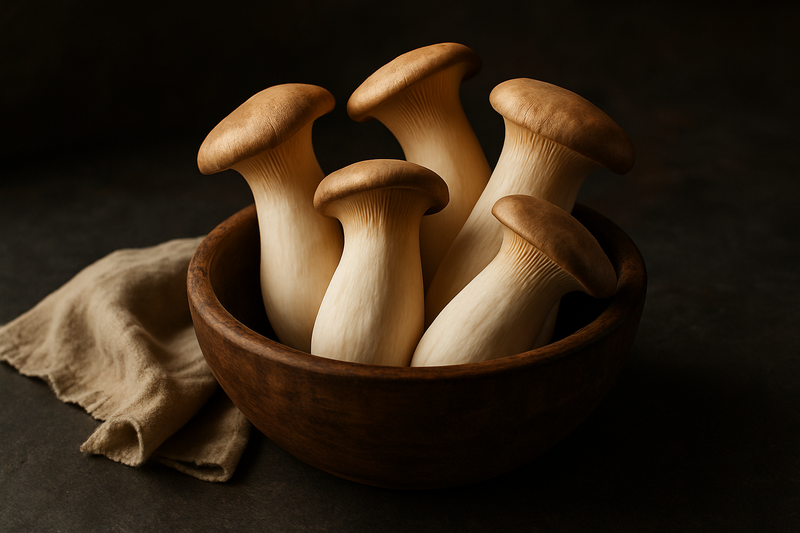
King Oyster Mushrooms · Photograph
Discover king oyster mushroom health benefits, nutrition facts, and how to cook them like scallops. Learn about their antioxidants, fiber, immune-support potential, and what the evidence really says.
Key Nutrients
% Daily Value based on 2,000 cal diet
Key active compounds
- Ergothioneine — A unique antioxidant amino acid concentrated in mushrooms and transported directly into human cells, where it may protect tissues from oxidative stress, especially in the brain and cardiovascular system.
- Beta-glucans — Soluble polysaccharides (a type of complex carbohydrate) in mushroom cell walls that can interact with gut and immune-cell receptors, supporting cholesterol management and immune modulation.
- Polyphenols — A broad class of plant-based antioxidants that help neutralize free radicals (unstable molecules that damage cells) and may reduce chronic inflammation.
- Adenosine and related nucleosides — Naturally occurring compounds in Pleurotus eryngii that in preclinical work show possible vasodilatory (blood-vessel relaxing) and antiplatelet effects, though human evidence is lacking.
- Chitin — An insoluble fiber forming the mushroom's structural cell walls; contributes to stool bulk and gut motility.
Prep and pairing ideas
Seared king oyster rounds + creamy white bean purée The meaty rounds on a silky bean base makes a complete, protein-rich plant-based dinner. The beans add extra fiber and complementary amino acids, and their creaminess contrasts beautifully with the caramelised crust.
Sliced into miso-sesame noodle broth Add thick rounds in the last 5 minutes of simmering. Miso (a fermented soybean paste) is itself rich in umami and probiotics, and the mushrooms absorb the broth while maintaining a satisfying chew. Both foods contribute to gut-supportive prebiotic and probiotic intake.
Thinly sliced raw into a quick hot-pickle Pour a hot mixture of rice vinegar, a little sugar, and salt over thin slices, cool, and refrigerate for 30 minutes. The acid partially "cooks" the surface (though for full safety benefits, finish in a skillet). These tangy coins are an excellent topping for grain bowls and tacos alongside avocado, which provides fat-soluble nutrients to complement the mushroom's water-soluble B vitamins.
Bottom line
King oyster mushrooms are one of the most nutritionally interesting vegetables you can add to a plant-based plate. They deliver impressive amounts of niacin and ergothioneine, meaningful fiber including gut-supportive beta-glucans, and a meaty texture that holds its own against animal proteins. The science on their specific health effects is genuinely promising — but most of it is still in the early, preclinical stages. Eat them for the whole-food nutrition they undeniably provide, enjoy the emerging evidence as a bonus, and always cook them thoroughly.
If you are exploring an ingredient-first approach to everyday wellness, king oyster mushrooms are an easy, low-risk, high-upside addition to your repertoire.
Looking to explore more ingredients by what your body needs? Browse our curated goal guides at Plantopedia Goals.
How King Oyster Mushrooms Compares
| Compared with | What's different |
|---|---|
| King Oyster Mushrooms vs. Oyster Mushroom | Has a thick, meaty stem that stays firm when cooked, unlike the soft, fluttering oyster cap. |
| King Oyster Mushrooms vs. Cremini Mushroom | Offers a denser, scallop-like texture and a milder, woodier flavor compared to the savory cremini. |
Health Benefits
Things to Know
Cook thoroughly.: Raw or undercooked mushrooms of all species can cause digestive discomfort (nausea, bloating, cramping) and present food safety risks. Always cook fully.
Introduce gradually if you have a sensitive gut.: The chitin and fiber content can cause gas and bloating if you add a large amount quickly. Start with a small portion (50 g cooked) and increase over time.
IBS or FODMAP sensitivity.: King oyster mushrooms contain fructans (a type of fermentable carbohydrate), which can trigger IBS symptoms in sensitive individuals. Low-FODMAP portion sizes are around 75 g; larger amounts may cause issues.
Mushroom allergy.: Allergic reactions to edible mushrooms are uncommon but real. If you have had reactions to any mushroom species, introduce cautiously and seek medical advice first.
Diabetes medications.: Preclinical data suggest hypoglycemic activity. If you use insulin or glucose-lowering drugs, speak to your doctor — there is a theoretical (unconfirmed in humans) risk of additive blood sugar lowering.
Blood-thinning medications.: Adenosine-related compounds in mushrooms may theoretically have antiplatelet effects. If you take anticoagulants (e.g., warfarin) or antiplatelet drugs, discuss with your healthcare provider.
Immunosuppressant drugs.: The immunomodulatory properties of mushroom polysaccharides could theoretically interact with drugs that suppress or stimulate the immune system. This has not been confirmed in humans but is worth flagging with your doctor.
Pregnancy and breastfeeding.: Culinary amounts from cooking are generally considered safe. Concentrated extracts or supplements have not been specifically studied in pregnancy; avoid these forms unless directed by a healthcare provider.
Immunocompromised individuals: should be particularly careful about thorough cooking to eliminate any microbial risk.
Best Forms
with a paper towel before cooking.
over medium-high to high heat until it just begins to smoke.
, then place rounds cut-side down without crowding.
let a deep golden crust form before flipping.
(add in the last 10 minutes to preserve texture)
(slice thin, cook fast on high heat)
at 200°C / 400°F, seasoned with miso and sesame oil
Glossary
Shop This Ingredient
Stock your pantry with quality king oyster mushrooms.
Buy on AmazonAs an Amazon Associate, Plantopedia earns from qualifying purchases. This costs you nothing extra and helps us keep the encyclopedia free.
Frequently Asked Questions
Heart and circulation King oyster mushrooms fit naturally into a heart-healthy pattern: they are very low in calories and saturated fat, provide potassium (which supports healthy blood pressure), and contain beta-glucans that in other foods like oats are associated with modest LDL cholesterol reduction. Small human studies on closely related Pleurotus ostreatus (regular oyster mushrooms) show modest improvements in blood lipids, glucose, and blood pressure — but sample sizes are small and study quality is mixed. No controlled human clinical trials have been done specifically on king oyster mushrooms and cardiovascular endpoints. Animal studies show whole king oyster mushroom intake can protect against diet-induced obesity and related metabolic disturbances. The honest framing: these are promising signals, not confirmed effects. Digestive health and microbiome Each 100 g serving delivers about 2.3 g of fiber, combining insoluble chitin (which adds bulk to stools) and soluble beta-glucans (which feed beneficial gut bacteria, acting as a prebiotic — meaning food for good microbes). Dedicated human microbiome trials using king oyster mushrooms are not yet published, but the fiber and prebiotic mechanisms are well supported by general fiber science. Thorough cooking softens cell walls and makes the mushroom significantly easier to digest than eating it raw. Blood sugar and metabolism The beta-glucans in king oyster mushrooms can slow carbohydrate absorption, which blunts post-meal blood sugar spikes — a mechanism well established with oat beta-glucan in human research. Preclinical work with Pleurotus eryngii specifically shows hypoglycemic (blood sugar-lowering) activity in animal models, likely through its polysaccharides. Human trials on this particular species are lacking, so any blood sugar benefit should be understood as extrapolated from related mushrooms and general fiber science rather than proven directly. People managing diabetes with medication should speak to their doctor before adding large amounts. Inflammation and recovery King oyster mushrooms contain notably high levels of ergothioneine, which accumulates in human tissues and is thought to reduce oxidative stress — a key driver of chronic inflammation. Cell and animal studies show that mushroom compounds can inhibit specific inflammation pathways (including NLRP3 inflammasome signaling, a molecular switch that, when overactivated, drives inflammatory disease). These findings are mechanistically interesting but have not yet been confirmed in human clinical trials. As part of a varied, vegetable-rich diet, king oyster mushrooms can reasonably be framed as an anti-inflammatory whole food. Neuroprotection — an emerging area An animal study found that king oyster mushroom powder improved memory and learning in an Alzheimer's disease mouse model, with researchers pointing to ergothioneine, adenosine, and polyphenols as likely contributors. Separate cell research shows the mushroom can dampen microglial activation (the brain's inflammation response). These are early-stage findings and have not been tested in people. Still, the ergothioneine-brain connection is an active area of scientific interest worth watching. Immune support Beta-glucans and other polysaccharides in Pleurotus eryngii interact with immune receptors in the gut, which is thought to help calibrate — not simply boost — the immune response. Pharmacological reviews describe antitumor, antimicrobial, and immunostimulating activities in preclinical models. No human trials have measured real-world immune outcomes like infection rates after eating king oyster mushrooms. As a culinary food within a varied diet, it can be positioned as immune-supportive; as a standalone immune therapy, the evidence does not yet support that framing.
The plant-based cook looking for meat alternatives The thick stem slices into rounds that mimic sea scallops in texture and appearance when seared at high heat. Low in calories (46 kcal/100 g) but satisfying and "meaty," making it easier to reduce animal protein without feeling deprived. Delivers protein, fiber, and B vitamins that are sometimes under-consumed on plant-based diets. The weight-conscious eater who wants volume without calories One of the lowest energy-density foods available: you can eat a generous 150 g portion for under 70 calories. The fiber and chitin content creates a sense of fullness (satiety) without a large caloric cost. Versatile enough to anchor a main dish rather than play a side-dish role, helping crowd out higher-calorie foods.
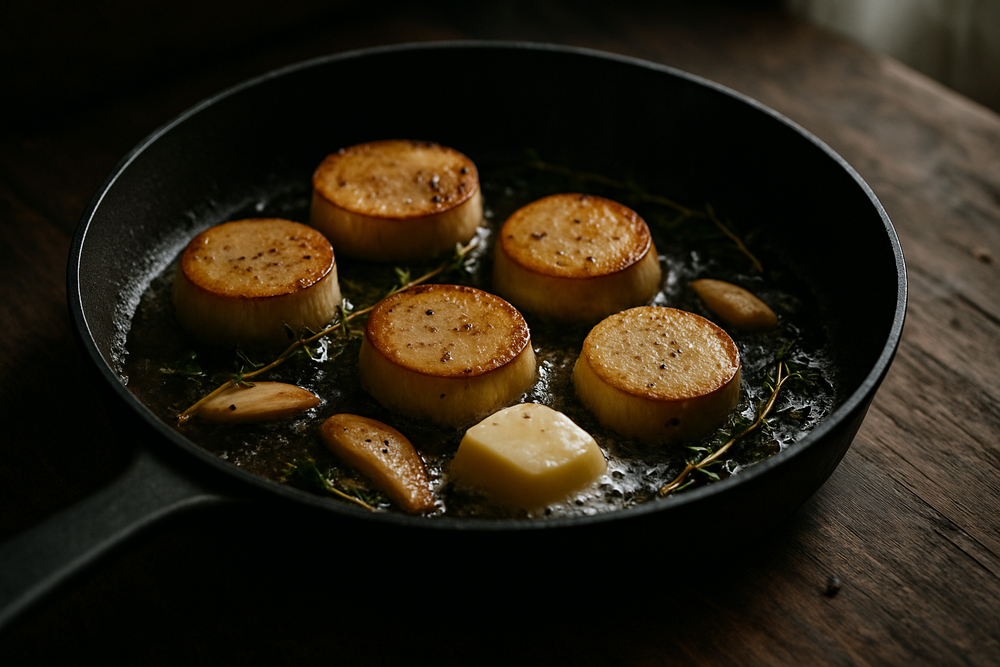
Fresh whole mushrooms are the gold standard — and the technique matters. King oyster mushrooms are unusually high in water. If you add them to a cool or crowded pan, they will steam and go limp. The right method is hot and dry: Pat slices completely dry with a paper towel before cooking. Heat a cast-iron or stainless skillet over medium-high to high heat until it just begins to smoke. Add a small amount of neutral oil or a dry spritz, then place rounds cut-side down without crowding. Do not touch them for 2–3 minutes — let a deep golden crust form before flipping. Finish with a small knob of plant-based butter, a garlic clove, and fresh thyme for the full "scallop" effect. Thorough cooking also matters for safety: heat deactivates heat-labile compounds that can cause GI upset when mushrooms are eaten raw, and it reduces microbial risk. Aim for fully cooked, never crunchy-raw in the centre. For other preparations, king oyster mushrooms hold up beautifully in: Soups and stews (add in the last 10 minutes to preserve texture) Stir-fries (slice thin, cook fast on high heat) Roasting at 200°C / 400°F, seasoned with miso and sesame oil
No official recommended daily dose exists for king oyster mushrooms as a therapeutic agent — they are a food, not a supplement, and no standardised human trials have established an optimal intake. What practical eating patterns suggest: A typical culinary serving is 75–150 g cooked, which is roughly one to two mushrooms. Eating them a few times per week as part of a varied vegetable intake aligns with how most research populations incorporate mushrooms. If you are new to them or have a sensitive digestive system, start with 50 g cooked and increase gradually. In animal studies, researchers used dried powder equivalent to several grams per kilogram of body weight — amounts far higher than typical food intake, so preclinical dose findings do not translate directly to human recommendations. The simplest guidance: enjoy king oyster mushrooms regularly as part of a diverse, plant-forward diet rather than aiming for a precise therapeutic dose.
Quick Answers
Common questions, answered in a line.
King oyster mushrooms contain ergothioneine, beta-glucans, polyphenols, and chitin. These compounds provide a mix of unique antioxidants, soluble and insoluble fibers, and complex carbohydrates that support cellular health and digestion.
King oyster mushrooms contain ergothioneine, an antioxidant that may protect tissues from oxidative stress, particularly in the brain and cardiovascular system. While preclinical, these compounds are studied for their potential to neutralize free radicals and reduce inflammation.
Yes, king oyster mushrooms should always be cooked thoroughly to avoid food safety risks and digestive discomfort. Raw mushrooms can cause nausea, bloating, and cramping due to their tough structural cell walls.
People with IBS or FODMAP sensitivities should limit king oyster mushrooms to around 75 grams. Because they contain fructans and chitin, eating large amounts quickly can cause gas, bloating, or other digestive triggers in sensitive individuals.
Consult your doctor if you take blood thinners, diabetes medications, or immunosuppressants before consuming large amounts of these mushrooms. Compounds like adenosine and beta-glucans may theoretically interact with these specific drug classes.
King oyster mushrooms provide ergothioneine for cellular protection, beta-glucans for cholesterol management, and high levels of niacin and fiber. Their meaty texture and amino acid profile make them a nutrient-dense addition to plant-based diets.
For Readers in the USA
Local context — sourcing, seasonality, and regional notes.
You can buy king oyster mushrooms at specialty grocers like Whole Foods Market and H-Mart, or find them at local farmers markets in the Pacific Northwest and Northeast. While less common in standard supermarkets than white buttons, they are increasingly available in the organic produce sections of nationwide chains like Wegmans and Sprouts.
In the U.S., king oyster mushrooms are primarily cultivated indoors in climate-controlled facilities, making them available year-round regardless of your USDA hardiness zone. Most commercial production is concentrated in California and Pennsylvania, ensuring a steady supply to both East and West Coast markets throughout the winter and summer.
Look for the USDA Organic seal to ensure your king oyster mushrooms were grown without synthetic fertilizers or pesticides, as mushrooms can absorb heavy metals from their growth substrate. While the FDA does not have specific regulations for king oysters, they recommend buying from reputable commercial sources to avoid misidentification with wild look-alikes.
King oyster mushrooms are often labeled as "King Trumpet" or "French Horn" mushrooms in American grocery stores and gourmet recipes. These names all refer to the species Pleurotus eryngii, which is prized in the U.S. culinary scene for its thick, meaty stalk that mimics the texture of seafood.
AI Clinical Review
- Clearly frames king oyster mushrooms as a nutrient-dense food (low calorie, fiber, B vitamins, potassium) rather than a proven “therapy,” which is consistent with current human research.
- Accurately highlights ergothioneine as a distinctive mushroom antioxidant and notes the lack of an established daily value, keeping expectations realistic.
- Explains beta‑glucans and chitin (types of fiber) in plain language and links them to plausible benefits for cholesterol, blood sugar steadiness, and digestive regularity, aligning with broader fiber science.
- Emphasizes thorough cooking and offers practical, food-safe techniques that support digestibility and nutrient retention.
- Most health claims specific to Pleurotus eryngii (heart, blood sugar, immune, brain) are based on cell or animal studies; controlled human trials with typical culinary intakes are not yet available.
- Findings from related oyster species (P. ostreatus) may be suggestive but aren’t directly interchangeable with king oyster mushrooms.
- Mechanistic ideas (e.g., NLRP3 inflammasome inhibition, adenosine‑related antiplatelet/vasodilatory effects) are intriguing but unproven in everyday diets and doses.
- The clinical importance of higher ergothioneine intake remains uncertain—there is no agreed‑upon requirement or outcome data to guide targets.
- Practical intake: 75–150 g cooked per serving a few times per week is reasonable; if you have a sensitive gut, start around 50 g and increase gradually.
- IBS/FODMAP: king oyster mushrooms contain fructans; low‑FODMAP portions are about 75 g, and larger amounts may trigger symptoms in sensitive individuals.
- Medication cautions: discuss regular large intakes or concentrates with your clinician if you use diabetes medications, anticoagulants/antiplatelets, or immunosuppressants—interactions are theoretical but worth caution.
- Safety: cook thoroughly (avoid raw/undercooked, especially if immunocompromised). Mushroom allergy is uncommon but possible. In pregnancy or breastfeeding, stick to culinary amounts and avoid concentrated extracts unless advised by a healthcare professional.
Cook thoroughly before eating.
References
- USDA FoodData Central — King Oyster Mushroom nutritional data (fdc.nal.usda.gov)
- USDA MyPlate — Vegetables group (includes mushrooms as a vegetable) (myplate.gov)
- Mushrooms Canada — King Oyster Mushroom nutrition overview (mushrooms.ca)
- Animal study: whole king oyster mushroom and protection against obesity-related health problems (PubMed, 2024) (pubmed.ncbi.nlm.nih.gov)
- Cell study: King oyster mushroom inhibits NLRP3 inflammasome and microglial activation (PMC, 2025) (pmc.ncbi.nlm.nih.gov)
- Animal study: King oyster powder improves memory in Alzheimer's disease mouse model (PubMed, 2020) (pubmed.ncbi.nlm.nih.gov)
- Systematic review: Health effects of oyster mushroom (Pleurotus ostreatus) consumption in humans (PMC, 2020) (pmc.ncbi.nlm.nih.gov)
- Pharmacological review: A potent pharmacological mushroom — Pleurotus eryngii (Longdom Open Access) (longdom.org)
- Nutrition Advance — King Oyster Mushroom nutrition profile (nutritionadvance.com)
- Care Omnia (USDA-derived) — King Oyster Mushroom nutrient tables (careomnia.com)
Know Your Numbers
Eating healthy is a start. Now get to know your biomarkers.
Food changes bloodwork — inflammation, lipids, blood sugar and nutrient status all respond to what you eat. 59 markers from $59.
- Results in 7–10 days at 2,000+ Quest sites
- Licensed provider reviews every result
- One flat price, no membership, HSA/FSA eligible
Educational information only, not medical advice. Panels are ordered and reviewed through our licensed partner; Plantopedia may earn a commission.