Lemon Balm — health benefits and uses
Traditional European nervine used to ease tension and support restful sleep.
The Short Answer
Lemon balm is a calming herb from the mint family used to reduce stress, improve sleep, and add a gentle citrus flavor to teas and salads. It contains rosmarinic acid, an antioxidant studied for its neuroprotective and antiviral effects.
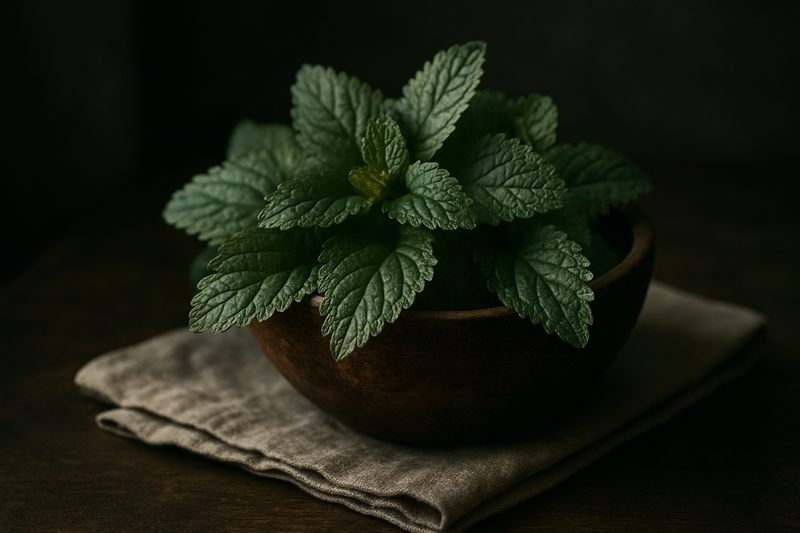
Lemon Balm · Photograph
Discover lemon balm health benefits and how to use it — from calming teas and fruit salads to supplements for anxiety, sleep, digestion, and more. Learn safe daily amounts, key active compounds, and who should use caution with this mint-family herb.
Key Nutrients
% Daily Value based on 2,000 cal diet
Key active compounds in lemon balm
- Rosmarinic acid — A polyphenol (a type of plant antioxidant compound) that is the most studied active compound in lemon balm. Research suggests it acts as an antioxidant, supports a healthy inflammation response, and may have antiviral and neuroprotective (brain-protective) effects. It is believed to underlie many of lemon balm's calming and cardiometabolic (heart and metabolism-related) actions.
- Caffeic acid derivatives — Phenolic acids (another class of plant antioxidant) related to caffeic acid. They provide antioxidant and anti-inflammatory properties and may support vascular (blood vessel) and metabolic health.
- Flavonoids — luteolin and apigenin glycosides — Plant pigments that contribute to lemon balm's antioxidant capacity and may help modulate signaling pathways related to mood, cognition, and inflammation.
- Essential oil monoterpenes — citral, citronellal, linalool — The volatile aromatic compounds responsible for lemon balm's signature lemony scent. They exert mild sedative (calming), spasmolytic (muscle-relaxing), and antimicrobial effects, and are central to its calming and digestive properties in teas and aromatherapy.
Prep and pairing ideas
Lemon balm's gentle citrus-mint flavour plays well with a wide range of foods and drinks. Here are three practical combinations worth trying:
1. Lemon balm + cucumber + still water (infused water) Bruise a small handful of fresh leaves and add to a jug of cold water with sliced cucumber. Let it steep for at least 30 minutes in the refrigerator. The essential oils from the leaves — citral and linalool — infuse into the water, creating a naturally flavoured, refreshing drink. Great as a non-caffeinated alternative to flavoured sodas, and a pleasant way to get a daily habit going.
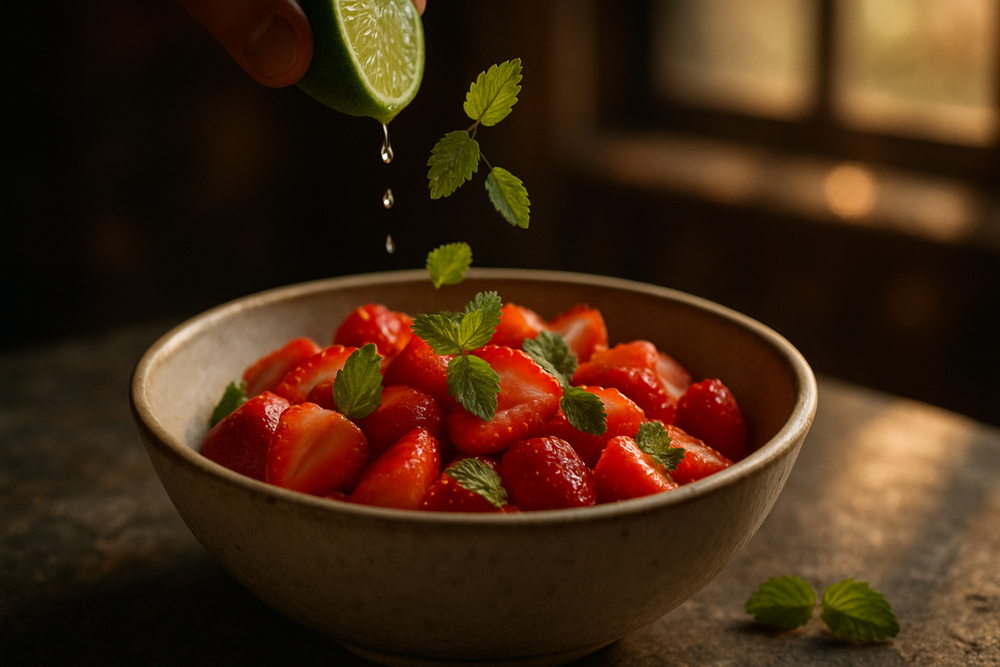
2. Lemon balm + strawberries + mint in a fruit salad Tear fresh lemon balm leaves over a bowl of sliced strawberries, add a little fresh mint, and dress with a squeeze of lime. The herb's floral citrus note complements berry sweetness without overpowering. This pairing is one of the simplest ways to use fresh lemon balm in everyday cooking.
3. Lemon balm + chamomile in an evening tea Steep 1 teaspoon of dried lemon balm with 1 teaspoon of dried chamomile flowers in hot (not boiling) water for 5–7 minutes. Both herbs have complementary calming effects and a honey-citrus aroma together. This combination has been used in traditional European herbal practice and aligns with the type of multi-herb preparations studied in sleep research.
Bottom line
Lemon balm is one of those rare herbs that is genuinely enjoyable to cook with and has a real, if modest, body of human clinical evidence behind it. The strongest data support its use for reducing anxiety and stress, improving sleep quality, and providing a gentle cognitive lift at moderate doses — all with a relatively good safety profile for most healthy adults at culinary or typical herbal tea amounts.
Beyond that, promising early evidence points to digestive comfort, modest cholesterol and blood pressure improvements, some benefit for PMS symptoms, and antioxidant activity — though these areas need larger, better-designed trials. Topical lemon balm creams for cold sores have solid support for that specific use.
For everyday use, fresh leaves in food, a mug of lemon balm tea in the evening, or a simple infused water are low-risk, pleasant, and consistent with a whole-food approach to wellness. If you are considering higher-dose supplements — especially if you take thyroid medication, sedatives, or blood pressure drugs — a conversation with your healthcare provider is worth having first.
How Lemon Balm Compares
| Compared with | What's different |
|---|---|
| Lemon Balm vs. Peppermint | Peppermint contains menthol for a cooling sensation, while lemon balm is citrusy and calming. |
| Lemon Balm vs. Lemon Verbena | Lemon verbena has a much more intense, sharp lemon scent and thinner, pointier leaves. |
| Lemon Balm vs. Catnip | Catnip has a more pungent, musky aroma and is primarily used for its sedative effects. |
Health Benefits
Things to Know
Thyroid medication interaction (key caution): At high medicinal doses, lemon balm may theoretically interfere with thyroid hormone function or interact with levothyroxine and similar thyroid drugs. Culinary amounts in tea or food are generally considered low-risk, but if you have hypothyroidism or take thyroid medication, discuss any supplement use with your doctor first.
Sedative medications: Lemon balm has genuine calming effects. Combined with sedative drugs, anxiolytics (anti-anxiety medications), sleep aids, or other central nervous system (CNS) depressants, it may cause excessive drowsiness. This includes some antihistamines and prescription sleep medications.
Blood pressure medications: Preliminary data suggest lemon balm may modestly lower blood pressure. If you are on antihypertensive drugs, monitor blood pressure and flag this with your prescriber.
Pregnancy and breastfeeding: Safety data for concentrated extracts are limited. Most authoritative herbal sources recommend avoiding high-dose supplements during pregnancy and breastfeeding, or using only under professional guidance. Occasional culinary use in food is generally viewed as low-risk.
Children: Therapeutic use in young children should be supervised and dose-appropriate. Culinary tea in reasonable amounts is widely used, but concentrated supplements are not studied in children.
Lamiaceae allergy: If you have a known allergy to mint-family plants (basil, oregano, rosemary, thyme), you may be at higher risk of a reaction to lemon balm.
Driving and machinery: At higher doses, lemon balm may cause drowsiness. Avoid tasks requiring full alertness until you know how it affects you.
Start low: As with any herb or supplement, begin with a smaller amount to assess your tolerance before increasing.
Glossary
Shop This Ingredient
Stock your pantry with quality lemon balm.
Buy on AmazonAs an Amazon Associate, Plantopedia earns from qualifying purchases. This costs you nothing extra and helps us keep the encyclopedia free.
Frequently Asked Questions
Anxiety, stress, and mood This is where the clinical evidence is strongest. Multiple randomized, placebo-controlled trials — the type where neither the participant nor the researcher knows who gets the real treatment — show that lemon balm (alone or combined with calming herbs like valerian) can meaningfully reduce self-rated anxiety, stress, and low mood in adults. Doses in these trials typically range from 300–600 mg of standardized extract once or twice daily, or 1.5–4.5 g of dried leaf as tea, used over 2–6 weeks. Participants reported increased feelings of calmness, lower anxiety scores on validated scales, and improved mood compared with those receiving a placebo. Most trials are small and short-term, and many use multi-herb combinations, so it is hard to isolate exactly how much lemon balm alone is doing. But the direction of evidence is consistent. Sleep Lemon balm's lemon balm benefits for sleep are closely tied to its anxiety-reducing effects: when your nervous system winds down, sleep tends to follow. Combination products pairing lemon balm with valerian have shown improvements in sleep onset (how quickly you fall asleep), fewer nighttime awakenings, and better sleep quality scores in controlled trials. Used as an evening tea, most people find it a practical, gentle wind-down ritual — even if the scientific evidence for culinary-level amounts is less rigorous than for concentrated extracts. Brain health and memory Lemon balm benefits for brain health and memory appear dose-dependent. Some controlled studies in healthy adults under mental stress found that single doses of 300–600 mg of lemon balm extract improved calmness and aspects of cognitive performance — memory accuracy, math task speed, and alertness — compared with placebo. Interestingly, some studies also note that very high doses can cause sedation rather than sharpness, suggesting a moderate "sweet spot" for daytime cognitive use. In small trials involving people with mild to moderate Alzheimer's disease, standardized lemon balm extracts and aromatherapy (using essential oil inhalation) were associated with modest improvements in agitation and cognitive scores. These findings are early and need replication in larger trials before drawing firm conclusions. Digestive health and bloating support Traditional use of lemon balm as a digestive tea is well established across European herbal medicine, and the mechanistic science supports it: lab and animal studies show antispasmodic (muscle-relaxing) and carminative (gas-relieving) effects in the gut. Some small clinical studies using herbal combinations that include lemon balm report reduced symptoms of functional dyspepsia (indigestion without a structural cause) and abdominal discomfort. However, high-quality trials testing lemon balm alone for irritable bowel syndrome or gas and bloating are limited, so this benefit should be considered plausible and promising rather than firmly proven. Blood sugar and metabolism Small human studies in people with type 2 diabetes or metabolic syndrome (a cluster of risk factors including abdominal weight, high blood sugar, and abnormal lipids) report that lemon balm extract, at doses of 500–1,000 mg/day for 6–8 weeks, can modestly improve fasting blood glucose and insulin resistance indices. These findings are preliminary, often from small studies, and frequently involve combination products. Larger dedicated trials are needed before any specific claims can be made. Heart health and cholesterol Emerging human data, primarily in people with metabolic syndrome or dyslipidemia (abnormal blood fat levels), suggest that lemon balm supplementation may modestly reduce total cholesterol, LDL cholesterol (often called "bad" cholesterol), and triglycerides (blood fats) over several weeks. Some studies also note small reductions in systolic blood pressure (the top number in a blood pressure reading). These effects are thought to relate to the antioxidant and vasodilatory (blood vessel-relaxing) actions of rosmarinic acid and other polyphenols. Results are promising but not yet backed by large-scale cardiovascular outcome trials. Hormones, PMS, and cycle health Some human trials show that lemon balm — often at around 1,200 mg/day or in combination formulas — can reduce PMS symptoms such as anxiety, insomnia, and irritability across several menstrual cycles. Researchers believe these effects come primarily from lemon balm's anxiolytic (anxiety-reducing) and sleep-promoting actions rather than direct changes to reproductive hormones. Data are promising but limited, and most studies use multi-herb formulas. A note on thyroid health: Lemon balm is sometimes marketed for thyroid or hormonal balance, but robust human evidence is minimal. At high medicinal doses, there is a theoretical concern that it may influence thyroid function or interfere with thyroid hormone medication. This is discussed more in the safety section below. Inflammation and antioxidant activity While a substantial body of lab and animal research confirms that rosmarinic acid and other lemon balm polyphenols can neutralize reactive oxygen species (unstable molecules that damage cells) and modulate inflammatory pathways, direct human trials specifically measuring inflammatory markers after lemon balm supplementation are limited. Many of its clinical benefits — reduced cold sore symptoms, improved cardiometabolic markers — are hypothesized to involve antioxidant and anti-inflammatory mechanisms. These mechanistic findings are encouraging but should not be taken as proven systemic anti-inflammatory effects in humans without more targeted clinical trials.
The best form depends entirely on your goal. Fresh leaves (culinary) are the most food-as-medicine approach. Tear them into fruit salads, muddle into water, blend into a cold sauce, or use as a finishing herb on grain dishes. You get the pleasure of the herb, small amounts of vitamin C and polyphenols, and essentially no safety concerns at typical culinary amounts. This is the right choice if you simply want to eat more diverse, flavourful whole plant foods. Dried leaf tea (1.5–4.5 g per cup) is the form most aligned with traditional use and gives you a concentrated infusion of the herb's calming volatile oils and polyphenols. It is a practical, low-cost, daily-use option for gentle relaxation, digestive comfort, or an evening wind-down. Many people combine it with chamomile or passionflower. Standardized extracts (capsules or tablets, 300–600 mg) are the forms used in most clinical trials for anxiety, sleep, cognitive performance, and PMS. If you want to closely mirror what was studied in research, this is the relevant form. Look for products standardized to rosmarinic acid content. Tinctures (liquid extracts) offer flexibility in dosing and are commonly used in herbal practice. Concentrations vary widely by product, so follow the manufacturer's guidance or consult a qualified herbalist. Topical creams have the best evidence for cold sore management. Standardized lemon balm creams applied at the first sign of symptoms have reduced healing time and recurrence rates in clinical trials. Homemade preparations are unlikely to match the extract concentrations used in research.
There is no single universal dose because the right amount depends on your goal and the form you are using. Here is a practical overview based on the research and traditional guidance: Culinary use (fresh or dried as food): No set upper limit. A few sprigs or 1–2 teaspoons of dried leaf in cooking or infused water is considered safe for most people. Herbal tea: Traditional and clinical references suggest 1.5–4.5 g of dried lemon balm leaf per cup, steeped in hot water, up to three or four times daily. A level teaspoon of loose dried herb is roughly 1.5–2 g. Standardized extract capsules (300–600 mg/day): This is the range most studied in clinical trials for anxiety, stress, sleep, and cognitive function. Some PMS studies use higher amounts around 1,200 mg/day. Follow the product label or a qualified practitioner's guidance. Tincture: Approximately 2–6 mL up to three times daily, though this varies by product concentration. Always follow the label. Start low principle: If you are new to lemon balm supplements, start at the lower end of the range for 1–2 weeks before increasing. This helps you gauge your response (particularly in terms of daytime sleepiness) and identify any sensitivity. Duration: Most trials have been conducted over 2–8 weeks. There are limited long-term safety data beyond a few months of continuous supplemental use. If you are using lemon balm alongside any medication or for a specific health condition, consult a healthcare provider about an appropriate amount.
The high-stress, sleep-challenged adult Consistently poor sleep or difficulty switching off after work Prefers non-caffeinated, non-pharmaceutical options to wind down Finds an evening tea ritual useful as a behavioural and physiological cue to relax The combination of lemon balm's GABAergic calming effects and the ritual of a warm drink is a genuinely practical fit here The digestive-health focused whole-food eater Experiences occasional bloating, gas, or indigestion, particularly after larger meals Already enjoys using culinary herbs and is looking to diversify flavours Wants to incorporate plant-based ingredients with dual culinary and functional value Fresh lemon balm in salads and herbal teas after meals aligns naturally with this profile If you are looking for ways to build lemon balm into a broader wellness approach, explore more herb and plant guides at Plantopedia's goals hub.
Quick Answers
Common questions, answered in a line.
Lemon balm contains active compounds like rosmarinic acid, caffeic acid derivatives, flavonoids, and essential oil monoterpenes such as citral and linalool. These components provide antioxidant, anti-inflammatory, and neuroprotective effects while contributing to the herb's signature scent.
Lemon balm is widely used to reduce anxiety and stress, improve sleep quality, and provide a gentle cognitive lift. Clinical evidence also supports its use in topical creams for cold sores and points to potential benefits for digestive comfort and PMS symptoms.
You can use lemon balm by steeping dried leaves for tea, bruising fresh leaves for infused water, or tearing them into fruit salads with strawberries and mint. It pairs well with cucumber for a refreshing drink or with chamomile for a calming evening blend.
Lemon balm may interact with thyroid medications, sedatives, anti-anxiety drugs, and blood pressure medications. Because it has calming effects, it may cause excessive drowsiness when combined with sleep aids or central nervous system depressants.
People with hypothyroidism or those taking thyroid medications like levothyroxine should use caution, as high doses may interfere with thyroid hormone function. Additionally, those with allergies to mint-family plants like basil or oregano should be careful when using this herb.
At higher doses, lemon balm can cause drowsiness or a mild sedative effect. Because of this, you should avoid driving or operating heavy machinery until you understand how the herb personally affects your alertness levels.
For Readers in the USA
Local context — sourcing, seasonality, and regional notes.
Lemon balm thrives in USDA Hardiness Zones 4 through 9, meaning it can be grown as a perennial in most of the United States from New England to the Pacific Northwest. In these regions, the plant is typically in season from late spring through the first frost of autumn.
Fresh lemon balm is commonly found at local farmers markets and specialty grocers like Whole Foods or Sprouts, while dried versions and supplements are widely available at major retailers like Walmart, Target, and CVS. Because it wilts quickly, many Americans prefer to buy starts at nurseries like The Home Depot to grow it at home.
While the FDA regulates lemon balm as a dietary supplement rather than a drug, it is generally recognized as safe (GRAS) for use in food. When shopping, look for the USDA Organic seal to ensure the herb was grown without synthetic pesticides, especially if you are using the leaves for tea.
In the United States, lemon balm is frequently referred to by its botanical name, Melissa officinalis, or simply as "Melissa," particularly when sold as an essential oil or in aromatherapy contexts. It is a member of the mint family and is sometimes called "sweet balm" in older American gardening texts.
AI Clinical Review
- It accurately highlights where human research is strongest: reductions in everyday anxiety and stress and modest sleep benefits, typically with 300–600 mg/day standardized extract or 1.5–4.5 g dried leaf as tea.
- It explains plausible mechanisms (not proofs), especially the role of rosmarinic acid and related polyphenols, and notes calming (GABA-related) effects in plain language.
- It keeps expectations realistic—positioning lemon balm as supportive, not a disease treatment—and encourages low-risk culinary/tea use.
- It correctly flags topical lemon balm for cold sores as one of the better-evidenced specific applications.
- Digestive benefits (bloating, dyspepsia, IBS) are supported mainly by tradition, lab data, and combination-herb studies; trials of lemon balm alone are small and limited.
- Metabolic and cardiovascular findings (glucose, lipids, blood pressure) are preliminary and short-term; larger, longer randomized trials are needed to confirm clinical relevance.
- Cognitive findings are dose-dependent and mixed—moderate doses may aid calm focus, while higher doses can sedate; data in Alzheimer’s disease and from aromatherapy are early and not directly generalizable.
- Anti-inflammatory/antiviral actions are well described in lab models, but human biomarker and outcomes data remain sparse.
- Potential interactions: thyroid medications (e.g., levothyroxine), sedatives/anxiolytics and sleep agents, and antihypertensives—start low and monitor for drowsiness or additive effects.
- Populations needing caution: pregnant or breastfeeding individuals, young children (for concentrated products), and those with mint-family (Lamiaceae) allergies—seek clinician guidance for supplement use.
- Form matters: culinary use and teas are generally low risk; standardized extracts mirror research best—look for products standardized to rosmarinic acid; topical preparations have the strongest evidence for cold sores.
- Most trials last 2–8 weeks; long-term safety data for high-dose supplements are limited. Avoid driving or operating machinery until you know your personal response.
May interact with thyroid medication in large medicinal doses.
References
- USDA FoodData Central — nutrient composition reference for herbs (fdc.nal.usda.gov)
- Examine.com evidence review — lemon balm benefits, dosage, and side effects (examine.com)
- WebMD supplement monograph — lemon balm uses, side effects, and interactions (webmd.com)
- Drugs.com herbal monograph — lemon balm uses, benefits, and dosage guidance (drugs.com)
- HerbalReality clinical overview — Melissa officinalis safety, benefits, and evidence (herbalreality.com)
- Healthline — lemon balm uses and benefits overview with research citations (healthline.com)
- Medical News Today — health benefits and ways to use lemon balm (medicalnewstoday.com)
- MedicineNet — lemon balm herbal uses, side effects, and dosage (medicinenet.com)
- RxList supplement monograph — lemon balm health benefits, side effects, and precautions (rxlist.com)
- Viridian Nutrition — summary of clinical trials on lemon balm benefits (viridian-nutrition.com)
Know Your Numbers
Eating healthy is a start. Now get to know your biomarkers.
Food changes bloodwork — inflammation, lipids, blood sugar and nutrient status all respond to what you eat. 59 markers from $59.
- Results in 7–10 days at 2,000+ Quest sites
- Licensed provider reviews every result
- One flat price, no membership, HSA/FSA eligible
Educational information only, not medical advice. Panels are ordered and reviewed through our licensed partner; Plantopedia may earn a commission.