Bael Fruit — health benefits and uses
A sacred fruit in India used in Ayurveda for digestion and gut health.
The Short Answer
Bael fruit is a tropical fruit rich in riboflavin (1.1 mg) and fiber (3.9 g), primarily used to make cooling sharbat drinks for digestive health. To eat it, crack the woody shell, scoop the pulp, and strain it with water to remove the sticky seeds.

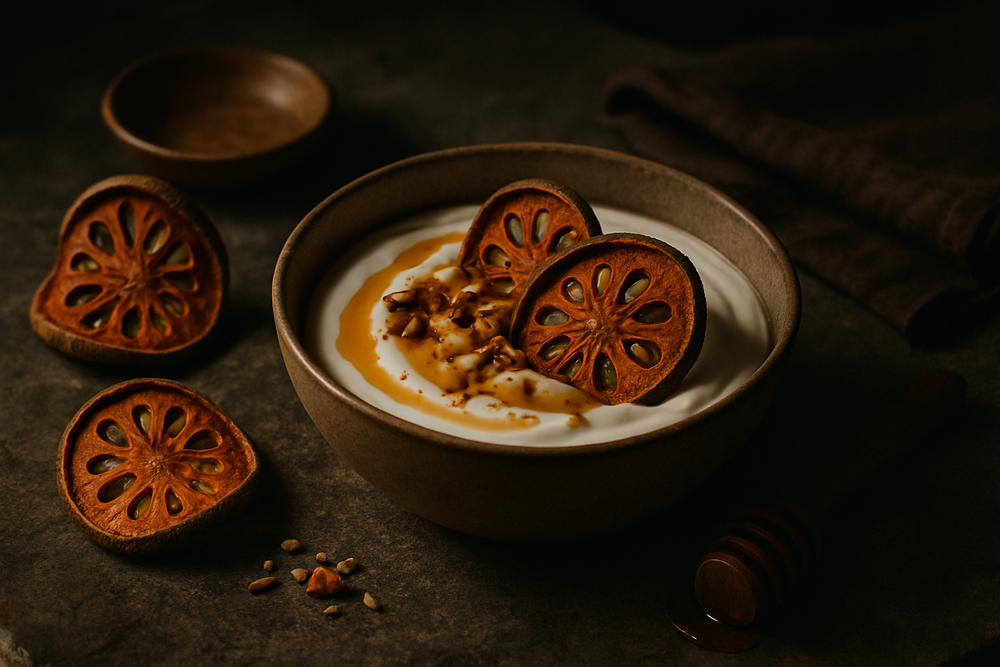
Bael Fruit · Photograph
Discover bael fruit benefits backed by research — from digestive support and blood sugar balance to cooling bael sharbat recipes. Learn the nutrition facts, active compounds, safe daily amounts, and who should use caution with this aromatic Ayurvedic tropical fruit.
Key Nutrients
% Daily Value based on 2,000 cal diet
Key active compounds in bael fruit
- Coumarins (marmelosin, marmesin): A class of aromatic benzopyrone compounds — ring-shaped molecules with antioxidant and mild anti-inflammatory properties. Unique to Aegle marmelos within its fruit family and linked to its characteristic fragrance.
- Flavonoids (rutin, quercetin-like compounds): Polyphenolic plant pigments (natural color-and-protection molecules) that show antioxidant and vascular-protective effects in cell and animal studies.
- Tannins: Astringent polyphenols — the compounds that make unripe fruit dry your mouth — found in high amounts in unripe bael. Traditionally linked to the fruit's use in diarrhea.
- Alkaloids (aegeline): Nitrogen-containing bioactive compounds found mainly in the leaves and fruit, associated with metabolic activity in experimental models.
- Essential oils and terpenoids: Volatile aromatic compounds responsible for bael's signature fragrance; show antimicrobial activity in lab studies.
- Pectin and structural polysaccharides: Soluble and insoluble fibers (including pectin, cellulose, hemicellulose) that support stool bulk and may help moderate blood sugar after meals.
Prep and pairing ideas
Making classic bael sharbat at home
- Crack the hard shell by tapping firmly with a heavy knife or rolling on a hard surface — the shell is genuinely woody.
- Scoop out the fragrant, sticky golden pulp. One medium bael fruit yields roughly 50–100 g of usable pulp.
- Mash pulp with 1–2 cups of cold water using your hands or a potato masher.
- Strain through a coarse sieve, pressing to extract as much liquid as possible.
- Add a squeeze of lime, a pinch of black salt (sendha namak), and sweeten lightly with jaggery, honey, or leave it plain.
- Serve over ice.
Optional: leave it partially unstrained for more fiber — the slightly textured drink is common in rural preparations.
Buying guide: fresh bael vs powder vs supplement
Fresh whole bael fruit
- Look for fruits with a smooth, uncracked shell and a golden-brown colour.
- A hollow sound when tapped suggests the pulp has dried out — choose a fruit that sounds solid.
- Available in Indian, Sri Lankan, and Bangladeshi grocery stores, and increasingly in South Asian markets in the UK, USA, and Australia during summer months (May–July).
- Store whole at room temperature for up to 1 week; refrigerate cracked fruit for 2–3 days.
Dried bael slices (dried rounds of unripe pulp)
- Commonly sold in Indian grocery stores as "bael murabba" or dried "bel patta."
- Used to make a tea-like infusion with digestive properties — more traditional medicine than nutrition.
- Read labels: some preparations are heavily sweetened.
Bael powder (churan)
- Check that the label specifies Aegle marmelos and states whether it is fruit pulp, leaf, or flower.
- Avoid products with fillers, artificial colours, or unlisted herbal blends.
- Powder is not equivalent to whole fruit for fiber content.
Supplements (capsules, extracts)
- Evidence base is thinner than for food forms.
- Look for a certificate of analysis (COA) from a third-party lab.
- Not recommended without medical guidance if you take diabetes or blood pressure medications.
Bottom line
Bael is a nutritionally solid tropical fruit with one of the more interesting phytochemical profiles in South Asian food. Its combination of fiber, potassium, riboflavin, and aromatic plant compounds — coumarins, flavonoids, and tannins — makes it a genuinely worthwhile addition to a varied fruit diet. The strongest human evidence for bael centers on blood sugar benefits from leaf juice and flower extracts used in clinical settings, not casual sharbat. Digestive benefits are well-grounded in tradition and animal data but still need more human trials. A phase 3 trial found no measurable anti-inflammatory effect from bael pulp powder, which is a useful reminder to read the science carefully.
For most people, a glass of bael sharbat on a hot day is a flavorful, hydrating, and nutritionally decent choice — a sensible reason to seek out this underused fruit next time you spot it at a South Asian grocery store.
If you're building a food-as-medicine eating pattern around digestive health or blood sugar management, explore how bael fits alongside other evidence-backed choices at /goals.
How Bael Fruit Compares
| Compared with | What's different |
|---|---|
| Bael Fruit vs. Wood Apple (Limonia acidissima) | Bael has a woody shell and higher fiber, whereas Wood Apple is more acidic and pungent. |
| Bael Fruit vs. Quince | Bael is typically consumed as a sweet summer drink, while Quince is always cooked due to its tartness. |
Health Benefits
Things to Know
Diabetes medications: Bael leaf juice and flower extracts show measurable blood-sugar-lowering effects. If you take insulin, sulfonylureas, or metformin, combining these with bael extracts (not casual sharbat) could push blood sugar too low. Monitor carefully and tell your doctor.
Anticoagulants (blood thinners like warfarin): Coumarin-type compounds in bael have theoretical interactions with blood-thinning medications. Casual fruit consumption is unlikely to be a problem, but concentrated extracts warrant caution and discussion with your pharmacist.
Rutaceae family allergy: Bael belongs to the same plant family as citrus. If you have a confirmed allergy to citrus fruits, introduce bael cautiously.
Severe constipation or bowel obstruction: Unripe bael is very high in astringent tannins and fiber. If you already have slow gut motility or a diagnosed bowel obstruction, a large dose of unripe bael pulp could worsen the situation.
Pregnancy and breastfeeding: Traditional food amounts (a glass of sharbat) are generally considered safe, but concentrated bael extracts have limited safety data in pregnancy. Check with your midwife or doctor before taking supplements.
Potassium-sparing diuretics or ACE inhibitors: Bael is relatively high in potassium (~600 mg per 100 g). Normal food consumption is safe for most people, but those on medications that raise potassium (certain blood pressure drugs, kidney disease management) should account for intake.
Prep Ideas
- — Crack the hard shell by tapping firmly with a heavy knife or rolling on a hard surface — the shell is genuinely woody.
- — Scoop out the fragrant, sticky golden pulp. One medium bael fruit yields roughly 50–100 g of usable pulp.
- — Mash pulp with 1–2 cups of cold water using your hands or a potato masher.
- — Strain through a coarse sieve, pressing to extract as much liquid as possible.
- — Add a squeeze of lime, a pinch of black salt (sendha namak), and sweeten lightly with jaggery, honey, or leave it plain.
- — Serve over ice.
Glossary
Shop This Ingredient
Stock your pantry with quality bael fruit.
Buy on AmazonAs an Amazon Associate, Plantopedia earns from qualifying purchases. This costs you nothing extra and helps us keep the encyclopedia free.
Frequently Asked Questions
Heart and circulation There are no large randomized human trials testing bael fruit or juice on heart outcomes directly. Animal studies using whole-plant extracts in diabetic rat models show reductions in blood cholesterol and triglycerides (blood fats), which is encouraging. From a whole-food standpoint, bael's potassium content aligns with general dietary guidance for heart and blood pressure health, and its fiber contributes to cholesterol management as part of an overall fruit-rich diet. At this stage, any heart benefit from bael is speculative and should not replace established treatments or lifestyle changes. Digestive health and microbiome This is where bael's oldest reputation lives — and where the science is most intriguing, even if still mostly preclinical. Ayurvedic texts have used bael pulp (particularly unripe fruit) for diarrhea, dysentery, constipation, gastric ulcers, and intestinal parasites for centuries. Modern animal studies back up the antidiarrhoeal angle: unripe bael fruit extract reduces intestinal movement and fluid secretion in lab models, likely through its tannin content. Mechanistic reviews describe antimicrobial effects on gut pathogens. For everyday bael sharbat drinkers, the practical benefits are likely tied to soluble fiber, pectin (a type of gel-forming fiber that feeds beneficial gut bacteria), and tannins. Ripe bael sherbet may support regularity; unripe bael is more astringent and traditionally used to firm loose stools. Controlled human trials for specific digestive disorders are still needed — current digestive evidence is largely traditional, animal-based, or mechanistic. Blood sugar and metabolism This is the best-studied area and the most nuanced. Important distinction: most of the positive human data involve bael leaf juice or dried flower water extracts — not the fruit juice you make at home. A controlled crossover trial in type 2 diabetics found that a water extract of dried Aegle marmelos flowers, taken for 2 weeks, significantly reduced fasting blood glucose and improved glucose tolerance. Post-meal insulin levels increased by roughly 62%, with no adverse effects reported. A randomized controlled trial in Gujarat, India, found that bael leaf juice used alongside standard diabetes care improved blood sugar control better than standard care alone. Animal studies consistently show that bael leaf and fruit extracts reduce blood glucose and improve insulin sensitivity through multiple mechanisms, including slowing carbohydrate digestion and absorption. For is bael fruit good for diabetes? the honest answer is: the fruit's fiber and low-glycemic-load profile fit a diabetes-friendly eating pattern, but the more direct blood-sugar evidence comes from leaf and flower preparations used in supervised clinical settings. People on diabetes medications should discuss any bael extract use with their doctor due to potential additive effects. Inflammation and recovery A phase 3 clinical trial specifically tested dried unripe bael pulp powder on chronic low-grade inflammation (measured by high-sensitivity C-reactive protein, or hsCRP — a blood marker of inflammation) in type 2 diabetics. The result: no significant change in hsCRP at any time point. This is a useful reality check. Bael contains antioxidant compounds that show anti-inflammatory activity in lab settings, but this particular well-designed trial found no measurable benefit on systemic inflammation. Bael is best understood as a nutritious fruit with antioxidant potential, not a proven anti-inflammatory therapy.
| Form | What you get | Best for | | --- | --- | --- | | Whole pulp (unstrained) | Maximum fiber, all micronutrients, phytochemicals | Fiber goals, gut health | | Strained sharbat / bael juice | Minerals, vitamins, flavonoids; less fiber | Hydration, summer cooling, easy digestion | | Dried pulp powder | Concentrated nutrients; longer shelf life | Traditional medicine use; mixed evidence | | Leaf juice | Strongest glycemic evidence in trials | Not a food; clinical/supervised use only | | Flower water extract | Controlled trial support for blood sugar | Clinical/research setting, not culinary | For most people pursuing bael fruit health benefits as a food, fresh pulp or lightly strained sharbat is the most practical and well-rounded choice. Straining is sensible because the raw pulp is very fibrous and contains seeds — most recipes mash and strain it through a coarse sieve. You keep the liquid nutrition while making the drink pleasant to sip.
The summer hydration seeker Lives in a hot climate or sweats heavily during summer months. Wants a cooling, naturally flavored alternative to sugary soft drinks. Benefits from bael's potassium (supports electrolyte balance), vitamin C, and light caloric profile. Can enjoy 1–2 glasses daily as part of a fruit-rich diet. The digestive-health-focused eater Interested in high-fiber, Ayurvedic-aligned foods for gut regularity. Finds commercial probiotic drinks expensive or inaccessible. Benefits from bael's pectin and fiber for stool bulk; tannins in slightly unripe preparations for loose stool management. Note: start with ripe, strained sharbat if you have a sensitive stomach — unripe pulp is more astringent.
From traditional dietary practice: One glass of bael sharbat (made from approximately 50–100 g of ripe pulp strained into 300 ml of water) is the standard serving across South Asian culinary tradition. One to two glasses daily during summer is typical. From clinical research: Studies used standardized leaf juice (not pulp juice) and flower water extracts for 2-week periods. These are not the same as home-prepared sharbat. Exact clinically tested doses for fruit pulp specifically are not well established. Practical guidance: Start with half a glass if you're new to bael — the high fiber and novel plant compounds can cause temporary bloating in some people. One full glass (300–400 ml of strained sharbat) daily is a reasonable, safe amount for most healthy adults. Don't rely on bael juice as a treatment for any medical condition. If you're using bael products beyond culinary food (powders, concentrated extracts, leaf juice) — especially alongside diabetes medications — consult your healthcare provider first. There is no established upper safe limit for bael fruit as food. Moderation and variety (as with all fruits) is the sensible default.
Quick Answers
Common questions, answered in a line.
Bael leaf juice and flower extracts show measurable blood-sugar-lowering effects and may interact with insulin or metformin. While casual consumption of bael sharbat is generally fine, concentrated extracts could push blood sugar levels too low if combined with diabetes drugs.
Fresh bael fruit should have a smooth, uncracked, golden-brown shell and sound solid rather than hollow when tapped. A hollow sound typically indicates that the internal pulp has dried out, so you should choose fruits that feel heavy and solid.
To prepare bael fruit, crack the woody shell, scoop out the golden pulp, and mash it with water before straining. You can enhance the flavor of the resulting sharbat by adding lime, black salt (sendha namak), or natural sweeteners like jaggery and honey.
Unripe bael fruit contains high levels of astringent tannins, which have been traditionally used to manage diarrhea. However, due to this high tannin and fiber content, unripe pulp should be avoided by those with severe constipation or bowel obstructions.
Bael fruit contains coumarin-type compounds that could theoretically interact with blood-thinning medications like warfarin. While casual fruit consumption is unlikely to cause issues, you should consult a pharmacist before using concentrated bael extracts.
Bael fruit is a rich source of potassium, containing approximately 600 mg per 100 g of pulp. People taking potassium-sparing diuretics or ACE inhibitors for blood pressure should account for this intake to avoid excessively high potassium levels.
People with citrus allergies should use caution when trying bael fruit because it belongs to the same plant family, Rutaceae. It is best to introduce the fruit slowly to monitor for any adverse reactions.
For Readers in the USA
Local context — sourcing, seasonality, and regional notes.
You can typically find fresh bael fruit at large Indian and South Asian grocery chains like Patel Brothers or H-Mart during the peak summer months. In the US, it is also sold in dried slice form or as a preserve (murabba) year-round at specialty ethnic markets and through major online retailers.
While bael fruit is native to South Asia, it is occasionally grown on a small scale in USDA Plant Hardiness Zones 10 and 11, such as Southern Florida and parts of Hawaii. Most bael fruit found in the US is imported, as the tree requires a tropical climate with a distinct dry season to thrive.
The FDA regulates bael fruit products as food or dietary supplements rather than drugs, so it is important to look for brands that follow Current Good Manufacturing Practices (cGMP). Consumers should check labels for the "USDA Organic" seal to ensure the fruit was grown without synthetic pesticides, especially when buying imported powders.
AI Clinical Review
- Clear distinction between food use (pulp/juice) and clinical extracts (leaf or flower), with an accurate summary that blood‑sugar findings come from small human trials of non‑culinary preparations.
- Balanced view of digestive effects: ripe pulp/fiber for regularity and unripe, tannin‑rich preparations for diarrhea, while acknowledging most evidence is traditional or animal‑based.
- Nutrition snapshot highlights realistic strengths for a tropical fruit—fiber, potassium, and notably high riboflavin—and notes that straining lowers fiber but retains many dissolved nutrients.
- Appropriate caution on anti‑inflammatory claims, citing a phase 3 trial showing no change in hsCRP (a blood marker of inflammation), which tempers lab‑based antioxidant narratives.
- Few rigorous, longer‑term randomized trials on bael fruit pulp itself for glycemic control, cardiovascular outcomes, or symptom‑based digestive endpoints.
- Microbiome and gut‑barrier impacts are mechanistic or preclinical; human studies linking bael intake to specific microbiome changes are limited.
- Potency and composition of bioactives (coumarins, flavonoids, tannins) likely vary by ripeness, cultivar, and processing; equivalence across powders, teas, and supplements isn’t established.
- Reported nutrition values are from published datasets rather than a standardized USDA entry; expect variability by source and handling.
- Typical food use: about one glass of strained sharbat (≈300–400 ml made from 50–100 g ripe pulp) is a sensible daily amount; start smaller if you’re new to it due to fiber.
- Medication cautions: concentrated bael preparations (especially leaf juice/flower extracts) can lower blood sugar—people on insulin or oral diabetes drugs should monitor and discuss with a clinician. Coumarin‑containing products may interact with anticoagulants, and the fruit’s potassium matters for those on ACE inhibitors, potassium‑sparing diuretics, or with kidney disease.
- Special populations: in pregnancy or breastfeeding, stick to food amounts and avoid concentrated extracts unless advised by a clinician; introduce cautiously if you have citrus‑family allergies. Avoid large amounts of unripe, astringent pulp if you have severe constipation or known bowel obstruction.
- Form matters: verify labels (fruit vs leaf vs flower) and be cautious with supplements lacking third‑party testing; benefits seen in studies of extracts don’t translate directly to home‑made sharbat.
Hard woody shell; the pulp is very fibrous and usually strained for juice.
References
- USDA FoodData Central — fruit nutrition reference (fdc.nal.usda.gov)
- MyPlate — USDA fruit group dietary guidance (myplate.gov)
- PMC review: Aegle marmelos, an underutilized fruit with high functional potential (2022) (pmc.ncbi.nlm.nih.gov)
- Journal of Food Processing and Preservation: Bael, an underutilized fruit with enormous potential (2023) (research.unipd.it)
- Controlled crossover trial — water extract of dried Aegle marmelos flowers in type 2 diabetics (Sri Lanka Clinical Trials Registry) (slctr.lk)
- RCT — bael leaf juice as complementary therapy in type 2 diabetes, Gujarat, India (sciencedirect.com)
- Hypoglycaemic effect of Aegle marmelos flower extract in type 2 diabetic patients (Herb Med Pharmacol) (herbmedpharmacol.com)
- Phase 3 trial — dried unripe bael fruit pulp powder and hsCRP in type 2 diabetics (banglajol.info)
- Gastroprotective and antidiarrhoeal properties of Aegle marmelos unripe fruit extract (PubMed) (pubmed.ncbi.nlm.nih.gov)
- Review: Aegle marmelos as potential treatment for various diseases — phytochemistry and pharmacology (herbmedpharmacol.com)
Know Your Numbers
Eating healthy is a start. Now get to know your biomarkers.
Food changes bloodwork — inflammation, lipids, blood sugar and nutrient status all respond to what you eat. 59 markers from $59.
- Results in 7–10 days at 2,000+ Quest sites
- Licensed provider reviews every result
- One flat price, no membership, HSA/FSA eligible
Educational information only, not medical advice. Panels are ordered and reviewed through our licensed partner; Plantopedia may earn a commission.