Malt Vinegar — health benefits and uses
A traditional British pantry vinegar used to brighten heavy, starchy foods.
The Short Answer
Malt vinegar is a fermented condiment made from malted barley, providing 3 calories and 0.3g of carbohydrates per tablespoon. It is distinct for its nutty flavor but is not gluten-free, making it unsuitable for those with celiac disease.

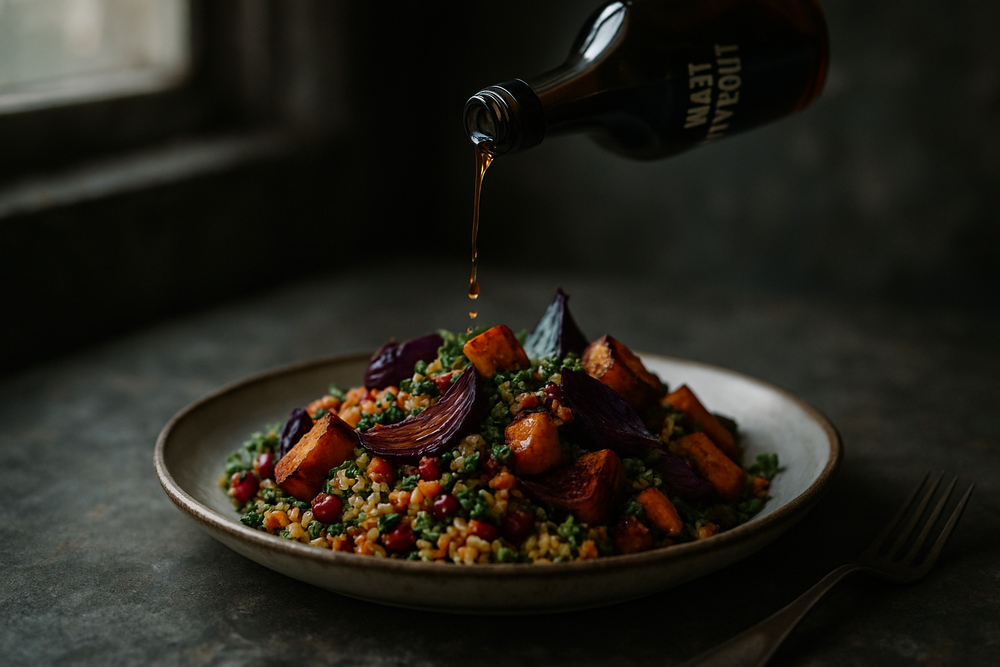
Malt Vinegar · Photograph
Discover the malt vinegar health benefits, nutrition facts per tablespoon, gluten content, and safe daily amounts. Learn how this fermented barley vinegar compares to apple cider vinegar and how to use it beyond chips.
Key Nutrients
% Daily Value based on 2,000 cal diet
Key active compounds
- Acetic acid — The primary bioactive compound in all vinegars, including malt vinegar (typically ~5% concentration). A short-chain organic acid produced when acetic acid bacteria convert ethanol to acid during fermentation. Responsible for the sharp flavour, the antimicrobial properties, and virtually all of the studied health effects of vinegars.
- Organic acids and fermentation by-products — Minor acids and flavour compounds formed during malted-barley fermentation. These give malt vinegar its characteristic mellow, slightly sweet-malty aroma distinct from other vinegars. No specific health effects at culinary doses have been confirmed for these minor compounds.
- Residual barley proteins (gluten-derived) — Present from the barley source material. Not a therapeutic compound, but a critical safety consideration for anyone with coeliac disease or barley allergy.
Myths vs facts about malt vinegar
Myth 1: "Malt vinegar is a probiotic." Fact: Standard commercial malt vinegar is filtered and pasteurised, so it does not reliably contain live beneficial bacteria. Fermented ≠ probiotic.
Myth 2: "Malt vinegar is gluten-free." Fact: Malt vinegar is brewed from barley, which contains gluten. It is consistently flagged as unsafe for people with coeliac disease or non-coeliac gluten sensitivity by dietetic and allergy guidance. Distilled malt vinegar (rare) may be different, but standard brewed malt vinegar should be avoided if you are on a strict gluten-free diet.
Myth 3: "More malt vinegar means more health benefit." Fact: Larger amounts increase the risk of dental enamel erosion, oesophageal irritation, and potential interactions with blood-glucose-lowering medications. Research doses are 1–2 tablespoons per meal, not large volumes throughout the day.
Prep and pairing ideas
Malt vinegar is wonderfully versatile beyond the chip shop.
Classic: chips or roasted root vegetables Splash 1–2 teaspoons over oven-baked chips, roasted parsnips, or sweet potato wedges straight from the oven. The acidity cuts through the starch and brings every other flavour forward.
Pickled quick vegetables Combine malt vinegar with a pinch of salt and sugar (if desired), and pour warm over thinly sliced red onion, cucumber, or cabbage. Leave for 20–30 minutes for a fast pickle that adds crunch and brightness to grain bowls, tacos, or sandwiches.
Vinaigrette for hearty salads Whisk 1 tablespoon of malt vinegar with 2 tablespoons of olive oil, a teaspoon of wholegrain mustard, and a pinch of black pepper. The malty note works particularly well over lentil, roasted beetroot, or grain salads — a more robust flavour than white wine vinegar.
Malt vinegar on avocado toast A light splash of malt vinegar over smashed avocado on wholegrain toast adds sharpness and depth, reducing the need for added salt.
Buying guide
Brewed vs non-brewed condiment Always check the label. A product labelled "malt vinegar" should be brewed from barley. Products labelled "non-brewed condiment" or "malt vinegar flavour" are made from diluted acetic acid and are not genuinely fermented — they may lack even the modest studied benefits of true vinegar.
Acidity level UK and US table vinegars are typically 5% acetic acid, which matches the concentrations used in research. Some catering or pickling vinegars can be 6–8%; these are more acidic and require more dilution for eating as a condiment.
Label tips for gluten-sensitive households Even if you do not have coeliac disease, be aware that guests or family members may. There is no gluten-free malt vinegar that is widely verified as safe for coeliac disease — standard malt vinegar is brewed from barley. If you need a gluten-free alternative, apple cider vinegar, white wine vinegar, and distilled white vinegar are generally safe choices for coeliac disease.
Sodium check Sodium content varies between brands from near 0 mg to ~25 mg per tablespoon. If you are managing blood pressure or following a low-sodium diet, compare labels before buying.
Bottom line
Malt vinegar is an honest, low-calorie condiment with a character all its own — mellow, malty, and versatile beyond the chip shop. Its primary active compound, acetic acid, has a reasonable evidence base (from other vinegar types) for modest effects on post-meal blood sugar, satiety, and potentially cardiovascular risk markers. It earns a place in a health-conscious kitchen as a flavour-forward, near-zero-calorie replacement for higher-fat and higher-sodium condiments.
What it is not: a cure, a probiotic, or a gluten-free choice. People with coeliac disease or gluten sensitivity should avoid it. People with acid reflux, ulcers, or acid-sensitive teeth should use it sparingly or not at all. For everyone else, 1–2 tablespoons with meals is a practical, evidence-informed way to use it.
Looking to explore how fermented foods and low-calorie flavourings fit into your broader health goals? Browse the Plantopedia goals hub for ingredient guides built around what you are actually trying to achieve.
How Malt Vinegar Compares
| Compared with | What's different |
|---|---|
| Malt Vinegar vs. Apple Cider Vinegar | Brewed from barley instead of apple juice, offering a nutty, toasted flavor profile. |
| Malt Vinegar vs. Balsamic Vinegar | Contains gluten-derived proteins from barley, whereas balsamic is gluten-free. |
| Malt Vinegar vs. White Vinegar | Has a complex malty aroma compared to the sharp, neutral acidity of white vinegar. |
Health Benefits
Things to Know
Coeliac disease and gluten sensitivity: Malt vinegar is derived from barley and contains gluten-derived proteins. It is widely regarded as unsafe for people who must follow a strict gluten-free diet. This is a firm caution, not a grey area.
Barley allergy: People with a diagnosed barley or wheat allergy should avoid malt vinegar due to residual barley proteins.
Acid reflux / GERD / gastritis / peptic ulcer disease: The high acidity (~5% acetic acid) can trigger or worsen symptoms. Use with caution or avoid if you have any of these conditions.
Dental enamel erosion: Frequent or undiluted exposure of teeth to acidic liquids damages enamel over time. Rinse your mouth with water after consuming vinegar-dressed foods; do not use a straw to sip malt vinegar directly.
Diabetes medications (insulin, insulin secretagogues, SGLT2 inhibitors): Vinegar taken with carbohydrate-rich meals can modestly enhance glucose lowering. If you significantly increase your malt vinegar use, mention it to your prescriber — especially if you take insulin or other glucose-lowering medications — as there is a theoretical risk of hypoglycaemia (abnormally low blood sugar).
NSAIDs and GI-irritating medications: Concentrated acids may worsen gastrointestinal irritation when combined with drugs that already stress the stomach lining (such as ibuprofen or aspirin taken regularly).
Pregnancy: In culinary amounts as a condiment, malt vinegar is generally considered safe, though evidence is limited. Avoid large therapeutic doses. Those with gluten sensitivity should follow standard gluten-avoidance guidance.
Children: Use as a condiment in small amounts is typically fine, but undiluted vinegar applied to skin or consumed in large volumes is not appropriate.
Glossary
Shop This Ingredient
Stock your pantry with quality malt vinegar.
Buy on AmazonAs an Amazon Associate, Plantopedia earns from qualifying purchases. This costs you nothing extra and helps us keep the encyclopedia free.
Frequently Asked Questions
The honest answer is: modest and mostly indirect. Here is what the evidence does and does not support, broken down by body system. Heart and circulation Small human studies using other vinegars (rice vinegar, apple cider vinegar) suggest that regular vinegar intake at doses of about 15–30 mL per day may modestly improve triglycerides (a type of fat in the blood linked to cardiovascular risk), LDL cholesterol (often called "bad" cholesterol), and blood pressure in some individuals. These effects are attributed to acetic acid and are not large. No robust human trials have tested malt vinegar specifically for cardiovascular outcomes. What malt vinegar does offer practically is a low-calorie, low-sodium way to add flavour — which matters if it replaces higher-sodium, higher-fat sauces in your daily diet. That substitution benefit is real, even if a direct cardioprotective effect remains speculative for malt vinegar. Digestive health and microbiome Malt vinegar is acidic, which can stimulate saliva production and may sharpen the sensory experience of eating, indirectly supporting the start of the digestive process. Beyond that, well-controlled clinical data specifically on malt vinegar and digestion is absent. One common misunderstanding worth addressing clearly: malt vinegar is not a reliable probiotic source. Probiotic products contain live, beneficial bacteria in meaningful counts. Commercial malt vinegar is typically filtered and pasteurised during production, which eliminates most if not all live microbes. Being a fermented food is not the same as being a probiotic. If gut microbiome support is a goal, fermented foods like unsweetened natural yoghurt, kefir, or raw sauerkraut are better candidates. People with GERD (gastro-oesophageal reflux disease), gastritis, or peptic ulcers should be cautious: the 5% acidity can worsen symptoms. Blood sugar and metabolism This is the area with the most human evidence for vinegars in general. Multiple small controlled trials (mostly using apple cider or white vinegar, 15–30 mL with meals) show that vinegar can modestly reduce post-meal blood glucose and insulin spikes in people with insulin resistance or type 2 diabetes. The mechanism is thought to involve acetic acid slowing gastric emptying (how quickly food moves from stomach to intestine) and interfering with carbohydrate-digesting enzymes. Because malt vinegar has a similar 5% acetic acid concentration, it is reasonable to expect comparable effects — but this has not been tested directly in clinical trials. Any blood sugar benefit is modest, not a substitute for prescribed medication or dietary management, and should be discussed with a doctor if you are on glucose-lowering drugs (see cautions below). Inflammation and recovery A small body of animal and cell-based research hints that acetic acid may reduce certain markers of inflammation, but well-controlled human trials confirming this for vinegar — let alone malt vinegar specifically — do not yet exist. Malt vinegar should not be relied on as an anti-inflammatory strategy. At culinary doses, it is primarily a flavouring agent.
There are three main forms you will encounter: Traditionally brewed barley-malt vinegar (5% acetic acid) The gold standard. Produced by double-fermentation of malted barley through an alcoholic stage and then an acetification stage. Delivers the fullest malty flavour and is the form most analogous to the types studied in vinegar research. Commercial bottled malt vinegar (table vinegar) The most common supermarket product. Brewed but then filtered and pasteurised for shelf stability, consistent acidity, and food safety. Nutrition labels typically show 0–15 kcal per tablespoon. Does not reliably contain live microbes. Non-brewed condiment or "malt vinegar imitation" Some food-service products are made from diluted acetic acid with water, added colouring, and flavouring rather than genuine fermentation from barley. These are cheaper but not truly fermented. Gluten content may vary significantly, and the label should be read carefully. These products may not deliver even the modest effects associated with naturally fermented vinegars. For general use: brewed or commercial bottled malt vinegar are equivalent for most purposes. If gluten is a concern, malt vinegar in any form is generally considered unsuitable; choose apple cider vinegar, rice vinegar, or white wine vinegar instead.
Research on vinegar and blood sugar or satiety has typically used 1–2 tablespoons (15–30 mL) taken with or just before a carbohydrate-containing meal. For everyday culinary use, most people splash far less than this, which is fine. There is no established recommended dietary intake (RDI) for malt vinegar or acetic acid. A few practical guidelines: Start with 1 teaspoon (5 mL) if you are new to using vinegar regularly or have a sensitive digestive system, and see how you tolerate it before increasing. 1–2 tablespoons (15–30 mL) per meal is the range used in human vinegar studies and is considered practical and well-tolerated by most healthy adults. Do not exceed large amounts thinking more means more benefit. High daily intakes of acidic liquids are associated with dental erosion, oesophageal discomfort, and low potassium in rare cases (documented with very high apple cider vinegar use over long periods). Timing: Taking vinegar immediately before or at the start of a meal containing carbohydrates seems to produce the best-documented effects on post-meal glucose in vinegar studies.
Quick Answers
Common questions, answered in a line.
Standard malt vinegar is not gluten-free because it is brewed from barley, which contains gluten. Health experts and dietetic guidance consistently flag it as unsafe for individuals with coeliac disease or non-coeliac gluten sensitivity.
Malt vinegar is not a probiotic because standard commercial versions are filtered and pasteurized, which removes live beneficial bacteria. While it is a fermented product, the process does not result in a reliable source of active probiotics for gut health.
Malt vinegar may help manage blood sugar because its primary active compound, acetic acid, has been shown to have modest effects on lowering post-meal glucose levels. It is particularly effective when consumed alongside carbohydrate-rich meals.
You can use malt vinegar as a base for hearty salad vinaigrettes, as a splash for avocado toast, or to create quick pickled vegetables like red onions and cucumbers. Its mellow, malty flavor also pairs well with roasted root vegetables like parsnips and sweet potatoes.
People with coeliac disease, barley allergies, or acid-sensitive conditions like GERD and peptic ulcers should avoid malt vinegar. Additionally, those taking blood-glucose-lowering medications or insulin should consult a doctor due to potential interactions.
Malt vinegar can damage dental enamel over time due to its high acidity, which typically sits at a 5% acetic acid concentration. To protect your teeth, it is recommended to rinse your mouth with water after eating foods dressed with vinegar.
Malt vinegar contains approximately 5% acetic acid, which is the same concentration typically found in white wine and apple cider vinegars. However, some catering or pickling varieties may have higher concentrations between 6% and 8%, requiring more dilution.
For Readers in the USA
Local context — sourcing, seasonality, and regional notes.
In the United States, you can find malt vinegar at nearly all major grocery chains like Walmart, Kroger, and Publix, usually located in the baking or condiment aisle near the apple cider vinegar. It is also a staple at specialty British import shops and is widely available through national online retailers.
Under FDA labeling regulations, malt vinegar must be derived from barley, meaning it cannot be certified as gluten-free in the United States. While distilled white vinegar is often gluten-free even when grain-derived, the FDA and organizations like Beyond Celiac warn that malt vinegar contains residual barley protein.
While malt vinegar is used nationwide, it is most culturally prominent in New England and coastal regions where it is the traditional accompaniment for American-style fish and chips. It is available year-round across all US climate zones due to its long shelf-stable fermentation process.
In the US, "distilled malt vinegar" is a clear, sharper version of the condiment often used for light-colored pickling, whereas "brown malt vinegar" is the standard caramel-colored variety found in restaurants. Both are distinct from "non-brewed condiment," which is a synthetic alternative rarely found in US retail but sometimes used in commercial food service.
AI Clinical Review
- Malt vinegar is very low in calories and can help replace higher‑calorie, higher‑sodium condiments without sacrificing flavor.
- The primary active compound is acetic acid; evidence for modest reductions in post‑meal blood sugar and insulin largely comes from studies using other vinegars, not malt specifically.
- Malt vinegar is not gluten‑free and is unsuitable for people with coeliac disease or barley allergy.
- Commercial products are typically filtered/pasteurised and are not probiotics; being fermented does not mean they contain live beneficial bacteria.
- Cardiometabolic effects (lipids, blood pressure) have been small and inconsistent in human studies and haven’t been tested directly with malt vinegar.
- Claims about microbiome or anti‑inflammatory benefits at culinary doses aren’t established in human trials; most signals are preclinical.
- The optimal dose, timing, and product form (brewed vs non‑brewed/imitations) for any metabolic effect have not been compared head‑to‑head.
- Practical study doses are 1–2 tablespoons (15–30 mL) with meals; starting with 1 teaspoon (5 mL) may improve tolerance. Use with food to reduce stomach and dental irritation.
- Avoid if you have coeliac disease/gluten sensitivity or a barley allergy; choose gluten‑free vinegars (e.g., apple cider, distilled white, wine vinegar) instead.
- People with GERD, gastritis, or ulcers—and those with sensitive tooth enamel—may experience symptom flare‑ups; rinse your mouth with water after acidic foods.
- If you take glucose‑lowering medicines (e.g., insulin, sulfonylureas, SGLT2 inhibitors), discuss regular vinegar use with your clinician due to hypoglycaemia risk. Culinary amounts are generally fine in pregnancy and for children, but large “therapeutic” intakes aren’t advised.
Contains gluten from barley; acidic.
References
- USDA FoodData Central — malt vinegar nutrition data (fdc.nal.usda.gov)
- Snapcalorie — malt vinegar nutrition profile per tablespoon (snapcalorie.com)
- Fas Kitchen — Malt Vinegar 101: nutrition, benefits, and uses (faskitchen.com)
- GluteGuard — vinegar and gluten: is malt vinegar safe for coeliac disease? (gluteguard.com.au)
- CheckGluten — Is vinegar gluten-free? Malt vs apple cider vs balsamic (checkgluten.com)
- Little Helpers — Is malt vinegar gluten-free? (littlehelpers.com)
- Johnston & Gaas (2004), Diabetes Care — Vinegar improves insulin sensitivity in insulin-resistant subjects: a small human RCT on acetic acid and post-meal glucose (doi.org)
- Khezri et al. (2018), Journal of Functional Foods — Apple cider vinegar modulates serum lipid profiles in healthy adults: a randomised trial (doi.org)
- Darzi et al. (2014), International Journal of Obesity — Vinegar and satiety: a human study on appetite and short-term energy intake (doi.org)
- NHS — Gluten-free diet guidance (including condiments) (nhs.uk)
Know Your Numbers
Eating healthy is a start. Now get to know your biomarkers.
Food changes bloodwork — inflammation, lipids, blood sugar and nutrient status all respond to what you eat. 59 markers from $59.
- Results in 7–10 days at 2,000+ Quest sites
- Licensed provider reviews every result
- One flat price, no membership, HSA/FSA eligible
Educational information only, not medical advice. Panels are ordered and reviewed through our licensed partner; Plantopedia may earn a commission.