Miso — health benefits and uses
Fermentation and gut-culture angle; explain live-culture, sodium, and heat-treatment differences
The Short Answer
Miso is a fermented soybean paste that provides 3.3g of protein and 2.2g of fiber per tablespoon, alongside beneficial probiotics and soy isoflavones. Its high sodium content (22% DV per serving) means it is best used as a seasoning rather than a primary food

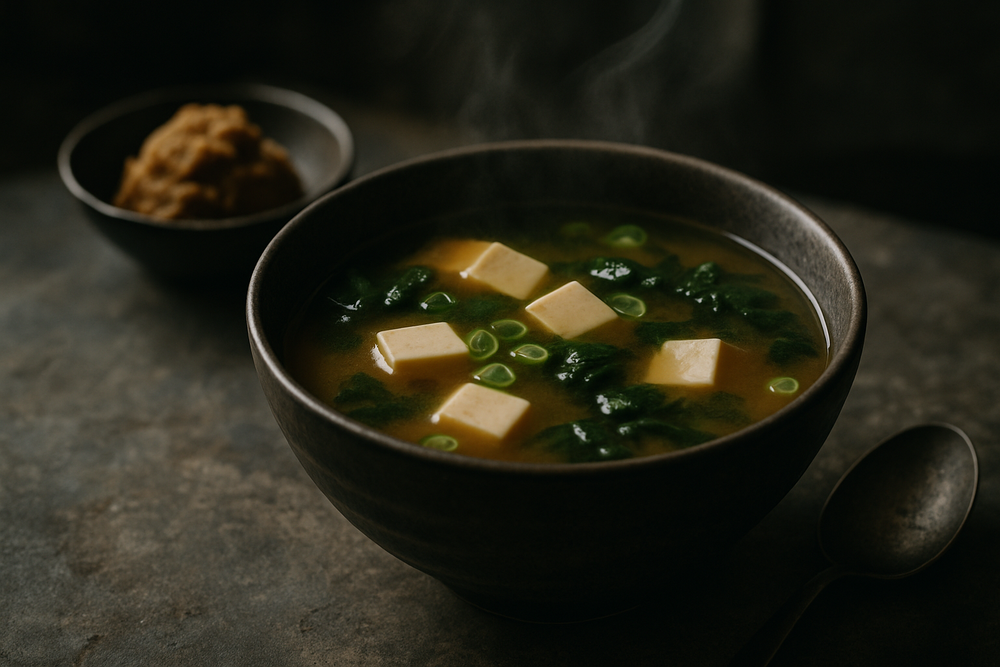
Miso · Photograph
Miso is a traditional Japanese fermented soybean paste (Glycine max) that transforms humble soybeans into a complex, umami-rich seasoning through months of careful fermentation. This ancient food offers potential benefits from fermented soy compounds and beneficial bacteria, though its extremely high sodium content requires mindful use.
Key Nutrients
% Daily Value based on 2,000 cal diet
Key active compounds in miso
- Soy isoflavones (genistein, daidzein, glycitein): Phytoestrogen compounds with potential cardiovascular and hormone-balancing effects
- Bioactive peptides: Protein fragments formed during fermentation that may help regulate blood pressure and cholesterol
- Beneficial bacteria: Live cultures in unpasteurized varieties that could support digestive health
- Saponins: Plant compounds that may contribute to cholesterol-lowering effects
- Enhanced antioxidants: Fermentation increases the antioxidant capacity compared to unfermented soybeans
Buying guide for miso
Fresh vs processed options:
- Unpasteurized refrigerated paste: Best for live cultures and full flavor complexity
- Pasteurized shelf-stable: Convenient but no probiotics; still provides fermented soy benefits
- Instant packets: Quick option but often higher in sodium and additives
Label reading tips:
- Look for "unpasteurized" or "contains live cultures" for probiotic potential
- Check sodium content - varies widely between brands (400-1000mg per serving)
- Ingredient lists should be short: soybeans, salt, koji starter, sometimes rice or barley
- Avoid products with excess preservatives or artificial flavors
Common pairings for maximum benefit
Miso + vegetables: The sodium in miso helps enhance the flavor of low-sodium vegetables like mushrooms, eggplant, and leafy greens, making nutrient-dense foods more appealing.
Miso + whole grains: Pairing miso with brown rice or quinoa creates complete protein profiles while the grains help buffer sodium absorption.
Miso + seaweed: Traditional combinations like miso soup with wakame provide complementary minerals and may enhance the overall nutritional profile of meals.
Bottom line
Miso offers unique benefits as a fermented soy food with potential advantages for heart health, digestion, and overall nutrition. However, its extremely high sodium content means it should be treated as a flavorful seasoning rather than a health food to consume in large quantities. Choose unpasteurized varieties when possible, use modest amounts, and consider miso as one component of a diverse, plant-forward diet rather than a standalone health intervention.
How Miso Compares
| Compared with | What's different |
|---|---|
| Miso vs. Soy Sauce | Thick paste with deep umami flavor; used for seasoning and soups. |
| Miso vs. Tempeh | Whole fermented beans with a nutty, chunky texture; higher in protein. |
| Miso vs. Hoisin Sauce | Thicker, sweeter, and uses wheat; miso is primarily salty soybean paste. |
Health Benefits
Things to Know
Extremely high sodium content: - account for this in daily intake planning
May interact with blood pressure medications: by counteracting their effects
People with soy allergies: should avoid miso entirely
Pregnancy and breastfeeding: Generally considered safe in normal culinary amounts
Hormone-sensitive conditions: Moderate soy intake appears safe, but discuss with healthcare providers
Kidney disease or heart failure: Consult your doctor before adding miso due to sodium content
Start small: Begin with 1/2 teaspoon servings to assess tolerance
Shop This Ingredient
Stock your pantry with quality miso.
Buy on AmazonAs an Amazon Associate, Plantopedia earns from qualifying purchases. This costs you nothing extra and helps us keep the encyclopedia free.
Frequently Asked Questions
Heart and circulation Observational studies from Japan suggest regular miso soup consumption correlates with better cardiovascular outcomes. Fermented soy compounds may help lower LDL cholesterol and support healthy blood pressure, though miso's high sodium content creates a complex picture. Some research indicates that miso's sodium doesn't raise blood pressure to the same extent as other salty foods, possibly due to protective soy compounds, but people with hypertension should still limit intake. Digestive health and microbiome Unpasteurized miso can provide live beneficial bacteria from fermentation, potentially supporting gut microbiome diversity. The fermentation process creates compounds that may promote digestive health, though evidence specific to miso (rather than fermented foods generally) remains limited. Pasteurized varieties lose live cultures but retain fermentation metabolites. Blood sugar and metabolism Small studies suggest fermented soy foods may help improve insulin sensitivity and glucose control. Miso's protein and fiber content, combined with fermentation-derived compounds, could support stable blood sugar when used as part of balanced meals. However, research specifically on miso's metabolic effects is still emerging. Inflammation and recovery Fermentation enhances miso's antioxidant capacity, and the resulting compounds may help counter oxidative stress. The combination of soy isoflavones and fermentation metabolites could support the body's natural anti-inflammatory processes, though human studies are limited.
Unpasteurized, refrigerated miso paste offers the most potential benefits, including live cultures and all fermentation-derived compounds. Look for products labeled "unpasteurized" or mentioning "live cultures" in the refrigerated section. White miso provides a milder introduction with typically lower sodium content, while red miso offers more intense flavor from longer fermentation but higher sodium levels. Both provide similar core nutritional benefits. Instant miso soups and pasteurized products are convenient but lack live cultures and often contain additional sodium and additives.
Most research suggesting benefits comes from Japanese populations consuming 1-3 servings of miso soup daily, using about 1-2 teaspoons of miso paste per serving. For general health, 1-2 teaspoons daily (5-10g) provides flavor benefits while keeping sodium intake reasonable. Start with smaller amounts (1/2 teaspoon) and gradually increase based on taste preference and sodium tolerance. People with cardiovascular conditions should use even smaller amounts or consult healthcare providers about incorporating miso safely.
Quick Answers
Common questions, answered in a line.
Miso provides soy isoflavones, bioactive peptides, saponins, and enhanced antioxidants that result from the fermentation process. Unpasteurized varieties also contain beneficial bacteria which may support digestive health.
Look for "unpasteurized" or "contains live cultures" on the label to ensure the product provides probiotic potential. The ingredient list should be short, typically containing only soybeans, salt, a koji starter, and occasionally rice or barley.
Individuals with soy allergies, kidney disease, or heart failure should avoid miso or consult a doctor due to its high sodium content and soy base. It may also interact with blood pressure medications by counteracting their intended effects.
Unpasteurized refrigerated miso paste is best if you are looking for live cultures and the most complex flavor profile. While shelf-stable pasteurized options still offer fermented soy benefits, they do not contain probiotics.
Miso is extremely high in sodium, with levels ranging from 400mg to 1,000mg per serving depending on the brand. Because of this, it should be used as a seasoning rather than a food consumed in large quantities.
Pairing miso with vegetables like mushrooms and eggplant makes nutrient-dense foods more appealing, while whole grains like brown rice help create a complete protein profile. Traditional pairings with seaweed can provide complementary minerals to the meal.
Begin with a small serving of approximately 1/2 teaspoon of miso to assess your personal tolerance. This is especially important given its high salt concentration and the potential for a strong flavor.
For Readers in the USA
Local context — sourcing, seasonality, and regional notes.
You can buy high-quality miso at major U.S. retailers like Whole Foods, Trader Joe’s, and Safeway, though Asian grocery chains like H-Mart or Mitsuwa offer the widest selection. Look in the refrigerated section near tofu or Kimchi for unpasteurized varieties rather than the dry goods aisle.
American-made miso brands like South River Miso and Miso Master are popular for using USDA Organic ingredients and traditional, long-term aging processes. These domestic brands often offer unique regional varieties made with U.S.-grown chickpeas or adzuki beans in addition to traditional soy.
In the U.S., you will most commonly find White Miso (Shiro), which is mild and sweet, and Red Miso (Aka), which is salty and pungent. Yellow Miso (Shinshu) is frequently available as a versatile "all-purpose" middle ground for American home cooks.
The FDA does not have a specific "standard of identity" for miso, but it does regulate the labeling of fermented foods to ensure salt levels are safe for preservation. When buying in the U.S., look for the USDA Organic seal to ensure the soybeans used are non-GMO.
AI Clinical Review
- Accurately describes miso as a fermented soy food rich in isoflavones and fermentation-derived peptides, with potential cardiometabolic and digestive upsides.
- Appropriately emphasizes miso’s very high sodium content and frames it as a seasoning rather than a staple.
- Correctly notes that potential “probiotic” benefits apply to unpasteurized, refrigerated miso and that high heat can inactivate live microbes.
- Serving guidance of roughly 1–2 teaspoons per day is reasonable for most adults aiming to manage sodium while enjoying flavor.
- Cardiovascular findings largely come from observational studies in Japanese cohorts; benefits may reflect overall diet/lifestyle, and sodium could offset advantages for some people.
- Microbiome effects are plausible but variable: strains and counts differ by brand/batch, and survival through cooking and digestion isn’t guaranteed.
- Data on blood sugar and insulin sensitivity are limited and often extrapolated from soy or fermented foods in general rather than miso-specific randomized trials.
- The idea that miso’s sodium raises blood pressure less than other salty foods is intriguing but not definitive enough to change standard sodium guidance.
- Sodium math: about 500–800 mg per tablespoon (roughly 170–270 mg per teaspoon). Consider your total daily target (many adults aim for ≤2,300 mg; lower for those with hypertension, kidney, or heart disease).
- Form matters: unpasteurized, refrigerated miso retains live microbes; pasteurized or instant products do not, though they still provide flavor and soy compounds. Stir miso into warm (not boiling) food to preserve any live cultures.
- Who should check with a clinician: people with high blood pressure, chronic kidney disease, or heart failure; those on MAO inhibitors (tyramine in fermented foods), with soy allergy, or with thyroid disease taking levothyroxine (separate soy and medication by several hours).
- Ingredients and allergens: some miso includes barley or wheat—choose gluten-free options if needed and read labels for sodium and additives.
Fermented does not always mean probiotic; note sodium and live/active culture differences.
References
- USDA FoodData Central miso nutrition data (fdc.nal.usda.gov)
- Harvard T.H. Chan School of Public Health microbiome guidance (nutritionsource.hsph.harvard.edu)
- Miso traditional fermented food review (pmc.ncbi.nlm.nih.gov)
- WebMD miso soup health analysis (webmd.com)
- Gut microbiota and fermented foods research review (pmc.ncbi.nlm.nih.gov)
- ZOE health platform miso analysis (zoe.com)
- Consumer fermented foods benefits overview (linverd.com)
- Japanese epidemiologic studies on miso and cardiovascular health (observational data)
- Soy isoflavone and peptide research in fermented foods (multiple studies)
Know Your Numbers
Eating healthy is a start. Now get to know your biomarkers.
Food changes bloodwork — inflammation, lipids, blood sugar and nutrient status all respond to what you eat. 59 markers from $59.
- Results in 7–10 days at 2,000+ Quest sites
- Licensed provider reviews every result
- One flat price, no membership, HSA/FSA eligible
Educational information only, not medical advice. Panels are ordered and reviewed through our licensed partner; Plantopedia may earn a commission.
Filed Under
Health Goals This Supports
Related Ingredients
Evening Foods That Are Gentle on Digestion
Why timing, portion size, fat load and texture decide whether an evening meal disturbs your night, plus eight gentle dinners and snacks with substitutions and cautions.
Fermented Foods vs. Fiber: What Helps the Gut More?
A head-to-head look at the two most popular gut strategies: what the single randomized trial comparing them found, what the long-term data say, and how to decide which one to work on first.
Foods That Support Mood and Mental Clarity
People who follow traditional dietary patterns, built around vegetables, legumes, whole grains, olive oil, and fermented foods, have consistently lower rates of depression in large observational studies than people eating a typical Western diet heavy in processed and refined foods. Foods tied to...
How Gut Health Supports Immunity
The intestine holds a large share of the body's immune tissue, and resident microbes help calibrate it. Here is the mechanism in sequence, the human trial evidence, and an honest account of where the science stops.
Prebiotics vs. Probiotics: What's the Difference?
A side-by-side comparison of prebiotics and probiotics, including what each one is, how strong the human evidence is for each, and a practical guide to deciding whether either is worth your money.
Signs Your Gut Microbiome May Be Out of Balance
There is no single symptom or test that proves your gut microbiome is "out of balance," a state researchers call dysbiosis, because a healthy microbiome varies between people and there is no agreed definition of "normal" for most adults. Persistent bloating, excess gas, and changes in bowel...
The Gut-Brain Connection Explained Simply
The gut and brain communicate constantly through nerves, hormones, immune signals and bacterial metabolites. This explains the mechanism step by step, then separates what human trials have demonstrated from what remains laboratory theory.