Nasturtium — health benefits and uses
Traditional remedy for respiratory and urinary support.
The Short Answer
Nasturtium is a fully edible herb featuring peppery leaves and flowers that provide 60 mg of vitamin C per serving. Its seeds are often pickled as a spicy alternative to capers, while the leaves function like arugula in salads and pesto.
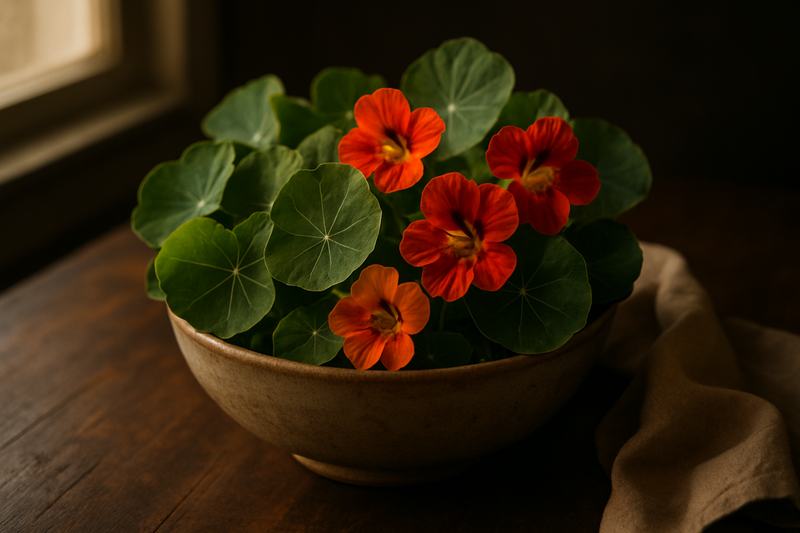
Nasturtium · Photograph
Discover nasturtium health benefits and how to use the edible flowers and leaves in everyday cooking. From peppery salads to pickled seeds, learn what the research says about this vivid, whole-plant herb and who should use caution.
Key Nutrients
% Daily Value based on 2,000 cal diet
Key active compounds in nasturtium
- Benzyl glucosinolate — the dominant sulfur-containing compound in nasturtium; when you chew or crush a leaf, an enzyme converts it into benzyl isothiocyanate (BITC), which drives most of the plant's functional properties.
- Benzyl isothiocyanate (BITC) — a reactive molecule linked to antimicrobial activity, anti-inflammatory signalling, and modulation of lipid and carbohydrate metabolism. The peppery heat you taste is largely BITC at work.
- Phenolic compounds — plant antioxidants (including quinic acid derivatives) that help neutralize free radicals (unstable molecules that damage cells) and reduce markers of oxidative stress.
- Flavonoids — polyphenolic pigments that support antioxidant defence and may help modulate vascular function and inflammatory pathways.
- Anthocyanins — the coloured flavonoid pigments responsible for nasturtium's vivid reds and oranges; they provide additional antioxidant protection.
- Carotenoids (including lutein and beta-carotene) — fat-soluble pigments concentrated especially in the flowers; lutein is well known for its role in protecting the macula (the central part of the retina) and overall eye health.
Prep and pairing ideas
Using nasturtium in the kitchen
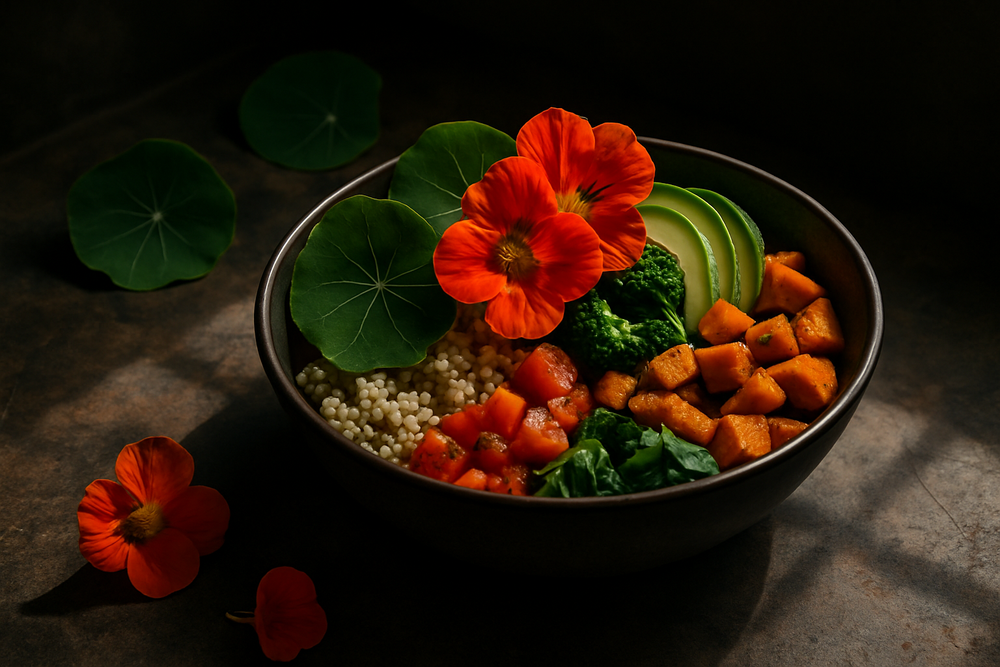
Raw in salads and grain bowls: Toss whole small leaves and a few flowers through a salad as you would peppery rocket (arugula). The flowers also make a striking garnish for a bowl of lentil soup or a grain salad with roasted vegetables.
Nasturtium pesto: Blend a generous handful of leaves with toasted pumpkin seeds, lemon juice, garlic, and olive oil for a vivid green, peppery pesto that works beautifully on pasta, flatbreads, or as a dip.
Pickled seeds as a caper swap: Once flowers fade, collect the small green seed pods. Rinse, pack into a sterilized jar, cover with warm brine (water, white wine vinegar, salt), seal, and refrigerate for two weeks. Use exactly as you would capers — on pizza, in pasta puttanesca, or scattered over roasted cauliflower.
Common pairings
1. Nasturtium + avocado + lemon The sharpness of nasturtium cuts through avocado's richness perfectly. Scatter leaves and flowers over avocado toast or a simple avocado salad with a squeeze of lemon. The vitamin C in nasturtium also helps your body absorb the fat-soluble carotenoids in both plants more efficiently.
2. Nasturtium + cucumber + white beans A cooling, high-protein salad combination. Cucumber tempers nasturtium's heat, and white beans add substance and fibre. Dress simply with olive oil and apple cider vinegar. This is a genuinely filling plant-based lunch.
3. Nasturtium + roasted beetroot + walnuts The earthy sweetness of roasted beetroot and the richness of walnuts create a backdrop that makes nasturtium's peppery bite shine rather than dominate. Anthocyanins from both nasturtium and beetroot give this combination serious antioxidant credentials.
Myths vs facts
Myth 1: "Nasturtiums are just decorative — they have no real nutritional value." Fact: Nasturtium leaves contain up to 465 mg of vitamin C per 100 g (more than four times the amount in oranges by weight) and over 100% of the daily value for vitamin K per 100 g. They are genuinely nutritious, not merely decorative.
Myth 2: "Nasturtium is a natural antibiotic and can replace antibiotics for infections." Fact: Nasturtium glucosinolates and their isothiocyanate breakdown products do have demonstrated antimicrobial activity in laboratory studies. In Europe, a regulated combination product containing nasturtium and horseradish is used clinically for certain infections. However, eating nasturtium leaves is not equivalent to taking antibiotics. Do not delay or replace prescribed antibiotic treatment with nasturtium.
Myth 3: "All parts of nasturtium are equally safe to eat in any quantity." Fact: Leaves and flowers are the most benign parts in culinary amounts. Seeds and buds are higher in oxalic acid and should be treated as condiments rather than eaten freely. Additionally, only food-grade, pesticide-free nasturtium should ever be consumed — ornamental varieties sold at garden centres are frequently treated with chemicals not safe for eating.
Bottom line
Nasturtium is a whole-plant culinary herb with one of the more interesting nutritional profiles in the edible flower category. Its leaves and flowers deliver a substantial hit of vitamin C and vitamin K, and its unique glucosinolate-derived compounds — particularly benzyl isothiocyanate — have genuine functional food credentials backed by preliminary human trial data. Early research suggests it may support antioxidant capacity and cardiovascular risk markers, especially in people managing prediabetes, though the evidence is still in its early stages and should not be interpreted as a medical claim.
In the kitchen, nasturtium is easy, versatile, and genuinely pleasurable to eat. Use the leaves and flowers freely in salads, pestos, and as garnishes. Pickle the seeds as a caper substitute. Grow your own or buy food-grade flowers — and if you take blood thinners, keep your intake consistent and flag it with your prescriber.
Looking for more ways to build an anti-inflammatory, nutrient-rich plate? Explore Plantopedia's curated ingredient goals to find combinations that work together.
How Nasturtium Compares
| Compared with | What's different |
|---|---|
| Nasturtium vs. Watercress | Nasturtium has a hotter, peppery radish-like bite compared to watercress's mild, mustardy crunch. |
| Nasturtium vs. Arugula | Nasturtium leaves are much spicier and more round, whereas arugula has a nutty, complex bitterness. |
| Nasturtium vs. Capers | Nasturtium seeds are larger and more pungent, while capers are flower buds with a saltier, floral brine. |
Health Benefits
Things to Know
Vitamin K and anticoagulants: Nasturtium is exceptionally rich in vitamin K. If you take warfarin or another vitamin K–antagonist blood thinner, sudden changes in nasturtium intake (either starting or stopping regular use) can shift your INR — the measure of how quickly your blood clots. Keep intake consistent and inform your prescriber.
Kidney stones and gout: Seeds and buds contain meaningful oxalic acid. If you have a history of calcium oxalate kidney stones, kidney disease, or gout, keep seed and bud consumption modest and prioritize leaves and flowers instead.
Thyroid conditions: Very high intake of glucosinolate-rich Brassicales plants has theoretical goitrogenic (thyroid-suppressing) potential, though specific data for Tropaeolum majus are limited. Culinary amounts are unlikely to be a concern, but very large supplemental doses are best avoided if you have thyroid disease.
Pregnancy and breastfeeding: Everyday culinary use appears reasonable, but there is insufficient safety data for concentrated extracts or medicinal doses. Stick to food amounts and check with your midwife or doctor.
Pesticide risk: Many commercially sold nasturtiums are treated as ornamental flowers and may carry pesticide residues or floral preservatives not intended for consumption. Only eat nasturtiums that are explicitly grown or labelled as food-grade and pesticide-free.
Allergies: If you have known sensitivities to other members of the Brassicales order (which includes broccoli, cabbage, and mustard), introduce nasturtium cautiously.
Children: Culinary amounts in food are fine for most children, but concentrated preparations, large amounts of seeds, or pickled buds eaten freely are best avoided given the oxalic acid and pungent isothiocyanate content.
Shop This Ingredient
Stock your pantry with quality nasturtium.
Buy on AmazonAs an Amazon Associate, Plantopedia earns from qualifying purchases. This costs you nothing extra and helps us keep the encyclopedia free.
Frequently Asked Questions
Heart and circulation The most direct human evidence for nasturtium comes from a randomized crossover pilot study in prediabetic adults. Participants consumed a standardized freeze-dried nasturtium drink delivering 15 g of nasturtium (containing 681 µmol of benzyl glucosinolate) once weekly for four weeks. The results showed significant reductions in LDL cholesterol (often called "bad" cholesterol), oxidized LDL (ox-LDL, a particularly damaging form linked to artery plaque), and two cardiovascular risk ratios — the Castelli Index I (total cholesterol divided by HDL) and the atherogenic coefficient (non-HDL divided by HDL). Total antioxidant capacity (the body's overall ability to neutralize damaging free radicals) also improved by roughly 10–21% depending on the measurement method used. These are promising findings, but important context: this was a small pilot trial in one specific population. Larger, longer studies are needed before nasturtium can be said to reliably "lower cholesterol" in a clinical sense. For now, it is more accurate to say that early evidence suggests it may support cardiovascular risk markers. Digestive health and microbiome Nasturtium has no dedicated clinical trials for digestive outcomes, but its culinary properties offer plausible support for gut comfort. The peppery phytochemicals may stimulate saliva and gastric secretion, which helps kick-start digestion. The plant also provides some dietary fibre and compounds traditionally described as carminative (helping to ease gas and bloating). People with sensitive digestion should introduce nasturtium gradually, as large amounts of pungent isothiocyanates can cause mild gastrointestinal irritation. Blood sugar and metabolism The same prediabetic crossover study explored insulin resistance and metabolic markers, but the glycaemic (blood sugar) results were exploratory rather than the primary finding. Mechanistically, BITC may influence signalling pathways involved in carbohydrate metabolism and insulin sensitivity, which makes this an area worth watching. At this stage, any blood sugar benefit should be considered speculative and secondary to broader dietary changes. Inflammation and recovery The prediabetic crossover study showed improvements in oxidized LDL and antioxidant capacity — both closely linked to oxidative stress–driven inflammation. A separately registered German cross-over intervention trial is actively investigating nasturtium's BITC content for anti-inflammatory effects, though published outcome data from that trial are limited. Laboratory studies show that glucosinolates and isothiocyanates can inhibit inflammatory responses in human immune cells, which provides a plausible mechanism. Overall: anti-inflammatory potential is supported by one pilot human trial plus mechanistic data, making the evidence promising but not yet firm. Immune and antimicrobial support In several European countries, a combination phytotherapeutic containing nasturtium and horseradish is used for acute sinusitis, bronchitis, and urinary tract infections — and in some studies these combinations have performed comparably to standard antibiotics for uncomplicated bladder infections. However, these findings come from combination products, not nasturtium alone. The plant's glucosinolates and isothiocyanates do have demonstrated broad antimicrobial activity against bacteria, viruses, and fungi in laboratory settings, which underpins traditional use. Treating it as immune-supportive food is reasonable; using it as a standalone antibiotic replacement is not supported by evidence.
Fresh leaves and flowers (the most practical choice) Raw, fresh nasturtium leaves and flowers retain the highest levels of vitamin C, glucosinolates, and heat-sensitive antioxidants. This is the form used in most traditional and culinary contexts, and it is the simplest way to add nasturtium to your diet. Look for young, tender leaves for the mildest flavour; older leaves are sharper and more peppery. Freeze-dried powder or functional drink The only form tested in human trials is a standardized freeze-dried nasturtium preparation. This concentrates glucosinolates and allows for precise dosing, but it is not widely available as a consumer product. If you see nasturtium powder supplements, check whether the glucosinolate content is standardized. Pickled seeds and buds Immature nasturtium seeds and flower buds pickled in brine or vinegar make a convincing caper substitute. They carry a punchy, briny flavour and are a useful condiment in plant-based cooking. One note: seeds and buds are relatively high in oxalic acid (a naturally occurring plant compound that can bind minerals and, in large quantities, contribute to kidney stones), so treat them as a condiment rather than a staple. Combination herbal products Registered phytotherapeutic combinations with nasturtium and horseradish are available in some European countries. These are formulated and dosed according to regulatory standards and are distinct from casual culinary use.
There is no formally established daily dose for nasturtium consumed as a food. Here is a practical guide based on available evidence: Culinary use (everyday baseline): A small handful of fresh leaves and flowers — roughly 5–15 g — a few times per week is a reasonable starting point. This is consistent with traditional and culinary use and is the amount that provides a meaningful hit of vitamin C and K without risk of overconsumption. What human trials used: The only published randomized crossover trial used a standardized freeze-dried drink delivering 15 g of nasturtium once weekly (not daily) for four weeks. This is not a daily dose recommendation — it was a research protocol designed to measure acute effects. Seeds and pickled buds: Treat these as condiments. A teaspoon to a tablespoon at a time is appropriate. Avoid eating large quantities of seeds or buds daily given their oxalic acid content. Start low: If nasturtium is new to your diet, begin with a few leaves in a salad and increase gradually. Very large amounts eaten at once can cause stomach upset in sensitive individuals due to the pungent isothiocyanate content. No upper limit is established for culinary nasturtium consumption in healthy adults, but common sense applies: variety in your diet matters more than maximizing any single ingredient.
The salad-as-meal cook Wants more nutritional depth from fresh vegetables without taking supplements Enjoys bold, peppery flavour as an alternative to rocket or watercress Benefits from nasturtium's vitamin C and K in combination with legumes and whole grains The heart-health-focused eater Already eating a mostly whole food, plant-based diet and looking for functional additions Interested in foods that may support healthy cholesterol ratios and antioxidant status Can incorporate nasturtium into regular meals knowing early human trial data exist for cardiometabolic markers
Quick Answers
Common questions, answered in a line.
Nasturtium leaves and flowers are highly nutritious, providing up to 465 mg of vitamin C per 100 g, which is more than four times the amount found in oranges. They are also an excellent source of vitamin K, offering over 100% of the daily value per 100 g.
Nasturtium leaves and flowers can be eaten raw in salads, blended into a peppery pesto, or used as a garnish for soups and grain bowls. The seeds can also be pickled in a vinegar brine for two weeks to create a flavorful substitute for capers.
People taking warfarin or other blood thinners should be cautious because nasturtium is exceptionally rich in vitamin K, which can interfere with how these medications work. Those with a history of kidney stones or gout should also limit their intake of seeds and buds due to their oxalic acid content.
Nasturtium contains benzyl isothiocyanate (BITC), a compound that drives the plant's antimicrobial, anti-inflammatory, and metabolic-regulating properties. It also provides antioxidants like phenolic compounds, flavonoids, and anthocyanins that help neutralize cell-damaging free radicals.
Nasturtium pairs exceptionally well with avocado, where its sharpness cuts through the richness, and with cucumber or white beans for a cooling, high-protein salad. Another effective combination is roasted beetroot and walnuts, which balances the plant's peppery bite with earthy sweetness.
While nasturtium compounds show antimicrobial activity in laboratory settings, eating the leaves is not a direct replacement for prescribed antibiotic treatment. A regulated combination of nasturtium and horseradish is used clinically in Europe, but you should never delay medical treatment in favor of the herb.
Nasturtium flowers contain high levels of lutein, a fat-soluble carotenoid pigment that is well known for protecting the macula of the eye. Lutein plays a critical role in maintaining overall eye health and protecting the central part of the retina.
You should only eat nasturtiums that are specifically labeled as food-grade and pesticide-free, as ornamental varieties from garden centers are often treated with toxic chemicals. Additionally, ensure you are eating the leaves and flowers rather than large quantities of seeds, which are higher in oxalic acid.
For Readers in the USA
Local context — sourcing, seasonality, and regional notes.
Nasturtiums are widely available at local farmers markets and specialty retailers like Whole Foods Market or Sprouts, typically during the spring and summer months. Because they are delicate, they are rarely found in the produce aisles of conventional grocery chains and are most easily sourced from local growers or home gardens.
In the US, nasturtium is a hardy annual that thrives during the spring and fall in warmer climates like California (Zones 9-11) or as a summer staple in northern states. They are particularly popular in Pacific Northwest and New England gardens because they prefer cooler roots and consistent moisture to produce the best-tasting leaves.
Under USDA regulations, nasturtium sold for consumption should be labeled as "edible flowers" to distinguish them from ornamental plants treated with non-food-safe pesticides. When buying at US farmers markets, look for "Certified Organic" labels to ensure the blooms haven't been exposed to systemic chemicals commonly used in decorative horticulture.
In American culinary culture, nasturtium seeds are often pickled to create "poor man’s capers," a traditional substitute for imported Mediterranean capers. This practice gained popularity in US farm-to-table cooking as a way to utilize the entire plant and provide a local, pungent alternative to imported pantry staples.
AI Clinical Review
- Nasturtium is a legitimate culinary herb with notable vitamin C and vitamin K, not just a garnish; using small handfuls in salads or pesto is a practical way to add nutrients.
- The key actives (glucosinolates and their isothiocyanate BITC) are accurately described and plausibly linked to antioxidant and cardio‑metabolic effects.
- Human data are presented appropriately: a small randomized crossover trial suggests improvements in oxidized LDL and total antioxidant capacity, framed as preliminary rather than definitive.
- Safety nuances are well covered, especially the vitamin K–warfarin interaction and higher oxalate content in seeds/buds.
- The distinction between culinary use and European combination phytotherapeutics (nasturtium + horseradish) is responsibly made.
- Cardiovascular benefits (cholesterol ratios, oxidized LDL) come from a small, short study in prediabetes; we don’t yet know effects with daily culinary amounts or in broader populations.
- Blood sugar and insulin findings are exploratory; BITC mechanisms are promising but clinical outcomes remain uncertain.
- Anti‑inflammatory claims rely mostly on biomarkers and lab work; robust trials on symptoms or disease endpoints are limited.
- “Immune” and antimicrobial support for nasturtium alone rests largely on laboratory data; clinical evidence mainly involves combination products, not the herb by itself.
- Practical intake: a small handful of leaves/flowers (about 5–15 g) a few times per week is a sensible culinary range; there is no established daily dose. The trial used 15 g freeze‑dried once weekly, which isn’t a standard consumer regimen.
- Form matters: fresh leaves/flowers retain vitamin C and glucosinolates best; pickled seeds/buds are flavorful but higher in oxalates—treat as a condiment.
- Who should be cautious: people on warfarin (keep vitamin K intake consistent), those with a history of calcium oxalate kidney stones or gout (limit seeds/buds), thyroid disease (avoid very high supplemental intakes), and those who are pregnant or breastfeeding (stick to normal food amounts).
- Source quality: only eat food‑grade, pesticide‑free nasturtium; ornamentals may carry residues not intended for consumption.
Use food-grade, pesticide-free flowers; peppery in large amounts.
References
- USDA FoodData Central — general nutrition database for all foods (fdc.nal.usda.gov)
- Randomized crossover pilot trial: nasturtium consumption on antioxidant capacity and ox-LDL in prediabetic adults (ffhdj.com)
- Pilot study: nasturtium sub-chronic consumption on insulin resistance and lipid profile in prediabetic subjects (perfilesycapacidades.javeriana.edu.co)
- Registered German cross-over intervention trial on bioactivity of Tropaeolum majus (nasturtium) — trial registry (drks.de)
- Review: isothiocyanate-containing foods, glucosinolates, and cardiometabolic health (pmc.ncbi.nlm.nih.gov)
- Randomized double-blind placebo-controlled trial: Nasturtium officinale extract on oxidative stress and inflammation markers in people with physical disability (pubmed.ncbi.nlm.nih.gov)
- Medicinal and culinary uses of nasturtium — Vital Veda overview (vitalveda.com.au)
- Nasturtium culinary uses: seeds, leaves, and flowers explained — ICE Blog (ice.edu)
- Nasturtium nutrition and benefits overview — Dr. Axe / draxe.com (draxe.com)
- Nasturtium (fresh, raw, organic) nutrition data — diet-health.info (diet-health.info)
Know Your Numbers
Eating healthy is a start. Now get to know your biomarkers.
Food changes bloodwork — inflammation, lipids, blood sugar and nutrient status all respond to what you eat. 59 markers from $59.
- Results in 7–10 days at 2,000+ Quest sites
- Licensed provider reviews every result
- One flat price, no membership, HSA/FSA eligible
Educational information only, not medical advice. Panels are ordered and reviewed through our licensed partner; Plantopedia may earn a commission.