Orzo — health benefits and uses
A small pasta shape woven through Italian and Greek home cooking.
The Short Answer
Orzo is a small, rice-shaped pasta made from durum wheat semolina. While it looks like a grain, it is a versatile pasta that provides 7g of protein and 210 calories per cooked cup.
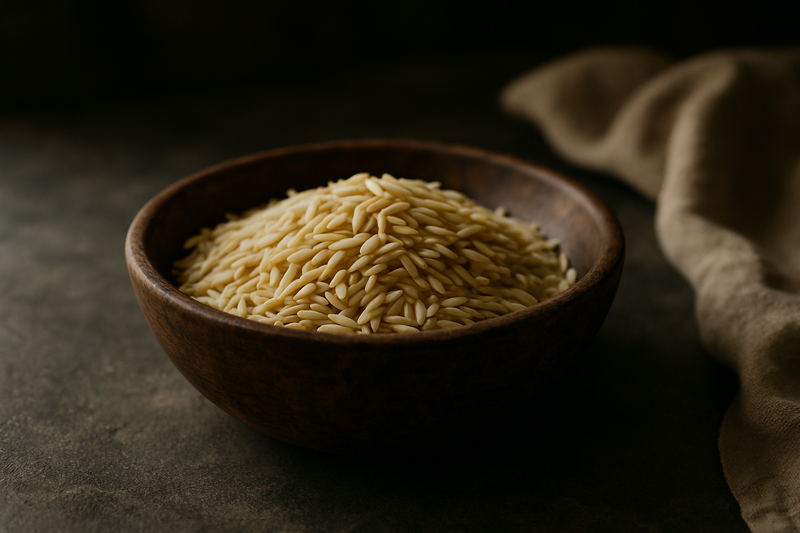
Orzo · Photograph
Discover the full picture on orzo nutrition, health benefits, and side effects — from calories and protein to gluten content, blood sugar impact, and how whole wheat orzo compares to the regular kind. Written in plain English, evidence-aligned, and built to help you use orzo smarter in everyday meals.
Key Nutrients
% Daily Value based on 2,000 cal diet
Key active compounds
- Complex carbohydrates — the main energy source; digested more slowly than simple sugars but still relatively quickly in refined form.
- Resistant starch (when cooled) — a portion of starch that resists digestion in the small intestine and acts like fiber, feeding beneficial gut bacteria. Increases when cooked orzo is refrigerated for at least 24 hours.
- Gluten proteins (gliadin and glutenin) — give pasta its chewy texture; problematic for people with celiac disease or non-celiac gluten sensitivity.
- B vitamins (thiamin, niacin, folate) — added back to enriched refined orzo during processing, and naturally higher in whole wheat orzo; support energy metabolism and cell formation.
- Minerals (iron, magnesium, zinc, phosphorus) — present in modest amounts; higher in whole wheat orzo because the bran and germ (outer layers of the wheat grain) are retained.
- Dietary fiber — ~2 g per serving in regular orzo; ~6–8 g in whole wheat orzo. Fiber supports digestion, helps slow glucose absorption, and feeds the gut microbiome (the community of microorganisms living in your digestive tract).
Prep and pairing ideas
Orzo's speed and versatility are its biggest practical advantages. Here are the most useful ways to use it:
As a pilaf base — toast dry orzo in a little olive oil until golden, then cook in vegetable broth with garlic and herbs. Add white beans, roasted vegetables, or sun-dried tomatoes to turn it into a complete plant-based meal.
In soups — orzo holds its shape better than many small pasta shapes and absorbs broth beautifully. Add it in the last 8–10 minutes of cooking to prevent it from going mushy. Classic pairings: lemon-chickpea soup, minestrone, or a simple tomato and herb broth.
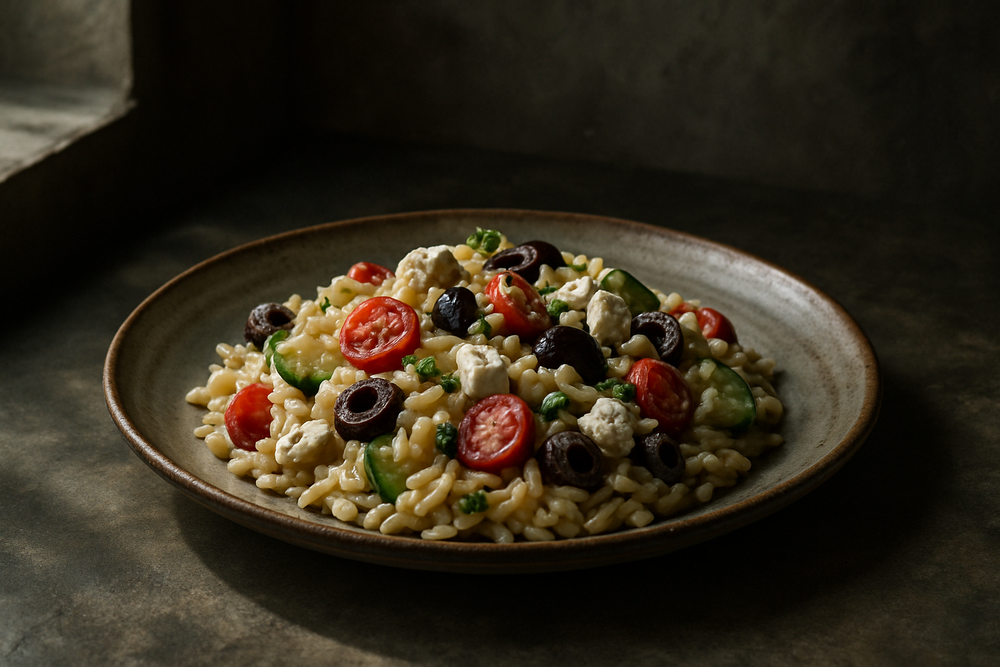
Cold Mediterranean orzo salad — cook, drain, and refrigerate orzo overnight. Toss with cucumber, cherry tomatoes, olives, red onion, parsley, feta (or a plant-based alternative), and a lemon-olive oil dressing. Bonus: the overnight cooling increases resistant starch.
Quick tip: Orzo can overcook fast. Start checking it at 7 minutes and drain while it still has a little bite — it continues softening after it leaves the heat.
Myths vs. facts
Myth 1: "Orzo is just like rice — it's a grain." Fact: Orzo looks like large rice grains, but it's 100% pasta made from durum wheat semolina. It's classified in the grains food group on MyPlate, but it's not a whole grain unless specifically labeled "whole wheat orzo."
Myth 2: "All pasta spikes blood sugar, so orzo should be avoided." Fact: Pasta generally has a moderate (not high) glycemic index — lower than white rice, white bread, and many breakfast cereals. Whole wheat orzo, cooled orzo, and orzo eaten with protein and vegetables all have a gentler effect on blood sugar than eating refined carbohydrates alone.
Myth 3: "Gluten-free orzo is healthier for everyone." Fact: Gluten-free orzo is necessary and beneficial for people with celiac disease or gluten sensitivity. For everyone else, it offers no proven health advantage over whole wheat orzo and may actually deliver less fiber and protein depending on the base grain used.
Bottom line
Orzo is a quick-cooking, rice-shaped pasta that earns its place in a balanced diet when used thoughtfully. Regular refined orzo is a reliable energy source enriched with B vitamins and iron, but it's relatively low in fiber and has a moderate impact on blood sugar. Whole wheat orzo is meaningfully better on both counts and should be the default choice for anyone focused on fiber intake, digestive health, or blood sugar management.
Cooling cooked orzo before eating — especially in Mediterranean salads — adds a free metabolic benefit through increased resistant starch. And as with all pasta, what you put alongside orzo matters as much as the orzo itself: vegetables, legumes, quality fats, and protein turn a simple bowl of pasta into a genuinely nourishing meal.
Orzo is not suitable for people with celiac disease or wheat allergy in its standard form. Everyone else can enjoy it in sensible portions as part of a varied, plant-forward diet.
Looking for Mediterranean-inspired meal patterns that include ingredients like orzo? Explore our healthy eating goals hub for practical guidance.
How Orzo Compares
| Compared with | What's different |
|---|---|
| Orzo vs. White Rice | Orzo is a wheat pasta, whereas rice is a seed grain with a softer, fluffier texture. |
| Orzo vs. Couscous | Couscous is made of smaller semolina granules and cooks faster than the larger orzo. |
| Orzo vs. Risotto (Arborio Rice) | Risotto uses starchy Arborio rice for a creamy sauce; orzo is a pasta shape often toasted first. |
Health Benefits
Things to Know
Contains gluten.: All wheat-based orzo contains gluten. People with celiac disease must use certified gluten-free orzo and verify there's no cross-contamination in production.
Wheat allergy.: Distinct from celiac disease — a true immune response to wheat proteins. People with a wheat allergy should avoid all wheat-based orzo.
Blood sugar watch.: Large portions of refined orzo can raise blood glucose quickly. People with type 2 diabetes, prediabetes, or insulin resistance should prefer whole wheat or cooled orzo, watch portion sizes, and pair with protein, fat, and vegetables to slow glucose absorption.
Weight management.: Orzo is calorie-dense for its volume. Pairing it with high-fiber vegetables and a protein source helps increase satiety (the feeling of fullness) without dramatically increasing total calories.
Medication interactions.: No specific drug–orzo interactions are documented. People taking medications for diabetes should be aware that large portions of any refined carbohydrate, including regular orzo, can affect blood glucose management.
Pregnancy.: Enriched orzo contributes folate, which supports fetal neural tube development. However, it's a supplement to — not a replacement for — a varied diet and prenatal supplements as directed by a healthcare provider.
Not recommended as-is for very low-carb or ketogenic diets.: At 41 g of carbohydrates per 2 oz dry serving, orzo doesn't fit strict low-carb eating patterns.
Shop This Ingredient
Stock your pantry with quality orzo.
Buy on AmazonAs an Amazon Associate, Plantopedia earns from qualifying purchases. This costs you nothing extra and helps us keep the encyclopedia free.
Frequently Asked Questions
Orzo isn't a superfood, but it isn't nutritional junk either. Here's what the evidence — mostly drawn from pasta and whole-grain research generally, since no clinical trials have tested orzo as a standalone food — suggests about each body system. Heart and circulation Whole grains are consistently linked to lower cardiovascular risk in large cohort studies and meta-analyses (studies that pool results from multiple research projects). Whole wheat orzo, which retains the bran and germ, can fit that pattern — but regular refined orzo lacks enough fiber to make that claim. The real heart benefit comes from using orzo as a base for Mediterranean-style dishes loaded with vegetables, legumes, and olive oil. No clinical trials have tested orzo alone for cholesterol or heart outcomes. Digestive health and microbiome Regular refined orzo provides only about 2 g of fiber per serving, which won't move the needle much on digestive regularity on its own. Whole wheat orzo at 6–8 g per serving is more meaningful. Both versions may contribute more resistant starch when cooked and cooled for 24 hours before eating — resistant starch feeds beneficial gut bacteria and may improve stool consistency. This cooling effect is well documented in pasta research broadly; orzo-specific studies haven't been done. People with wheat or gluten sensitivity can experience bloating, cramping, or diarrhea from any wheat-based orzo. Blood sugar and metabolism Regular refined orzo has a moderate glycemic index (GI) — a score that reflects how quickly a food raises blood glucose. With only 2 g of fiber per serving, it can raise blood sugar fairly quickly if eaten in large portions. Whole wheat orzo, with 3–4× more fiber, has a lower GI and a gentler effect on blood glucose. A practical hack backed by pasta research: cooking orzo and refrigerating it for at least 24 hours before eating — either cold in a salad or gently reheated — increases resistant starch content and may blunt post-meal blood sugar spikes. There are no orzo-specific diabetes trials; effects are inferred from broader pasta and carbohydrate physiology research. Inflammation and recovery No human studies have directly linked orzo consumption to changes in inflammatory markers. Any anti-inflammatory effect is likely context-dependent: whole wheat orzo used in a dish rich in vegetables, herbs, and olive oil may contribute to an overall anti-inflammatory eating pattern. Refined orzo eaten in large portions with few plant accompaniments is unlikely to do the same. Hormones and metabolic health Orzo doesn't contain phytoestrogens (plant compounds that interact with estrogen receptors) or other known hormone-active compounds. Its most relevant hormonal effect is through insulin — the hormone that manages blood glucose. Large portions of refined orzo can spike insulin more sharply than whole wheat or cooled versions. For people managing insulin resistance or PCOS (polycystic ovary syndrome), choosing whole wheat orzo, watching portions, and pairing it with protein and vegetables makes the most sense. This is extrapolated from general carbohydrate physiology, not orzo-specific studies.
There are four main forms available: Refined durum wheat semolina orzo — the most common. Made from the inner endosperm (starchy core) of the wheat grain. Moderate protein, low fiber. Often enriched with B vitamins and iron. Best for dishes where you want a neutral, light texture. Whole wheat orzo — made from the entire wheat kernel, keeping the bran and germ intact. Higher in fiber (6–8 g per 2 oz), slightly higher in protein and micronutrients, and has a lower glycemic index than regular orzo. Best for everyday use when fiber and blood sugar balance are priorities. Gluten-free orzo (rice, corn, quinoa, cassava base) — essential for people with celiac disease or gluten sensitivity. Nutrient profile depends on the base grain; quinoa-based versions tend to have the best amino acid (protein building block) profile. Often lower in protein than wheat orzo and can have a similar or higher glycemic impact unless paired carefully. Cooked-then-cooled orzo — any variety of orzo refrigerated for at least 24 hours after cooking. Resistant starch content increases, which can support gut health and modestly improve blood sugar response. An easy win for anyone making orzo salads or meal-prepping in advance. Verdict: Whole wheat orzo is the best everyday choice for most people. Regular orzo is fine in moderation as part of a balanced meal. Gluten-free orzo is a solid alternative for those who need it.
The busy plant-based eater Needs a quick-cooking, versatile carb base that works hot or cold. Can use whole wheat orzo to hit fiber targets without a lot of planning. Pairs easily with canned chickpeas, spinach, and olive oil for a complete meal in 20 minutes. The person managing blood sugar through diet Can benefit from choosing whole wheat orzo over regular for its lower glycemic impact. Gets additional benefit from the cook-and-cool trick for Mediterranean salads. Should watch portions (aim for ½ cup cooked as a side) and always pair with protein and non-starchy vegetables.
There are no orzo-specific guidelines. General healthy eating frameworks — including USDA MyPlate and Mediterranean diet research — provide a practical framework: Typical single serving: ½ to 1 cup cooked (roughly 1.5 to 2 oz / 42–56 g dry). MyPlate guidance: Adults need about 6 oz of grains (including pasta) per day, and at least half should be whole grain. One serving of orzo counts as roughly 2 oz grain equivalents. If managing blood sugar or weight: Start with ½ cup cooked as a side portion, paired with generous non-starchy vegetables and a protein source. No upper limit is set for healthy individuals, but as with any refined or even whole grain, variety matters — rotating orzo with other whole grains like brown rice, farro, and quinoa gives a broader nutrient profile. Start with smaller portions if you're new to higher-fiber whole wheat versions, since jumping from low-fiber to high-fiber eating too quickly can cause temporary bloating or gas.
Quick Answers
Common questions, answered in a line.
Orzo is a type of pasta made from durum wheat semolina, though its shape resembles large grains of rice. While it belongs to the grains food group, it is technically a pasta and is only considered a whole grain if the package is specifically labeled as "whole wheat orzo."
Standard orzo is not gluten-free because it is made from wheat, which contains gluten proteins like gliadin and glutenin. Individuals with celiac disease or non-celiac gluten sensitivity must choose certified gluten-free orzo alternatives to avoid adverse health effects.
Whole wheat orzo is generally healthier than regular orzo because it contains significantly more fiber, typically providing 6–8 grams per serving compared to just 2 grams in the refined version. It also retains more natural minerals like magnesium and zinc found in the grain's bran and germ.
You can lower the glycemic impact of orzo by refrigerating it for at least 24 hours after cooking to increase resistant starch, which helps slow glucose absorption. Pairing orzo with protein, healthy fats, and high-fiber vegetables also results in a gentler effect on blood sugar.
Orzo is an excellent source of complex carbohydrates for energy and provides B vitamins like thiamin, niacin, and folate, which support cell formation and metabolism. When opted for in its whole wheat form, it also provides essential minerals like iron and phosphorus.
To keep orzo from getting mushy, start checking for doneness at 7 minutes and drain it while it still has a slight "bite" or al dente texture. If adding orzo to soups, wait until the last 8–10 minutes of cooking, as the pasta will continue to soften even after being removed from the heat.
Orzo is relatively calorie-dense for its size, so it is best for weight management when paired with high-fiber vegetables and protein to increase satiety. This approach helps you feel full without consuming excessive calories from the pasta alone.
For Readers in the USA
Local context — sourcing, seasonality, and regional notes.
You can find orzo in the dry pasta aisle of major U.S. grocery chains like Kroger, Safeway, and Publix, or in the bulk bins at stores like Whole Foods Market. Specialty Mediterranean markets also carry high-quality imported Italian versions and whole-wheat varieties.
The USDA Dietary Guidelines classify orzo under the Grains group, recommending that at least half of your daily grain intake comes from whole-grain sources like whole-wheat orzo. Refined orzo sold in the U.S. is typically enriched with iron and B vitamins to meet federal standards.
While orzo is available year-round in the U.S., it peaks in popularity during summer months as a staple for cold American pasta salads and at Thanksgiving as a rice substitute in stuffings. In the winter, it is a common addition to comfort-food soups like Italian wedding soup.
Yes, brands like Barilla, DeLallo, and Jovial offer gluten-free orzo made from corn, rice, or cassava, which are widely available at U.S. retailers like Target and Walmart. These alternatives are essential for Americans following a gluten-free diet due to celiac disease or wheat allergies.
AI Clinical Review
- Accurately clarifies that orzo is pasta made from durum wheat, not a grain, and distinguishes refined vs. whole‑wheat versions.
- Provides realistic nutrition figures for a typical 2 oz (dry) serving and notes enrichment with B vitamins and iron.
- Emphasizes that health impact depends on portion size and meal context (e.g., pairing with vegetables, legumes, and olive oil), which aligns with evidence for Mediterranean-style eating.
- Highlights substantially higher fiber in whole‑wheat orzo and its likely gentler effect on blood sugar and satiety.
- Correctly flags gluten content and the need for certified gluten‑free options for celiac disease or wheat allergy.
- The “cook‑then‑cool” resistant starch effect is supported in pasta and starchy foods generally, but the size of the benefit and clinical outcomes (glucose control, microbiome changes) remain variable and orzo‑specific data are limited.
- Glycemic index/load for pasta can differ by brand, protein/fiber content, and cooking time (al dente vs. soft), so individual responses may not mirror average GI table values.
- Claims about cardiovascular or metabolic advantages derive from whole‑grain and dietary‑pattern studies; there are no randomized trials isolating orzo itself.
- Gluten‑free orzo formulations vary (rice, corn, quinoa, cassava), so nutrition and glycemic impact are product‑dependent and not uniformly established.
- Portion guidance: 1/2–1 cup cooked is a practical range; those managing blood sugar or weight often do better starting near 1/2 cup and building the plate with protein and non‑starchy vegetables.
- Celiac disease and wheat allergy: choose certified gluten‑free orzo and be cautious about cross‑contact when dining out or using shared cookware.
- Diabetes or insulin resistance (including PCOS): prefer whole‑wheat orzo, consider the cook‑and‑cool approach, and monitor personal post‑meal glucose; medication users should watch for hypoglycemia when adjusting carbohydrate portions.
- Digestive comfort: when switching to whole‑wheat or higher‑fiber versions, increase gradually and hydrate to minimize gas or bloating; sodium can climb in prepared mixes, broths, cheeses, or dressings used with orzo dishes.
Contains gluten; choose whole-wheat orzo for more fiber.
References
- USDA FoodData Central — pasta and orzo nutrient data (fdc.nal.usda.gov)
- USDA MyPlate — grains group guidance (refined vs whole grains) (myplate.gov)
- Healthline — Is Orzo Gluten-Free? (gluten content and celiac safety overview) (healthline.com)
- University of Illinois Extension — What's Orzo? (nutrition overview) (extension.illinois.edu)
- Good Housekeeping — What Is Orzo and How Do I Cook It? (goodhousekeeping.com)
- MasterClass — What Is Orzo? 5 Ways to Use the Rice-Like Italian Pasta (masterclass.com)
- DeLallo — Spotlight Series: All About Orzo (pasta classification and culinary uses) (delallo.com)
- Teohl — Is Orzo Healthy? (nutrition summary with blood sugar and fiber commentary) (teohl.com)
- Whole Grains Council — One-Pot Mediterranean Orzo (recipe and whole-grain context) (wholegrainscouncil.org)
- My Curated Tastes — Creamy Whole Wheat Orzo with Orange and Spinach (whole wheat orzo fiber and nutrition commentary) (mycuratedtastes.com)
Know Your Numbers
Eating healthy is a start. Now get to know your biomarkers.
Food changes bloodwork — inflammation, lipids, blood sugar and nutrient status all respond to what you eat. 59 markers from $59.
- Results in 7–10 days at 2,000+ Quest sites
- Licensed provider reviews every result
- One flat price, no membership, HSA/FSA eligible
Educational information only, not medical advice. Panels are ordered and reviewed through our licensed partner; Plantopedia may earn a commission.