Passionflower — health benefits and uses
Traditional calming nervine used for restlessness and sleep.
The Short Answer
Passionflower tea is a calming botanical used to reduce anxiety and improve sleep by interacting with GABA receptors in the brain. A typical dose involves steeping 1–2 grams of dried aerial parts in hot water for 5–10 minutes, usually consumed 30 minutes
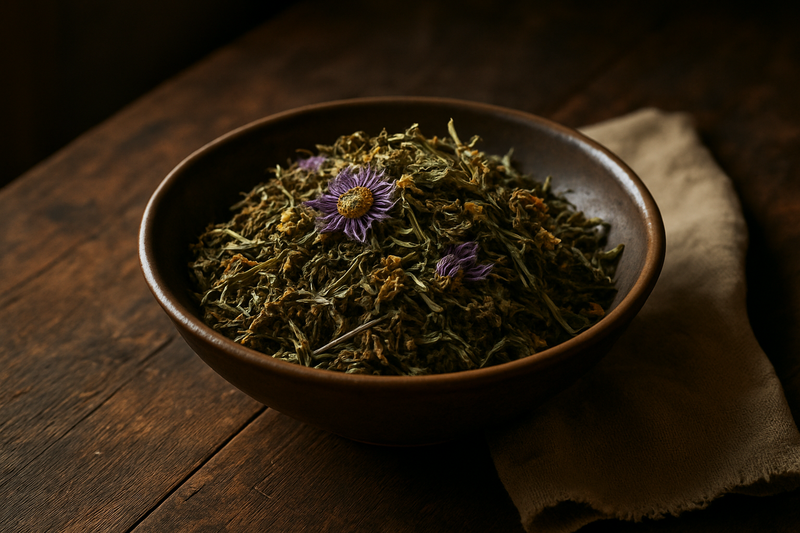
Passionflower · Photograph
Discover the evidence-backed passionflower tea benefits for anxiety and sleep, including how to brew it, safe dosage ranges, common herb pairings, and who should use caution before trying this calming botanical.
Key Nutrients
% Daily Value based on 2,000 cal diet
Key active compounds
The calming effects of passionflower are not caused by a single molecule. Several compound classes work together:
- Flavonoids — vitexin, isovitexin, orientin: These are polyphenolic plant compounds (plant chemicals with antioxidant properties) concentrated in the aerial parts. They are thought to interact with GABA receptors (gamma-aminobutyric acid receptors — the brain's main "slow down" signaling system), and are considered the primary drivers of passionflower's anxiolytic (anxiety-reducing) activity.
- Harmala alkaloids — harmine, harmaline: These are beta-carboline compounds that may interact with monoamine oxidase (an enzyme that breaks down mood-related brain chemicals) and central nervous system receptors. They contribute to sedative effects but also raise caution flags at higher doses.
- Maltol and related aromatic compounds: Minor constituents that may add mild calming and flavor properties, based largely on mechanistic (laboratory) rather than clinical (human trial) data.
Prep and pairing ideas
Common pairings
Passionflower + chamomile: The most classic evening tea combination. Chamomile (Matricaria chamomilla) provides its own mild anxiolytic and antispasmodic properties, plus a familiar apple-like taste that softens passionflower's more earthy flavor. Use equal parts dried herb; steep 5–7 minutes. This pairing is gentle enough for most adults new to calming teas.
Passionflower + lemon balm: Lemon balm (Melissa officinalis) contributes a bright citrusy note and has its own evidence for reducing anxiety and improving mood. Together with passionflower, the blend creates a complementary GABA-supporting effect. This is a good choice for evenings when you feel wired but tired — mentally restless rather than physically tense.
Passionflower + oat straw (milky oats): Oat straw (Avena sativa) is a traditional nervine (nervous-system tonic) that blends well with passionflower for people dealing with stress-related exhaustion. It adds a slightly creamy, mild sweetness to the brew. This combination is more of a long-term nourishing tea than an acute sleep aid.
Basic brewing method
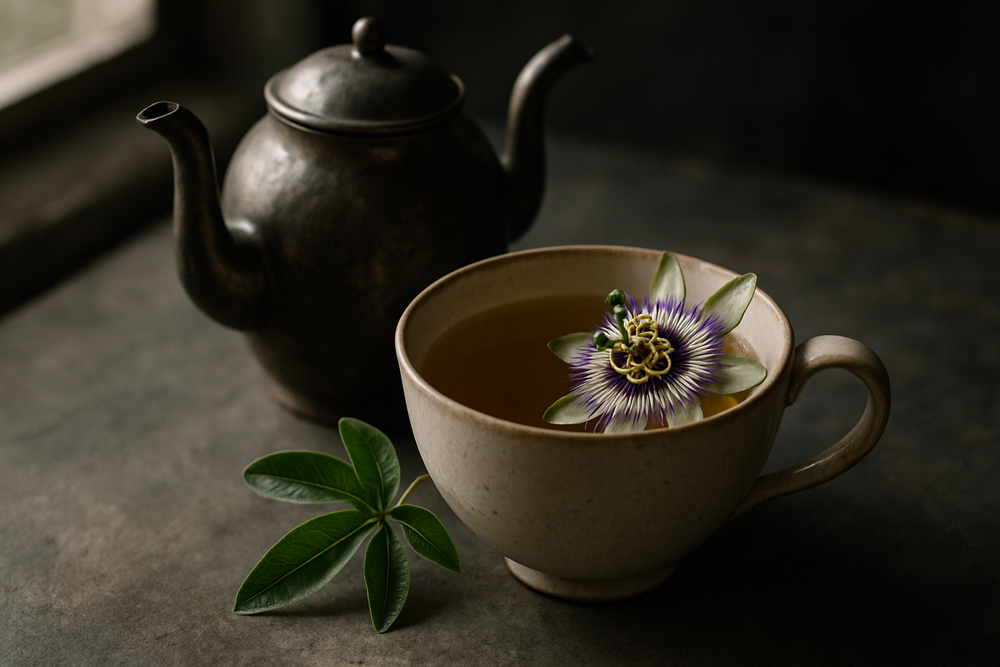
Steep 1–2 g (roughly 1 heaped teaspoon) of dried passionflower aerial parts in about 150–200 ml of just-boiled water for 5–10 minutes. Strain, add honey if desired, and drink 30 minutes before bed. The taste is mild and earthy — most people find it pleasant, especially when blended.
Bottom line
Passionflower is one of the better-evidenced calming herbs available without a prescription. Multiple small, controlled human trials suggest it can meaningfully reduce anxiety symptoms and improve sleep quality — particularly in people whose insomnia is tied to nervous tension or stress. It works best as an evening ritual: a simple tea, or a standardized extract capsule, taken 30 minutes before bed.
The limitations are real: studies are short and small, tea preparations are less standardized than capsules, and the drowsiness effect is not trivial. Passionflower is not a substitute for addressing the root causes of anxiety or insomnia, and it is not appropriate for everyone. But for a healthy adult looking for a plant-based, gently sedating evening wind-down option, the evidence is solid enough to be worth trying — thoughtfully and at a low starting dose.
If you're curious about how passionflower fits into a broader plant-based approach to sleep and stress, explore our goal-based guides at /goals.
How Passionflower Compares
| Compared with | What's different |
|---|---|
| Passionflower vs. Valerian Root | Passionflower focuses on GABA receptors for anxiety, while Valerian is more sedative for deep sleep onset. |
| Passionflower vs. Lemon Balm | Lemon balm has a citrus profile and mood-boosting qualities, whereas passionflower is more earthy and calming. |
| Passionflower vs. Chamomile | Passionflower is an earthy-tasting nervine, while Chamomile is a floral antispasmodic with apple notes. |
Health Benefits
Things to Know
Drowsiness is real and predictable.: Passionflower can impair alertness and coordination. Do not drive or operate machinery within several hours of taking it.
Avoid with prescription sedatives, sleep medications (e.g., zolpidem, eszopiclone), benzodiazepines (e.g., diazepam), antiepileptics, or opioids.: The additive CNS (central nervous system) depression can be significant.
Alcohol adds to the sedative effect.: Don't combine passionflower with alcohol if you're sensitive to its effects.
Other calming herbs compound the drowsiness.: Valerian, kava, melatonin, and high-dose chamomile all overlap mechanistically. Use combinations carefully.
Pregnancy and breastfeeding: avoid.: Some passionflower alkaloids have theoretical uterine-stimulating effects. Human safety data in pregnancy are absent. Most clinical guidelines advise against use in these groups.
Children and adolescents: Pediatric evidence is limited to one small study. Routine use should be supervised by a clinician.
Older adults and people with low blood pressure or heart rhythm conditions: may be more sensitive to sedative and blood-pressure-lowering effects.
Liver disease or polypharmacy (multiple drugs): Passionflower constituents are metabolized by the liver. Theoretical interactions with other hepatically metabolized drugs are possible; check with a pharmacist.
Long-term safety: Most studies run 4–12 weeks. Data beyond three months in humans are limited.
Glossary
Shop This Ingredient
Stock your pantry with quality passionflower.
Buy on AmazonAs an Amazon Associate, Plantopedia earns from qualifying purchases. This costs you nothing extra and helps us keep the encyclopedia free.
Frequently Asked Questions
Anxiety and stress The strongest clinical signal for passionflower is in anxiety. A double-blind randomized trial published in a peer-reviewed psychiatry journal found that Passiflora incarnata extract performed comparably to oxazepam (a prescription benzodiazepine) in adults with generalized anxiety disorder over four weeks — and notably caused less impairment of job performance. A separate 12-week trial in adults with nervous restlessness found that a dried ethanolic (alcohol-based) extract of passionflower significantly improved stress resistance and quality of life. A Japanese study using 200 mg per day of passionflower extract over 12 weeks also showed improvements in emotional parameters related to daytime social and mental functioning. That said, nearly all anxiety trials are small (often 30–60 participants), short (4–12 weeks), and frequently use standardized extracts rather than simple teas. The evidence is encouraging but not yet definitive. "May help" is the accurate phrase — not "treats anxiety." Sleep quality and insomnia Passionflower's sleep evidence is similarly promising but still modest. A double-blind, placebo-controlled study in adults with insomnia disorder found that passionflower extract increased total sleep time and improved sleep efficiency (the proportion of time in bed actually spent sleeping) on objective polysomnography (a detailed overnight sleep lab test). In healthy adults with mild sleep complaints, a separate trial using low-dose passionflower herbal tea showed short-term subjective improvements in sleep quality compared with placebo — a meaningful finding because it used tea, not a concentrated capsule extract. Sleep studies share the same limitations as the anxiety trials: small samples, short durations (typically 2–12 weeks), and variation in the form and dose used. Digestive ease Traditional herbalism describes passionflower as helpful for nervous-type digestive discomfort — the kind of stomach unease that comes with stress or anxiety. Laboratory studies suggest antispasmodic (muscle-relaxing) properties in smooth muscle, which lines the gut. However, modern controlled human trials specifically testing passionflower for digestive outcomes are sparse. Any digestive benefit is most plausibly an indirect effect of its calming action on the nervous system. Inflammation and antioxidant activity Passionflower's flavonoid profile — particularly vitexin and isovitexin — shows free-radical scavenging (antioxidant) activity and modulation of inflammatory signaling pathways in cell and animal studies. Human trials measuring inflammatory markers directly are lacking, so this area should be considered mechanistically interesting but not yet clinically proven for people. Perimenopausal and hormonal symptoms Passionflower appears in some over-the-counter combination formulas marketed for menopausal symptoms. The most plausible explanation is its anxiolytic and sleep-supporting properties rather than any direct hormonal effect. Human data specifically measuring hormone levels (estradiol, FSH) in response to passionflower are lacking.
Buying guide Dried herb for tea: The most traditional form and the one with at least one clinical trial behind it. Look for products that specify Passiflora incarnata (not just "passionflower," which could refer to other Passiflora species). Organic certification is a bonus but not essential. Loose-leaf is often fresher than tea bags; the herb should smell faintly earthy and slightly floral. Standardized capsule extracts: Most clinical trials use these. Look for a label stating the flavonoid content (typically standardized to ≥0.5% flavonoids by weight). A daily dose of 200–500 mg is the most studied range. Standardized extracts are a sensible choice if you want a consistent dose and don't enjoy the taste of the tea. Liquid extracts and tinctures: Convenient and fast-absorbing. Traditional monographs suggest 0.5–1 ml of fluid extract or 0.5–2 ml of tincture up to three times daily. These often contain alcohol as a solvent — relevant if you avoid alcohol for any reason. Combination blends: Products pairing passionflower with chamomile, lemon balm, or valerian are widely available. These may be pleasant and practical, but formal clinical data on the combinations are limited. They also make it harder to know which herb is doing what. Label tip: Avoid products listing only "passionflower fruit" — the medicinal evidence is for the aerial parts (leaves, stems, flowers), not the fruit itself.
There is no single universally agreed dose, but the following ranges are supported by traditional use, pharmacopoeia monographs, and clinical studies: As dried herb tea: 0.25–2 g of dried aerial herb per cup, up to three times daily For sleep specifically: one cup containing roughly 1–2 g, taken 30 minutes before bed Start at the lower end (0.25–0.5 g per cup) and see how your body responds before increasing As standardized extract capsules: 200–500 mg per day is the range used in clinical trials; 200 mg/day was studied over 12 weeks Most supplement guides suggest taking the full dose in the evening As liquid extract or tincture: Approximately 0.5–1 ml of fluid extract, up to three times daily 0.5–2 ml of tincture, up to three times daily General guidance: Start low — especially if you are new to herbal sedatives or sensitive to sleep aids. Don't take it before activities that require alertness (driving, machinery, caregiving). Most clinical data covers up to 12 weeks of continuous use. If you want to use it longer, discuss with a healthcare provider. If you feel groggy the next morning, reduce your dose or move the timing earlier in the evening.
Quick Answers
Common questions, answered in a line.
Passionflower contains flavonoids like vitexin and isovitexin that interact with GABA receptors, which serve as the brain's primary "slow down" signaling system. These polyphenolic compounds are considered the main drivers of the herb's anxiety-reducing activity.
To brew passionflower tea, steep 1–2 grams of dried aerial parts in 150–200 ml of just-boiled water for 5–10 minutes. Most people find the earthy taste pleasant and recommend drinking it about 30 minutes before bed.
You should not take passionflower if you are pregnant, breastfeeding, or taking prescription sedatives like benzodiazepines and sleep medications. The herb may have uterine-stimulating effects and can cause dangerous additive central nervous system depression when combined with certain drugs.
Passionflower pairs well with chamomile for a gentle evening tea, lemon balm for mood support, or oat straw for stress-related exhaustion. These combinations can soften passionflower's earthy flavor and provide complementary calming effects.
Passionflower can cause significant drowsiness and impair your alertness and coordination. Because of these sedative effects, you should not drive or operate heavy machinery within several hours of consuming the herb.
Most human clinical studies on passionflower safety and efficacy have only lasted between 4 to 12 weeks. Currently, there is limited data regarding the safety of using passionflower for longer than three months.
For Readers in the USA
Local context — sourcing, seasonality, and regional notes.
The purple passionflower (Passiflora incarnata) is native to the Southeastern United States and thrives in USDA hardiness zones 5 through 9. It is frequently found growing wild from Florida to Pennsylvania and as far west as Texas, typically blooming from May through September.
You can find dried passionflower or tea blends at major US retailers like Whole Foods Market, Sprouts Farmers Market, and Vitamin Shoppe, or through local apothecaries. Many American consumers also purchase standardized extracts from brands like Traditional Medicinals or Gaia Herbs, which are widely available in the supplement aisle of most grocery chains.
In the United States, passionflower is sold as a dietary supplement, which is regulated by the FDA under the Dietary Supplement Health and Education Act (DSHEA). While the FDA does not approve these products for safety or effectiveness before they are marketed, consumers should look for the USDA Organic seal or third-party certifications like USP or NSF to ensure quality and purity.
AI Clinical Review
- Provides a balanced summary of small randomized trials showing modest benefits of Passiflora incarnata for anxiety and sleep, and avoids overstating outcomes.
- Clearly distinguishes tea made from the aerial parts from standardized extracts, noting that most trials used extracts and at least one used tea.
- Explains a plausible mechanism (support of GABA signaling) without claiming a single “active” compound, and correctly frames antioxidant data as mechanistic.
- Flags key safety points: predictable drowsiness, additive sedation with alcohol/CNS depressants, and avoidance in pregnancy/lactation.
- Trials are small, short (often 2–12 weeks), and use varied preparations/doses—so real‑world effect sizes and optimal dosing remain uncertain.
- Evidence for digestive comfort and perimenopausal symptoms is largely traditional or mechanistic; high‑quality human studies are limited.
- Antioxidant/anti‑inflammatory findings come mostly from cell/animal work; human biomarker data are sparse.
- Forms and dosing: tea 0.25–2 g of dried aerial parts per cup (up to 3×/day); standardized extracts commonly 200–500 mg/day; tincture/fluid extract dosing varies by product—start low and take in the evening due to sedation.
- Safety/interaction cautions: avoid combining with benzodiazepines, Z‑drugs, opioids, or other sedatives; alcohol can amplify drowsiness. Long‑term safety beyond ~12 weeks isn’t well characterized.
- Populations needing clinician guidance: pregnant or breastfeeding individuals, children/adolescents, older adults, and people with low blood pressure, heart rhythm issues, liver disease, or polypharmacy.
- Product quality: choose products labeled Passiflora incarnata and the aerial parts; standardized extracts improve dose consistency. Third‑party testing (e.g., USP/NSF) can help reduce adulteration risk.
May cause drowsiness; avoid with sedatives and in pregnancy.
References
- USDA FoodData Central — passion fruit nutritional data (fdc.nal.usda.gov)
- Randomized, double-blind, placebo-controlled trial: passionflower extract for stress and insomnia (pmc.ncbi.nlm.nih.gov)
- Passionflower vs. oxazepam for generalized anxiety disorder (RCT) (pubmed.ncbi.nlm.nih.gov)
- Double-blind RCT: passionflower in adults with insomnia disorder — polysomnography outcomes (pubmed.ncbi.nlm.nih.gov)
- Passionflower herbal tea for sleep quality in healthy adults (placebo-controlled trial) (pubmed.ncbi.nlm.nih.gov)
- Passiflora incarnata in neuropsychiatric disorders — systematic review (pubmed.ncbi.nlm.nih.gov)
- Passionflower extract for quality of life in Japanese adults — 12-week trial (ffhdj.com)
- Improvement of stress resistance with passionflower in nervous restlessness — Karger CMR (karger.com)
- Memorial Sloan Kettering Cancer Center — passionflower herbal monograph (safety and interactions) (mskcc.org)
- RxList — passion flower: side effects, dosage, and interactions (rxlist.com)
Know Your Numbers
Eating healthy is a start. Now get to know your biomarkers.
Food changes bloodwork — inflammation, lipids, blood sugar and nutrient status all respond to what you eat. 59 markers from $59.
- Results in 7–10 days at 2,000+ Quest sites
- Licensed provider reviews every result
- One flat price, no membership, HSA/FSA eligible
Educational information only, not medical advice. Panels are ordered and reviewed through our licensed partner; Plantopedia may earn a commission.