Unlock the full science of pineapple nutrition with our comprehensive guide. From the protein-digesting bromelain enzymes that optimize dige
Fiber + phytonutrients; use as a whole-food sweet, snack, or smoothie base
The Short Answer
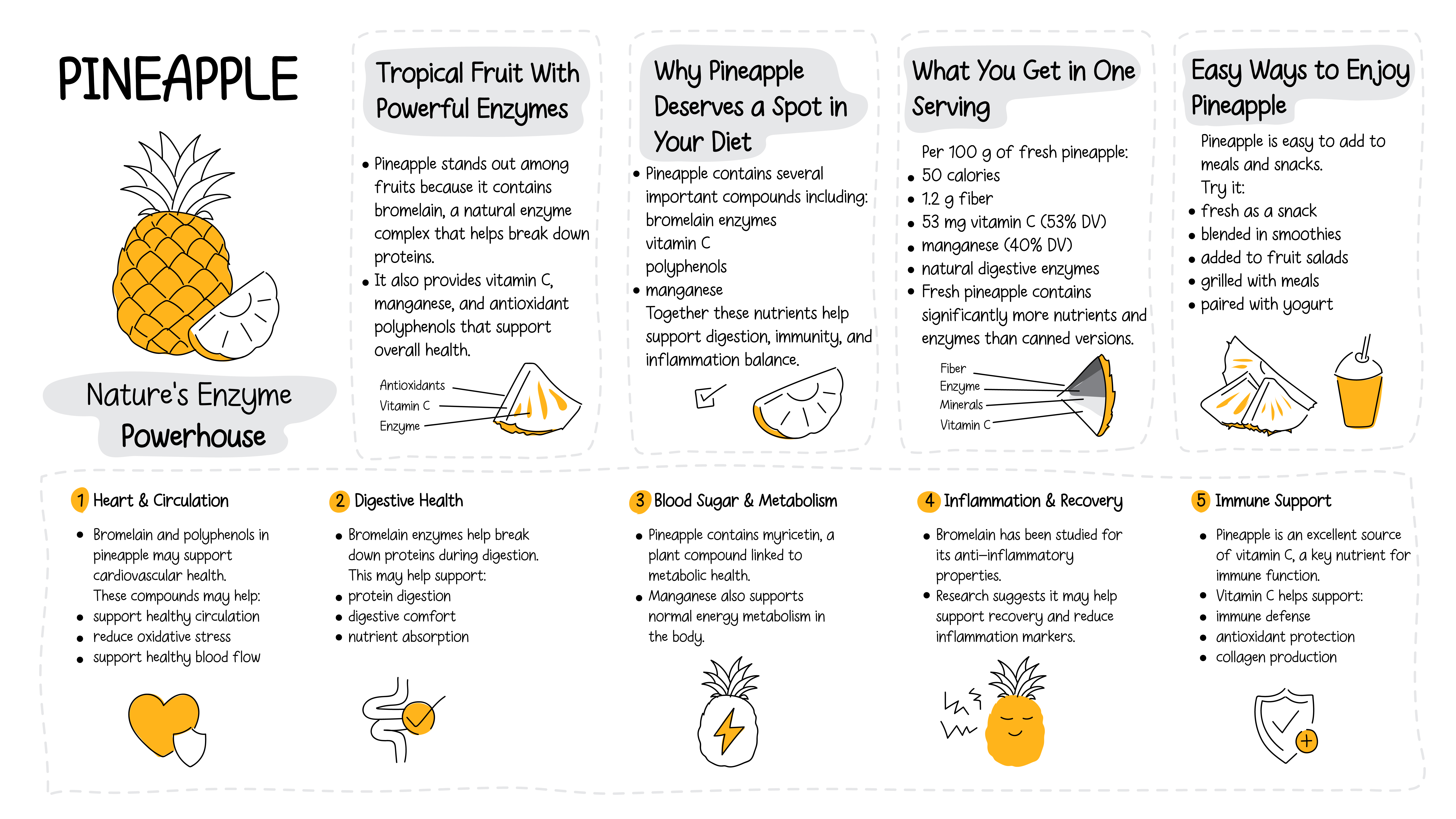
Pineapple is a nutrient-dense fruit providing 88% of the Daily Value for vitamin C and 65% for manganese per cup. It contains bromelain, a unique group of enzymes that aid protein digestion and help reduce systemic inflammation.

Pineapple · Photograph
In our processed-food landscape, pineapple offers a rare nutritional advantage: natural proteolytic enzymes that support protein digestion and help manage systemic inflammation. Research suggests that bromelain from fresh pineapple, combined with its high vitamin C and polyphenol content, provides meaningful support for immune function and athletic recovery. By optimizing the digestion of macronutrients, pineapple helps the body absorb more from every meal while reducing the oxidative stress that can lead to chronic illness.
Key Nutrients
% Daily Value based on 2,000 cal diet
Why Pineapple Health Benefits Matter for Modern Nutrition
In our processed-food landscape, pineapple offers a rare nutritional advantage: natural proteolytic enzymes that support protein digestion and help manage systemic inflammation. Research suggests that bromelain from fresh pineapple, combined with its high vitamin C and polyphenol content, provides meaningful support for immune function and athletic recovery. By optimizing the digestion of macronutrients, pineapple helps the body absorb more from every meal while reducing the oxidative stress that can lead to chronic illness.
Key Active Compounds in Pineapple
The therapeutic potential of pineapple is driven by its bioactive "enzyme-vitamin" matrix, which distinguishes it from other high-sugar tropical fruits.
- Bromelain: A mixture of proteolytic enzymes that break down proteins and support a healthy inflammatory response.
- Polyphenols (147.91 mg per 100g): Including gallic acid and ferulic acid, which provide cellular antioxidant protection.
- Myricetin: A flavonol linked explicitly to blood sugar regulation and metabolic health.
- Vitamin C (Ascorbic Acid): At 53 mg per 100g, it provides foundational immune support and collagen synthesis.
- Manganese: An essential trace mineral required for bone formation and energy metabolism.
Conclusion
Pineapple is much more than a tropical treat; it is a precision tool for digestion and immune health. By delivering a concentrated dose of vitamin C alongside the protein-dissolving power of bromelain, it supports everything from gut comfort to athletic recovery. While canned versions are convenient, opting for fresh pineapple ensures you receive the full "enzyme-vitamin" matrix necessary to combat systemic inflammation and optimize your metabolic health.
Incorporating this "enzyme powerhouse" into your routine—especially when paired with protein—is a science-backed way to upgrade your daily wellness. Ready to incorporate more beneficial whole foods like pineapple into your routine? Our meal planner can help you create balanced meals that maximize the health benefits of functional ingredients.
How Pineapple Compares
| Compared with | What's different |
|---|---|
| Pineapple vs. Papaya | Contains higher levels of papain enzyme compared to pineapple's bromelain. |
| Pineapple vs. Guava | Lower in manganese but significantly higher in vitamin C and fiber than pineapple. |
| Pineapple vs. Mango | Provides vitamin C without the protein-digesting bromelain enzymes found in pineapple. |
Health Benefits
Things to Know
Oral Irritation: Fresh pineapple can cause a tingling sensation on the tongue. This is actually the bromelain enzymes beginning to break down proteins on your mucous membranes—it is harmless but can be minimized by grilling or salt-rinsing the fruit.
Blood Thinners: Because bromelain has mild anticoagulant effects, consult a doctor if you are on medications like Warfarin or Aspirin.
Pesticides: Pineapples have thick skins that protect the inner fruit, but washing the exterior before cutting is still recommended to avoid cross-contamination.

Common Uses
- —Consuming fresh pineapple after high-protein meals to assist the stomach in breaking down complex meats and plant proteins.
- —Using pineapple in recovery smoothies to neutralize free radicals and soothe muscle tissue inflammation.
- —Eaten fresh during cold and flu season to maximize Vitamin C intake and strengthen the gut barrier.
- —Utilizing the bromelain in pineapple juice or pulp as a natural marinade to soften tough protein fibers before cooking.
- —Adding fresh pineapple chunks to yogurt or cottage cheese for a nutrient-dense, enzyme-rich breakfast.
- —Including pineapple in the diet to ensure adequate manganese levels for long-term skeletal strength.
Active Compounds
A mixture of proteolytic enzymes that break down proteins and support a healthy inflammatory response.
Including gallic acid and ferulic acid, which provide cellular antioxidant protection.
A flavonol linked explicitly to blood sugar regulation and metabolic health.
At 53 mg per 100g, it provides foundational immune support and collagen synthesis.
An essential trace mineral required for bone formation and energy metabolism.
Glossary
Shop This Ingredient
Stock your pantry with quality pineapple.
Buy on AmazonAs an Amazon Associate, Plantopedia earns from qualifying purchases. This costs you nothing extra and helps us keep the encyclopedia free.
Frequently Asked Questions
For most adults, bromelain from fresh pineapple is perfectly safe for daily consumption and can improve long-term digestion. However, if you have a bleeding disorder or are scheduled for surgery, you should monitor your intake, as the enzymes can slightly increase the time it takes for blood to clot.
While fresh pineapple contains anti-inflammatory bromelain and vitamin C, most clinical trials for joint pain use highly concentrated supplements. However, eating fresh pineapple regularly can contribute to a lower overall inflammatory "load" in the body, providing a supportive role in a broader anti-inflammatory diet designed to protect the joints.
Bromelain is a unique complex of proteolytic enzymes that helps the body break down proteins. It is important because it facilitates better digestion, reduces tissue swelling, and may even enhance the absorption of certain nutrients and medications. It is one of the few enzymes that survive the stomach’s acidic environment.
Pineapple supports the heart through its high vitamin C content, which protects arteries from oxidative stress. Additionally, the anti-clotting effects of bromelain support healthy circulation. While it shouldn't be the only tool for managing cholesterol, its polyphenols help prevent LDL cholesterol oxidation, a key step in managing heart disease.
Eating excessive amounts of fresh pineapple can lead to mouth sores or a "burning tongue" due to its high enzyme content. Additionally, the natural sugar and acidity can cause digestive upset or blood sugar spikes in sensitive individuals. It is best to stick to the recommended daily serving size of 1 cup.
Quick Answers
Common questions, answered in a line.
Pineapple supports protein digestion and helps manage systemic inflammation through its natural proteolytic enzymes, specifically bromelain. This "enzyme-vitamin" matrix also provides high levels of vitamin C and polyphenols to bolster immune function and reduce oxidative stress.
Pineapple contains a high concentration of manganese, an essential trace mineral required for bone formation and long-term skeletal strength. Consuming the fruit regularly helps ensure the body has the necessary nutrients to maintain bone density and support energy metabolism.
Eating fresh pineapple after high-protein meals can assist the stomach in breaking down complex meats and plant proteins. This natural digestive aid helps the body optimize macronutrient absorption while improving overall gut comfort.
Pineapple is effective for athletic recovery because it contains bromelain to soothe muscle tissue inflammation and vitamin C to neutralize free radicals. Athletes often use it in recovery smoothies to support tissue repair and reduce the physical stress of exercise.
Fresh pineapple causes a tingling sensation because the bromelain enzymes are actively breaking down proteins on your tongue's mucous membranes. This effect is harmless and can be minimized by grilling the fruit or using a salt-rinse before eating.
Fresh pineapple is a superior choice because it ensures you receive the full active "enzyme-vitamin" matrix, including living bromelain. While canned versions offer convenience, the fresh fruit is necessary to maximize the anti-inflammatory and metabolic health benefits.
Pineapple contains a flavonol called myricetin, which is explicitly linked to blood sugar regulation and metabolic health. Additionally, its polyphenols like gallic and ferulic acid provide cellular antioxidant protection to support a healthy metabolism.
For Readers in the USA
Local context — sourcing, seasonality, and regional notes.
Most pineapples sold in U.S. grocery stores like Kroger, Whole Foods, and Walmart are imported year-round from Costa Rica and Mexico, though Hawaii remains a iconic domestic producer. While available 12 months a year, the peak season for the sweetest fruit typically runs from March through July.
In the U.S., the MD2 variety, often marketed as 'Gold' or 'Honey Glow,' is the most common pineapple found in supermarkets due to its high vitamin C content and low acidity. You may also find the 'Sugarloaf' variety at specialty farmers markets in Florida or Hawaii, known for its edible core.
The USDA Organic seal ensures pineapples were grown without synthetic fertilizers or pesticides, though the fruit's thick, inedible skin means it consistently ranks low on the 'Dirty Dozen' list for pesticide residue. Most U.S. retailers offer both conventional and organic options.
Pineapple is a staple in U.S. culinary culture, ranging from traditional Hawaiian plate lunches and Southern 'Pig Pickin' cakes to contemporary grilled toppings for American barbecue. It is also a primary ingredient in the juice and smoothies frequently sold at national chains like Jamba or Tropical Smoothie Cafe.
AI Clinical Review
- Bromelain Uniqueness: Correctly identifies pineapple as the primary dietary source of bromelain. This enzyme's ability to survive the acidic stomach environment makes it clinically effective for systemic use.
- Manganese Density: Properly highlights the fruit's exceptional manganese content, which is often overshadowed by its Vitamin C profile but is critical for metabolic enzymes.
- Processing Impact: Accurately warns that heat pasteurization in canned pineapple destroys bromelain and significantly degrades Vitamin C, rendering it less effective for clinical goals.
- Protein Synergy: Correctly advises pairing pineapple with protein to leverage its proteolytic (protein-digesting) capabilities.
- Anti-Thrombotic Mechanism: Rightly mentions the role of pineapple enzymes in supporting blood flow and preventing platelet aggregation.
- Joint Pain Efficacy: While pineapple consumption reduces general inflammation, most successful clinical trials for osteoarthritis use high-dose bromelain supplements rather than whole fruit.
- Myricetin for Diabetes: The role of pineapple myricetin in blood sugar regulation is promising in molecular studies, but more long-term human trials are needed to define its impact on HbA1c levels.
- Anticancer Potential: Some lab studies look at bromelain and cancer cell apoptosis; however, this is currently strictly experimental and lacks human clinical validation.
- Absorption Enhancement: There is emerging evidence that pineapple enzymes may enhance the absorption of certain antibiotics, but this requires more standardized clinical testing.
- The tingling sensation on the tongue when eating fresh pineapple is a localized enzymatic reaction; it is not an allergy, though it can be irritating for those with sensitive oral mucosa.
- Because of the anticoagulant effects of bromelain, patients on Warfarin, Aspirin, or other blood thinners should consult their physician before significantly increasing pineapple intake.
- The natural acids in pineapple can aggravate GERD (acid reflux) or contribute to tooth enamel erosion if consumed excessively.
- Clinical note: The pineapple core contains the highest concentration of bromelain, so juicing or finely blending the core is beneficial for enzyme intake.
- Advise patients that canned pineapple is often stored in heavy syrup, which significantly increases the glycemic load and negates metabolic benefits.
Frame as food education, not disease treatment.
References
- USDA FoodData Central - Pineapple (Raw) Nutritional Profile: Primary source for macronutrient, vitamin C, and manganese concentrations.
- Biomedical Reports – Bromelain: A Review of its Therapeutic Applications: Clinical evidence regarding bromelain's role in protein digestion and systemic inflammation.
- Molecules (MDPI) – Phenolic Compounds and Antioxidant Capacity of Pineapple: Data on the polyphenolic content (Gallic and Ferulic acid) and its role in neutralizing oxidative stress.
- NIH National Center for Complementary and Integrative Health (NCCIH) – Bromelain Safety: Authoritative guidance on drug interactions, blood-thinning risks, and oral sensitivity.
- Journal of Food Science and Technology – Effect of Processing on Pineapple Nutrients: Comparative research on the degradation of Vitamin C and enzymes in canned vs. fresh fruit.
- American Heart Association (AHA) – Role of Vitamin C in Vascular Health: Supporting evidence for the cardiovascular benefits of high-dose antioxidant intake from whole fruits.
Know Your Numbers
Eating healthy is a start. Now get to know your biomarkers.
Food changes bloodwork — inflammation, lipids, blood sugar and nutrient status all respond to what you eat. 59 markers from $59.
- Results in 7–10 days at 2,000+ Quest sites
- Licensed provider reviews every result
- One flat price, no membership, HSA/FSA eligible
Educational information only, not medical advice. Panels are ordered and reviewed through our licensed partner; Plantopedia may earn a commission.