Puffed Rice — health benefits and uses
A light, easily digested food used in Indian fasting and festival snacks.
The Short Answer
Puffed rice is a low-calorie, gluten-free grain snack that provides 56 calories and 12.6g of carbohydrates per cup. While easy to digest, it has a high glycemic index and is best paired with protein and fiber to manage blood sugar levels.
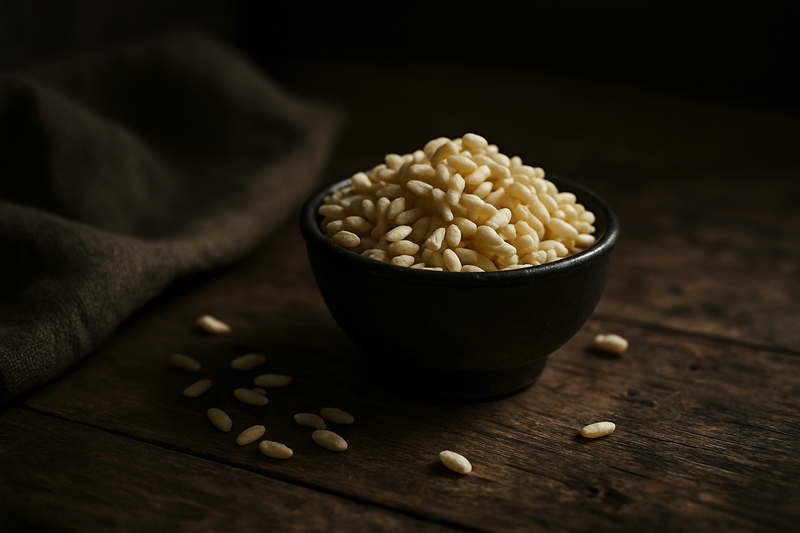
Puffed Rice · Photograph
Discover puffed rice nutrition and health benefits, including calories per cup, glycemic index, blood sugar impact, and how to make bhel puri and snack mixes healthier. Covers puffed brown rice vs white puffed rice, diabetes safety, and expert pairing tips.
Key Nutrients
% Daily Value based on 2,000 cal diet
Key active compounds in puffed rice
Puffed rice is not a rich source of phytonutrients (plant compounds with biological activity), especially the refined white variety. However, some compounds are worth knowing:
- Gamma-oryzanol — found primarily in the bran of brown rice. A mixture of ferulic acid esters (molecules formed when ferulic acid, a plant antioxidant, bonds with sterol-like compounds). Research in animal and human studies has explored its potential to lower cholesterol and reduce oxidative stress. Puffing can reduce gamma-oryzanol levels compared with intact brown rice, and puffed white rice contains very little.
- Phenolic acids (including ferulic acid) — antioxidant compounds concentrated in the outer layers of rice grains. Refining rice removes most of the bran, so puffed white rice is a minor source. Puffed brown rice retains more.
- Phytic acid — a naturally occurring phosphorus compound in whole grains. It can bind minerals like iron and zinc and reduce their absorption. Levels are higher in puffed brown rice than puffed white rice.
- Rapidly digestible starch — the dominant compound in puffed rice. The puffing process physically disrupts the starch granule structure, making it even easier for digestive enzymes to break it down quickly — which explains the high GI.
Prep and pairing ideas
Puffed rice is one of the most versatile grain ingredients in the kitchen. Its neutral flavor and crisp texture make it easy to combine with almost anything.
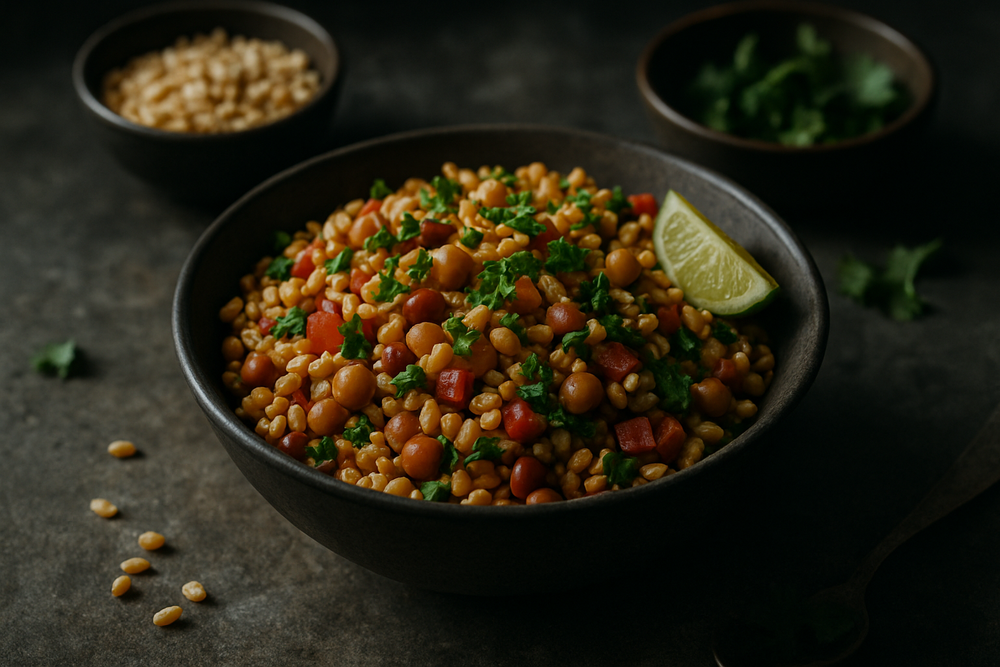
Classic bhel puri (the gold standard for healthy puffed rice eating): Toss 1–2 cups of puffed rice with ½ cup boiled or canned chickpeas, diced tomato, red onion, cucumber, a handful of roasted peanuts, fresh coriander (cilantro), green chutney, tamarind chutney, chaat masala, and a squeeze of lime. The chickpeas and peanuts add protein, fiber, and healthy fats that blunt the glycemic impact. Serve immediately so the puffed rice stays crunchy.
Morning grain bowl: Use ¾ cup puffed brown rice as a base, top with plain unsweetened yogurt (adds protein and probiotics), fresh berries, a tablespoon of ground flaxseed (adds fiber and omega-3 fatty acids), and a small drizzle of honey. Far more balanced than plain puffed rice cereal with milk.
Trail mix: Combine ½ cup puffed rice with raw almonds, pumpkin seeds, dried cranberries, and a square of dark chocolate (70%+ cacao). The nuts and seeds add protein, fiber, and healthy fats; the dark chocolate contributes flavanols (plant compounds linked to cardiovascular health). A practical, portable snack where the puffed rice adds crunch and lightness without dominating.
Bottom line
Puffed rice is a light, naturally gluten-free, low-fat grain product with a long culinary history — especially in South Asian cuisine. Its strengths are its versatility, affordability, and digestibility. Its main limitation is what makes it distinctive: the puffing process creates a very high-GI food that raises blood glucose rapidly when eaten alone.
If you enjoy puffed rice, you do not have to give it up. The key is pairing — chickpeas, peanuts, vegetables, seeds, or yogurt alongside puffed rice meaningfully improve the nutritional picture. Choosing puffed brown rice over refined white varieties, keeping portions to 1–2 cups in a mixed dish, and treating puffed rice as one ingredient rather than a dietary staple will serve most people well.
People with diabetes, prediabetes, insulin resistance, or PCOS should be especially thoughtful about frequency, portion size, and what accompanies puffed rice. When in doubt, a registered dietitian is the best person to help you fit it into your specific plan.
How Puffed Rice Compares
| Compared with | What's different |
|---|---|
| Puffed Rice vs. Rice cakes | Lower in calories and volume, with a denser, crunchier texture than puffed rice. |
| Puffed Rice vs. Puffed brown rice | Significantly higher in fiber (approx 3g) and protein than white puffed rice. |
| Puffed Rice vs. Puffed quinoa | Higher in fiber and contains more complex carbohydrates than refined puffed rice. |
Health Benefits
Things to Know
Blood sugar management: If you have diabetes (type 1 or type 2), prediabetes, insulin resistance, PCOS, or metabolic syndrome, puffed rice's high GI and GL deserve attention. Work with your dietitian or doctor to understand appropriate portion sizes and pairing strategies.
Insulin users: The rapid blood glucose rise from puffed rice can require careful timing with insulin doses. Do not change your insulin management without guidance from your healthcare provider.
Sulfonylureas and meglitinides: (oral diabetes medications that stimulate insulin release): large portions of puffed rice eaten without enough protein, fat, or fiber could cause a sharp glucose rise followed by a dip. Discuss carbohydrate management with your prescriber.
Metformin, SGLT2 inhibitors, GLP-1 agonists, DPP-4 inhibitors: No direct drug-food pharmacokinetic interaction, but high-GI dietary patterns can complicate glycemic control.
Weight management: Puffed rice is low in calories per cup, but its low fiber and protein content means it is not very filling. Large bowls eaten quickly can contribute to overeating later. Pair with protein and fiber for satiety.
Gluten-free diets: Plain puffed rice is naturally gluten-free. However, check packaging for cross-contamination warnings if you have celiac disease — some facilities also process wheat.
Children and adolescents: High snack-cereal intake from refined puffed rice products can crowd out more nutrient-dense foods. Whole fruit, legumes, nuts, and whole-grain options are generally preferable as everyday snacks.
Pregnancy: No specific safety concerns with puffed rice in moderate amounts during pregnancy, but overall dietary quality matters — whole grains, legumes, and vegetables should form the foundation.
Not a significant allergen: Rice is not among the major allergens, though individual sensitivities can occur rarely.
Shop This Ingredient
Stock your pantry with quality puffed rice.
Buy on AmazonAs an Amazon Associate, Plantopedia earns from qualifying purchases. This costs you nothing extra and helps us keep the encyclopedia free.
Frequently Asked Questions
The honest answer is: it depends almost entirely on how, how much, and with what you eat it. Here is a benefit-by-benefit breakdown of what the evidence says. Blood sugar and metabolism This is where puffed rice has the most direct, well-measured human data — and where the most caution is warranted. Human glycemic index studies consistently rate puffed rice at 82–90 on the GI scale, placing it in the "high GI" category. Its glycemic load (GL) — a measure that combines GI with the actual amount of carbohydrate per serving — is also high at typical snack portions. What this means in practice: when you eat plain puffed rice on its own, your blood glucose rises sharply within 30–60 minutes, followed by a corresponding insulin spike. For most healthy adults eating occasional, small servings, this is not a crisis. But for people with type 2 diabetes, prediabetes, insulin resistance, metabolic syndrome, or polycystic ovary syndrome (PCOS), repeated blood sugar spikes from high-GI foods can make glycemic management harder. The good news is that food pairing works. Research on mixed meals shows that adding protein, healthy fat, and fiber to a high-GI food meaningfully slows digestion and reduces the blood sugar peak. Traditional bhel puri — puffed rice tossed with chickpeas, diced vegetables, peanuts, lime, and fresh herbs — is an intuitive example of this principle in action. The legumes and nuts moderate what the puffed rice would do alone. Digestive health and microbiome Puffed rice is very low in fiber (about 0.2 g per cup), so it contributes almost nothing to stool bulk, prebiotic effects (feeding beneficial gut bacteria), or long-term digestive health in the way that intact whole grains do. It is, however, easy to chew, swallow, and digest, and some people find it gentle on the stomach during temporary digestive upset. Think of it like plain white rice: relatively bland and low-residue, which can be useful when you are feeling unwell but is not a reason to rely on it daily. If digestive health is a priority, higher-fiber whole grains, legumes, fruits, and vegetables are far better tools. Heart and circulation No human clinical trials have specifically linked puffed rice to better or worse heart outcomes. What we can say is that its nutritional profile — very low fiber, high rapidly digestible carbohydrate — places it closer to refined grain products than to the intact whole grains associated with improved cardiometabolic health in large dietary studies. Dietary guidelines broadly recommend making at least half your grain servings whole grains and limiting refined, low-fiber grain products. Puffed brown rice fits more closely with those recommendations than puffed white rice, though it still does not behave like intact cooked brown rice in the body. Inflammation and recovery There are no dedicated human trials measuring inflammatory markers in response to puffed rice. In theory, repeated rapid blood sugar and insulin spikes from a high-GI dietary pattern can indirectly promote low-grade inflammation over time — but this research has been done at the level of overall dietary patterns, not for puffed rice specifically. Puffed brown rice contains small amounts of phenolic compounds with antioxidant potential, but the levels are modest and reduced by the puffing process compared with intact brown rice.
The form you choose matters — here is a quick breakdown: Plain puffed white rice is the most common commercial variety, used in Indian murmura, breakfast cereals, and packaged snack mixes. It is refined (the outer bran is removed), so it is very low in fiber, phytonutrients, and micronutrients. High GI. Convenient and widely available. Puffed brown rice is made from whole-grain brown rice, meaning the bran layer is intact. It contains more fiber, gamma-oryzanol, and phenolic acids than the white version. It still has a relatively high GI compared with intact cooked brown rice (the puffing process disrupts starch structure), but it fits better within a whole-food, plant-based dietary pattern. Look for it in health food stores or specialty grocers. Fortified puffed rice cereals have iron and B vitamins added back in processing. If you rely on puffed rice as a regular breakfast cereal, a fortified version meaningfully improves the micronutrient picture — though it does not address the fiber or GI situation. Bhel puri and snack mixes represent the best way to eat puffed rice from a health standpoint. Combining it with chickpeas, vegetables, peanuts, and citrus adds fiber, protein, healthy fat, and micronutrients that partially offset the high-GI nature of the puffed rice itself. As a supplement: There is no supplement form of puffed rice — it is purely a food ingredient. Label tip: Check the ingredient list. Plain puffed rice should list only "puffed rice" or "puffed brown rice." Many flavored or sweetened varieties add sugar, salt, oil, or artificial flavors that alter the nutrition profile significantly. For snack mixes, compare sodium levels — some savory Indian packaged versions can be high in salt.
The active person who needs quick fuel: Needs fast-digesting carbohydrate before or after a workout Wants a light, non-heavy snack that won't cause GI discomfort during exercise Can use 1 cup of puffed rice with a banana and a small handful of almonds as a pre-workout snack Benefits from the rapid energy release that would be a drawback in other contexts The South Asian home cook building balanced traditional meals: Wants to keep bhel puri and murmura chivda (spiced puffed rice mix) in their repertoire Can upgrade these dishes by adding more legumes, vegetables, and seeds Benefits from choosing puffed brown rice when available for traditional recipes Uses puffed rice as one component of a varied, plant-forward plate rather than a daily staple
There is no official upper limit for puffed rice consumption, but the practical answer is: use portion size and pairing as your primary levers. Typical serving range: 1–2 cups (roughly 14–30 g) per occasion provides about 56–120 calories and 12–25 g of carbohydrate. Most adults will encounter puffed rice in dishes where it is combined with other foods, which naturally moderates the amount eaten. General guidance: As part of a mixed dish (bhel puri, spiced chivda, grain bowl): 1–2 cups per serving is reasonable for most healthy adults. As a standalone cereal or snack: Smaller portions (½–1 cup) paired with a protein and fat source (nuts, seeds, legumes, yogurt) are advisable to reduce glycemic impact. If you have diabetes or insulin resistance: Start small (½ cup), always pair with protein and fiber, monitor your personal blood glucose response, and discuss regular use with your healthcare team. Start low principle: If you are introducing puffed rice after a period of eating lower-carbohydrate foods, ease in gradually and observe how your energy and hunger levels respond. There is no benefit to eating large amounts of puffed rice daily. Intact whole grains (brown rice, quinoa, oats, barley) and legumes are better everyday staples for sustained energy and long-term health.
Quick Answers
Common questions, answered in a line.
Puffed rice has a high glycemic index (GI) because the puffing process physically disrupts starch granules, making them very easy for enzymes to digest quickly. This structural change causes the body to break down the starch rapidly, leading to a sharp rise in blood sugar.
People with diabetes or insulin resistance should pair puffed rice with protein, fiber, and healthy fats to blunt its glycemic impact. Adding ingredients like chickpeas, peanuts, or yogurt helps manage the rapid blood glucose rise caused by this high-GI food.
Plain puffed rice is naturally gluten-free, making it a safe grain choice for those avoiding gluten. However, individuals with celiac disease should check packaging for cross-contamination warnings, as some facilities also process wheat.
Puffed rice is low in calories per cup, but it is not very filling because it lacks significant fiber and protein. To help with weight management and satiety, it is best to pair it with nutrient-dense ingredients like nuts, seeds, or legumes.
Gamma-oryzanol is a mixture of ferulic acid esters found in the bran of brown rice that may help lower cholesterol and reduce oxidative stress. While puffing reduces these levels, puffed brown rice retains more of this compound than refined white varieties.
Puffed brown rice is generally more nutritious because it retains more phenolic acids and gamma-oryzanol than refined white puffed rice. While it contains higher levels of phytic acid, it also offers more antioxidants found in the grain's outer layers.
You can make a healthy Bhel Puri by tossing puffed rice with boiled chickpeas, peanuts, diced tomatoes, onions, and cucumbers. These additions provide the protein, fiber, and healthy fats necessary to balance the snack's high glycemic index.
For Readers in the USA
Local context — sourcing, seasonality, and regional notes.
You can find puffed rice at major US retailers like Whole Foods, Sprouts, and Walmart, usually located in the cereal aisle or the international foods section. For the most authentic varieties used in Bhel Puri, visit local Indian grocery stores where it is often sold in large, cost-effective bags.
In the US, puffed rice is commonly labeled as "Crispy Rice" cereal or sold as "Puffed Rice" in the health food aisle by brands like Arrowhead Mills or Nature's Path. While they are functionally the same, cereal brands often add sugar or malt flavoring, so check the label if you want plain grains for savory dishes.
The USDA organic seal on puffed rice ensures the grain was grown without synthetic pesticides and processed without irradiation, which is important given rice's potential for arsenic absorption. Additionally, the FDA regulates puffed rice as a "ready-to-eat" cereal, ensuring it meets specific fortification and safety standards.
While puffed rice is available year-round in the US, it is most culturally prominent during summer cookouts as a base for treats or in South Asian-American communities during festivals like Diwali. Because it is a shelf-stable, processed grain product, its availability does not fluctuate with American agricultural seasons.
AI Clinical Review
- Accurately explains that puffed rice is mostly rapidly digested starch, very low in fiber, protein, and fat, and therefore has a high glycemic index (GI). Pairing with protein, fat, and fiber to blunt glucose spikes is sound, practical advice.
- The portion-based perspective is helpful: a cup is light in calories but can still cause quick rises in blood sugar if eaten alone or in large amounts.
- Distinguishes forms well: puffed brown rice retains more bran-derived compounds and fiber than white, while fortified cereals add iron/B vitamins but don’t fix the low-fiber issue.
- Notes gluten-free status alongside cross-contact concerns for celiac disease, and emphasizes using puffed rice as part of mixed dishes rather than a staple.
- Direct human studies linking puffed rice itself (as opposed to overall refined-grain patterns) to cardiometabolic or inflammatory outcomes are limited; most data are extrapolated from GI/GL research and dietary patterns.
- Bioactives like gamma-oryzanol and phenolic acids are present mainly in brown rice bran, but their amounts after puffing are modest, and clinically meaningful benefits from puffed rice as a source remain uncertain.
- GI and glycemic responses vary by product, puffing method, and accompaniments; personal glucose responses (e.g., with mixed meals) can differ even at the same nominal portion size.
- Typical “dose”: about 1 cup (~14 g) provides ~12–13 g carbohydrate (glycemic load roughly in the medium range); larger bowls (2–3 cups) can push GL into the high range—pair with protein, fat, and fiber for balance.
- If you have diabetes, prediabetes, insulin resistance, or PCOS—or use mealtime insulin—start with smaller portions, pair thoughtfully, and discuss timing/portions with your clinician or diabetes care team.
- Rice-based products can contribute to inorganic arsenic exposure; rotating grains is prudent, especially for infants, young children, and during pregnancy.
- For strict gluten-free needs, choose products labeled gluten-free and watch flavored mixes for added sugars, oils, and sodium that change the nutrition profile.
Very high glycemic; pair with legumes, vegetables, or nuts.
References
- USDA FoodData Central — puffed rice nutritional data (fdc.nal.usda.gov)
- MyPlate Grains Group — whole vs refined grain guidance (myplate.gov)
- URMC Nutrition Facts: Quaker Puffed Rice cereal — micronutrient reference (urmc.rochester.edu)
- LogiFoodCoach — glycemic index of puffed rice rated at 85 (high) (logifoodcoach.com)
- EatHealthy365 — puffed rice and diabetes blood sugar guide (eathealthy365.com)
- ScienceInsights — is puffed rice good for diabetes? Blood sugar facts (scienceinsights.org)
- Blue Circle Foundation — puffed rice diabetes nutrition data (bluecircle.foundation)
- SnapCalorie — complete puffed rice nutrition guide (snapcalorie.com)
- Anuvaad — murmura (puffed rice) nutrition facts (anuvaad.org.in)
- SnuggyMom — is puffed rice healthy? Nutritional overview (snuggymom.com)
Know Your Numbers
Eating healthy is a start. Now get to know your biomarkers.
Food changes bloodwork — inflammation, lipids, blood sugar and nutrient status all respond to what you eat. 59 markers from $59.
- Results in 7–10 days at 2,000+ Quest sites
- Licensed provider reviews every result
- One flat price, no membership, HSA/FSA eligible
Educational information only, not medical advice. Panels are ordered and reviewed through our licensed partner; Plantopedia may earn a commission.