Purslane — health benefits and uses
Used across Mediterranean and Mexican folk kitchens as a cooling, nourishing green.
The Short Answer
Purslane is a nutrient-dense succulent vegetable known for having higher levels of heart-healthy omega-3 fatty acids than almost any other green. It offers a crunchy texture and a mild, lemony flavor that works well in salads, stir-frys, and soups.
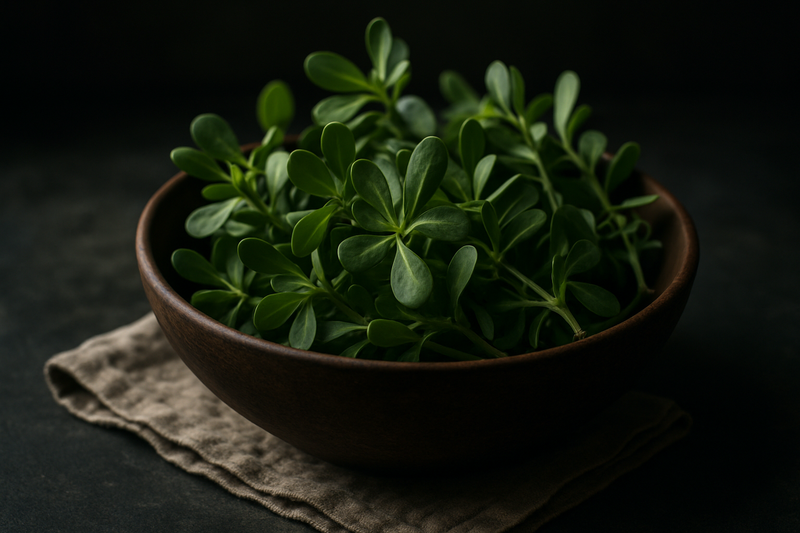
Purslane · Photograph
Discover the purslane health benefits and side effects you need to know — from its exceptional omega-3 content and heart-supportive nutrients to oxalate considerations, prep ideas, and what the current research actually says.
Key Nutrients
% Daily Value based on 2,000 cal diet
Key active compounds
- Alpha-linolenic acid (ALA): An essential omega-3 fatty acid the body cannot make on its own. Found at unusually high concentrations in purslane compared with other vegetables — supports cardiovascular and brain health.
- Eicosapentaenoic acid (EPA): A long-chain omega-3 with anti-inflammatory properties; rare in land plants but present in small amounts in purslane.
- Flavonoids (quercetin, kaempferol, apigenin): A class of polyphenols (plant compounds with antioxidant and anti-inflammatory properties) associated with heart and brain protective effects in lab and early human studies.
- Carotenoids (beta-carotene): Pigmented antioxidants that can be converted into vitamin A; support eye health and immune function.
- Glutathione: A tripeptide (short protein fragment) and major intracellular antioxidant that helps the body neutralize harmful free radicals and supports detoxification.
- Phenolic and organic acids (caffeic acid, ferulic acid): Acidic plant compounds that contribute to purslane's overall antioxidant capacity.
- Alkaloids and terpenoids: Secondary plant metabolites studied for neuroprotective and liver-protective effects in laboratory models.
Prep and pairing ideas
Purslane needs very little preparation. Rinse stems and leaves thoroughly (especially if foraged), pat dry, and trim any very woody base sections. Everything else — tender stems, leaves, and small flower buds — is edible.
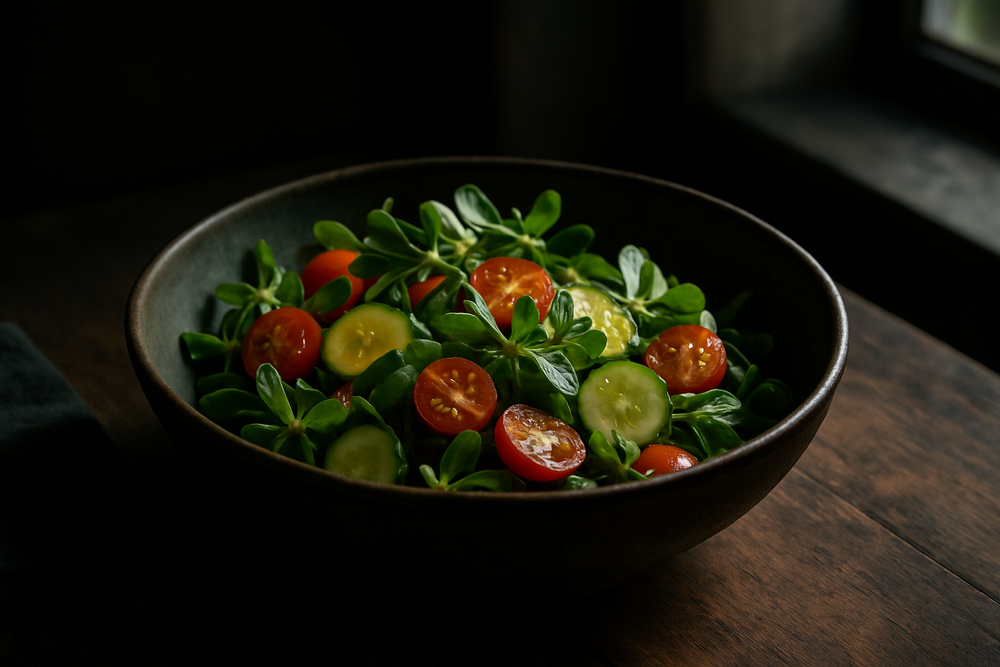
Simple raw salad: Toss fresh purslane with sliced cucumber, cherry tomatoes, red onion, olive oil, and lemon juice. The natural saltiness and lemony bite of purslane means you need minimal seasoning.
Warm side dish: Sauté briefly in olive oil with garlic and a pinch of chili flakes for 2–3 minutes — just long enough to wilt. Serve alongside grilled fish, legumes, or grain bowls.
Soup or stew finish: Add a generous handful of raw purslane to lentil soup, minestrone, or a chickpea stew in the final 2 minutes of cooking. It wilts quickly and adds body without becoming mushy.
Egg dishes: Stir into scrambled eggs or fold into an omelette alongside feta and herbs for a Mediterranean-style breakfast.
With vitamin C foods: Purslane's iron is non-heme iron (the plant-based form, which is less readily absorbed than iron from meat). Pairing it with vitamin C–rich foods — tomatoes, lemon juice, bell pepper — boosts iron absorption. Conveniently, purslane already contains vitamin C, making it self-pairing in this regard.
Who benefits most from adding purslane to their diet
Plant-based eaters looking for dietary omega-3s
- Purslane is one of very few vegetables that provides both ALA and small amounts of EPA — both omega-3 fatty acids.
- It's a practical, low-cost way to increase omega-3 variety without relying on supplements.
- Adds meaningful vitamin E and vitamin C alongside the omega-3s, supporting broader antioxidant intake.
People managing blood sugar or metabolic health
- Early clinical evidence suggests purslane may support blood glucose and lipid improvements in people with metabolic conditions.
- Its low calorie density (16 kcal per 100 g) makes it easy to increase vegetable volume without adding significant energy to meals.
- Works well as a salad base or soup add-in to displace more calorie-dense ingredients — always as part of a varied diet, not as a standalone intervention.
Bottom line
Purslane is genuinely one of the more nutritionally interesting leafy greens available — and it's almost certainly growing as a "weed" in gardens near you right now. Its combination of omega-3 fatty acids, vitamin E, vitamin C, potassium, and plant antioxidants is hard to match at 16 calories per 100 g. Early human research on blood sugar, lipids, liver health, and inflammation is promising, though most trials used concentrated supplements rather than culinary portions, and larger studies in healthy general populations are still needed.
For most people eating a varied diet, adding purslane as one of several leafy greens is low-risk, high-reward, and delicious. If you have kidney stones, chronic kidney disease, diabetes, or take prescription medications, a brief conversation with your healthcare provider is the sensible first step before dramatically increasing your intake or reaching for a supplement.
How Purslane Compares
| Compared with | What's different |
|---|---|
| Purslane vs. Spinach | Purslane has a crunchier, succulent texture and significantly higher omega-3 content. |
| Purslane vs. Watercress | Purslane is tart and citrusy, while Watercress has a peppery, spicy bite. |
| Purslane vs. Wood Sorrel | Purslane is a low-growing succulent; Wood Sorrel has heart-shaped leaves and a sharper oxalic tang. |
Health Benefits
Things to Know
Oxalates and kidney stones: Purslane contains oxalates — naturally occurring plant acids that can bind calcium and, in susceptible individuals, contribute to calcium oxalate kidney stone formation. If you have a history of kidney stones or hyperoxaluria (a condition involving excess oxalate), moderate your intake and discuss it with your doctor.
Chronic kidney disease (CKD): People with CKD may need to limit high-mineral or high-oxalate foods generally; talk to your healthcare team before increasing purslane intake.
Diabetes medications: Concentrated purslane extracts have shown modest blood glucose–lowering effects in clinical trials. If you take insulin, sulfonylureas, metformin, or other blood sugar medications, adding large amounts of purslane supplements could theoretically enhance blood glucose lowering and increase hypoglycemia (low blood sugar) risk. Culinary amounts are unlikely to be an issue, but discuss any supplemental use with your prescriber.
Blood pressure medications: Purslane's potassium and magnesium content, and any modest blood pressure–supportive effects, could theoretically add to antihypertensive drug effects at very high intakes. Monitor as appropriate.
Anticoagulants (blood thinners): As with many leafy greens, consistency matters more than avoidance. A significant sudden increase in omega-3-rich foods from concentrated purslane products is worth discussing with your clinician if you're on anticoagulant therapy.
Pregnancy and breastfeeding: Culinary use is traditional in many cultures and is not generally considered a concern. Medicinal doses or purslane supplements during pregnancy lack robust safety data; consult your midwife or doctor.
Allergies: Rare, but if you experience oral itching, swelling, or hives after eating purslane, stop and seek medical advice.
Garden purslane vs. spurge: Before foraging, make sure you correctly identify purslane — common spurge (Euphorbia species) is a look-alike weed that can cause irritation. Purslane has thick, succulent, paddle-shaped leaves and a smooth, reddish stem; spurge produces a milky sap when broken.
Glossary
Shop This Ingredient
Stock your pantry with quality purslane.
Buy on AmazonAs an Amazon Associate, Plantopedia earns from qualifying purchases. This costs you nothing extra and helps us keep the encyclopedia free.
Frequently Asked Questions
Heart and circulation Purslane brings several heart-relevant nutrients together in one plant: ALA and EPA omega-3s, potassium, magnesium, and antioxidant vitamins C and E. Each of these is independently associated with cardiovascular health in the broader nutrition literature. In a randomized, double-blind clinical trial — one of the highest-quality study designs — purslane supplementation alongside standard care improved lipid profiles (cholesterol and triglyceride levels) in adults with non-alcoholic fatty liver disease (NAFLD), a condition closely linked to heart disease risk. The study was short-term and focused on a specific metabolic population, so results can't automatically be extended to everyone, but the direction of evidence is consistent with what purslane's nutritional composition would predict. Direct, long-term heart outcome trials in healthy people haven't been done yet. Digestive health and microbiome Purslane is mostly water, which gives it a hydrating, crunchy texture and contributes to its very low calorie density. It contains small amounts of fiber and polysaccharides (a type of complex carbohydrate). Traditional use in various cultures includes purslane as a "cooling" digestive herb, and its mucilage (a gel-like plant fiber) is being studied in laboratory models for gut-lining protection. Human clinical data specifically on digestion are limited — the benefits here are largely inferred from its profile as a whole leafy green rather than purslane-specific gut trials. Blood sugar and metabolism This is where the most direct human evidence exists. In the randomized controlled trial in NAFLD patients, purslane supplementation significantly improved fasting blood glucose and other metabolic markers compared with a control group. Additional small clinical studies and a quantitative review of purslane's biological activities also report improvements in glycemic (blood sugar–related) parameters in people with metabolic disorders. Important caveat: most of these studies used concentrated purslane extracts or supplements, not the couple of handfuls you'd toss in a salad. How much benefit typical culinary amounts provide to people without existing metabolic disease is genuinely uncertain. Inflammation and recovery Purslane's anti-inflammatory reputation is backed by multiple lines of evidence: its omega-3 fats (ALA and EPA) are known to influence inflammatory pathways; its flavonoids and phenolic acids have antioxidant activity in lab studies; and in the NAFLD clinical trial, purslane supplementation reduced inflammatory and oxidative stress markers alongside improvements in liver enzymes. Cell and animal studies show suppression of pro-inflammatory cytokines (chemical messengers that drive inflammation), but large, diverse human trials are still needed to confirm the magnitude of this effect in everyday dietary use. Purslane benefits for brain health Animal and laboratory studies on purslane show neuroprotective (nerve-protecting) and neuroregenerative (nerve-regenerating) effects in models of Alzheimer's disease, Parkinson's disease, depression, and epilepsy — largely attributed to its antioxidant, anti-inflammatory, and anti-apoptotic (cell-death-preventing) activities. Practically speaking, no controlled human trials have tested purslane specifically for brain or cognitive outcomes yet. Its omega-3 content does align with general evidence linking dietary ALA intake to brain health, but direct claims remain speculative at this stage.
Both are valid — your best choice depends on what you're after and how you enjoy it. Raw preserves the most vitamin C and omega-3 fatty acids, which are sensitive to heat. Raw purslane in a salad is crisp, succulent, and naturally lemony — it needs almost no dressing beyond olive oil and lemon juice. Lightly cooked (steamed, briefly sautéed, or stirred into soups at the end of cooking) softens the texture and mellows the flavor, making it more approachable as a cooked vegetable side. Minerals like potassium, magnesium, and iron are heat-stable, so you retain most of those. Some vitamin C and heat-sensitive omega-3 content will decrease, but not catastrophically. Dried or powdered forms are used in some commercial supplements and were the format used in several clinical trials. Concentrations of phytochemicals can be higher per gram, but some volatile and heat-sensitive compounds are lost in processing. Pickled purslane is a condiment found in some Mediterranean cuisines. It's flavorful and provides some minerals and phytochemicals, but the nutritional content of the brine-preserved product is less studied. The bottom line: for maximum omega-3 and vitamin C, eat it raw. For everyday versatility, lightly cooking it is perfectly reasonable.
There is no officially established recommended daily intake for purslane, and no universally accepted supplemental dose for the general population. For culinary use: A practical starting range is a small handful — roughly 25–50 g — added to salads, soups, or cooked dishes a few times per week. If you enjoy it, up to around 100 g per serving eaten regularly is consistent with how it's used in traditional cuisines where it's a staple green. For maximum omega-3 benefit: 100 g of fresh purslane provides approximately 300–400 mg of ALA. While this is meaningful, it's worth noting the body's conversion of ALA to the longer-chain omega-3s (EPA and DHA) used most actively in the brain and cardiovascular system is limited in humans — typically only a few percent. Purslane's EPA content adds a small direct supply, which is unusual for a land plant, but the amounts are still modest compared with fatty fish or algal oil supplements. If you're considering supplements: Clinical trials in NAFLD used standardized extracts as an adjunct to medical care. There is no agreed optimal dose for general wellness purposes. Start low, go slow, and loop in your healthcare provider — especially if you have kidney stones, diabetes, or take medications. Start low if you're new to it: A handful a few times a week is a sensible beginning. Purslane contains oxalates, and very large amounts eaten daily may be a concern for oxalate-sensitive individuals. Variety across many greens is always a smarter strategy than relying heavily on any single one.
Quick Answers
Common questions, answered in a line.
Purslane is one of the few land plants that contains eicosapentaenoic acid (EPA), a long-chain omega-3 fatty acid typically found in fish. It is also exceptionally high in alpha-linolenic acid (ALA), an essential fatty acid that supports cardiovascular and brain health.
You can eat the leaves, tender stems, and small flower buds of the purslane plant once they have been thoroughly rinsed. Only the very woody base sections of the stems should be trimmed away before preparation.
Purslane contains oxalates, which are naturally occurring plant acids that can contribute to the formation of calcium oxalate kidney stones in susceptible individuals. People with a history of kidney stones or chronic kidney disease should moderate their intake and consult a doctor.
To increase iron absorption from purslane, pair it with foods rich in vitamin C like tomatoes, lemon juice, or bell peppers. Purslane naturally contains both non-heme iron and vitamin C, making it a self-pairing food that helps the body absorb its minerals more effectively.
While purslane is safe in culinary amounts, those taking blood sugar medications like insulin or metformin should be cautious with concentrated supplements. Purslane extracts have shown blood glucose-lowering effects in trials, which could theoretically increase the risk of hypoglycemia.
Purslane has thick, succulent, paddle-shaped leaves and smooth reddish stems, whereas the look-alike weed spurge produces a milky sap when broken. It is vital to correctly identify the plant before foraging, as spurge (Euphorbia species) can cause irritation.
Purslane is a low-calorie leafy green, containing only 16 calories per 100 grams. Its low calorie density allows you to increase vegetable volume in meals without adding significant energy, making it a helpful addition to a weight-management diet.
For Readers in the USA
Local context — sourcing, seasonality, and regional notes.
Purslane is a summer-thriving plant that grows across most of the United States from May through September, peaking when temperatures are consistently above 70°F. While it is found in all 50 states, it is particularly abundant in the USDA Hardiness Zones 4 through 10.
In the U.S., you can typically find purslane at local farmers markets, Hispanic grocery stores (where it is called 'verdolagas'), and upscale chains like Whole Foods. It is rarely stocked in conventional supermarkets but is often available as a 'wild green' during the summer months.
Purslane is a staple in Mexican-American cuisine, often simmered with pork in green salsa (salsa verde) or added to scrambled eggs. It is also frequently featured in Mediterranean-style salads within Greek and Middle Eastern communities across the U.S.
While purslane is often foraged, commercial growers in the U.S. can obtain USDA Organic certification if they meet standard soil and pesticide-free requirements. The FDA classifies purslane as 'Generally Recognized as Safe' (GRAS) for consumption as a natural seasoning or vegetable.
AI Clinical Review
- Accurately highlights purslane as an unusually rich vegetable source of omega‑3s, especially ALA (a plant omega‑3) with small amounts of EPA (a long‑chain omega‑3).
- Notes a helpful nutrient profile for the calories (vitamins C and E, potassium, magnesium), which aligns with food‑composition databases.
- Summarizes early clinical findings in metabolic conditions (e.g., NAFLD) showing improvements in blood sugar, lipids, and inflammatory markers, while acknowledging most studies used concentrated forms.
- Provides practical cooking guidance: raw preserves more vitamin C and omega‑3s; light cooking is still nutritious.
- Human research specific to purslane and long‑term heart or brain outcomes is limited; most trials are small, short, and often use extracts rather than typical food portions.
- The real‑world impact of culinary amounts on glycemia, lipids, and inflammation in generally healthy adults remains uncertain.
- Reported nutrient levels (e.g., vitamin E, omega‑3 content) can vary by species, season, and growing conditions, so figures are best viewed as ranges.
- Oxalates: People with a history of calcium oxalate kidney stones or chronic kidney disease should moderate intake and discuss with a clinician.
- Medications: High‑dose supplements (less likely with normal food use) may modestly lower blood sugar or blood pressure—those on antidiabetic or antihypertensive therapy should monitor and consult their prescriber.
- Forms and amounts: Culinary use of ~25–100 g per serving a few times per week is reasonable; supplements used in studies are not the same as salads or sautés.
- Omega‑3 nuance: ALA converts poorly to EPA/DHA in humans; purslane can complement—but not replace—marine or algal sources if your goal is higher EPA/DHA intake.
Contains oxalates; those prone to kidney stones should moderate intake.
References
- USDA FoodData Central — purslane nutrient composition (fdc.nal.usda.gov)
- MyPlate — Vegetables food group overview (myplate.gov)
- PMC3934766 — Purslane: A prospective plant source of nutrition, omega-3 fatty acids, and antioxidants (review) (pmc.ncbi.nlm.nih.gov)
- Frontiers in Nutrition 2024 — Randomized, double-blind clinical trial of purslane in NAFLD patients (lipids, liver enzymes, blood glucose, inflammation) (frontiersin.org)
- PubMed 39531109 — Quantitative literature review of purslane phytochemistry and biological activities (pubmed.ncbi.nlm.nih.gov)
- PMC9790064 — Review: Purslane and nervous system disorders (neuroprotective effects in preclinical models) (pmc.ncbi.nlm.nih.gov)
- PubMed 1354675 — Common purslane as a source of omega-3 fatty acids and antioxidants (pubmed.ncbi.nlm.nih.gov)
- University of Florida IFAS Extension HS1484 — Purslane: the reigning champion of vitamins A and E among vegetables (ask.ifas.ufl.edu)
- WebMD — Health benefits of purslane (safety and nutrition overview) (webmd.com)
- UR Medicine / URMC Nutrition Encyclopedia — Purslane nutrition facts (urmc.rochester.edu)
Know Your Numbers
Eating healthy is a start. Now get to know your biomarkers.
Food changes bloodwork — inflammation, lipids, blood sugar and nutrient status all respond to what you eat. 59 markers from $59.
- Results in 7–10 days at 2,000+ Quest sites
- Licensed provider reviews every result
- One flat price, no membership, HSA/FSA eligible
Educational information only, not medical advice. Panels are ordered and reviewed through our licensed partner; Plantopedia may earn a commission.