Discover the evidence-based rhodiola benefits for stress, energy and brain health. Learn how to use rhodiola root tea for stamina, the right
Traditional Scandinavian and Russian adaptogen for fatigue and endurance.
The Short Answer
Rhodiola is an adaptogenic herb used to reduce fatigue and improve cognitive performance during stress. It works by modulating neurotransmitters via active compounds like rosavins and salidroside, typically consumed as a tea or extract in the morning.
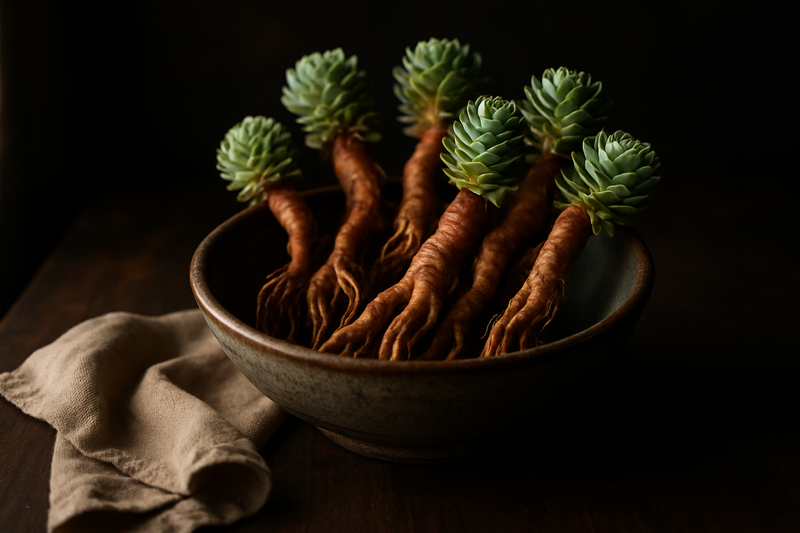
Rhodiola · Photograph
Discover the evidence-based rhodiola benefits for stress, energy and brain health. Learn how to use rhodiola root tea for stamina, the right daily dosage, who should avoid it, and what the science actually says.
Key Nutrients
% Daily Value based on 2,000 cal diet
Key active compounds in rhodiola root
Rhodiola root contains a distinctive set of phytochemicals (plant chemicals) that set it apart from most other adaptogens.
- Rosavins (rosavin, rosarin, rosin) — cinnamyl alcohol glycosides (sugar-linked compounds built around a cinnamon-type backbone) unique to Rhodiola rosea. Standardized extracts are typically benchmarked to contain about 3% rosavins. They appear to modulate neurotransmitters (brain signalling molecules) and stress pathways, and may support mental and physical performance under strain.
- Salidroside (rhodioloside) — a phenolic glycoside (a sugar-attached plant phenol) considered one of the most pharmacologically active constituents. Standardized extracts usually contain around 1% salidroside. In lab and animal studies it shows antioxidant, anti-inflammatory, and neuroprotective (brain-protective) properties and may help regulate fatigue and stress resilience.
- Tyrosol — a small phenolic compound related structurally to phenolics found in olive oil. It contributes to antioxidant activity and may support cellular and vascular protection, though specific human evidence is limited.
- Flavonoids and proanthocyanidins — a broader family of polyphenols (multi-ring plant antioxidants) that add antioxidant and circulatory support and may contribute to overall stress resilience in experimental models.
Prep and pairing ideas
How to make rhodiola root tea:
- Measure 2–3 g of dried, cut rhodiola root (roughly 1 teaspoon).
- Add to a cup and pour over freshly boiled water cooled slightly to around 90–95°C.
- Steep for 10–15 minutes. The tea has an earthy, slightly bitter, rose-like flavour.
- Strain and drink in the morning or early afternoon.
Practical pairings:
- Rhodiola + lemon and ginger — lemon brightens the earthy bitterness, and ginger adds warming circulatory support. A natural morning ritual for focus and warmth before a demanding day.
- Rhodiola + ashwagandha (staggered) — some people use rhodiola in the morning (more activating) and ashwagandha in the evening (more calming). Note that combining adaptogens in a single dose has less clinical backing, and taking both together may increase overstimulation risk.
- Rhodiola + a small protein-rich snack — taking rhodiola with food rather than on an empty stomach may reduce the chance of nausea and mild gastric discomfort, especially when you are first starting out.
Bottom line
Rhodiola rosea is one of the better-studied adaptogens, with a growing body of human trial evidence supporting its use for stress-related fatigue, cognitive performance under pressure, and physical stamina. The active compounds — rosavins and salidroside — appear to work through stress-signalling and neuroprotective pathways rather than by simply stimulating the nervous system.
That said, the evidence is still maturing. Regulators consider it a "traditional herbal medicine" with promising but not definitive clinical support. It is generally well tolerated for up to 12 weeks but is not suitable for everyone: people with bipolar disorder, those on antidepressants, pregnant individuals, and children should approach it cautiously or avoid it altogether.
If you are healthy, not on psychotropic medication, and looking for a gentle, whole-plant tool to support your body's stress resilience, rhodiola — particularly as a morning tea or a quality standardized extract — may be worth exploring. As always, start low, pay attention to how your body responds, and treat it as one piece of a broader well-being picture, not a standalone fix.
How Rhodiola Compares
| Compared with | What's different |
|---|---|
| Rhodiola vs. Ashwagandha | Rhodiola is more stimulating and energizing, whereas Ashwagandha is generally more sedative and calming. |
| Rhodiola vs. Panax Ginseng | Rhodiola provides a rose-like aroma and earthy bitterness, while Ginseng has a stronger bittersweet, licorice-like profile. |
Health Benefits
Things to Know
Avoid late-day use.: Rhodiola can be mildly stimulating. Taking it in the afternoon or evening may cause difficulty falling asleep or restlessness.
Bipolar disorder.: Case reports document manic or hypomanic episodes triggered by rhodiola in susceptible individuals. Do not use without psychiatric supervision if you have a history of mania.
Antidepressants and psychiatric medications.: Rhodiola may influence serotonin and dopamine pathways. Combining it with SSRIs, SNRIs, MAOIs, or other psychotropic (mind-affecting) drugs carries a theoretical risk of serotonin syndrome (a potentially dangerous excess of serotonin activity) and should only be done under medical guidance.
Cardiovascular conditions.: Reports of palpitations and blood pressure changes mean rhodiola warrants caution in people with arrhythmias (irregular heartbeat), uncontrolled hypertension (high blood pressure), or hypotension (low blood pressure). Check with your doctor first.
Autoimmune conditions.: Rhodiola may stimulate immune activity, which could theoretically interfere with immunosuppressant drugs used in conditions like multiple sclerosis or rheumatoid arthritis.
Diabetes and blood sugar medications.: Possible metabolic effects mean monitoring of blood glucose may be warranted. Risk of altered glycemic (blood sugar) control.
Pregnancy and breastfeeding.: Insufficient safety data. Major health agencies recommend avoiding rhodiola entirely during pregnancy and lactation.
Children and adolescents under 18.: Safety data are very limited. Most guidelines advise caution or avoidance.
Anxiety and insomnia.: If you're already prone to agitation or poor sleep, rhodiola's stimulating properties could worsen symptoms, particularly at higher doses or when taken with caffeine.
Duration.: Most clinical trials run 4–12 weeks. Long-term safety beyond 12 weeks is not well established.
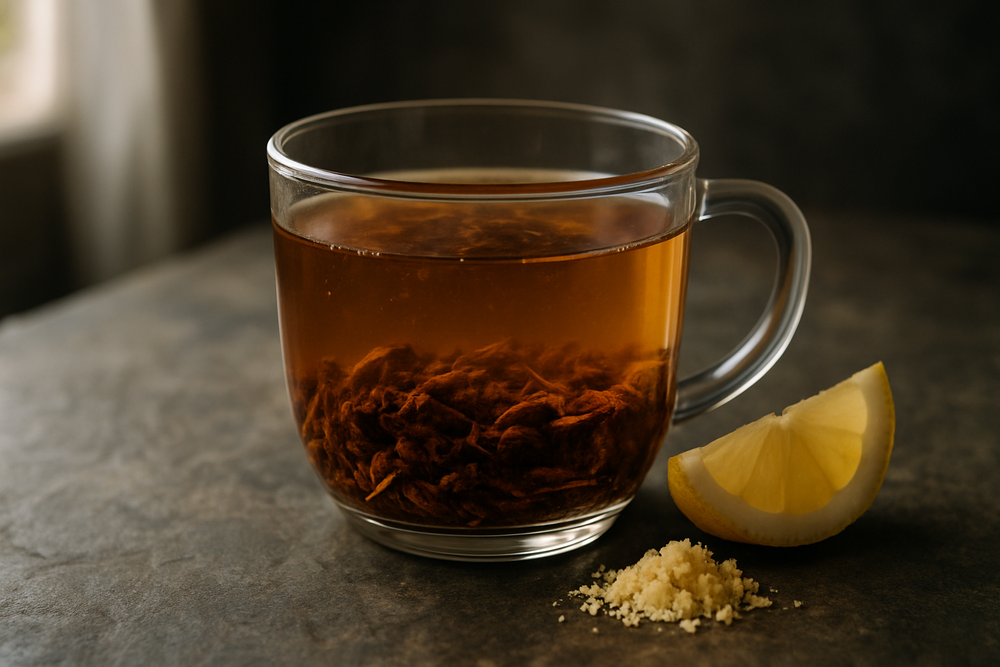
Prep Ideas
- — Measure 2–3 g of dried, cut rhodiola root (roughly 1 teaspoon).
- — Add to a cup and pour over freshly boiled water cooled slightly to around 90–95°C.
- — Steep for 10–15 minutes. The tea has an earthy, slightly bitter, rose-like flavour.
- — Strain and drink in the morning or early afternoon.
- — Rhodiola + lemon and ginger — lemon brightens the earthy bitterness, and ginger adds warming circulatory support. A natural morning ritual for focus and warmth before a demanding day.
- — Rhodiola + ashwagandha (staggered) — some people use rhodiola in the morning (more activating) and ashwagandha in the evening (more calming). Note that combining adaptogens in a single dose has less clinical backing, and taking both together may increase overstimulation risk.
- — Rhodiola + a small protein-rich snack — taking rhodiola with food rather than on an empty stomach may reduce the chance of nausea and mild gastric discomfort, especially when you are first starting out.
Glossary
Shop This Ingredient
Stock your pantry with quality rhodiola.
Buy on AmazonAs an Amazon Associate, Plantopedia earns from qualifying purchases. This costs you nothing extra and helps us keep the encyclopedia free.
Frequently Asked Questions
Stress resilience and fatigue This is rhodiola's strongest area of clinical evidence. Multiple randomized and open-label trials in adults experiencing life-stress, burnout, or chronic fatigue have found that standardized rhodiola extract (typically 200–400 mg/day for 4–12 weeks) reduces self-reported fatigue, emotional exhaustion, and overall stress scores compared to placebo or baseline. A systematic review of randomized clinical trials published in Phytomedicine concluded that rhodiola shows "positive effects on physical performance, mental performance, and certain stress-related mental health symptoms," while noting that most studies are small and methodologically varied. The EMA's assessment similarly found "plausible" traditional evidence for use in temporary fatigue and mental weakness, but stopped short of granting it a well-established medicinal indication. In plain terms: the signal is real, but the science is not yet airtight. Cognitive performance and brain fog Several studies in healthy volunteers under mental stress have reported improvements in concentration, processing speed, and accuracy on cognitive tasks after rhodiola supplementation. One double-blind trial found that a single dose improved attention and cognitive performance during a fatiguing nightshift protocol. Research suggests that salidroside and rosavins may support neurotransmitter balance — particularly dopamine and serotonin pathways — which could help explain improvements in focus and mood. That said, rhodiola is not a proven treatment for clinical attention disorders or depression. Physical stamina and exercise performance Exploratory human studies — including trials in athletes and recreationally active adults — suggest rhodiola may modestly reduce perceived exertion, lower blood lactate (a marker of muscular effort) after intense exercise, and support recovery. The effects appear modest rather than dramatic, and study protocols vary widely, so rhodiola benefits for stamina are supported by emerging rather than definitive evidence. Heart and circulation Some clinical work suggests rhodiola may influence heart rate, blood pressure, and vascular tone under stress. A few studies note improvements in cardiovascular function in stressed individuals. However, no large long-term trials have evaluated rhodiola for cardiovascular disease prevention or treatment. Occasional reports of palpitations and blood pressure changes also mean cardiovascular effects cut both ways — see the safety section below. Digestive health and microbiome Human clinical trials have not focused on digestive outcomes, and gut-related benefits remain largely theoretical. A recent review noted that rhodiola may modulate gut microbiota composition and exert immunoregulatory effects in experimental models, suggesting potential gut–brain interaction pathways. In practice, GI discomfort (nausea, stomach upset) is one of the more commonly reported side effects, particularly at higher doses or in sensitive individuals. Blood sugar and metabolism Direct human evidence on rhodiola and blood sugar control is minimal. In vitro (cell-level) and animal models suggest rhodiola extracts may influence glucose handling and energy metabolism, but these findings are far too early to justify using rhodiola as a primary tool for blood sugar management. People with diabetes should treat any metabolic claims with caution. Inflammation and recovery Preclinical research (lab and animal studies) consistently shows that salidroside and other rhodiola compounds reduce inflammatory signalling and protect cells from oxidative stress — a state where harmful reactive molecules outpace the body's repair mechanisms. Clinical translation remains limited, meaning we don't yet have strong human trial data showing rhodiola reliably lowers specific inflammatory markers in people. It may offer adjunctive (supportive) anti-inflammatory benefit, but should not be used as a primary anti-inflammatory therapy. Hormones and stress axis Rhodiola's adaptogenic classification is partly based on evidence that it can blunt the cortisol spike triggered by acute stress in some protocols. Cortisol is the primary stress hormone released by the adrenal glands. Mechanistic reviews describe effects on the HPA axis and monoamine (brain chemical) systems. Broader hormonal impacts — on thyroid, sex hormones, or metabolic hormones — are not well studied in humans, so rhodiola should not be relied on for hormone disorders.
The short answer: traditional tea preparations and standardized extracts both deliver rhodiola's active compounds, but in very different and less predictable amounts. A cup of rhodiola root tea made from 2–3 g of dried, cut root delivers rosavins and salidroside, but the exact amounts depend on root quality, drying methods, steeping time, and water temperature. Almost all published clinical trials used standardized extracts (typically capsules or tablets verified to contain 3% rosavins and 1% salidroside), so the evidence base is built largely on those forms. That said, the tea route has real appeal for people who prefer a whole-food, low-intervention approach — it delivers phytochemicals in a gentler, slower format, fits naturally into a morning ritual, and avoids the fillers and excipients (inactive ingredients) sometimes found in supplements. Quick comparison: | Form | Pros | Considerations | | --- | --- | --- | | Dried root tea (2–3 g) | Whole-plant, ritual-friendly, lower dose | Variable potency, less clinical evidence | | Standardized extract (capsule/tablet) | Consistent dose, evidence-backed | Additives possible, higher cost | | Tincture (liquid extract) | Flexible dosing | Alcohol base; follow product guidance | | Combination adaptogen blends | Convenient | Less direct evidence; interaction risk | Label tip: If buying a supplement, look for "standardized to 3% rosavins and 1% salidroside" on the label. Third-party tested products (e.g., carrying NSF, USP, or Informed Sport certification) provide an extra layer of quality assurance.
Dose ranges across human trials vary, but a workable framework looks like this: Tea (whole root): 2–3 g dried root per cup, once or twice daily in the morning. Standardized extract (capsule or tablet, 3% rosavins / 1% salidroside): Starting dose: 100–200 mg once daily, taken in the morning with food. Typical maintenance range in trials: 200–400 mg/day, often split into two doses (morning and midday). Short-term upper range used in some trials: up to 600–680 mg/day for brief periods. Practical guidance: Start at the lower end and give it 2–4 weeks before assessing effect — adaptogens tend to work gradually, not overnight. Avoid taking rhodiola within 4–6 hours of your intended bedtime. Most clinical evidence covers use up to 12 weeks. If you plan to use it longer, consult a healthcare professional. There is no established dose for children or during pregnancy — avoid in those groups. 🌿 Exploring more ways to support your energy and focus through food? Browse the Plantopedia energy and stamina goals guide for ingredient ideas backed by whole-food evidence.
Quick Answers
Common questions, answered in a line.
Rhodiola rosea contains active phytochemicals called rosavins and salidroside that help modulate stress pathways and neurotransmitters. These compounds work through stress-signaling and neuroprotective pathways to help the body maintain mental and physical performance under strain.
Rhodiola root tea is made by steeping 2–3 grams of dried root in freshly boiled water (90–95°C) for 10 to 15 minutes. It is best consumed in the morning or early afternoon to take advantage of its activating properties and avoid sleep disruption.
People with bipolar disorder, those on antidepressants, pregnant individuals, and children should avoid rhodiola or use it only under medical supervision. It is also contraindicated for people with autoimmune conditions or those taking immunosuppressant drugs due to its potential to stimulate immune activity.
Rhodiola can have a mildly stimulating effect, which may cause restlessness or difficulty falling asleep if taken in the late afternoon or evening. To prevent insomnia, experts recommend using it as a morning ritual or before early afternoon.
It is generally recommended to take rhodiola with a small protein-rich snack to reduce the likelihood of nausea or mild gastric discomfort. While it can be taken alone, pairing it with food is helpful for those just starting out or those with sensitive stomachs.
Combining rhodiola with antidepressants like SSRIs, SNRIs, or MAOIs carries a theoretical risk of serotonin syndrome, a potentially dangerous excess of serotonin activity. Because rhodiola influences dopamine and serotonin pathways, it should only be used with psychiatric medications under medical guidance.
Rhodiola is typically considered safe for short-term use in healthy adults for up to 12 weeks. Clinical evidence for long-term safety beyond three months is not yet well established, so users should monitor their response and consult a professional for extended use.
For Readers in the USA
Local context — sourcing, seasonality, and regional notes.
Rhodiola rosea can be successfully grown in the United States within USDA Hardiness Zones 1 through 7, particularly in high-altitude or northern regions like Alaska and the Rocky Mountains. The plant requires cold winters to thrive and is typically harvested in the fall after the root has matured for three to five years.
In the U.S., you can find rhodiola root and supplements at major health food chains like Whole Foods Market and Sprouts Farmers Market, or via specialized online retailers like Mountain Rose Herbs. While less common in standard supermarkets, it is a staple in the supplement aisle of most natural grocers and apothecary-style shops.
The FDA regulates rhodiola as a dietary supplement rather than a drug, meaning it does not approve the herb for treating specific medical conditions. Consumers should look for products with third-party certifications like USP or NSF to ensure the product contains the standardized levels of rosavins and salidrosides promised on the label.
Within the U.S. herbal market, rhodiola is frequently referred to by regional names such as "Arctic root," "Golden root," or "King’s crown." While these names vary, American consumers should check the botanical name on the packaging to ensure they are purchasing true Rhodiola rosea rather than related but less potent species.
AI Clinical Review
- Accurately frames rhodiola as an adaptogen with the best human evidence for reducing stress-related fatigue and improving subjective well‑being over 4–12 weeks.
- Appropriately emphasizes standardized extracts (about 3% rosavins/1% salidroside) as the basis of most clinical trials, while noting tea can be a gentler, lower‑dose option.
- Provides practical dosing guidance that aligns with trials (typically 200–400 mg/day; start lower), and sensible timing advice to avoid evening use due to mild stimulation.
- Correctly highlights key actives (rosavins, salidroside) and plausible mechanisms involving the stress (HPA) axis and neurotransmitters, without overstating disease claims.
- Sensibly positions rhodiola as adjunctive support—not a substitute for sleep, nutrition, or mental health care.
- Cognitive benefits (attention, processing speed) are reported mainly in small, short‑term studies under stress; not established for clinical disorders.
- Exercise and stamina findings are mixed and modest; protocols vary, so expectations should remain conservative.
- Cardiovascular, metabolic, gut/microbiome, and anti‑inflammatory effects are largely preclinical or exploratory in humans—insufficient for firm health claims.
- Long‑term safety beyond about 12 weeks hasn’t been well characterized.
- Safety: avoid during pregnancy/breastfeeding and use caution with bipolar disorder (risk of mania/hypomania). Discuss with a clinician if you have heart rhythm or blood‑pressure issues, autoimmune disease, or diabetes.
- Interactions: potential with antidepressants (SSRIs/SNRIs/MAOIs) and other psychotropics due to serotonergic/dopaminergic effects—medical guidance is advised.
- Dosing/form: a common approach is 100–200 mg in the morning to start, then 200–400 mg/day if tolerated; avoid late‑day dosing. Tea offers lower, variable exposure; standardized, third‑party‑tested products improve dose consistency.
- Tolerability: mild GI upset, restlessness, or sleep disturbance can occur—taking with food and starting low may help.
May be stimulating; avoid late in the day and in bipolar conditions without guidance.
References
- USDA FoodData Central — nutritional reference database for whole foods and botanicals (fdc.nal.usda.gov)
- NIH NCCIH: Rhodiola — Usefulness and Safety — US government safety and evidence overview (nccih.nih.gov)
- EMA Assessment Report on Rhodiola rosea — European regulatory review of traditional herbal evidence (ema.europa.eu)
- Systematic review of RCTs — Rhodiola rosea effectiveness (Phytomedicine, 2011) — pooled analysis of human trial data on fatigue, physical and mental performance (sciencedirect.com)
- PMC review: Rhodiola rosea — anti-stress, anti-aging (2018) — broad mechanistic and clinical review of adaptogenic effects (pmc.ncbi.nlm.nih.gov)
- Human trial: Rhodiola for life-stress symptoms (Phytotherapy Research, 2012) — randomized trial showing fatigue and well-being improvements (pubmed.ncbi.nlm.nih.gov)
- Human trial: Rhodiola for physical and cognitive deficiencies (2007) — double-blind trial in fatigued adults (pubmed.ncbi.nlm.nih.gov)
- Multicenter open-label trial: Rhodiola for stress-related fatigue (2017) — exploratory clinical trial on burnout populations (pmc.ncbi.nlm.nih.gov)
- Health Canada Natural Health Products Ingredients Database: Rhodiola rosea — Canadian regulatory monograph on safety and dosing (webprod.hc-sc.gc.ca)
- PMC: Rhodiola rosea review in the context of PPPM (2024) — recent comprehensive review including gut, metabolic and systemic effects (pmc.ncbi.nlm.nih.gov)
Know Your Numbers
Eating healthy is a start. Now get to know your biomarkers.
Food changes bloodwork — inflammation, lipids, blood sugar and nutrient status all respond to what you eat. 59 markers from $59.
- Results in 7–10 days at 2,000+ Quest sites
- Licensed provider reviews every result
- One flat price, no membership, HSA/FSA eligible
Educational information only, not medical advice. Panels are ordered and reviewed through our licensed partner; Plantopedia may earn a commission.