Black Rice — health benefits and uses
Plant-based energy base; pair with legumes/vegetables for a complete meal
The Short Answer
Black rice is a whole grain containing 5 grams of protein and 5 grams of fiber per serving, most notable for its high concentration of anthocyanin antioxidants. Also known as forbidden rice, it has a nutty flavor and a chewy texture similar to brown rice.
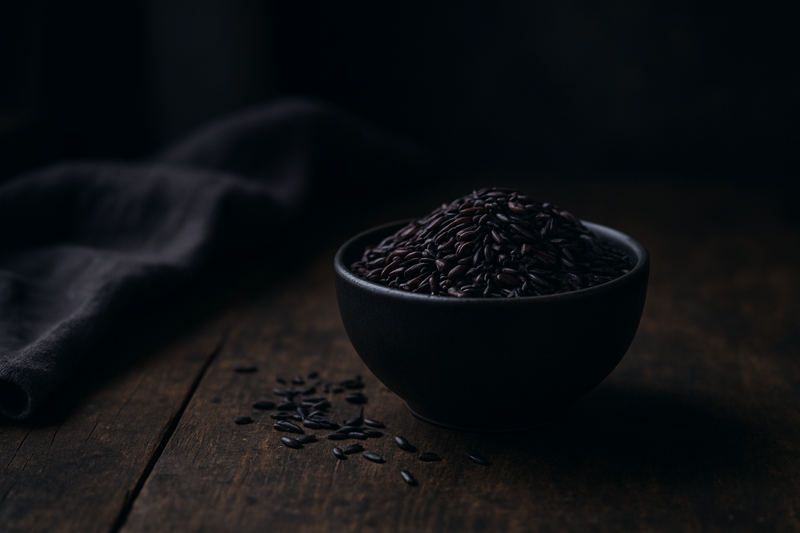
Black Rice · Photograph
Black rice (Oryza sativa L.) goes by many names — forbidden rice, purple rice, imperial rice — but the thing that really sets it apart is visible the moment you look at it: a deep, almost jewel-like purple-black colour that no other rice variety can match. That colour is not just striking; it signals one of the highest concentrations of anthocyanin antioxidants found in any grain on the planet, rivalling blueberries and blackberries by some analyses.
Key Nutrients
% Daily Value based on 2,000 cal diet
Key active compounds in black rice
These are the plant compounds that researchers believe drive most of black rice's distinctive health properties:
- Anthocyanins — especially cyanidin-3-glucoside and peonidin-3-glucoside: Water-soluble flavonoid pigments (a type of polyphenol) responsible for the grain's dark colour. They are the most-studied compounds in black rice and drive most of its antioxidant and anti-inflammatory activity.
- Phenolic acids — including ferulic, protocatechuic, p-coumaric, and syringic acids: A family of polyphenolic compounds concentrated in the bran. They contribute additional antioxidant and anti-inflammatory effects and may support vascular (blood vessel) health.
- Gamma-oryzanol: A mixture of ferulic acid esters found in rice bran oil. Has demonstrated lipid-lowering (cholesterol-reducing) and antioxidant effects in animal and early human studies.
- Phytosterols: Plant compounds structurally similar to cholesterol that can reduce how much cholesterol the gut absorbs from food.
- Carotenoids — particularly lutein and zeaxanthin: Fat-soluble pigments with antioxidant properties concentrated in retinal (eye) tissue.
- Tocopherols and tocotrienols (forms of vitamin E): Fat-soluble antioxidants that protect cell membranes from oxidative damage.
- Resistant starch and dietary fiber: Not technically phytochemicals, but functionally important — they slow digestion, support gut bacteria, and blunt blood sugar spikes.
- GABA (gamma-aminobutyric acid): An amino acid that acts as an inhibitory neurotransmitter; present in black rice and of interest for potential calming and blood-pressure effects, though black-rice–specific human data are limited.
How Black Rice Compares
| Compared with | What's different |
|---|---|
| Black Rice vs. Brown Rice | Higher in fiber and contains anthocyanin antioxidants not found in brown rice. |
| Black Rice vs. Wild Rice | Stays whole and chewy when cooked, whereas wild rice is a grass seed that often splits open. |
Health Benefits
Things to Know
Arsenic: Like all rice, black rice can accumulate inorganic arsenic from soil and water. Always rinse dry black rice thoroughly before cooking. For lower arsenic exposure, consider the pasta method: cook in a larger volume of water (6:1 water to rice) and drain the excess. Rotate with other grains regularly — especially if you eat rice daily or are feeding infants and toddlers.
Digestive adjustment: The higher fiber and resistant starch content can cause temporary gas or bloating if you increase intake too quickly. Start with half a cup cooked and build up over one to two weeks.
Celiac disease and gluten sensitivity: Black rice is naturally gluten-free, but cross-contamination can occur in shared processing facilities. Choose certified gluten-free products if you have celiac disease.
Chronic kidney disease (CKD): Whole grains including black rice are higher in phosphorus and potassium than refined grains. If you are on a renal diet, speak with your dietitian before significantly increasing whole-grain intake.
Infants and toddlers: Paediatric guidance recommends not relying on rice as the primary grain for young children due to arsenic exposure. Rotate among oats, quinoa, millet, and other grains.
Blood sugar medications: Black rice may have a modest glucose-lowering effect. If you are on insulin or oral hypoglycaemic (blood-sugar-lowering) agents, monitor blood sugar when making significant changes to your staple starch.
High-fiber meals and medication timing: As with other whole grains, very high-fiber meals may slightly slow absorption of some oral medications. A common precaution is to take narrow-therapeutic-window drugs (such as thyroid hormone or certain antibiotics) one to two hours before or after a high-fiber

Best Forms
Best. Retains all bran compounds. Cook like brown rice: rinse well, use a 1:2 ratio of rice to water, simmer covered for 30–35 minutes, then rest for 10 minutes.
Good. If labelled as whole-grain, it retains most of the original nutritional profile and works well in gluten-free baking.
Less ideal. Fine milling or processing can reduce fiber and anthocyanin content. Check that whole black rice is the primary ingredient.
Variable. Useful for variety, but check labels for added oils, sodium, and whether whole black rice is actually the main ingredient.
These are mainly research or supplement formats. They can deliver high doses of specific compounds but long-term safety data for supplement forms are limited. Stick with food forms unless directed by a healthcare provider.
Shop This Ingredient
Stock your pantry with quality black rice.
Buy on AmazonAs an Amazon Associate, Plantopedia earns from qualifying purchases. This costs you nothing extra and helps us keep the encyclopedia free.
Frequently Asked Questions
Heart health and circulation Black rice contains a combination of nutrients and compounds — fiber, anthocyanins, gamma-oryzanol, phenolic acids, and phytosterols — that each have independent evidence supporting cardiovascular (heart and blood vessel) health in broader research. Mechanistic studies (cell and animal research) show that black rice anthocyanins can reduce oxidative stress in blood vessels, inhibit cholesterol absorption from food, enhance cholesterol excretion, and lower LDL cholesterol (the type associated with higher cardiovascular risk). Gamma-oryzanol and phytosterols add to this picture. In human terms, the evidence is more cautious: observational data and general whole-grain intervention trials link higher whole-grain intake to lower LDL cholesterol and cardiovascular risk, and black rice fits that whole-grain profile. A few small human trials on pigmented rice (including black rice) show some improvements in cardiometabolic markers and body fat, but results for blood lipids specifically are mixed and not yet conclusive. The honest summary: black rice appears to be a heart-healthier grain choice than refined white rice, but robust black-rice–specific human cardiovascular trials are still needed. Digestive health and microbiome Black rice is a decent source of dietary fiber — about 3 g per cooked serving — and also contains resistant starch (starch that resists digestion in the small intestine and travels to the colon). Both are well-established in human research for supporting bowel regularity, stool bulk, and feeding beneficial gut bacteria (your microbiome). The polyphenols in black rice add a further layer: anthocyanins and phenolic acids are partly metabolised by gut bacteria into smaller bioactive compounds that may support gut barrier function and reduce intestinal inflammation. This is an active area of research, and while the mechanisms are plausible and well-supported in cell studies, large human trials specifically on black rice and microbiome outcomes are limited. Practical note: if you are new to high-fiber foods, introduce black rice gradually and drink plenty of water. A sudden jump in fiber intake is the most common cause of temporary bloating and gas with any whole grain. Blood sugar and metabolism This is one of the more studied areas for black rice. Anthocyanins can inhibit key carbohydrate-digesting enzymes (alpha-amylase and alpha-glucosidase — the enzymes that break complex carbs into glucose in your gut), which in theory slows glucose release into the bloodstream. Resistant starch and fiber add to that glycaemic-blunting effect. Animal studies show improved blood glucose and insulin responses with black rice or its anthocyanin-rich fractions. Early human research is promising: reviews report that some small clinical studies show improvements in metabolic markers and that black rice has a lower glycaemic index (GI) than white rice. However, larger, longer human trials comparing black rice directly with white or brown rice for HbA1c (a 3-month average blood sugar marker) and fasting glucose are still needed before firm conclusions can be drawn. If you are managing diabetes or taking blood sugar–lowering medication, black rice may be a useful whole-grain swap, but monitor your levels and work with your healthcare provider before making significant changes to your carbohydrate base. Inflammation and recovery Black rice has one of the highest anthocyanin contents of any grain — some analyses place it above blueberries by weight. In cell and animal models, cyanidin-3-glucoside (the primary anthocyanin) reduces oxidative stress, modulates NF-κB signalling (a key cellular inflammatory pathway), and lowers pro-inflammatory cytokines (signalling molecules that drive inflammation). Human clinical evidence specific to black rice and inflammatory biomarkers is still limited and mixed. Short-term trials in some reviews show promising changes in oxidative stress markers; others show minimal effect. The broader anthocyanin research in humans (from mixed dietary sources) is more consistent. Practically speaking, regularly choosing black rice over refined grains contributes to a dietary pattern associated with lower chronic inflammation — but it is one piece of a larger picture, not a standalone anti-inflammatory treatment. Weight management and satiety Fiber and resistant starch both promote satiety (feeling full) partly by slowing stomach emptying and feeding gut bacteria that produce short-chain fatty acids linked to appetite regulation. A few small human trials with pigmented rice varieties have shown reductions in body fat and improved body composition when used as part of calorie-controlled diets, but the data are limited. The most evidence-supported claim here is straightforward: replacing refined white rice with black rice increases fiber and nutrient density per calorie, which aligns with eating patterns associated with healthy weight management.
Whole cooked black rice grains are the gold standard, and the form most consistent with the research. The bran layer — where the anthocyanins, fiber, and most minerals live — is fully intact. This is also the form that fits whole-food, plant-based (WFPB) eating patterns. Here is how the other forms compare: Whole black rice (cooked grains) — Best. Retains all bran compounds. Cook like brown rice: rinse well, use a 1:2 ratio of rice to water, simmer covered for 30–35 minutes, then rest for 10 minutes. Whole-grain black rice flour — Good. If labelled as whole-grain, it retains most of the original nutritional profile and works well in gluten-free baking. Refined black rice flour or highly processed black rice snacks — Less ideal. Fine milling or processing can reduce fiber and anthocyanin content. Check that whole black rice is the primary ingredient. Black rice noodles, crackers, and blends — Variable. Useful for variety, but check labels for added oils, sodium, and whether whole black rice is actually the main ingredient. Black rice bran extracts or anthocyanin concentrates — These are mainly research or supplement formats. They can deliver high doses of specific compounds but long-term safety data for supplement forms are limited. Stick with food forms unless directed by a healthcare provider. Key label tip: The terms "whole grain" and "whole black rice" on a product label are your cues that the bran layer is intact. "Black rice flour" without the word "whole" may be partially refined.
Quick Answers
Common questions, answered in a line.
The deep purple-black color of black rice is caused by high concentrations of anthocyanins, particularly cyanidin-3-glucoside and peonidin-3-glucoside. These water-soluble flavonoid pigments are powerful antioxidants that give the grain its jewel-like appearance.
Black rice contains several eye-healthy carotenoids, specifically lutein and zeaxanthin, which are fat-soluble pigments that concentrate in retinal tissue. These compounds provide antioxidant properties that support vision and eye health.
To reduce arsenic in black rice, rinse the dry grains thoroughly and use the "pasta method" by boiling it in a 6:1 ratio of water to rice for drainage. This cooking process helps remove inorganic arsenic that the plant accumulates from soil and water.
Black rice may help lower cholesterol through the presence of gamma-oryzanol and phytosterols, which can reduce the amount of cholesterol the gut absorbs from food. These compounds are found primarily in the rice bran and have demonstrated lipid-lowering effects in studies.
Black rice is naturally gluten-free, making it a safe grain choice for individuals with celiac disease or gluten sensitivity. However, consumers should check for certified gluten-free labels to avoid potential cross-contamination from shared processing facilities.
People with chronic kidney disease (CKD) should consult a dietitian before eating black rice because it is higher in phosphorus and potassium than refined grains. These minerals are often restricted in renal diets to maintain kidney function.
Black rice contains resistant starch and dietary fiber that slow digestion and prevent rapid blood sugar spikes. While it can support blood sugar management, individuals on insulin or glucose-lowering medications should monitor their levels when adding it to their diet.
The high fiber and resistant starch in black rice support gut health by feeding beneficial bacteria and slowing digestion. If you are not used to high-fiber foods, it is recommended to start with a half-cup serving to prevent temporary gas or bloating.
For Readers in the USA
Local context — sourcing, seasonality, and regional notes.
Major US grocery chains like Whole Foods, Sprouts, and Trader Joe's stock black rice, while specialty brands like Lundberg Family Farms are widely available in the health food aisle. You can also find it in bulk at Asian markets (such as H-Mart) or through online retailers.
In the United States, most commercial black rice is grown in the Mississippi Delta region or California's Sacramento Valley, which provide the sub-tropical conditions the grain requires. Specifically, the "Black Japonica" variety was popularized by California growers for the US market.
When shopping for black rice in the US, look for the USDA Organic seal to ensure it was grown without synthetic pesticides and the Non-GMO Project Verified seal if you wish to avoid bioengineered ingredients. These labels are the standard for verifying sustainable farming practices in US retail.
Black rice is often marketed as "Forbidden Rice" in the US, a trademarked name by Lotus Foods, or simply as "Purple Rice" in American-Thai and Korean-American restaurants. While distinct from Thai black glutinous rice, these terms are often used interchangeably in US culinary contexts.
AI Clinical Review
- Clearly explains that black rice is a true whole grain with an anthocyanin-rich bran, and that replacing refined grains with whole grains is consistently linked to better cardiometabolic outcomes.
- Accurately contrasts black rice with white and brown rice: more fiber and polyphenols than white; similar macros to brown but substantially higher anthocyanins.
- Summarizes the glycemic advantages well: fiber, resistant starch, and anthocyanins can modestly blunt post‑meal blood sugar compared with white rice.
- Offers practical, food-first guidance on forms (intact grains best) and useful label cues (look for “whole grain/whole black rice”).
- Cardiovascular benefits specific to black rice: mechanistic and animal data are promising, but human trials remain small and mixed for blood lipids; stronger randomized studies are needed.
- Inflammation and recovery: anthocyanin mechanisms are plausible, yet human biomarker changes with black rice alone are inconsistent.
- Microbiome effects: fiber and polyphenols likely support gut health, but black‑rice–specific human studies are limited.
- Weight and body composition: early studies with pigmented rice show potential, though effects are modest and confounded by overall diet and energy balance.
- Portions and context: black rice is still a carbohydrate‑dense staple; starting with about 1/2 cup cooked per meal is reasonable, and glucose responses vary with portion size, cooking texture, and what else is on the plate (protein, fats, vegetables).
- Arsenic: rinse well; cooking in excess water and draining can lower arsenic but may also wash out some water‑soluble compounds—rotate grains (especially for infants/toddlers) rather than relying on rice daily.
- Medical considerations: people with diabetes on insulin/oral agents should monitor glucose when swapping staples; those with chronic kidney disease should review phosphorus/potassium loads with a clinician; take narrow‑therapeutic‑window meds (e.g., thyroid hormone, certain antibiotics) away from very high‑fiber meals.
- Form matters: intact whole grains provide the most consistent benefits; processed noodles/snacks vary in fiber and added oils/sodium; anthocyanin/extract supplements lack robust long‑term safety and efficacy data—food-first is preferred.
For grain products, clarify whole-grain vs refined where relevant.
References
- PMC, National Library of Medicine — Functional Foods from Black Rice (Oryza sativa L.): An Overview of the Influence of Drying, Storage, and Processing on Bioactive Molecules and Health-Promoting Effects (pmc.ncbi.nlm.nih.gov)
- PMC, National Library of Medicine — Black rice as the emerging functional food: bioactive compounds, therapeutic potential and industrial applications (pmc.ncbi.nlm.nih.gov)
- PubMed — Black rice (Oryza sativa L.): A review of its historical aspects, chemical composition, nutritional and functional properties, and applications and processing technologies (pubmed.ncbi.nlm.nih.gov)
- PubMed — Black rice and its by-products: anthocyanin-rich extracts and their biological potential (pubmed.ncbi.nlm.nih.gov)
- PubMed — Recent advances on bioactivities of black rice (pubmed.ncbi.nlm.nih.gov)
- Harvard T.H. Chan School of Public Health — Forbidden Rice with Scallions • The Nutrition Source (nutritionsource.hsph.harvard.edu)
- USDA FoodData Central — USDA FoodData Central (fdc.nal.usda.gov)
Know Your Numbers
Eating healthy is a start. Now get to know your biomarkers.
Food changes bloodwork — inflammation, lipids, blood sugar and nutrient status all respond to what you eat. 59 markers from $59.
- Results in 7–10 days at 2,000+ Quest sites
- Licensed provider reviews every result
- One flat price, no membership, HSA/FSA eligible
Educational information only, not medical advice. Panels are ordered and reviewed through our licensed partner; Plantopedia may earn a commission.