Teff — health benefits and uses
Plant-based energy base; pair with legumes/vegetables for a complete meal
The Short Answer
Teff is a gluten-free ancient grain that provides 9.7g of protein and 7.1g of fiber per cooked cup. It is exceptionally high in iron and magnesium, making it a nutrient-dense base for porridge, flatbreads, and baking.
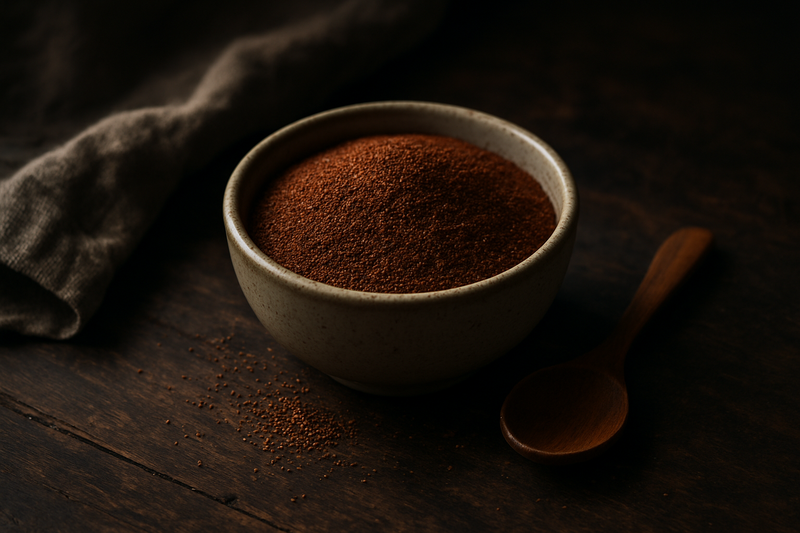
Teff · Photograph
Teff (Eragrostis tef) is a tiny, nutrient-dense grain that has been a cornerstone of Ethiopian cooking for thousands of years. Despite being smaller than a poppy seed, it packs a surprisingly complete nutritional profile — whole-grain fiber, quality protein, iron, calcium, and magnesium, all in a naturally gluten-free package. Whether you are building plant-based meals, managing a gluten-free diet, or simply looking for a more interesting energy base than white rice, teff is worth understanding.
Key Nutrients
% Daily Value based on 2,000 cal diet
Key active compounds and phytochemicals
Understanding what is inside teff helps explain the benefits described below.
- Slowly digestible starch and resistant starch — Fractions of starch that are broken down more gradually, or resist digestion in the small intestine altogether, reaching the colon where gut bacteria ferment them. This contributes to a lower, more gradual rise in blood glucose and feeds beneficial microbes.
- Phytic acid (phytate) — A natural phosphorus-storage compound found in the bran of whole grains. It acts as an antioxidant and may modestly lower the glycaemic response, but in large quantities it can bind minerals like iron, zinc, and calcium in the gut, reducing how much you absorb. Traditional fermentation (as in injera) breaks down much of the phytic acid, improving mineral bioavailability.
- Polyphenol-associated compounds — Teff contains compounds found in whole-grain brans that are associated with antioxidant activity in other grains; teff-specific research on these is still early.
- Lysine-rich protein — Unlike most grains, teff has a relatively favourable amino acid (protein building block) profile, including useful amounts of lysine — an essential amino acid often lacking in grain-heavy diets.
Prep and pairing ideas
Teff is more versatile than its unfamiliar name suggests.
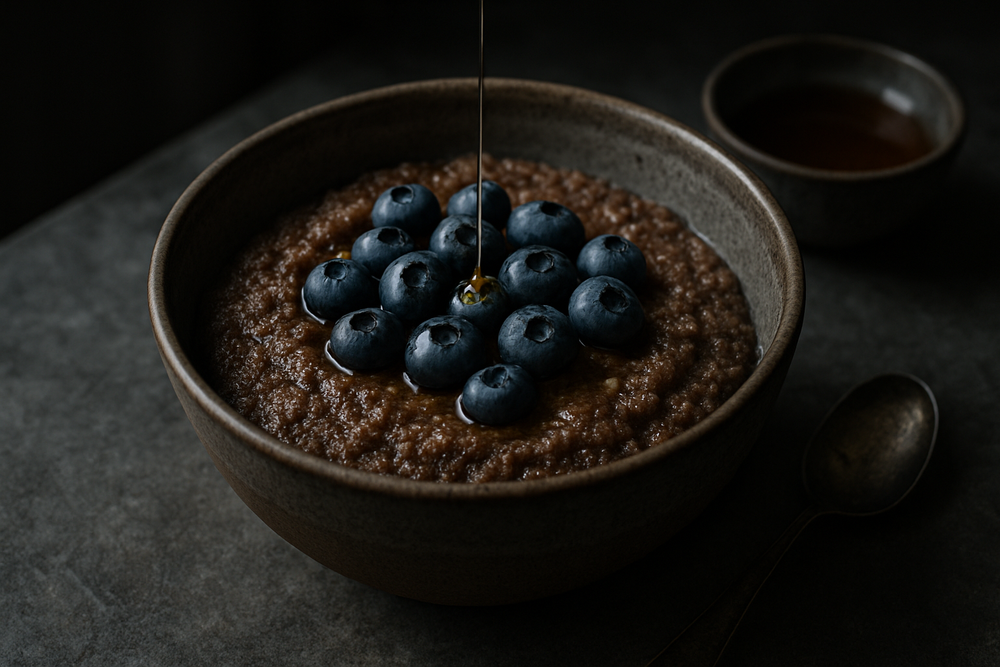
Whole grain porridge (the simplest start): Combine 1 part teff with 3–4 parts water or plant milk. Bring to a boil, reduce heat, and simmer for 15–20 minutes, stirring occasionally, until thick and creamy. Season with cinnamon, a little maple syrup, and berries.
Injera-style flatbread: Mix teff flour with water and a small amount of starter or yoghurt (or simply leave it to ferment naturally for 1–3 days at room temperature). Cook thin rounds on a lightly oiled griddle. Fermentation reduces phytic acid and creates a pleasant sour flavour.
In baking: Replace 25–50% of wheat flour in muffins, cookies, or banana bread with teff flour for a nutty, slightly earthy flavour and a fibre boost. Start with a partial substitution — 100% teff bakes can be denser than wheat-based ones.
Common pairings:
- Teff + lentils: Ethiopian cuisine traditionally pairs teff injera with spiced lentil stews. The vitamin C in tomato-based sauces helps counteract phytate's mineral-binding effect, improving iron and zinc absorption from both foods simultaneously.
- Teff + sweet potato: A warm teff porridge topped with mashed sweet potato and pumpkin seeds creates a complete energy-and-mineral meal — the orange flesh adds beta-carotene and vitamin C, and the seeds add zinc and healthy fats.
- Teff + berries and flaxseed: Breakfast teff porridge with blueberries (polyphenols and vitamin C) and ground flaxseed (omega-3 ALA and extra fibre) is a simple, high-nutrient, plant-based morning meal that covers energy, antioxidants, and gut health in one bowl.
How Teff Compares
| Compared with | What's different |
|---|---|
| Teff vs. Quinoa | Teff is significantly smaller and creates a creamy porridge, whereas quinoa remains distinct and fluffy. |
| Teff vs. Whole Wheat | Teff is naturally gluten-free and contains more calcium and iron per serving than whole wheat. |
| Teff vs. Millet | Teff grains are much smaller than millet and provide a higher concentration of iron and fiber. |
Health Benefits
Things to Know
Celiac disease or non-celiac gluten sensitivity: Teff itself is naturally gluten-free, but cross-contact during processing is possible. Choose certified gluten-free teff products.
Sensitive digestion or IBS: The higher fibre content can cause temporary gas, bloating, or loose stools if you increase intake too quickly. Start with small amounts and build up gradually over one to two weeks, alongside adequate fluid intake.
Iron overload conditions (e.g. hereditary haemochromatosis): Teff is relatively iron-rich. If you have a condition that causes the body to store excess iron, monitor total dietary iron and check with your doctor.
High-phytate diet concerns: If you rely heavily on multiple high-phytate foods (whole grains, legumes, nuts) and have a known mineral deficiency, consider pairing teff with vitamin C-rich foods to enhance iron absorption, or choose fermented teff products like injera, which have lower phytate levels.
Medication timing: As with other high-fibre foods, eating large portions of teff at the same time as oral medications may modestly slow drug absorption. A general precaution is to space high-fibre meals and medications by at least one to two hours. This is extrapolated from general fibre-drug interaction data rather than teff-specific research; ask your pharmacist if you are unsure.
Pregnancy: Teff's iron and calcium content may be beneficial during pregnancy, and one study noted improved iron levels in pregnant women consuming teff. That said, always discuss significant dietary changes during pregnancy with your midwife or doctor.
Prep Ideas
- — Teff + lentils: Ethiopian cuisine traditionally pairs teff injera with spiced lentil stews. The vitamin C in tomato-based sauces helps counteract phytate's mineral-binding effect, improving iron and zinc absorption from both foods simultaneously.
- — Teff + sweet potato: A warm teff porridge topped with mashed sweet potato and pumpkin seeds creates a complete energy-and-mineral meal — the orange flesh adds beta-carotene and vitamin C, and the seeds add zinc and healthy fats.
- — Teff + berries and flaxseed: Breakfast teff porridge with blueberries (polyphenols and vitamin C) and ground flaxseed (omega-3 ALA and extra fibre) is a simple, high-nutrient, plant-based morning meal that covers energy, antioxidants, and gut health in one bowl.
Shop This Ingredient
Stock your pantry with quality teff.
Buy on AmazonAs an Amazon Associate, Plantopedia earns from qualifying purchases. This costs you nothing extra and helps us keep the encyclopedia free.
Frequently Asked Questions
The evidence below ranges from well-established (for whole grains generally) to early-stage (for teff specifically). Where teff-specific human trials are limited, that is noted clearly. Heart and circulation Teff provides meaningful amounts of dietary fibre, magnesium, potassium, and calcium — all nutrients associated with healthier blood pressure and vascular function (how well your arteries work). High-fibre diets are consistently linked to lower risk of heart disease in large population studies, and replacing refined grains with whole grains like teff is a practical way to align with those patterns. That said, there are currently no large, teff-specific randomised controlled trials (studies where participants are randomly assigned to eat teff or not, to isolate its effect) directly measuring reduced cardiovascular events. The heart benefits are reasonably inferred from teff's whole-grain profile, not yet from teff-only outcome studies. Digestive health and microbiome Teff is rich in insoluble fibre — the kind that stays largely undigested, adds bulk to stool, and supports regular bowel movements. This fibre also acts as a prebiotic (food for beneficial gut bacteria), helping maintain a diverse and healthy gut ecosystem. No controlled human trials have tested teff alone for conditions like constipation or irritable bowel syndrome (IBS), but its fibre content is comparable to other whole grains with established digestive benefits. Fermented teff products like injera may offer additional digestive advantages because fermentation partially breaks down the grain's starch and reduces phytic acid. Blood sugar and metabolism Research suggests that teff's combination of fibre and slowly digestible starch may support a more stable blood glucose (blood sugar) response compared with refined starches. A published review of teff in people with diabetes described its nutrient profile as promising for glycaemic management. However, teff-specific clinical glucose trials are limited, and most of the evidence is extrapolated from strong whole-grain research. The practical takeaway: swapping refined gluten-free starches (white rice, tapioca) for teff is a sound strategy for anyone trying to moderate post-meal blood sugar spikes. Inflammation and recovery No human trials have directly measured inflammatory markers (like CRP — a blood protein that rises when the body is inflamed) in response to teff consumption. However, teff's fibre, magnesium, and slowly digestible carbohydrates are the same features that, in broader whole-grain research, are linked to lower levels of systemic (body-wide) inflammation. Substituting teff for refined starches is a plausible step toward lowering inflammatory burden, but this has not been confirmed in teff-focused clinical studies. Teff benefits for vegans, vegetarians, and active people For people on plant-based diets, teff addresses several common nutritional gaps simultaneously: iron, calcium, magnesium, and quality protein — all in one whole-grain food. Its complex carbohydrate base provides sustained energy for active lifestyles and exercise. Ethiopian distance runners have used teff as a dietary staple for generations, and while direct sports-performance trials are limited, the grain's micronutrient density and energy profile make it a logical fit for high-demand diets.
In practice, this question almost answers itself. Because teff grains are so small — smaller than a poppy seed — it is not commercially viable to strip out the bran and germ during milling. As a result, virtually all teff flour on the market is whole-grain flour. There is essentially no "refined teff flour" equivalent to what you see with white wheat flour or white rice flour. This is one of teff's quiet advantages. When you choose teff — whether as whole cooked grains or as flour in baking — you are almost certainly choosing a whole grain by default. Look for the words "whole grain teff flour" on packaging, and if you have celiac disease, also look for a certified gluten-free stamp to rule out cross-contact with wheat, barley, or rye during processing.
The gluten-free whole-grain seeker Has celiac disease or non-celiac gluten sensitivity Frustrated that most gluten-free products are low in fibre, protein, and micronutrients Wants a whole-grain base that doesn't require reading the small print on every pack Practical move: replace white rice or tapioca-based products with cooked teff grain or teff flour bakes The plant-based athlete or active person Needs sustained energy from complex carbohydrates without relying on ultra-processed sports foods Concerned about iron and calcium intake on a dairy-free, meat-free diet Looking for a grain that doubles as a protein contributor (around 12 g per 100 g dry) Practical move: use teff porridge as a pre-workout breakfast, or mix teff flour into pancake batter for a nutrient-dense post-run meal
There is no single established clinical dose for teff as there would be for a supplement. In traditional Ethiopian diets — where teff has been studied most — it functions as a primary staple grain providing a meaningful portion of daily carbohydrate and calorie intake, often appearing at one or more meals per day. For practical guidance in a Western-style diet: A good starting point: 40–60 g dry teff grain or flour per meal (roughly ¼ to ⅓ cup dry), which cooks up to about 1 cup of porridge or contributes one serving of grain in a recipe. USDA guidance recommends at least half your daily grain servings come from whole grains (roughly 3 servings per day for a 2,000 kcal diet). Teff counts toward this target. If you are new to high-fibre whole grains: start with one small serving (30–40 g dry) per day and
Quick Answers
Common questions, answered in a line.
Yes, teff is naturally gluten-free and suitable for people with celiac disease or non-celiac gluten sensitivity. However, because cross-contact during processing is possible, you should choose products that are certified gluten-free to ensure safety.
Teff takes approximately 15 to 20 minutes to cook when prepared as a whole grain porridge. You should combine one part teff with three to four parts water or plant milk, bring it to a boil, and then simmer while stirring occasionally until it reaches a thick and creamy consistency.
Teff contains phytic acid, which can bind to minerals like iron and zinc in the gut and reduce their absorption. To improve mineral bioavailability, you can use traditional fermentation methods, as seen in injera, or pair teff with foods high in vitamin C like tomatoes or berries.
Teff is a rich source of essential minerals including iron, calcium, and magnesium, and it contains high-quality protein with useful amounts of lysine. It also provides whole-grain fiber and resistant starch, which supports gut health and a gradual rise in blood glucose.
Teff can be used to make porridge, fermented injera flatbreads, or as a flour substitute in baking for muffins and cookies. For the best texture in baking, it is recommended to replace 25–50% of wheat flour with teff flour rather than a full substitution, which can be quite dense.
Teff may cause temporary gas, bloating, or loose stools if you increase your intake too quickly due to its high fiber content. To avoid digestive discomfort, start with small portions and gradually increase your intake over one to two weeks while drinking plenty of fluids.
Teff contains slowly digestible starch and resistant starch that provide a lower, more gradual rise in blood glucose compared to other grains. These starches reach the colon where they are fermented by gut bacteria, contributing to sustained energy and microbial health.
For Readers in the USA
Local context — sourcing, seasonality, and regional notes.
In the United States, teff is primarily grown in Idaho, Nevada, and Oregon due to their high-altitude and dry summer climates. While it is native to Ethiopia, these American Northwest regions have become major producers, ensuring a steady domestic supply and USDA-certified organic options for consumers.
You can find teff at major US health food chains like Whole Foods Market and Sprouts, as well as in the "Natural" or "Gluten-Free" aisles of larger retailers like Kroger or Walmart. For the freshest flour and bulk grains, shoppers often visit local Ethiopian markets found in major metro areas like Washington D.C., Los Angeles, or Minneapolis.
Teff is typically harvested in late summer and early fall across US growing regions, though its status as a dry grain means it is available year-round in stores. Because it is a "minor crop" in the US, supply can sometimes fluctuate, making it most abundant in specialty shops right after the autumn harvest.
While there is no specific FDA "health claim" for teff, it is recognized under USDA guidelines as a nutrient-dense whole grain that provides significant amounts of plant-based iron and fiber. Because it is naturally gluten-free, it is a frequent recommendation in US clinical nutrition settings for patients with Celiac disease or gluten sensitivity.
AI Clinical Review
- Teff is a naturally gluten‑free whole grain; because the kernels are tiny, flour is typically whole grain by default, preserving fibre, minerals, and protein.
- Nutrient profile is accurately described: higher fibre than white rice, meaningful iron, calcium, magnesium, and a relatively lysine‑rich protein compared with many grains.
- Explains slowly digestible/resistant starch and how fermentation (e.g., injera) lowers phytic acid to improve mineral absorption—useful, practical context.
- Positions teff as a smart swap for refined gluten‑free starches, aligning with whole‑grain guidance for cardiometabolic health.
- Teff‑specific randomized trials for cardiovascular outcomes, glycaemic control, and inflammation are limited; much of the benefit is inferred from broader whole‑grain research.
- Sports or performance claims and iron‑status improvements are based on small or observational studies; results may not generalize.
- Polyphenol and microbiome effects are plausible but not well characterized in controlled human studies focused on teff alone.
- Portion and tolerance: if new to higher‑fibre grains, start around 30–40 g dry per day and increase over 1–2 weeks with adequate fluids to minimize gas or bloating.
- Form matters: whole grain vs. flour/porridge, fermentation (injera), and meal composition (adding vitamin C–rich foods) all influence mineral absorption and post‑meal blood sugar.
- Gluten‑free safety: choose certified gluten‑free products if you have celiac disease or non‑celiac gluten sensitivity to avoid cross‑contact.
- Extra caution: people with iron overload (e.g., hereditary haemochromatosis), those taking oral medications (space high‑fibre meals by 1–2 hours), and anyone pregnant or with complex medical conditions should review changes with a clinician.
For grain products, clarify whole-grain vs refined where relevant.
References
- PMC, National Library of Medicine — Nutritional Characteristics, Health-Related Properties, and Food Application of Teff (Eragrostis tef): An Overview (pmc.ncbi.nlm.nih.gov)
- PMC, National Library of Medicine — Unlocking the Potential of Teff for Sustainable, Gluten-Free Diets and Unravelling Its Production Challenges to Address Global Food and Nutrition Security: A Review (pmc.ncbi.nlm.nih.gov)
- PMC, National Library of Medicine — The Effect of Teff Seed on Hematological Findings and Anthropometric Measurements (pmc.ncbi.nlm.nih.gov)
- NCBI, National Library of Medicine — The levels of essential nutrients and nonessential metals in different varieties of teff produced in Hidabu Abote Woreda, Oromia, Ethiopia (ncbi.nlm.nih.gov)
Know Your Numbers
Eating healthy is a start. Now get to know your biomarkers.
Food changes bloodwork — inflammation, lipids, blood sugar and nutrient status all respond to what you eat. 59 markers from $59.
- Results in 7–10 days at 2,000+ Quest sites
- Licensed provider reviews every result
- One flat price, no membership, HSA/FSA eligible
Educational information only, not medical advice. Panels are ordered and reviewed through our licensed partner; Plantopedia may earn a commission.