Rhubarb — health benefits and uses
Long used in Chinese medicine (root) and European kitchens as a tart spring stalk.
The Short Answer
Rhubarb is a tart vegetable typically used like a fruit, providing 35 mcg of vitamin K and 100 mg of calcium per cup. While the stalks are safe to eat raw or cooked, the leaves must be discarded as they contain toxic levels of oxalic acid.
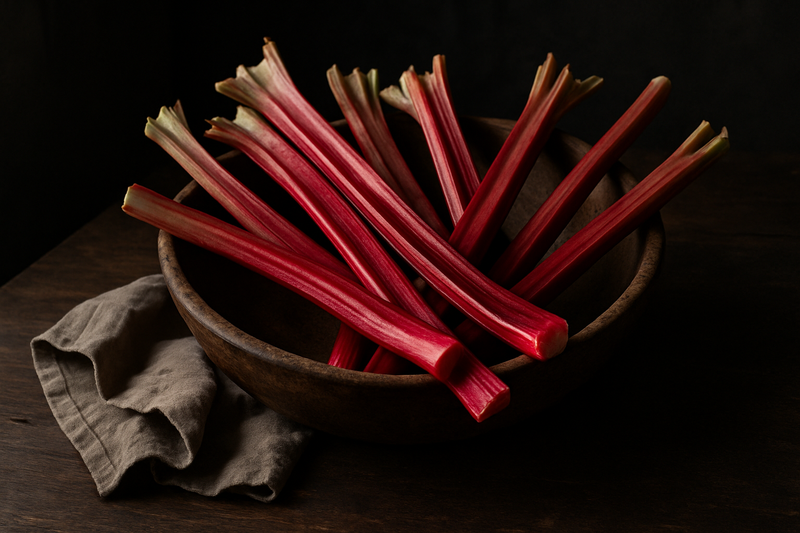
Rhubarb · Photograph
Discover the rhubarb health benefits and side effects you actually need to know — from vitamin K and fiber to why the leaves are toxic, how to cook the stalks safely, and how rhubarb fits into a whole food plant-based diet.
Key Nutrients
% Daily Value based on 2,000 cal diet
Key active compounds
- Anthraquinones (rhein, emodin, aloe-emodin, sennosides): Aromatic compounds concentrated in rhubarb root; responsible for the plant's well-documented stimulant laxative effect. Present in much smaller amounts in culinary stalks.
- Anthocyanins: The red and purple pigments in coloured rhubarb stalks. These are antioxidants — molecules that help neutralise free radicals (unstable molecules that can damage cells) — and may support vascular health.
- Flavonols (e.g., quercetin derivatives): Polyphenols (a broad class of plant-protective compounds) that contribute to the stalk's overall antioxidant activity and may modestly support cardiometabolic health as part of a varied diet.
- Oxalic acid (oxalate): An organic acid naturally present in many plants. Rhubarb leaves contain extremely high levels; stalks contain moderate levels. At typical food amounts in healthy people, this is not usually a concern — but it is relevant for those prone to kidney stones (see cautions below).
- Vitamin K1 (phylloquinone): A fat-soluble vitamin present in meaningful amounts in the stalk, important for blood coagulation (the process that helps blood clot) and bone health.
Prep and pairing ideas
Rhubarb's almost aggressive tartness means it almost always benefits from a companion. The good news: that companion does not have to be a cup of white sugar.
Trimming and washing: Cut the leaves off completely (right to the base of the stalk), wash the stalks under cold water, and trim any tough or stringy ends. The stalk is all you need; everything else goes in the bin.
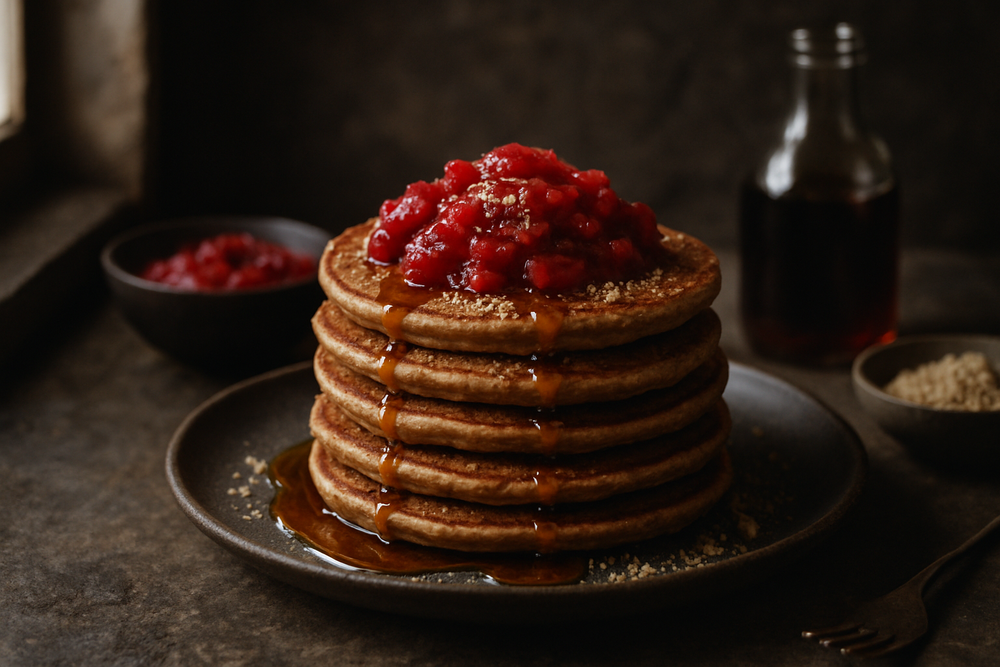
Stewed rhubarb compote (low-sugar method): Chop stalks into 2–3 cm pieces. Combine with a peeled, diced apple or a small handful of pitted dates and a splash of water in a saucepan. Simmer on medium-low, stirring occasionally, until soft (about 10–15 minutes). The apple and dates provide natural sweetness. A small amount of added sugar or maple syrup can be stirred in at the end if needed. Serve warm over porridge, plain yoghurt, or whole-grain pancakes.
Rhubarb crumble (whole-food approach): Use the compote above as the filling. For the topping, combine rolled oats, ground almonds, a pinch of cinnamon, a small amount of coconut oil or plant-based butter, and a tablespoon of maple syrup. Bake at 180 °C / 350 °F for 25–30 minutes until golden.
Rhubarb and ginger: Fresh or ground ginger pairs exceptionally well with rhubarb, adding warmth that makes the dish feel sweet without adding sugar. Add a 1 cm piece of fresh ginger (grated) to stewed rhubarb.
Rhubarb and strawberry: The classic pairing. Strawberries are naturally sweet and their anthocyanins complement rhubarb's. This combination allows you to use significantly less added sugar in pies or compotes.
Rhubarb in savoury dishes: Less common but worth trying. A small amount of stewed rhubarb makes an excellent tangy chutney alongside lentil dishes or grain bowls.
Buying guide
Fresh stalks (seasonal — spring to early summer in most climates): Look for firm, crisp stalks without soft spots or wilting. Colour ranges from bright green to deep red; colour does not determine ripeness or flavour intensity (some green varieties are sweeter). Redder stalks tend to have higher anthocyanin content. Buy with the leaves already cut, or cut them off the moment you get home.
Frozen rhubarb: Widely available year-round and nutritionally comparable to fresh. Check the label: ideally the only ingredient should be rhubarb — no added sugar. Frozen rhubarb releases a lot of liquid when thawed, which is useful for compote but may make crumble filling watery; consider cooking it from frozen or draining excess liquid.
Canned rhubarb: Usually packed in heavy sugar syrup, which significantly changes the calorie and sugar profile. If using canned, rinse it or look for versions packed in juice. Not ideal for whole-food plant-based eating, but a practical option in a pinch.
Rhubarb root supplements / extracts: These are medicines, not food supplements. If a clinician recommends one, source from a reputable manufacturer with third-party quality testing and clear labelling of active constituent levels (e.g., rhein content per dose). Avoid unregulated products with vague labelling.
Bottom line
Rhubarb is a genuinely useful ingredient — tart, versatile, low in calories, and a solid source of vitamin K, fiber, manganese, and antioxidants. It belongs in a whole-food kitchen.
The strongest health research on rhubarb concerns the root, used medicinally at pharmacological doses, not the stalk eaten at the table. That is not a reason to dismiss culinary rhubarb — it is a reason to understand what you are getting: a nutritious, low-sugar cooking ingredient with real (if modest) contributions to a healthy diet, rather than a botanical medicine.
The non-negotiable safety point stands on its own: the leaves are toxic. Always remove them. The stalks are safe and enjoyable for most people. Those with kidney stones, kidney disease, or on warfarin should get individual guidance on portion sizes.
Cook it with fruit and a light hand on added sugar, pair it with whole-grain toppings, and rhubarb fits comfortably into almost any health-conscious eating pattern.
Curious how rhubarb fits into a broader gut health or weight management plan? Browse ingredient guides by goal at Plantopedia goals.
How Rhubarb Compares
| Compared with | What's different |
|---|---|
| Rhubarb vs. Celery | Botanically a vegetable with edible stalks, whereas celery is mostly water and milder in flavor. |
| Rhubarb vs. Strawberry | Rhubarb is much more acidic and tart, requiring cooking or sweeteners compared to sweet berries. |
| Rhubarb vs. Swiss Chard | Swiss chard has edible leaves, while rhubarb leaves are toxic due to extreme oxalic acid levels. |
Health Benefits
Things to Know
Leaves are toxic — always discard them.: Rhubarb leaves contain high levels of oxalic acid and anthraquinone glycosides, which can cause nausea, vomiting, diarrhoea, and at high intakes, serious kidney damage or worse. Cooking does not deactivate these compounds. Remove leaves at the source, double-bag them for disposal, and never compost them where pets or livestock can access the pile.
Kidney stones (calcium oxalate type): Rhubarb stalks contain moderate oxalate. If you have a personal or family history of calcium oxalate kidney stones, speak with your doctor or dietitian about appropriate portion sizes and always drink plenty of water.
Kidney disease: Those with reduced kidney function should be cautious about moderate-to-high oxalate foods, and should avoid medicinal rhubarb root preparations entirely.
Warfarin (and other vitamin K antagonists): One cup of rhubarb provides roughly 30% of the daily vitamin K reference intake. If your anticoagulant dose is calibrated to your current diet, suddenly eating much more or much less rhubarb can shift your INR (a measure of how quickly blood clots). Keep intake consistent and let your clinician know if you plan to eat rhubarb regularly.
Digoxin and diuretics: These interactions are relevant to medicinal rhubarb root, not food-level stalk consumption. High-dose rhubarb laxatives can lower potassium, increasing the risk of digoxin toxicity or compounding fluid loss from diuretics.
Inflammatory bowel disease, IBS, or unexplained abdominal pain: Avoid stimulant laxative forms of rhubarb root. Culinary stalk in normal portions is generally fine, but if GI symptoms are active, go gently.
Pregnancy and breastfeeding: Rhubarb stalk in food amounts is generally considered acceptable. Medicinal doses and concentrated root extracts are typically avoided.
Older adults and children: More susceptible to dehydration and electrolyte shifts; medicinal laxative forms are not appropriate without medical guidance.
Pets: Dogs, cats, and most livestock are sensitive to oxalate-containing plants. Keep rhubarb leaves — and large amounts of stalk — away from animals.
Shop This Ingredient
Stock your pantry with quality rhubarb.
Buy on AmazonAs an Amazon Associate, Plantopedia earns from qualifying purchases. This costs you nothing extra and helps us keep the encyclopedia free.
Frequently Asked Questions
Heart and circulation Small clinical trials using concentrated rhubarb root preparations in people with atherosclerosis (build-up of plaque inside arteries) found improvements in how well the inner lining of blood vessels functions, alongside reductions in total and LDL cholesterol — the type sometimes called "bad" cholesterol. These effects are attributed to the anthraquinones and polyphenols in the root, not the stalk, and the preparations used were pharmacological (medicine-level) doses. From a food perspective, rhubarb stalks are very low in calories and fat, contain some fiber and potassium, and can fit into a heart-healthy eating pattern — especially when they replace heavier desserts. The stalk's anthocyanins and flavonols may contribute antioxidant support, but rhubarb stalk has not been directly tested in cardiovascular outcome trials. Digestive health and microbiome This is where the strongest evidence sits, with an important caveat. Multiple randomised controlled trials (the gold standard in clinical research) confirm that medicinal rhubarb root — taken as a decoction (a water-based herbal extract simmered and strained), powder, or standardised extract — is an effective short-term stimulant laxative for constipation, post-surgical gut sluggishness, and gut motility issues in critically ill patients. A double-blind randomised trial in middle-aged adults with low stool frequency found that 30 days of a standardised rhubarb extract improved stool frequency and consistency, and appeared to increase butyrate-producing bacteria (microbes that feed the gut lining) such as Roseburia and Agathobacter. The important caveat: these trials used concentrated root preparations at doses far above what you'd get from a slice of rhubarb crumble. Culinary stalks offer a gentler, fibre-based route to digestive support — the 2 g of fibre per cup contributes to overall daily intake and feeds beneficial gut bacteria, without the stimulant laxative mechanism. Good for everyday eating; not a substitute for medicinal preparations when those are clinically indicated. Blood sugar and metabolism Rhubarb stalk is low in natural sugars and provides some fiber, which can blunt the blood sugar rise after a meal. There is no direct evidence that eating rhubarb stalk meaningfully improves fasting glucose or HbA1c (a marker of long-term blood sugar control). Rhubarb appears in some traditional Chinese medicine formulas used alongside other herbs for type 2 diabetes, but isolating rhubarb's individual contribution from those combinations is difficult. The practical blood-sugar benefit of culinary rhubarb is mostly about displacement — a well-made rhubarb compote with modest sweetener is far lighter than a sugary processed dessert. People managing diabetes should keep a close eye on the total sugar in any rhubarb recipe. Inflammation and recovery Several randomised trials in critically ill patients — particularly those with severe acute pancreatitis (inflammation of the pancreas), sepsis (a life-threatening response to infection), and acute respiratory distress syndrome — found that rhubarb root preparations added to standard care reduced systemic inflammatory markers and improved gut barrier function. These are striking findings in serious clinical contexts, and they are entirely attributable to medicinal root preparations used under medical supervision in hospitals. For everyday eating, rhubarb stalks contribute antioxidants that may support a generally anti-inflammatory diet, but rhubarb stalk has not been studied for chronic inflammation or inflammatory conditions in healthy people. Hormones and cycle health Evidence here is thin. Some laboratory and pharmacological work suggests rhubarb anthraquinones may interact with hormone receptors, but robust human trials on rhubarb and hormonal health are lacking. The most clinically relevant hormone-adjacent concerns are practical ones: vitamin K intake from stalks can affect anticoagulation therapy (see below), and long-term high-dose laxative use can disrupt electrolyte balance, which in turn affects hormone-regulated systems. Rhubarb should not be relied on for hormone balance based on current evidence.
The honest answer is that it depends on which benefit you are looking for. Fresh or frozen rhubarb stalk (cooked) is the form most people encounter. It delivers fiber, vitamin K, potassium, manganese, and plant antioxidants in a low-calorie package. This is the form relevant to healthy eating, and the one this guide focuses on. Stewed rhubarb / compote preserves most fiber. Vitamin C is somewhat heat-sensitive, so gentle cooking is better than prolonged boiling. Sweetness can be managed by pairing with naturally sweet fruit (apple, pear, or blended dates) rather than large amounts of added sugar. Frozen rhubarb stalks have a nutritional profile very close to fresh and are practical year-round. Thaw and cook as you would fresh. Dried rhubarb root / Chinese rhubarb extract (from Rheum palmatum or Rheum officinale) is the medicinal form used in clinical trials. It is categorically different from eating the stalk. These preparations should be treated as medicines, used short-term only, and always under the guidance of a qualified health practitioner. Self-prescribing rhubarb root as a laxative long-term is not recommended.
For culinary rhubarb stalk, there is no formally established upper limit for healthy adults. Most practical servings fall between ½ cup and 1 cup (60–120 g) of cooked rhubarb in a dish, which sits well within a safe range for the majority of people. General guidance: Healthy adults: 1 cup (120 g) of cooked rhubarb per serving, a few times per week, is a reasonable amount and consistent with how it is typically used in recipes. People with calcium oxalate kidney stones: Discuss specific limits with a doctor or registered dietitian. The general dietary advice for this group is to moderate oxalate-rich foods (which includes rhubarb, spinach, nuts, and beets), stay well hydrated, and maintain adequate calcium intake from food — dietary calcium actually binds oxalate in the gut and reduces absorption. People on warfarin: No need to avoid rhubarb, but keep intake consistent from week to week and flag any major dietary changes to your healthcare team. Children: Small portions of cooked rhubarb are generally fine. Be mindful of added sugar in desserts. Medicinal rhubarb root preparations: Typical trial doses range from 1.5–9 g of dried root daily for 2–4 weeks, or standardised extracts providing 12.5–25 mg rhein per day. These are pharmacological doses for short-term use under medical supervision — not daily food targets. Start low: If you are new to rhubarb, begin with a small portion (around ½ cup cooked) to gauge how your digestive system responds to the tartness and fiber. Some people find a large serving of very sour fruit causes mild stomach discomfort.
Quick Answers
Common questions, answered in a line.
Rhubarb leaves are toxic and should never be eaten because they contain high levels of oxalic acid and anthraquinone glycosides. Ingesting them can cause nausea, vomiting, diarrhea, and serious kidney damage; cooking the leaves does not deactivate these harmful compounds.
Rhubarb is a good source of vitamin K1, fiber, manganese, and various antioxidants like anthocyanins and flavonols. Vitamin K1 is essential for healthy blood coagulation and bone health, while the fiber and antioxidants support digestive and heart health.
You can sweeten rhubarb without white sugar by stewing it with naturally sweet fruits like peeled apples, pitted dates, or strawberries. Adding fresh grated ginger can also provide a warmth that makes the dish feel sweeter without the need for added refined sugars.
Rhubarb can interact with Warfarin because it contains significant amounts of vitamin K, which helps blood clot. People taking blood thinners should keep their rhubarb intake consistent to avoid shifting their INR levels and should consult a clinician before making changes.
People with a history of calcium oxalate kidney stones should be cautious because rhubarb stalks contain moderate levels of oxalate. It is recommended to speak with a doctor about safe portion sizes and to ensure you are drinking plenty of water when consuming it.
When buying rhubarb, look for firm, crisp stalks that are free from soft spots or wilting. While color ranges from green to deep red and doesn't indicate ripeness, redder stalks typically contain higher levels of anthocyanins, which are beneficial antioxidants.
The laxative effect of rhubarb is primarily found in the root, which contains concentrated aromatic compounds called anthraquinones like rhein and emodin. While culinary stalks contain these compounds in much smaller amounts, they are not typically used for their stimulant laxative properties.
For Readers in the USA
Local context — sourcing, seasonality, and regional notes.
In the United States, rhubarb is a cool-weather perennial primarily grown in the USDA Hardiness Zones 3 through 6, including the Pacific Northwest, New England, and the Upper Midwest. While it thrives in the North, it is difficult to grow in the hot, humid South.
Fresh rhubarb is typically available at U.S. grocery stores and farmers markets from April through June, though "hothouse" rhubarb may appear as early as January. Look for it in the produce aisle of major chains like Whole Foods, Kroger, or Safeway during these peak spring months.
U.S. consumers can look for the USDA Organic seal to ensure rhubarb was grown without synthetic pesticides or fertilizers. Additionally, the FDA regulates rhubarb as a "raw agricultural commodity," primarily focusing on the safety of the stalks and labeling accuracy for processed forms.
Americans most commonly enjoy rhubarb in "Strawberry Rhubarb Pie," a staple of summer picnics and July 4th celebrations, particularly in the Midwest. It is also a traditional ingredient in regional American preserves, crisps, and "sauces" served over biscuits.
AI Clinical Review
- Clearly distinguishes culinary rhubarb stalk from medicinal rhubarb root, explaining that laxative effects come from root anthraquinones while stalks mainly offer fiber and micronutrients.
- Accurately emphasizes leaf toxicity and that cooking does not make leaves safe.
- Presents a reasonable nutrition snapshot: stalks are low‑calorie, fiber‑containing, and a meaningful source of vitamin K, with practical tips to limit added sugars in recipes.
- Summarizes the strongest clinical evidence for rhubarb root in constipation and certain critical‑care settings, while not overclaiming benefits for everyday stalk consumption.
- Cardiovascular benefits: small, short‑term trials of root extracts show favorable surrogate markers (e.g., lipids, endothelial function), but there are no large outcome trials and no direct evidence for culinary stalks.
- Glycemic control: stalks are low in sugar and provide fiber, but human trials showing improvements in fasting glucose or HbA1c from eating rhubarb stalks are lacking; net effect depends on recipe sugars.
- Anti‑inflammatory effects: promising hospital‑based data with root preparations may not translate to food amounts or to generally healthy adults.
- Hormone‑related claims remain preliminary; in‑vitro findings on anthraquinones have limited clinical corroboration.
- Safety first: eat stalks only; leaves are toxic for people and pets. Dispose of them securely.
- If you take warfarin or other vitamin K antagonists, keep intake consistent; about 1 cup of rhubarb stalk provides roughly 30% of daily vitamin K. Discuss any sustained dietary changes with your care team and monitor INR.
- If you have a history of calcium oxalate kidney stones or chronic kidney disease, moderate portions, stay well hydrated, and pair rhubarb with calcium‑containing foods (which can bind oxalate). Boiling and discarding the cooking water can further lower oxalate.
- Medicinal rhubarb root is not food: typical short‑term doses in studies are about 1.5–9 g dried root or standardized extracts (often 12.5–25 mg rhein/day). Use only with clinician guidance due to risks of electrolyte shifts and interactions (e.g., digoxin, diuretics), and avoid in pregnancy/breastfeeding.
Only the stalks are edible; the leaves are toxic due to oxalic acid.
References
- USDA FoodData Central — Rhubarb, raw (nutrition data) (fdc.nal.usda.gov)
- USDA MyPlate — Fruits food group guidance, includes culinary rhubarb (myplate.gov)
- WebMD — Rhubarb: overview, uses, side effects, interactions (webmd.com)
- Drugs.com — Rhubarb uses, benefits, dosage, and safety (drugs.com)
- Healthline — Are rhubarb leaves poisonous? (safety explainer) (healthline.com)
- European Medicines Agency — Assessment report: Rhei radix (rhubarb root), safety and evidence review (ema.europa.eu)
- Double-blind RCT: Rhubarb extract, constipation, and gut microbiome modulation in middle-aged adults (pmc.ncbi.nlm.nih.gov)
- Clinical trial: Effects of rhubarb on intestinal dysmotility in critically ill patients (pmc.ncbi.nlm.nih.gov)
- Human trial: Rhubarb preparation improves brachial artery endothelial function in atherosclerosis patients (pubmed.ncbi.nlm.nih.gov)
- Comprehensive review: Bio-active constituents, pharmacology, and clinical applications of rhubarb (frontiersin.org)
Know Your Numbers
Eating healthy is a start. Now get to know your biomarkers.
Food changes bloodwork — inflammation, lipids, blood sugar and nutrient status all respond to what you eat. 59 markers from $59.
- Results in 7–10 days at 2,000+ Quest sites
- Licensed provider reviews every result
- One flat price, no membership, HSA/FSA eligible
Educational information only, not medical advice. Panels are ordered and reviewed through our licensed partner; Plantopedia may earn a commission.