Discover the real health benefits of rice. Learn why black rice beats berries for antioxidants, how to lower calories by cooling your rice,
Plant-based energy base; pair with legumes/vegetables for a complete meal
The Short Answer
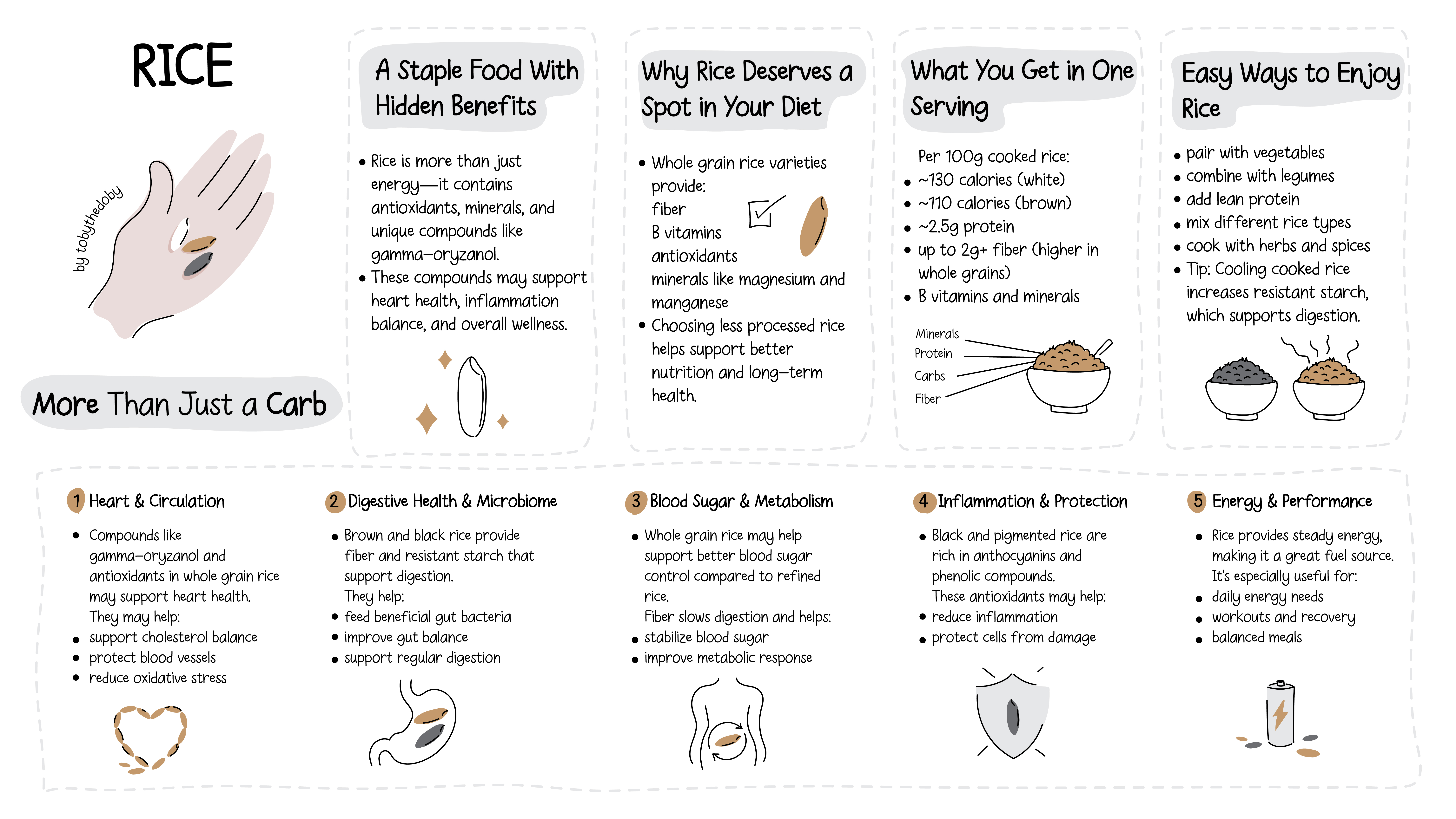
Rice is a primary energy source providing 130 to 216 calories per cup, with whole-grain varieties like brown and black rice offering fiber and cholesterol-lowering gamma-oryzanol.

Rice · Photograph
Why Rice Health Benefits Stand Out Rice serves as the primary caloric engine for more than half of the global population.
Key Nutrients
% Daily Value based on 2,000 cal diet
Why Rice Health Benefits Stand Out
Rice serves as the primary caloric engine for more than half of the global population. While refined white rice is a quick energy source, whole-grain varieties like brown, red, and black rice contain the bran and germ layers. These layers house over 80% of the grain's bioactive potential, including specialized lipids and antioxidants that are absent in polished grains.
Recent clinical research highlights that regular consumption of whole-grain rice is associated with a reduced risk of Type 2 diabetes and cardiovascular disease, largely due to its unique fiber-polyphenol matrix.
Key Active Compounds: The Molecular Matrix
Specialized compounds found in the outer layers drive the therapeutic potential of rice:
- $\gamma$-Oryzanol: A mixture of steryl ferulates unique to rice bran oil. It is studied for its ability to lower LDL cholesterol by inhibiting HMG-CoA reductase.
- Anthocyanins: Potent pigments found in Black Rice (Cyanidin-3-glucoside) that support vascular elasticity and nitric oxide production.
- Ferulic Acid: A phenolic compound that protects cellular membranes from oxidative stress.
- GABA ($\gamma$-aminobutyric acid): A neurotransmitter that increases significantly during the germination (sprouting) process, supporting neurological calm.
- Resistant Starch: A prebiotic carbohydrate that forms upon cooling, supporting the growth of beneficial gut flora.
Conclusion: A Bioactive Framework
Rice is a sophisticated functional food that offers far more than simple "starch energy." By shifting your focus toward Black Rice for mitochondrial protection and Brown Rice for cholesterol regulation, you tap into a deep well of therapeutic compounds. To achieve the highest rice health benefits, utilize the "cook, cool, and reheat" method to maximize resistant starch and prioritize sprouted (GABA) varieties to neutralize antinutrients.
When integrated into a plant-forward, nutrient-dense diet, rice serves as a powerful foundation for cardiovascular and metabolic resilience. Ready to plan healthy meals with rice? Our meal planner helps you create nutritious combinations that work with your health goals.
How Rice Compares
| Compared with | What's different |
|---|---|
| Rice vs. Brown Rice | Whole-grain with the bran layer intact, providing 216 calories and higher magnesium per cup. |
| Rice vs. Black Rice | Contains anthocyanins and cyanidin-3-glucoside, offering higher antioxidant levels than berries. |
| Rice vs. Wild Rice | A higher-protein aquatic grass seed with a firmer texture and more intense earthy flavor. |
Health Benefits
Things to Know
Arsenic Mitigation: Rice absorbs inorganic arsenic more efficiently than other grains. To maximize rice health benefits safely, rinse rice thoroughly and consider cooking it in excess water (6:1 ratio) and draining it, which can remove up to 60% of arsenic.
Antinutrients: Brown rice contains phytic acid, which can bind to minerals like Zinc and Iron. Soaking or sprouting (GABA rice) activates enzymes that break down phytic acid, "unlocking" these minerals.
Blood Sugar Management: Always pair rice with protein and healthy fats (like avocado or olive oil) to slow the entry of glucose into the bloodstream.
Common Uses
- —Utilizing the "cook-and-cool" method for meal prep to maximize resistant starch and maintain stable blood sugar.
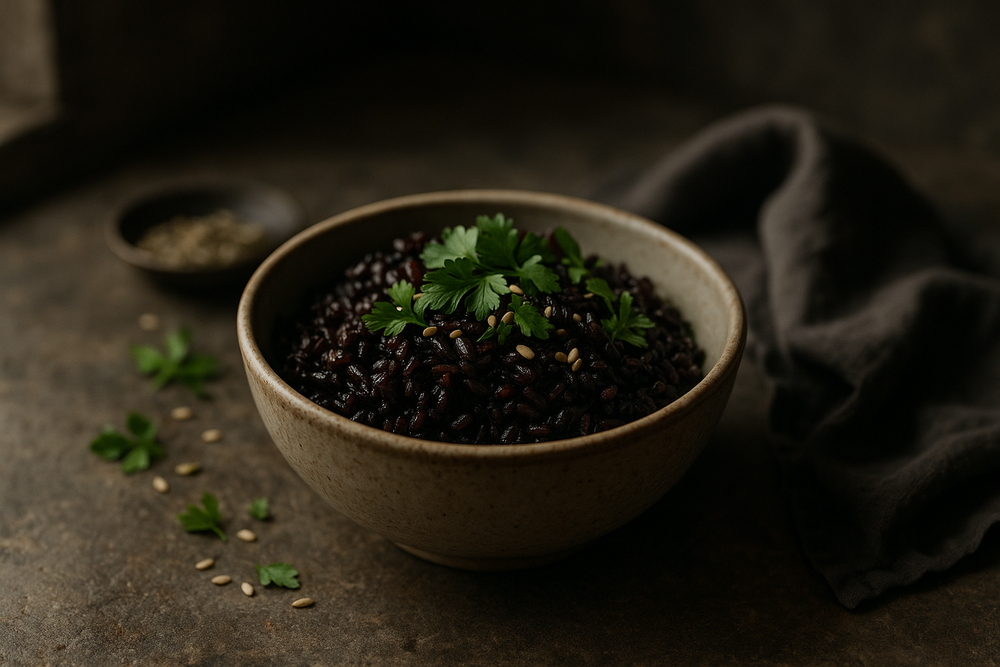
- —Swapping white rice for black rice to increase intake of anthocyanins for cellular and DNA protection.
- —Using brown rice to access $\gamma$-oryzanol and bran fiber for natural cholesterol regulation.
- —Consuming sprouted (GABA) rice to benefit from increased $\gamma$-aminobutyric acid for a calming effect on the nervous system.
- —Using white rice as a "safe" starch during digestive flare-ups (like IBS) due to its low lectin and fiber content.
- —Soaking brown rice for 12+ hours before cooking to neutralize phytic acid and unlock magnesium, zinc, and iron.
Glossary
Shop This Ingredient
Stock your pantry with quality rice.
Buy on AmazonAs an Amazon Associate, Plantopedia earns from qualifying purchases. This costs you nothing extra and helps us keep the encyclopedia free.
Frequently Asked Questions
Gram for gram, black rice contains a similar concentration of anthocyanins as blueberries but offers more fiber and Vitamin E without the sugar found in fruit. This makes it an ideal staple for those seeking high-antioxidant rice health benefits while maintaining stable blood sugar levels.
White rice is often the best choice for those with acute digestive sensitivity, such as IBS or Crohn's flare-ups, as it is extremely low in irritating lectins and easy to digest. While it lacks the micronutrients of brown rice, it provides "clean" energy that doesn't cause gas or bloating.
If you cook rice and refrigerate it for 24 hours, the starch undergoes retrogradation, turning into resistant starch. This lowers the calorie count and the glycemic index. When you reheat and eat this rice, it acts as a prebiotic, feeding your gut bacteria rather than spiking your insulin.
Soaking brown rice for 12+ hours triggers the early stages of germination. This activates the enzyme phytase, which breaks down phytic acid. This is crucial for rice health benefits because it allows your body to actually absorb the iron, zinc, and magnesium that are otherwise "locked" in the grain.
Yes, specifically through the sprouting process. GABA rice (germinated rice) contains significantly higher levels of $\gamma$-aminobutyric acid, which has been shown in clinical trials to help relax blood vessels and lower blood pressure. Additionally, the potassium in whole-grain rice helps balance sodium levels in the body.
Quick Answers
Common questions, answered in a line.
Whole-grain varieties like brown, red, and black rice contain over 80% of the grain's bioactive potential because they retain the bran and germ layers. These outer layers house specialized lipids, fiber, and antioxidants that are removed during the polishing process of white rice.
Gamma-oryzanol is a unique mixture of steryl ferulates found in rice bran oil that may help lower LDL cholesterol. It works by inhibiting HMG-CoA reductase, an enzyme involved in cholesterol production, making brown rice a useful tool for cardiovascular health.
You can remove up to 60% of inorganic arsenic by rinsing the rice thoroughly and cooking it in excess water using a 6:1 ratio before draining. This method allows you to enjoy the health benefits of rice while significantly reducing exposure to this heavy metal.
Sprouted or GABA rice is regular rice that has undergone germination to increase levels of gamma-aminobutyric acid, a neurotransmitter that supports neurological calm. This process also activates enzymes that break down phytic acid, making minerals like zinc and iron easier for your body to absorb.
To manage blood sugar, you should pair rice with protein and healthy fats, such as avocado or olive oil, to slow glucose absorption. Additionally, cooling cooked rice creates resistant starch, a prebiotic carbohydrate that helps maintain stable blood glucose levels.
Anthocyanins are potent antioxidant pigments found in black rice that support vascular elasticity and nitric oxide production. These compounds, specifically Cyanidin-3-glucoside, provide cellular and DNA protection and give black rice its deep purple color.
White rice serves as a "safe" starch during digestive flare-ups, such as IBS, because it has very low levels of lectins and fiber. While it lacks the bioactive compounds of whole grains, its simple structure makes it easy for the digestive system to process.
For Readers in the USA
Local context — sourcing, seasonality, and regional notes.
The majority of rice in the U.S. is grown in the Mississippi River Delta (Arkansas, Louisiana, Mississippi, Missouri) and California's Sacramento Valley. These regions produce diverse varieties ranging from long-grain Southern rice to California-grown short-grain Japonica and medium-grain Calrose.
You can find a wide variety of domestic and imported rice at major U.S. retailers like Kroger, Walmart, and Whole Foods, as well as via regional H-Mart or 99 Ranch Market locations. Specialty varieties like heirloom black rice or organic sprouted brown rice are increasingly common in the natural foods aisle and at local farmers markets in growing regions.
The FDA monitors arsenic levels in rice and advises domestic consumers to vary their grain intake and rinse rice thoroughly to reduce potential exposure. While the U.S. does not currently have a federal limit for arsenic in adult rice products, the agency has established specific action levels for infant rice cereal to ensure infant safety.
Wild rice (Zizania palustris) is actually a semi-aquatic grass native to the Great Lakes region and is the only cereal grain native to North America. It is culturally significant to Indigenous peoples, particularly the Ojibwe, and is legally protected in Minnesota where hand-harvested varieties are prized for their nutty flavor and high protein content.
AI Clinical Review
- Variety Specificity: Correctly identifies that the majority of bioactive potential (80%) is stripped away during the polishing process of white rice.
- $\gamma$-Oryzanol Mechanism: Accurately highlights the role of rice bran lipids in inhibiting HMG-CoA reductase, a key pathway in cholesterol management.
- Starch Architecture: Properly distinguishes between amylose (slow-digesting) and amylopectin (fast-digesting), which is vital for glycemic control.
- Arsenic Mitigation: Rightly emphasizes the clinical importance of rinsing and using high water-to-rice ratios to reduce inorganic arsenic exposure.
- Resistant Starch Formation: Correctly explains retrogradation, the biochemical shift that occurs when starch is cooled.
- GABA Therapeutic Dose: While sprouted rice definitely contains more GABA, more research is needed to determine if the amount consumed in a standard portion is sufficient to treat clinical hypertension or anxiety.
- Uterine/Hormonal Health: Some early studies suggest rice bran may influence hormonal pathways, but this remains speculative and lacks robust human trial data.
- Anthocyanin Bioavailability: The exact percentage of anthocyanins from black rice that survive the cooking process and human digestion to reach the bloodstream is still being quantified.
- Weight Loss Comparison: While resistant starch reduces calories, the real-world weight loss advantage of "cooled rice" versus "hot rice" requires more long-term longitudinal studies.
- Arsenic Accumulation: Brown rice contains more arsenic than white rice because the toxin accumulates in the bran. Preparation methods (soaking/rinsing) are non-negotiable for frequent consumers.
- Antinutrients: Unsoaked brown rice can lead to mineral deficiencies in those with already low intake due to phytic acid binding.
- The "Halo" Effect: Just because black or brown rice is "healthy" doesn't mean it is low-calorie. Portion control remains essential for weight management.
- Glycemic Index Nuance: Even brown rice can have a high GI if it is overcooked into a soft, mushy texture; keep it al dente to preserve the fiber matrix.
- Digestive Load: For those with severe gut issues, the insoluble fiber in brown rice bran may be too irritating; white rice is often a safer clinical starting point.
For grain products, clarify whole-grain vs refined where relevant.
References
- USDA FoodData Central - Rice Nutritional Composition
- Nutrients Journal - Bioactive Compounds in Pigmented Rice: Comprehensive review of anthocyanin and phenolic acid activity.
- Harvard T.H. Chan School of Public Health - The Science of Whole Grains
- FDA - Inorganic Arsenic in Rice Safety Guidance
- Journal of Agricultural and Food Chemistry - $\gamma$-Oryzanol and Cholesterol: Research regarding the HMG-CoA reductase inhibition properties of rice bran lipids.
- Frontiers in Nutrition - Black Rice as a Functional Food: Current research on the mitochondrial protective effects of pigmented grains.
Know Your Numbers
Eating healthy is a start. Now get to know your biomarkers.
Food changes bloodwork — inflammation, lipids, blood sugar and nutrient status all respond to what you eat. 59 markers from $59.
- Results in 7–10 days at 2,000+ Quest sites
- Licensed provider reviews every result
- One flat price, no membership, HSA/FSA eligible
Educational information only, not medical advice. Panels are ordered and reviewed through our licensed partner; Plantopedia may earn a commission.