Romano Beans — health benefits and uses
An Italian garden bean beloved for hearty, satisfying texture.
The Short Answer
Romano beans are flat, broad Italian green beans prized for their meaty texture and sweet flavor. They are highly nutritious, providing 17 mcg of Vitamin K and 35 mcg of folate per 100g serving while remaining low in calories.
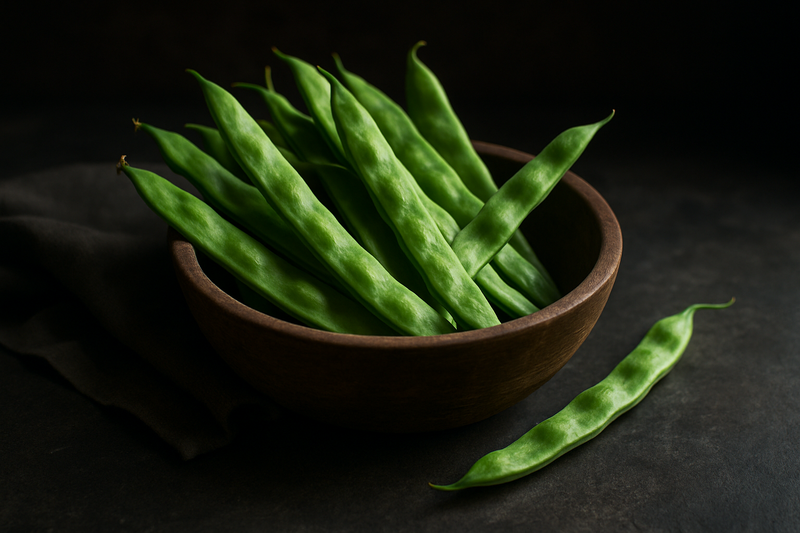
Romano Beans · Photograph
Discover the Romano beans health benefits backed by nutrition science — from heart and gut support to blood sugar balance. Learn Romano beans nutrition facts, safe cooking tips, and easy ways to add these Italian flat beans to your plate.
Key Nutrients
% Daily Value based on 2,000 cal diet
Key active compounds in Romano beans
- Polyphenols (including flavonoids such as quercetin and kaempferol) — plant compounds with antioxidant properties that may help dampen inflammation and support gut bacteria balance.
- Carotenoids (lutein, beta-carotene) — pigmented molecules that may support eye health and act as antioxidants; present in modest amounts in green snap beans.
- Saponins — naturally occurring glycosides in legumes that may contribute to cholesterol-lowering effects, based on mixed-legume research.
- Resistant starch and fermentable dietary fibers — carbohydrate fractions that bypass digestion in the small intestine and are broken down by bacteria in the colon, producing short-chain fatty acids (SCFAs) that feed gut cells and may help regulate blood sugar and appetite.
- Lectins — carbohydrate-binding proteins that can cause gastrointestinal distress if the beans are eaten raw or undercooked. Thorough cooking inactivates them fully, making cooked Romano beans safe for most people.
- Folate (vitamin B9) — a B vitamin essential for DNA synthesis and healthy red blood cell production.
Prep and pairing ideas
Romano beans are forgiving in the kitchen. Here are three practical pairings that highlight their versatility:
1. Romano beans + tomato + garlic (classic braise) Slow-cooking Romano beans in crushed tomatoes with garlic, olive oil, and a pinch of chilli transforms them into a silky, intensely flavored side or pasta sauce. The long cook time also fully deactivates any residual lectins and softens the pods until they are almost spoonable. The tomato adds lycopene (an antioxidant) and vitamin C, which also helps your body absorb more of the iron in the beans.
2. Romano beans + olive oil + lemon (blanch-and-dress) Blanch trimmed pods in salted boiling water for 4–6 minutes until just tender, then shock in cold water to preserve the green color. Dress while still slightly warm with extra-virgin olive oil, lemon juice, flaky salt, and shaved Parmesan or toasted pine nuts. The fat in olive oil helps your body absorb the fat-soluble carotenoids in the beans.
3. Romano beans + whole grains (grain bowl base) Combining Romano beans with a cooked whole grain like farro, barley, or brown rice creates a complementary amino acid profile — each contributes different essential amino acids that together give you a more complete plant protein. This pairing also makes a satisfying, fiber-rich meal that keeps blood sugar steadier than either food alone.
Basic prep: Wash, snap off the stem ends, and remove any tough strings from older pods. Beans do not need to be presoaked. Cook until fully tender — no crunching.
Bottom line
Romano beans are a low-calorie, fiber-rich, folate-containing whole plant food that fits easily into a heart-healthy, blood-sugar-friendly, and gut-supportive eating pattern. They are not a superfood with miraculous properties, but the evidence for legumes as a group is genuinely solid — and Romano beans carry the same nutritional signature that makes the broader family worth eating regularly.
The single most important practical tip: cook them fully. Everything else — which cooking method, how often, what to pair them with — is flexible and up to your taste.
Looking to build a more complete picture of your eating goals? Browse Plantopedia's plant-based goals guides to see how Romano beans can fit into a broader approach to eating for energy, heart health, or weight management.
How Romano Beans Compares
| Compared with | What's different |
|---|---|
| Romano Beans vs. Green Beans (String Beans) | Romano beans are wide and flat with a meatier texture, while green beans are thin and cylindrical. |
| Romano Beans vs. Wax Beans | Yellow wax beans have a milder flavor and waxy skin; Romano beans are sweeter and more robust. |
Health Benefits
Things to Know
Cook thoroughly, always.: Raw or undercooked Romano beans contain active lectins that can cause nausea, vomiting, and diarrhea. Steaming, blanching, sautéing, or braising until fully tender deactivates lectins. Avoid relying on a slow cooker set to "low" for dry beans — the temperature may never reach a full boil, leaving lectins partially active. Bring dry beans to a hard boil for at least 10 minutes before simmering.
Gradual introduction for gut comfort.: If beans currently cause you gas or bloating, start with ½ cup cooked and increase portion size slowly over several weeks.
IBS and FODMAP sensitivity.: Romano beans are fermentable (they contain oligosaccharides that qualify as FODMAPs — fermentable carbohydrates that can trigger symptoms in sensitive individuals). People following a low-FODMAP diet should introduce beans cautiously and in small amounts.
Kidney disease.: Beans contribute potassium. If you are on a potassium-restricted diet for chronic kidney disease, check with your dietitian about how beans fit into your daily potassium budget.
Warfarin (blood thinner) users.: Beans provide vitamin K, which influences how warfarin works. You do not need to avoid beans, but consistency of intake matters — large swings in vitamin K from week to week can make anticoagulant levels unpredictable. Discuss any dietary changes with your prescriber.
Antidiabetic medications.: Because beans lower postprandial (after-meal) blood glucose, people on insulin or sulfonylureas who significantly increase bean intake should monitor blood glucose and work with their care team to adjust medication doses if needed.
Legume allergy.: If you have had reactions to peanuts, soy, or other beans, use caution when trying Romano beans and seek medical advice if you are unsure.
Pregnancy.: Folate needs are elevated during early pregnancy; Romano beans contribute folate but are not a substitute for prenatal folic acid supplementation as recommended by your midwife or doctor.
Shop This Ingredient
Stock your pantry with quality romano beans.
Buy on AmazonAs an Amazon Associate, Plantopedia earns from qualifying purchases. This costs you nothing extra and helps us keep the encyclopedia free.
Frequently Asked Questions
The evidence base for Romano beans specifically is thin — most human trials study mixed legumes (beans, lentils, chickpeas, peas) rather than one variety in isolation. That said, Romano beans share the nutritional profile responsible for legumes' well-documented effects, so the findings translate reasonably well. Heart and circulation Are Romano beans good for heart health? The short answer is: probably yes, as part of a broader legume habit. Observational studies and clinical trials show that eating legumes roughly 3–4 times per week is associated with lower LDL ("bad") cholesterol, modest reductions in blood pressure, and reduced risk of coronary heart disease and stroke — particularly when beans replace foods higher in saturated fat. The likely drivers are soluble fiber (which binds to cholesterol in the gut), plant protein, potassium (which supports healthy blood pressure), and the very low saturated fat content of beans. Romano beans tick all those boxes. Evidence is graded as moderate — driven by mixed-legume cohort studies and meta-analyses rather than trials on Romano beans alone. Digestive health and microbiome Romano beans benefits for digestion are among the better-supported claims for legumes as a group. Dietary fiber adds bulk to stools, supports regularity, and may reduce the risk of diverticular disease over time. More interestingly, the fermentable fibers and resistant starch in beans act as prebiotics — food sources for beneficial gut bacteria. When those bacteria break down these fibers, they produce short-chain fatty acids (SCFAs) like butyrate, which nourish the cells lining your colon and may reduce gut inflammation. One practical caveat: if you are not used to eating beans regularly, increasing intake too quickly often causes gas and bloating. Starting with a smaller portion (½ cup cooked) and building up over several weeks gives your gut microbiome time to adapt. Blood sugar and metabolism Beans and legumes consistently show a low glycemic index — meaning they cause a slower, gentler rise in blood glucose compared with refined carbohydrates like white bread or white rice. Clinical trials in people with and without type 2 diabetes suggest that one daily serving of mixed legumes can modestly improve HbA1c (a long-term blood sugar marker) and fasting glucose when substituted for higher-glycemic staples. The mechanism involves several factors working together: dietary fiber slows digestion, protein blunts the glucose spike, and resistant starch escapes digestion in the small intestine entirely. Romano beans and blood sugar control is a reasonable evidence-backed claim — but benefits are strongest when beans replace high-glycemic foods rather than being piled on top of an otherwise sugar-heavy diet. Inflammation and recovery Research on legumes and inflammation is still emerging. Observational cohort studies find that people who eat beans regularly tend to have lower levels of C-reactive protein (CRP), a blood marker of chronic low-grade inflammation. Some small intervention studies using mixed beans show modest CRP reductions. The polyphenols, fermentable fibers, and magnesium in Romano beans may all play a role, but direct trials on Romano beans and inflammatory markers do not yet exist.
Buying guide Fresh pods are the classic form: look for pods that are firm, bright green or yellow-green (a purple variety also exists), and free of soft spots or browning. Fresh Romano beans have a distinctly wider and flatter pod than regular green beans — that's your visual cue. Peak season is summer through early autumn. Frozen pods are blanched before freezing, which preserves most of the fiber and a good portion of the vitamins. They cook from frozen and are a convenient year-round option. Check that the ingredient list is just beans — no added salt or sauce. Canned Romano/Roman beans typically contain the mature dried seed rather than the immature pod. They are nutritionally similar to home-cooked dried beans — higher in protein and calories than fresh pods — but watch for sodium in the brine. Drain and rinse canned beans to cut sodium by roughly 40%. Label tip: "Romano," "Roman," and "cranberry bean" are sometimes used interchangeably on cans. The mature seed form is nutritionally distinct from the fresh snap bean pod, so check what you are buying before cooking.
Human studies on legumes and health outcomes generally use about ¾–1½ cups of cooked beans per day, or at least 3–4 servings per week, as the threshold where consistent benefits appear in the data. For Romano beans as fresh pods, a practical single serving is ½–1½ cups cooked (roughly 75–225 g), a few times per week as part of your total legume intake. If you are new to beans, start at the lower end — ½ cup cooked a few times per week — and build up over several weeks. There is no firm upper limit for healthy adults, but very large portions will increase gas production and may temporarily loosen stools until your gut adapts. The "more is better" principle does not apply linearly here. The research suggests that going from zero servings to 3–4 per week produces the most meaningful health gains. Going from 3 to 6 per week adds less marginal benefit, while any amount greater than none is still a step in the right direction.
Quick Answers
Common questions, answered in a line.
You must cook Romano beans thoroughly until they are fully tender to inactivate lectins, which can cause nausea and vomiting if eaten raw. Steaming, blanching, sautéing, or braising are effective methods, but avoid using a slow cooker on "low" as it may not reach the temperature required to neutralize these proteins.
Romano beans contain fermentable fibers and resistant starch that act as prebiotics, feeding beneficial gut bacteria and producing short-chain fatty acids. To avoid gas or bloating, it is recommended to start with a small half-cup portion and increase your intake gradually over several weeks.
Yes, Romano beans can help regulate blood sugar because their fermentable dietary fibers and resistant starch slow down digestion and lower post-meal glucose levels. If you are taking antidiabetic medications like insulin, you should monitor your glucose levels closely when increasing your bean intake.
Romano beans are rich in folate (vitamin B9), polyphenols like quercetin, carotenoids for eye health, and saponins that may help lower cholesterol. These compounds provide antioxidant and anti-inflammatory properties that support heart health and DNA synthesis.
To prepare Romano beans, wash them, snap off the stem ends, and remove any tough strings from older pods before cooking. They do not require pre-soaking and can be blanched for 4–6 minutes or slow-cooked in a tomato sauce until they are completely soft and "spoonable."
People with a legume allergy, those on a low-FODMAP diet for IBS, or individuals on potassium-restricted diets for kidney disease should use caution with Romano beans. Additionally, because they contain Vitamin K, people taking blood thinners like Warfarin should maintain a consistent intake to avoid interfering with their medication.
For Readers in the USA
Local context — sourcing, seasonality, and regional notes.
Romano beans are typically in season in the United States from mid-summer through early fall, generally between July and September. During these months, you are most likely to find them at local farmers markets in cooler climates or southern growing regions as they thrive in warm, but not scorching, temperatures.
In the US, you can find Romano beans at specialty grocers like Whole Foods, international markets (especially Italian or Mediterranean), and increasingly at large chains like Kroger or Safeway during the summer. If they aren't in the fresh produce aisle, check the frozen section where they are often labeled as 'Italian flat beans.'
Look for the USDA Organic seal to ensure Romano beans were grown without synthetic pesticides or fertilizers, following strict federal standards. While the 'Clean Fifteen' often includes domestic green beans, purchasing organic Romano beans is a common choice for consumers looking to minimize environmental impact and pesticide residue.
While 'Romano' is the most common US name, these are also frequently sold as 'Italian flat beans' or 'broad beans' in American supermarkets. They are distinct from the 'Kentucky Wonder' pole bean, though both are popular in home gardens across the Midwest and Southern United States.
AI Clinical Review
- Clearly explains that Romano beans are fresh snap beans (immature pods) that are low in calories and provide fiber, folate, vitamin C, potassium, and modest plant protein.
- Aligns with human research on legumes: regular intake is linked to lower LDL cholesterol, better glycemic control when legumes replace higher‑glycemic foods, and support for a healthier gut microbiome via fermentable fibers and resistant starch.
- Emphasizes safe preparation: lectins in raw/undercooked beans are inactivated by thorough cooking; the advice to boil dried beans before simmering and to avoid low‑temp slow cookers is sound.
- Offers practical pairing tips that enhance nutrient use (e.g., vitamin C to boost non‑heme iron absorption; olive oil fat to aid carotenoid absorption).
- Most data cited come from mixed‑legume studies, not specifically Romano snap beans; benefits are inferred and likely modest per serving of fresh pods.
- Cardiometabolic effects depend on displacement: snap beans are very low in available carbohydrate, so direct blood‑sugar effects are small; improvements arise mainly when legumes replace refined starches.
- Anti‑inflammatory findings (e.g., CRP reductions) are inconsistent and generally small across studies; stronger trials are needed.
- Nutrient values (especially folate and iron) vary by cultivar, growing conditions, and cooking method; expect database differences and some loss with boiling.
- Practical intake: 1/2–1 1/2 cups cooked fresh pods per serving, a few times weekly, is reasonable; increase gradually if you’re not used to legumes to limit gas/bloating.
- Form matters: fresh/frozen Romano pods differ nutritionally from canned “Roman/cranberry” mature beans (the latter are higher in calories, protein, starch, and often sodium). Rinse canned beans to reduce sodium.
- Who should check in with a clinician: people on warfarin (keep vitamin K intake consistent), those with chronic kidney disease managing potassium, and individuals on insulin or sulfonylureas (monitor for lower post‑meal glucose if intake rises).
- IBS/low‑FODMAP: tolerance varies; smaller portions and slow increases often help. Cook pods until fully tender; tender‑crisp is fine if cooked through, but avoid eating them raw.
Cook fully before eating.
References
- USDA FoodData Central — snap beans and cranberry beans entries (fdc.nal.usda.gov)
- Harvard T.H. Chan School of Public Health Nutrition Source — Legumes and Pulses overview (nutritionsource.hsph.harvard.edu)
- Romano beans fresh product nutritional values per 100 g — Darta (darta.com)
- Cooked cranberry (Roman) beans nutrition facts — MyFoodData (tools.myfooddata.com)
- Green Romano beans produce profile and culinary description — Specialty Produce (specialtyproduce.com)
- What are Romano beans and how are they best cooked? — Tasting Table (tastingtable.com)
- Romano beans cooking methods and preparation tips — Green Plate Pursuits (greenplatepursuits.com)
- Community discussion of lectins and undercooked flat beans — Reddit r/Cooking (reddit.com)
- Systematic review and meta-analysis: legume intake and cardiometabolic risk factors in humans (nutritionsource.hsph.harvard.edu)
- NIH National Center for Complementary and Integrative Health — general guidance on dietary supplements and whole foods (nccih.nih.gov)
Know Your Numbers
Eating healthy is a start. Now get to know your biomarkers.
Food changes bloodwork — inflammation, lipids, blood sugar and nutrient status all respond to what you eat. 59 markers from $59.
- Results in 7–10 days at 2,000+ Quest sites
- Licensed provider reviews every result
- One flat price, no membership, HSA/FSA eligible
Educational information only, not medical advice. Panels are ordered and reviewed through our licensed partner; Plantopedia may earn a commission.