Salmonberry — health benefits and uses
A staple Indigenous food of the Pacific Northwest coast.
The Short Answer
Salmonberries are edible wild fruits rich in Vitamin K and Manganese, offering 47 calories and 1.9 grams of fiber per cup. They are best known for their high antioxidant content and traditional use in Pacific Northwest foraging.
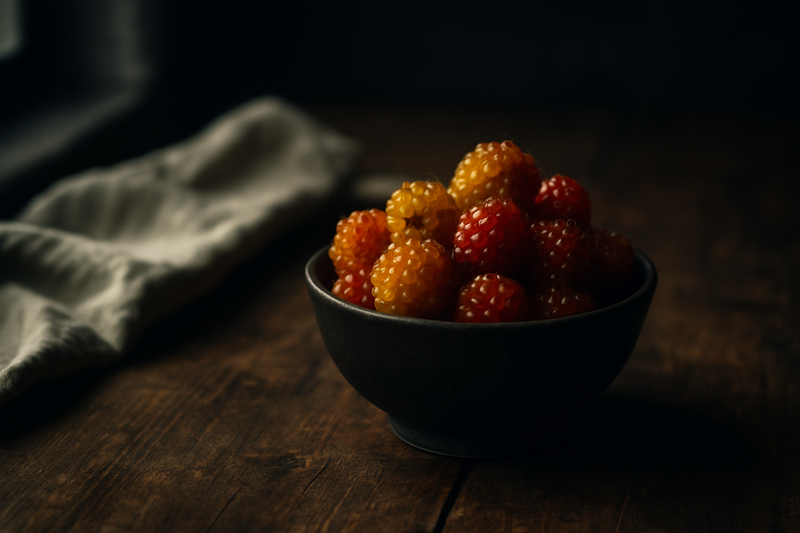
Salmonberry · Photograph
Discover salmonberry health benefits, nutrition facts, and safe foraging tips for this golden-to-red Pacific Northwest wild berry. Learn how salmonberry's vitamin C, manganese, fiber, and antioxidants fit into a whole food plant-based diet.
Key Nutrients
% Daily Value based on 2,000 cal diet
Key active compounds in salmonberry
These are the phytochemicals (plant-made compounds with biological activity) that give salmonberry much of its nutritional character.
- Anthocyanins — Water-soluble pigments in the flavonoid family responsible for red and golden hues. In research on other berries, anthocyanins have shown anti-inflammatory, vascular-protective, and blood-sugar-moderating effects. Salmonberries contain them, though exact concentrations have not been formally published.
- Ellagic acid — A polyphenol (a broad class of plant compounds with antioxidant properties) formed from compounds called ellagitannins. Common across Rubus species; associated with antioxidant and potential chemopreventive (cancer-risk-reducing) effects in preclinical studies.
- Flavonoids (general) — A large family of plant polyphenols including flavonols and flavones. Associated in population studies with better endothelial (blood-vessel lining) function and lower cardiovascular risk.
- Carotenoids (provitamin A) — Fat-soluble pigments that the body can convert to vitamin A. Salmonberry is a notably better source of provitamin A than many other berries. Carotenoids support vision, immune function, and skin integrity.
- Tannins — Astringent polyphenols found especially in salmonberry leaves and bark. Tannins can tighten tissues and have antimicrobial properties; they are the basis for many traditional uses of salmonberry leaves for gut complaints.
Prep and pairing ideas
Salmonberries are delicate and best eaten within a day or two of picking. Here are three practical pairings:
Salmonberries + rolled oats + hemp seeds A classic whole-food breakfast. The oats add beta-glucan fiber to further support cholesterol and gut health; hemp seeds contribute omega-3 fatty acids and protein. The berries provide the antioxidant hit and natural sweetness with no added sugar needed.
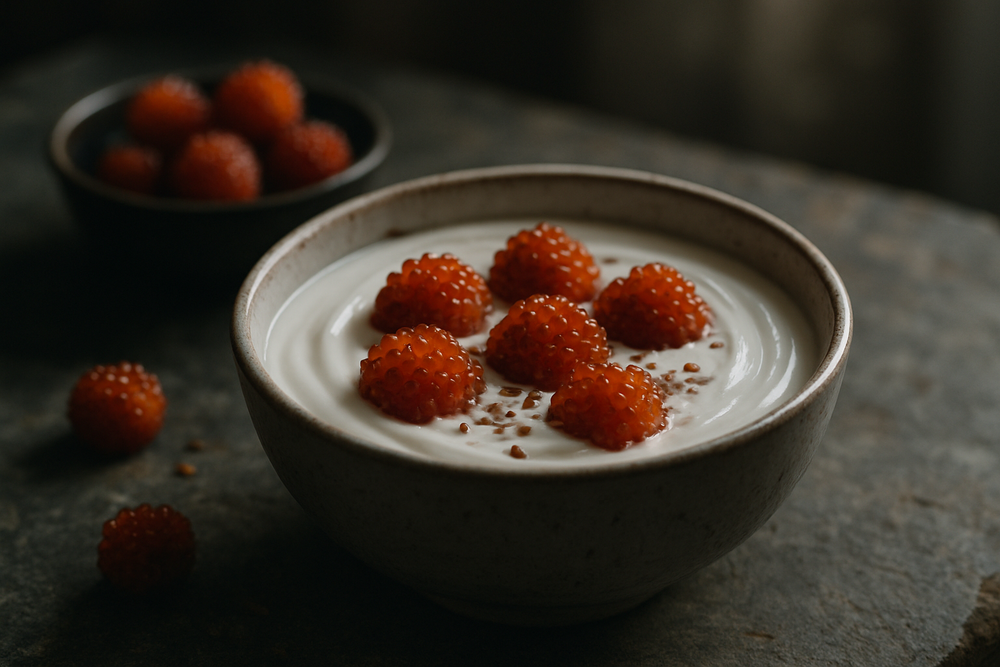
Salmonberries + plain unsweetened yogurt (or plant-based yogurt) + a drizzle of flaxseed Pairing with a probiotic-rich base doubles down on gut microbiome support. The small amount of fat from flaxseed also helps absorb the fat-soluble carotenoids in the berries.
Salmonberries + spinach + cucumber + lemon juice (smoothie or salad) Vitamin C from the berries enhances non-heme iron absorption from leafy greens — a useful pairing for anyone eating a predominantly plant-based diet. Lemon juice provides additional vitamin C and brightens flavor.
To store: refrigerate fresh berries in a single layer on a paper-towel-lined tray and use within 1 to 2 days. For longer storage, freeze in a single layer on a baking sheet, then transfer to a container.
Bottom line
Salmonberry is a nutritionally solid wild fruit with a standout manganese content, a well-rounded antioxidant vitamin profile, and a long history of traditional use across coastal Indigenous cultures. The direct human clinical evidence for salmonberry-specific effects is thin — but the indirect evidence from broader fruit and berry research supports eating it as part of a diverse, plant-rich diet for heart health, gut health, and overall wellbeing.
The most evidence-aligned way to eat salmonberries is simple: pick them fresh (correctly identified), eat them raw or freeze them for later, and include them alongside other colorful fruits and vegetables. Skip the concentrated leaf or bark preparations unless working with a knowledgeable herbalist or healthcare provider.
Looking to build a broader anti-inflammatory or heart-supportive eating pattern? Explore the Plantopedia [/goals] section for ingredient combinations and dietary approaches backed by the same evidence-first approach.
How Salmonberry Compares
| Compared with | What's different |
|---|---|
| Salmonberry vs. Raspberry | Salmonberries are more tart and watery with a softer, hollow-core structure. |
| Salmonberry vs. Blackberry | Salmonberries are significantly softer and less sweet than firmer, seeded blackberries. |
| Salmonberry vs. Cloudberry | Salmonberries have a milder, more acidic flavor and contain more provitamin A. |
Health Benefits
Things to Know
Correct identification when foraging is essential.: Salmonberry canes have distinctive pink-to-magenta blossoms and compound leaves. The ripe berry looks like an oversized, golden-to-red raspberry. If you are new to foraging, learn from an experienced guide or use a well-reviewed regional field guide before eating any wild berry.
Vitamin K content and anticoagulants.: At 14.8 mcg of vitamin K per 100 g, salmonberries are a moderate source of this vitamin. People on warfarin or other anticoagulants (blood thinners) should keep their vitamin K intake consistent from week to week rather than abruptly eating large amounts.
Blood sugar medications.: Like any fruit, salmonberries contain carbohydrates. If you use insulin or oral glucose-lowering drugs, account for berries in your meal plan and monitor blood sugar as needed.
Berry or fruit allergies.: People with known allergies to other Rubus species (raspberries, blackberries) may react to salmonberries similarly.
Pregnancy and breastfeeding — for leaf or bark preparations only.: Eating the ripe fruit in normal quantities is not flagged as a concern. However, traditional leaf and bark preparations have been used to affect uterine tissue — these preparations lack safety data and should be avoided during pregnancy unless supervised by a qualified provider.
Iron overload or manganese metabolism disorders.: Salmonberries contribute moderate manganese. For most people, food-level intake is not a concern, but individuals with conditions affecting manganese or iron clearance should discuss inclusion with their care team.
No specific drug interactions are clinically documented: for the fruit itself beyond the nutrient-level considerations above.
Shop This Ingredient
Stock your pantry with quality salmonberry.
Buy on AmazonAs an Amazon Associate, Plantopedia earns from qualifying purchases. This costs you nothing extra and helps us keep the encyclopedia free.
Frequently Asked Questions
Heart and circulation No randomized trials have tested salmonberries directly for heart outcomes. What we do have is strong evidence from large prospective cohort studies and meta-analyses showing that eating more fruit — including berries — is linked to meaningfully lower rates of coronary heart disease, stroke, and cardiovascular death. One meta-analysis found that more than 5 servings of fruit and vegetables per day was associated with roughly 17% lower coronary heart disease risk compared with fewer than 3 servings. Another study linked 2 or more daily fruit servings to a 38% lower cardiovascular disease risk in young adults. Salmonberries contribute fiber, potassium, vitamin C, vitamin E, and polyphenols — all nutrients that align with heart-protective dietary patterns. The fiber and potassium can help support healthy blood pressure; polyphenols like anthocyanins may support vascular function and reduce LDL cholesterol oxidation (oxidized LDL is a marker of cardiovascular damage). These are plausible mechanisms, not proven effects specific to salmonberry. Digestive health and gut microbiome Dietary fiber is the key player here. The approximately 1.9 g of fiber per 100 g of salmonberries — plus the fruit's high water content — contributes to normal bowel regularity and supports the gut microbiome (the community of bacteria living in your intestines). Larger bodies of research on fiber-rich whole plant foods consistently show improvements in stool bulk, decreased constipation, and a more diverse microbiome linked to lower risks of obesity and metabolic disease. Traditionally, Indigenous communities of the Pacific Northwest used salmonberry leaves and bark as tea to address diarrhea, dysentery, and stomach discomfort. These uses are well-documented in ethnobotanical records and are consistent with the tannin content of the leaves — tannins have astringent properties that can calm irritated gut tissue. However, these traditional uses have not been tested in controlled clinical trials, so they remain observational. Blood sugar and metabolism Salmonberries are low in calories and relatively low in sugar (roughly 3.7 to 5 g per 100 g), giving them a low glycemic load (a measure of how much a food raises blood sugar, taking portion size into account). Human trials with other anthocyanin-rich berries — such as blueberries, strawberries, and chokeberries — show modest improvements in post-meal blood sugar, insulin sensitivity, and related metabolic markers. Whether those findings translate to salmonberries is unknown. What is clear is that as a whole fresh fruit, salmonberries are a reasonable choice for most people managing blood sugar, especially compared with refined snacks or sweetened berry jams. People on glucose-lowering medications should still count berries toward their daily carbohydrate targets. Salmonberry's high manganese content is also worth noting here. Manganese is a cofactor in manganese superoxide dismutase, an antioxidant enzyme involved in protecting cells from oxidative stress, and it plays a role in carbohydrate metabolism. Whether the manganese in a serving of salmonberries meaningfully shifts metabolic outcomes has not been studied. Inflammation and recovery Research with several berry types (blueberries, strawberries, blackberries, chokeberries) demonstrates reductions in inflammatory biomarkers — including oxidized LDL and pro-inflammatory cytokines (signaling proteins that drive inflammation) — after regular berry consumption. Salmonberries have not been tested in equivalent human studies, but they contain the same classes of antioxidant compounds: anthocyanins, ellagic acid, vitamin C, and vitamin E. These can neutralize free radicals (unstable molecules that damage cells) and may modulate inflammatory pathways based on in vitro (laboratory cell) research. The reasonable framing: salmonberries are one of many antioxidant-rich fruits that may support an anti-inflammatory dietary pattern when eaten regularly alongside other colorful fruits and vegetables.
Fresh, raw berries are the gold standard. Vitamin C and delicate polyphenols are best preserved without heat, and fresh whole fruit aligns directly with dietary guidelines for fruit intake. Salmonberries ripen from late spring through mid-summer along coastal North America; their season is short. Frozen berries are a practical year-round alternative. Freezing preserves most vitamins and polyphenols very well — often better than storing fresh berries at room temperature for several days. Use frozen salmonberries in smoothies, oat bowls, or sauces. Cooked preparations (jams, jellies, syrups, pies) are delicious but come with trade-offs. Heat degrades vitamin C, and added sugar increases calorie density and glycemic load. If you make or buy salmonberry jam, treat it as a condiment rather than a main fruit serving. Dried berries and extracts appear in some preclinical research on antioxidant and anti-inflammatory properties, but no human dosing guidelines exist for salmonberry supplements. Standardization is unclear, and there is no established therapeutic dose. Leaf tea and bark decoctions have a long ethnobotanical history for gastrointestinal and other complaints, but safety and dosing have not been studied in clinical trials. These preparations are not recommended as replacements for medical care, especially in pregnancy or chronic illness.
The outdoor enthusiast or forager Looking for a genuinely wild, whole, minimally processed food Wants to connect seasonal eating with regional ecology Benefits from salmonberry's short but accessible harvest window along Pacific coast trails The fiber- and antioxidant-focused plant-based eater Rotating through multiple berry types each week to diversify polyphenol intake Wants to hit daily fruit targets without added sugar Can use frozen salmonberries year-round in smoothies and oat bowls when fresh is unavailable
There is no established therapeutic dose for salmonberries as a supplement or medicine. As a food, a practical and evidence-aligned target is ½ to 1 cup of fresh or frozen salmonberries (about 75 to 150 g) as part of an overall daily fruit intake of 1½ to 2 cups recommended for most adults by USDA MyPlate. Human studies on fruit and cardiovascular outcomes typically assess intake at around 160 g or more per day from a variety of fruits — not salmonberries alone. The clearest takeaway from that research is that variety and consistency across all fruit types matters more than any single berry. Start with a small handful if your gut is unaccustomed to high-fiber foods or wild berries, and increase gradually. Most people tolerate salmonberries easily.
Quick Answers
Common questions, answered in a line.
Salmonberries are an excellent source of manganese, vitamin C, fiber, and provitamin A (carotenoids). They also contain beneficial plant compounds like anthocyanins, ellagic acid, and flavonoids, which support heart and immune health.
Salmonberry is a notably better source of provitamin A (carotenoids) than many other berries. These fat-soluble pigments are essential for supporting healthy vision, immune function, and skin integrity.
Salmonberries contain approximately 14.8 mcg of vitamin K per 100 grams, which is considered a moderate amount. Because vitamin K can affect blood clotting, people on anticoagulants like warfarin should maintain a consistent intake rather than eating large amounts suddenly.
To store salmonberries, refrigerate them in a single layer on a paper-towel-lined tray and consume them within one to two days. For long-term storage, freeze the berries in a single layer on a baking sheet before transferring them to a sealed container.
Pregnant individuals should avoid salmonberry leaf and bark preparations because they have traditionally been used to affect uterine tissue. While eating the ripe fruit in normal quantities is generally not a concern, these specific medicinal preparations lack safety data.
Salmonberries are delicate and best paired with whole foods like rolled oats, hemp seeds, or unsweetened yogurt. Pairing them with leafy greens and lemon juice is also recommended, as the vitamin C in the berries helps your body absorb iron from the greens.
A ripe salmonberry looks like an oversized, golden-to-red raspberry and grows on canes with distinctive pink-to-magenta blossoms. It is essential to use a regional field guide or an experienced guide for correct identification before consuming any wild berries.
For Readers in the USA
Local context — sourcing, seasonality, and regional notes.
Salmonberries grow natively along the West Coast of the United States, stretching from the moist coastal forests of Alaska down through Washington and Oregon to Northern California. They are most commonly found in the Pacific Northwest’s temperate rainforests and near stream banks.
In the Pacific Northwest, salmonberry season typically begins in early to mid-May and can last through late July depending on elevation and latitude. They are often the first wild berries to ripen in the spring, earned them the nickname 'the herald of summer.'
Salmonberries are rarely found in major US grocery chains like Safeway or Kroger because they are too delicate for commercial shipping and have a very short shelf life. Your best chance to find them is at local farmers markets in Washington or Oregon, or by foraging them yourself.
The salmonberry holds deep cultural and nutritional significance for Indigenous peoples of the Pacific Northwest Coast, who have traditionally harvested both the berries and the young sprouts. Many tribes historically used the berries in ceremonies or mixed them with salmon roe.
AI Clinical Review
- Positions salmonberry as a nutritious, low‑calorie whole fruit with meaningful manganese plus vitamins C, E, and K; this aligns with general fruit-as-disease‑risk–reducing evidence.
- Clearly distinguishes between indirect evidence from other berries and the limited salmonberry‑specific data, which is an accurate reflection of the literature.
- Practical advice on forms is sound: fresh or frozen best preserve vitamin C and polyphenols; cooked, sugary preparations raise calories and glycemic load.
- Sensible guidance for cardiometabolic health: whole berries can fit into diabetes care plans and heart‑healthy patterns when counted toward daily fruit portions.
- Few or no human trials have tested salmonberry specifically; most proposed benefits are extrapolated from other Rubus berries or mixed‑fruit studies.
- Key phytochemical amounts (for example, anthocyanins and carotenoids) haven’t been consistently quantified in salmonberry, and levels likely vary by color, ripeness, and growing site.
- Reported nutrition values for wild foods can fluctuate more than for cultivated berries; fiber and sugar figures should be viewed as ranges rather than fixed numbers.
- Mechanistic claims about blood sugar, inflammation, or lipid oxidation are plausible but remain inference until salmonberry‑focused human studies are done.
- Reasonable food range: about ½–1 cup (≈75–150 g) as part of the 1½–2 cups/day total fruit most adults are advised to eat. Introduce gradually if you’re not used to higher‑fiber fruits.
- Vitamin K is moderate; if you take warfarin or similar anticoagulants, keep vitamin K intake steady week to week rather than making sudden changes.
- If you use insulin or other glucose‑lowering medicines, count salmonberries toward your carbohydrate plan; choose fresh or frozen over jams/syrups.
- Foragers and those with allergies to raspberries/blackberries should be cautious: ensure correct plant identification and consider potential cross‑reactivity. Avoid leaf/bark teas in pregnancy or chronic illness due to limited safety data; people with rare disorders affecting manganese clearance should discuss intake with their clinician.
Correct identification matters when foraging; ripe berries are safe.
References
- USDA FoodData Central — salmonberry raw nutritional data (fdc.nal.usda.gov)
- University of Alaska Fairbanks Cooperative Extension — Salmonberries traditional food reference (uaf.edu)
- USDA MyPlate — Fruit group daily intake recommendations (myplate.gov)
- Nutrient composition review of selected Rubus berries (University of Wollongong) (ro.uow.edu.au)
- Horticulture Innovation Australia — Literature review of health claims for Rubus species (horticulture.com.au)
- Whole Fruits and Fruit Fiber: Emerging Health Effects (PMC review) (pmc.ncbi.nlm.nih.gov)
- Fruits for Prevention and Treatment of Cardiovascular Diseases (PMC review) (pmc.ncbi.nlm.nih.gov)
- Relation of fruit and vegetable sources with cardiovascular outcomes — AHA systematic review and meta-analysis (ahajournals.org)
- Berries: Anti-inflammatory Effects in Humans (ACS review) (pubs.acs.org)
- WebMD — Health Benefits of Salmonberry (overview) (webmd.com)
Know Your Numbers
Eating healthy is a start. Now get to know your biomarkers.
Food changes bloodwork — inflammation, lipids, blood sugar and nutrient status all respond to what you eat. 59 markers from $59.
- Results in 7–10 days at 2,000+ Quest sites
- Licensed provider reviews every result
- One flat price, no membership, HSA/FSA eligible
Educational information only, not medical advice. Panels are ordered and reviewed through our licensed partner; Plantopedia may earn a commission.