Salsify — health benefits and uses
An old European root valued as a prebiotic, inulin-rich winter vegetable.
The Short Answer
Salsify is a prebiotic-rich root vegetable containing 3.3g of fiber and 380mg of potassium per 100g serving. It is best known for its high inulin content, which supports gut health and helps maintain stable blood sugar levels.

Salsify · Photograph
Discover the salsify health benefits you need to know: how this prebiotic-rich root vegetable supports digestion, blood sugar, and heart health, plus nutrition facts, cooking tips, and who should go slow with it.
Key Nutrients
% Daily Value based on 2,000 cal diet
Key active compounds in salsify root
- Inulin — A soluble, non-digestible fructan (a chain of fructose sugar units). Acts as a prebiotic fiber; does not raise blood glucose significantly; feeds Bifidobacterium and other friendly gut bacteria. Salsify is one of the richer vegetable sources of inulin outside of chicory and Jerusalem artichoke.
- Dietary fiber (total) — About 3.3 g per 100 g, including both soluble and insoluble types. Supports bowel regularity, satiety, and cholesterol management.
- Polyphenols — Plant-based antioxidant compounds (phenolic acids and related molecules) found broadly in root vegetables. Help neutralize free radicals (unstable molecules that can damage cells) and may support the body's natural anti-inflammatory defenses.
- Folate — A B vitamin essential for DNA synthesis and cell division; relevant to heart health via homocysteine metabolism (an amino acid that, at high levels, is linked to cardiovascular risk).
- Potassium — An electrolyte that counterbalances the blood-pressure-raising effects of sodium; salsify has a high potassium-to-sodium ratio.
- Vitamin C — A water-soluble antioxidant that supports immune function and collagen production.
- Copper and manganese — Trace minerals that act as cofactors in antioxidant enzyme systems, including superoxide dismutase (an enzyme that breaks down harmful free radicals inside cells).
Prep and pairing ideas
Salsify + lemon and thyme: After boiling or roasting, finish with fresh lemon juice and thyme. The acidity balances the root's mild sweetness and complements its faint marine note. Lemon also provides additional vitamin C, which helps the body absorb salsify's non-heme (plant-based) iron more efficiently.
Salsify + legumes (white beans or lentils): Combining salsify with legumes creates a high-fiber, complete-protein meal in the WFPB tradition. The inulin from salsify and the resistant starch from beans work synergistically as prebiotics, feeding a broader range of gut bacteria than either food does alone.
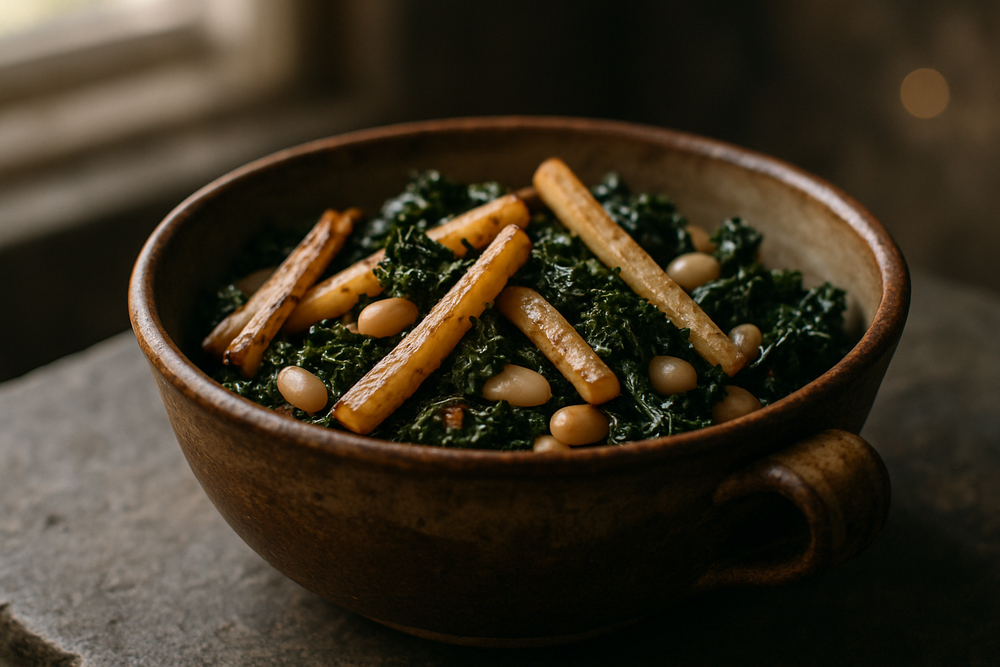
Salsify + dark leafy greens (e.g., kale or spinach): Roasted salsify alongside wilted greens makes a nutrient-dense plate with complementary minerals — salsify brings potassium and manganese; leafy greens add magnesium, vitamin K, and additional folate. This pairing is also visually striking: the pale, golden root against deep green leaves.
Bottom line
Salsify is a genuinely nutritious, under-used root vegetable. Its standout features are its inulin content (which supports gut bacteria and modest blood sugar stability), its potassium-to-sodium ratio (favorable for blood pressure and heart health), and its modest but real contribution of folate, vitamin C, and antioxidant minerals across a range of body systems.
The honest caveat: no clinical trial has tested salsify directly for any health outcome. Its benefits are plausible and grounded in solid research on the nutrients and fibers it contains, but they are not proven by the gold standard of evidence. Think of salsify as a high-value addition to a varied, plant-forward diet rather than a remedy for any specific condition.
It is easy to cook once you get over the sticky peeling step, tastes genuinely interesting, and brings nutritional diversity to a plate that relies heavily on the same handful of root vegetables. That, by itself, is worth something.
How Salsify Compares
| Compared with | What's different |
|---|---|
| Salsify vs. Parsnip | Salsify has a faint oyster-like flavor, whereas parsnips are distinctly sweet and peppery. |
| Salsify vs. Jerusalem Artichoke | Salsify is a true root, while Jerusalem artichoke is a tuber with significantly higher inulin content. |
| Salsify vs. Burdock Root | Salsify has a firmer, creamier texture and a more delicate flavor than the earthy, fibrous burdock. |
Health Benefits
Things to Know
Inulin and gas: Inulin is fermented by gut bacteria, which produces gas as a byproduct. This is normal, but it can cause noticeable flatulence, bloating, or loose stools — especially when you're new to inulin-rich foods or eat a large portion. Start with smaller amounts (50–75 g cooked) and build up over two to three weeks.
IBS and FODMAP sensitivity: Inulin is classified as a FODMAP (Fermentable Oligosaccharides, Disaccharides, Monosaccharides and Polyols) — a group of short-chain carbohydrates that can trigger gut symptoms in people with irritable bowel syndrome (IBS) or SIBO (small intestinal bacterial overgrowth). If you follow a low-FODMAP diet, salsify is likely high-FODMAP and worth avoiding or testing in very small amounts.
Diabetes: Salsify's inulin means its effective glycemic impact is lower than total carb counts suggest, but it is not a free food. Count total carbohydrates in your complete dish, not just the vegetable, and monitor your individual blood glucose response.
Kidney disease: Salsify provides moderate potassium (~380 mg/100 g). People on potassium-restricted diets for advanced chronic kidney disease (CKD) should account for this and discuss vegetable choices with their dietitian.
Asteraceae allergy: Salsify belongs to the same family as ragweed, daisies, and chrysanthemums. People with confirmed allergies to other Asteraceae plants (chamomile, chicory, echinacea) have a small theoretical risk of cross-reactivity, though documented salsify allergy is uncommon.
Medication timing: High-fiber foods can modestly slow the absorption of some oral medications. If you take medication that requires consistent blood levels or must be taken on an empty stomach, space it at least 1–2 hours away from high-fiber meals.
Potassium-sparing diuretics: These medications (e.g., spironolactone) reduce potassium excretion. Adding multiple high-potassium foods simultaneously is worth discussing with a prescriber, though typical salsify servings are unlikely to cause problems in stable patients.
Pregnancy: Salsify's folate content makes it a reasonable pregnancy-friendly vegetable. It poses no known special risks at typical food amounts.
Best Forms
Look for firm, unshriveled roots with no soft spots. Smaller roots (pencil to finger-width) are more tender; very thick roots can be woody in the center. Unwashed roots keep in the fridge crisper drawer wrapped in a damp cloth for up to 2 weeks.
Available in some specialty stores, typically pre-peeled and cooked. Convenient but may have added salt; rinse before using. Inulin content after industrial processing is not well documented.
Rare but available from specialty suppliers; useful if fresh is out of season. Nutritional profile is broadly similar to fresh-cooked.
Fresh salsify sold as "vegetable oyster" or "oyster plant" is the same thing as purple salsify (Tragopogon porrifolius). Black salsify (Scorzonera hispanica) is a closely related root with a darker skin and a very similar nutritional profile and flavor; the two can be used interchangeably.
Glossary
Shop This Ingredient
Stock your pantry with quality salsify.
Buy on AmazonAs an Amazon Associate, Plantopedia earns from qualifying purchases. This costs you nothing extra and helps us keep the encyclopedia free.
Frequently Asked Questions
Bear in mind throughout this section: most evidence below is inferential — drawn from research on inulin and fiber generally, not from clinical trials specifically testing salsify. That distinction matters. It means the potential benefits are plausible and biologically reasonable, not yet proven by gold-standard studies. Heart and circulation Salsify's potassium content (380 mg per 100 g) combined with its near-zero sodium is the headline story for cardiovascular health. High dietary potassium is consistently associated with lower blood pressure in large population studies, and guidelines from organizations like the American Heart Association point to potassium-rich vegetables as part of a heart-healthy eating pattern. Salsify's soluble fiber may also contribute modestly to better cholesterol levels. Human studies on soluble fiber broadly — not salsify specifically — show reductions in total and LDL cholesterol (low-density lipoprotein, sometimes called "bad" cholesterol) at intakes of roughly 5–10 g of soluble fiber per day. A typical 100–150 g serving of salsify contributes a portion of that target. Research suggests this is a "diet quality" benefit rather than a drug-like effect; it works best alongside an overall plant-forward eating pattern. Digestive health and microbiome This is where salsify's inulin content is most directly relevant. Inulin is one of the best-studied prebiotic fibers in human nutrition. Clinical trials using inulin extracted from chicory root — a plant in the same botanical family as salsify — consistently show increases in beneficial Bifidobacterium bacteria, improved stool frequency, and better markers of gut microbiome (the community of microorganisms living in your intestines) diversity at daily intakes around 5–10 g. A 150 g serving of salsify likely provides somewhere in the range of 6–10 g of inulin, putting it in the ballpark of amounts shown to have measurable prebiotic effects. That said, no trial has confirmed this specifically with salsify, and inulin content varies with growing conditions, variety, and cooking method. Eating salsify as part of a varied, fiber-rich diet can reasonably support digestive regularity and a healthy gut environment. Blood sugar and metabolism Inulin's most notable metabolic property is that it does not raise blood glucose or trigger a significant insulin response — it passes through the small intestine intact. This means salsify's effective glycemic load (a measure of how much a food actually raises blood sugar in practice) is lower than its total carbohydrate count suggests. Human studies on inulin-type fructans from other sources show modest improvements in post-meal glucose responses and insulin sensitivity in people with type 2 diabetes and metabolic syndrome. Whether eating salsify specifically produces these effects has not been tested, but the biological pathway is the same. People managing diabetes should still count total carbohydrates in their salsify dishes — especially if the recipe includes added fats, cream, or other carbohydrate sources — and monitor their individual response. Inflammation and recovery Salsify contains vitamin C, manganese, and copper — three nutrients that play direct roles in the body's antioxidant enzyme systems. Chronic low-grade inflammation, driven in part by excess oxidative stress (cellular damage caused by free radicals), is implicated in conditions ranging from cardiovascular disease to metabolic syndrome. Diets rich in antioxidant-containing vegetables are associated with lower inflammatory markers in population studies, though no study has singled out salsify as an anti-inflammatory food. The polyphenol compounds in salsify are not well characterized compared to, say, berries or olive oil, but they add to the broader antioxidant package that comes with eating a colorful, plant-diverse diet.
Salsify is almost always eaten cooked. The raw root is edible but starchy, fibrous, and quite astringent (sharp, drying taste). Cooking softens the texture and brings out its mild, slightly sweet, faintly oyster-like flavor. Boiled or simmered: The simplest approach. Peel, cut into batons or coins, and simmer in lightly salted water for 15–20 minutes until fork-tender. Serve as a side vegetable or add to soups and stews. This method preserves fiber and inulin well, though some vitamin C will leach into the cooking water. Roasted: Cut peeled roots into even pieces, toss with a little olive oil and seasoning, and roast at 200 °C (400 °F) for 25–30 minutes until golden. Roasting concentrates the natural sweetness and gives a slightly caramelized edge. Fiber and inulin survive roasting well. Puréed: Salsify can be blended with a little butter or olive oil into a smooth purée — elegant as a restaurant-style side dish and a great way to introduce the flavor to skeptical diners. Gratins and mixed dishes: Salsify works well layered in gratins alongside other root vegetables. Note that cream- or cheese-heavy gratin recipes add significant calories and saturated fat, which partly offsets the vegetable's natural heart-friendly profile. A note on raw prep: The freshly peeled root releases a sticky, milky sap (a latex-like fluid produced by the plant). This sap discolors in the air and clings to hands and knives. Standard culinary advice: peel salsify into a bowl of acidulated water — water with a squeeze of lemon juice or a splash of vinegar — and drop the peeled pieces in immediately. This prevents browning and reduces stickiness. Wearing kitchen gloves during peeling is also practical. Buying and storing guide: Fresh roots: Look for firm, unshriveled roots with no soft spots. Smaller roots (pencil to finger-width) are more tender; very thick roots can be woody in the center. Unwashed roots keep in the fridge crisper drawer wrapped in a damp cloth for up to 2 weeks. Canned or jarred: Available in some specialty stores, typically pre-peeled and cooked. Convenient but may have added salt; rinse before using. Inulin content after industrial processing is not well documented. Frozen: Rare but available from specialty suppliers; useful if fresh is out of season. Nutritional profile is broadly similar to fresh-cooked. Label tip: Fresh salsify sold as "vegetable oyster" or "oyster plant" is the same thing as purple salsify (Tragopogon porrifolius). Black salsify (Scorzonera hispanica) is a closely related root with a darker skin and a very similar nutritional profile and flavor; the two can be used interchangeably.
There is no established clinical dose for salsify — it is a food, not a supplement — and no regulatory body has set a specific daily recommendation for it. Here is a practical framework based on its composition and general dietary fiber guidance: General food amounts: A typical culinary serving is 100–150 g cooked salsify (roughly one to two medium roots). At this amount, you get approximately 3–5 g of dietary fiber and an estimated 6–10 g of inulin, depending on variety and preparation. For gut health: Human inulin studies suggest measurable prebiotic effects start around 5–10 g of inulin per day. One generous serving of salsify could contribute meaningfully to that range, though you'd be relying on estimates, not lab-tested inulin content. Start low: If salsify is new to you, or if you currently eat a low-fiber diet, start with 50–75 g (about half a medium root, cooked) two to three times a week. Give your gut bacteria two to three weeks to adapt before increasing. This reduces the risk of gas and bloating significantly. No upper limit established: Eating salsify at normal food quantities (up to 200 g per day) is not associated with any known toxicity. The practical limit is digestive comfort — some people tolerate large amounts of inulin without issue; others find anything above a small portion causes noticeable gas. Who benefits most: People rebuilding gut diversity after antibiotics or a low-fiber diet: Inulin from salsify selectively feeds Bifidobacterium and Lactobacillus species depleted by antibiotics. Even one to two servings per week adds meaningful prebiotic variety alongside other fiber sources. Pair with fermented foods (yogurt, kefir, kimchi) for a synbiotic (prebiotics + probiotics together) approach. People managing their cardiovascular risk through diet: Salsify's high potassium and near-zero sodium profile fits directly into dietary patterns like DASH and Mediterranean eating. Its soluble fiber contributes to the daily fiber targets (25–38 g) associated with better cholesterol and blood pressure outcomes. Works well substituted for higher-glycemic root vegetables in familiar recipes.
Quick Answers
Common questions, answered in a line.
Salsify contains high levels of inulin, a prebiotic fiber that feeds beneficial gut bacteria like Bifidobacterium. This soluble fiber supports bowel regularity and helps manage cholesterol, though it may cause gas or bloating in those not used to high-inulin foods.
Salsify provides potassium to counterbalance sodium, folate to manage homocysteine levels, and fiber to support cholesterol management. Together, these nutrients help regulate blood pressure and reduce cardiovascular risk factors.
Salsify contains inulin, a non-digestible fructan that does not significantly raise blood glucose levels. While its effective glycemic impact is lower than many other root vegetables, people with diabetes should still monitor their individual blood glucose response.
Salsify is rich in antioxidants like vitamin C and polyphenols, as well as trace minerals like copper and manganese. These compounds work together to neutralize free radicals and support the body's natural anti-inflammatory defenses.
Salsify is considered a high-FODMAP food because it is rich in inulin, which can trigger symptoms like bloating or gas. People with irritable bowel syndrome (IBS) or SIBO should avoid it or test it in very small amounts.
It is best to start with small portions of 50–75 grams of cooked salsify and gradually increase your intake over two to three weeks. This allows your gut bacteria time to adjust to the high inulin content and helps minimize potential flatulence or bloating.
Salsify is a source of folate (a B vitamin essential for DNA synthesis), potassium, and vitamin C, making it a healthy choice during pregnancy. There are no known special risks associated with eating salsify in typical food amounts while pregnant.
For Readers in the USA
Local context — sourcing, seasonality, and regional notes.
In the United States, you are most likely to find salsify at local farmers markets or specialty retailers like Whole Foods and Wegmans during the late fall and winter months. Because it is a niche crop, it is rarely stocked in conventional supermarkets, though it can often be special-ordered through boutique produce distributors.
Salsify thrives in USDA Hardiness Zones 5 through 9, where the long, cool growing season allows the roots to develop their signature flavor. It is primarily grown as a specialty crop in the Pacific Northwest and parts of the Northeast, with the harvest typically peaking after the first frost in October or November.
While there are no specific FDA mandates for salsify, U.S. consumers should look for the USDA Organic seal to ensure the root was grown without synthetic pesticides. As with all raw root vegetables, the FDA recommends thorough scrubbing under running water to remove soil-borne bacteria before peeling or cooking.
In the U.S., you will typically encounter two distinct varieties: "Black Salsify" (Scorzonera hispanica) and "White Salsify" (Tragopogon porrifolius), the latter of which is often nicknamed "Oyster Plant." While the black variety is prized for its smoother texture, the white variety is a heritage favorite in Southern and Mid-Atlantic heirloom gardening circles.
AI Clinical Review
- Salsify is a fiber- and inulin‑rich root that likely functions as a prebiotic; the piece correctly ties expected gut benefits to the inulin literature rather than to salsify-specific trials.
- The heart-health angle is appropriately framed around potassium and overall diet quality (e.g., DASH-like patterns), not a drug-like effect.
- Blood sugar discussion is balanced: inulin doesn’t raise glucose, but total dish carbohydrates still matter—good guidance for people with diabetes.
- Practical cooking, storage, and “start low” portion advice are accurate and useful for minimizing GI symptoms while preserving fiber.
- No randomized trials have tested salsify itself for outcomes like cholesterol, glycemic control, or microbiome shifts; benefits are inferred from studies of inulin or mixed soluble fiber.
- Reported inulin amounts are estimates and can vary by variety, season, and processing; whole‑food effects may be smaller or more variable than those seen with purified inulin.
- Antioxidant and anti‑inflammatory claims are based on general polyphenol and vitamin C logic; salsify’s specific polyphenol profile and clinical impact remain poorly characterized.
- Effects of canning/jarring on inulin and micronutrient retention are not well documented, so health impacts of these forms are less certain.
- Typical food range: about 100–150 g cooked per serving; if you’re new to inulin, begin with 50–75 g and increase over 2–3 weeks to reduce gas/bloating.
- Who should take extra care: people with IBS/low‑FODMAP needs or SIBO; those with advanced chronic kidney disease or on potassium‑sparing diuretics; individuals with known Asteraceae (ragweed/chamomile/chicory) allergies; people with diabetes should monitor glucose and count total carbs in the full recipe.
- Medication timing: high‑fiber meals can modestly delay absorption—separate certain oral meds by 1–2 hours if advised by your clinician or pharmacist.
- Forms and prep: canned/jarred salsify may contain added sodium (rinse before use); boiling can reduce vitamin C, while fiber and inulin are relatively heat‑stable.
Inulin may cause gas; peel releases a sticky sap, work in acidulated water.
References
- USDA FoodData Central — salsify nutrition data (fdc.nal.usda.gov)
- USDA MyPlate — vegetables group guidance (myplate.gov)
- WebMD — overview of salsify health benefits (webmd.com)
- Nutrition-and-you.com — salsify nutrition facts and health benefits (nutrition-and-you.com)
- Aprifel (European produce nutrition database) — salsify nutritional sheet (aprifel.com)
- Iowa State University Extension — Food of the Week: Salsify (culinary and basic nutrition guide) (extension.iastate.edu)
- Organicfacts.net — benefits of salsify (inulin and fiber overview) (organicfacts.net)
- Wikipedia — Tragopogon porrifolius (botanical and culinary background) (en.wikipedia.org)
- Dovemed — 7 health benefits of salsify (nutrient-based review) (dovemed.com)
- Nutrition and Innovation — salsify nutrition facts and health benefits (nutritionandinnovation.com)
Know Your Numbers
Eating healthy is a start. Now get to know your biomarkers.
Food changes bloodwork — inflammation, lipids, blood sugar and nutrient status all respond to what you eat. 59 markers from $59.
- Results in 7–10 days at 2,000+ Quest sites
- Licensed provider reviews every result
- One flat price, no membership, HSA/FSA eligible
Educational information only, not medical advice. Panels are ordered and reviewed through our licensed partner; Plantopedia may earn a commission.