Serviceberry — health benefits and uses
An Indigenous and early-settler woodland food of eastern North America.
The Short Answer
Serviceberries are highly nutritious fruits containing 4.6 grams of fiber and 85 calories per cup. They are rich in anthocyanin antioxidants and provide significant amounts of Manganese and Vitamin K.
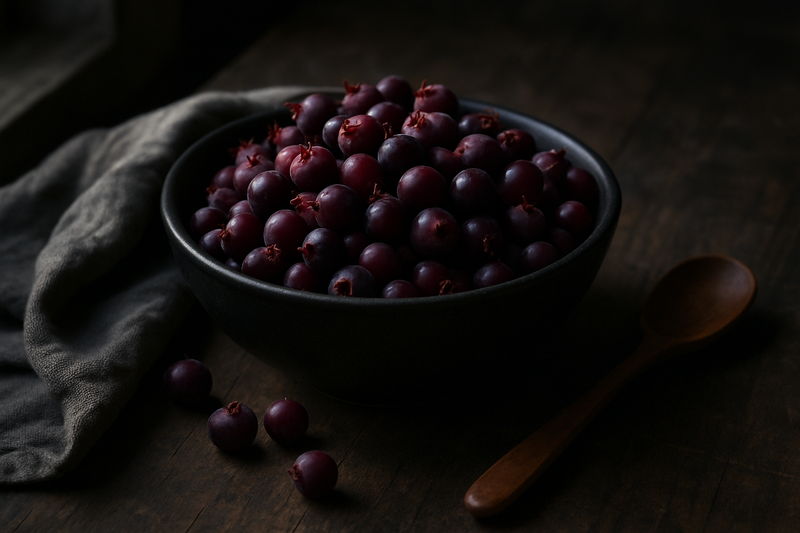
Serviceberry · Photograph
Discover serviceberry health benefits and nutrition, from its rich anthocyanins and fiber to heart, blood sugar, and digestive support. Learn how to eat juneberries safely, fresh or baked, with evidence-backed insights from Plantopedia.
Key Nutrients
% Daily Value based on 2,000 cal diet
Key active compounds in serviceberry
- Anthocyanins — Pigments (mainly cyanidin-3-galactoside and cyanidin-3-glucoside) responsible for the deep red-purple color. Concentrations often exceed 150–200 mg per 100 g, which is high compared with many common berries. These are the most studied compounds in serviceberry for antioxidant and anti-inflammatory activity.
- Proanthocyanidins (condensed tannins) — Polymeric flavonoids that contribute mild astringency and additional antioxidant capacity. They may also interact beneficially with gut bacteria.
- Flavonols (quercetin, rutin) — A class of flavonoids widely studied for their roles in vascular health and reducing inflammation at the cellular level.
- Phenolic acids (notably chlorogenic acid) — Plant compounds that may help moderate blood glucose by slowing carbohydrate absorption and supporting blood vessel function.
- Triterpenes and other minor phytochemicals — A diverse group of non-flavonoid plant compounds with emerging roles in antioxidant and anti-inflammatory activity in preclinical models.
Prep and pairing ideas
Serviceberries are perhaps the most versatile native berry most people have never cooked with. Their mild sweetness and slight almond note make them easy to fold into everyday meals.
Common pairings
- Serviceberry + oats (overnight oats or muesli): The berry's anthocyanins and fiber combine with oats' beta-glucan fiber for a blood-sugar-friendly breakfast with complementary prebiotic benefits for gut bacteria. The natural sweetness of ripe serviceberries means you need less added sugar.
- Serviceberry + lemon zest in muffins or quick bread: Lemon's acidity brightens the berry's mild flavor and may help preserve the color of the anthocyanins during baking. A classic juneberry muffin uses the same ratio as a blueberry muffin — a direct 1:1 swap.
- Serviceberry + spinach in a summer salad: Tossed with fresh serviceberries, a handful of walnuts, and a light vinaigrette, spinach gains both color and a polyphenol boost. The vitamin C in the berries may also enhance the absorption of the non-heme iron in spinach — a practical nutrition pairing.
Other quick ideas:
- Stir into yogurt or plant-based kefir for a probiotic-polyphenol combo
- Simmer briefly with a little water and lemon to make a simple compote for pancakes or porridge
- Fold into a Saskatoon berry pie using a recipe developed for the Canadian prairie tradition — the flavor is richer and less tart than blueberry pie
Bottom line
Serviceberry is a genuinely nutritious, underrated native fruit worth making room for in a whole-food, plant-based diet. Its fiber content outpaces many popular berries, its anthocyanin profile is impressive in lab comparisons, and it delivers useful manganese, potassium, vitamin K, and vitamin C in a modest calorie package. The emerging science on heart health, blood sugar, and inflammation is biologically plausible and exciting — but human trials are still needed before specific therapeutic claims can be made.
For now, the best case for serviceberry is simple: it is a delicious, colorful, fiber-rich whole fruit that fits seamlessly into everyday eating, from fresh handfuls to juneberry pies and Saskatoon berry muffins. Eat it like you would any other deeply colored berry — often, in variety, and with enjoyment.
Looking to build a diet around ingredients like serviceberry? Explore goal-based eating plans at /goals to find patterns that fit your health priorities.
How Serviceberry Compares
| Compared with | What's different |
|---|---|
| Serviceberry vs. Blueberry | Serviceberries have a mild almond-like flavor and higher fiber content than blueberries. |
| Serviceberry vs. Cranberry | Serviceberries are sweeter and less tart, while cranberries require significant sweetening. |
| Serviceberry vs. Huckleberry | Serviceberries have edible soft seeds that provide a distinct nutty flavor when chewed. |
Health Benefits
Things to Know
Foraging identification: This is the most important safety note for wild serviceberries. Amelanchier species are generally safe and have a long food history, but correct identification is essential. Learn to distinguish serviceberry from similar-looking shrubs in your region, or go with an experienced forager or field guide. When in doubt, leave it out.
Unripe fruit: Unripe serviceberries are astringent and can cause stomach upset. Only eat fully ripe, dark-colored berries.
Rosaceae allergy: Serviceberry belongs to the rose family (Rosaceae), along with apples, pears, and cherries. People with known allergies to these fruits may experience cross-reactive reactions and should introduce serviceberry cautiously.
Blood-thinning medications (e.g., warfarin): Serviceberry contains vitamin K, which can influence how these medications work. Normal food portions are unlikely to cause issues, but if you eat large, consistent amounts or take concentrated extracts, mention it to your prescriber.
Diabetes medications (insulin, sulfonylureas, metformin, acarbose): Preclinical data suggest leaf extracts may have additive blood-sugar-lowering effects. Stick to whole fruit in normal amounts unless discussing extract use with your doctor.
Blood pressure medications: Animal studies hint at additive blood-pressure-lowering effects at high supplemental doses. Again, whole fruit in typical serving sizes is unlikely to be an issue.
Kidney disease (potassium restriction): Serviceberries, like most fruits, contribute dietary potassium. If you are on a strict potassium-restricted diet, factor serviceberry into your total intake.
Pregnancy and breastfeeding: Whole ripe fruit as part of a normal diet is considered safe. High-dose leaf or fruit extracts have no established safety data for pregnant or breastfeeding individuals; avoid them.

Best Forms
Look for fully ripe, deep-purple to blue-black berries with no visible mold. Ripe berries should release easily from the cluster. Avoid pale pink or red berries — they are unripe and notably more astringent.
Check the label for single-ingredient bags (just serviceberries or Saskatoon berries) with no added sugar. Color should be deep purple-red. Frozen is often more widely available than fresh outside the berry's native range.
Higher in concentrated sugar and calories per gram. Fine for trail mix or baking, but not a like-for-like swap for fresh if fiber content is your goal. Look for no-added-sugar versions.
Traditional and delicious, but cooking and pasteurization reduce anthocyanin content significantly. These are great ways to enjoy the flavor, but not the most efficient route to polyphenols.
These are experimental, have no established human dose, and no confirmed safety profile for supplemental use. Treat these the same as any untested supplement — only under professional guidance.
Prep Ideas
- — **Serviceberry + oats (overnight oats or muesli):** The berry's anthocyanins and fiber combine with oats' beta-glucan fiber for a blood-sugar-friendly breakfast with complementary prebiotic benefits for gut bacteria. The natural sweetness of ripe serviceberries means you need less added sugar.
- — **Serviceberry + lemon zest in muffins or quick bread:** Lemon's acidity brightens the berry's mild flavor and may help preserve the color of the anthocyanins during baking. A classic juneberry muffin uses the same ratio as a blueberry muffin — a direct 1:1 swap.
- — **Serviceberry + spinach in a summer salad:** Tossed with fresh serviceberries, a handful of walnuts, and a light vinaigrette, spinach gains both color and a polyphenol boost. The vitamin C in the berries may also enhance the absorption of the non-heme iron in spinach — a practical nutrition pairing.
- — Stir into yogurt or plant-based kefir for a probiotic-polyphenol combo
- — Simmer briefly with a little water and lemon to make a simple compote for pancakes or porridge
- — Fold into a Saskatoon berry pie using a recipe developed for the Canadian prairie tradition — the flavor is richer and less tart than blueberry pie
Glossary
Shop This Ingredient
Stock your pantry with quality serviceberry.
Buy on AmazonAs an Amazon Associate, Plantopedia earns from qualifying purchases. This costs you nothing extra and helps us keep the encyclopedia free.
Frequently Asked Questions
The evidence ranges from well-established (fiber, micronutrients) to emerging (heart health, blood sugar). Here is what the research says, area by area. Heart and circulation No randomized controlled trials have tested serviceberry specifically for heart outcomes in people. However, animal studies using Saskatoon/serviceberry preparations showed reductions in cardiac inflammation, improvements in blood pressure, and more favorable cholesterol levels in models of diet-induced metabolic syndrome. These effects are biologically plausible: anthocyanins and flavonols in other deeply colored berries have been linked to reduced oxidative stress (cellular damage caused by unstable molecules called free radicals) and better endothelial function (the health of the inner lining of blood vessels). Eating serviceberries as part of a varied, plant-rich diet aligns with general heart-healthy eating patterns, but berry-specific cardiovascular claims remain emerging until human trials confirm them. Digestive health and microbiome Serviceberry's fiber content — about 4.6 g per 100 g — is notably high for a small berry and supports stool bulk and regular bowel movements, consistent with broader evidence that high-fiber fruit intake improves gut transit. Polyphenols in berries are also increasingly recognized for feeding beneficial gut bacteria and promoting the production of short-chain fatty acids (byproducts that nourish the cells lining the colon). This interaction has not yet been studied in serviceberry directly, but the fiber and polyphenol combination makes it a logical fit within a gut-friendly eating pattern. Blood sugar and metabolism This is where serviceberry research gets genuinely interesting, even if it is still preclinical. Blackfeet communities in Montana traditionally used serviceberry to support people with diabetes. Modern laboratory studies have found that serviceberry leaf extracts strongly inhibit an enzyme called α-glucosidase (alpha-glucosidase) — the intestinal enzyme that breaks down complex carbohydrates into glucose — slowing sugar entry into the bloodstream at a level comparable to the prescription drug acarbose in animal models. As whole fruit, serviceberry also provides fiber that naturally moderates blood sugar response. Concentrated leaf or fruit extracts for glycemic control should be considered experimental, and anyone managing diabetes with medication should discuss them with their healthcare provider before trying them. Inflammation and recovery Serviceberry is rich in the same anthocyanins and flavonols shown in other berry research to modulate inflammatory signaling pathways — specifically something called NF-κB, a molecular switch that controls inflammatory gene activity. Animal studies show reduced systemic and cardiac inflammation markers when serviceberry preparations are added to the diet under metabolic stress conditions. In vitro (lab) studies consistently show high free-radical scavenging activity. These are promising signals, but the anti-inflammatory impact in healthy humans eating normal serving sizes has not been directly measured.
Fresh whole berries preserve the full fiber, most vitamins, and the highest polyphenol content. Frozen berries are an excellent second choice — research on Amelanchier canadensis specifically found that freezing preserves anthocyanins far better than pasteurization, making frozen serviceberries a practical, year-round option with minimal nutritional compromise. Buying guide Fresh (in season, June–July): Look for fully ripe, deep-purple to blue-black berries with no visible mold. Ripe berries should release easily from the cluster. Avoid pale pink or red berries — they are unripe and notably more astringent. Frozen: Check the label for single-ingredient bags (just serviceberries or Saskatoon berries) with no added sugar. Color should be deep purple-red. Frozen is often more widely available than fresh outside the berry's native range. Dried: Higher in concentrated sugar and calories per gram. Fine for trail mix or baking, but not a like-for-like swap for fresh if fiber content is your goal. Look for no-added-sugar versions. Jam, jelly, pie filling: Traditional and delicious, but cooking and pasteurization reduce anthocyanin content significantly. These are great ways to enjoy the flavor, but not the most efficient route to polyphenols. Leaf or fruit extracts / powders: These are experimental, have no established human dose, and no confirmed safety profile for supplemental use. Treat these the same as any untested supplement — only under professional guidance.
There is no established therapeutic dose for serviceberry because human clinical trials have not defined one. As a food, general dietary guidance (MyPlate and similar frameworks) recommends 1.5–2 cups of fruit per day for most adults, and serviceberry fits naturally within that total. Practical starting points: ½ cup (about 75 g) fresh or frozen is a reasonable daily serving if you are new to serviceberry; it contributes meaningful fiber and antioxidants without displacing other fruits in your diet. Up to 1 cup (about 150 g) per day is consistent with broader fruit intake recommendations and the amounts used in general dietary diversity research on polyphenol-rich berries. Start lower if your gut is adjusting to a higher-fiber diet — serviceberry's 4.6 g fiber per 100 g adds up quickly if you are eating multiple high-fiber foods simultaneously. Concentrated extracts have no confirmed safe or effective human dose — there is no research to guide supplementation beyond normal food intake. If you are managing a specific health condition, a registered dietitian can help you work serviceberry into a personalized plan.
Quick Answers
Common questions, answered in a line.
Serviceberries contain high concentrations of anthocyanins, proanthocyanidins, flavonols like quercetin and rutin, and phenolic acids such as chlorogenic acid. These plant compounds are primarily studied for their antioxidant and anti-inflammatory activities.
Serviceberries are a rich source of fiber, manganese, potassium, vitamin K, and vitamin C while remaining relatively low in calories. Their fiber content is notably higher than that of many other popular berries.
Yes, serviceberries (also known as juneberries) can be used as a direct 1:1 swap for blueberries in muffins, quick breads, and pies. Their mild sweetness and slight almond notes make them a versatile ingredient for baking.
It is essential to only eat fully ripe, dark-colored serviceberries because unripe fruit is highly astringent and can cause stomach upset. Always ensure proper identification when foraging to avoid consuming look-alike shrubs.
Individuals taking blood-thinning medications like warfarin should be mindful of serviceberry's vitamin K content, which can affect how the medication works. Those on diabetes or blood pressure medications should also consult a doctor if considering high-dose extracts.
Pairing serviceberries with vitamin C-rich foods, such as spinach in a salad, may help enhance the absorption of non-heme iron. Additionally, their fiber content can be paired with oats for a blood-sugar-friendly breakfast.
Serviceberries are often called juneberries or Saskatoon berries, depending on the region and specific species. They are a native fruit known for a flavor profile that is richer and less tart than a typical blueberry.
For Readers in the USA
Local context — sourcing, seasonality, and regional notes.
Serviceberries grow natively across most of the United States, with different species thriving from the Pacific Northwest and the Great Lakes to the Appalachian Mountains. While the Saskatoon variety is famous in the Northern Plains, other serviceberry species are common ornamental and wild trees in USDA zones 2 through 9.
In the U.S., serviceberries are most commonly found at local farmers markets or U-pick farms during their short harvest window in June and July. While rarely stocked at major grocery chains like Kroger or Safeway, you may find them frozen or as jams in specialty health food stores and Co-ops.
Serviceberries are often nicknamed "juneberries" in the United States because the fruit typically ripens in June across much of the country. Depending on your specific U.S. region and elevation, the peak picking season usually lasts only two to three weeks between late May and mid-July.
When foraging in the U.S., ensure the fruit has a distinct "crown" (calyx) at the bottom, similar to a blueberry, and avoid any trees near high-traffic roads treated with chemical pesticides. The USDA classifies many species as native plants, but always cross-reference with a local field guide to distinguish them from lookalikes like toxic bittersweet nightshade.
AI Clinical Review
- Clearly describes serviceberry as a fiber‑rich fruit (~4–5 g per 100 g) with useful amounts of manganese, vitamin C/K, and potassium.
- Appropriately notes that most evidence is compositional, in vitro, or animal-based; human clinical trials for heart or glycemic outcomes are not yet available.
- Explains anthocyanins (the pigments with antioxidant activity) and other polyphenols in accessible terms and situates them within a whole‑food eating pattern rather than supplements.
- Offers practical guidance on forms: fresh or frozen best preserve polyphenols; cooked/pasteurized products favor flavor over antioxidants, which is accurate.
- Cardiometabolic benefits (blood pressure, cholesterol, insulin sensitivity) remain untested in humans specifically for serviceberry; current claims are extrapolated from animal models and other berries.
- “High antioxidant capacity” reflects lab assays that don’t directly predict health outcomes; real‑world bioavailability and metabolism of anthocyanins vary widely.
- Proposed microbiome benefits are plausible given fiber/polyphenols but lack serviceberry‑specific human studies.
- α‑Glucosidase inhibition from leaf or concentrated extracts is preclinical; effective and safe human dosing hasn’t been established.
- Practical intake: 1/2–1 cup (about 75–150 g) daily fits general fruit guidance; increase gradually if you’re boosting fiber to minimize GI discomfort.
- Form matters: choose fresh or frozen without added sugar for nutrients; dried and jams are higher in sugars and lower in heat‑sensitive polyphenols; avoid unstandardized extracts unless advised by a clinician.
- Medication considerations: frequent large intakes or supplements may interact with warfarin (vitamin K), diabetes drugs, or antihypertensives—discuss with your clinician if relevant.
- Special populations: people with Rosaceae fruit allergies, potassium restrictions (kidney disease), or who are pregnant/breastfeeding should favor normal food amounts and avoid high‑dose extracts; foragers should confirm correct plant ID and ripeness.
Ripe fruit is safe; ensure correct identification when foraging.
References
- USDA FoodData Central — serviceberry and Saskatoon berry composition data (fdc.nal.usda.gov)
- MyPlate fruit intake guidance — U.S. dietary recommendations for whole fruit (myplate.gov)
- Bioactive Components and Health Benefits of Saskatoon Berry — comprehensive review of Amelanchier phytochemistry and preclinical health effects (onlinelibrary.wiley.com)
- Amelanchier Species: An Underutilized Source of Bioactive Molecules with Pharmacological Potential — systematic pharmacological review (pmc.ncbi.nlm.nih.gov)
- Effect of Processing and Storage on the Antioxidant Activity of Frozen and Pasteurized Shadblow Serviceberry (Amelanchier canadensis) — processing effects on anthocyanins (tandfonline.com)
- Mechanisms mediating antidiabetic effects of serviceberry leaf extract — dissertation on α-glucosidase inhibition in animal models (etd.auburn.edu)
- Serviceberry and α-glucosidase inhibitory activity in diabetes models — PubMed-indexed study on blood sugar mechanisms (pubmed.ncbi.nlm.nih.gov)
- Physicochemical and health-related component characterization of serviceberry fruit — nutritional and polyphenol composition study (fruits.edpsciences.org)
- Multivariate analysis of polyphenolic content and in vitro antioxidant capacity of wild and cultivated berries — comparative berry antioxidant data including serviceberry (pubmed.ncbi.nlm.nih.gov)
- Overview of phenolic compounds and antioxidants in Amelanchier fruits — phytochemical profile review (pmc.ncbi.nlm.nih.gov)
Know Your Numbers
Eating healthy is a start. Now get to know your biomarkers.
Food changes bloodwork — inflammation, lipids, blood sugar and nutrient status all respond to what you eat. 59 markers from $59.
- Results in 7–10 days at 2,000+ Quest sites
- Licensed provider reviews every result
- One flat price, no membership, HSA/FSA eligible
Educational information only, not medical advice. Panels are ordered and reviewed through our licensed partner; Plantopedia may earn a commission.