Shea Butter (Food-Grade) — health benefits and uses
Central to West African cuisine and traditional skincare for centuries.
The Short Answer
Food-grade shea butter is an edible plant fat high in stearic and oleic acids, traditionally used in West African cuisine as a nutrient-dense cooking oil. It is distinct from cosmetic versions and must be labeled as edible or food-grade to be safe for
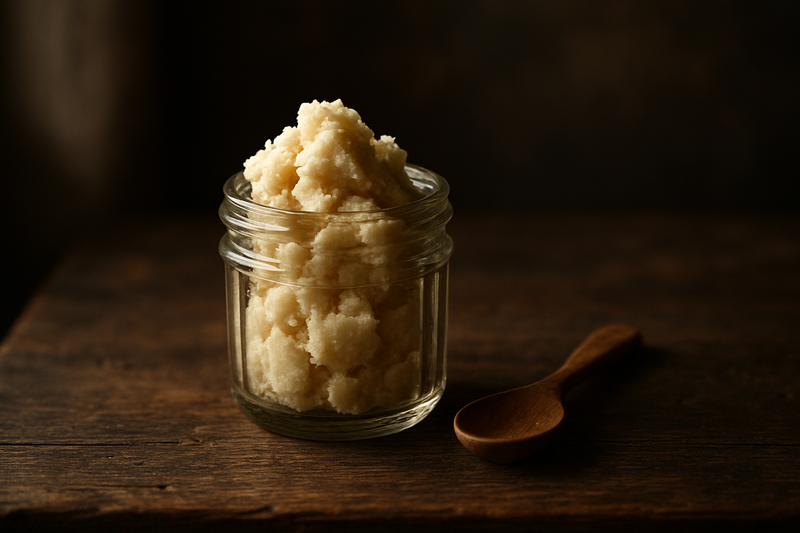
Shea Butter (Food-Grade) · Photograph
Discover the edible shea butter health benefits and how to use it in cooking. Learn about its nutrition facts, fatty acid profile, heart and cholesterol research, and the critical difference between food-grade and cosmetic shea butter — all in plain language.
Key Nutrients
% Daily Value based on 2,000 cal diet
Key active compounds
Food-grade shea butter is primarily fat, but its most nutritionally interesting properties come from a smaller fraction called the unsaponifiable fraction — the part of the fat that does not break down into soap or glycerol. Here is what it contains:
- Oleic acid — A monounsaturated omega-9 fatty acid (the same type abundant in olive oil) making up roughly 40–55% of total fat. Associated with heart-friendly lipid profiles in broader dietary research.
- Stearic acid — A saturated fatty acid making up roughly 35–45% of total fat. Unlike most saturated fats, stearic acid is largely converted to oleic acid by the body and appears to have a neutral to modestly favourable effect on LDL (low-density lipoprotein, often called "bad") cholesterol.
- Triterpenes (e.g., butyrospermol, lupeol, α- and β-amyrins) — Lipophilic (fat-loving) plant compounds in the unsaponifiable fraction. In cell and animal studies, these inhibit inflammatory enzymes including iNOS and COX-2. Human dietary data are limited.
- Tocopherols (vitamin E compounds) — Fat-soluble antioxidants present in meaningful concentrations in unrefined shea butter. They help protect the fat from oxidative rancidity and may contribute dietary antioxidant activity.
- Phytosterols (e.g., β-sitosterol, campesterol, stigmasterol) — Plant sterols that may modestly reduce cholesterol absorption in the gut, similar to the plant sterols added to fortified margarines.
- Carotenoids (e.g., beta-carotene) — Antioxidant pigments detected in quality unrefined samples, responsible for the ivory-to-yellow colour. Amounts vary by processing method.
Buying guide: how to choose edible shea butter
Shea products occupy two completely separate market lanes — cosmetic and food — and packaging is not always obvious. Here is what to look for:
Unrefined food-grade / edible shea butter
- Look for: "food-grade," "edible," "culinary," or "Codex-compliant" on the label. The Codex Alimentarius (the international food safety standard body run by the FAO and WHO) publishes a Regional Standard for Unrefined Shea Butter (CXS 325R-2017) that governs safety and quality.
- Colour: ivory to pale yellow. A grey or very dark product may indicate oxidation or poor handling.
- Smell: mild, nutty. Rancid or chemical odours are a red flag.
- Storage: keep in a cool, dark place in an airtight container. Unrefined shea butter is relatively stable due to its tocopherol content, but heat and light accelerate rancidity.
What to avoid
- Any jar labelled only for skin, hair, or cosmetic use — do not eat it.
- Products with fragrance, essential oils, preservatives, or other additives listed — these are cosmetic formulations.
- "Raw shea butter" without food-grade certification is ambiguous; confirm with the supplier before consuming.
Prep and pairing ideas
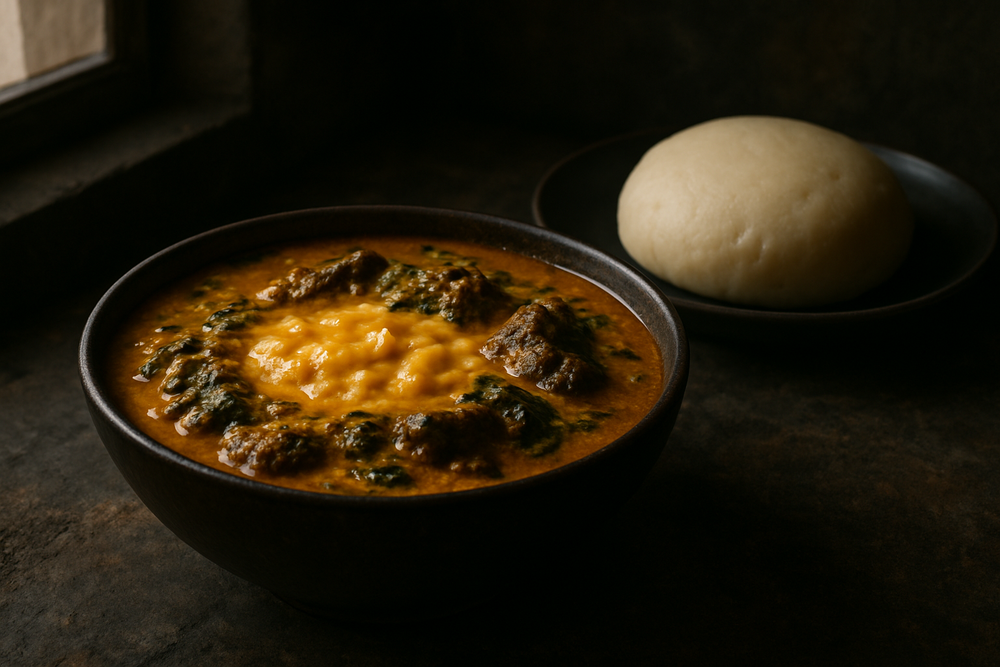
Traditional West African stew base Melt 1–2 teaspoons of food-grade shea butter in a heavy-based pan, add sliced onions and garlic, and build a stew with tomatoes, leafy greens, and a protein of your choice. The shea butter contributes a subtle nuttiness and coats the vegetables with fat-soluble nutrients.
Enriched grain porridge Stir a small knob (about 1 teaspoon) of unrefined shea butter into cooked millet, sorghum, or oat porridge. This is a traditional preparation in Burkina Faso and Mali, and the fat adds staying power to an otherwise carbohydrate-heavy breakfast.
Chocolate and baking Refined food-grade shea fat can replace up to 5% of cocoa butter in homemade chocolate or ganache without significantly altering texture or flavour. This mirrors the industrial cocoa-butter-extender application on a home scale.
Sautéed greens Use a small amount of food-grade shea butter to sauté bitter greens such as kale or collards. The fat aids the absorption of fat-soluble vitamins (A, K, and E) present in the leaves while adding mild flavour.
Bottom line
Food-grade shea butter is a legitimate, traditional cooking fat with a more interesting nutritional profile than many people assume. Its fatty acid mix — heavy on oleic and stearic acids — gives it a relatively benign effect on blood lipids compared with other solid saturated fats, and early human data from West Africa hint at potential blood pressure benefits. The unrefined version also brings along a meaningful package of vitamin E, plant sterols, and triterpenes, though the practical impact of these compounds at culinary doses needs more human research.
None of this makes shea butter a superfood or a medicine. It is a calorie-dense fat that works well in the kitchen, has centuries of safe dietary use behind it, and happens to come with some compounds worth watching in future research. Used in moderation as part of a varied, plant-rich diet, food-grade shea butter is a reasonable choice for cooks interested in expanding beyond the usual shelf of oils — particularly those cooking West African dishes or working with chocolate.
The non-negotiable: check the label. If it does not say food-grade or edible, it is not for your frying pan.
How Shea Butter (Food-Grade) Compares
| Compared with | What's different |
|---|---|
| Shea Butter (Food-Grade) vs. Olive Oil | Shea butter contains 40–55% oleic acid, similar to the heart-healthy fats in olive oil. |
| Shea Butter (Food-Grade) vs. Butter | Shea butter has a higher smoke point and a thicker, solid-at-room-temperature texture. |
| Shea Butter (Food-Grade) vs. Coconut Oil | Shea butter is solid at room temperature and contains unique anti-inflammatory triterpenes. |
Health Benefits
Things to Know
Tree nut allergy: Shea butter comes from a tree nut. Cross-reactivity with common tree nut allergens is rare but documented. If you have a diagnosed tree nut allergy, check with your allergist before eating shea butter.
Cardiovascular disease or high LDL cholesterol: Each tablespoon provides about 6 g of saturated fat — 30% of a typical daily limit. People managing cardiovascular disease should use shea butter in moderation and discuss it with their doctor or dietitian, even given stearic acid's more favourable profile.
Gallbladder disease, pancreatitis, or fat malabsorption: High-fat foods can worsen these conditions. Go cautiously and consult a healthcare provider.
Pregnancy and breastfeeding: Culinary amounts of food-grade shea butter are generally considered safe, based on its long history of use in West African diets. Concentrated triterpene-rich shea extracts marketed as supplements are a different matter — safety data in pregnancy are lacking.
Children: Guidelines generally recommend limiting saturated fat intake in children and adolescents. Shea butter can be used in family cooking in moderation, but it should not displace nutrient-dense, lower-calorie-density foods.
Lipid-lowering medication (e.g., statins): No specific drug–shea interaction has been documented, but if you are on cholesterol-lowering therapy, discuss any significant change to your cooking fat with your prescriber.
Lipophilic medications: High-fat meals can influence the absorption of fat-soluble drugs and supplements. No shea-specific interaction data exist, but be aware of this general principle.
Cosmetic grade ≠ food grade.: This bears repeating: do not eat cosmetic shea butter.
Glossary
Shop This Ingredient
Stock your pantry with quality shea butter (food-grade).
Buy on AmazonAs an Amazon Associate, Plantopedia earns from qualifying purchases. This costs you nothing extra and helps us keep the encyclopedia free.
Frequently Asked Questions
Most of the benefit claims you read about shea butter online are based on topical (skin) research or animal studies. The sections below flag clearly where human dietary evidence exists and where it does not. Heart and circulation The strongest human dietary data comes from a cross-sectional study (a study that surveys people at one point in time) conducted in Ghana. Adults who cooked primarily with shea butter had a systolic blood pressure approximately 2.4 mmHg lower and diastolic blood pressure approximately 1.8 mmHg lower than those using vegetable oils, and roughly 25% lower odds of hypertension after adjusting for other lifestyle factors. Separately, a narrative review cites a human feeding study in which shea butter administration reduced total cholesterol and LDL cholesterol, an effect attributed to the high stearic acid content. However, details of that specific study are not widely replicated in independently published literature. The current scientific consensus is that stearic acid is probably the least harmful of the common saturated fats for LDL — but "less harmful" is not the same as "actively beneficial," and total saturated fat intake still matters in cardiovascular guidelines. The evidence here is preliminary and interesting, but not conclusive. Digestive health Food-grade shea butter is essentially pure fat — no fibre, no carbohydrates, no protein. There are no controlled human trials examining its direct effect on digestion, gut motility, or the gut microbiome (the community of microorganisms living in your digestive tract). General nutrition principles apply: fat slows gastric emptying (the rate at which your stomach empties into the small intestine), which can increase satiety (the feeling of fullness). Traditional use in stew-based dishes — where it combines with legumes, leafy greens, and whole grains — likely means that its digestive impact is shaped largely by the overall meal composition rather than the shea butter alone. Blood sugar and metabolism Shea butter contains virtually no carbohydrates, giving it a glycaemic index (a measure of how fast a food raises blood sugar) of zero. No human trials have tested shea butter's direct effect on fasting glucose or insulin resistance. For people managing blood sugar, it can function similarly to any other pure fat source — it will not spike blood glucose in isolation. That said, it is calorie-dense, and total energy balance matters for metabolic health. Inflammation and recovery Lab and animal studies consistently show that shea butter's triterpenes inhibit inflammatory signalling molecules. A triterpene-rich shea extract has been studied as an oral supplement in osteoarthritis patients, though detailed randomised controlled trial (RCT) data are not widely available in the public domain. Eating standard culinary amounts of food-grade shea butter is unlikely to deliver the concentrated doses of triterpenes tested in supplement studies. Any systemic anti-inflammatory effect from everyday cooking with shea should be considered speculative until human dietary trials are completed.
The choice between unrefined and refined food-grade shea butter depends on what you are cooking and how much of the bioactive compounds you want to retain. Unrefined food-grade shea butter is extracted by traditional mechanical pressing and retains more vitamin E, triterpenes, phytosterols, and carotenoids. It has a nutty, sometimes smoky aroma that suits stews, sauces, and porridges. This is the form most used in traditional West African cooking, and it is likely the more nutritionally complete option. Refined or deodorised food-grade shea fat goes through industrial processing that removes odours, pigments, and a large portion of the unsaponifiable fraction. The result is a neutral-tasting, white fat — ideal as a cocoa butter extender in chocolate but offering fewer of the bioactive compounds found in the unrefined version. Fractionated shea stearin or olein are specific triglyceride fractions (separations of distinct fat types) used in confectionery manufacturing. You are unlikely to cook with these at home; they arrive via chocolate bars and coatings. The bottom line: for home cooking, unrefined food-grade shea butter preserves more of the interesting phytochemicals. For baking or chocolate work where you need a neutral flavour, refined food-grade shea is the practical choice. Always confirm the label says food-grade or edible.
There is no established official recommended daily intake for shea butter specifically. A practical and evidence-consistent approach: 1–2 tablespoons (15–30 g) per day, counted as part of your total daily fat allowance, mirrors how it is used in traditional West African diets and sits within ranges used in dietary studies. Start with 1 teaspoon if shea butter is new to you, to assess tolerance — especially if you are not accustomed to a high-fat diet. Factor in all other fats in your diet. Shea butter is not a supplement to add on top of your usual oils; it is a replacement or partial substitution. Saturated fat guidelines (typically under 10% of total daily calories, or around 20–22 g for a 2,000-calorie diet) mean that two tablespoons of shea butter alone approach or exceed that threshold. Moderation is key. People with cardiovascular conditions, elevated LDL, or those following a prescribed low-fat diet should get specific guidance from their healthcare team before including shea butter regularly.
Quick Answers
Common questions, answered in a line.
You can cook with shea butter by using it as a sautéing base for greens, stirring it into grain porridges, or using it as a cocoa butter substitute in baking. In traditional West African cooking, it is often melted with aromatics like onions and garlic to form a savory stew base.
The main difference is that food-grade shea butter must meet specific safety standards, such as the Codex Alimentarius CXS 325R-2017, while cosmetic shea butter may contain harmful additives. Cosmetic versions often include fragrances, essential oils, or preservatives that are not safe to ingest.
Food-grade shea butter is unique because it contains high levels of stearic acid, which the body largely converts into heart-healthy oleic acid. It also features an "unsaponifiable fraction" rich in plant sterols, vitamin E, and anti-inflammatory triterpenes like lupeol and amyrins.
Shea butter may have a neutral to favorable effect on cholesterol because its primary saturated fat, stearic acid, does not raise LDL levels as much as other saturated fats. Additionally, it contains phytosterols like beta-sitosterol, which can modestly reduce cholesterol absorption in the gut.
People with tree nut allergies should be cautious because shea butter is derived from a tree nut, and while rare, cross-reactivity is documented. It is also important for individuals with gallbladder disease, pancreatitis, or those on lipid-lowering medications to consult a doctor before use.
When buying edible shea butter, look for labels marked "food-grade," "culinary," or "Codex-compliant" and ensure the product is ivory to pale yellow in color. Avoid any product labeled only for hair or skin, or those that have a grey color and chemical odor.
Yes, edible shea butter is a traditional staple in West African diets, particularly in countries like Burkina Faso and Mali. It has been used safely for centuries as a cooking fat for stews and as a way to add nutritional density to millet or sorghum porridges.
For Readers in the USA
Local context — sourcing, seasonality, and regional notes.
In the United States, you can typically find food-grade shea butter at West African specialty markets, high-end health food stores, or through reputable online retailers specializing in culinary fats. While major chains like Walmart or Kroger carry cosmetic shea butter in their beauty aisles, they rarely stock the edible version, so checking the "International Foods" section or a dedicated spice shop is your best bet.
The FDA generally recognizes shea nut oil as safe (GRAS) for use as a direct food ingredient, particularly as a cocoa butter substitute in confections and baked goods. When shopping in the US, look for the "USDA Organic" seal to ensure the product was produced without synthetic pesticides, and always verify that the packaging explicitly states "Food Grade" to meet US safety standards.
Edible shea butter is not grown in the US; it is imported primarily from West African countries like Ghana and Nigeria, where the shea tree (Vitellaria paradoxa) grows wild. Because it is a processed stable fat derived from nuts harvested between May and August, it does not have a domestic "season" and is available year-round to US consumers as a shelf-stable import.
In the US, culinary shea butter is most frequently used by the West African diaspora for traditional stews, but it is also gaining popularity among domestic vegan bakers as a dairy-free butter alternative. Because of its high stearic acid content, it provides a firm texture in plant-based pastries and homemade chocolates that liquid vegetable oils cannot replicate.
AI Clinical Review
- Clearly distinguishes food-grade (edible) shea butter from cosmetic-grade and stresses not to eat cosmetic products; this is an important safety point.
- Accurately describes the fat profile (rich in oleic and stearic acids) and that stearic acid is relatively neutral for LDL cholesterol compared with other saturated fats.
- Positions shea butter as a traditional cooking fat with practical culinary uses and reasonable starting portions (about 1–2 tablespoons per day as a replacement, not an add‑on).
- Notes that unrefined shea retains more bioactive compounds (vitamin E, plant sterols, triterpenes) than refined forms and explains what the “unsaponifiable fraction” is (the non–soap-forming, bioactive part of the fat).
- Blood pressure findings come from cross-sectional data in Ghana; this shows association, not cause and effect. Randomized trials are needed to confirm any BP benefit.
- Lipid effects from eating shea butter are not well established in controlled human studies; most support for stearic acid’s neutrality comes from broader fat research rather than shea-specific trials.
- Anti-inflammatory claims mainly rely on lab and animal work examining triterpenes; the doses achievable with normal culinary use are uncertain.
- Micronutrient content (tocopherols, carotenoids) varies by origin and processing; real-world amounts per tablespoon can differ substantially between products.
- Portion and saturated fat: each tablespoon has ~6 g saturated fat. People with high LDL cholesterol or cardiovascular disease should use it sparingly and discuss with their clinician.
- Allergies: shea is from a tree nut. True cross-reactivity appears uncommon but possible—individuals with tree nut allergy should consult an allergist before trying it.
- Digestive and medical conditions: high-fat foods can aggravate gallbladder disease, pancreatitis, or fat malabsorption. Fat can also affect absorption of some fat-soluble medications—ask your prescriber if unsure.
- Form and storage matter: choose products clearly labeled “food-grade/edible.” Unrefined offers more bioactives but a stronger flavor; refined is more neutral. Store in a cool, dark place to limit oxidation and rancidity.
Only edible, food-grade shea should be eaten; cosmetic grades are not for consumption.
References
- USDA FoodData Central — shea nut oil / shea butter nutritional composition (fdc.nal.usda.gov)
- Cross-sectional study: cooking with shea butter associated with lower blood pressure and reduced hypertension odds (Ghana) (pubmed.ncbi.nlm.nih.gov)
- Narrative review: oral and topical uses of Vitellaria paradoxa nut oil, including cholesterol and lipid effects (longdom.org)
- PMC review: vegetable butters and oils as therapeutically active ingredients — fatty acid profiles, unsaponifiable fractions (pmc.ncbi.nlm.nih.gov)
- Codex Alimentarius Regional Standard for Unrefined Shea Butter (CXS 325R-2017) — food safety and quality standards (fao.org)
- PMC article: optimised shea butter quality and utilisation potential — tocopherols, carotenoids, sterols (pmc.ncbi.nlm.nih.gov)
- PubMed: anti-inflammatory effects of shea butter via inhibition of iNOS, COX-2, and cytokines (laboratory study) (pubmed.ncbi.nlm.nih.gov)
- Cosmetic Ingredient Review safety assessment of Butyrospermum parkii (Shea) — safety profile and ingredient grades (cir-safety.org)
- PMC: skin acceptability of a moisturiser containing shea butter in subjects with dry skin (topical trial for reference) (pmc.ncbi.nlm.nih.gov)
- iCliniq clinical nutrition summary — shea butter macro profile and uses (icliniq.com)
Know Your Numbers
Eating healthy is a start. Now get to know your biomarkers.
Food changes bloodwork — inflammation, lipids, blood sugar and nutrient status all respond to what you eat. 59 markers from $59.
- Results in 7–10 days at 2,000+ Quest sites
- Licensed provider reviews every result
- One flat price, no membership, HSA/FSA eligible
Educational information only, not medical advice. Panels are ordered and reviewed through our licensed partner; Plantopedia may earn a commission.