Shiso (Perilla Leaf) — health benefits and uses
Used in Japanese and Chinese medicine to support digestion and ease seasonal congestion.
The Short Answer
Shiso is a nutrient-dense herb containing 360 mcg of Vitamin K and 230 mg of calcium per cup. It is prized for its high concentration of rosmarinic acid, a polyphenol that may act as a natural antihistamine and support digestive health.
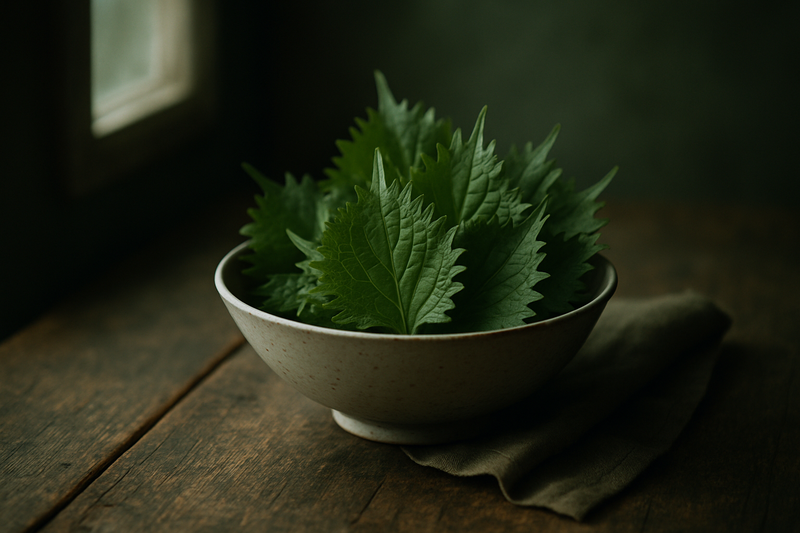
Shiso (Perilla Leaf) · Photograph
Discover shiso leaf (perilla) health benefits and how to use it — from wrapping sushi to brewing tea. Learn about red vs green shiso, key nutrients, digestion research, safety tips, and easy prep ideas.
Key Nutrients
% Daily Value based on 2,000 cal diet
Key active compounds in shiso
- Rosmarinic acid — a potent polyphenol (a type of plant-made antioxidant) found in many mint-family herbs. Research suggests it can reduce oxidative stress (cellular damage from unstable molecules called free radicals), modulate inflammatory pathways, and may act as a natural antihistamine (a compound that reduces allergy-related immune responses).
- Perillaldehyde — the aromatic monoterpenoid (a small, fragrant plant molecule) responsible for shiso's signature scent. Experimental studies suggest it has antimicrobial and gut-settling properties.
- Shisonin (anthocyanin) — the red-purple pigment concentrated in red shiso. Anthocyanins are water-soluble plant pigments associated with antioxidant activity and vascular health.
- Luteolin and other flavonoids — a group of polyphenol compounds showing antioxidant, anti-inflammatory, and potential neuroprotective (brain cell-protecting) effects in laboratory models.
- Alpha-linolenic acid (ALA) — a plant-based omega-3 fatty acid present mainly in the seeds but also in leaves in small amounts. ALA is a building block the body can partially convert to longer-chain omega-3s.
- General polyphenols — a broad family of plant compounds that contribute to antioxidant capacity, support the gut microbiome (the community of bacteria in your digestive tract), and may help regulate immune signaling.
Prep and pairing ideas
Shiso is one of the easiest herbs to use because it requires almost zero preparation — just rinse, pat dry, and go.
Fresh green shiso
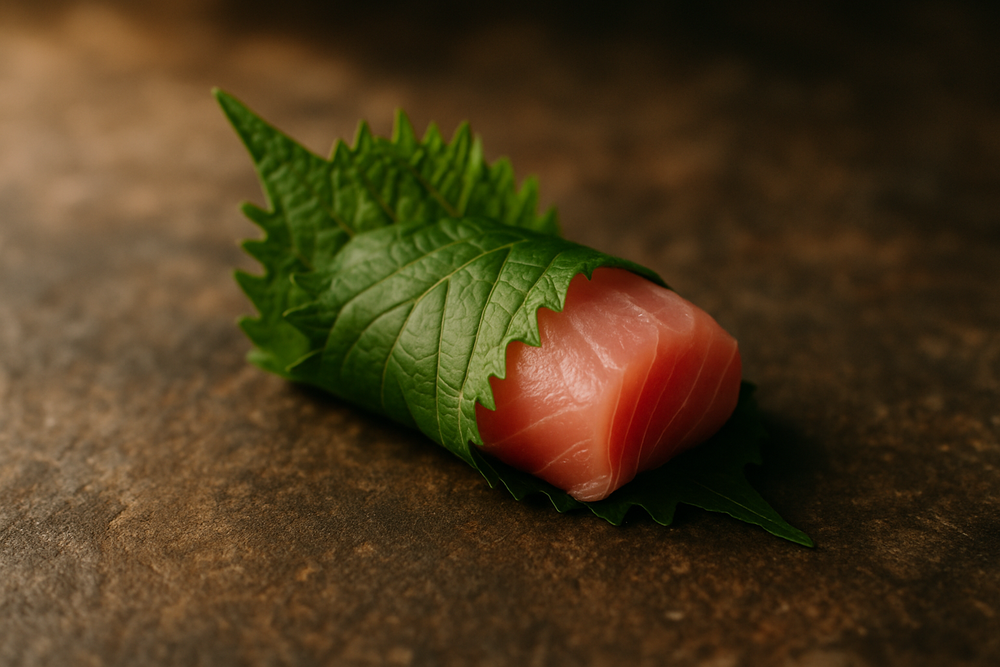
- Stack 2–3 leaves as a wrap for a small ball of rice or a piece of fish. The leaf acts as a natural edible vessel.
- Chiffonade (thinly slice) and toss into grain bowls, cold noodle salads, or cucumber salads with rice vinegar.
- Blend a few leaves into a miso salad dressing for a bright herbal note.
Red shiso
- Steep 6–8 red leaves in hot water with a slice of lemon for a vivid pink-purple tea. Add a little honey if desired.
- Layer into quick-pickled vegetables: slice daikon or cucumber, toss with salt and rice vinegar, add red shiso leaves, and refrigerate for 30 minutes.
Three practical pairings and why they work:
- Shiso + cold soba noodles — The herb's bright aromatics cut through the earthiness of buckwheat, and the combination is a classic in Japanese home cooking.
- Red shiso + umeboshi (pickled plum) — An iconic pairing where the plum's acid turns the shiso's anthocyanins a deep crimson red. Together they create a sour, salty, antioxidant-rich condiment.
- Green shiso + tofu + sesame — Shiso's herbal freshness balances the mild, creamy texture of soft tofu, while sesame adds richness. A quick, high-protein plant-based dish with polyphenols from the herb.
Bottom line
Shiso is a genuine culinary gem: fragrant, versatile, nearly calorie-free, and packed with plant compounds that food scientists find genuinely interesting. The most human-backed benefit is digestive comfort support, based on clinical trials of concentrated perilla leaf extracts. Antioxidant, anti-inflammatory, and allergy-related properties are biologically plausible and rooted in a deep traditional history, but most of that data comes from labs rather than large human trials.
For the vast majority of people, eating shiso regularly — in sushi wraps, rice bowls, pickles, salads, or tea — is a low-risk, high-flavor way to add more variety and phytochemical diversity to a whole-food diet. It is not a treatment, but it is very good food.
How Shiso (Perilla Leaf) Compares
| Compared with | What's different |
|---|---|
| Shiso (Perilla Leaf) vs. Basil | Milder with a sweet, peppery flavor compared to shiso's complex citrusy, minty profile. |
| Shiso (Perilla Leaf) vs. Spearmint | Cooler and more refreshing, whereas shiso has deeper notes of cinnamon, anise, and citrus. |
Health Benefits
Things to Know
Vitamin K and blood thinners: Shiso is high in vitamin K, which can reduce the effectiveness of anticoagulant medications like warfarin. If you take a blood thinner, keep your leafy herb intake consistent day-to-day and discuss any big dietary changes with your prescriber.
Antihistamines and allergy medications: Shiso's antihistamine-like compounds could theoretically add to the effect of allergy medications at high supplemental doses. At culinary amounts this is unlikely to be significant, but worth noting if you are taking multiple allergy treatments.
Kidney stones: Shiso contains oxalates — naturally occurring compounds that in very high amounts can contribute to calcium-oxalate kidney stones in susceptible people. Standard culinary use is unlikely to pose a risk, but people with a history of kidney stones should keep portions moderate and stay well hydrated.
Pregnancy and breastfeeding: Eating shiso as a culinary herb is generally regarded as safe. Taking concentrated perilla leaf supplements or large amounts of shiso tea beyond normal food portions during pregnancy is not recommended due to limited safety data.
Allergy to mint-family plants: Rare but possible. If you have reactions to basil, mint, oregano, or other Lamiaceae herbs, test a small amount of shiso before eating it freely.
Anti-inflammatory or immunomodulatory drugs: Shiso's polyphenols influence inflammatory pathways in experimental models. No specific clinical drug interactions are documented, but if you are on immunosuppressive therapy, check with your doctor.
Prep Ideas
- — Stack 2–3 leaves as a wrap for a small ball of rice or a piece of fish. The leaf acts as a natural edible vessel.
- — Chiffonade (thinly slice) and toss into grain bowls, cold noodle salads, or cucumber salads with rice vinegar.
- — Blend a few leaves into a miso salad dressing for a bright herbal note.
- — Steep 6–8 red leaves in hot water with a slice of lemon for a vivid pink-purple tea. Add a little honey if desired.
- — Layer into quick-pickled vegetables: slice daikon or cucumber, toss with salt and rice vinegar, add red shiso leaves, and refrigerate for 30 minutes.
- — Shiso + cold soba noodles — The herb's bright aromatics cut through the earthiness of buckwheat, and the combination is a classic in Japanese home cooking.
- — Red shiso + umeboshi (pickled plum) — An iconic pairing where the plum's acid turns the shiso's anthocyanins a deep crimson red. Together they create a sour, salty, antioxidant-rich condiment.
- — Green shiso + tofu + sesame — Shiso's herbal freshness balances the mild, creamy texture of soft tofu, while sesame adds richness. A quick, high-protein plant-based dish with polyphenols from the herb.
Glossary
Shop This Ingredient
Stock your pantry with quality shiso (perilla leaf).
Buy on AmazonAs an Amazon Associate, Plantopedia earns from qualifying purchases. This costs you nothing extra and helps us keep the encyclopedia free.
Frequently Asked Questions
Heart and circulation Shiso leaves contain small amounts of ALA, plus antioxidants that may help protect the inner walls of blood vessels (the endothelium) from oxidative damage. However, most of the cardiovascular research around Perilla frutescens focuses on perilla seed oil — which is nutritionally distinct from the leaf — rather than on culinary shiso itself. No well-designed human trials have tested shiso leaves specifically for blood pressure, cholesterol, or other heart outcomes. Any circulatory benefit from eating fresh shiso is likely modest and best understood as part of a broad whole-food plant-based dietary pattern. Digestive health and microbiome This is where the most human clinical evidence exists. A proprietary standardized perilla leaf extract called Benegut has been tested in clinical trials involving adults with functional dyspepsia (a condition involving chronic post-meal discomfort, bloating, and nausea without a clear structural cause). Participants reported statistically significant reductions in digestive symptoms compared to placebo over four-week periods. That said, these trials used concentrated, standardized extracts — not everyday culinary shiso — and sample sizes were modest. Traditional use and mechanistic data also suggest shiso's aromatic oils and rosmarinic acid may reduce mild gut spasms, support the gut barrier, and act against certain foodborne bacteria. Blood sugar and metabolism There are no clinical trials specifically examining shiso leaves for blood glucose, insulin sensitivity, or HbA1c (a three-month average of blood sugar levels). Shiso's antioxidant and anti-inflammatory properties could theoretically support metabolic health, but this remains speculative. People managing blood sugar concerns can safely enjoy shiso in cooking — just don't swap it for established dietary or medical strategies. Inflammation and recovery Rosmarinic acid, luteolin, and shisonin all demonstrate anti-inflammatory activity in lab and animal studies, including the ability to inhibit COX-2 (an enzyme that drives inflammatory responses). But robust controlled human trials testing fresh shiso leaves as an anti-inflammatory intervention don't yet exist. Available human data mostly involve perilla seed oil or mixed herbal formulas. Shiso is best viewed as a supportive food in an anti-inflammatory diet rather than a primary treatment. Allergies and immune support Shiso has a well-documented traditional role in Japanese herbal medicine for hay fever, asthma, and skin allergy. The Japanese Medical Herb Association notes that benefits for these conditions are under investigation but not yet confirmed by large clinical trials. Rosmarinic acid and perillaldehyde have shown mast-cell-stabilizing effects (mast cells are immune cells that trigger allergy symptoms) in experimental systems. Red shiso's anthocyanins may also support general immune resilience. This is a genuinely promising area, but "promising in the lab" is not the same as "proven to work in humans."
The honest answer: use both, for different purposes. Green shiso is higher in aromatic oils, particularly perillaldehyde, which gives it that bright, herbal flavor. It is the go-to for fresh applications — wrapping, garnishing, slicing into salads, or blending into sauces. It provides good amounts of vitamin C and carotenoids. Red shiso is the better source of shisonin and other anthocyanins, making it the stronger antioxidant-pigment option. It is traditionally used in pickling (umeboshi, shiso-pickled ginger) and in infused drinks and teas. Its color is pH-sensitive — it turns bright pink in acidic environments like plum or citrus, which is part of what makes it so striking in Japanese pickled foods. For most people, the practical choice is whichever variety is fresher and available. Both belong in the kitchen.
The digestive-comfort seeker Struggles with mild post-meal bloating or heaviness, especially after large or rich meals. Wants to add aromatic herbs to cooking without turning to supplements. May benefit from shiso tea after meals, or from using fresh shiso in place of heavier sauces and dressings. The antioxidant-curious home cook Interested in eating a more colorful, polyphenol-rich diet without complicated supplementation. Already enjoys Japanese or Asian-style cooking and wants to understand why these ingredients are so prominent. Red shiso pickles, green shiso rice bowls, and shiso-infused dressings are all easy, practical entry points.
There is no official recommended daily intake for shiso as a medicine or supplement. As a culinary herb, typical use looks like this: Fresh leaves: 5–10 leaves per serving (approximately 5–10 g), used as wraps, garnishes, or mixed into dishes. This is considered safe for daily use for most people. Shiso tea: About 5–8 fresh leaves (or 1–2 teaspoons of dried leaf) per 250 ml cup. One to two cups per day is a reasonable starting point. Dried shiso flakes (furikake or yukari): A small pinch to a teaspoon over rice or noodles — these are more concentrated in flavor and often contain added salt, so check labels. Supplements / concentrated extracts: Clinical studies have used standardized extracts in the range of several hundred milligrams per day, but these products vary significantly by manufacturer. If you are considering a supplement (rather than food), look for standardized rosmarinic acid content and consult your healthcare provider for dosing guidance. Start low if you are new to shiso — not because it is risky, but because the flavor is assertive. A few leaves in a bowl is enough to appreciate the aroma; you can build from there based on taste and tolerance.
Quick Answers
Common questions, answered in a line.
Shiso leaf contains rosmarinic acid, perillaldehyde, and flavonoids like luteolin, which provide antioxidant and anti-inflammatory effects. These compounds help reduce oxidative stress and cellular damage caused by free radicals while supporting the body's immune signaling and gut microbiome.
Shiso leaf may support digestive health due to the compound perillaldehyde, which has antimicrobial and gut-settling properties. Clinical trials using concentrated perilla leaf extracts have specifically highlighted its potential for providing digestive comfort.
You can use fresh shiso as an edible wrap for fish and rice, thinly slice it for grain bowls and salads, or blend it into miso dressings. Red shiso is commonly used to steep into a vivid pink tea or layered with vinegar to quick-pickle vegetables like daikon and cucumber.
People taking anticoagulant medications like warfarin should be cautious because shiso is high in Vitamin K, which can reduce the effectiveness of blood thinners. It is recommended to keep leafy herb intake consistent and consult a doctor before making significant dietary changes.
Shiso contains oxalates, which are naturally occurring compounds that can contribute to the formation of calcium-oxalate kidney stones in susceptible individuals. While standard culinary portions are unlikely to be a risk, those with a history of stones should moderate their intake and stay hydrated.
Shiso contains rosmarinic acid, a potent polyphenol that research suggests may act as a natural antihistamine to reduce allergy-related immune responses. While culinary amounts are generally safe, these compounds could theoretically enhance the effects of allergy medications at high supplemental doses.
Eating shiso as a culinary herb is generally considered safe during pregnancy, but concentrated supplements or large amounts of tea are not recommended. This precaution is due to a lack of limited safety data regarding high doses of perilla during pregnancy and breastfeeding.
For Readers in the USA
Local context — sourcing, seasonality, and regional notes.
Shiso can be grown as a summer annual in most US USDA Hardiness Zones (2–11) or as a perennial in warmer regions like Florida and Southern California. While it thrives in the heat of July and August, gardeners should be aware that it can become invasive in the Eastern US if allowed to go to seed.
You can typically find fresh shiso at H Mart, Mitsuwa Marketplace, and 99 Ranch Market, or at local farmers markets in cities with significant Japanese or Korean populations. While rarely stocked in conventional supermarkets like Kroger or Publix, it is increasingly available through specialty produce delivery services like Weee! or Misfits Market.
In the United States, Japanese varieties are typically labeled as Shiso, while the larger, milder Korean varieties are often sold as Perilla or Sesame Leaves. Though they are the same species, the Korean variety (Perilla frutescens var. frutescens) is preferred for pickling and BBQ wraps, while the Japanese variety (var. crispa) is prized for sushi.
AI Clinical Review
- Accurately distinguishes green vs. red shiso, linking green to aromatic oils and red to anthocyanin pigments, and offers practical culinary uses for each.
- Frames digestive comfort as the best-supported benefit and clarifies that human data come from standardized perilla leaf extracts, not from typical food amounts.
- Provides a realistic, food-first message: shiso is a flavorful, low-calorie herb with interesting phytochemicals, not a stand‑alone treatment.
- Highlights meaningful nutrients (notably vitamin K) and places them in appropriate context for everyday portions.
- Cardiovascular findings largely involve perilla seed oil (a different form with different actives); high‑quality trials on shiso leaves themselves for blood pressure or lipids are lacking.
- Anti-inflammatory and immune/allergy claims are supported mainly by lab or animal models; confirmatory, well‑designed human trials using culinary leaves or teas are limited.
- Metabolic effects (blood sugar, insulin sensitivity) remain speculative without clinical trials in humans using leaf preparations.
- The proprietary extract studies for dyspepsia are short‑term and modest in size, so generalizability to broader populations and to culinary use is uncertain.
- Typical culinary amounts are reasonable: about 5–10 fresh leaves per serving, or tea made from 5–8 leaves (1–2 cups/day). Do not assume these doses match effects seen with concentrated extracts.
- Form matters: fresh/dried leaves, standardized leaf extracts, and perilla seed oil have different active compounds and potencies; results are not interchangeable.
- Use caution and consider clinician input if you: take warfarin or other anticoagulants (vitamin K is high), have a history of calcium‑oxalate kidney stones (oxalates present), are pregnant/breastfeeding and considering supplements or large amounts of tea, or have known sensitivities to mint‑family herbs.
- Seasonings like yukari/furikake can be higher in sodium; check labels if you’re monitoring salt intake.
Safe in culinary amounts.
References
- USDA FoodData Central — perilla/shiso nutritional data (fdc.nal.usda.gov)
- Japanese Medical Herb Association — shiso monograph on traditional and investigated uses (medicalherb.or.jp)
- Fytexia / Benegut — clinical data summary for perilla leaf extract in functional dyspepsia (fytexia.com)
- Hermetica Superfoods Encyclopedia — perilla leaf phytochemistry and benefits overview (hermeticasuperfoods.com)
- Natureword — properties and benefits of shiso, phytochemical review (natureword.com)
- Zen Antibacterial — red shiso anthocyanin and immune properties (zenantibacterial.com)
- The Rike — shiso nutrition facts, uses, and side effects overview (therike.com)
- Coffee Tea Culture — how to make shiso tea (green and red) (coffeeteaculture.com)
- Alibaba Product Insights — shiso leaf extract vs perilla oil for histamine inhibition (alibaba.com)
- Ask Ayurveda — Perilla frutescens traditional uses and phytochemistry (ask-ayurveda.com)
Know Your Numbers
Eating healthy is a start. Now get to know your biomarkers.
Food changes bloodwork — inflammation, lipids, blood sugar and nutrient status all respond to what you eat. 59 markers from $59.
- Results in 7–10 days at 2,000+ Quest sites
- Licensed provider reviews every result
- One flat price, no membership, HSA/FSA eligible
Educational information only, not medical advice. Panels are ordered and reviewed through our licensed partner; Plantopedia may earn a commission.