Sprouted Pumpkin Seeds — health benefits and uses
Healthy fats, minerals, and texture; small-amount high-leverage add-in
The Short Answer
Sprouted pumpkin seeds are pumpkin kernels that have been soaked and germinated to increase mineral bioavailability and create a light, crunchy texture. They are exceptionally high in magnesium, providing 36% of your daily value in a single one-ounce serving.
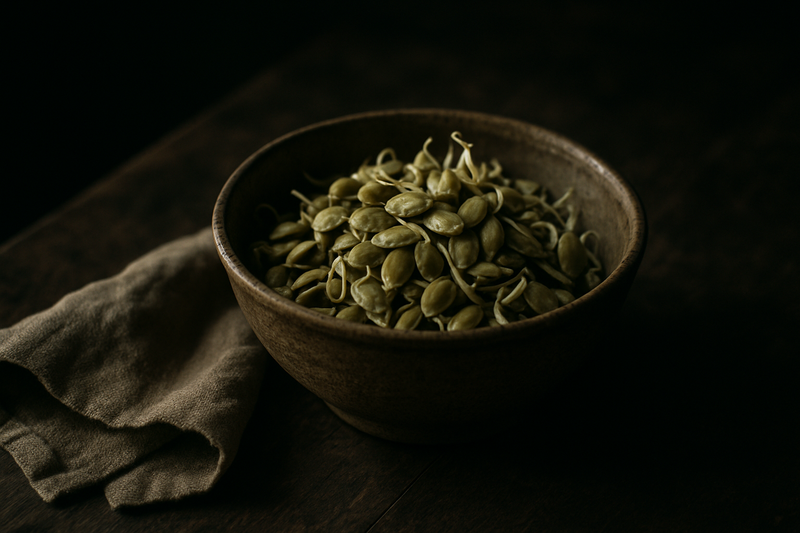
Sprouted Pumpkin Seeds · Photograph
Sprouted pumpkin seeds are the hulled inner kernels of Cucurbita pepo — the common pumpkin — that have been soaked in water, allowed to just begin germinating, and then gently dried or low-temperature roasted. That extra step changes two things you can actually notice: the texture becomes lighter and crunchier, and the seed's natural phytic acid content drops, which may help your body absorb more of the impressive mineral load these seeds already carry.
Key Nutrients
% Daily Value based on 2,000 cal diet
Key active compounds
- Polyunsaturated fatty acids (PUFAs): Unsaturated fats with multiple double bonds in their carbon chain, including omega-6 and small amounts of omega-3 fats. These support heart health and healthy cell membranes.
- Phytosterols (including beta-sitosterol): Plant-derived compounds structurally similar to cholesterol. They can interfere with cholesterol absorption in the gut and have been studied for prostate and urinary health, particularly in pumpkin seed oil research.
- Antioxidant compounds (vitamin E and phenolics): Molecules that neutralize free radicals — unstable molecules that damage cells — and help reduce oxidative stress linked to chronic disease.
- Carotenoids (including small amounts of beta-carotene): Fat-soluble pigments with antioxidant activity. Beta-carotene is a precursor to vitamin A. Amounts in seeds are modest compared to brightly coloured vegetables, but still add to your overall antioxidant intake.
Are sprouted pumpkin seeds good for you? What the evidence says
Heart health and circulation
Pumpkin seeds are rich in unsaturated fats, magnesium, phytosterols, and antioxidants — a combination that health organisations including the American Heart Association and Dartmouth Health link to healthier blood pressure and cholesterol profiles. Diets higher in magnesium are consistently associated with lower blood pressure and reduced stroke risk in large observational studies. Human and animal studies using pumpkin seed oil have shown reductions in blood pressure and improvements in LDL cholesterol (often called "bad" cholesterol because high levels are associated with arterial plaque buildup), though most study samples are small.
Sprouting does not change the underlying fat or magnesium content, so the heart-supportive nutrient profile carries over. For best results, use pumpkin seeds to replace less healthy snack choices — salted chips, for example — rather than adding them on top of an existing high-calorie diet.
Digestive health and microbiome
Each ounce of sprouted pumpkin seeds delivers around 5 g of fiber, contributing to the recommended 25–38 g daily. Fiber feeds beneficial gut bacteria (your microbiome — the trillions of microbes that live in your digestive tract and influence everything from immunity to mood) and supports regular bowel movements. The sprouting process further reduces phytic acid, making the seeds easier on the gut for many people. That said, the fiber content is still significant: if you are not used to eating much fiber, introducing pumpkin seeds gradually avoids gas and bloating.
Blood sugar and metabolism
Pumpkin seeds contain a combination of protein, healthy fats, fiber, and magnesium — all of which can slow how quickly carbohydrates raise your blood sugar after a meal. One small human trial found that eating pumpkin seeds alongside a high-carbohydrate meal meaningfully reduced the post-meal blood sugar spike compared to the same meal without seeds. Magnesium intake is also associated with better insulin sensitivity (how well your cells respond to the hormone insulin, which controls blood sugar) in large observational studies. Most data come from unsprouted seeds; the effect is expected to be similar or slightly better with sprouted seeds due to potentially improved mineral bioavailability.
Hormones and reproductive health
Pumpkin seed oil has been studied for benign prostatic hyperplasia (BPH) — a non-cancerous prostate enlargement common in older men that causes urinary symptoms. Small human trials suggest pumpkin seed oil supplements can improve urinary flow and quality of life in men with BPH, possibly via phytosterols and anti-androgenic (hormone-modifying) effects. Whole sprouted seeds contribute these same phytosterols and a meaningful dose of zinc, a mineral important for testosterone metabolism and sperm quality, though the effect from food is expected to be milder than from concentrated oil supplements. These findings should not be taken as a reason to delay or replace medical treatment.
Inflammation and recovery
Pumpkin seeds contain vitamin E and other antioxidant compounds that may reduce oxidative stress — a process where unstable molecules called free radicals damage cells and contribute to chronic inflammation. Several lab and animal studies support an anti-inflammatory role for pumpkin seed compounds, and small human trials using seed oil hint at benefits for chronic disease markers. Including sprouted pumpkin seeds regularly in place of more processed snacks is a practical way to shift your snack's antioxidant and healthy fat profile — but treat them as one piece of an overall anti-inflammatory eating pattern, not a shortcut.
Prep and pairing ideas
Buying guide — what to look for:
- Organic, sprouted, low-temperature dried is the ideal label combination. "Sprouted" should be clearly stated; if the label says "raw" only, the seeds have likely not been germinated.
- Check for added salt and oils. Many packaged sprouted seeds are flavoured or oiled. Plain or lightly salted versions give you the most control over your sodium and calorie intake.
- Freshness: Look for a "best by" date with at least six months remaining. Store at home in an airtight container in a cool, dark place — or refrigerate for extended shelf life (up to three months). The high fat content means they can go rancid if stored in a warm, humid environment.
- Supplement vs. food: Pumpkin seed oil capsules and extracts are available, but for everyday nutrition the whole or sprouted seed provides fiber and protein you do not get from oil alone.
Three practical pairings and why they work:
- Sprouted pumpkin seeds + orange segments: The vitamin C in citrus significantly boosts absorption of the non-heme iron in plant-based seeds. A simple salad topping that doubles as a nutrition strategy.
- Sprouted pumpkin seeds + plain Greek yoghurt: Adds crunch, healthy fats, and zinc to a meal already rich in protein and calcium — a combination that supports muscle repair and bone health in one bowl.
- Sprouted pumpkin seeds + leafy greens and olive oil: Dark greens provide folate and additional magnesium; olive oil is a fat-soluble carrier that helps your body absorb the carotenoids in both the greens and the seeds. This is a textbook example of food synergy — where two foods together are more nutritious than either alone.
Other easy uses:
- Stir into overnight oats or porridge
- Blend into homemade
How Sprouted Pumpkin Seeds Compares
| Compared with | What's different |
|---|---|
| Sprouted Pumpkin Seeds vs. Raw Pumpkin Seeds | Sprouted seeds have a lighter, crunchier texture and lower phytic acid levels for easier digestion. |
| Sprouted Pumpkin Seeds vs. Sunflower Seeds | Pumpkin seeds contain significantly more magnesium and zinc per gram than sunflower seeds. |
Health Benefits
Things to Know
Allergy risk is rare but real.: Pumpkin seed allergy has been reported with reactions ranging from mild oral itching to anaphylaxis (a severe, potentially life-threatening whole-body reaction). Sprouting does not remove allergenic proteins. If you have a seed, nut, or Cucurbitaceae family allergy, get medical guidance before trying these.
Calorie density adds up quickly.: One ounce (~28 g) is about 126 calories. It is easy to eat two or three times that amount without noticing. Measure your portion, at least initially.
Fibre ramp-up can cause GI distress.: If your usual diet is low in fibre, jumping straight to a large daily serving can cause bloating, cramps, or loose stools. Start with 1–2 tablespoons and increase over a week or two.
Kidney disease and high phosphorus/potassium.: People with advanced kidney (renal) disease are often advised to limit foods high in phosphorus and potassium. Pumpkin seeds are rich in both. Check with your nephrologist (kidney specialist) before adding them regularly.
Blood pressure medications.: Pumpkin seed oil can modestly lower blood pressure. Whole seeds may have a smaller effect, but eating them in large amounts alongside antihypertensive (blood pressure-lowering) drugs is worth mentioning to your doctor.
Glucose-lowering medications.: Because pumpkin seeds can blunt post-meal blood sugar rises, people on insulin or oral diabetes medications who make large dietary shifts should monitor their blood sugar more closely during the transition.
Pregnancy and breastfeeding.: Food-level intake (around 1 oz per day) is generally considered safe. No specific contraindications have been established, but always confirm major dietary changes with your midwife or OB/GYN.
IBS and gut conditions.: People with irritable bowel syndrome (IBS) or inflammatory bowel conditions with intestinal narrowing (strictures) should introduce seeds cautiously, as the fibre and seed fragments can aggravate symptoms in some cases.

Prep Ideas
- — Organic, sprouted, low-temperature dried is the ideal label combination. "Sprouted" should be clearly stated; if the label says "raw" only, the seeds have likely not been germinated.
- — Check for added salt and oils. Many packaged sprouted seeds are flavoured or oiled. Plain or lightly salted versions give you the most control over your sodium and calorie intake.
- — Freshness: Look for a "best by" date with at least six months remaining. Store at home in an airtight container in a cool, dark place — or refrigerate for extended shelf life (up to three months). The high fat content means they can go rancid if stored in a warm, humid environment.
- — Supplement vs. food: Pumpkin seed oil capsules and extracts are available, but for everyday nutrition the whole or sprouted seed provides fiber and protein you do not get from oil alone.
- — Sprouted pumpkin seeds + orange segments: The vitamin C in citrus significantly boosts absorption of the non-heme iron in plant-based seeds. A simple salad topping that doubles as a nutrition strategy.
- — Sprouted pumpkin seeds + plain Greek yoghurt: Adds crunch, healthy fats, and zinc to a meal already rich in protein and calcium — a combination that supports muscle repair and bone health in one bowl.
- — Sprouted pumpkin seeds + leafy greens and olive oil: Dark greens provide folate and additional magnesium; olive oil is a fat-soluble carrier that helps your body absorb the carotenoids in both the greens and the seeds. This is a textbook example of food synergy — where two foods together are more nutritious than either alone.
- — Stir into overnight oats or porridge
- — Blend into homemade
Shop This Ingredient
Stock your pantry with quality sprouted pumpkin seeds.
Buy on AmazonAs an Amazon Associate, Plantopedia earns from qualifying purchases. This costs you nothing extra and helps us keep the encyclopedia free.
Frequently Asked Questions
The form you choose matters less than consistency, but here is a practical breakdown: | Form | Texture | Phytic acid | Best use | |---|---|---|---| | Sprouted, low-temp dried | Light, crunchy | Lower | Snacking, salads, grain bowls | | Raw hulled (unsprouted) | Denser, chewy | Standard | Cooking, grinding, smoothies | | Pumpkin seed oil | N/A (liquid) | N/A | Drizzling, capsule supplement | | Ground / crushed sprouted | Soft, powder-like | Lower | Smoothies, pesto, oat toppings | Sprouted and gently dried is generally the most versatile whole-food option: the phytic acid is reduced, the texture is enjoyable enough to eat straight, and the nutrient profile is well preserved because no high heat is involved. Pumpkin seed oil delivers a concentrated dose of phytosterols and unsaturated fats but lacks the protein and fiber of whole seeds; most of the BPH and blood pressure research uses the oil rather than whole seeds.
Quick Answers
Common questions, answered in a line.
Sprouted pumpkin seeds are the hulled kernels of the common pumpkin (Cucurbita pepo) that have been soaked, germinated, and dried at low temperatures. This process results in a lighter, crunchier texture and lowers the seed's natural phytic acid content.
Sprouted pumpkin seeds are beneficial for heart health because they are rich in magnesium, unsaturated fats, phytosterols, and antioxidants. These specific nutrients are linked by health organizations to healthier blood pressure and improved cholesterol profiles.
Eating sprouted pumpkin seeds with high-carb meals can help lower the post-meal blood sugar spike due to their combination of protein, healthy fats, fiber, and magnesium. Magnesium is also associated with better insulin sensitivity, helping cells respond more effectively to insulin.
Sprouted pumpkin seeds provide fiber to feed beneficial gut bacteria and support regular bowel movements, while the sprouting process makes them easier to digest by reducing phytic acid. You should introduce them gradually to avoid gas or bloating, as each ounce contains about 5g of fiber.
Sprouted pumpkin seeds may support prostate health because they contain phytosterols and zinc, which are important for hormone metabolism. Research on pumpkin seed oil specifically suggests these compounds may improve urinary flow and quality of life for those with benign prostatic hyperplasia (BPH).
You should store sprouted pumpkin seeds in an airtight container in a cool, dark place, or refrigerate them to extend their shelf life for up to three months. Because of their high fat content, they can go rancid if left in warm or humid environments.
Pairing sprouted pumpkin seeds with vitamin C-rich foods like orange segments significantly boosts the absorption of the non-heme iron found in the seeds. You can also pair them with olive oil and leafy greens to help your body absorb fat-soluble carotenoids.
People with advanced kidney disease, seed allergies, or those taking blood pressure and diabetes medications should consult a doctor before consuming sprouted pumpkin seeds. The seeds are high in phosphorus and potassium, which may need to be limited in renal diets.
For Readers in the USA
Local context — sourcing, seasonality, and regional notes.
You can find sprouted pumpkin seeds at major US retailers like Whole Foods Market, Sprouts Farmers Market, and Trader Joe's, or through online health food stores. Many regional food co-ops and local health food chains also stock brands like Go Raw or Sprouted Garden that specialize in minimally processed, sprouted snacks.
While pumpkins are harvested across the US in October and November, sprouted pumpkin seeds are available year-round as a shelf-stable product in every state. Most commercial pumpkin seeds in the US are sourced from specific hull-less varieties like the Styrian pumpkin or traditional Jack-o'-lantern types grown primarily in the Midwest and Pacific Northwest.
Look for the USDA Organic seal to ensure your seeds were grown without synthetic pesticides and processed according to federal organic standards. Additionally, because "sprouted" is not a strictly regulated term by the FDA in the same way "Organic" is, choosing reputable brands with third-party certifications helps ensure the seeds were sprouted under safe, food-grade conditions.
In the United States, sprouted pumpkin seeds—often called "pepitas" when referring to the hulled green kernels—are popular as a high-protein salad topper or as a replacement for croutons. They are also common in Southwestern and Mexican-American cuisine, where "pepitas" have a long history of being used in moles, salsas, and traditional snacks.
AI Clinical Review
- Clearly explains sprouting’s role in lowering phytic acid (phytate), which can improve mineral absorption; this is consistent with lab data and small human studies on sprouted foods.
- Accurately highlights pumpkin seeds as rich in magnesium, zinc, and unsaturated fats, nutrients linked with heart and metabolic health when they replace lower‑quality snacks.
- Sensibly notes that most clinical data come from regular seeds or pumpkin seed oil, setting realistic expectations for sprouted whole seeds.
- Practical tips (vitamin C with seeds to enhance non‑heme iron absorption, gradual fiber increases, storage for freshness) are evidence‑aligned and useful.
- The exact degree to which sprouting pumpkin seeds improves real‑world mineral status (e.g., blood magnesium or zinc levels) hasn’t been tested in robust human trials; effects likely vary by sprouting method.
- Cardiovascular and prostate benefits are mostly from oil or extract studies with small samples; translating those outcomes to typical servings of whole sprouted seeds remains uncertain.
- Anti‑inflammatory and antioxidant claims are supported mainly by mechanistic and animal work; meaningful clinical changes from everyday intakes are not well established.
- Nutrition numbers for sprouted products can differ by brand and moisture/processing; databases for unsprouted pepitas often list higher calories and fat—so label checks matter.
- A practical portion is about 1 oz (just under ¼ cup hulled), which fits most diets; larger amounts add calories quickly despite the healthy profile.
- Choose plain or lightly salted versions and store airtight (refrigeration extends shelf life) to prevent rancidity due to the high fat content.
- Use caution and consider clinician guidance if you have seed/nut or Cucurbitaceae allergies; chronic kidney disease (high phosphorus/potassium load); IBS or intestinal strictures; or if you take blood pressure– or glucose‑lowering medications.
- During pregnancy or breastfeeding, food‑level intakes are generally fine; avoid high‑dose supplements (e.g., oil capsules) unless your clinician agrees.
Mention allergy context where appropriate; keep serving size realistic.
References
- PMC, National Library of Medicine — Nutritional Value, Phytochemical Potential, and Therapeutic Benefits of Pumpkin (Cucurbita sp.) (pmc.ncbi.nlm.nih.gov)
- PMC, National Library of Medicine — Pumpkin Seeds as a Natural Remedy for Anemia: Nutritional Insights and Therapeutic Potential (pmc.ncbi.nlm.nih.gov)
- PubMed — Survival of Salmonella during Production of Partially Sprouted Pumpkin, Sunflower, and Chia Seeds Dried for Direct Consumption (pubmed.ncbi.nlm.nih.gov)
- ScienceDirect — 030881469190137D (sciencedirect.com)
Know Your Numbers
Eating healthy is a start. Now get to know your biomarkers.
Food changes bloodwork — inflammation, lipids, blood sugar and nutrient status all respond to what you eat. 59 markers from $59.
- Results in 7–10 days at 2,000+ Quest sites
- Licensed provider reviews every result
- One flat price, no membership, HSA/FSA eligible
Educational information only, not medical advice. Panels are ordered and reviewed through our licensed partner; Plantopedia may earn a commission.