Star Anise — health benefits and uses
Flavor-first apothecary angle; use food amounts rather than supplement claims
The Short Answer
Star anise is the dried fruit of an evergreen tree containing anethole, the compound responsible for its distinct licorice-like aroma. It is widely used in slow-cooked broths, braises, and desserts to add a warm, sweet-savory depth.

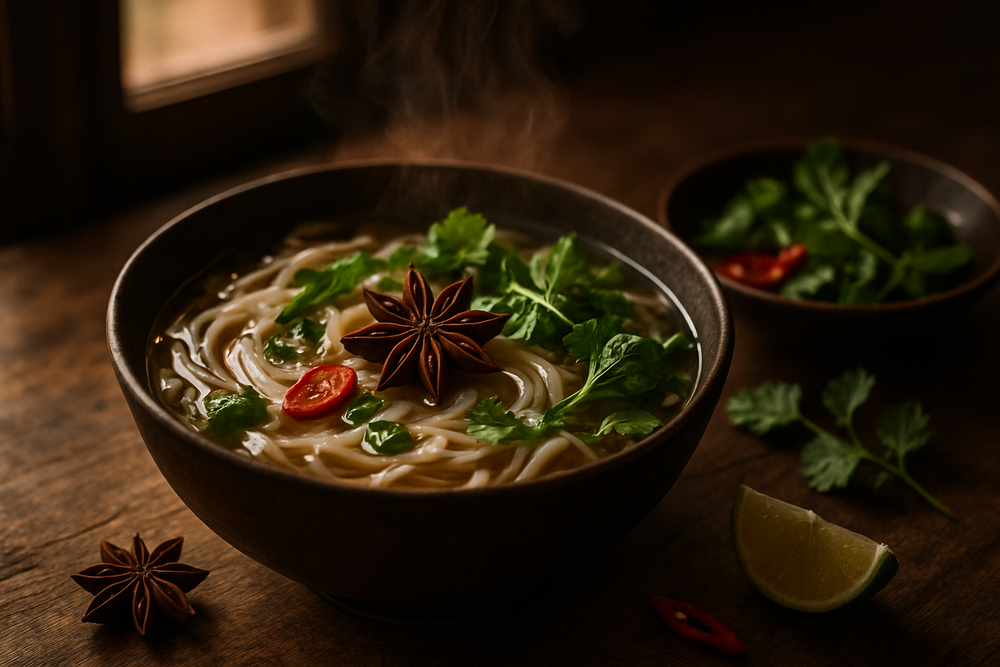
Star Anise · Photograph
Star anise is one of the most visually striking spices in any kitchen: a rust-brown, eight-pointed star that smells like licorice and tastes like a memory of winter. Botanically known as Illicium verum, it is the dried fruit of an evergreen tree native to southwestern China and northern Vietnam, and it has been part of both cooking and traditional apothecary practice for centuries.
Key Nutrients
% Daily Value based on 2,000 cal diet
Key active compounds
- Anethole — A phenylpropanoid (a type of aromatic plant molecule) that gives star anise its characteristic sweet, licorice-like scent. It is the same compound responsible for the similar aroma of anise seed and fennel. Lab and animal studies have looked at anethole for antimicrobial, anti-inflammatory, and potential hormone-modulating effects.
- Shikimic acid — A cyclohexene carboxylic acid found in star anise and several other plants. It is industrially important as a pharmaceutical precursor, but culinary amounts do not translate to pharmaceutical effects. Research into its direct dietary role in humans is limited.
- Flavonoids and polyphenols — Broad classes of antioxidant plant compounds (molecules that neutralize cell-damaging particles called free radicals) found in the pod's outer casing (the pericarp). They are explored in lab studies for roles in modulating oxidative stress and inflammation.
- Lignans and related phenolics — Smaller, structurally related plant compounds explored in early research for antioxidant effects. Specific human data for star anise–derived lignans remain scarce.
Prep and pairing ideas
Star anise rewards slow, gentle heat. Here are three practical ways to bring it into regular rotation:
1. Slow-simmered broth or ramen base Add 2 whole pods to a pot of vegetable or bone broth with ginger and garlic. Simmer for 30–45 minutes, then remove. The result is a warming, restaurant-quality base that needs very little else.
2. Poached pears or stone fruit Drop 1–2 pods into a light poaching liquid (water, a splash of orange juice, a cinnamon stick). The anethole in star anise deepens the perceived sweetness of the fruit without added sugar — a useful trick for desserts that feel indulgent and balanced.
3. Spiced morning oats or grain porridge Add one whole pod to the cooking water for oats or congee. Remove before eating. The flavor is subtle but warming — a simple way to build the habit of cooking with spice.
Myths vs. facts
Myth: Eating star anise will give you the same antiviral protection as Tamiflu. Fact: Shikimic acid from star anise is used industrially to synthesize oseltamivir (Tamiflu) in a pharmaceutical process. Eating the spice or drinking the tea does not deliver pharmaceutical doses of the drug or its precursor in your body. These are completely different things.
Myth: Star anise and anise seed are the same spice. Fact: They share a similar aroma (both contain anethole) but come from entirely different plant families. Star anise is a fruit from an Asian evergreen tree; anise seed is from a Mediterranean herb. They are not interchangeable in all culinary applications, and their traditional medicinal histories differ.
Myth: If it's a spice, it's automatically safe in any amount. Fact: Culinary doses of Chinese star anise are considered safe for most adults. But the essential oil is potent and potentially toxic in excess, and the risk of accidental use of Japanese star anise — particularly for teas prepared for infants — is a documented public health concern, not a theoretical one.
How Star Anise Compares
| Compared with | What's different |
|---|---|
| Star Anise vs. Anise Seed | A small Mediterranean seed with a similar licorice flavor but a milder, sweeter profile. |
| Star Anise vs. Fennel Seed | A green bulbous vegetable with feathery fronds that provides a fresh, herbal anise aroma. |
Health Benefits
Things to Know
Chinese vs. Japanese star anise: — This is the most important safety point on this page. Chinese star anise (Illicium verum) is the culinary spice. Japanese star anise (Illicium anisatum) is a related but toxic species that can cause seizures and other neurologic symptoms. They can look nearly identical whole. Always buy from a reputable supplier that labels the product as Illicium verum. Regulatory agencies in Europe and the US have issued warnings specifically about infants being given star anise teas that were contaminated with or mistakenly prepared from the toxic species.
Infants and young children: should not be given star anise teas or concentrated preparations at all, due to reported cases of neurologic reactions.
Pregnant and breastfeeding individuals: normal culinary use in food is generally considered low risk; medicinal teas, extracts, and essential oils lack safety data and should be avoided without professional guidance.
People with seizure disorders or neurologic conditions: should avoid medicinal-strength preparations or non-standard tea blends where sourcing is unclear.
Allergy cross-reactivity: if you are allergic to anise seed, fennel, or licorice, you may be at higher risk of a reaction to star anise, since all contain anethole.
Hormone-sensitive conditions: (such as estrogen-receptor-positive breast cancer, endometriosis, or uterine fibroids): medicinal-dose extracts are best avoided pending more data; culinary use is unlikely to be clinically significant.
Liver disease: high-dose extracts and essential oils have not been well studied for hepatic safety. Culinary use is considered low risk.
Anticoagulant medications: (such as warfarin or direct oral anticoagulants): theoretical interaction with concentrated extracts; normal food-level use is not known to cause problems, but flag it with your prescriber if using medicinal amounts.
CNS-active medications: (antiepileptics, sedatives): avoid non-standard teas or medicinal preparations where adulteration risk cannot be ruled out.
Essential oils: are highly concentrated and not interchangeable with culinary spice. Do not use internally without professional oversight.
Shop This Ingredient
Stock your pantry with quality star anise.
Buy on AmazonAs an Amazon Associate, Plantopedia earns from qualifying purchases. This costs you nothing extra and helps us keep the encyclopedia free.
Frequently Asked Questions
Most published research on star anise uses isolated extracts or animal models at doses far above what you'd encounter in food. Human trials are limited. What follows is an honest summary of where the research stands today. Heart and circulation Preclinical (lab and animal) studies suggest star anise's polyphenols may have antioxidant and lipid-modulating properties — meaning they might influence cholesterol or vascular function. No robust human trials have confirmed these effects with star anise as a primary intervention. The most evidence-aligned framing: star anise is a satisfying, low-sugar spice that fits naturally into plant-forward meals that are broadly good for cardiovascular health. Digestive health and microbiome Star anise has a long history of use as a carminative — a preparation that eases gas and bloating — in Chinese, Southeast Asian, and Mediterranean traditional medicine. Modern evidence for star anise benefits for digestion comes mainly from that traditional record and early mechanistic research, not controlled human trials. That said, aromatic spice teas (including star anise) are a comforting, low-calorie way to wind down after meals, and the ritual itself may support digestive ease. Blood sugar and metabolism Animal and lab studies on anethole and related compounds suggest possible effects on carbohydrate metabolism and oxidative stress. No well-designed human trials have tested culinary star anise for star anise for blood sugar outcomes. The practical angle: star anise creates sweetness perception in dishes without adding sugar, which can be a useful culinary tool in balanced eating patterns. Hormones and cycle health Some anethole-rich spices, particularly anise seed and fennel, have been studied for mild phytoestrogenic activity (meaning compounds that can weakly mimic or modulate estrogen in the body). Star anise shares anethole but has far less direct human data in this area. Star anise benefits for women and hormones remain speculative at this point; it should not be positioned as a hormonal remedy. People with hormone-sensitive conditions should consult a clinician before using it in medicinal quantities. Inflammation and recovery A 2020 review in Phytotherapy Research highlighted multiple bioactive compounds in star anise with antiviral and anti-inflammatory activity — in lab models. Translating those findings to humans eating the spice requires considerably more research. It is reasonable to describe star anise as a phytonutrient-rich aromatic spice with early research interest in anti-inflammatory pathways, without claiming it treats inflammatory conditions.
The form you choose shapes both flavor and practical use. Whole dried pods are the traditional choice. Add them to broths, braises, poaching liquids, mulled wine, or chai-style teas; remove before serving. They release flavor gradually and are easy to spot and discard. Ground star anise is more intense and integrates directly into a dish — ideal for spice rubs, baked goods, and spice blends. Use roughly half to a quarter the amount you might use of whole pods. Ground spice loses potency faster, so buy in small quantities and store in an airtight jar away from heat and light. Tea or infusion using one lightly crushed pod per cup, steeped five to ten minutes, is the simplest way to explore star anise tea benefits. Combine with cinnamon, ginger, or clove for a warming blend. A note: always use a trusted source labeled Illicium verum (see safety section below). Five-spice and spice blends: Star anise is one of the five in Chinese five-spice powder, alongside cloves, Sichuan pepper, fennel seeds, and cinnamon. This blend is a quick way to add depth to stir-fries, roasted vegetables, and marinades.
There is no established recommended daily intake for star anise as a food. The evidence base for precise dosing is thin, and most of what exists comes from traditional practice and small studies. Practical culinary guidance: In soups, stews, broths, or braises: 1–2 whole pods per pot (serving 4–6 people) is a standard starting point. This gives gentle flavor without overwhelm. In tea: 1 whole pod per cup, lightly crushed, steeped 5–10 minutes. One to two cups daily as part of a spiced tea habit is a reasonable culinary approach for most adults. Ground in cooking: Start with ¼ teaspoon per recipe serving 2–4 people and adjust to taste. In spice blends (e.g., five-spice): Follow recipe proportions; star anise is one of several spices and the individual contribution per serving is small. Start low, especially if star anise is new to you. The flavor is intense and it is easy to overdo, both for taste and out of caution regarding unfamil
Quick Answers
Common questions, answered in a line.
Star anise and anise seed are distinct spices from different plant families that share a similar licorice-like aroma due to the compound anethole. While they smell alike, star anise comes from an Asian evergreen tree, whereas anise seed is from a Mediterranean herb.
Star anise is a key source of shikimic acid, which is used industrially to synthesize the antiviral drug Tamiflu. However, consuming the spice in food or tea does not provide a pharmaceutical dose of the medication or offer the same antiviral protection.
Chinese star anise is a safe culinary spice, but Japanese star anise is a toxic species that can cause seizures and neurological symptoms. Because they look nearly identical, it is vital to buy from reputable suppliers that specifically label the product as Illicium verum.
Infants and young children should not be given star anise teas or concentrated preparations due to the risk of serious neurological reactions. Public health warnings have been issued regarding accidental contamination with the toxic Japanese variety in teas prepared for babies.
Star anise contains anethole, which gives it a sweet licorice scent, as well as shikimic acid, flavonoids, and polyphenols. These compounds are studied in laboratory settings for their potential antioxidant, antimicrobial, and anti-inflammatory properties.
Star anise pairs well with slow-simmered broths, poached fruits like pears, and morning oats or grain porridges. Adding one or two whole pods during the cooking process provides a warming, subtle sweetness and depth of flavor.
People with allergies to anise seed, fennel, or licorice may experience a cross-reaction to star anise because all of these plants contain the aromatic molecule anethole. If you have known sensitivities to these related spices, use star anise with caution.
For Readers in the USA
Local context — sourcing, seasonality, and regional notes.
You can find star anise at major U.S. grocery chains like Whole Foods and Kroger, or at Asian supermarkets like H-Mart and 99 Ranch Market. While smaller regional stores might carry it in the spice aisle, international markets often offer whole pods in bulk at a lower price point.
The FDA specifically warns consumers to avoid brewing teas from star anise due to the risk of toxic Japanese star anise (Illicium anisatum) being mixed with the edible Chinese variety. While the Chinese spice is safe for culinary use, the FDA advises caution because the two varieties are visually identical.
Star anise is not commercially grown in the U.S. mainland as it requires the specific subtropical climate of South China and Vietnam. Although it can grow in USDA hardiness zones 8-10, such as parts of Florida or the Gulf Coast, nearly all star anise sold in America is imported.
AI Clinical Review
- Clearly distinguishes Chinese star anise (Illicium verum) from toxic Japanese star anise (Illicium anisatum) and explains why correct sourcing matters.
- Sets realistic expectations: most research is lab/animal-based; human evidence for specific health outcomes is limited.
- Debunks the Tamiflu myth by noting that shikimic acid is an industrial precursor, not a dietary antiviral effect.
- Offers practical culinary guidance (whole vs. ground, simple tea preparation, pairing ideas) that fits a balanced eating pattern.
- Cardiovascular and metabolic effects (lipids, blood sugar) are suggested by preclinical work; controlled human trials using culinary amounts are lacking.
- Digestive comfort claims largely reflect traditional use; modern, well-designed human studies are sparse.
- Potential hormone-related effects are extrapolated from other anethole-rich spices; direct human data for star anise are minimal and dose relevance is unclear.
- Anti-inflammatory and antiviral properties are mechanistic findings; no evidence supports using the spice to prevent or treat infections.
- Reasonable culinary ranges: about 1–2 whole pods per pot of broth (serves 4–6); 1 lightly crushed pod per cup for tea (steep 5–10 minutes), up to 1–2 cups/day; ~¼ tsp ground spice per small recipe—avoid high-dose extracts and essential oils internally.
- Safety first: never use Japanese star anise; buy products labeled Illicium verum from reputable suppliers to reduce adulteration risk.
- Populations needing caution: infants/young children (avoid entirely), pregnancy or breastfeeding (stick to culinary use), seizure disorders or neurologic conditions (avoid nonstandard teas/concentrates), and those with hormone-sensitive conditions (avoid medicinal doses without clinician input).
- Potential interactions and sensitivities: concentrated preparations may interact with anticoagulants or CNS-active drugs and may not be ideal with liver disease; culinary amounts are generally well tolerated. Cross-reactivity is possible if you’re sensitive to anise, fennel, or licorice.
Use culinary framing; avoid treatment claims or supplement-dose guidance.
References
- PubMed — Antioxidant, Anti-Obesity, and Hypolipidemic Effects of Polyphenol Rich Star Anise (Illicium verum) Tea in High-Fat-Sugar Diet-Induced Obesity Rat Model (pubmed.ncbi.nlm.nih.gov)
- PubMed — Star anise (Illicium verum): Chemical compounds, antiviral properties, and clinical relevance (pubmed.ncbi.nlm.nih.gov)
- PMC, National Library of Medicine — Effects of star anise (Illicium verum Hook. f) and its extractions on carcass traits, relative organ weight, intestinal development, and meat quality of broiler chickens (pmc.ncbi.nlm.nih.gov)
- PubMed — Effects of star anise (Illicium verum Hook.f.) essential oil on nutrient and energy utilization of laying hens (pubmed.ncbi.nlm.nih.gov)
- PMC, National Library of Medicine — Case series: star anise toxicity presenting to the emergency department in Eastern Regional Referral Hospital in Bhutan (pmc.ncbi.nlm.nih.gov)
- PMC, National Library of Medicine — Illicium verum (Star Anise) and Trans-Anethole as Valuable Raw Materials for Medicinal and Cosmetic Applications (pmc.ncbi.nlm.nih.gov)
Know Your Numbers
Eating healthy is a start. Now get to know your biomarkers.
Food changes bloodwork — inflammation, lipids, blood sugar and nutrient status all respond to what you eat. 59 markers from $59.
- Results in 7–10 days at 2,000+ Quest sites
- Licensed provider reviews every result
- One flat price, no membership, HSA/FSA eligible
Educational information only, not medical advice. Panels are ordered and reviewed through our licensed partner; Plantopedia may earn a commission.