Stevia Leaf — health benefits and uses
Used in South American tradition as a naturally sweet, sugar-free herb.
The Short Answer
Stevia leaf is a natural, zero-calorie sweetener derived from the Stevia rebaudiana plant that is 200–300 times sweeter than sugar without raising blood glucose levels.

Stevia Leaf · Photograph
Discover the stevia leaf health benefits and side effects in plain language. Learn how this intensely sweet herb may support blood sugar, heart health, and weight management, plus safe daily amounts, prep tips, and who should use caution.
Key Nutrients
% Daily Value based on 2,000 cal diet
Key active compounds in stevia leaf
- Stevioside — The primary steviol glycoside (a type of sweet-tasting plant compound made of a core molecule attached to sugar units). Responsible for most of the leaf's sweetness and has been studied independently for blood sugar and blood pressure effects.
- Rebaudioside A (Reb A) — The cleanest-tasting and most concentrated steviol glycoside; the one most commonly isolated for commercial stevia extracts and also naturally present in the whole leaf.
- Total phenolic compounds (TPC) — A broad family of antioxidant molecules found abundantly in stevia leaf. Phenolics help neutralize free radicals (unstable molecules that can damage cells).
- Flavonoids — A subset of phenolics with well-documented antioxidant and anti-inflammatory properties in laboratory studies.
- Condensed tannins — Polymeric phenolics that give stevia its slight astringency (mouth-drying sensation) and contribute additional antioxidant activity.
- Dietary fiber — The indigestible carbohydrate in the leaf; small amounts at typical culinary doses, but meaningful if the leaf is consumed in larger food quantities.
Prep and pairing ideas
Stevia leaf is more versatile than most people assume. A few practical starting points:
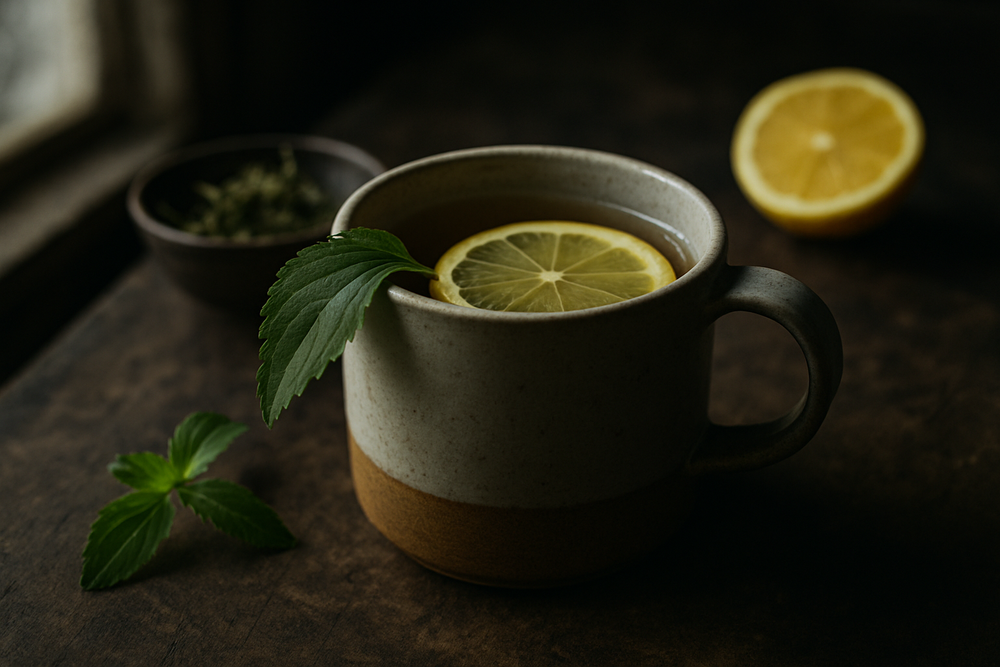
Classic herbal tea sweetener: Drop 1–2 fresh leaves or a generous pinch of dried leaf into your mug before pouring hot water. Steep 3–5 minutes, then remove (longer steeping = more bitterness). Works beautifully with chamomile, peppermint, or green tea.
Infused water: Muddle (lightly crush) 3–4 fresh leaves into a jug of cold water with sliced cucumber and mint. Let it infuse in the refrigerator for 2 hours. A gentle, refreshing sweetness with zero sugar.
Common pairings:
- Stevia leaf + fresh ginger root in hot water — Ginger's warming spice balances stevia's sweetness and masks any bitterness. Both ingredients have preliminary evidence for supporting blood sugar and digestion — a practical, evidence-curious pairing.
- Stevia leaf + cinnamon + oat milk — A naturally sweet, warming blend for a caffeine-free drink. Cinnamon adds its own blood-sugar-relevant phytochemicals (particularly cinnamaldehyde), and oat milk provides a creamy texture without dairy.
- Stevia leaf + hibiscus flower (dried) — Hibiscus is tart and slightly floral; stevia leaf rounds out the tartness without sugar. Hibiscus has its own preliminary data on blood pressure, making this a pleasant functional pairing.
Bottom line
Stevia leaf is one of the few herbs that genuinely earns the label "natural sweetener" in whole-plant form. The research is promising — particularly for modest blood sugar and blood pressure support — though the strongest human trials involve purified extracts, so translating those results directly to a pinch in your tea requires appropriate humility. What we can say confidently: using a small amount of dried or fresh stevia leaf to sweeten drinks is low-calorie, well-tolerated in the short term, and brings along antioxidant phytochemicals that table sugar simply doesn't offer.
The watchwords are small amounts and gradual introduction. This is an intensely potent herb — a little genuinely goes a long way — and it interacts with enough medications and conditions to warrant a quick conversation with your doctor if you're in any of the caution groups above. Used thoughtfully, stevia leaf is a useful, whole-food tool for anyone working toward less sugar and more plant diversity in their daily routine.
Looking to explore more ways food can support your health goals? Browse our [/goals] section for evidence-aligned ingredient guides organized by what you want to achieve.
How Stevia Leaf Compares
| Compared with | What's different |
|---|---|
| Stevia Leaf vs. Sugar | Contains calories and causes blood sugar spikes, whereas stevia has zero calories and is sugar-free. |
| Stevia Leaf vs. Aspartame | Artificial sweetener with a chemical profile, while stevia is a plant-based herbal sweetener. |
| Stevia Leaf vs. Erythritol | A fermented sugar alcohol with a cooling mouthfeel, while stevia is an herb with an earthy sweetness. |
Health Benefits
Things to Know
Diabetic medications: Stevia leaf may lower postprandial blood glucose. If you take insulin, sulfonylureas, metformin, DPP-4 inhibitors, or GLP-1 agonists, there is a potential additive effect that could cause hypoglycemia (blood sugar dropping too low). Monitor your blood sugar and consult your care team.
Blood pressure medications: ACE inhibitors, beta-blockers, angiotensin receptor blockers, and calcium channel blockers may have their effects amplified. If you already have low-normal blood pressure, start with very small amounts.
Diuretics and lithium: Theoretical interactions exist through changes in fluid balance and renal (kidney) handling. If you take either, discuss stevia leaf use with your doctor.
Kidney disease: Safety data for high chronic doses of whole leaf in people with significantly impaired kidney function are limited. Keep amounts small and seek professional guidance.
Pregnancy and breastfeeding: Insufficient high-quality human data exist for whole-leaf use. Conservative practice is to avoid beyond culinary pinch amounts.
Asteraceae/Compositae allergy: Stevia is in the same plant family as ragweed, daisies, and chrysanthemums. People with known allergies to these plants have a theoretical risk of cross-reactivity and should introduce stevia leaf cautiously.
Taste sensitivity: At higher doses, stevia leaf develops a distinct bitter, licorice-like aftertaste. This is not harmful, but it signals you've used more than needed.
Prep Ideas
- — Stevia leaf + fresh ginger root in hot water — Ginger's warming spice balances stevia's sweetness and masks any bitterness. Both ingredients have preliminary evidence for supporting blood sugar and digestion — a practical, evidence-curious pairing.
- — Stevia leaf + cinnamon + oat milk — A naturally sweet, warming blend for a caffeine-free drink. Cinnamon adds its own blood-sugar-relevant phytochemicals (particularly cinnamaldehyde), and oat milk provides a creamy texture without dairy.
- — Stevia leaf + hibiscus flower (dried) — Hibiscus is tart and slightly floral; stevia leaf rounds out the tartness without sugar. Hibiscus has its own preliminary data on blood pressure, making this a pleasant functional pairing.
Glossary
Shop This Ingredient
Stock your pantry with quality stevia leaf.
Buy on AmazonAs an Amazon Associate, Plantopedia earns from qualifying purchases. This costs you nothing extra and helps us keep the encyclopedia free.
Frequently Asked Questions
Heart and circulation The most clinically relevant heart-related finding comes from a randomized, double-blind, crossover trial (a study design where participants try both the treatment and a placebo in sequence, reducing bias) using dried stevia leaves as an add-on treatment in people with type 2 diabetes. Hypertensive participants (those with high blood pressure) saw a meaningful reduction in mean blood pressure during short-term stevia leaf use, with no adverse cardiovascular events reported. Separately, long-term randomized trials (one and two years in length) using high-purity stevioside — the purified form — found modest reductions in systolic and diastolic blood pressure in people with hypertension. Effect sizes were small and not all shorter studies replicated the finding, so this is best described as a promising signal rather than a proven outcome for everyday use. Lab and animal studies suggest stevia may promote vasodilation (widening of blood vessels) by modulating calcium channels and reducing oxidative stress in vascular tissue, but these mechanisms need more human confirmation. Digestive health and microbiome Direct human evidence for stevia leaf's effect on digestion is limited — most clinical trials have focused on blood sugar and blood pressure rather than gut outcomes. That said, dried stevia leaves do contain dietary fiber and non-digestible components that, in sufficient amounts, could modestly support stool bulk and gut microbial fermentation (the process by which gut bacteria break down fiber for their own nutrition and produce beneficial byproducts). At typical sweetening doses (a pinch), the fiber contribution is negligible. Some people notice mild bloating or loose stools when consuming larger amounts of stevia products, but clinical trials report good gastrointestinal tolerability overall. If you have irritable bowel syndrome (IBS) or a sensitive gut, start with a very small amount and see how you respond. Blood sugar and metabolism This is where the most compelling human data sits. A 60-day study in adults using 1 g/day of powdered stevia leaf reported significant reductions in both fasting blood glucose (blood sugar measured after not eating) and postprandial blood glucose (blood sugar measured after a meal) compared with a control group. The crossover trial in type 2 diabetes patients also showed meaningful reductions in postprandial glucose from short-term dried leaf use. Systematic reviews (studies that pool and analyze data from many individual studies) of stevia preparations broadly describe modest improvements in glucose tolerance and fasting glucose, with the strongest signals in people who already have elevated blood sugar or are insulin resistant. The caveat: most pooled data comes from purified steviol glycosides, not culinary leaf use. Extrapolating clinical trial doses to a daily pinch in tea requires caution. Still, replacing sugary drinks with stevia-leaf-sweetened ones mechanically reduces the glycemic (blood-sugar-raising) load of your diet, which itself is beneficial. Hormones and cycle health Human evidence here is thin and largely indirect. Some meta-analytic data on stevia-derived sweeteners show improvements in insulin sensitivity — the body's ability to respond to the hormone insulin — in people with type 2 diabetes or higher BMI (body mass index, a measure of body weight relative to height). This is a hormonal effect, but it relates to metabolic hormones rather than sex or thyroid hormones. High-dose animal studies have examined potential effects on reproductive parameters with inconsistent results; these findings have not been confirmed in humans. Due to limited safety data, conservative guidance is to avoid large chronic amounts of whole stevia leaf during pregnancy. Inflammation and antioxidant activity Dried stevia leaf scores well on standard laboratory antioxidant assays — DPPH scavenging (a test measuring how well a substance neutralizes a specific free radical) and FRAP (ferric reducing antioxidant power) — thanks to its phenolic and flavonoid content. These in vitro (test-tube) results suggest the leaf has meaningful antioxidant capacity. Whether that translates to measurable anti-inflammatory benefits in living humans at culinary doses is not yet established. No controlled human trials have specifically measured inflammation markers like CRP (C-reactive protein, a marker of systemic inflammation) or cytokines (immune signaling molecules) in response to whole stevia leaf intake. The evidence is mechanistically plausible but clinically unproven — worth knowing, but not worth overstating.
Myths vs. facts about stevia leaf forms Myth 1: "Stevia extract drops are basically the same thing as stevia leaf." Fact: Purified stevia extracts (drops, sachets) isolate one or two steviol glycosides and strip away everything else. The whole leaf retains fiber, minerals, flavonoids, and tannins alongside its sweetening compounds. Whether this extra complexity matters clinically at small doses is an open question, but they are nutritionally distinct products. Myth 2: "More stevia leaf means more health benefits." Fact: The leaf is so intensely sweet that just 1–2 fresh leaves or a pinch of dried leaf sweetens a full cup of tea. Exceeding this adds bitterness and takes you into dose ranges not well studied for long-term human safety. The sweet spot (literally) is using the minimum effective amount. Myth 3: "Green stevia powder is processed and less healthy than fresh leaves." Fact: Green stevia powder is simply dried, milled whole leaf — not chemically extracted. It is nutritionally very similar to the dried leaf and is actually the form used in clinical research (1 g/day powdered leaf for 60 days). It is a whole-food option that stores conveniently and measures easily. Choosing your form at a glance: Fresh leaf: Best for home growers; add 1–2 leaves directly to a mug, bruise lightly before steeping. Most perishable. Dried whole leaf: Great for herbal tea blends; a pinch (0.5–1 g) per cup. Easy to store. Green stevia powder: Convenient and measurable; most research-relevant whole-leaf form. Start with ¼ teaspoon or less per cup. Leaf infusion (stevia tea): Steep dried leaves in hot water; drink as tea or use the liquid to sweeten other drinks. Purified extracts (drops, tablets): Not whole-leaf, but backed by the strongest clinical trial data. Choose these if you want precise, consistent sweetness without any leaf taste.
The honest answer: a clear, universally agreed "recommended daily dose" for whole stevia leaf does not exist, because regulatory frameworks (like the FDA's GRAS — Generally Recognized As Safe — status) cover purified steviol glycosides, not the crude leaf. What research tells us: A 60-day study used 1 g/day of powdered dried stevia leaf — roughly ¼ teaspoon — and reported both efficacy and tolerability without adverse events. A crossover trial used dried stevia leaf as a short-term adjuvant (add-on) in type 2 diabetes with good safety results. For culinary sweetening, 1–2 fresh leaves or a pinch (0.5 g) of dried leaf per cup is typically more than enough. Practical start-low guidance: Begin with ½ to 1 fresh leaf per cup, or a very small pinch of dried leaf. Taste as you go — stevia's sweetness blooms as it steeps, and bitterness increases with excess. If using green stevia powder for metabolic support, 1 g/day (¼ teaspoon) over a limited trial period aligns with published research, but discuss this with a healthcare provider if you have diabetes or take medications. Avoid large, chronic amounts above a few grams per day — these ranges lack long-term human safety data.
People managing blood sugar or reducing sugar intake Replacing sugar in daily drinks with stevia leaf mechanically removes glycemic load from your diet. Short-term human trials suggest a direct glucose-lowering signal, especially meaningful if you have prediabetes or type 2 diabetes (under medical supervision). The whole leaf's antioxidant compounds may add value beyond simple calorie savings. People in weight management or following a whole-food, plant-based diet Every teaspoon of sugar replaced saves 16 calories and 4 g of added sugar — small per cup, but significant across daily drinks. As a whole-plant herb, stevia leaf fits naturally within a WFPB approach without artificial additives. Maintaining the enjoyment of sweetened drinks while reducing sugar makes dietary change more sustainable long-term.
Quick Answers
Common questions, answered in a line.
Stevia leaf contains active compounds like stevioside and Rebaudioside A, along with antioxidants such as flavonoids, phenolics, and condensed tannins. These compounds provide the leaf's intense sweetness while neutralizing free radicals and offering anti-inflammatory properties.
Stevia leaf may cause blood sugar to drop too low if combined with diabetic medications like insulin, metformin, or GLP-1 agonists. This additive effect can lead to hypoglycemia, so it is important to monitor levels and consult a doctor if you are on these medications.
You can use stevia leaf by steeping 1–2 fresh leaves or a pinch of dried leaf in hot tea, or by muddling leaves into water with cucumber and mint. For the best flavor, steep for only 3–5 minutes to avoid the bitterness that develops with longer times.
People with allergies to the Asteraceae family, which includes ragweed, daisies, and chrysanthemums, should use stevia leaf with caution due to potential cross-reactivity. Stevia belongs to the same plant family and may trigger allergic responses in sensitive individuals.
Stevia leaf may amplify the effects of blood pressure medications such as ACE inhibitors, beta-blockers, and calcium channel blockers. If you already have low-normal blood pressure, you should start with very small amounts to avoid an excessive drop.
Stevia leaf pairs well with ginger to mask bitterness, cinnamon and oat milk for a warming drink, or hibiscus flower to balance tartness. These combinations not only improve taste but also provide additional antioxidant and phytochemical benefits.
For Readers in the USA
Local context — sourcing, seasonality, and regional notes.
You can grow stevia as a perennial in USDA Hardiness Zones 9 through 11, though it is typically grown as a warm-season annual in most other U.S. regions. To thrive, the plants require full sun and well-drained soil, usually reaching peak sweetness for harvest in late summer or early fall before the first frost.
Fresh stevia leaves are most commonly found at local farmers markets or specialty nurseries, while dried whole leaves are typically stocked at health food stores and online retailers like Thrive Market or Amazon. Major U.S. grocery chains like Whole Foods or Sprouts often carry stevia, though they primarily stock processed extracts rather than the whole leaf.
In the United States, the FDA has granted "Generally Recognized as Safe" (GRAS) status to high-purity steviol glycosides, but the sale of whole stevia leaves and crude extracts as food additives is not currently permitted. Under the Dietary Supplement Health and Education Act (DSHEA), whole stevia leaf can be sold legally in the U.S. as a dietary supplement.
To ensure you are getting a product free from synthetic pesticides, look for the USDA Organic seal on dried stevia leaf packaging. Because whole stevia leaf is sold as a supplement in the U.S., the USDA Organic certification provides an extra layer of verification regarding the agricultural practices used during cultivation.
AI Clinical Review
- Clearly distinguishes whole stevia leaf from purified steviol glycosides and sets appropriate expectations about where most human data come from.
- Frames blood‑sugar and blood‑pressure effects as modest and most evident in people with type 2 diabetes or hypertension, without overselling.
- Notes the leaf’s antioxidant polyphenols while acknowledging that lab (in‑vitro) results don’t guarantee clinical benefits at culinary doses.
- Offers practical tips on using very small amounts and pairing flavors to limit bitterness—useful for real‑world success and safety.
- Human trials with whole leaf are few, small, and short (weeks to ~2 months); findings from purified extracts may not translate to a culinary pinch.
- Gut microbiome effects and anti‑inflammatory outcomes (e.g., changes in CRP or cytokines) haven’t been established in robust human studies.
- Long‑term safety at multi‑gram daily intakes, and use during pregnancy or lactation, remain insufficiently characterized.
- Natural variability in leaf composition and lack of standardized dosing limit how confidently we can generalize results.
- Dose: for sweetening, a pinch (~0.5–1 g) per cup is typically enough; the best‑studied whole‑leaf amount is ~1 g/day of green powder for up to 60 days—use cautiously and monitor if you track glucose.
- Medication interactions: stevia may modestly lower blood glucose and blood pressure; people on insulin, sulfonylureas, GLP‑1s, metformin, ACE inhibitors, ARBs, beta‑blockers, or calcium‑channel blockers should discuss routine use with a clinician.
- Populations needing caution: pregnancy/breastfeeding, chronic kidney disease, low‑normal blood pressure, and those with Asteraceae (ragweed/daisy) allergies.
- Form and regulation: in the U.S., safety determinations (e.g., GRAS and an acceptable daily intake) apply to high‑purity steviol glycosides, not to whole‑leaf products; stick to small culinary amounts and choose reputable sources.
Whole leaf is very potent; use small amounts.
References
- USDA FoodData Central — Stevia leaf nutritional data (fdc.nal.usda.gov)
- Randomized double-blind crossover trial: dried stevia leaf in type 2 diabetes (blood sugar and blood pressure outcomes) (dau.url.edu)
- Systematic review and meta-analysis: stevia leaf and diabetes in preclinical models (onlinelibrary.wiley.com)
- Evidence-based systematic review of stevia by the Natural Standard Research Collaboration (pubmed.ncbi.nlm.nih.gov)
- Review: Natural sweetener Stevia rebaudiana — functionalities, health benefits, and technological applications (PMC) (pmc.ncbi.nlm.nih.gov)
- Nutritional evaluation of dried stevia leaf and its infusion profile (longdom.org)
- Nutritional evaluation of stevia leaves by chemical, biological, and microbiological studies (gavinpublishers.com)
- Frontiers in Nutrition: Progress review on Stevia rebaudiana Bertoni (frontiersin.org)
- Safety and side effects overview: Is stevia leaf bad for you? (thelivinglook.com)
- Stevia dried leaves nutrient tables (diet-health.info) (diet-health.info)
Know Your Numbers
Eating healthy is a start. Now get to know your biomarkers.
Food changes bloodwork — inflammation, lipids, blood sugar and nutrient status all respond to what you eat. 59 markers from $59.
- Results in 7–10 days at 2,000+ Quest sites
- Licensed provider reviews every result
- One flat price, no membership, HSA/FSA eligible
Educational information only, not medical advice. Panels are ordered and reviewed through our licensed partner; Plantopedia may earn a commission.