Tamarillo — health benefits and uses
An Andean tree tomato eaten sweet or savory across South America and New Zealand.
The Short Answer
Tamarillo is a nutrient-dense fruit providing 29.8 mg of vitamin C and 321 mg of potassium per serving. You eat it by scooping out the tangy pulp or peeling the bitter skin to use the fruit in salsas, chutneys, or yogurt bowls.
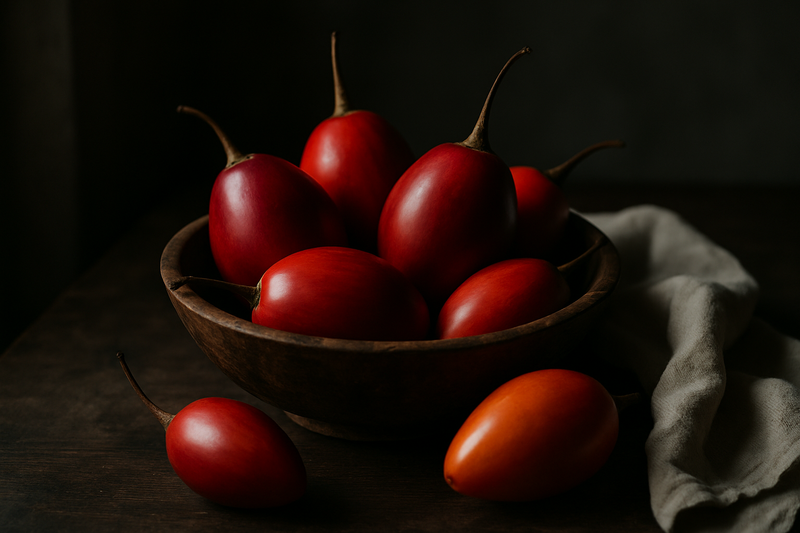
Tamarillo · Photograph
Discover tamarillo health benefits and how to eat it safely — from scooping the tangy pulp raw to cooking it into chutneys and sauces. Learn tamarillo nutrition facts, active compounds, cautions, and easy prep ideas. Not medical advice.
Key Nutrients
% Daily Value based on 2,000 cal diet
Key active compounds (phytochemicals)
Phytochemical means any biologically active compound naturally found in plants. Here are the main ones identified in tamarillo:
- Anthocyanins — Water-soluble flavonoid pigments that give red and purple fruits their color. In cell studies, tamarillo anthocyanins show strong antioxidant and potential vascular-protective effects.
- Phenolic acids (especially chlorogenic acid) — A class of polyphenols (plant compounds with multiple chemical ring structures) linked to antioxidant and anti-inflammatory activity in mechanistic research.
- Flavonoids (quercetin, kaempferol) — Widely studied polyphenols that display radical-scavenging, anti-inflammatory, and cell-growth-modulating properties in laboratory settings.
- Carotenoids (beta-carotene, lycopene) — Fat-soluble pigments; beta-carotene converts to vitamin A in the body. Both are associated with eye and cardiovascular health in broader nutrition science.
- Vitamin E (alpha-tocopherol) — A fat-soluble antioxidant that helps protect cell membranes.
- Alkaloids — Nitrogen-containing compounds common in the Solanaceae family. Metabolomic profiling (the measurement of small molecules in a biological sample) shows tamarillo contains several alkaloids that may contribute to its observed antitumor activity in cell lines, but their effects at typical dietary doses in humans are not yet defined.
Prep and pairing ideas
3 practical pairings and why they work:
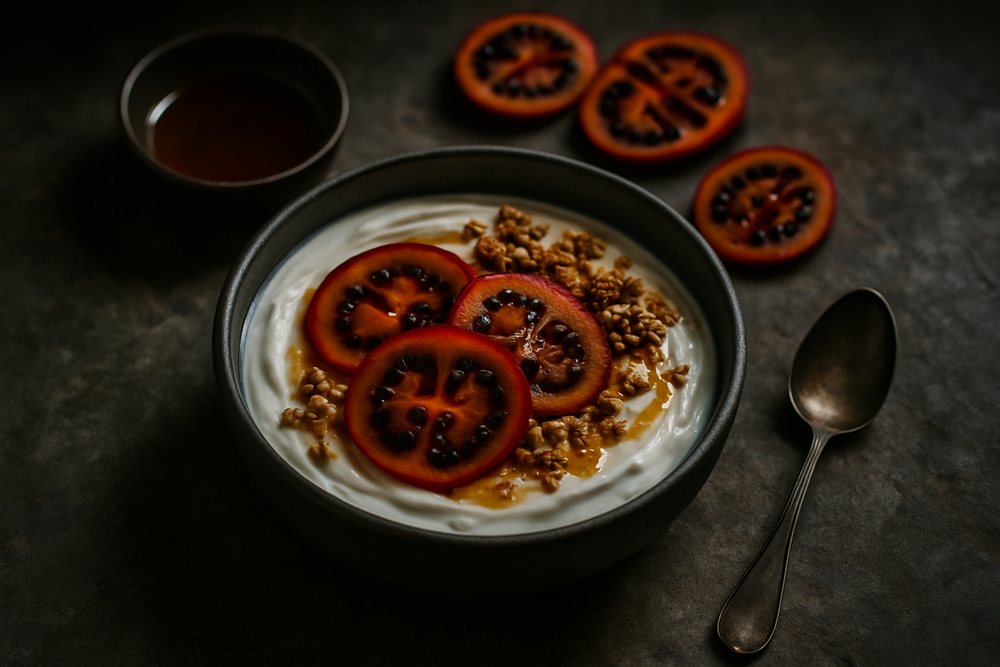
- Tamarillo + Greek yogurt + honey — The yogurt's creaminess tames the tartness; the fat helps absorb fat-soluble carotenoids; and the honey balances acidity for a simple breakfast bowl.
- Tamarillo + red onion + lime in a fresh salsa — The acidity of tamarillo mimics tomato but goes deeper; it pairs naturally with the sulfur sweetness of onion and the brightness of lime for a topping that works on grilled fish, beans, or tacos.
- Tamarillo + ginger + apple cider vinegar as a chutney — Slow cooking concentrates the flavor; ginger adds warmth and its own anti-inflammatory phenolics; the finished chutney stores well and adds complexity to cheese boards, curries, or grain bowls.
Quick prep tips:
- To peel easily, score an X at the base, dip in boiling water for 30 seconds, then transfer to ice water — the skin slips off cleanly.
- Store uncut tamarillos at room temperature until ripe (they give slightly when pressed), then refrigerate and use within a week.
- The seeds are edible and slightly crunchy; no need to remove them from the pulp.
Bottom line
Tamarillo is a genuinely nutritious, low-calorie fruit with a striking antioxidant profile — vitamins C, A, and E, plus anthocyanins, chlorogenic acid, carotenoids, and flavonoids. The human clinical evidence for specific health outcomes is still catching up to the fruit's impressive lab-based profile, so it is best framed as a flavorful addition to a plant-rich diet rather than a medicinal food. Peel the skin, enjoy the pulp raw or cooked, and treat it like you would any other vibrant whole fruit: eat it regularly, vary it with other colorful options, and let the overall dietary pattern do the heavy lifting for long-term health.
Looking for ways to build meals around whole plant foods like tamarillo? Browse our ingredient goals guides for pattern-based eating ideas.
How Tamarillo Compares
| Compared with | What's different |
|---|---|
| Tamarillo vs. Tomato | Sweeter and less acidic; tamarillos have a tart, tangy profile and edible seeds. |
| Tamarillo vs. Tomatillo | Smaller and sweeter with a papery husk; tamarillos are larger and more pungent. |
| Tamarillo vs. Passion Fruit | Slightly higher vitamin C and tropical flavor; tamarillos have a more savory, tomato-like base. |
Health Benefits
Things to Know
Nightshade sensitivity: Tamarillo belongs to the Solanaceae (nightshade) family. If you have a known sensitivity or allergy to tomatoes, eggplant, or related plants, introduce tamarillo cautiously and watch for reactions.
Acid reflux / GERD: The fruit is quite acidic. Large servings may trigger heartburn or mouth irritation in people with gastroesophageal reflux disease (GERD — a condition where stomach acid flows back into the oesophagus) or acid-sensitive digestion.
Kidney disease and potassium: One tamarillo provides about 321 mg of potassium. People with advanced chronic kidney disease who follow a potassium-restricted diet should count this toward their daily limit and discuss with a dietitian.
Medication interactions: If you take potassium-sparing diuretics, ACE inhibitors, or angiotensin receptor blockers (blood-pressure medications that raise potassium levels), be aware that tamarillo adds to your dietary potassium load — similar to other fruits.
Pregnancy and breastfeeding: Tamarillo as an ordinary food is generally not flagged as unsafe, but specific safety data in pregnancy are limited. Use culinary amounts as part of a balanced diet and check with your provider.
Concentrated extracts: Lab-grade tamarillo extracts are not standardized for consumer use. Stick to whole food or minimally processed forms.
Always peel the skin: The skin is bitter, contains higher concentrations of alkaloids, and is not typically eaten. The edible part is the pulp.
Prep Ideas
- — Tamarillo + Greek yogurt + honey — The yogurt's creaminess tames the tartness; the fat helps absorb fat-soluble carotenoids; and the honey balances acidity for a simple breakfast bowl.
- — Tamarillo + red onion + lime in a fresh salsa — The acidity of tamarillo mimics tomato but goes deeper; it pairs naturally with the sulfur sweetness of onion and the brightness of lime for a topping that works on grilled fish, beans, or tacos.
- — Tamarillo + ginger + apple cider vinegar as a chutney — Slow cooking concentrates the flavor; ginger adds warmth and its own anti-inflammatory phenolics; the finished chutney stores well and adds complexity to cheese boards, curries, or grain bowls.
- — To peel easily, score an X at the base, dip in boiling water for 30 seconds, then transfer to ice water — the skin slips off cleanly.
- — Store uncut tamarillos at room temperature until ripe (they give slightly when pressed), then refrigerate and use within a week.
- — The seeds are edible and slightly crunchy; no need to remove them from the pulp.
Glossary
Shop This Ingredient
Stock your pantry with quality tamarillo.
Buy on AmazonAs an Amazon Associate, Plantopedia earns from qualifying purchases. This costs you nothing extra and helps us keep the encyclopedia free.
Frequently Asked Questions
A clear honest note up front: most tamarillo-specific research is at the in vitro (test tube or cell culture) stage. Human clinical trials directly testing tamarillo for health outcomes are very limited. The benefits below are grounded in the fruit's nutrient profile and, where noted, mechanistic or cell-based data. They should not be read as proven therapeutic effects. Heart and circulation Tamarillo pulp supplies potassium, vitamin C, carotenoids, and dietary fiber — nutrients that human nutrition research consistently associates with healthier blood pressure and vascular function when consumed from fruits broadly. In vitro studies of tamarillo extracts demonstrate high antioxidant capacity, which could in theory help reduce oxidative stress (cell damage from unstable molecules called free radicals) relevant to heart disease progression. However, no controlled human trials have directly linked tamarillo intake to reduced cardiovascular events or blood pressure changes, so any heart-health framing should be understood as plausible rather than proven. Digestive health and microbiome Tamarillo provides about 3.3 g of dietary fiber per 100 g — a meaningful contribution from one piece of fruit. Fiber adds bulk to stool, supports intestinal motility (the rhythmic muscle movement that moves food through your gut), and feeds beneficial gut bacteria. The human evidence base for dietary fiber and improved bowel regularity, and for higher fruit intake and lower digestive disease risk, is robust. Tamarillo has not been tested directly in clinical trials on constipation or gut microbiome outcomes, but its fiber and organic acid composition make it a reasonable contributor to overall digestive health as part of a high-variety, plant-rich diet. Blood sugar and metabolism Tamarillo is low in calories and carbohydrates and relatively high in fiber, a profile that generally helps moderate the glucose spike (rapid rise in blood sugar) that follows a meal. Laboratory studies report that tamarillo extracts inhibit carbohydrate-digesting enzymes, which could theoretically slow glucose absorption. No human intervention studies have confirmed this effect in people with diabetes or metabolic syndrome (a cluster of conditions including high blood sugar, high blood pressure, and excess belly fat). Tamarillo can fit into a balanced dietary pattern for most people, but it is not a glucose-lowering treatment. Inflammation and recovery The phenolic acids, flavonoids, and anthocyanins in tamarillo all show anti-inflammatory activity in cell studies. Chlorogenic acid in particular has a well-documented antioxidant and anti-inflammatory profile across the plant foods literature. What is less clear is whether the amounts present in one or two tamarillos per day translate to measurable reductions in inflammatory biomarkers (measurable signals in the blood that indicate inflammation levels) in living humans. Research is ongoing; current evidence is encouraging but not conclusive.
Fresh raw pulp: the gold standard for nutrients Eating the raw pulp preserves the most vitamin C and many heat-sensitive polyphenols. Simply score around the equator of the fruit, twist the halves apart, and scoop the pulp with a spoon — or slice and peel like an avocado. Raw tamarillo works in fruit salads, salsas, and on top of yogurt or oatmeal. Chutneys, sauces, and savory cooking Heat reduces some vitamin C, but many phenolics and anthocyanins survive mild cooking. Simmering tamarillo into a chutney or pasta-style sauce is one of the most popular traditional uses, and studies show cooked tamarillo products retain substantial antioxidant activity. Cooking also softens the sourness, making it more approachable if you find raw tamarillo very tart. Smoothies and purees Blending the pulp into a smoothie is an easy entry point. Note that straining out the seeds removes some fiber. Pairing tamarillo with a small amount of fat (like nut butter or avocado in the same smoothie) can improve absorption of its fat-soluble carotenoids. Dried, processed, and concentrated forms Drying and jam-making alter the phytochemical profile but can still yield antioxidant-rich foods. Concentrated extracts (as studied in labs) are not yet standardized for consumer use and have no established safe dosage range for humans.
The adventurous whole-food eater Already eats a variety of fruits and wants to expand their antioxidant range beyond the usual berries. Interested in low-calorie, high-nutrient options that add bold flavor to savory cooking. Comfortable peeling and prepping an unfamiliar fruit. The fiber-focused digestive health seeker Looking to increase daily fiber without adding many calories. Enjoys tangy, acidic flavors and tolerates them well. Wants a fruit that doubles as a savory cooking ingredient (chutneys, sauces) for versatility.
No specific therapeutic dose has been established for tamarillo in human studies. From a whole-food standpoint, treating tamarillo the same way you would any nutrient-dense fruit is sensible: Typical serving: 1 medium peeled fruit (approximately 60–100 g of pulp), which counts as roughly one fruit serving in line with MyPlate guidance. Practical range: 1–2 fruits per day is common in populations where tamarillo is a dietary staple, and there is no evidence that this level causes harm in healthy adults. Start low if you are new to it: Try half a fruit first. Its tartness and acidity can be surprising, and starting small lets you gauge how your stomach responds, especially if you are acid-sensitive. No need to eat it every day: Variety across many colorful fruits will give you a broader phytochemical range than any single fruit can. Think of tamarillo as one excellent option among many, not a required daily supplement.
Quick Answers
Common questions, answered in a line.
You can eat tamarillo raw by scooping the tangy pulp directly from the fruit or using it in fresh salsas. To make prep easier, score an X at the base and dip the fruit in boiling water for 30 seconds to help the bitter skin slip off cleanly.
Tamarillo skin is generally not eaten because it has a bitter taste and contains higher concentrations of alkaloids. While the inner pulp and edible seeds are consumed, it is recommended to always peel or scoop out the fruit before eating.
Tamarillo contains active phytochemicals like anthocyanins, chlorogenic acid, and flavonoids such as quercetin and kaempferol. These compounds are linked to antioxidant and anti-inflammatory activities in laboratory settings, though human clinical evidence is still developing.
People with nightshade sensitivities, acid reflux (GERD), or advanced chronic kidney disease should exercise caution with tamarillo. The fruit belongs to the Solanaceae family, is quite acidic, and contains about 321 mg of potassium per fruit.
Tamarillo can be paired with Greek yogurt and honey to balance its acidity, or cooked with ginger and apple cider vinegar to create a complex chutney. It also works well in fresh salsas combined with red onion and lime to top grilled fish or tacos.
Store uncut tamarillos at room temperature until they are ripe and give slightly when pressed. Once ripe, you should transfer them to the refrigerator and consume them within one week.
For Readers in the USA
Local context — sourcing, seasonality, and regional notes.
In the United States, tamarillos are primarily grown in the frost-free coastal regions of Southern California and parts of Florida. While they thrive in these Mediterranean and subtropical climates, the majority of the US supply is imported from New Zealand to ensure year-round availability.
Tamarillos are most commonly found at specialty grocers like Whole Foods Market, international markets (particularly Latin American or Asian stores), and through online tropical fruit distributors. Because they are often imported from the southern hemisphere, they typically appear in US produce aisles from May through October.
While often called "Tree Tomatoes" in their native regions, they are almost exclusively labeled as Tamarillos in US supermarkets to distinguish them from garden tomatoes. You may also occasionally see them sold under the name "tomeate" in Hispanic specialty markets.
The USDA does not have specific grading standards for tamarillo, but consumers should look for the USDA Organic seal if they wish to avoid synthetic pesticides. Like other members of the Solanaceae family, the FDA advises that the bitter skin should be removed before consumption to avoid potential digestive irritation.
AI Clinical Review
- Clearly presents tamarillo as a low‑calorie, nutrient‑dense fruit with meaningful vitamin C, provitamin A, vitamin E, and fiber—consistent with standard nutrition databases.
- Appropriately frames potential benefits within a whole‑food, plant‑forward pattern rather than as a stand‑alone treatment.
- Transparently notes that most evidence comes from laboratory and compositional studies, with limited human trials.
- Provides practical, accurate guidance on peeling, serving size (about one medium fruit), storage, and versatile culinary uses.
- Antioxidant and anti‑inflammatory findings are largely in vitro (cell/test‑tube) and may not translate to measurable benefits in people without clinical trials.
- Enzyme‑inhibition and “antitumor” signals are preliminary and based on extracts at doses not reflective of typical food intake.
- Cardiometabolic claims (blood pressure, glucose, lipids) are inferred from nutrient patterns; tamarillo itself hasn’t been tested in controlled human studies.
- Statements about “higher antioxidant capacity” than tomatoes depend on assay type and variety/ripeness; real‑world relevance is uncertain.
- Nightshade family: individuals with allergies/sensitivities to tomato, eggplant, or related plants should introduce tamarillo cautiously and watch for symptoms.
- Acidity: may aggravate reflux/GERD or cause mouth irritation; start with small portions if you’re acid‑sensitive.
- Potassium: one fruit contributes meaningfully; people with chronic kidney disease or on ACE inhibitors/ARBs or potassium‑sparing diuretics should account for this and check with a clinician.
- Form and dose: prioritize whole fruit; concentrated extracts aren’t standardized for safety or dosing. A practical food range is 1–2 fruits as desired within a varied diet.
The bitter skin is peeled off; the tart pulp is what is eaten.
References
- USDA FoodData Central — Tamarillo, raw (nutrition baseline for this guide): (fdc.nal.usda.gov)
- MyPlate fruit guidance — USDA dietary framework: (myplate.gov)
- PMC review: Tamarillo wastes, by-products, and bioactive profile (2024): (pmc.ncbi.nlm.nih.gov)
- PubMed: Nutritional compositions and antiproliferative activities of tamarillo ethanol extract fractions: (pubmed.ncbi.nlm.nih.gov)
- ScienceDirect: Nutraceutical properties of tamarillo fruits — vibrational spectroscopy study: (sciencedirect.com)
- International Journal of Food Science and Technology: Antioxidant capacity, antitumor activity and metabolomic profile of tamarillo: (academic.oup.com)
- ScienceDirect: Phytochemical composition of red tamarillo and metabolic syndrome prevention potential: (sciencedirect.com)
- Academia.edu: Phytochemical constituents and antioxidant activity of fresh vs cooked tamarillo using different drying methods: (academia.edu)
- Wiley: Potential health benefits of subtropical fruits including tamarillo (book chapter): (onlinelibrary.wiley.com)
- Malaysian International Food Research Journal: Comparison of antioxidant properties of tamarillo with selected fruits: (ifrj.upm.edu.my%202014/42%20IFRJ%2021%20(06)%202014%20Asmah%20079.pdf)
Know Your Numbers
Eating healthy is a start. Now get to know your biomarkers.
Food changes bloodwork — inflammation, lipids, blood sugar and nutrient status all respond to what you eat. 59 markers from $59.
- Results in 7–10 days at 2,000+ Quest sites
- Licensed provider reviews every result
- One flat price, no membership, HSA/FSA eligible
Educational information only, not medical advice. Panels are ordered and reviewed through our licensed partner; Plantopedia may earn a commission.