Thai Basil — health benefits and uses
Valued across Southeast Asia as a warming digestive and cold remedy.
The Short Answer
Thai basil is a heat-tolerant herb known for its distinct licorice-like aroma and high vitamin K content. Unlike sweet basil, its sturdy leaves hold up well in stir-fries and curries, providing essential antioxidants like eugenol and linalool.
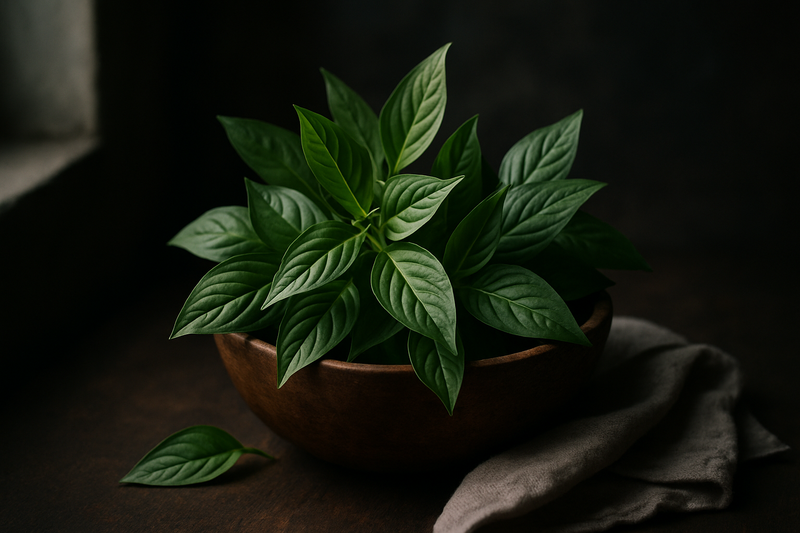
Thai Basil · Photograph
Discover Thai basil health benefits and nutrition facts, from its exceptional vitamin K content to antioxidant compounds like eugenol and linalool. Learn how this heat-tolerant herb fits into curries, stir-fries, and a whole food plant-based diet — plus what to know if you take blood thinners.
Key Nutrients
% Daily Value based on 2,000 cal diet
Key active compounds in Thai basil
- Linalool — A monoterpene alcohol (a fragrant compound from the terpene family) that gives Thai basil its floral, slightly citrusy top note. In mechanistic (lab-based) studies, linalool shows antioxidant and potential anti-anxiety effects.
- Eugenol — A phenylpropanoid (an aromatic compound also found in cloves) responsible for Thai basil's faint spice. Displays free-radical scavenging, anti-inflammatory, and antimicrobial activity in cell and animal studies.
- Flavonoids — Polyphenolic (multi-ring) plant pigments that help protect cells from oxidative damage and may influence inflammatory pathways.
- Phenolic acids (including rosmarinic acid) — Aromatic compounds that contribute strongly to Thai basil's antioxidant capacity; water extracts of Thai basil test especially high in total phenolics.
- Carotenoids (including beta-carotene) — Fat-soluble orange-yellow pigments that act as vitamin A precursors and antioxidants; they contribute to Thai basil's deep green color.
- Chlorophylls — Green photosynthetic pigments also associated with antioxidant activity and, in preliminary research, with detoxification pathways.
Prep and pairing ideas
Thai basil is one of the easier herbs to work with once you understand one rule: heat is its enemy at the flavor stage, not the cooking stage. Here is how to get the most from it.
Stir-fries (pad kra pao style): Toss a large handful of whole leaves into the wok in the last 30 seconds of cooking. The residual heat wilts the leaves just enough while preserving most of the aroma.
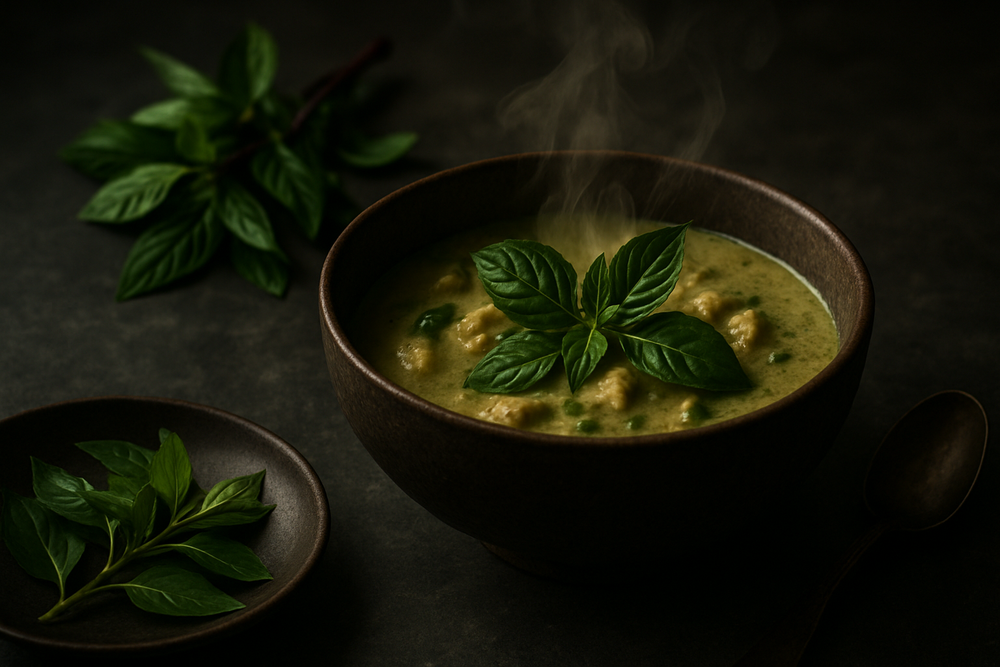
Green and red curries: Stir leaves into the curry off the heat, or float them on top when serving. The fat in coconut milk also helps absorb fat-soluble carotenoids and vitamins A and K.
Pho and noodle soups: Serve fresh Thai basil leaves on the side plate alongside bean sprouts and lime — diners add their own to personal taste, keeping the herb fully raw and aromatic.
Buying guide: what to look for
Fresh: Look for bright green (or purple-tinged) leaves with no yellowing or sliminess. Stems should be firm and purple. Avoid bunches where the leaves are already wilted — Thai basil deteriorates quickly once cut.
Storing fresh Thai basil: Treat it like cut flowers. Trim the stems and stand the bunch in a glass of water on the counter (not in the fridge — cold damages the leaves). Cover loosely with a plastic bag. Use within 4–5 days.
Dried: Check for a strong, still-recognizable anise scent when you open the jar. If it smells like dust, the volatile oils are gone and you are buying flavor-free fiber. Opt for brands that pack in smaller jars to improve turnover.
Frozen: Some Asian grocery stores sell frozen Thai basil leaves, which hold their color and flavor reasonably well in cooked dishes but will not work as a fresh garnish.
Supplement / extract: No standardized Thai basil supplement exists for human use. Be cautious of products making specific health claims — the human trial evidence is not there to support them.
Bottom line
Thai basil is a genuinely nutrient-dense culinary herb that earns a regular place in a whole food plant-based kitchen — not because it is a superfood in the clinical sense, but because it layers real micronutrients and well-characterized antioxidant compounds into meals that might otherwise lack them. Its vitamin K content is the one detail that deserves attention if you are on blood-thinning medication; for everyone else, consistency and generosity are more relevant than caution.
The human trial evidence for specific health outcomes is sparse and early. What is solid is the nutrition profile and the phytochemical fingerprint. Used as traditional Southeast Asian cooking uses it — abundantly, fresh, and late in the cooking process — Thai basil is one of the more rewarding ways to add plant diversity to your plate.
Looking for ways to build Thai basil into a broader anti-inflammatory or digestive-health routine? Browse the Plantopedia goals hub for curated herb and ingredient combinations.
How Thai Basil Compares
| Compared with | What's different |
|---|---|
| Thai Basil vs. Sweet Basil (Genovese) | Thai basil has a sturdy, purple stem and a distinct licorice or anise flavor profile. |
| Thai Basil vs. Holy Basil (Tulsi) | Holy basil is peppery and musky; Thai basil is sweeter with citrus and anise notes. |
Health Benefits
Things to Know
Warfarin and anticoagulants: Thai basil is exceptionally high in vitamin K, which plays a central role in blood clotting. Large or suddenly inconsistent amounts can theoretically alter how well warfarin (a blood thinner) works. If you are on warfarin or a similar drug, do not avoid Thai basil, but do keep your intake consistent week to week and discuss it with your prescribing provider.
Other antiplatelet medications: Consistent vitamin K intake is generally recommended alongside anticoagulant or antiplatelet therapy — Thai basil is fine to include as long as the amount doesn't swing dramatically.
Lamiaceae family allergy: Thai basil belongs to the same plant family (Lamiaceae) as mint, oregano, and thyme. If you have a known allergy to any of these, introduce Thai basil cautiously.
Pregnancy and breastfeeding: Culinary amounts are widely considered safe. Concentrated extracts or essential oils should be avoided during pregnancy due to limited safety data.
Children: Culinary amounts in food are fine. Thai basil essential oil products are not appropriate for young children.
Bleeding disorders: Anyone managing vitamin K intake for medical reasons should account for Thai basil, especially if eating it in generous quantities.
Glossary
Shop This Ingredient
Stock your pantry with quality thai basil.
Buy on AmazonAs an Amazon Associate, Plantopedia earns from qualifying purchases. This costs you nothing extra and helps us keep the encyclopedia free.
Frequently Asked Questions
Heart and circulation Thai basil has not been tested in cardiovascular clinical trials as a standalone food. What researchers do know is that its phytochemical profile — high phenolic acids, flavonoids, and essential oil compounds — overlaps significantly with the class of plant foods associated with reduced markers of oxidative stress and endothelial (blood vessel lining) inflammation in the broader diet literature. Its vitamin K content is also relevant: vitamin K plays a role in regulating calcium deposition in arteries, a process linked to cardiovascular risk. Evidence at this stage is mechanistic and indirect; no one can say Thai basil "protects your heart," but its nutrient and compound profile is consistent with a heart-supportive dietary pattern. Digestive health and microbiome Traditional medicine across Southeast Asia has long used basil as a carminative herb — meaning it may help ease gas, bloating, and mild indigestion. The proposed mechanism involves essential oils like eugenol and linalool relaxing smooth muscle in the gut and exhibiting mild antimicrobial effects. No controlled human trials have tested Thai basil for IBS (irritable bowel syndrome), dyspepsia, or microbiome outcomes specifically. The digestive reputation is plausible given the phytochemistry, but it should be considered traditional and anecdotal rather than clinically proven for now. Blood sugar and metabolism Thai basil contains very few calories (about 23 kcal per 100 g) and minimal carbohydrates, so it has essentially no direct effect on blood glucose at culinary serving sizes. Research on basil and glycemic control has focused on holy basil (tulsi), a different species, rather than on Ocimum basilicum var. thyrsiflorum. Some early findings suggest basil-family antioxidants may help reduce oxidative stress that contributes to insulin resistance, but this is theoretical territory for Thai basil specifically. It fits comfortably into blood-sugar-conscious diets without any special caveats. Inflammation and recovery Laboratory extracts of Thai basil — particularly water-based extracts — show some of the highest total phenolic content measured in culinary herbs, and these phenolics display measurable free-radical scavenging activity in test-tube assays. Eugenol in particular has well-documented anti-inflammatory effects in cell studies. Translating this to human inflammation (the kind measured by blood markers like CRP, or felt as joint soreness) requires clinical trials that don't yet exist for Thai basil. The compounds are there; the human evidence is not yet.
Fresh leaves are the gold standard for aroma, phytochemical integrity, and culinary experience. Add them at the very end of cooking or straight to the table; prolonged heat degrades linalool and eugenol. Dried Thai basil concentrates fiber and some minerals per gram (water is removed), but volatile essential oils are significantly reduced. It works as a flavoring in slow-cooked dishes but delivers a different, less aromatic experience. Infused as an herbal tea — leaves steeped in hot water — extracts water-soluble phenolic compounds reasonably well. Research confirms Thai basil water extracts have high phenolic content, making this a practical option for people who want a non-caloric phytochemical boost. Essential oil is concentrated far beyond any culinary amount and is studied in laboratory settings rather than as a daily supplement. Not recommended for internal use at home without medical guidance. For everyday nutrition, fresh leaves used generously in cooking or as a table herb provide the best balance of flavor, micronutrients, and phytochemicals.
There is no established therapeutic dosage for Thai basil because it is a culinary herb, not a studied supplement. Here is a practical framework: Garnish level (a few leaves, 1–2 g): Adds flavor and trace micronutrients. Fine every day, essentially no nutritional impact. Active cooking level (1–3 tablespoons, 5–15 g): Starts contributing meaningful vitamin K (17–50% DV), small amounts of vitamin A, calcium, and iron. A realistic daily intake for people who cook Southeast Asian food regularly. Generous use (½ cup or more, 20–40 g): Common in Thai basil salads or larb-style dishes. Vitamin K contribution becomes significant (100–170% DV or more). Still entirely appropriate for healthy adults not on anticoagulants. If you take warfarin: Aim for consistency rather than a specific gram target. Pick an amount you can maintain daily and discuss it with your healthcare provider. There is no evidence of harm from regular generous culinary use in otherwise healthy adults. Start with normal cooking amounts and build from there based on your dietary goals.
Quick Answers
Common questions, answered in a line.
Thai basil contains essential compounds like linalool and eugenol, which provide antioxidant, anti-inflammatory, and antimicrobial properties. It is also exceptionally high in vitamin K and contains carotenoids, phenolic acids, and flavonoids that protect cells from oxidative damage.
You should store fresh Thai basil by trimming the stems and placing the bunch in a glass of water on the counter, rather than in the refrigerator. Cold temperatures can damage the leaves; covering the bunch loosely with a plastic bag helps it stay fresh for 4 to 5 days.
People taking warfarin or other blood thinners should be cautious with Thai basil because its high vitamin K content can interfere with blood clotting medications. It is recommended to keep your intake consistent and consult a healthcare provider rather than avoiding the herb entirely.
To preserve the flavor and aroma of Thai basil, add the whole leaves to stir-fries in the last 30 seconds of cooking or stir them into curries after removing the pot from the heat. This prevents the delicate aromatic oils from being destroyed by excessive cooking time.
Thai basil is characterized by a floral, slightly citrusy scent from linalool and a faint spice from eugenol, often described as having an anise-like aroma. When buying dried Thai basil, ensure it still has this distinct scent, as a dusty smell indicates the volatile oils have evaporated.
Yes, Thai basil is considered safe in culinary amounts during pregnancy and breastfeeding, though concentrated extracts and essential oils should be avoided. Because there is limited safety data on concentrated forms, sticking to fresh or dried leaves in food is the best approach.
When buying fresh Thai basil, look for firm purple stems and bright green or purple-tinged leaves with no signs of yellowing or sliminess. Avoid bunches that are already wilted, as the herb tends to deteriorate quickly once it has been cut.
For Readers in the USA
Local context — sourcing, seasonality, and regional notes.
You can find fresh Thai basil at major U.S. retailers like Whole Foods Market and H Mart, or at local farmers markets during the summer months. While conventional grocery chains may only carry Italian Sweet basil, specialized Asian grocers are the most reliable source for the authentic purple-stemmed variety year-round.
In the U.S., Thai basil thrives in USDA Plant Hardiness Zones 9–11, though it is grown as a summer annual in northern states once night temperatures stay above 50°F. Because it is more heat-tolerant than Genovese basil, it is a popular choice for home gardeners in the humid Southeast and Southwest.
Look for the USDA Organic seal to ensure your Thai basil was grown without synthetic fertilizers or prohibited pesticides. Since herbs are often consumed raw as garnishes, many U.S. consumers prefer organic-certified bunches to minimize potential pesticide residue.
In U.S. specialty markets, you may encounter specific cultivars like 'Siam Queen,' which is an AAS (All-America Selections) winner known for its intense licorice aroma and ornamental purple flowers. While "Thai basil" is the common umbrella term, these specific varieties are prized by U.S. chefs for their consistent flavor profiles.
AI Clinical Review
- Accurately highlights Thai basil’s high vitamin K content and provides realistic serving-size estimates grounded in standard nutrient databases.
- Appropriately frames antioxidant and anti-inflammatory compounds (eugenol, linalool, phenolics) as mechanistic support rather than proof of disease prevention.
- Sensibly distinguishes culinary forms (fresh, dried, tea, essential oil) and explains why fresh, added late in cooking, best preserves aroma and phytochemicals.
- Gives practical, evidence-aligned guidance for people on warfarin to keep vitamin K intake consistent rather than eliminating Thai basil.
- No human randomized trials test Thai basil for cardiovascular, metabolic, or digestive outcomes; current claims rely on lab studies and broader diet patterns.
- Antioxidant activity of extracts in test tubes does not automatically translate to clinical benefits; real-world bioavailability and effective doses remain uncertain.
- Findings from holy basil (tulsi) cannot be assumed to apply to Thai basil; they are related but distinct species with different phytochemical profiles.
- Typical culinary use (about 5–15 g per meal) is reasonable for most adults; larger portions (20–40 g) can exceed the daily value for vitamin K—fine for many, but coordinate with your anticoagulation plan if you take warfarin.
- Form matters: fresh leaves retain volatile oils; dried offers less aroma but similar minerals; teas capture water‑soluble phenolics; concentrated essential oils are not for self-dosing.
- Populations who should check with a clinician first: those on warfarin or other anticoagulants/with bleeding disorders, people with Lamiaceae (mint-family) allergies, and anyone pregnant or breastfeeding considering extracts or essential oils.
- For fat-soluble nutrients (vitamin K, carotenoids), pairing Thai basil with a small amount of dietary fat (e.g., coconut milk in curries) can aid absorption.
Safe in culinary amounts.
References
- USDA FoodData Central — Basil, fresh (nutrient data foundation) (fdc.nal.usda.gov)
- USDA SR28 Nutritional value of fresh basil — full micronutrient profile (PDF) (growables.org)
- PMC — Phytochemical and functional properties of Thai basil (peer-reviewed analysis of antioxidant compounds, phenolics, and essential oils) (pmc.ncbi.nlm.nih.gov)
- IJSDR — Review on clinical efficacy and safety of basil-family herbs in humans (contextualizes evidence level for culinary basil vs. holy basil) (ijsdr.org)
- USDA ARS SR28 — Spices and herbs nutrient report (dried basil reference data) (ars.usda.gov)
- MedicineContact — Thai basil nutritional value and health benefits (secondary summary with micronutrient breakdown) (medicinecontact.com)
- TheHomeSprouts — Is Thai basil good for you? (practical overview aligned with phytochemical evidence) (thehomesprouts.com)
- Recipal — Thai basil nutrition facts per 100 g (nutrient cross-reference) (recipal.com)
- BatchBase — USDA dried basil nutrient summary (cross-reference for dried form comparison) (batchbase.com.au)
Know Your Numbers
Eating healthy is a start. Now get to know your biomarkers.
Food changes bloodwork — inflammation, lipids, blood sugar and nutrient status all respond to what you eat. 59 markers from $59.
- Results in 7–10 days at 2,000+ Quest sites
- Licensed provider reviews every result
- One flat price, no membership, HSA/FSA eligible
Educational information only, not medical advice. Panels are ordered and reviewed through our licensed partner; Plantopedia may earn a commission.