Vanilla Bean — health benefits and uses
Flavor-first apothecary angle; use food amounts rather than supplement claims
The Short Answer
Vanilla beans are the cured fruit of the Vanilla planifolia orchid, prized for the aromatic compound vanillin which possesses antioxidant and anti-inflammatory properties in laboratory settings.

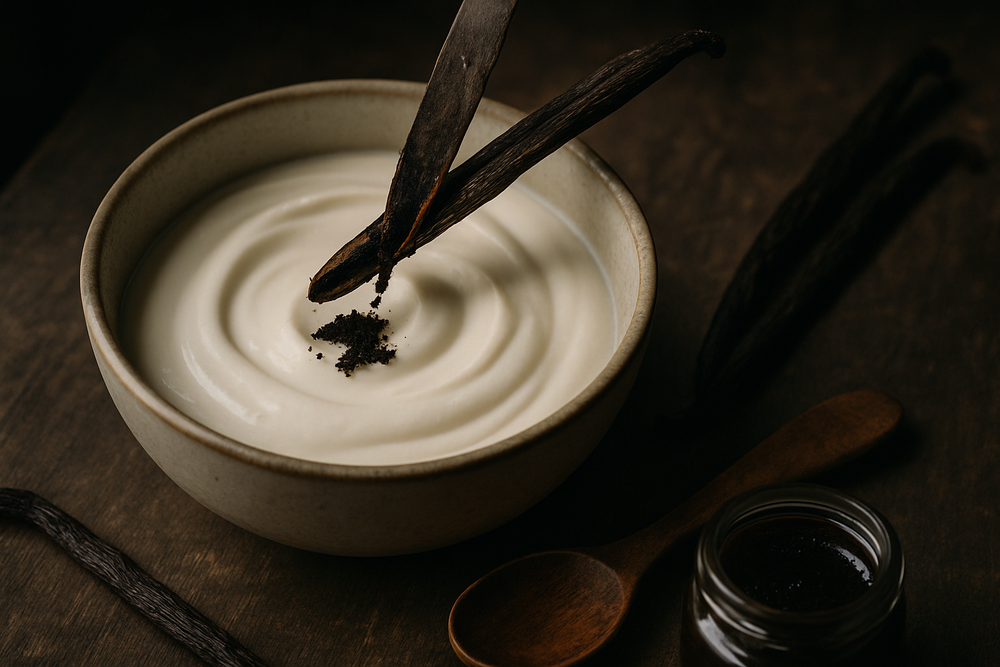
Vanilla Bean · Photograph
Vanilla is one of the world's most beloved flavors — but the seed pod hiding it has a story worth knowing. The vanilla bean is the cured fruit of Vanilla planifolia, a tropical orchid native to Mexico and now grown in Madagascar, Tahiti, Indonesia, and beyond. What makes vanilla unique among culinary spices is that its flavoring power comes almost entirely from a single aromatic compound called vanillin (explained in the glossary below), yet the whole pod contains dozens of supporting phenolics that give real vanilla its warm, complex character.
Key Nutrients
% Daily Value based on 2,000 cal diet
Key active compounds (phytochemicals)
Vanilla bean is a culinary botanical — a plant used primarily as a flavoring that also contains biologically active plant chemicals called phytochemicals.
- Vanillin — The star compound. A phenolic aldehyde (a type of plant-derived aromatic molecule) responsible for vanilla's iconic scent and flavor. In cell and animal studies, it scavenges free radicals, reduces lipid peroxidation (cellular damage from oxidative stress), and damps down inflammatory signaling pathways including NF-κB (a protein complex that acts like a master switch for inflammation). No human clinical trials have confirmed these effects at culinary doses.
- Vanillic acid — A phenolic acid structurally related to vanillin, present in cured pods and also formed when other polyphenols are metabolized in the body. Contributes to vanilla's antioxidant profile.
- p-Hydroxybenzaldehyde and related phenolics — Aromatic compounds that build vanilla's complex aroma. Present in smaller quantities; add to the overall phenolic bouquet of high-quality whole pods.
- Trace aromatic esters and aldehydes — Over 250 flavour-active compounds have been identified in cured vanilla. Most are present in amounts too small to be pharmacologically significant, but they collectively differentiate real vanilla from imitation.
Buying guide: getting the most from your vanilla bean
Vanilla quality varies enormously. Here is how to shop smart.
- Origin matters for flavor profile: Madagascar (Bourbon) beans are the most widely available — rich, creamy, and classic. Tahitian beans are more floral and delicate. Indonesian beans are earthy and woody. Mexican vanilla has a subtle spice note. No origin has proven health superiority; choose based on flavor preference.
- Grade A vs Grade B beans: Grade A (gourmet) beans are plump, moist, and higher in moisture — ideal for scraping seeds. Grade B beans are drier and more concentrated in flavor compounds — often used for making extract. Both are legitimate choices.
- Freshness check: A good whole bean should be pliable and almost waxy to the touch, not brittle. Dry beans can be revived by wrapping in a damp cloth for 24 hours, though flavor will still be reduced.
- Extract labels: Pure vanilla extract must by law (in the US) contain a minimum of 13.35 ounces of vanilla beans per gallon of solution at 35% alcohol. If it says "imitation" or "vanilla flavor," it is not from real beans.
- Vanilla paste: Convenient and seed-rich, but most commercial pastes include sugar or corn syrup. Check the ingredients if you are managing sugar intake.
- Storage: Keep whole beans in an airtight glass jar at room temperature, away from heat and light. Do not refrigerate — moisture causes mold. Properly stored beans last 1–2 years.
Prep and pairing ideas
Whole vanilla beans are more versatile than most people realize, extending well beyond desserts.
Basic technique: Lay the bean flat, slice lengthwise with a small sharp knife, and use the back of the knife to scrape the tiny seeds out. Both seeds and pod carry flavor — simmer the empty pod in plant milk, oat cream, or a poaching liquid, then remove before serving.
Three pairings worth trying:
- Vanilla + oats + cinnamon: The aromatic warmth of vanilla amplifies the natural sweetness of rolled oats, allowing you to reduce or skip added sugar entirely. Cinnamon adds complementary phenolics. A classic combination with real metabolic logic — lower added sugar, higher flavor satisfaction.
- Vanilla + stone fruit (peaches, plums, apricots): Vanilla's aldehydes harmonize chemically with the lactone compounds in stone fruit. Roast halved peaches with a split vanilla pod for a dessert or breakfast topping with no added sugar needed.
- Vanilla + legumes in sweet preparations (e.g., white bean mousse, chickpea blondies): Vanilla masks the beany undertones that can make legume-based desserts off-putting for new eaters. This pairing directly supports WFPB adherence — the flavor bridges people toward protein-rich plant dishes they might otherwise avoid.
Flavor-forward kitchen shortcuts:
- Press a spent (scraped) vanilla pod into a jar of granulated sugar for 10–14 days → homemade vanilla sugar for finishing baked goods
- Add one whole pod to a batch of homemade almond milk or oat milk while it chills overnight
- Stir vanilla powder into nut butter, tahini, or plant-based yogurt dressings for a subtle aromatic lift
How Vanilla Bean Compares
| Compared with | What's different |
|---|---|
| Vanilla Bean vs. Vanilla Extract (Imitation) | A synthetic version containing only vanillin, lacking the 250+ complex aromatic compounds of real pods. |
| Vanilla Bean vs. Tahitian Vanilla Bean | Sourced from a different orchid species with a more floral, fruity, and delicate aroma profile. |
| Vanilla Bean vs. Vanilla Bean Paste | A convenient paste that includes the seeds but often contains added sugar or thickeners. |
Health Benefits
Things to Know
Fragrance allergies: Anyone with a known allergy to fragrance mixes, balsam of Peru, or vanilla itself may experience contact dermatitis (skin irritation) or respiratory sensitivity. This is rare in food settings but worth knowing.
Alcohol in vanilla extract: Standard pure vanilla extract is 35% alcohol by volume. Quantities per finished serving are tiny after cooking, but if you use uncooked extract (raw desserts, cold drinks), trace alcohol remains. Individuals who avoid alcohol for medical, religious, or recovery reasons may prefer vanilla powder or alcohol-free glycerin-based extracts.
Pregnancy and breastfeeding: Culinary amounts of vanilla bean or pure extract are considered safe. Concentrated vanillin supplements or non-food preparations are not well studied during pregnancy — not necessary, and best avoided.
Young children and infants: Small amounts of vanilla flavor in solid foods are fine. Do not give undiluted vanilla extract directly to infants or small children — the alcohol content is inappropriately high.
Migraine and fragrance sensitivity: Some individuals with fragrance-triggered migraines or asthma find strong vanilla aromas triggering. Monitor personal tolerance, especially with vanilla-heavy recipes or diffused vanilla essential oil (which is separate from culinary use).
Drug interactions: No clinically significant drug–nutrient interactions are documented for vanilla bean at normal dietary intakes. High-dose isolated vanillin supplements have not been systematically studied alongside prescription medications.
Prep Ideas
- — Vanilla + oats + cinnamon: The aromatic warmth of vanilla amplifies the natural sweetness of rolled oats, allowing you to reduce or skip added sugar entirely. Cinnamon adds complementary phenolics. A classic combination with real metabolic logic — lower added sugar, higher flavor satisfaction.
- — Vanilla + stone fruit (peaches, plums, apricots): Vanilla's aldehydes harmonize chemically with the lactone compounds in stone fruit. Roast halved peaches with a split vanilla pod for a dessert or breakfast topping with no added sugar needed.
- — Vanilla + legumes in sweet preparations (e.g., white bean mousse, chickpea blondies): Vanilla masks the beany undertones that can make legume-based desserts off-putting for new eaters. This pairing directly supports WFPB adherence — the flavor bridges people toward protein-rich plant dishes they might otherwise avoid.
- — Press a spent (scraped) vanilla pod into a jar of granulated sugar for 10–14 days → homemade vanilla sugar for finishing baked goods
- — Add one whole pod to a batch of homemade almond milk or oat milk while it chills overnight
- — Stir vanilla powder into nut butter, tahini, or plant-based yogurt dressings for a subtle aromatic lift
Shop This Ingredient
Stock your pantry with quality vanilla bean.
Buy on AmazonAs an Amazon Associate, Plantopedia earns from qualifying purchases. This costs you nothing extra and helps us keep the encyclopedia free.
Frequently Asked Questions
The honest answer is: both, and that is perfectly fine. Here is what the evidence says across the areas most relevant to everyday health. Heart and circulation Vanillin's antioxidant activity — specifically its ability to reduce lipid peroxidation (oxidative damage to fats in cell membranes and blood) and modulate inflammatory pathways — is theoretically relevant to cardiovascular health. Cell and animal studies report reduced markers of vascular inflammation. However, no well-controlled human trials have tested vanilla bean or extract as a cardiovascular intervention. In a whole-food, plant-based dietary pattern, vanilla's contribution to heart health is likely minor compared with the bigger levers: vegetables, legumes, whole grains, and reduced added sugar. Digestive health and mindful eating There is essentially no clinical research showing that vanilla bean directly improves gut motility, digestive enzyme function, or gastrointestinal symptoms. What is worth noting is the behavioral angle: familiar, comforting aromas like vanilla are associated with relaxed, present-moment eating in some observational and sensory-science research. Eating slowly and with enjoyment is consistently linked to better digestion and lower post-meal discomfort in general dietary literature — and vanilla can support that experience. Blood sugar and metabolism Some rodent models of diabetes show modest glycemic or oxidative-stress benefits from high-dose vanillin, but those doses far exceed what you would consume from flavoring a smoothie. In everyday cooking, vanilla's most direct metabolic contribution is as a sugar substitute strategy: a generous pinch of real vanilla powder in oatmeal, coffee, or plant-based yogurt can significantly reduce the amount of added sugar needed to achieve sweetness perception. That is a practical, evidence-consistent benefit. Inflammation and recovery Laboratory studies show vanillin can inhibit pro-inflammatory mediators — proteins like TNF-α, IL-6, and COX-2 that amplify the body's inflammatory response. These are mechanistic findings from cells and animals; they support the biological plausibility of anti-inflammatory effects but cannot be translated into treatment claims for humans eating vanilla in food. In a whole-diet context, vanilla contributes as one of many phenolic compounds across a diverse plant-based plate. Sensory mood and comfort (a note on aroma) Small experimental studies using vanilla scent (as an environmental aroma, not specifically from food intake) suggest pleasant, familiar smells can influence perceived comfort and reduce situational anxiety in some settings. Evidence is limited and not specific to disease outcomes, but it supports the idea that vanilla's aromatic richness has experiential value beyond taste alone.
The best form depends on what you are making, not on dramatic differences in health impact. | Form | Best for | What to look for | |---|---|---| | Whole vanilla bean (pod) | Custards, plant milks, infused syrups, slow-cook dishes | Plump, moist, pliable pods; avoid dry or brittle beans | | Pure vanilla extract | Baking, batters, sauces, dressings | Label must say "pure vanilla extract"; check for no added colors or flavors | | Vanilla bean paste | Desserts, smoothie bowls, yogurt | Visible seeds, strong flavor; contains sweetener — adjust recipe sugar accordingly | | Vanilla powder (ground) | Dry rubs, spice blends, raw desserts, coffee | Look for 100% ground vanilla bean, no filler or maltodextrin if preferred | | Infused vanilla sugar or salt | Finishing touch on baked goods and fruit dishes | DIY-able: press a spent pod into a jar of sugar for two weeks | On imitation vanilla: Artificial vanilla flavor is typically synthetic vanillin alone. It reproduces the dominant aroma but lacks the complex phenolic profile of whole beans or pure extract. For culinary depth and access to the broadest range of vanilla phytochemicals, real beans or pure extract are worth the cost difference.
There is no established therapeutic dose for vanilla bean — it is a culinary spice, not a supplement. Use it to flavor food, not to hit a target. Practical equivalences: 1 whole vanilla bean ≈ 1 tablespoon (3 teaspoons) of pure vanilla extract ≈ 1–2 teaspoons of vanilla paste ≈ 1 teaspoon of pure vanilla powder For a smoothie, bowl of oatmeal, or single-serve yogurt: one-quarter teaspoon of vanilla extract or a small pinch of vanilla powder is usually enough For a batch recipe (muffins, cookies, one pot of custard serving 6–8): one whole bean or one to two teaspoons of extract is standard Start low and taste: Vanilla intensity varies significantly by origin, grade, freshness, and processing. Madagascar Bourbon beans tend to be reliably strong; Tahitian beans are subtler and may require more
Quick Answers
Common questions, answered in a line.
What makes vanilla bean unique is that its flavoring power comes primarily from vanillin, a phenolic aldehyde that acts as a potent aromatic compound. While vanillin is the star, whole beans contain over 250 flavor-active compounds, including vanillic acid and various phenolics, that create its complex character.
Whole vanilla beans should be stored in an airtight glass jar at room temperature and kept away from heat and light. Do not refrigerate your vanilla beans, as the moisture inside a refrigerator can cause them to develop mold.
Vanilla bean contains phytochemicals like vanillin and vanillic acid, which have shown antioxidant and anti-inflammatory properties in cell and animal studies. Vanillin specifically helps scavenge free radicals and may damp down inflammatory signaling pathways like NF-κB, though human trials at culinary doses are lacking.
You can tell a vanilla bean is fresh if it is pliable and almost waxy to the touch rather than brittle. If a bean has become dry, you can attempt to revive it by wrapping it in a damp cloth for 24 hours, though some flavor may be lost.
To use a whole vanilla bean, lay it flat and slice it lengthwise with a sharp knife, then use the back of the blade to scrape out the tiny seeds. Both the seeds and the empty pod carry flavor; the pod can be simmered in liquids like plant milk or oat cream to extract its aroma.
Pure vanilla extract is generally safe in cooked dishes, but it contains 35% alcohol by volume, which remains in trace amounts if used in raw preparations. People who avoid alcohol for medical or religious reasons may prefer alcohol-free glycerin-based extracts or vanilla powder.
Vanilla bean can support healthy eating by adding aromatic warmth that amplifies natural sweetness, allowing you to reduce or skip added sugar in foods like oats or stone fruit. Additionally, it helps mask beany undertones in legume-based desserts, making nutrient-dense plant foods more palatable.
For Readers in the USA
Local context — sourcing, seasonality, and regional notes.
Vanilla orchids are only commercially grown in the United States in Southern Florida, Hawaii, and Puerto Rico due to their need for a tropical climate. While most vanilla sold in the U.S. is imported from Madagascar or Mexico, small-scale domestic production is expanding in these frost-free regions.
In the U.S., "Pure Vanilla Extract" is strictly regulated by the FDA and must contain at least 35% alcohol and 13.35 ounces of vanilla beans per gallon. Products labeled as "vanilla flavor" or "imitation" do not meet these federal standards and often use synthetic vanillin derived from wood pulp or petroleum.
You can find whole vanilla beans at major U.S. grocers like Whole Foods Market, Trader Joe's, and specialty spice shops like Penzeys or spice stands at local farmers markets. For the best value, many American home bakers purchase Grade A or Grade B beans in bulk through reputable online suppliers based in the Pacific Northwest or Florida.
AI Clinical Review
- Clearly positions vanilla bean as a flavor-first spice with negligible calories and nutrients, whose main practical value is helping lower added sugar and improve enjoyment of healthy foods.
- Accurately describes that most proposed health effects (antioxidant/anti-inflammatory) come from laboratory and animal studies, with no clinical trials at culinary doses.
- Offers useful guidance on forms (whole bean, extract, paste, powder) and label reading; the U.S. “pure vanilla extract” standard (35% alcohol and a defined bean-to-solvent ratio) is correctly noted for shoppers.
- Sensory and adherence framing is reasonable: familiar aromas like vanilla can support slower, more satisfying eating, which aligns with broader healthy eating patterns.
- Heart, metabolic, and digestive benefits in humans remain unproven; existing data are largely preclinical or use doses far above what food provides.
- Anti-inflammatory pathway findings (e.g., NF-κB, TNF-α, IL-6) are mechanistic; it’s unknown whether typical kitchen use meaningfully alters these markers in people.
- Mood and comfort studies using vanilla scent are small and context-specific; smelling an aroma doesn’t necessarily translate to measurable health outcomes from eating it.
- The “vanilla-for-sugar-reduction” strategy is practical and plausible, but hasn’t been tested in long-term randomized trials tracking metabolic endpoints.
- Culinary amounts are generally very safe; rare fragrance/contact allergies occur, and strong vanilla aromas can trigger migraines or asthma in sensitive individuals.
- Standard extracts contain alcohol before dilution; if you avoid alcohol (medical, religious, recovery), consider alcohol-free glycerin extracts or pure vanilla powder.
- Pregnancy and breastfeeding: normal food use is considered safe; avoid high-dose vanillin supplements due to limited human data.
- Check ingredients for added sugars in pastes or some extracts; don’t give undiluted extract directly to young children because of alcohol content; store beans airtight and dry to prevent mold.
Use culinary framing; avoid treatment claims or supplement-dose guidance.
References
- PubMed — Vanilla--its science of cultivation, curing, chemistry, and nutraceutical properties (pubmed.ncbi.nlm.nih.gov)
- PubMed — Studies on the antioxidant activities of natural vanilla extract and its constituent compounds through in vitro models (pubmed.ncbi.nlm.nih.gov)
- USDA FoodData Central — USDA FoodData Central (fdc.nal.usda.gov)
Know Your Numbers
Eating healthy is a start. Now get to know your biomarkers.
Food changes bloodwork — inflammation, lipids, blood sugar and nutrient status all respond to what you eat. 59 markers from $59.
- Results in 7–10 days at 2,000+ Quest sites
- Licensed provider reviews every result
- One flat price, no membership, HSA/FSA eligible
Educational information only, not medical advice. Panels are ordered and reviewed through our licensed partner; Plantopedia may earn a commission.