Wasabi — health benefits and uses
Used in Japanese tradition as a warming, antimicrobial condiment.
The Short Answer
Real wasabi is a nutrient-dense root containing unique sulfur compounds called isothiocyanates, which offer anti-inflammatory and antimicrobial properties. Unlike imitation pastes, fresh wasabi provides 5.9 mg of Vitamin C and 1.1 g of fiber per tablespoon.
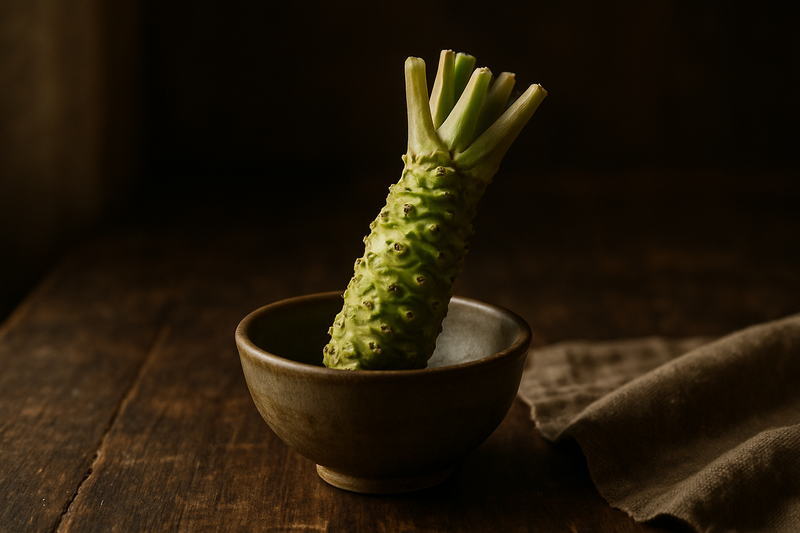
Wasabi · Photograph
Discover the real wasabi health benefits and side effects, from antioxidant isothiocyanates to sodium-heavy imitation pastes. Learn what fresh wasabi root offers nutritionally, who should use caution, and how to tell real wasabi from horseradish-based fakes.
Key Nutrients
% Daily Value based on 2,000 cal diet
Key active compounds in wasabi
- Isothiocyanates — especially 6-methylsulfinylhexyl isothiocyanate (6-MITC) and allyl isothiocyanate: These sulfur-containing molecules are wasabi's headline bioactives. They are not stored pre-formed in the plant; they're created when the rhizome's cell walls are broken — by grating, chewing, or chopping — triggering an enzyme reaction that converts precursor compounds into pungent isothiocyanates. This is why freshly grated wasabi smells and tastes sharper than pre-made paste, and why flavor fades within 15–20 minutes of grating.
- Glucosinolates (including sinigrin and related compounds): The stable precursor molecules that yield isothiocyanates. They belong to a class of sulfur compounds characteristic of the entire Brassicaceae family, which includes broccoli, cabbage, and mustard. Glucosinolates may support the body's natural detoxification enzyme systems, though human data are limited.
- Phenolic antioxidants: Wasabi contains a range of plant-derived phenolic compounds — molecules with ring structures that can neutralize free radicals (unstable molecules that can damage cells). These are less well characterized than the isothiocyanates but likely contribute to wasabi's overall antioxidant capacity.
Prep and pairing ideas
Wasabi is most at home in Japanese cuisine, but its clean, sharp heat works in more contexts than most people realize.
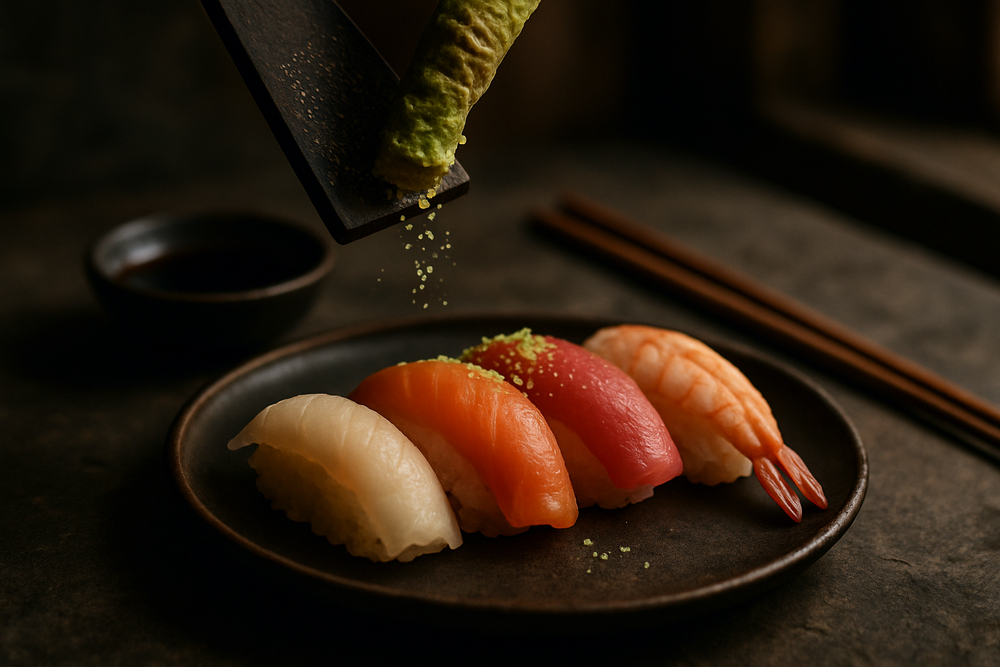
Classic use — sushi and sashimi: A small smear of freshly grated wasabi under a piece of fish allows the heat to bloom gradually without overpowering the fish. Mixing wasabi directly into soy sauce (a practice many Japanese chefs consider improper) dilutes its volatile compounds quickly.
Wasabi vinaigrette: Whisk 1 teaspoon of fresh grated wasabi or quality paste into rice vinegar, a drop of sesame oil, and a pinch of salt. Excellent over shredded cabbage, edamame, or cucumber — and a smart way to add wasabi antioxidant and anti-inflammatory properties to an everyday salad.
Avocado toast or guacamole: A small amount of wasabi stirred into mashed avocado adds brightness and complexity without chili heat. The fat in avocado helps carry the fat-soluble phenolic compounds.
Bottom line
Wasabi is genuinely interesting nutritionally: a low-calorie, fiber-containing root vegetable with a solid vitamin C and mineral profile, and a class of sulfur compounds (isothiocyanates) that show real promise in laboratory research for anti-inflammatory, antimicrobial, and antiplatelet effects. The honest caveat is that most of that research is preclinical — test tubes and animal models, not human clinical trials — so the evidence for specific health outcomes in people is still early.
The more practical takeaway is probably this: if you enjoy wasabi, using fresh-grated rhizome or a real-wasabi product in small amounts is a flavorful way to add variety and phytochemical diversity to a plant-forward diet. If you're reaching for a tube of green paste, check the label — chances are it's mostly horseradish and sodium, not the Wasabia japonica that's been studied for these effects.
Explore Plantopedia's anti-inflammatory and immune-supporting ingredients to see how wasabi fits into a broader food-as-medicine approach.
How Wasabi Compares
| Compared with | What's different |
|---|---|
| Wasabi vs. Fresh Wasabi Rhizome | Contains 6-MITC isothiocyanates and has a floral, herbal heat that dissipates quickly. |
| Wasabi vs. Horseradish (Imitation Paste) | Derived from a different root; provide a harsher, more persistent heat and typically contain green dye. |
| Wasabi vs. Mustard Seed | Contains sinigrin but typically used as a dry powder or oil-based condiment with a different flavor profile. |
Health Benefits
Things to Know
GI sensitivity: Wasabi can irritate the esophagus, stomach, and intestines. People with GERD, gastritis, peptic ulcer, or IBS should use very small amounts or avoid it altogether.
Sodium and blood pressure: Commercial pastes and sauces can contain extremely high sodium levels. People on low-sodium diets, those with hypertension, heart disease, or kidney disease should check labels carefully and limit intake.
Blood thinners: Theoretical antiplatelet effects from isothiocyanates are a concern at supplement doses. If you take warfarin, aspirin, clopidogrel, or other anticoagulants, stick to small culinary amounts and flag this with your prescribing doctor before using wasabi supplements or extracts.
Cruciferous allergy or sensitivity: Wasabi belongs to the same family as mustard, horseradish, and broccoli. If you have known reactions to any of these, treat wasabi (and imitation products containing horseradish and mustard) with the same caution.
Pregnancy and breastfeeding: Small culinary amounts are likely fine, but concentrated extracts or supplements have not been studied for safety in pregnancy. Default to food-form only.
Thyroid conditions (iodine note): Like other cruciferous vegetables, large amounts of raw wasabi contain glucosinolates that could theoretically interfere with iodine uptake by the thyroid when consumed in very large quantities. At typical culinary portions, this is not a practical concern.
Glossary
Shop This Ingredient
Stock your pantry with quality wasabi.
Buy on AmazonAs an Amazon Associate, Plantopedia earns from qualifying purchases. This costs you nothing extra and helps us keep the encyclopedia free.
Frequently Asked Questions
Most of wasabi's studied effects come from laboratory and animal research using concentrated isothiocyanate extracts — doses far higher than you'd get from a small green smear next to your tuna roll. That said, the mechanistic evidence is genuinely interesting, and wasabi's micronutrient profile adds real value in the context of a balanced diet. Heart and circulation Isothiocyanates — particularly 6-MITC — have shown antiplatelet activity in test-tube experiments, meaning they may interfere with platelets clumping together (a process central to blood clot formation). Some animal models also suggest vasoprotective (blood-vessel-protecting) effects. However, no well-designed human clinical trials have confirmed that eating culinary amounts of wasabi measurably improves cardiovascular outcomes. For now, this is a promising area of research, not a proven benefit. A practical note working in the opposite direction: wasabi paste sodium content and heart health are directly linked. Many commercial pastes clock in at extremely high sodium levels, which can counteract blood-pressure management efforts if consumed regularly in generous amounts. Digestive health and microbiome Wasabi's isothiocyanates have demonstrated antimicrobial activity against several foodborne bacteria — including E. coli and H. pylori — in laboratory settings. This has fueled the popular idea that wasabi traditionally served with raw fish may have offered a layer of food safety protection. Plausible, but not proven in real-world eating conditions. On the flip side, wasabi's intense pungency can provoke or worsen symptoms in people with acid reflux (GERD), gastritis, or irritable bowel syndrome (IBS). The Cleveland Clinic specifically flags this group as needing caution. Pungent foods stimulate gastric acid secretion, which is helpful for digestion in healthy individuals but potentially irritating for sensitive digestive systems. Blood sugar and metabolism Fresh wasabi root is relatively low in simple sugars and contains meaningful fiber, which slows digestion and moderates blood sugar response. There are no direct human trials linking wasabi consumption to improved blood sugar control or insulin sensitivity. Commercial pastes may contain added starches and sugars, shifting their glycemic profile compared to the fresh rhizome. Inflammation and recovery Wasabi's antioxidant and anti-inflammatory properties are among its most actively studied features. Isothiocyanates have been shown in cell culture and animal experiments to modulate inflammatory signaling pathways and reduce oxidative stress (an imbalance between free radicals and antioxidants that contributes to chronic disease). These are mechanistically sound findings — but they come from concentrated extracts, not from eating sushi. Large, well-controlled human trials measuring inflammation markers like C-reactive protein (CRP) after dietary wasabi consumption do not yet exist. Immune support Wasabi provides meaningful vitamin C, which is one of the better-evidenced nutrients for normal immune function. Its antimicrobial compounds add theoretical immune-adjacent value. But "immune-supporting" should be understood modestly here: wasabi can be one flavorful component of a micronutrient-rich diet, not a targeted immune therapy.
Almost certainly, yes — and the difference is significant enough to be worth knowing. Fresh wasabi rhizome (real vs imitation wasabi) provides volatile isothiocyanates at their most active, a genuine micronutrient profile, essentially no sodium, and no additives. It's also expensive ($50–$100+ per rhizome in many markets) and highly perishable once grated. Tube or jar paste marketed as wasabi is typically composed of horseradish, mustard, starch, oil, and artificial green coloring, with little to no Wasabia japonica. The wasabi vs horseradish health benefits distinction is real: horseradish (Armoracia rusticana) contains its own glucosinolates and is not without nutritional value, but the phytochemical profile differs. More importantly, many commercial pastes are very high in sodium — a serious consideration for anyone managing blood pressure or fluid retention. Wasabi powder sits somewhere in between: usually a dried blend of horseradish, mustard, and small amounts of real wasabi, reconstituted with water. Convenient, but nutritionally and phytochemically different from fresh. How to identify real wasabi on a label: Look for Wasabia japonica or "hon wasabi" (Japanese for "true wasabi") as the first or primary ingredient. If the first ingredient is horseradish (Armoracia rusticana), you have an imitation product regardless of the green color.
There is no established recommended daily intake for wasabi. Most human studies and safety commentary refer to culinary amounts — roughly 2–10 grams of freshly grated rhizome or paste per serving — as well tolerated by healthy adults. Starting low is the right move, especially if you're new to it or have a sensitive digestive system. A portion the size of a small pea (about 1–2 g) is plenty for flavor and a reasonable starting point. Working up to 1–2 teaspoons (5–10 g) per meal is well within typical culinary use. Who should stay at the lower end or avoid entirely: Anyone with active GERD, gastritis, or IBS Anyone on a sodium-restricted diet using commercial pastes Anyone on blood-thinning medication (culinary amounts are likely fine, high-dose supplements are not) High-dose isothiocyanate supplements are a different category entirely — not the same as eating wasabi with food — and should not be used without medical guidance.
Quick Answers
Common questions, answered in a line.
Wasabi contains unique sulfur-containing molecules called isothiocyanates, specifically 6-MITC and allyl isothiocyanate, which provide its signature pungent heat. These compounds are created through an enzymatic reaction when the plant's cell walls are broken by grating or chewing.
Freshly grated wasabi loses its characteristic flavor and sharp aroma within 15 to 20 minutes of preparation. This occurs because the volatile isothiocyanate compounds created during grating are unstable and dissipate quickly when exposed to air.
People with GERD, gastritis, peptic ulcers, or IBS should use wasabi with caution as it can irritate the esophagus, stomach, and intestines. Additionally, those on blood thinners should stick to small culinary amounts due to the plant's potential antiplatelet effects.
Real wasabi (Wasabia japonica) contains glucosinolates and phenolic antioxidants that may support detoxification and neutralize free radicals. In contrast, most commercial green pastes are primarily made of horseradish and high levels of sodium rather than the actual wasabi root.
Wasabi belongs to the Brassicaceae family, so you should use caution if you have known allergies to mustard, horseradish, broccoli, or cabbage. Many imitation wasabi products also contain horseradish and mustard, which could trigger a similar allergic response.
While theoretically possible for large amounts of raw cruciferous vegetables to interfere with iodine uptake, typical culinary portions of wasabi are not a practical concern for thyroid health. The glucosinolates found in the root are only problematic if consumed in very large quantities.
For Readers in the USA
Local context — sourcing, seasonality, and regional notes.
Real wasabi is grown commercially in the Pacific Northwest and North Carolina, as it requires the cool, misty, and running-water environments found in these regions. The temperate rainforests of the Oregon coast and the Blue Ridge Mountains provide the specific spring-fed conditions necessary for the rhizomes to thrive.
Fresh wasabi rhizomes are rarely found in standard supermarkets like Kroger or Publix, but are available at high-end specialty grocers like Whole Foods, Uwajimaya, and Mitsuwa Marketplace. Most American consumers instead purchase imitation paste or powder, which the FDA allows to be labeled as 'wasabi' even if the primary ingredient is horseradish.
Fresh wasabi is typically harvested year-round in the U.S. due to controlled greenhouse and spring-fed environments, though peak quality often aligns with the cooler spring and autumn months. Because it takes roughly 18 to 24 months for a rhizome to reach maturity, supply remains limited and prices stay high regardless of the calendar month.
AI Clinical Review
- Clearly distinguishes real wasabi (Wasabia japonica) from horseradish-based “wasabi,” noting meaningful differences in sodium and phytochemicals.
- Accurately explains isothiocyanates (pungent sulfur compounds formed when the rhizome is grated) and summarizes their anti-inflammatory, antimicrobial, and antiplatelet activity from preclinical studies.
- Provides a realistic nutrition snapshot: culinary portions are small, so per-serving vitamin C and fiber are modest even though the rhizome is nutrient-dense by weight.
- Offers practical guidance on use and pairing that keeps intake within typical culinary amounts.
- Cardiovascular benefits (e.g., antiplatelet effects) are based largely on test-tube and animal data; human trials at food-like doses are lacking.
- Antimicrobial findings against foodborne pathogens are laboratory-based; real-world protection when eating sushi hasn’t been demonstrated.
- Claims around blood sugar or metabolic effects are not supported by direct human studies; any impact is likely minor compared with overall diet quality.
- The dose and bioavailability of key isothiocyanates vary with freshness, grating, and storage, and aren’t standardized across products.
- Typical culinary use of fresh wasabi is about 2–10 g per serving; starting with ~1–2 g (pea-sized) helps limit GI discomfort, especially if you have reflux, gastritis, ulcers, or IBS.
- Form matters: many tubes/powders are primarily horseradish and can be very high in sodium—check labels for “Wasabia japonica” or “hon wasabi,” and consider lower-sodium or fresh options if you manage blood pressure.
- If you take blood thinners or antiplatelet drugs (e.g., warfarin, aspirin, clopidogrel), stick to small culinary amounts and avoid high-dose extracts; discuss supplements with your clinician.
- Pregnancy/breastfeeding: food amounts are likely fine, but avoid concentrated extracts. People with mustard/horseradish or other crucifer allergies should use caution; very large raw crucifer intake could affect thyroid iodine use but typical wasabi portions are small.
Very pungent; use small amounts. Check labels for real vs imitation wasabi.
References
- USDA FoodData Central — wasabi, raw rhizome nutrition data (fdc.nal.usda.gov)
- Cleveland Clinic — "Is Wasabi Good for You?" health commentary (health.clevelandclinic.org)
- URMC Rochester Health Encyclopedia — wasabi root, raw nutrition profile (urmc.rochester.edu)
- Nutrition-and-you.com — wasabi nutrition facts and phytochemicals overview (nutrition-and-you.com)
- Signos Health — wasabi vs horseradish nutritional and health comparison (signoshealth.com)
- EatThisMuch — wasabi paste nutrition facts (serving-level data) (eatthismuch.com)
- Medindia — wasabi nutritional data including sodium content of commercial paste (medindia.net)
- Dr. Axe — wasabi benefits for gut health and foodborne bacteria (experimental evidence summary) (draxe.com)
- FitAudit — raw wasabi macronutrient and micronutrient breakdown (fitaudit.com)
Know Your Numbers
Eating healthy is a start. Now get to know your biomarkers.
Food changes bloodwork — inflammation, lipids, blood sugar and nutrient status all respond to what you eat. 59 markers from $59.
- Results in 7–10 days at 2,000+ Quest sites
- Licensed provider reviews every result
- One flat price, no membership, HSA/FSA eligible
Educational information only, not medical advice. Panels are ordered and reviewed through our licensed partner; Plantopedia may earn a commission.