Argan Oil — health benefits and uses
Berber tradition uses it both as food and as a skin and hair conditioner.
The Short Answer
Culinary argan oil is a heart-healthy finishing oil rich in vitamin E and monounsaturated fats. It is best used raw, drizzled over couscous, tagines, or blended into amlou to preserve its delicate antioxidants and nutty aroma.
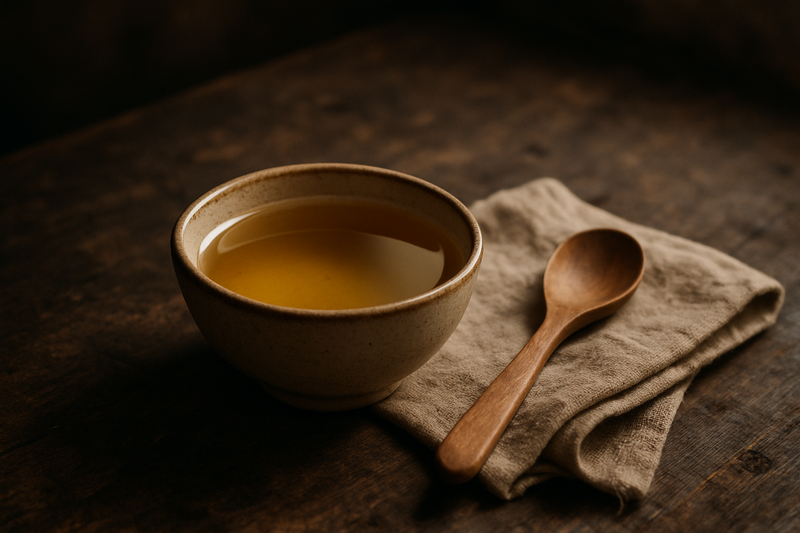
Argan Oil · Photograph
Discover the argan oil health benefits, nutrition facts per tablespoon, and how to use culinary argan oil in Moroccan cooking — from drizzling over tagines to making amlou. Learn what the evidence actually says about heart health, cholesterol, and more.
Key Nutrients
% Daily Value based on 2,000 cal diet
Key active compounds
- Oleic acid — A monounsaturated omega-9 fatty acid (the same dominant fat in olive oil) that makes up roughly 43–49% of argan oil's fat content. Associated with lower LDL ("bad") cholesterol and improved cardiovascular markers.
- Linoleic acid — An essential omega-6 polyunsaturated fatty acid comprising about 29–36% of the oil. The body cannot make it; it must come from food. Supports cell membrane integrity and a healthy lipid (blood fat) profile.
- Gamma-tocopherol (γ-tocopherol) — The dominant form of vitamin E in argan oil, present at roughly 600–900 mg per kilogram of oil. Neutralises free radicals in cell membranes and lipoproteins (fat-protein particles that carry cholesterol in the blood).
- Phytosterols (schottenol and spinasterol) — Plant sterols structurally similar to cholesterol that compete with dietary cholesterol for absorption in the intestine, potentially nudging LDL levels downward. These specific sterols are rare in other commercial oils.
- Polyphenols (including ferulic acid) — Plant-derived antioxidant compounds present in modest amounts that help protect LDL particles from oxidation and may exert mild anti-inflammatory effects.
- Squalene — A naturally occurring triterpene (a type of plant hydrocarbon) that contributes additional antioxidant activity and supports skin barrier function.
- Carotenoids — Fat-soluble pigment antioxidants present in small amounts that help quench singlet oxygen and free radicals.
Prep and pairing ideas
Argan oil earns its place at the table as a finishing oil, not a frying fat. Its nutty warmth is best applied after heat, not during it.
Couscous: The most classic pairing. Fluff cooked couscous and drizzle 1–2 teaspoons of culinary argan oil over the top just before serving. It adds depth without competing with spices like ras el hanout or preserved lemon.
Amlou spread: Blend roughly equal parts toasted ground almonds, raw honey, and argan oil until a thick paste forms. Traditionally eaten for breakfast with flatbread in Morocco. A small spoonful delivers a concentrated hit of unsaturated fats, polyphenols, and vitamin E alongside the almonds' own beneficial fats.
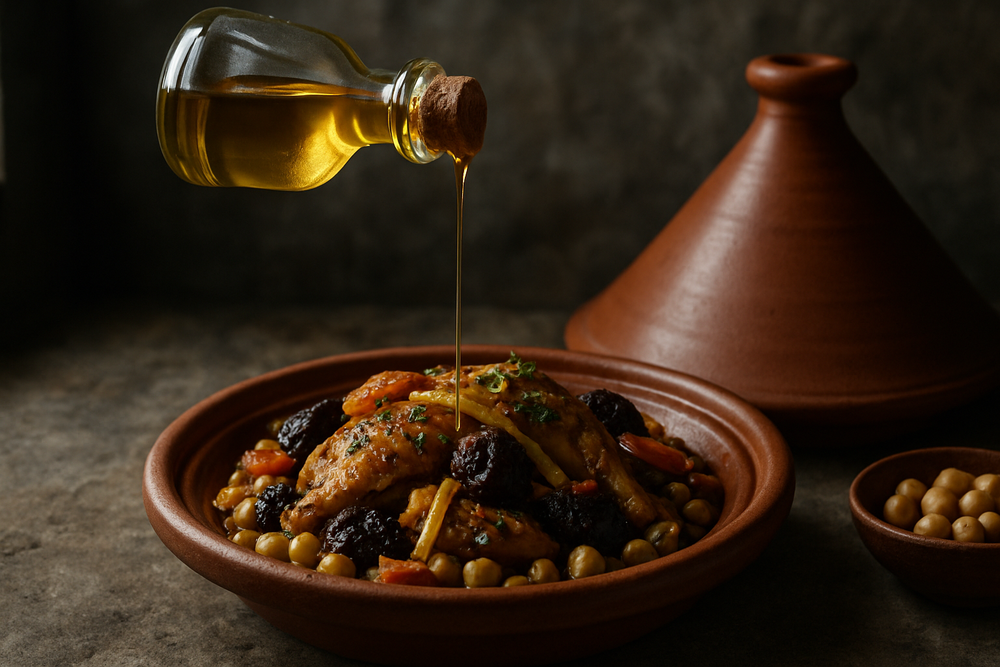
Tagines and roasted vegetables: A thin drizzle over a finished lamb, chicken, or chickpea tagine amplifies the aromatic quality of the dish. It works equally well over a sheet pan of roasted cauliflower, sweet potato, or beets.
Salad dressings: Replace up to half the olive oil in a simple lemon-herb vinaigrette with argan oil for a more complex, nutty flavour. The combination provides both oleic acid (from olive oil) and a higher gamma-tocopherol boost (from argan oil).
Soups and dips: A small drizzle over harira (Moroccan lentil soup) or a bowl of hummus works well. The oil mingles with plant-based protein sources and enhances the absorption of fat-soluble carotenoids in tomatoes and red peppers.
Bottom line
Culinary argan oil is a nutritionally distinctive finishing oil with a meaningful evidence base — modest by pharmaceutical standards, but solid for a whole food. Its combination of high unsaturated fat content, rare phytosterols, and concentrated gamma-tocopherol makes it worth considering as a flavourful, practical swap for saturated fats like butter in everyday cooking.
The research consistently supports its potential to improve cholesterol profiles and reduce oxidative stress markers at doses of 1–2 tablespoons per day. These are risk-factor improvements, not cures, and the studies are small and short. But when viewed through a food-as-medicine lens — where the goal is replacing less helpful dietary choices with more beneficial ones — argan oil makes a credible case for a regular place in the kitchen.
Use the food-grade, roasted version. Treat it as a finishing oil. Pair it with the whole-food ingredients it traditionally accompanies — legumes, whole grains, vegetables, nuts. And if you have a nut allergy or take blood-thinning medication, check with your doctor first.
Looking to explore oils and fats as part of a broader heart-health approach? Browse the Plantopedia heart health goal guide for more ingredient-level guidance.
How Argan Oil Compares
| Compared with | What's different |
|---|---|
| Argan Oil vs. Extra Virgin Olive Oil | Has a higher concentration of gamma-tocopherol and a more distinct, toasted nutty flavor. |
| Argan Oil vs. Peanut Oil | Primarily used as a finishing oil due to a lower smoke point, whereas peanut oil is for frying. |
Health Benefits
Things to Know
Allergies: Argan oil comes from a tree nut family. People with tree-nut, seed, or sesame allergies should exercise caution and consider allergy testing or medical advice before consuming it regularly.
Blood-thinning medications: Argan oil's vitamin E content and observed reduction of platelet aggregation in trials suggest a theoretical interaction with anticoagulants like warfarin and antiplatelet drugs like aspirin or clopidogrel. If you take these, speak to your doctor.
Lipid-lowering or blood pressure medications: Argan oil's cholesterol-improving effects are generally beneficial, but if you are on intensive lipid therapy, monitor your levels as your overall dietary fat profile changes.
NSAIDs (non-steroidal anti-inflammatory drugs): High vitamin E intake could theoretically compound the effect of these drugs on platelet function — a speculative but worth-knowing interaction.
Gallbladder disease, fat malabsorption, or pancreatitis: People with these conditions may need to limit all added fats, including argan oil. Seek personalised guidance.
Pregnancy and breastfeeding: Normal culinary amounts are considered fine, but there is limited data on high-dose supplementation. Stick to typical cooking quantities.
Calorie density: Like all oils, argan oil provides roughly 120 calories per tablespoon. Use it as a replacement for other fats, not an addition, to avoid unintended calorie surplus.
Heat: Culinary argan oil has a relatively modest smoke point. Use it as a finishing oil — added after cooking — rather than for high-heat frying, to preserve its tocopherols and flavour.
Shop This Ingredient
Stock your pantry with quality argan oil.
Buy on AmazonAs an Amazon Associate, Plantopedia earns from qualifying purchases. This costs you nothing extra and helps us keep the encyclopedia free.
Frequently Asked Questions
Heart health and cholesterol This is the most researched area for culinary argan oil, and the evidence is reasonably compelling — though still limited to small, short-term studies. In multiple human trials, participants who replaced butter or other saturated-fat sources with 15–30 mL of argan oil per day for 3–4 weeks saw reductions in total cholesterol, LDL cholesterol, and triglycerides (blood fats linked to cardiovascular risk). Some trials also reported increases in HDL ("good") cholesterol. One well-cited study in people with dyslipidaemia (abnormal blood fat levels) found that 25 mL per day for three weeks not only improved the lipid profile but also reduced platelet aggregation — the tendency of platelets (small blood cells) to clump together, which contributes to clot formation — and lowered thromboxane B2, a marker related to clotting and arterial inflammation. These are surrogate markers (measurable signs associated with risk) rather than hard outcomes like heart attack or stroke. No large long-term trial has yet confirmed that argan oil directly prevents cardiovascular events, and no major cardiology society has issued specific argan oil guidelines. Its heart-supporting profile is consistent with broader evidence favouring unsaturated plant oils over saturated fats. Antioxidant status and vitamin E Multiple clinical trials have shown that regular consumption of culinary argan oil measurably raises serum vitamin E levels — particularly gamma-tocopherol — in healthy adults and in postmenopausal women. Gamma-tocopherol is especially effective at neutralising reactive nitrogen species, a type of free radical that alpha-tocopherol (the form in most supplements) is less efficient at neutralising. Studies also report reduced TBARS (thiobarbituric acid reactive substances — a standard lab marker of lipid peroxidation, meaning fat damage caused by oxidation). In practical terms, this suggests that regular culinary use may help reduce overall oxidative load, which is a background driver of cellular ageing and chronic disease. Inflammation and joint health Evidence here is promising but early. A randomised controlled trial — the gold standard in research — found that people with knee osteoarthritis (joint wear-and-tear disease) who consumed 30 mL of argan oil daily for eight weeks reported meaningful improvements in pain and functional scores compared to a control group. However, direct inflammatory biomarkers such as CRP (C-reactive protein, a standard blood marker of inflammation) or cytokines (signalling proteins involved in the inflammatory response) were not the primary outcome. Most mechanistic support comes from animal studies and from the known anti-inflammatory roles of tocopherols, phytosterols, and polyphenols. More robust human data is needed before argan oil can be recommended specifically for inflammatory conditions. Blood sugar and metabolism Evidence in this area is emerging and limited. Some clinical work using around 7–8 mL per day reported improvements in surrogate metabolic markers, and the oil's high unsaturated fat content aligns with general dietary patterns associated with better insulin sensitivity. However, no large controlled human trial has specifically targeted fasting glucose, insulin, or HbA1c (a measure of average blood sugar over three months) as primary outcomes. Argan oil's role here is best described as part of an overall strategy of replacing saturated fats with unsaturated ones — not as a targeted glycaemic therapy. Digestive health No well-controlled human trials have specifically evaluated argan oil for gut health or microbiome changes. As a fat, it supports the absorption of fat-soluble nutrients like vitamin E and carotenoids from the rest of your meal, which may indirectly support mucosal (gut lining) health. At high intakes above typical culinary use, some individuals report mild nausea or loose stools — a response common to many oils rather than unique to argan oil. Skin health from within Most documented skin benefits of argan oil — improved hydration, elasticity, and barrier function — come from topical (directly applied) cosmetic-grade oil. There is limited but plausible evidence that oral consumption could support skin health indirectly via improved vitamin E status, which protects skin-cell membranes from oxidative damage. This remains a secondary and less-studied benefit compared to topical use.
This distinction matters and is worth being clear about. Only food-grade (culinary) argan oil should be eaten. Here is why the two differ: | Feature | Culinary (roasted) argan oil | Cosmetic (unroasted) argan oil | | --- | --- | --- | | Kernel preparation | Lightly roasted | Unroasted | | Flavour | Warm, nutty, toasty | Neutral to bland | | Food safety standards | Produced for human consumption | Not always food-grade | | Intended use | Cooking, finishing dishes | Skin, hair, nails | | Suitable to eat? | Yes | Not unless explicitly labelled for food use | Cosmetic argan oil is not produced under food-safety controls and may be oxidised, solvent-treated, or blended — none of which are concerns you want to introduce into your diet. A common question is: "Can I eat the argan oil I use on my hair?" The short answer is no, not unless the label explicitly states it is food grade.
Human trials have used between 15 mL (about 1 tablespoon) and 30 mL (about 2 tablespoons) per day for periods of 3–8 weeks, with no serious adverse events reported at these doses. Traditional Moroccan culinary use tends toward 1–2 teaspoons per meal as a finishing drizzle, which aligns with the lower end of the studied range. A sensible starting framework: Start with 1 teaspoon (about 5 mL) per day as a finishing drizzle to assess tolerance, particularly if you are not accustomed to higher-fat foods. A daily target of 1 tablespoon (about 15 mL) represents a practical, evidence-aligned amount for most healthy adults, consistent with the dose used in several clinical trials. Up to 2 tablespoons (30 mL) per day was used in trials without safety concerns, but this is a significant calorie contribution (around 240 calories) and should comfortably replace, not supplement, other added fats in the diet. Supplement capsules exist but are less well-studied than culinary oil and offer no practical advantage for most people who can easily incorporate the oil into food. There is no established official recommended intake for argan oil specifically. The general guidance from nutrition bodies to replace saturated fats with unsaturated plant oils is the framework into which argan oil fits most naturally.
The everyday Mediterranean or Moroccan-style cook Already relies on plant oils, pulses, and whole grains as dietary staples Wants a flavourful finishing oil that brings culinary interest and a vitamin E boost Can easily substitute argan oil for butter in dishes like couscous or grain bowls without changing cooking habits significantly Gains additional antioxidant diversity compared to using olive oil alone Adults with mildly elevated LDL cholesterol or triglycerides seeking dietary support Has been advised to reduce saturated fat intake and is actively replacing butter or margarine Is looking for a practical, food-first strategy rather than or alongside supplementation Can use 1–2 tablespoons per day as a direct butter substitute in sauces, spreads (amlou), and finishing drizzles Should continue to monitor cholesterol levels with their healthcare provider and understand that argan oil alone is not a treatment
Quick Answers
Common questions, answered in a line.
Argan oil is rich in oleic acid (43–49%) and linoleic acid (29–36%), which are monounsaturated and polyunsaturated fats that support heart health. It also contains high levels of gamma-tocopherol (vitamin E), rare phytosterols like schottenol, and antioxidant polyphenols.
Culinary argan oil is best used as a finishing oil rather than a frying fat to preserve its delicate flavor and nutritional compounds. You can drizzle it over cooked couscous, tagines, or roasted vegetables, and it is a key ingredient in the traditional Moroccan almond spread called amlou.
Argan oil contains unique plant sterols called schottenol and spinasterol that compete with dietary cholesterol for absorption in the intestine. Studies suggest that consuming 1–2 tablespoons daily may improve cholesterol profiles and lower LDL ("bad") cholesterol.
Individuals with tree nut, seed, or sesame allergies should be cautious, as argan oil is derived from a tree nut family. It may also interact with blood-thinning medications like warfarin or aspirin due to its vitamin E content and effects on blood platelets.
Argan oil is an excellent source of gamma-tocopherol, providing roughly 600–900 mg per kilogram of oil. This specific form of vitamin E acts as a potent antioxidant that neutralizes free radicals in cell membranes and helps protect blood lipids from oxidation.
Amlou is a traditional Moroccan breakfast spread made by blending toasted ground almonds, raw honey, and culinary argan oil into a thick paste. It is typically served with flatbread and provides a concentrated dose of unsaturated fats, polyphenols, and vitamin E.
For Readers in the USA
Local context — sourcing, seasonality, and regional notes.
Culinary argan oil is widely available at specialty grocers like Whole Foods Market and through major online retailers like Amazon. While less common in standard supermarkets, you can often find high-quality, USDA Organic certified versions in the international or health food aisles.
When buying argan oil in the US, look for the USDA Organic seal and ensure the label specifies the oil is 'culinary' or 'food grade.' Because argan oil is an imported specialty product, the USDA Organic certification helps ensure the oil was produced without synthetic pesticides or GMOs.
Argan oil is not produced in the United States; it is exclusively imported from the Arganeraie Biosphere Reserve in southwestern Morocco. The argan tree (Argania spinosa) is endemic to this specific North African region, meaning all authentic culinary argan oil found in US stores is an import.
In the US, culinary argan oil is most commonly used as a gourmet finishing oil in Mediterranean-style diets or as a plant-based alternative to butter. Its popularity has grown within the American 'food as medicine' movement, where it is prized for its high vitamin E content and heart-healthy monounsaturated fats.
AI Clinical Review
- Clearly distinguishes culinary (roasted, food‑grade) from cosmetic argan oil and advises using only the culinary form for eating.
- Accurately summarizes small human trials showing improvements in LDL, triglycerides, and some platelet measures when 15–30 mL/day replaces saturated fat.
- Highlights argan oil’s unusually high gamma‑tocopherol (vitamin E) and presence of phytosterols and polyphenols, aligning with its antioxidant profile.
- Sensibly positions argan oil as a finishing oil within Mediterranean/Moroccan‑style eating and as a swap (not an add‑on) given ~120 kcal per tablespoon.
- Cardiovascular benefits are based on short, small studies using surrogate markers (lab measures linked to risk) rather than hard outcomes like heart attack or stroke.
- Osteoarthritis findings come from limited trials; symptom improvements are promising but not yet strong enough to recommend argan oil as a joint treatment.
- Effects on blood sugar and insulin sensitivity are preliminary; robust trials targeting fasting glucose or HbA1c are lacking.
- “Skin from within” benefits are biologically plausible via vitamin E status but far less studied than topical use.
- Typical studied amounts are 15–30 mL/day (1–2 Tbsp). A practical start is ~1 tsp/day, building to ~1 Tbsp if well tolerated—always as a replacement for other fats due to calorie density.
- Allergy and medication cautions: people with tree‑nut/seed allergies should be careful; those on anticoagulants or antiplatelets (e.g., warfarin, aspirin, clopidogrel) or high‑dose NSAIDs should discuss regular use with a clinician because vitamin E and platelet effects may increase bleeding risk.
- Use only food‑grade, roasted argan oil; avoid cosmetic products for eating. Preserve quality by storing sealed, away from heat and light, and use as a finishing oil rather than for high‑heat cooking.
- Individuals with gallbladder disease, fat malabsorption, or pancreatitis may need to limit added fats; in pregnancy or breastfeeding, stick to normal culinary amounts and avoid high‑dose supplements.
Ensure culinary (roasted) grade rather than cosmetic; generally safe in food amounts.
References
- USDA FoodData Central — argan oil nutrition data (fdc.nal.usda.gov)
- Drugs.com natural product monograph: Argania spinosa — safety, dosage, and interactions (drugs.com)
- Nutrition Reviews 2012 — bioactive compounds and nutritional significance of virgin argan oil (review) (academic.oup.com)
- PubMed 16554174 — argan oil and cardiovascular disease: review of evidence (pubmed.ncbi.nlm.nih.gov)
- Iranian Journal of Nutrition Sciences — effect of argan oil on surrogate markers in metabolic disease prevention (clinical trial) (ijns.sums.ac.ir)
- Journal of Medicinal Food — argan oil and postmenopausal women: impact on vitamin E profile (clinical trial) (journals.sagepub.com)
- PubMed 28699499 — randomised controlled trial: argan oil for knee osteoarthritis symptoms (pubmed.ncbi.nlm.nih.gov)
- PMC 11510224 — the importance of argan oil in medicine and cosmetology (peer-reviewed review, 2024) (pmc.ncbi.nlm.nih.gov)
- Natural Health Research — argan oil improves heart health (summary of clinical data) (naturalhealthresearch.org)
- WebMD — argan oil: health benefits and nutritional profile (webmd.com)
Know Your Numbers
Eating healthy is a start. Now get to know your biomarkers.
Food changes bloodwork — inflammation, lipids, blood sugar and nutrient status all respond to what you eat. 59 markers from $59.
- Results in 7–10 days at 2,000+ Quest sites
- Licensed provider reviews every result
- One flat price, no membership, HSA/FSA eligible
Educational information only, not medical advice. Panels are ordered and reviewed through our licensed partner; Plantopedia may earn a commission.