Baek Kimchi (White Kimchi) — health benefits and uses
Made for those who find spicy kimchi too warming; still a probiotic staple.
The Short Answer
Baek kimchi (white kimchi) is a mild, non-spicy fermented cabbage dish rich in probiotics and vitamin C. It provides approximately 2 grams of fiber and 10^8–10^9 CFU of beneficial bacteria per gram, supporting gut health without the heat of traditional red
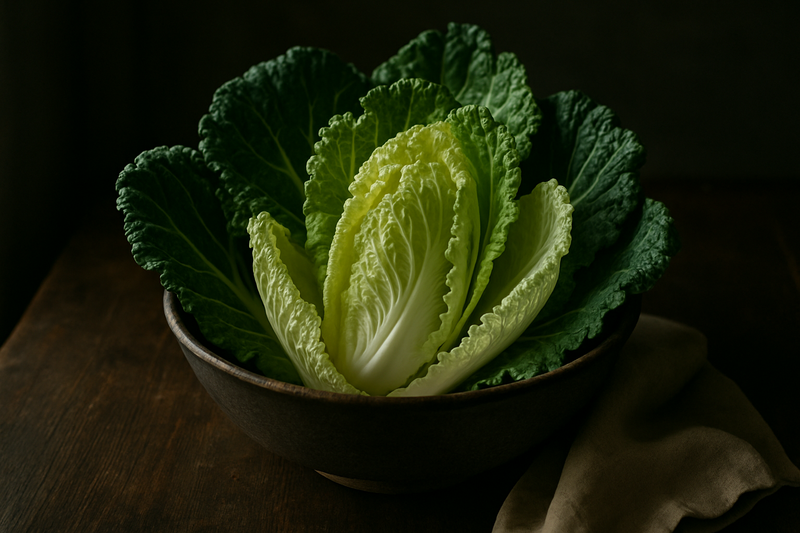
Baek Kimchi (White Kimchi) · Photograph
Discover white kimchi (baek kimchi) health benefits and side effects — from gut-friendly probiotics and vitamin C to its sodium content and who should go easy on it. A complete, evidence-aligned guide for chili-sensitive eaters and whole-food plant-based diets.
Key Nutrients
% Daily Value based on 2,000 cal diet
Key active compounds
- Lactic acid bacteria (LAB): Beneficial microbes — mainly Lactobacillus and Leuconostoc species — produced during lacto-fermentation (the natural process where salt and naturally occurring bacteria convert sugars into lactic acid). Kimchi typically contains 10⁸–10⁹ colony-forming units (CFU) per gram at peak fermentation.
- Postbiotics: Compounds that LAB produce during fermentation, including organic acids, bacteriocins (natural antimicrobials), and antioxidant molecules that may support gut barrier integrity and immune signalling.
- Glucosinolates and isothiocyanates: Sulfur-containing compounds native to napa cabbage and other cruciferous vegetables. Fermentation and chewing break them down into isothiocyanates, which are linked to detoxification enzyme activity and studied for potential cancer-protective effects (mostly in lab and observational research).
- Allyl sulfides: Organosulfur compounds from garlic used in the kimchi brine, associated with antimicrobial activity and possible cardiovascular support.
- Gingerol and related phenolics: Bioactive plant compounds from ginger (when included in the seasoning) with antioxidant and mild anti-inflammatory properties.
- Dietary fibre: From cabbage, radish, and any added fruit, acting as a prebiotic substrate — essentially food for your beneficial gut bacteria.
- Vitamin C: An antioxidant that supports immune defence and collagen production; present in cabbage and can be enhanced or partly preserved during fermentation.
Buying guide
Fresh / refrigerated kimchi (best for probiotics)
- Look for jars kept in the refrigerated section, not shelf-stable pantry products.
- Check the ingredients list: baek kimchi should not list gochugaru (Korean red pepper flakes) or chili paste.
- Ingredients to look for: napa cabbage, radish, garlic, ginger, Asian pear or pear juice, jujube, salt, and water. Short ingredient lists are generally a good sign.
- Sodium per serving varies from around 400 mg to over 900 mg — compare labels.
Sodium reduction tip Briefly rinsing a serving of commercial kimchi under cold water before eating can reduce sodium by 10–30% without eliminating its flavour or live cultures entirely.
Supplement form Kimchi probiotic supplements (capsules) exist but are not the same as eating the whole fermented vegetable. You lose the fibre, the phytochemicals, and the food-matrix context that likely shapes how the probiotics work. Whole food first, supplement as a secondary option.
Prep and pairing ideas
As a classic Korean side dish (banchan) Serve 3–4 tablespoons cold alongside steamed brown rice, tofu, and blanched greens. The mild tang acts as a palate cleanser and adds texture contrast.
In a grain bowl Layer baek kimchi over farro, quinoa, or mixed rice with sliced cucumber, edamame, and a sesame-ginger dressing. The kimchi provides the fermented hit without competing with other bold flavours.
Wrapped in lettuce Ssam-style: a leaf of butter lettuce, a spoonful of rice, a strip or two of baek kimchi, and a sliver of avocado. A naturally low-sodium delivery method since the portion of kimchi stays small.
Blended into a cold soup base Purée baek kimchi with cucumber, a little apple, and water for a quick chilled soup inspired by Korean mul kimchi (water kimchi). Light, hydrating, and probiotic-forward.
Common pairings and why they work
| Pairing | Why it works |
|---|---|
| Steamed tofu | Protein balances the mild acidity; tofu's neutrality lets the kimchi flavour lead |
| Asian pear slices | Echoes the pear already in the brine; natural sweetness softens residual saltiness |
| Short-grain brown rice | Fibre from rice complements kimchi's prebiotic fibre for a more complete gut-friendly meal |
Bottom line
Baek kimchi is a genuinely useful whole food: low in calories, rich in live cultures, and one of the most accessible fermented vegetables for people who can't or don't want to eat chilli. The evidence base for kimchi broadly — gut microbiome modulation, possible improvements in blood lipids and blood sugar, low-calorie satisfaction — translates plausibly to baek kimchi given their shared fermentation chemistry, but direct clinical trials on the white variety specifically are limited. Its sodium content is real and worth managing, particularly for those with cardiovascular or kidney concerns.
For most healthy adults eating a varied whole-food, plant-based diet, 50–100 g of baek kimchi per day as a side dish is a reasonable, evidence-informed starting point — crisp, mild, and worth exploring.
Looking to build a gut-friendly eating pattern beyond a single ingredient? Explore our goals-based guides at Plantopedia for personalised whole-food frameworks.
How Baek Kimchi (White Kimchi) Compares
| Compared with | What's different |
|---|---|
| Baek Kimchi (White Kimchi) vs. Red Kimchi (Tongbaechu) | Fermented without chili flakes, making it mild and refreshing rather than spicy. |
| Baek Kimchi (White Kimchi) vs. Sauerkraut | Fermented in a salt brine with garlic and ginger instead of vinegar and sugar. |
| Baek Kimchi (White Kimchi) vs. Dongchimi (Radish Water Kimchi) | Uses a watery brine and often includes fruit like Asian pear for a subtle sweetness. |
Health Benefits
Things to Know
Sodium is the primary safety consideration.: At ~747 mg per cup, regular large servings can contribute substantially to daily sodium intake. The WHO recommends less than 2,000 mg/day total; one cup of baek kimchi is already a third of that.
High blood pressure, heart failure, or kidney disease: Discuss salt-rich fermented foods with your care team before adding them regularly.
Blood pressure medications (ACE inhibitors, ARBs, beta-blockers, diuretics): High sodium intake can reduce the effectiveness of antihypertensive drugs and complicate fluid management. Keep your doctor informed.
Warfarin (and other vitamin K–sensitive anticoagulants): Napa cabbage contains vitamin K, which influences how warfarin works. Consistency in intake matters more than avoidance; sudden large changes in cabbage consumption can shift INR (a clotting measure) readings.
MAOIs (monoamine oxidase inhibitors): Fermented foods contain tyramine and other biogenic amines. In large amounts, these can interact with MAOIs to cause dangerous blood pressure spikes. If you take an MAOI, consult your prescriber before eating fermented foods regularly.
IBS, histamine intolerance, or highly sensitive digestion: Start with 2–3 tablespoons and increase slowly. Fermented foods and high-fibre cabbage can trigger bloating, gas, or symptom flares in sensitive individuals.
Active gastritis, peptic ulcers, or severe GERD: The acidity of fermented foods may aggravate symptoms even without chilli; monitor your response.
Immunocompromised individuals: Those on chemotherapy, high-dose immunosuppressants, or with conditions that impair immune function are often advised to avoid unpasteurised fermented foods due to a small risk of contamination.
Pregnancy: Baek kimchi is generally considered safe in normal food amounts when prepared hygienically and stored properly under refrigeration. Unpasteurised homemade batches should be prepared with care.
Shop This Ingredient
Stock your pantry with quality baek kimchi (white kimchi).
Buy on AmazonAs an Amazon Associate, Plantopedia earns from qualifying purchases. This costs you nothing extra and helps us keep the encyclopedia free.
Frequently Asked Questions
Heart and circulation Observational data from large Korean cohort studies show that adults who eat more napa cabbage kimchi (1–3 servings per day) have lower rates of dyslipidaemia (abnormal blood fat levels) — including lower prevalence of low HDL cholesterol in women and high total cholesterol in men. Separate analyses link regular kimchi consumption with lower obesity prevalence in men, which indirectly supports cardiovascular health. A scoping review of randomised controlled trials (studies where participants are randomly assigned to kimchi or a control diet) found reductions in serum lipids and body fat in several small interventions, though almost all used spicy baechu kimchi rather than baek kimchi specifically. The mechanisms proposed include fibre-driven cholesterol binding, LAB-mediated effects on bile acid metabolism, and the anti-inflammatory activity of garlic-derived compounds. The sodium content works in the opposite direction: high salt intake is a well-established risk factor for raised blood pressure. Some large analyses find no clear link between kimchi consumption and hypertension at typical Korean serving sizes, but people with salt-sensitive blood pressure or existing heart conditions should keep portions moderate and factor kimchi sodium into their overall daily intake. Digestive health and microbiome This is where baek kimchi's evidence base is strongest. Randomised trials using 300 g/day of kimchi for two weeks have shown measurable increases in beneficial gut bacteria (Lactobacillus and Leuconostoc species) in stool samples and a reduction in faecal pH — both signs of a more favourable gut environment. A lower faecal pH is associated with reduced growth of harmful bacteria and better colon health. The combination of live LAB (probiotic action), dietary fibre (prebiotic substrate), and postbiotic metabolites creates what researchers sometimes call a "synbiotic" effect — the bacteria and their food arrive together. Because baek kimchi contains no capsaicin, it may be better tolerated by people with chilli sensitivity, gastric reflux, or irritable bowel syndrome (IBS), while still delivering this full fermentation package. That said, any high-fibre fermented food can trigger bloating or loose stools when introduced quickly, so starting with 2–3 tablespoons and building up gradually is a sensible approach. Blood sugar and metabolism The evidence here is described as emerging rather than established. Some epidemiological analyses (population-level studies) link higher fermented vegetable intake with lower fasting blood glucose and improved lipid profiles in Korean adults. Clinical reviews describe a plausible antidiabetic potential for kimchi — pointing to fibre-driven slowing of glucose absorption, LAB-mediated gut changes, and possible improvements in short-chain fatty acid production that can influence insulin sensitivity. However, there are no large, well-controlled clinical trials testing baek kimchi alone against glycaemic (blood sugar) outcomes, and the effect on long-term markers like HbA1c (a three-month average blood sugar measure) is under-studied. Baek kimchi's very low calorie density may be its most practical metabolic contribution: as a flavourful, filling side dish, it can replace higher-calorie or higher-glycaemic options in a meal pattern without adding much sugar or fat. Inflammation and recovery Lab and animal studies show that LAB strains isolated from kimchi can suppress pro-inflammatory cytokines (chemical messengers that drive inflammation) and support gut barrier integrity (the lining that prevents harmful particles from entering the bloodstream). In humans, small interventional studies hint at reductions in inflammatory markers, but results are not yet consistent enough to draw firm conclusions. Baek kimchi lacks capsaicin — the compound in red kimchi that has its own anti-inflammatory pathway — but retains cabbage-derived glucosinolates, garlic's allyl sulfides, and the full LAB-and-postbiotic toolkit. Whether these components produce meaningful reductions in systemic inflammation at normal serving sizes in humans is still an open question. Anyone managing an inflammatory condition should treat baek kimchi as a potentially supportive food within a broader dietary pattern, not as a targeted treatment.
Baek kimchi comes in two practical forms for most people: homemade and commercial. Homemade baek kimchi is fermented at room temperature for one to two days, then refrigerated to slow fermentation and preserve crispness. Because it is unpasteurised, it retains live LAB throughout its fridge life (typically two to four weeks at peak flavour, up to several months at a more sour stage). Controlling ingredients means you can manage sodium by rinsing cabbage after salting, or reducing the initial salt volume slightly. Commercial refrigerated white kimchi is widely available in Korean grocery stores and online. Refrigerated (not shelf-stable) versions are more likely to contain live cultures, though LAB counts vary by brand, batch age, and whether the product has been pasteurised. Read labels for sodium content — it varies considerably between brands — and look for versions with minimal additives. A note on heat: Cooking baek kimchi (in soups, stir-fries, or rice dishes) will kill the live bacteria, removing the probiotic benefit. If gut microbiome support is your goal, eat it cold or at room temperature as a side dish.
There is no official recommended dose for baek kimchi. Here's how to think about it practically: Typical Korean dietary intake: 1–3 servings per day across all kimchi types, roughly 50–200 g total. The cohort studies linking kimchi to lower obesity and dyslipidaemia risk were conducted in this context. Clinical trials: Some randomised trials used 300 g/day of kimchi (about two cups) to observe gut microbiota effects over two weeks. That level delivered measurable changes in gut bacteria, but it also supplies close to 1,500 mg of sodium from kimchi alone — significant for anyone near or above daily limits. Practical starting point for most healthy adults: Start: 2–3 tablespoons (about 30–40 g) per day with a meal. Build to: 50–100 g per day (about a third to half a cup) if well tolerated. Upper comfort zone: 150 g per day (1 cup), factoring total daily sodium from all sources. If you are sodium-restricted (target under 1,500 mg/day), a half-cup of baek kimchi already uses half that budget, so smaller portions — or rinsing — make sense. Start low and build gradually, especially if you are new to fermented vegetables. Digestive symptoms in the first week or two (mild bloating, changes in stool) are common as your gut microbiome adjusts.
Quick Answers
Common questions, answered in a line.
Baek kimchi (white kimchi) is distinguished by the absence of gochugaru (Korean red pepper flakes) or chili paste. It relies on a brine of napa cabbage, radish, garlic, ginger, and fruit like Asian pear to create a mild, tangy flavor profile without the heat of traditional red kimchi.
One cup of baek kimchi contains approximately 747 mg of sodium, which is about one-third of the World Health Organization's daily recommended limit. Because salt content varies, people with high blood pressure or kidney disease should monitor servings or consult a doctor.
You can reduce the sodium in commercial baek kimchi by 10–30% by briefly rinsing a serving under cold water before eating. This method helps lower salt intake while preserving the vegetable's flavor and beneficial live cultures.
Baek kimchi contains 10⁸–10⁹ colony-forming units (CFU) of beneficial microbes like Lactobacillus and Leuconostoc species per gram at peak fermentation. These probiotics, along with postbiotic organic acids, help support gut barrier integrity and immune signaling.
People taking MAOIs (monoamine oxidase inhibitors) should be cautious with baek kimchi because fermented foods contain tyramine, which can cause dangerous blood pressure spikes. Additionally, those on Warfarin should maintain consistent intake due to the vitamin K found in napa cabbage.
Baek kimchi pairs well with steamed tofu, Asian pear slices, and short-grain brown rice. Its mild acidity acts as a palate cleanser, while the fiber in rice and pear complements the kimchi’s prebiotic fiber for better digestive support.
Individuals with IBS, histamine intolerance, or highly sensitive digestion should start with 2–3 tablespoons of baek kimchi and increase intake slowly. The high fiber and fermentation products can occasionally trigger gas or bloating in sensitive systems.
For Readers in the USA
Local context — sourcing, seasonality, and regional notes.
You can find baek kimchi at national grocers like Whole Foods Market and H-Mart, or at local Korean markets which often sell house-made batches. In the U.S., look for it in the refrigerated produce or fermented foods section rather than the shelf-stable aisles.
While napa cabbage is available year-round in the U.S. due to California and Florida harvests, baek kimchi is culturally a "winter kimchi" traditionally prepared in late fall. Many Americans now find it most refreshing during the summer months as a cooling, non-spicy side dish for BBQs.
Look for the "USDA Organic" seal and check the label for "Live and Active Cultures" to ensure the product hasn't been heat-pasteurized. Because fermentation creates CO2, it is common and safe for U.S. commercial jars to have slightly bulging lids or to hiss when opened.
In the U.S., you may see this variety labeled as "Mild Kimchi," "Non-Spicy Kimchi," or occasionally "Water Kimchi" if it has a high brine-to-vegetable ratio. While traditionally made with Asian pear, American producers sometimes substitute Fuji or Gala apples to provide the necessary fermentation sugars.
AI Clinical Review
- Clear explanation of what baek kimchi is and why its chili-free profile can make fermented foods more accessible for people who don’t tolerate capsaicin (spice) well.
- Balanced summary of kimchi’s probiotic potential: live lactic acid bacteria, prebiotic fiber, and fermentation by‑products that may support a healthier gut environment.
- Practical emphasis on sodium as the key nutritional caveat, with sensible portion guidance and a realistic rinsing tip to lower salt without losing all benefits.
- Useful buying and use guidance: choose refrigerated over shelf‑stable for live cultures, and avoid cooking if the goal is probiotics.
- Most human research evaluates “kimchi” broadly; baek‑kimchi–specific randomized trials and long‑term outcomes are limited, so benefits are best viewed as plausible rather than proven for this exact variety.
- Cardiometabolic findings (lipids, weight, glucose) rely heavily on small trials and observational data that can’t fully rule out confounding from overall diet and lifestyle.
- Reported probiotic counts and nutrient values can vary widely by recipe, brand, fermentation time, and storage, so real‑world effects may differ from study conditions.
- Lab and animal signals around anti‑inflammatory effects and phytochemicals (e.g., glucosinolates) have not translated into consistent, clinically meaningful endpoints in humans yet.
- Sodium adds up quickly with fermented vegetables; most people do well starting with 2–3 tablespoons and working toward roughly 50–100 g per day if tolerated, adjusting based on total daily sodium from all foods.
- Live‑culture benefits depend on product and handling: refrigerated, unpasteurized kimchi typically contains more viable bacteria; heating will inactivate them.
- Check in with a clinician if you have hypertension, heart or kidney disease (salt sensitivity), take warfarin (keep vitamin K–rich cabbage intake consistent), or use MAOIs (fermented foods contain tyramine). Immunocompromised individuals and those with histamine intolerance should also use caution with unpasteurized ferments.
- Temporary bloating or stool changes can occur when introducing fermented, high‑fiber foods—go low and slow, and monitor personal tolerance, especially with IBS or reflux.
Salty; non-spicy and suitable for chili-sensitive eaters.
References
- USDA FoodData Central — kimchi nutrient data (fdc.nal.usda.gov)
- Wikipedia: Baek-kimchi — overview of ingredients and preparation (en.wikipedia.org)
- Wikipedia: Kimchi — general composition and fermentation (en.wikipedia.org)
- Park et al. (2014) — Health benefits of kimchi as a probiotic food, review (2024.sci-hub.se)
- Scoping review: Effects of kimchi on human health, clinical trials (koreascience.kr)
- Frontiers in Nutrition (2026) — Kimchi and fermented food health perspectives (frontiersin.org)
- PMC10836382 — Association between kimchi consumption and obesity in Korean adults (ncbi.nlm.nih.gov)
- PubMed 29595643 — Kimchi intake and dyslipidaemia in Korean adults (pubmed.ncbi.nlm.nih.gov)
- PMC5039233 — Kimchi and traditional fermented foods of Korea, functional review (pmc.ncbi.nlm.nih.gov)
- PMC12249102 — Microbial and health perspectives on fermented foods (pmc.ncbi.nlm.nih.gov)
Know Your Numbers
Eating healthy is a start. Now get to know your biomarkers.
Food changes bloodwork — inflammation, lipids, blood sugar and nutrient status all respond to what you eat. 59 markers from $59.
- Results in 7–10 days at 2,000+ Quest sites
- Licensed provider reviews every result
- One flat price, no membership, HSA/FSA eligible
Educational information only, not medical advice. Panels are ordered and reviewed through our licensed partner; Plantopedia may earn a commission.