Fermented Peperoncini — health benefits and uses
An Italian antipasto pickle served to whet the appetite.
The Short Answer
Fermented pepperoncini are mild, probiotic-rich chili peppers that provide gut-friendly lactic acid bacteria and antioxidants like beta-carotene. Because they are naturally brined rather than vinegar-pickled, they retain live cultures that support digestive

Fermented Peperoncini · Photograph
Discover the real pepperoncini health benefits and side effects — from gut health and heart support to sodium risks and probiotic potential. Learn how fermented vs. vinegar-pickled pepperoncini differ, and how to use them wisely in a healthy diet.
Key Nutrients
% Daily Value based on 2,000 cal diet
Key active compounds in pepperoncini
- Capsaicinoids and capsinoids (present in trace amounts): Bioactive compounds in chili peppers responsible for pungency and heat. Pepperoncini are mild, so levels are very low compared with hot chili varieties. Fermented red pepper pastes rich in these compounds have shown cardiometabolic benefits in research, though results don't directly transfer to mild peperoncini.
- Carotenoids (beta-carotene, lutein): Pigmented antioxidant molecules — natural plant compounds that neutralize cell-damaging molecules called free radicals — that support eye and immune health. Fermentation generally preserves these fat-soluble compounds.
- Phenolic compounds and flavonoids: A broad class of plant-based molecules with antioxidant and potential anti-inflammatory properties. Fermentation can modify their profiles and generate new metabolites, though human evidence for specific clinical effects is still limited.
- Organic acids (lactic acid, acetic acid): Produced during lactic acid fermentation or added via vinegar. These acids lower the pH to preserve the pepper, contribute the tangy flavor, and may mildly influence digestion and blood sugar response after eating.
- Lactic acid bacteria (in naturally fermented versions only): Microorganisms — particularly species from the Lactobacillus family — that carry out fermentation. These are the bacteria that make a food "probiotic" in the traditional sense.
Prep and pairing ideas
Pepperoncini are a versatile condiment that punch well above their calorie weight in terms of flavor impact. Here are practical ways to use them:
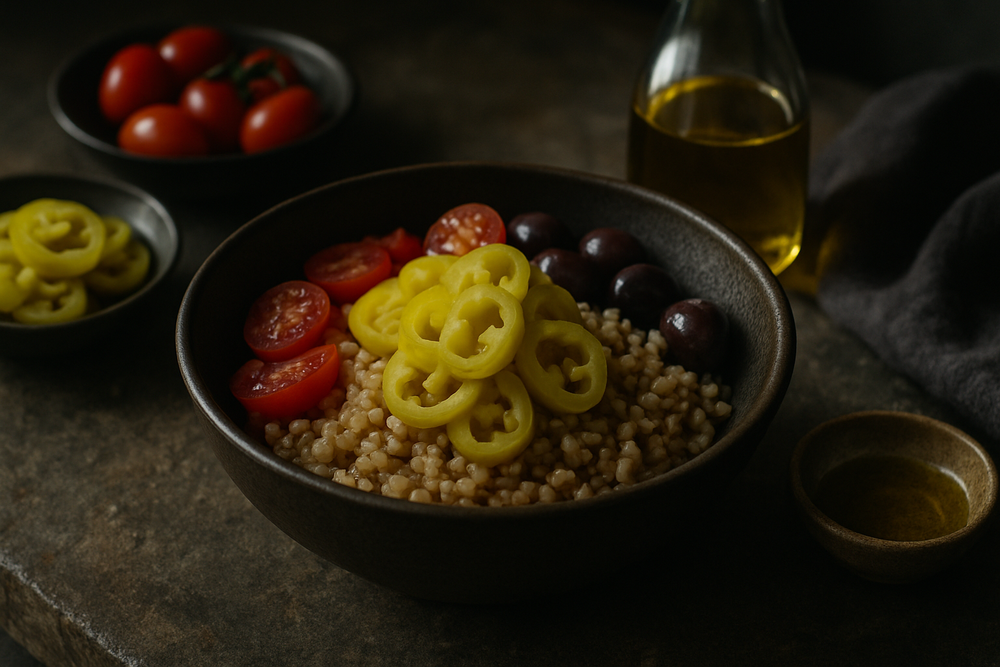
- Italian grain bowls: Toss sliced rings into farro, wheat berries, or quinoa with cherry tomatoes, olives, and a drizzle of olive oil. The acidity brightens the whole dish without added dressing calories.
- Plant-based sandwiches and wraps: Layer whole rings on hummus wraps, lentil-patty sandwiches, or avocado toast for a hit of brine and mild heat that replaces the need for salt or mayo.
- Salad finishing touch: A few rings scattered over a simple green salad add complexity — pair with white beans, roasted red peppers, and a lemon-herb vinaigrette for a Mediterranean feel.
- Pasta and grain salads: Chop finely and stir into cold pasta salads or grain-based dishes where you want tangy flavor distributed throughout.
- Brine as seasoning: If you buy naturally fermented pepperoncini, a teaspoon of the brine can be used like a mild hot sauce or a splash of acid in salad dressings — this also transfers any live cultures into your dish.
Bottom line
Fermented pepperoncini are a genuinely useful whole-food condiment — low in calories, bold in flavor, and capable of supporting a varied, plant-forward diet. Naturally brined versions may offer a modest probiotic benefit and contribute small amounts of vitamin C, carotenoids, and antioxidant plant compounds. The evidence for specific health benefits — gut microbiome support, heart health, and blood sugar modulation — is emerging and encouraging but not yet strong or pepperoncini-specific.
The main caveat is sodium. Commercial jarred pepperoncini can deliver up to 600 mg per small serving, making them a condiment to use mindfully rather than freely, especially for anyone managing blood pressure, heart disease, or kidney function. And if you're buying them for probiotic reasons, read the label: most store-bought jars are vinegar-pickled, not lacto-fermented, and contain no live cultures.
Used wisely — in small amounts as part of a sodium-conscious, vegetable-rich diet — fermented pepperoncini are a smart, flavorful addition to the food-as-medicine pantry.
How Fermented Peperoncini Compares
| Compared with | What's different |
|---|---|
| Fermented Peperoncini vs. Banana Peppers | Pepperoncini are milder (100–500 Scoville) than the medium heat of Banana peppers. |
| Fermented Peperoncini vs. Vinegar-Pickled Pepperoncini | Fermented pepperoncini contain live probiotics; vinegar-pickled versions are heat-processed and sterile. |
| Fermented Peperoncini vs. Jalapeños | Pepperoncini have a sweet-tangy profile compared to the sharp, pungent heat of Jalapeños. |
Health Benefits
Things to Know
High sodium content: A single ~30 g serving can provide up to 600 mg of sodium — about 26% of the recommended daily limit. Multiple servings add up fast. If you're watching sodium intake, treat pepperoncini as a seasoning, not a side dish.
Hypertension and kidney disease: If you have high blood pressure, heart failure, or chronic kidney disease, talk with your doctor before adding regular servings. The sodium load may counteract blood pressure medications or fluid management goals.
GERD and acid reflux: Spicy and acidic foods can trigger or worsen heartburn in some people. If you have gastroesophageal reflux disease (GERD), gastritis, or peptic ulcer disease, start small and notice how your body responds.
Histamine intolerance: Fermented foods are higher in histamine — a compound released during fermentation that some people cannot break down efficiently, leading to symptoms like headaches, flushing, or hives. If you suspect histamine intolerance or have a mast cell condition, naturally fermented pepperoncini may aggravate symptoms.
Sulfite sensitivity: Many commercial brands contain sodium bisulfite as a preservative. People with sulfite sensitivity or asthma can react to this additive.
Food dye sensitivity: Some jarred products contain FD&C Yellow No. 5 (tartrazine). Check labels if you have a known sensitivity.
Medication interactions: High sodium foods can reduce the effectiveness of antihypertensive medications and diuretics. Those on strict sodium-restricted diets for heart or kidney conditions should factor in pepperoncini servings.
Pregnancy: Fermented foods are generally considered safe in pregnancy when from a reputable source and kept properly refrigerated, but high sodium intake should be managed. Consult your midwife or OB for personalized guidance.
Prep Ideas
- — Italian grain bowls: Toss sliced rings into farro, wheat berries, or quinoa with cherry tomatoes, olives, and a drizzle of olive oil. The acidity brightens the whole dish without added dressing calories.
- — Plant-based sandwiches and wraps: Layer whole rings on hummus wraps, lentil-patty sandwiches, or avocado toast for a hit of brine and mild heat that replaces the need for salt or mayo.
- — Salad finishing touch: A few rings scattered over a simple green salad add complexity — pair with white beans, roasted red peppers, and a lemon-herb vinaigrette for a Mediterranean feel.
- — Pasta and grain salads: Chop finely and stir into cold pasta salads or grain-based dishes where you want tangy flavor distributed throughout.
- — Brine as seasoning: If you buy naturally fermented pepperoncini, a teaspoon of the brine can be used like a mild hot sauce or a splash of acid in salad dressings — this also transfers any live cultures into your dish.
Glossary
Shop This Ingredient
Stock your pantry with quality fermented peperoncini.
Buy on AmazonAs an Amazon Associate, Plantopedia earns from qualifying purchases. This costs you nothing extra and helps us keep the encyclopedia free.
Frequently Asked Questions
Research on pepperoncini specifically is sparse. Most of the useful human data comes from studies on mixed fermented vegetables or fermented red chili pepper pastes. That means conclusions require a small logical step — and honest uncertainty. Heart and circulation A meta-analysis of studies on fermented red chili pepper paste found that fermented pepper products were associated with lower systolic and diastolic blood pressure (the two numbers in a blood pressure reading, representing the force when the heart beats and rests) and improvements in lipid and glucose markers compared with non-fermented capsinoid supplements. That's encouraging, but fermented red pepper paste is a very different product from mild brined pepperoncini rings. A separate randomized controlled trial — a study where participants are randomly assigned to groups to reduce bias — gave adults at risk for cardiovascular disease about half a cup of mixed fermented vegetables daily for eight weeks. The result? No significant change in systemic inflammation markers or overall gut microbiota diversity, though some specific bacterial populations did shift. In practical terms, fermented pepperoncini may support heart health indirectly: they're a flavorful, low-calorie way to avoid richer sauces and add variety to vegetable intake. But their high sodium content means large or frequent servings could work against blood pressure goals for some people. Digestive health and microbiome Naturally fermented pepperoncini belong to the same category as other lacto-fermented vegetables — sauerkraut, kimchi, naturally brined pickles — that deliver lactic acid bacteria and fermentation-derived metabolites to the gut. Reviews of traditionally fermented pickles note that these products can contribute to microbial diversity and digestive comfort, though firm human evidence linking specific fermented vegetables to clear clinical digestive outcomes remains limited. The key caveat: most commercial jarred pepperoncini are vinegar-pickled and heat-treated, meaning they contain no live cultures. If gut microbiome support is a goal, you need to check the label and look specifically for naturally fermented, refrigerated products with only peppers, water, and salt listed. Blood sugar and metabolism Fermented red pepper products have shown modest improvements in fasting glucose and insulin sensitivity in human trials, compared with non-fermented versions. Researchers suggest fermentation generates metabolites that may favorably influence glucose metabolism. However, this evidence is not yet strong or consistent enough to make firm claims, and it hasn't been tested specifically on pepperoncini. From a practical standpoint, pepperoncini have almost no direct glycemic impact — roughly 1.4 g of carbohydrate per serving means they won't meaningfully raise blood sugar. Their bigger metabolic benefit is behavioral: using them to add bold flavor to meals may help reduce reliance on calorie-dense, sugar-heavy condiments. Inflammation and recovery One controlled trial found that half a cup of mixed fermented vegetables daily for two months did not significantly reduce systemic inflammatory markers in people at risk for cardiovascular disease. Broader reviews of fermented foods acknowledge that fermentation can increase levels of compounds with anti-inflammatory potential, but human data linking fermented vegetables to clear anti-inflammatory outcomes is sparse and inconsistent. Pepperoncini contain small amounts of vitamin C and carotenoids with antioxidant activity, and naturally fermented versions add organic acids and lactic acid bacteria — all theoretically supportive of an anti-inflammatory dietary pattern. But the honest summary is: don't expect dramatic anti-inflammatory effects from a condiment serving of pepperoncini alone.
This is one of the two optional modules most relevant to this ingredient, because the fermented vs. pickled distinction is the most consequential practical choice a shopper faces. Naturally fermented (lacto-fermented) pepperoncini Typically refrigerated, not shelf-stable Ingredient list: peppers, water, salt — and nothing else Flavor: tangier, more complex Probiotic potential: yes, if unpasteurized Sodium: still present, but often slightly lower than commercial jarred versions Vinegar-pickled jarred pepperoncini (most store brands) Shelf-stable in glass jars Ingredient list often includes: peppers, water, vinegar, salt, citric acid, sodium benzoate, sodium bisulfite, FD&C Yellow No. 5 Flavor: sharp, vinegary Probiotic potential: essentially zero — acidified and heat-treated Sodium: typically 340–600 mg per 30 g serving Label tips: Look for "raw," "live cultures," or "naturally fermented" on the label Refrigerated placement in the store is a good (though not foolproof) sign Short ingredient lists are better — if you see sodium bisulfite or benzoate, it's a pickled product, not a fermented one Homemade lacto-fermented pepperoncini using non-iodized salt brine is the most reliable way to get live cultures
Human studies on fermented vegetables have typically used about half a cup (100 g) per day. As a condiment, most people eat considerably less — 1 to 4 tablespoons (roughly 15 to 60 g) per serving. The safe upper limit isn't about the pepper itself; it's about sodium. The American Heart Association recommends no more than 2,300 mg of sodium per day for most adults, with an ideal target of 1,500 mg for those managing blood pressure. At 600 mg per 30 g serving, two to three helpings of commercial pepperoncini could consume a significant chunk of that budget. Practical guidance: Start with 2 to 4 rings (about 15 g) and see how your digestion responds, especially if you're new to fermented or acidic foods. If you're using them regularly, balance the rest of your day's sodium from fresh, minimally processed whole foods. For gut health benefits, aim for naturally fermented versions and use them consistently — occasional use is unlikely to meaningfully shift your microbiome. There's no established therapeutic dose for pepperoncini specifically. Use them as a flavorful, functional condiment rather than a supplement. Explore how fermented vegetables like pepperoncini fit into broader gut and digestive health goals at Plantopedia's digestive health hub.
Quick Answers
Common questions, answered in a line.
Fermented pepperoncini can support gut health if they are naturally brined and contain live lactic acid bacteria, such as Lactobacillus. These microorganisms are the probiotic cultures responsible for traditional fermentation, though most store-bought vinegar-pickled versions do not contain them.
Naturally fermented pepperoncini contain carotenoids like beta-carotene and lutein, which are antioxidant molecules that support eye health and the immune system. Fermentation processes generally preserve these fat-soluble compounds, helping to neutralize cell-damaging free radicals.
People with high blood pressure, heart disease, or kidney issues should use pepperoncini mindfully because a single 30g serving can contain up to 600 mg of sodium. This high salt content can interfere with blood pressure medications, fluid management goals, and overall heart health.
Fermented pepperoncini are higher in histamines, which are compounds produced during the fermentation process that may cause headaches, flushing, or hives in sensitive individuals. Those with histamine intolerance or mast cell conditions may find that naturally fermented peppers aggravate their symptoms.
Fermented pepperoncini may improve digestion and blood sugar response due to the organic acids, such as lactic and acetic acid, produced during fermentation. While these acids contribute to the tangy flavor, human evidence for specific clinical blood sugar effects is still emerging.
You can use fermented pepperoncini to add flavor to grain bowls, hummus wraps, avocado toast, and green salads without adding the calories found in heavy dressings or mayo. Additionally, the leftover brine can be used as a seasoning or a splash of acid in dressings to distribute live cultures.
Pepperoncini may trigger or worsen heartburn symptoms for individuals suffering from GERD, gastritis, or peptic ulcer disease due to their acidity and mild heat. It is recommended that those with acid reflux start with very small amounts to monitor their body's response.
For Readers in the USA
Local context — sourcing, seasonality, and regional notes.
In the U.S., you can find raw pepperoncini at farmers markets from July through September, primarily in warm regions like California, Florida, and Texas. While they are warm-weather crops, the processed jars are available year-round at most major grocery chains like Kroger, Safeway, and Whole Foods.
Look for jars in the refrigerated section labeled "Lacto-fermented" or "Raw" at U.S. specialty grocers like Whole Foods Market, Sprouts, or local food co-ops. Unlike shelf-stable jars in the pickle aisle (which use vinegar and heat pasteurization), these refrigerated versions contain the live cultures described in the article.
In the United States, pepperoncini are a staple of "Italian-American" cuisine, most famously served whole in Greek-style salads or as a mandatory garnish in Papa Johns pizza boxes. They are also a signature ingredient in the "Mississippi Pot Roast," a popular slow-cooker dish originating in the American South.
The USDA does not have a specific "fermented" category for grading, so U.S. consumers should look for the USDA Organic seal to ensure the peppers were grown without synthetic pesticides. Additionally, check the FDA-mandated nutrition label for sodium content, as domestic brands can vary significantly in salt levels.
AI Clinical Review
- Clearly explains the difference between naturally brined (lacto‑fermented) pepperoncini and vinegar‑pickled versions, and why only the former may contain live “good” bacteria (probiotics).
- Accurately highlights sodium as the main nutritional trade‑off, while noting the very low calorie content and modest micronutrients.
- Appropriately frames potential benefits (gut health, heart and metabolic markers) as extrapolated from broader fermented‑vegetable and red‑pepper research, not pepperoncini‑specific trials.
- Offers practical label tips to identify truly fermented products and notes that most shelf‑stable jars are pasteurized and non‑probiotic.
- Direct human studies on pepperoncini are scarce; most data come from mixed fermented vegetables or fermented red‑pepper pastes, so effects may not translate to mild pepperoncini.
- Findings on microbiome shifts and cardiometabolic outcomes with fermented vegetables are mixed, and the clinical relevance of small changes remains uncertain.
- Probiotic strain types, viable counts, and survival through digestion for fermented pepperoncini are not well characterized; no agreed‑upon “dose.”
- Portion and sodium: typical servings are 15–60 g; commercial products can reach ~600 mg sodium per 30 g. Rinsing may lower sodium slightly, but plan your daily sodium budget accordingly.
- Choose based on goals: for potential probiotic exposure, look for refrigerated, naturally fermented, unpasteurized products with short ingredient lists (peppers, water, salt).
- Use extra caution or discuss with a clinician if you have hypertension, heart failure, chronic kidney disease, GERD/acid reflux, histamine intolerance, or sensitivities to sulfites or food dyes; pregnancy generally fine with reputable, well‑refrigerated products but watch sodium.
- Medications: high‑sodium foods can counteract some blood‑pressure medicines and diuretics; those on sodium‑restricted plans should review portions with their care team.
Salty; choose naturally fermented over vinegar-only for live cultures.
References
- USDA FoodData Central — pepperoncini and fermented pepper nutrient data (fdc.nal.usda.gov)
- Fermented red chili pepper paste: effects on lipid, glucose, and cardiovascular parameters — ScienceDirect review (sciencedirect.com)
- Effects of fermented vegetables on gut microbiota and cardiovascular risk — randomized trial, Cambridge University Press (cambridge.org)
- Traditionally fermented pickles: microbial diversity and health aspects — ScienceDirect review (sciencedirect.com)
- Human health effects of fermented foods — Frontiers in Nutrition review (frontiersin.org)
- Pepperoncini nutrition facts and sodium per serving — Snapcalorie database (snapcalorie.com)
- Pastene peperoncini — commercial product nutrition and ingredient label (pastene.com)
- Fermented red peppers — calories, vitamins, minerals — Eato Health database (eato.health)
- Pepperoncini Villa Frizzoni product specification sheet including sodium and preservatives (ulfweb.com)
- Pepperoncini calories and macros — Recipal nutrition database (recipal.com)
Know Your Numbers
Eating healthy is a start. Now get to know your biomarkers.
Food changes bloodwork — inflammation, lipids, blood sugar and nutrient status all respond to what you eat. 59 markers from $59.
- Results in 7–10 days at 2,000+ Quest sites
- Licensed provider reviews every result
- One flat price, no membership, HSA/FSA eligible
Educational information only, not medical advice. Panels are ordered and reviewed through our licensed partner; Plantopedia may earn a commission.