Baru Nuts — health benefits and uses
A traditional food of Brazil's savanna prized locally as an energy-dense staple.
The Short Answer
Baru nuts are nutrient-dense seeds from the Brazilian Cerrado that provide 7g of protein and 8g of fiber per ounce. They are high in heart-healthy oleic acid and antioxidants, offering a flavor profile similar to a cross between a peanut and a cashew with
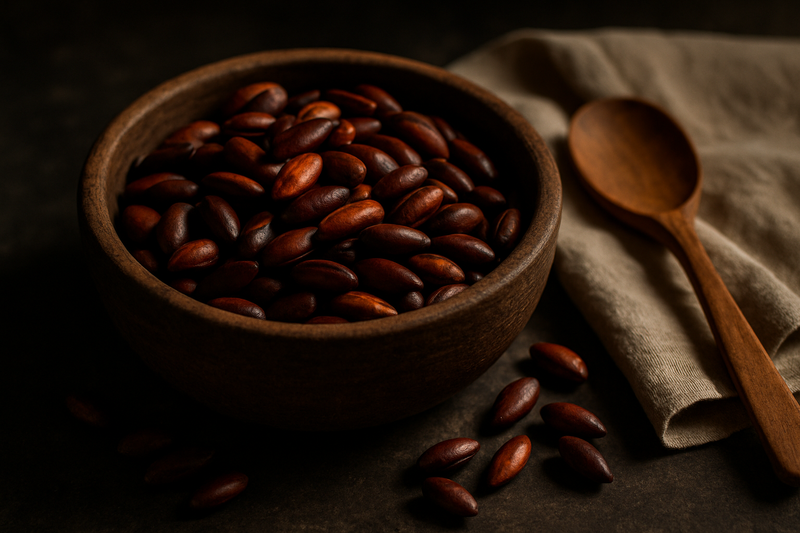
Baru Nuts · Photograph
Discover baru nuts benefits and side effects — from heart health and cholesterol support to protein, fiber, and safety tips. Learn how many to eat per day, how they compare to peanuts and almonds, and who should use caution with this Brazilian Cerrado superfood.
Key Nutrients
% Daily Value based on 2,000 cal diet
Key active compounds in baru nuts
- Oleic acid — The dominant fatty acid in baru nuts; a monounsaturated fat (the same type prominent in olive oil) linked to lower LDL ("bad") cholesterol when it replaces saturated fat in the diet.
- Linoleic acid — An essential polyunsaturated omega-6 fatty acid that contributes to cell membrane health and cardiovascular function when balanced with omega-3 intake.
- Tocopherols (vitamin E compounds) — Fat-soluble antioxidants, primarily alpha-tocopherol, that protect lipoproteins (fat-carrying proteins in the blood) and cell membranes from oxidative damage.
- Phenolic compounds including tannins — Plant polyphenols (natural antioxidant molecules found in many plant foods) that contribute antioxidant activity and may modulate inflammation in laboratory models.
- Phytates — Phosphorus-containing compounds common in legumes and nuts that can modestly reduce absorption of minerals like iron and zinc, but also carry antioxidant and potential prebiotic properties at typical dietary amounts.
Prep and pairing ideas
Baru nuts as a trail snack — Combine 30 g roasted baru nuts with dried tart cherries and a few dark chocolate chips for a portable, fiber-rich trail mix that balances sweet, salty, and savory notes. The healthy fats in the baru nuts slow digestion of the fruit sugars, making blood sugar less likely to spike.
Baru nut butter on whole-grain toast — Blend roasted baru nuts in a food processor for 5–8 minutes until smooth. Spread on sourdough with sliced banana and a drizzle of honey. The butter's natural creaminess sits between peanut butter and tahini — great for those tired of either.
Chopped baru nuts over grain bowls — Roughly chop 20 g of roasted baru nuts and scatter over a farro, roasted beet, and arugula bowl with a lemon-tahini dressing. They add crunch, protein, and a nutty depth that toasted seeds can't quite replicate.
Baru nut flour in baking — Replace up to 25% of all-purpose flour in banana bread or muffin recipes with finely ground roasted baru nuts for extra protein, fiber, and a mild, nutty flavor.
Buying guide: how to choose and store baru nuts
Whole roasted nuts (the gold standard): Look for single-ingredient labels — "baru nuts" or "baru almonds," roasted — with no added oils, salt, or sugar listed unless you want them. This is the form used in human studies and the closest to the whole plant food. Available from specialty online retailers and some health food stores.
Baru nut butter: Check the ingredient list for added palm oil, sugar, or excessive salt. The best versions list only "roasted baru nuts." Consistency should be thick and natural-looking; separation (oil rising to the top) is normal and a sign of minimal processing.
Freshness and storage: Baru nuts have a higher unsaturated fat content than many nuts, which means their fats can oxidize (go rancid) over time. Store in an airtight container in a cool, dark place for up to three months, or refrigerate for up to six months. If they smell sharp, sour, or paint-like, they've gone rancid — discard them. Rancid fats are not beneficial and may actually increase oxidative stress rather than reduce it.
Avoid raw seeds: Do not source raw, unprocessed baru seeds as a food. They have not been studied for safety in humans in the raw state and may contain higher levels of compounds that cause digestive distress.
Bottom line
Baru nuts are genuinely worth knowing about. They offer a nutritional combination — high fiber, solid plant protein, heart-friendly fats, a third of your daily vitamin E — that's rare in a single snack food. The strongest evidence points to benefits for lipid profiles (especially HDL cholesterol) and antioxidant status, backed by small but well-designed human trials. Evidence on digestion, blood sugar, and inflammation is real but more preliminary, largely inferred from their nutrient profile rather than direct trials on those endpoints.
A practical daily portion is 15–30 g of dry-roasted nuts. They're not magic, they're not a medicine, and they don't replace a varied diet or medical care — but as one component of a whole-food, plant-based eating pattern, they earn their place on the shelf.
Looking to build a smarter snacking routine? Browse ingredient combinations by health goal at Plantopedia Goals.
How Baru Nuts Compares
| Compared with | What's different |
|---|---|
| Baru Nuts vs. Almonds | Baru nuts have a harder crunch and a flavor profile closer to cocoa or coffee. |
| Baru Nuts vs. Peanuts | Baru nuts provide more fiber and a smokier, earthier taste than traditional peanuts. |
Health Benefits
Things to Know
Tree nut allergy: Baru nuts are seeds of a legume tree but are consumed like tree nuts and carry cross-reactivity risk. If you have a tree nut or peanut allergy, or a history of anaphylaxis (a severe, potentially life-threatening allergic reaction) to any nut or legume, avoid baru nuts unless cleared by an allergist.
Kidney disease: Baru nuts contain potassium (≈280 mg per serving). People on potassium-restricted diets due to chronic kidney disease should account for this and consult their dietitian.
Blood thinners (anticoagulants): Baru nuts supply vitamin E; while one 30 g serving is unlikely to be problematic, total vitamin E from all food and supplement sources should be monitored if you're on anticoagulant therapy.
Potassium-sparing diuretics or ACE inhibitors: These medications can raise blood potassium; regular large portions of baru nuts could contribute to elevated levels. Check with your prescriber.
Fiber newcomers: If you're increasing dietary fiber from a low baseline, introduce baru nuts gradually — start with 15 g per day — to allow your gut to adapt and minimize bloating.
Young children: Whole nuts are a choking hazard for children under 4. Use baru nut butter or finely ground baru meal instead.
Pregnancy and breastfeeding: Baru nuts are a nutritious whole food but introduce any new nut cautiously if you have a history of food allergies, and discuss with your midwife or OB.
Calorie awareness: At ~155 calories per 30 g, baru nuts are energy-dense. Portions add up quickly; keep servings moderate if you're managing weight.
Glossary
Shop This Ingredient
Stock your pantry with quality baru nuts.
Buy on AmazonAs an Amazon Associate, Plantopedia earns from qualifying purchases. This costs you nothing extra and helps us keep the encyclopedia free.
Frequently Asked Questions
Heart and circulation This is where baru nut evidence is strongest — though "strongest" is a relative term for a still-emerging food. Two randomized, placebo-controlled trials in adults with mildly elevated cholesterol found that incorporating roasted baru almonds into the daily diet improved serum lipid profiles: HDL cholesterol rose, and markers of atherogenic (artery-damaging) lipids improved compared to control diets over several weeks. A separate controlled trial found that baru nut consumption increased erythrocyte (red blood cell) glutathione peroxidase activity — a key antioxidant enzyme — and reduced lipid peroxidation markers, suggesting the nuts help the body fight oxidative stress, which is implicated in cardiovascular disease. The mechanistic story makes sense: approximately 50% of baru nut fat is monounsaturated, 30% is polyunsaturated, and only around 12% is saturated. Add fiber and vitamin E, and you have a nutrient package consistently associated with cardiovascular risk reduction in the broader nut literature. That said, long-term hard outcomes — heart attack, stroke, cardiovascular death — have not been directly studied with baru nuts specifically. Benefits extrapolate from short-term risk-factor data and general nut research. Digestive health and fiber A 30 g serving delivers approximately 8 g of dietary fiber — a meaningful contribution toward the 25–38 g daily target most adults miss. Fiber supports stool bulk and regularity, and higher-fiber diets are consistently linked to healthier gut microbiomes (the community of microorganisms living in your digestive tract). Baru nuts likely contain both soluble fiber (which forms a gel and slows digestion) and insoluble fiber (which adds bulk), though the exact split is still being characterized by researchers. One caveat: human trials on baru nuts have focused on cardiometabolic markers, not digestive endpoints, so improvements in constipation or gut microbiota composition are inferred from fiber content rather than directly measured. If you're not used to high-fiber foods, increasing intake suddenly can cause temporary gas or bloating — a common adaptation issue, not a sign something is wrong. Blood sugar and metabolism No dedicated human trials have tested baru nuts against fasting glucose, insulin resistance, or HbA1c (a three-month blood sugar average). What we do know from their nutrient profile is that a 30 g serving provides protein, fiber, and healthy fats alongside very little sugar — a combination that slows digestion and may blunt post-meal blood sugar spikes compared to high-carbohydrate snacks. This is extrapolated from broad nut and legume research rather than baru-specific trials. People managing diabetes should factor baru nuts into their overall nutrition plan rather than treating them as a primary glycemic tool. Inflammation and oxidative stress Emerging evidence from controlled trials shows that daily baru nut consumption can upregulate the body's own antioxidant defense system — specifically by boosting glutathione peroxidase, an enzyme that neutralizes harmful free radicals (unstable molecules that damage cells). The vitamin E, polyphenols, and unsaturated fats all likely contribute. However, clinical inflammatory markers like C-reactive protein (CRP — a blood protein that rises when inflammation is high) were not the primary focus of these studies, and no large-scale trials have examined baru nuts and inflammatory disease outcomes. The evidence here is real but early.
The fiber-gap snacker Regularly reaches for low-fiber packaged snacks between meals Knows they're not hitting their daily fiber target but finds vegetables and legumes inconvenient Can swap a bag of pretzels or chips for a 30 g portion of roasted baru nuts for an immediate fiber and protein upgrade The plant-based protein builder Following a whole-food, plant-based or mostly plant diet and looking for snack foods that pull their protein weight Finds most nuts feel "mostly fat" and wants something more nutritionally balanced Can use baru nut butter as a post-workout spread or blend whole nuts into grain bowls to add 7+ g plant protein per serving without supplements
Short answer: yes, and roasted is the only form with human safety data. Raw baru seeds contain higher levels of antinutrients — particularly phytates and tannins — that can interfere with mineral absorption and may cause digestive discomfort. Roasting reduces moisture, improves the flavor profile significantly (bringing out the peanut-meets-cashew quality), and lowers some of these antinutrients. Every published human trial on baru nuts has used roasted baru almonds, so the evidence base applies specifically to the roasted form. Stick to properly roasted, commercially prepared baru nuts and avoid eating them raw.
Tree nut allergy: Baru nuts are seeds of a legume tree but are consumed like tree nuts and carry cross-reactivity risk. If you have a tree nut or peanut allergy, or a history of anaphylaxis (a severe, potentially life-threatening allergic reaction) to any nut or legume, avoid baru nuts unless cleared by an allergist. Kidney disease: Baru nuts contain potassium (≈280 mg per serving). People on potassium-restricted diets due to chronic kidney disease should account for this and consult their dietitian. Blood thinners (anticoagulants): Baru nuts supply vitamin E; while one 30 g serving is unlikely to be problematic, total vitamin E from all food and supplement sources should be monitored if you're on anticoagulant therapy. Potassium-sparing diuretics or ACE inhibitors: These medications can raise blood potassium; regular large portions of baru nuts could contribute to elevated levels. Check with your prescriber. Fiber newcomers: If you're increasing dietary fiber from a low baseline, introduce baru nuts gradually — start with 15 g per day — to allow your gut to adapt and minimize bloating. Young children: Whole nuts are a choking hazard for children under 4. Use baru nut butter or finely ground baru meal instead. Pregnancy and breastfeeding: Baru nuts are a nutritious whole food but introduce any new nut cautiously if you have a history of food allergies, and discuss with your midwife or OB. Calorie awareness: At 155 calories per 30 g, baru nuts are energy-dense. Portions add up quickly; keep servings moderate if you're managing weight.
Research and nutrition references consistently point to 15–30 g per day (roughly a small to medium handful, or about 1–3 tablespoons) as a practical daily portion. Human trials have used daily portions in this range as part of the usual diet without adverse effects in healthy adults over several weeks. If you're new to baru nuts or high-fiber foods in general, start at the lower end — 15 g per day — for the first week or two, then increase to 30 g if tolerated well. Because they're calorie-dense, eating beyond 30–40 g per day regularly without adjusting other intake could contribute to unwanted calorie surplus. There is no established therapeutic dose; more is not necessarily better, and the evidence points to consistent moderate inclusion rather than large supplemental quantities.
Quick Answers
Common questions, answered in a line.
Baru nuts are the seeds of a legume tree, featuring a nutritional profile high in plant protein, fiber, and heart-friendly fats. They are often described as having a flavor and texture that sits somewhere between peanut butter and tahini when processed into a butter.
Yes, you can use roasted baru nuts as a functional flour substitute by replacing up to 25% of all-purpose flour in recipes like banana bread or muffins. This substitution adds extra protein, fiber, and a mild, nutty flavor to your baked goods.
Store roasted baru nuts in an airtight container in a cool, dark place for up to three months, or refrigerate them for up to six months. Because they have a high unsaturated fat content, they can go rancid; if they smell sharp or sour, they should be discarded.
Baru nuts contain oleic acid, a monounsaturated fat linked to lower LDL ("bad") cholesterol when it replaces saturated fats in the diet. They also provide tocopherols (vitamin E) and phenolic compounds that help protect cell membranes from oxidative damage.
People with tree nut or peanut allergies, those on potassium-restricted diets for kidney disease, and individuals taking blood thinners or ACE inhibitors should use caution. Additionally, raw baru seeds should be avoided as they may cause digestive distress and have not been studied for human safety.
One 30g serving of roasted baru nuts contains approximately 155 calories, making them an energy-dense snack food. While they offer high fiber and protein, it is recommended to keep portions moderate if you are managing your weight.
Baru nuts contain phytates, which are phosphorus-containing compounds that can modestly reduce the absorption of minerals like iron and zinc. However, at typical dietary amounts, these compounds also provide antioxidant and potential prebiotic properties.
For Readers in the USA
Local context — sourcing, seasonality, and regional notes.
You can typically find baru nuts at specialty health food chains like Whole Foods Market, Sprouts Farmers Market, or through major online retailers like Amazon and Thrive Market. While they are not yet a staple in every local grocery store, they are increasingly stocked in the "superfood" or natural snack aisles of premium U.S. grocers.
Because baru nuts are imported from Brazil's Cerrado region, they are typically sold year-round in the U.S. as roasted, shelf-stable products rather than fresh seasonal produce. You won't usually find them at local U.S. farmers markets unless a vendor specializes in imported Brazilian superfoods or artisanal nut butters.
Look for the USDA Organic seal on the packaging to ensure the baru nuts were produced without synthetic fertilizers or pesticides according to U.S. national standards. While the nuts are wild-harvested in Brazil, the USDA Organic certification provides an extra layer of quality assurance for American consumers concerned about chemical residues.
In the United States, baru nuts are often marketed as "Baru Almonds" due to their similar shape and nutritional profile, though they are botanically a legume. You may also see them referred to as "Baruzeiro seeds" in specialty Brazilian markets located in hubs like Miami, Boston, or New York City.
AI Clinical Review
- Accurately highlights baru nuts’ standout nutrient mix for a 30 g serving: meaningful protein, unusually high fiber, and predominantly unsaturated fats, plus vitamin E.
- Correctly notes small randomized trials linking daily roasted baru nut intake with improvements in HDL (“good”) cholesterol and reductions in oxidative stress markers—patterns consistent with broader nut research.
- Sensibly emphasizes roasted (not raw) seeds as the form studied in humans and lower in antinutrients.
- Provides realistic intake guidance (about 15–30 g/day) and frames baru nuts as one part of a whole‑food, plant‑based pattern rather than a cure‑all.
- Long‑term clinical outcomes (heart attacks, strokes, mortality) haven’t been studied for baru nuts; current data are short‑term and focus on risk factors.
- Claims around blood sugar control and digestive health are primarily inferred from the nutrient profile; dedicated human trials on glycemia or gut outcomes are limited.
- Findings on reduced abdominal adiposity come from a single trial and require replication to confirm magnitude and generalizability.
- The precise fiber types and polyphenol profile—and how they translate to clinically meaningful effects—are still being characterized.
- Allergies: Despite being a legume-tree seed, baru is eaten like a tree nut. Anyone with peanut, tree nut, or legume allergy should avoid unless cleared by an allergist.
- Dose and tolerance: If you’re new to high‑fiber foods, start around 15 g/day and increase gradually to reduce temporary gas/bloating; drink adequate fluids.
- Medical considerations: At ~155 kcal and ~280 mg potassium per 30 g, be mindful if managing weight, chronic kidney disease, or taking ACE inhibitors/ARBs or potassium‑sparing diuretics. The vitamin E content warrants caution if you use anticoagulants—coordinate with your clinician.
- Form and storage: Choose commercially roasted products (the form used in studies). Store airtight and cool to prevent rancidity; discard if the nuts smell sharp or “paint‑like.”
Tree nut—avoid with tree-nut allergy; always eat roasted, not raw.
References
- USDA FoodData Central — nutrient database for baru nuts (fdc.nal.usda.gov)
- USDA MyPlate — nuts and seeds in the protein foods group (myplate.gov)
- Randomized controlled trial: baru almonds improve lipid profile in mildly hypercholesterolemic adults (pubmed.ncbi.nlm.nih.gov)
- Randomized controlled trial: baru almonds increase glutathione peroxidase and reduce oxidative stress markers (pmc.ncbi.nlm.nih.gov)
- Randomized placebo-controlled trial: baru almond diet reduces abdominal adiposity and raises HDL (sciencedirect.com)
- Comprehensive physical and chemical analysis of baru almonds — compositional data (pubmed.ncbi.nlm.nih.gov)
- NutritionFacts.org evidence review — how healthy are baruka nuts? (nutritionfacts.org)
- NutritionAdvance evidence-based overview — baru nuts nutrition facts, benefits, and research (nutritionadvance.com)
- HealthifyMe — baru nuts nutrition and health overview (healthifyme.com)
- Nuts.com product nutrition facts — roasted unsalted baru nuts (nuts.com)
Know Your Numbers
Eating healthy is a start. Now get to know your biomarkers.
Food changes bloodwork — inflammation, lipids, blood sugar and nutrient status all respond to what you eat. 59 markers from $59.
- Results in 7–10 days at 2,000+ Quest sites
- Licensed provider reviews every result
- One flat price, no membership, HSA/FSA eligible
Educational information only, not medical advice. Panels are ordered and reviewed through our licensed partner; Plantopedia may earn a commission.