Borage — health benefits and uses
Traditional European herb used for cooling and skin support.
The Short Answer
Borage is an edible herb known for its refreshing cucumber flavor and star-shaped blue flowers, providing 35mg of vitamin C and 3.3mg of iron per 100g serving.
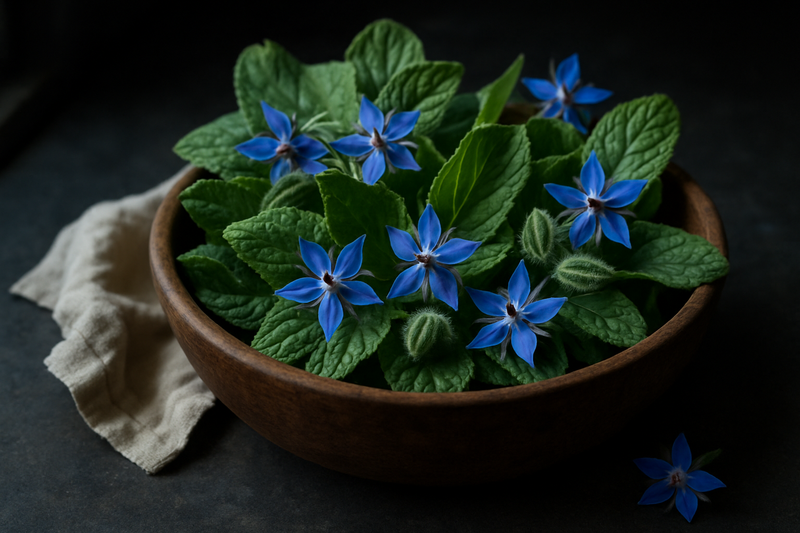
Borage · Photograph
Discover borage herb benefits, uses, and side effects — from cucumber-flavored leaves and star-shaped blue flowers in salads and drinks to borage seed oil GLA research. Includes nutrition facts, pyrrolizidine alkaloid safety guidance, and who should avoid it.
Key Nutrients
% Daily Value based on 2,000 cal diet
Key active compounds
- Gamma-linolenic acid (GLA): An omega-6 polyunsaturated fatty acid (a type of healthy fat the body cannot make in large amounts on its own) concentrated in borage seed oil. Acts as a building block for anti-inflammatory signaling molecules called eicosanoids. Clinical trials using GLA from borage oil have shown modest improvements in rheumatoid arthritis symptoms and blood lipid profiles.
- Pyrrolizidine alkaloids (PAs) — lycopsamine, intermedine, amabiline, supinine, thesinine: A class of naturally occurring plant compounds found mainly in borage leaves, stems, and roots, with lower levels in flowers and seeds. Unsaturated PAs are potentially hepatotoxic (liver-damaging) and possibly carcinogenic at high or chronic exposures. Their presence is the primary safety concern with borage leaf use.
- Flavonoids and phenolic acids: Polyphenolic compounds (plant-based antioxidants) naturally present in the leaves. Associated with antioxidant and mild anti-inflammatory activity in lab studies; human evidence is preliminary.
- Mucilage and soluble fibers: Viscous polysaccharides (gel-like carbohydrates) in the soft leaf tissue. May have mild soothing effects on mucous membranes and contribute to gut comfort, though no clinical trials have confirmed this in borage specifically.
Prep and pairing ideas
With what it grows alongside: Borage self-seeds prolifically and is a natural companion to strawberries in the garden — and on the plate. A few borage flowers scattered over a strawberry salad with balsamic and mint is a classic combination that plays the cucumber-sweetness contrast beautifully.
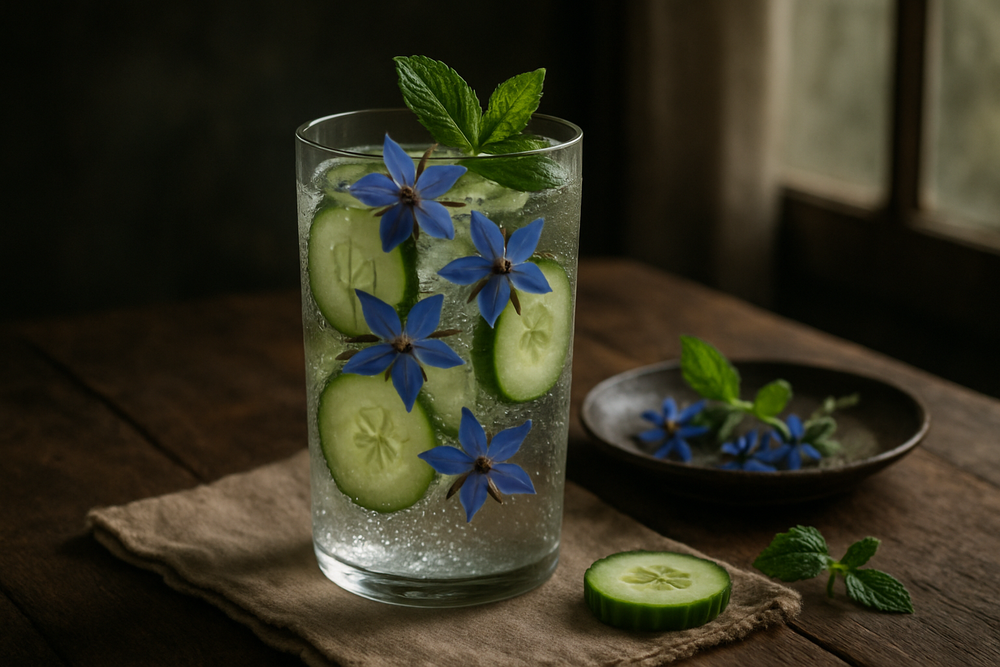
In summer drinks: Float three or four borage flowers in a glass of sparkling water with cucumber slices and a sprig of mint. The flowers hold their color for about 20–30 minutes before wilting, so add them just before serving. For a more dramatic presentation, freeze single flowers into ice cubes.
In grain and pasta dishes: Young borage leaves, roughly chopped, can replace spinach in ricotta-stuffed pasta or be stirred into a farro salad with roasted tomatoes and olives. The heat mellows the mild prickliness of the leaf surface.
Who benefits most from borage in a culinary context?
The adventurous plant-based cook: If you grow your own herbs or have access to a farmer's market that carries specialty greens, borage gives you a unique flavor profile (that cucumber freshness) and unmatched visual appeal at no cost to your WFPB goals.
- Adds variety to herb-forward salads without relying on the same basil-parsley-dill rotation
- Edible flowers reduce the need for processed garnishes or added sugars in drinks and desserts
- Grows easily and abundantly, making it accessible for home growers
The person managing joint inflammation (with medical guidance): If you have rheumatoid arthritis and are exploring adjunct approaches alongside your prescribed treatment:
- Borage seed oil (PA-free, GLA-standardized) has modest trial evidence for symptom improvement
- May allow some people to reduce NSAID use, though this should always be supervised by a clinician
- Worth discussing with a rheumatologist as part of an integrative care plan
Bottom line
Borage is a genuinely useful and beautiful culinary herb when used in its natural role: as an occasional edible flower and fresh-leaf garnish that brings cucumber flavor and visual drama to food and drink. At culinary amounts, it contributes meaningful nutrients and fits comfortably in a whole-food, plant-based diet.
The deeper functional story belongs to borage seed oil, which has modest but real human trial evidence for rheumatoid arthritis symptom relief and modest lipid benefits — provided the oil is PA-free and used under medical supervision.
The limits matter here too: pyrrolizidine alkaloids make daily leaf use inadvisable, borage tea is best avoided, clinical evidence for eczema is negative, and several populations (pregnant people, those with liver disease, people on blood thinners) should steer clear or consult a doctor first. Use borage for what it does well — bring a plate to life — and seek professional guidance before reaching for the seed oil.
How Borage Compares
| Compared with | What's different |
|---|---|
| Borage vs. Arugula | Cucumber-scented leaves with a prickly texture vs smooth, spicy-peppery leaves. |
| Borage vs. Fennel Leaves | Contains GLA and vitamin C with a cucumber flavor vs anise-like flavor and no GLA. |
Health Benefits
Things to Know
PA safety rule #1: Never use borage leaves medicinally or in large daily quantities. Pyrrolizidine alkaloids accumulate with repeated exposure and can cause hepatic veno-occlusive disease (a serious condition where small blood vessels in the liver become blocked).
PA safety rule #2: If using borage seed oil as a supplement, choose products that are certified PA-free or PA-reduced. Not all commercial oils have been tested.
Pregnancy: Avoid all internal use of borage herb and non-verified borage oils. PAs are potentially teratogenic (capable of harming fetal development), and safety data during pregnancy are absent.
Breastfeeding: Also avoid internal borage herb; PAs may transfer to breast milk.
Children and adolescents: More vulnerable to hepatotoxicity (liver damage); internal medicinal use of borage herb is not appropriate and seed oil should only be used under specialist supervision.
Liver disease or elevated liver enzymes: The additive hepatotoxic risk from PAs makes borage herb unsafe for this group.
Blood thinners (warfarin, DOACs, aspirin, clopidogrel): Borage oil's effects on prostaglandins and platelet function may increase bleeding risk or interfere with INR (a clotting test used to monitor warfarin).
Epilepsy or seizure history: High-dose GLA has been linked to seizures in case reports; caution or avoidance is advised.
Other PA-containing herbs (comfrey, coltsfoot): Using these alongside borage increases cumulative PA exposure. Avoid combining them.
Hepatotoxic medications (methotrexate, isoniazid, certain chemotherapy agents): Combined liver stress from PAs and these drugs is a real risk.
Prep Ideas
- — Adds variety to herb-forward salads without relying on the same basil-parsley-dill rotation
- — Edible flowers reduce the need for processed garnishes or added sugars in drinks and desserts
- — Grows easily and abundantly, making it accessible for home growers
- — Borage seed oil (PA-free, GLA-standardized) has modest trial evidence for symptom improvement
- — May allow some people to reduce NSAID use, though this should always be supervised by a clinician
- — Worth discussing with a rheumatologist as part of an integrative care plan
Glossary
Shop This Ingredient
Stock your pantry with quality borage.
Buy on AmazonAs an Amazon Associate, Plantopedia earns from qualifying purchases. This costs you nothing extra and helps us keep the encyclopedia free.
Frequently Asked Questions
Heart and circulation The most consistent human evidence involves borage seed oil, not the herb itself. In one trial of overweight young adults with a family history of obesity, six weeks of borage oil providing 880 mg GLA daily lowered plasma triglycerides (a type of blood fat linked to cardiovascular risk) and raised HDL ("good") cholesterol, without changing body weight or fasting glucose. A separate study in adults with early-stage type 2 diabetes or metabolic syndrome (a cluster of risk factors including high blood pressure and abnormal cholesterol) found that eight weeks of a combined borage and echium oil supplement improved total and LDL cholesterol and some metabolic markers, though the exact contribution of borage versus other oils in the blend was unclear. These are modest effects in small, short studies. No trials have looked at whether borage changes hard outcomes like heart attacks or strokes, and there is no evidence that culinary amounts of borage leaf or flower affect cardiovascular risk in any measurable way. Digestive health and microbiome Borage has been used as a traditional digestive aid — described in Mediterranean ethnobotanical literature as mildly laxative, emollient (soothing), and diuretic (promoting fluid excretion). The mucilage in the leaves may contribute to this reputation. An in-vivo study of traditionally consumed Mediterranean wild plants, including borage, found no toxicity signals and suggested antigenotoxic (DNA-protecting) properties, consistent with its long culinary history. However, no controlled human trials have tested borage for constipation, dyspepsia (indigestion), or irritable bowel syndrome. Digestive benefits remain in the territory of traditional use and early-stage science. Blood sugar and metabolism Borage seed oil studies show some improvements in lipid profiles among people with metabolic syndrome, but not in fasting blood glucose or HbA1c (a measure of longer-term blood sugar control). In the young-adult overweight trial, six weeks of GLA had no effect on glucose at all. Traditional claims about borage being "anti-obesity" are not yet backed by robust human data. Inflammation and recovery This is where borage seed oil has the strongest (though still modest) evidence base. Several randomized trials of borage oil providing roughly 1–3 g GLA per day in people with rheumatoid arthritis (an autoimmune inflammatory joint disease) reported reductions in joint tenderness, swelling, and pain, and sometimes a reduced need for NSAIDs (nonsteroidal anti-inflammatory drugs like ibuprofen). Memorial Sloan Kettering Cancer Center, which reviews integrative medicine evidence for oncology patients, summarizes the data as showing moderate support for symptom relief in rheumatoid arthritis. Worth noting: two clinical trials of borage oil for atopic dermatitis (eczema) found no benefit for skin inflammation, despite widespread marketing of borage oil for this purpose. Skin health Borage seed oil is frequently promoted for dry skin and eczema. The theoretical rationale is that GLA supports the skin's moisture barrier. However, controlled human trials for atopic dermatitis have not shown a meaningful benefit. Topical borage oil avoids the internal PA exposure issue when using purified seed oil, but evidence for skin improvement remains limited.
The answer depends entirely on what you're trying to do: For culinary enjoyment: Fresh leaves and flowers are the forms to reach for. A small handful of young leaves adds cucumber freshness to salads, cold soups, and grain bowls. The flowers make striking garnishes on desserts, cocktails, and appetizer plates. Use occasionally — a few times a week at most — rather than as a daily staple, given the PA content in leaves. For joint inflammation support (under medical supervision): Borage seed oil standardized for GLA content, certified as PA-free or PA-reduced, is the form used in clinical trials. Doses of approximately 1–3 g GLA per day for 6–24 weeks have been studied; this is not something to self-prescribe, and you should confirm any oil you buy has been tested for PAs. Borage tea from dried leaves: Major safety references advise against this. The internal medicinal use of borage leaf infusion carries the most direct PA exposure risk and has no demonstrated clinical benefit that would justify it. Topical oil: PA-free borage seed oil applied to skin is an option for dryness or irritation, though clinical evidence for eczema is limited.
There is no official recommended daily intake for borage herb because it is used as a garnish rather than a dietary staple. For leaves and flowers (culinary): A sensible culinary amount is a small handful of young leaves (roughly 5–15 g) or a few flowers, used occasionally — a few times per week at most, not every day. Major references, including the German Federal Ministry of Health guidance on pyrrolizidine alkaloids, recommend keeping total unsaturated PA intake to approximately 1–10 µg per day from all sources. This translates to very modest, infrequent portions of borage herb. Boiling leaves and discarding the cooking water may reduce some alkaloid content, though this has not been formally quantified in clinical terms. For borage seed oil (supplemental, PA-free products): Clinical trials have used approximately 1–3 g GLA per day, delivered as 1–6 g of borage oil depending on GLA concentration, for 6–24 weeks. Always use under medical supervision; this is not a dose to self-titrate. Start at the lower end and monitor for any liver, GI, or bleeding-related symptoms. The bottom line on amount: Less is more with the herb itself. Enjoy it as a culinary accent, not a supplement.
Quick Answers
Common questions, answered in a line.
Borage leaves and flowers have a unique flavor profile that closely mimics the freshness of cucumber. This makes the herb a popular addition to summer drinks, salads, and pasta dishes where a crisp, cooling taste is desired.
Borage seed oil contains gamma-linolenic acid (GLA), which may help reduce symptoms of rheumatoid arthritis and improve blood lipid profiles. These anti-inflammatory benefits are most effective when using PA-free, standardized oils under medical supervision.
Borage flowers are edible and often used as a garnish in salads, sparkling water, or frozen into ice cubes for a dramatic presentation. Because they wilt within 20–30 minutes, it is best to add these star-shaped blue blooms to food and drinks just before serving.
Pregnant and breastfeeding individuals, children, and people with liver disease or seizure disorders should avoid using borage. Additionally, those taking blood thinners like warfarin or hepatotoxic medications should consult a doctor due to potential drug interactions and liver risks.
Borage leaves contain pyrrolizidine alkaloids (PAs), which are naturally occurring compounds that can be toxic to the liver and potentially carcinogenic. Because these toxins accumulate with repeated exposure, daily consumption of the leaves or use in medicinal teas is not recommended.
You can use young borage leaves as a substitute for spinach in cooked dishes like ricotta-stuffed pasta or stir them into grain salads. Applying heat to the leaves helps to mellow their mild natural prickliness and softens the texture for easier eating.
For Readers in the USA
Local context — sourcing, seasonality, and regional notes.
In the United States, borage thrives in USDA Hardiness Zones 3 through 10, typically blooming from late spring through the first frost of autumn. Because it self-seeds so aggressively, many American gardeners consider it a "permanent" addition to the landscape once planted.
Borage is rarely found in major US supermarkets like Kroger or Safeway; it is most commonly sourced at local farmers markets or specialty nurseries during the summer months. You are more likely to find the plant sold as a "pollinator friendly" herb at garden centers than as a packaged culinary green.
The FDA does not approve herbal supplements like borage oil for the treatment of diseases, so you should look for "PA-free" (pyrrolizidine alkaloid-free) certification on labels to ensure safety. When buying seeds or plants, look for the USDA Organic seal to ensure the leaves and flowers are free from synthetic pesticides.
In the US, borage is famously known as the "Bee Bread" or "Starflower" plant due to its ability to attract honeybees and its distinct five-pointed blue petals. It is a staple in American pollinator gardens and is frequently recommended by agricultural extension offices for organic pest management.
AI Clinical Review
- Clearly separates culinary borage (leaves/flowers) from borage seed oil, and explains why most research focuses on the oil’s GLA content.
- Accurately highlights pyrrolizidine alkaloids (PAs) as the key safety issue and frames borage as an occasional garnish rather than a daily green.
- Fair summary of human data: modest symptom relief for rheumatoid arthritis with PA-free, GLA-standardized seed oil; little to no benefit for eczema.
- Notes realistic nutrition contributions (vitamin C, iron, potassium) at typical culinary portions within a plant-forward diet.
- Cardiometabolic findings (lipids, HDL/triglycerides) come from small, short trials; there are no studies showing reductions in events like heart attacks or strokes.
- Digestive claims are largely traditional or preclinical; controlled human studies are lacking.
- Skin outcomes remain mixed: topical or oral borage oil has not consistently improved atopic dermatitis in trials.
- Real-world PA exposure from leaves varies by plant part, preparation, and sourcing; standardized testing of commercial products is inconsistent.
- Culinary use: keep portions small (about a small handful of young leaves or a few flowers) and occasional; avoid medicinal-strength teas made from leaves due to PA load.
- Supplements: clinical trials used roughly 1–3 g/day of GLA (often 1–6 g borage oil, depending on concentration) for 6–24 weeks—only with PA-free/PA-reduced products and clinician oversight.
- Who should avoid or seek medical advice first: pregnant or breastfeeding individuals, children/adolescents, anyone with liver disease or elevated liver enzymes, people on blood thinners, those with seizure history, and those taking hepatotoxic medications.
- Expectations: culinary borage will not deliver the GLA doses studied in supplements; even with seed oil, benefits are modest and should not replace prescribed care for rheumatoid arthritis or eczema.
Contains trace pyrrolizidine alkaloids; use leaves occasionally, not daily.
References
- USDA FoodData Central — Borage, raw (nutrition data): (fdc.nal.usda.gov)
- Pyrrolizidine alkaloids in borage — PubMed review (2023): (pubmed.ncbi.nlm.nih.gov)
- Borage monograph — Drugs.com (safety, interactions, dosage overview): (drugs.com)
- Memorial Sloan Kettering Cancer Center integrative medicine — Borage clinical evidence summary: (mskcc.org)
- Systematic review of adverse events for PA-containing herbs including borage (PubMed 2021): (pubmed.ncbi.nlm.nih.gov)
- Human trial: Fish and borage/echium oil for metabolic syndrome biomarkers — NutraIngredients (2015): (nutraingredients.com)
- Human trial: Borage oil in overweight young adults — lipid outcomes (PubMed 2021): (pubmed.ncbi.nlm.nih.gov)
- Mediterranean wild greens review including borage — cancer prevention and antigenotoxic properties (PMC): (pmc.ncbi.nlm.nih.gov)
- Borage phytochemistry and pharmacology — The Pharma Journal (2022): (thepharmajournal.com)
- Borage bioactive compounds and safety review — ScienceDirect: (sciencedirect.com)
Know Your Numbers
Eating healthy is a start. Now get to know your biomarkers.
Food changes bloodwork — inflammation, lipids, blood sugar and nutrient status all respond to what you eat. 59 markers from $59.
- Results in 7–10 days at 2,000+ Quest sites
- Licensed provider reviews every result
- One flat price, no membership, HSA/FSA eligible
Educational information only, not medical advice. Panels are ordered and reviewed through our licensed partner; Plantopedia may earn a commission.