Cardamom Seeds — health benefits and uses
Prized in Ayurveda and Middle Eastern medicine as a warming digestive and breath freshener.
The Short Answer
Cardamom seeds are a potent source of manganese, providing 1.6 mg (roughly 70% DV) per tablespoon, alongside volatile oils like eucalyptol that support digestion and heart health.
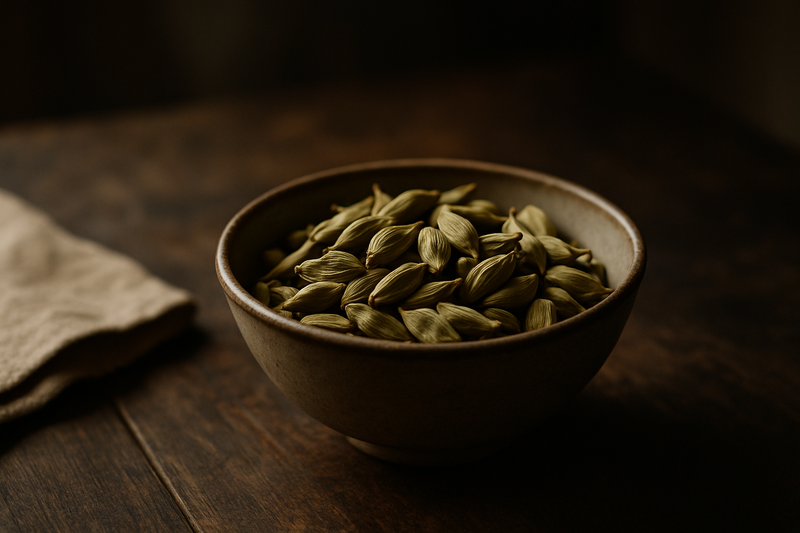
Cardamom Seeds · Photograph
Discover the science-backed cardamom seeds health benefits, from blood pressure and inflammation support to digestion. Learn nutrition facts, safe daily amounts, and how to crush pods for chai, baking, and coffee.
Key Nutrients
% Daily Value based on 2,000 cal diet
Key active compounds in cardamom seeds
The seeds inside the pod contain both volatile oils — the aromatic fraction responsible for flavour — and non-volatile polyphenols that provide much of the antioxidant activity.
- 1,8-Cineole (Eucalyptol): A monoterpene (a type of fragrant plant oil molecule) that makes up the largest share of cardamom essential oil. Has demonstrated antioxidant, anti-inflammatory, and mild airway-relaxing effects in lab and animal studies.
- Terpinyl acetate: The second major volatile component, responsible for the sweet, floral note. May have antispasmodic (muscle-relaxing) and antimicrobial effects that could contribute to digestive comfort.
- Limonene and other monoterpenes: Fragrant terpenes also found in citrus peel. Contribute antioxidant properties and cardamom's characteristic brightness.
- Polyphenols and flavonoids: Plant-based antioxidant compounds that are likely the key players behind reductions in inflammatory markers seen in human trials. They neutralize free radicals — unstable molecules that can damage cells — and modulate inflammatory signaling pathways.
Prep and pairing ideas
Cardamom seeds pair well with warmth, fat, and sweetness — flavors that both carry and soften its floral intensity.
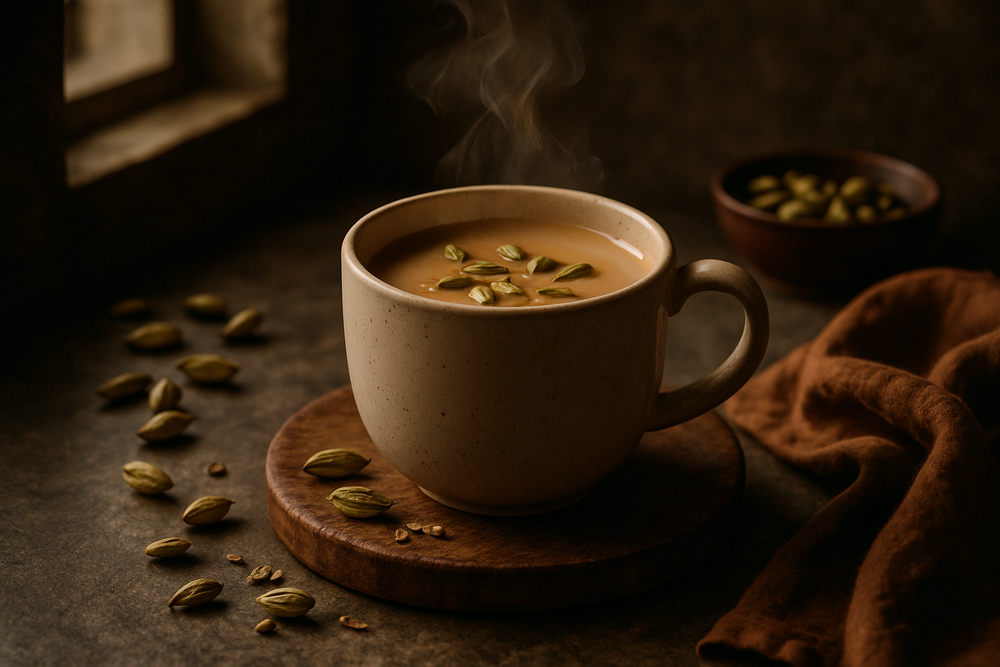
Cardamom chai: Lightly crush 4–5 green pods to release the black seeds, then simmer with black tea, fresh ginger, cinnamon, cloves, and plant-based milk. The seeds release 1,8-cineole and terpinyl acetate into the hot liquid, giving the beverage its signature warming quality.
Cardamom coffee: A common practice in Gulf-region Arabic coffee (qahwa). Add ½ teaspoon of ground cardamom directly to your coffee grounds before brewing. The volatile oils bloom in hot water and soften coffee's bitterness without added sugar — a practical way to reduce sweetener use.
Cardamom in oat bakes or energy balls: Ground cardamom pairs naturally with oats, dates, and almond or tahini bases. Even a quarter teaspoon in a batch of overnight oats or no-bake bites adds meaningful manganese and a complex floral note that makes naturally sweetened recipes feel more indulgent.
Who benefits most from making cardamom a daily habit?
The spice-curious home cook who wants flavour without added sugar
- Cardamom's natural sweetness and floral complexity can replace or reduce added sugars in porridges, baked goods, and smoothies.
- Using whole pods to flavor hot drinks is a low-effort daily practice that builds consistent phytochemical exposure.
- It pairs well with other anti-inflammatory spices (turmeric, ginger, black pepper), making it easy to layer benefit across a single recipe.
Someone with modestly elevated blood pressure who is already focused on diet quality
- The trial evidence, while limited, is most consistent for people in a similar cardiometabolic risk profile.
- Incorporating 1–2 teaspoons of ground cardamom across meals is a realistic way to approach the doses studied without needing a supplement.
- Works synergistically with other dietary levers — reducing sodium, increasing potassium-rich foods, and eating more fiber — rather than acting as a standalone intervention.
Bottom line
Cardamom seeds are a genuinely interesting whole-plant spice that sits at the intersection of culinary tradition and emerging food-as-medicine science. The strongest evidence supports a modest but real benefit for blood pressure and systemic inflammation markers at around 3 g per day in people with elevated cardiovascular risk. Digestive support has plausible mechanisms but needs more human data. Blood sugar effects remain inconsistent.
At culinary amounts, cardamom is safe, flavorful, and meaningfully rich in manganese. Crushing the pods fresh, using the seeds in chai, coffee, and baking, and thinking of it as a consistent daily habit — rather than a one-off supplement — is the most practical and evidence-aligned approach. Those with gallstones, low blood pressure, or who take blood thinners or antihypertensive drugs should discuss supplemental use with a healthcare provider first.
If you want to explore how spices and seeds fit into a broader food-as-medicine approach, browse the Plantopedia goals guide for patterns that connect ingredients like cardamom to specific health priorities.
How Cardamom Seeds Compares
| Compared with | What's different |
|---|---|
| Cardamom Seeds vs. Coriander Seeds | Cardamom is floral and citrusy, whereas Coriander is earthy, nutty, and slightly peppery. |
| Cardamom Seeds vs. Cloves | Cardamom is sweet and cooling; Clove is significantly more pungent, medicinal, and numbing. |
Health Benefits
Things to Know
Gallstones: Cardamom has choleretic (bile-flow stimulating) properties. At medicinal doses (3 g/day or more), it may trigger biliary colic — cramping pain caused by bile duct spasm — in people with gallstones. Stick to culinary amounts if you have this condition.
Blood pressure medications: Cardamom may add to the blood pressure-lowering effects of ACE inhibitors, ARBs, beta-blockers, or diuretics. Monitor blood pressure if combining.
Blood thinners: Enhanced fibrinolytic activity has been documented in one trial. People taking warfarin, direct oral anticoagulants (such as rivaroxaban or apixaban), aspirin, or clopidogrel should use supplemental doses cautiously and inform their prescriber.
Antidiabetic medications: While cardamom's direct glucose effect appears modest, it is often used in metabolic-support protocols and could theoretically interact with insulin or oral hypoglycemic agents.
Pregnancy and breastfeeding: Normal cooking amounts are considered safe; high-dose supplements have not been studied in pregnancy, so avoid supplemental doses.
Allergy: Cardamom belongs to the Zingiberaceae (ginger) family. If you have a known allergy to ginger, turmeric, or galangal, proceed carefully and watch for any reaction.
Hypotension (low blood pressure): If your blood pressure already runs low, supplemental cardamom could lower it further.
Prep Ideas
- — Cardamom's natural sweetness and floral complexity can replace or reduce added sugars in porridges, baked goods, and smoothies.
- — Using whole pods to flavor hot drinks is a low-effort daily practice that builds consistent phytochemical exposure.
- — It pairs well with other anti-inflammatory spices (turmeric, ginger, black pepper), making it easy to layer benefit across a single recipe.
- — The trial evidence, while limited, is most consistent for people in a similar cardiometabolic risk profile.
- — Incorporating 1–2 teaspoons of ground cardamom across meals is a realistic way to approach the doses studied without needing a supplement.
- — Works synergistically with other dietary levers — reducing sodium, increasing potassium-rich foods, and eating more fiber — rather than acting as a standalone intervention.
Glossary
Shop This Ingredient
Stock your pantry with quality cardamom seeds.
Buy on AmazonAs an Amazon Associate, Plantopedia earns from qualifying purchases. This costs you nothing extra and helps us keep the encyclopedia free.
Frequently Asked Questions
Heart health and blood pressure This is where cardamom has the most human trial data. A 12-week open-label study in adults with stage 1 hypertension (mildly elevated blood pressure) found that 3 g of cardamom powder per day significantly reduced systolic, diastolic, and mean blood pressure, while also improving fibrinolytic activity — the body's ability to break down blood clots — and antioxidant markers. Several randomized controlled trials and at least two meta-analyses in people with metabolic syndrome or type 2 diabetes show consistent, modest reductions in diastolic blood pressure (the lower number) and some inflammatory markers. The evidence is real but tempered: studies are short (8–12 weeks), sample sizes are small, and not every trial finds a meaningful effect on systolic (upper) blood pressure. Cardamom is best framed as a heart-supportive culinary spice, not a replacement for prescribed antihypertensive therapy. Digestive health and bloating Cardamom's reputation as a carminative — a substance that helps relieve gas and bloating — is ancient, and its volatile oils do show antispasmodic properties in animal and lab studies: they may relax smooth muscle in the gut and stimulate gastric secretions. In practice, this is why a pinch of cardamom is traditionally stirred into heavy bean dishes or rich desserts across South and West Asian cuisines. Solid clinical trials measuring digestive symptoms in humans are still limited. What exists is a plausible mechanism backed by traditional use and mechanistic science, but not yet confirmed by well-controlled human trials. Most people find culinary amounts well tolerated, and that gentle daily exposure is probably the most practical digestive benefit. Blood sugar and metabolism The evidence here is emerging and inconsistent. An 8-week randomized trial in pre-diabetic adults found that green cardamom supplementation improved some inflammatory markers but did not significantly shift fasting blood glucose or insulin resistance compared to placebo. Multi-spice combination trials (which included cardamom alongside cinnamon, saffron, and ginger) showed some cardiometabolic improvements, but it is not possible to isolate cardamom's individual contribution. Systematic reviews currently conclude there is no strong human evidence that cardamom meaningfully lowers blood sugar on its own. Any metabolic benefit may be secondary to reduced inflammation rather than a direct blood sugar effect. Inflammation and recovery A systematic review and meta-analysis of randomized trials found that cardamom supplementation significantly reduced levels of hs-CRP (high-sensitivity C-reactive protein), IL-6 (interleukin-6), and TNF-α (tumor necrosis factor-alpha) — three widely used blood markers of systemic inflammation. Individual trials in metabolic syndrome populations report similar trends. The anti-inflammatory effects are thought to flow from cardamom's polyphenols and volatile oils, which can modulate the signaling pathways that switch inflammation on and off. Dose-response relationships (how much you need for how much benefit) are not yet well mapped, and most data come from high-risk groups.
This is one of the most practical questions about the spice, and the answer depends partly on what you are making and partly on how much flavor and compound potency you want. Whole pods, crushed just before use: Cracking or gently bruising a green pod with the flat of a knife splits the hull and exposes the sticky black seeds inside. The volatile oils are largely preserved until that moment, so freshly cracked seeds have the most intense aroma and the highest content of intact terpenes. Ideal for steeping in chai, hot coffee, or pilaf, where the pod is removed before eating. Loose seeds from the pod: If a recipe calls for grinding or chewing the seeds directly, remove them from the pod first. The seeds alone are what you would typically toast in a dry pan for spice blends like garam masala. Pre-ground cardamom: Convenient and widely available. The volatile oils begin to dissipate after grinding, so ground cardamom loses potency faster than whole pods. Buy in small quantities, store in an airtight jar away from heat, and use within three to six months for best flavor. Supplemental capsules or powders: The clinical trials that document blood pressure and anti-inflammatory effects used standardized green cardamom seed powder, typically 3 g per day in two divided doses. This form is more consistent in dose but should be treated more like a supplement than a spice — see safety notes below.
Culinary range (everyday use): ½ teaspoon to 2 teaspoons (roughly 1–4 g) of ground cardamom spread across the day in food and drinks. This is achievable without supplementation and is safe for almost everyone. Research dose: Most clinical trials used 3 g per day — roughly 1½ teaspoons of ground cardamom — divided into two servings, taken over 8–12 weeks. This is the range where blood pressure and inflammatory marker reductions have been observed. Supplement capsules: If using cardamom capsules, follow the label and stay within the ranges studied (up to 3 g/day) unless guided by a healthcare provider. Higher amounts have not been well studied, and doses large enough to aggressively stimulate bile flow may cause discomfort. Start low: If you are new to cardamom or have a sensitive gut, start with ¼ teaspoon per day and build up. The most common reported side effect at higher doses is mild gastrointestinal discomfort.
Quick Answers
Common questions, answered in a line.
Cardamom contains 1,8-Cineole (Eucalyptol), terpinyl acetate, and various polyphenols and flavonoids. These compounds provide the spice's signature floral aroma while offering antioxidant, anti-inflammatory, and mild airway-relaxing properties.
Cardamom may help lower blood pressure and reduce systemic inflammation markers, particularly in people with elevated cardiovascular risk. It is also a significant source of manganese and contains compounds that may support digestive comfort.
Lightly crush 4–5 green pods to release the black seeds, then simmer them with black tea, fresh ginger, cinnamon, cloves, and plant-based milk. This process releases volatile oils like 1,8-cineole into the hot liquid, creating a warming, aromatic beverage.
Add half a teaspoon of ground cardamom directly to your coffee grounds before brewing to soften bitterness without using sugar. This traditional practice, common in Gulf-region Arabic coffee (qahwa), allows the spice's volatile oils to bloom in hot water.
People with gallstones should avoid high doses of cardamom because its bile-flow stimulating properties may trigger biliary colic or cramping pain. It is also advised to consult a doctor if you take blood pressure medications or blood thinners due to potential interactions.
Cardamom seeds are excellent in oat bakes, energy balls, and overnight oats, where they pair well with dates, almonds, and tahini. Its natural sweetness and floral complexity can also be used to reduce or replace added sugars in smoothies and porridges.
For Readers in the USA
Local context — sourcing, seasonality, and regional notes.
You can buy cardamom seeds at major US supermarkets like Whole Foods, Trader Joe's, and Kroger, or in bulk at Indian grocery stores (Patel Brothers) and specialty spice shops like Penzeys. While standard grocers carry small jars of ground seeds or pods, international markets often offer larger bags at a much lower price point per ounce.
The USDA Organic seal on cardamom seeds ensures they were grown without synthetic pesticides or irradiation, which is common for imported spices. While the FDA regulates spices for safety and purity, choosing "certified organic" is a reliable way for US consumers to minimize exposure to chemical residues.
Cardamom is a tropical plant that generally only grows outdoors in the US in USDA Hardiness Zones 10 and 11, such as parts of Southern Florida, Hawaii, and Puerto Rico. Most cardamom sold in the US is imported from Guatemala or India, as the plant requires high humidity and consistent warmth that most of the continental US lacks.
In the US, "Green Cardamom" is the most common variety used for sweet baking and chai, while "Black Cardamom" is a distinct, smoky variety found in specialty shops for savory stews. American recipes for cookies or coffee almost always call for the green pods or the black seeds found inside them.
AI Clinical Review
- Clearly explains that the seeds (especially when freshly released from the pod) contain most of the aroma and active compounds.
- Accurately summarizes human data: about 3 g/day of green cardamom powder for 8–12 weeks is linked to modest blood pressure reductions and lower inflammatory markers (such as hs-CRP), and it is not a substitute for prescribed therapy.
- Frames digestive benefits as plausible and rooted in tradition, while noting limited human trials—an appropriately cautious stance.
- Nutrition snapshot is reasonable: cardamom is low calorie yet notably rich in manganese, and the culinary usage suggestions are practical.
- Relief of gas/bloating is supported mainly by traditional use and mechanistic/animal data; high-quality trials measuring digestive symptoms are sparse.
- Effects on blood sugar and insulin resistance remain inconsistent; combination-spice studies make it hard to isolate cardamom’s role.
- Dose–response relationships and longer-term safety beyond roughly 12 weeks are unclear, and product standardization (what’s in a “3 g” dose) can vary.
- Most studies involve adults with metabolic risk; it’s uncertain how much benefit applies to generally healthy individuals.
- Practical intake: culinary use of about 1/2–2 tsp (≈1–4 g) per day is reasonable; research doses cluster around 3 g/day, often split—do not replace prescribed blood pressure medications.
- Form matters: freshly cracked pods preserve volatile oils best; pre-ground loses potency faster—buy small amounts and store airtight.
- Safety and interactions: medicinal‑range doses may aggravate gallstone symptoms; can add to the effects of antihypertensives and possibly blood thinners—monitor and consider checking with a clinician.
- Special populations: in pregnancy or breastfeeding, stick to culinary amounts (supplement doses aren’t well studied); those with low baseline blood pressure or ginger/turmeric family allergies should use caution and start low if sensitive.
Safe as a spice; gallstone sufferers should keep medicinal doses modest.
References
- USDA FoodData Central — Spices, cardamom, ground (nutrition data basis for this page): (fdc.nal.usda.gov)
- Meta-analysis: Cardamom supplementation, blood pressure, and inflammatory markers in randomized trials — systematic review pooling trial data on hs-CRP, IL-6, TNF-α, and blood pressure: (pmc.ncbi.nlm.nih.gov)
- Randomized trial: Cardamom and blood pressure, fibrinolytic activity, and antioxidant status in stage 1 hypertension — 12-week open-label study using 3 g/day: (sysrevpharm.org)
- Systematic review: Green cardamom, blood pressure, and inflammatory markers in metabolic syndrome — pooled analysis of RCTs: (pmc.ncbi.nlm.nih.gov)
- Randomized trial: Cardamom in pre-diabetic subjects — glycemic indices, lipids, and blood pressure — 8-week RCT finding limited glycemic effect: (pubmed.ncbi.nlm.nih.gov)
- Systematic review: Cardiovascular effects of Elettaria cardamomum — review of human data — overview of cardiometabolic trial evidence: (pmc.ncbi.nlm.nih.gov)
- Randomized trial: Multi-spice combination (including cardamom) in type 2 diabetes — blood pressure and endothelial function: (onlinelibrary.wiley.com)
- Randomized trial: Green cardamom supplementation in type 2 diabetes — blood pressure and endothelial biomarkers: (onlinelibrary.wiley.com)
- Cardamom nutrition profile overview — foodcontents.com (supporting micronutrient data): (foodcontents.com)
- MyPlate — protein foods and plant-based options (context for plant food dietary guidance): (myplate.gov)
Know Your Numbers
Eating healthy is a start. Now get to know your biomarkers.
Food changes bloodwork — inflammation, lipids, blood sugar and nutrient status all respond to what you eat. 59 markers from $59.
- Results in 7–10 days at 2,000+ Quest sites
- Licensed provider reviews every result
- One flat price, no membership, HSA/FSA eligible
Educational information only, not medical advice. Panels are ordered and reviewed through our licensed partner; Plantopedia may earn a commission.