Does coconut oil raise cholesterol? Explore clinical research on how this cooking fat impacts LDL and HDL levels compared to healthier unsat
Use intentionally; compare extracted oil vs whole-food fat alternatives
The Short Answer
Coconut oil raises both LDL (bad) and HDL (good) cholesterol due to its high saturated fat content, particularly lauric and myristic acids. While it contains medium-chain fatty acids, it should be used in moderation as it increases LDL more than liquid
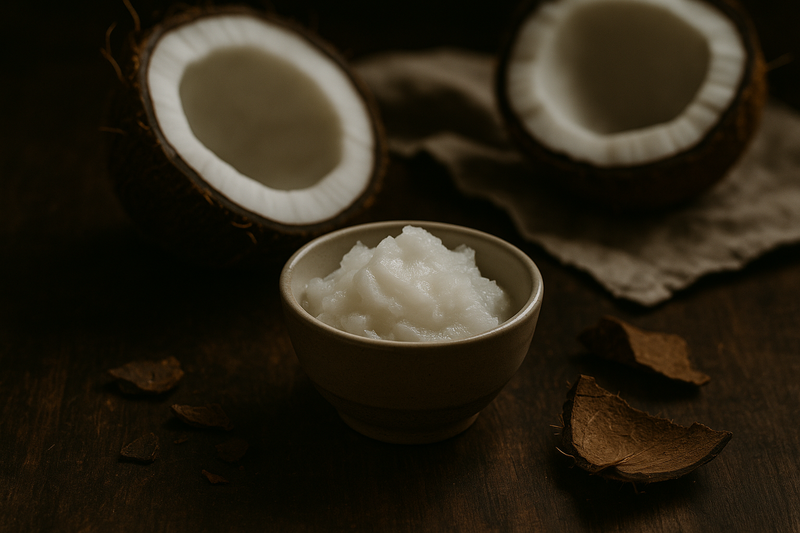
Coconut Oil · Photograph
Why Coconut Oil Health Benefits Deserve a Closer Look Unlike many plant oils, this cooking fat's unique fatty acid profile sets it apart.
Key Nutrients
% Daily Value based on 2,000 cal diet
Why Coconut Oil Health Benefits Deserve a Closer Look
Unlike many plant oils, this cooking fat's unique fatty acid profile sets it apart. About 62% consists of medium-chain fatty acids (MCFAs), which are metabolized differently than typical dietary fats. However, the largest component—lauric acid—behaves more like a long-chain fatty acid despite being classified as medium-chain.
This distinction matters because many coconut oil health claims stem from research on specialized MCT (medium-chain triglyceride) oils that contain 100% MCFAs, not the mixed profile found in commercial cooking fat.
Key Active Compounds
- Lauric acid (45-50%): The dominant fatty acid in this cooking fat that raises both LDL and HDL cholesterol.
- Caprylic acid (C8:0): True medium-chain fatty acid, readily absorbed for quick energy.
- Capric acid (C10:0): Another MCFA that bypasses normal fat storage pathways.
- Myristic acid: Saturated fat that research shows raises LDL cholesterol levels.
- Oleic acid (5-12%): Monounsaturated fat that supports skin barrier function.
- Vitamin E, Phytosterols, and Polyphenols: Trace nutrients that act as antioxidants in this cooking fat.
Prep and Pairing Ideas
- Cooking: Medium-high heat (350°F for virgin, 400°F for refined).
- Baking: Use 3/4 the amount of butter.
- Flavor Pairings: Tropical fruits, curries, and chocolate benefit from this cooking fat.
- Topical Uses: Excellent as a moisturizer or hair conditioner.
Myths vs. Facts
- Myth: This cooking fat melts belly fat. Fact: Human studies don't support specific weight loss benefits.
- Myth: All health claims apply to store-bought oil**—fact:** Many studies used pure MCT oil, not commercial cooking fat.
- Myth: It lowers cholesterol because it raises HDL. Fact: Trials show it raises LDL (bad) cholesterol more than HDL.
Buying Guide
- Virgin: Look for "cold-pressed" or "centrifuged." It should smell like coconut.
- Refined: Best for a neutral-tasting cooking fat with a high smoke point.
- Avoid Confusion: "Liquid coconut oil" is fractionated; it's not the same as whole cooking fat.
Conclusion: A Balanced Perspective on Saturated Fats
In conclusion, coconut oil serves as a unique and flavorful cooking fat, but the scientific evidence suggests it is far from a "miracle" superfood. Its primary distinction lies in its medium-chain fatty acid content, yet the dominance of lauric acid means it behaves more like a saturated fat than a pure metabolic booster. The most critical takeaway is the mixed effect it has on blood lipids; while it can raise "good" HDL cholesterol, it significantly raises "bad" LDL cholesterol as well.
Therefore, for those with cardiovascular concerns, this oil should be used strategically as a replacement cooking fat rather than an additive supplement. Choosing virgin, cold-pressed varieties ensures you receive the maximum antioxidant benefits, but it should remain just one component of a varied diet. By using our meal planner to balance this cooking fat with heart-healthy monounsaturated oils, you can enjoy its culinary benefits while maintaining a healthy metabolic and lipid profile.
How Coconut Oil Compares
| Compared with | What's different |
|---|---|
| Coconut Oil vs. Refined Coconut Oil | Higher smoke point (400°F) and neutral flavor, whereas virgin oil tastes like coconut. |
| Coconut Oil vs. MCT Oil | Contains 100% medium-chain fats for energy, while coconut oil is roughly 50% lauric acid. |
| Coconut Oil vs. Ghee | A saturated fat that contains milk solids, while coconut oil is entirely plant-based fat. |
Health Benefits
Things to Know
Cholesterol Considerations: May raise LDL; monitor levels if using this cooking fat regularly.
Calorie Density: Very high in calories (120 per tablespoon).
Digestive Effects: Large amounts of this cooking fat may cause stomach upset in sensitive individuals.

Common Uses
- —Using virgin coconut oil as a 1:1 replacement for butter in vegan recipes to provide a similar texture and a hint of tropical flavor.
- —Utilizing refined coconut oil (smoke point 400°F) for stir-frying or roasting vegetables where a neutral taste is preferred.
- —Adding a teaspoon to smoothies to provide long-lasting satiety and help the body absorb fat-soluble vitamins from fruits and greens.
- —Applying as a body oil or hair mask to lock in moisture and protect against environmental damage.
- —Blending a small amount into coffee (often called "Bulletproof" style) to provide a slow-release energy source and reduce caffeine jitters.
- —Using as a primary fat source for individuals with fat malabsorption issues, as MCFAs are easier for the digestive system to process.
Best Forms
Undergoes minimal processing and is the best form of this cooking fat for retaining antioxidants.
Heavily processed, neutral taste, and a higher smoke point for a versatile cooking fat.
Not a cooking fat; it is a specialized product containing 100% medium-chain triglycerides.
Prep Ideas
- — Cooking: Medium-high heat (350°F for virgin, 400°F for refined).
- — Baking: Use 3/4 the amount of butter.
- — Flavor Pairings: Tropical fruits, curries, and chocolate benefit from this cooking fat.
- — Topical Uses: Excellent as a moisturizer or hair conditioner.
Glossary
Shop This Ingredient
Stock your pantry with quality coconut oil.
Buy on AmazonAs an Amazon Associate, Plantopedia earns from qualifying purchases. This costs you nothing extra and helps us keep the encyclopedia free.
Frequently Asked Questions
Yes, clinical studies consistently show coconut cooking fat raises both LDL and HDL cholesterol. A meta-analysis found increases of about 10 points in LDL and 4 points in HDL. This mixed effect makes its long-term cardiovascular impact unclear compared to other options.
Virgin coconut oil is a better cooking fat for nutrition because it retains vitamin E and polyphenols. Refined oil is processed to have a neutral taste and a higher smoke point. While virgin oil offers more antioxidants, both forms have the same effect on your cholesterol and calories.
While MCFAs in coconut cooking fat provide energy, human studies don't show significant weight loss. Because it contains 120 calories per tablespoon, it can lead to weight gain if you add it to your diet without replacing other calories or fats in your meals.
Most researchers recommend 1–2 tablespoons of this cooking fat daily. There is no official recommendation, but it should be consumed as part of your total fat limit. Start with small amounts to ensure your digestion tolerates the saturated fat content without causing any temporary stomach upset.
No, coconut oil is a whole cooking fat containing 62% MCFAs, whereas MCT oil is a supplement containing 100% MCFAs. Health claims for coconut oil are actually based on MCT research. Coconut oil contains lauric acid, which is processed differently than true MCTs.
Quick Answers
Common questions, answered in a line.
Coconut oil consists of about 62% medium-chain fatty acids (MCFAs), which are metabolized differently than typical dietary fats. These include caprylic and capric acids, which provide quick energy, though the main component—lauric acid—behaves more like a long-chain fatty acid.
You can use refined coconut oil for high-heat cooking up to 400°F, while virgin coconut oil is better suited for temperatures up to 350°F. The refined version provides a neutral taste, whereas virgin varieties retain a distinct coconut aroma and flavor.
When substituting coconut oil for butter in baking recipes, use approximately 3/4 the amount of butter called for. This cooking fat is particularly popular in vegan baking to provide a similar texture to traditional dairy fats.
Coconut oil contains tiny amounts of Vitamin E, phytosterols, and polyphenols that act as antioxidants. While primarily used as a cooking fat, these trace nutrients contribute to its overall nutritional profile.
Lauric acid is the dominant fatty acid in coconut oil, making up 45-50% of its composition. Although classified as a medium-chain fatty acid, research shows it raises both LDL and HDL cholesterol levels.
Coconut oil is an excellent topical moisturizer or hair conditioner that helps lock in moisture. Its oleic acid content supports skin barrier function, and it can also protect against environmental damage when used as a hair mask.
While coconut oil contains MCFAs that are easier to process, it is high in calories at 120 per tablespoon and can cause stomach upset in sensitive individuals. It also contains myristic acid, a saturated fat known to raise LDL cholesterol.
For Readers in the USA
Local context — sourcing, seasonality, and regional notes.
In the United States, you can find coconut oil in the baking or health food aisle of major retailers like Walmart, Kroger, and Costco, as well as specialty stores like Whole Foods. Organic and non-GMO varieties are widely available to meet USDA labeling standards for health-conscious consumers.
While the US mainland does not produce commercial coconut oil, Hawaii and Florida grow coconuts that are occasionally processed for local markets or artisanal oils. The vast majority of coconut oil sold in the US is imported from tropical regions like the Philippines and Indonesia.
The FDA classifies coconuts as tree nuts for labeling purposes, meaning coconut oil must be clearly identified on food packaging to protect individuals with nut allergies. However, most experts note that coconut allergies are relatively rare compared to sensitivities to peanuts or walnuts.
AI Clinical Review
- The LDL Reality: Correctly clarifies that despite the "superfood" label, coconut oil raises LDL cholesterol more than unsaturated vegetable oils do.
- MCFA vs. MCT Distinction: Properly notes that coconut oil is not the same as pure MCT oil; its lauric acid content means it behaves more like a long-chain fat in the blood.
- Energy Metabolism: Accurately explains that MCFAs bypass the normal fat storage pathways, providing quicker energy than fats found in meat or dairy.
- Substitution over Addition: Rightly emphasizes that it should be a replacement fat to avoid excessive calorie intake (120 kcal per tablespoon).
- Processing Differences: Correctly identifies that virgin oil is superior for antioxidants (polyphenols/Vitamin E) compared to refined versions.
- Belly Fat Reduction: While some small studies suggested a link to reduced waist circumference, large-scale clinical evidence has failed to prove that coconut oil is an effective weight-loss tool.
- Alzheimer’s & Brain Health: There is significant interest in whether the ketones produced from coconut oil can fuel the brains of those with cognitive decline, but definitive human trials are still lacking.
- Cardiovascular Risk: While we know it raises LDL, we are still studying whether the specific type of LDL it produces is as harmful as the LDL produced by trans fats.
- Immune System Defense: Though lauric acid is antimicrobial in a lab, the degree to which eating coconut oil prevents human infections is still being researched.
- Lipid Monitoring: If you have high cholesterol or a history of heart disease, you should monitor your blood lipids closely if you use coconut oil as a primary fat.
- The "Smoke Point" Rule: Virgin coconut oil has a lower smoke point (350°F) than refined oil. Using virgin oil for high-heat frying can cause the oil to break down and create harmful compounds.
- Digestion: Starting with too much can cause "disaster pants" (acute diarrhea). Always start with 1 teaspoon and work up to a tablespoon.
- Comedogenic Rating: Topically, coconut oil is highly comedogenic (pore-clogging). It’s great for the body and hair, but those with acne-prone skin should avoid using it on the face.
- Calorie Density: Like all oils, it is 100% fat. It is easy to overconsume calories if you are drizzling it generously without adjusting your overall diet.
Flag strict WFPB limitations for extracted oils and highly processed fat products.
References
- USDA FoodData Central nutrition database for coconut oil composition (fdc.nal.usda.gov
- /)
- Meta-analysis of coconut oil effects on blood lipids in clinical trials (pubmed.ncbi.nlm.nih.gov)
- Oklahoma State University extension fact sheet on coconut oil health effects (extension.okstate.edu)
- Research on bioactive compounds in virgin vs refined coconut oil (maljnutr.org.my)
- Scientific review of coconut oil chemical composition and health benefits (scijournals.onlinelibrary.wiley.com)
- Analysis of active molecules and fatty acid profile in coconut oil (us.typology.com)
Know Your Numbers
Eating healthy is a start. Now get to know your biomarkers.
Food changes bloodwork — inflammation, lipids, blood sugar and nutrient status all respond to what you eat. 59 markers from $59.
- Results in 7–10 days at 2,000+ Quest sites
- Licensed provider reviews every result
- One flat price, no membership, HSA/FSA eligible
Educational information only, not medical advice. Panels are ordered and reviewed through our licensed partner; Plantopedia may earn a commission.