Green Peanuts (Raw In-Shell) — health benefits and uses
A Southern roadside tradition eaten warm and salty as a summer treat.
The Short Answer
Green peanuts are raw, freshly harvested peanuts that have not been dried. They are best prepared by boiling in salted water for 3–6 hours until they reach a tender, bean-like consistency.
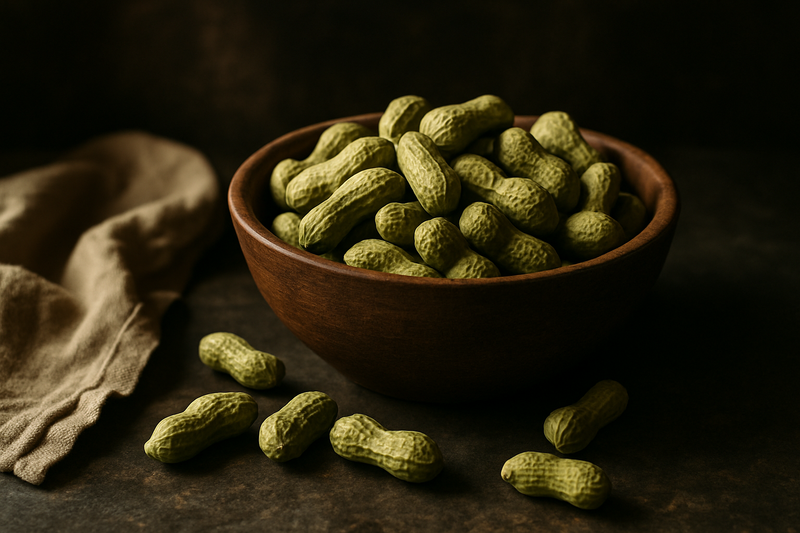
Green Peanuts (Raw In-Shell) · Photograph
Discover the boiled peanuts nutrition and health benefits you need to know — from plant protein and healthy fats to heart health and blood sugar support. Learn how green peanuts (raw in-shell) compare to roasted, how much sodium to watch for, and who should be cautious before eating them.
Key Nutrients
% Daily Value based on 2,000 cal diet
Key active compounds in green boiled peanuts
- Resveratrol — A polyphenol (a plant-based antioxidant compound) found in peanut skins; may support vascular health through antioxidant pathways, though most strong evidence comes from grape-derived sources.
- Phytosterols (e.g., beta-sitosterol) — Plant compounds structurally similar to cholesterol that may modestly reduce LDL ("bad") cholesterol absorption in the gut.
- Arginine — An amino acid that the body uses to make nitric oxide, a molecule that helps blood vessels relax; may contribute to healthy blood pressure and circulation.
- Polyphenols and flavonoids — A broad family of antioxidant plant compounds found in peanut skins and kernels; boiling retains many of these, though some heat-sensitive varieties may be reduced.
- Monounsaturated and polyunsaturated fatty acids — The dominant fats in peanuts are oleic acid (the same type found in olive oil) and linoleic acid, both associated with heart-friendly fat profiles.
- B vitamins (niacin, folate) — Peanuts are a notable food source of niacin (vitamin B3), which supports energy metabolism, and folate (vitamin B9), important for DNA production and cell growth.
Prep and pairing ideas
Classic Southern boiled peanuts: Cover fresh green peanuts in the shell with water in a large pot. Add 1/4 to 1/2 cup of salt per gallon of water (or much less for low-sodium versions). Bring to a boil, then simmer for 3–6 hours until the shells are soft and the kernels inside have a texture like a tender cooked bean. Taste test along the way. Drain and serve warm or cold.
Seasoning variations: Cajun spice blends, garlic, bay leaves, Old Bay seasoning, or a splash of apple cider vinegar in the water all work beautifully. These add flavor without dramatically increasing sodium if you keep the overall salt level modest.
Three practical pairings:
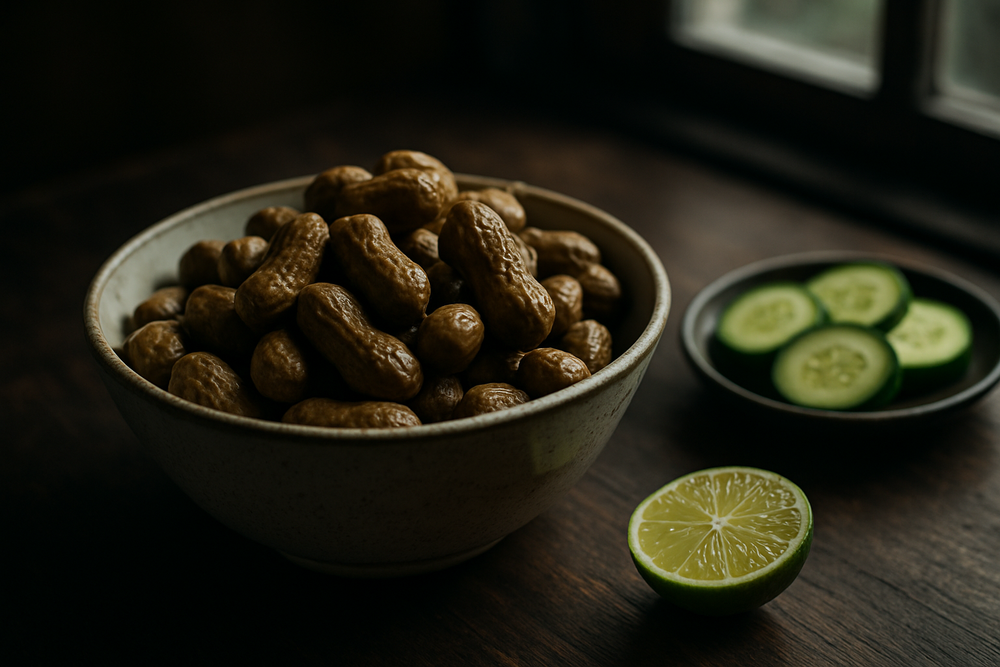
- Boiled peanuts + sliced cucumbers and a squeeze of lime — The cooling crunch of cucumber balances the briny warmth of boiled peanuts; lime adds a little acidity that brightens the flavor. Together they make a hydrating, fiber-rich snack with no added fat or calories.
- Boiled peanuts + brown rice + sautéed greens — A simple grain-and-legume bowl that creates a complementary amino acid profile (meaning the combination provides a broader range of essential amino acids than either alone), with iron from greens enhanced by the vitamin C you can add with a lemon wedge.
- Boiled peanuts + watermelon — A classic Southern summer pairing. The natural sweetness of watermelon offsets the salt of boiled peanuts beautifully, and the combination is refreshing, high in fiber, and deeply satisfying on a hot day.
Bottom line
Green peanuts boiled in the shell are a genuinely nourishing whole-food snack that earns respect as a legume, not just a game-day treat. The evidence suggests that regular peanut intake can support heart health, help maintain healthy blood sugar patterns, and contribute meaningful protein, fiber, and micronutrients — especially magnesium, zinc, phosphorus, niacin, and folate — to a plant-focused diet. Boiled peanuts specifically offer a softer texture and lower calorie density than roasted peanuts, and the slow, hands-on experience of cracking shells naturally encourages mindful eating.
The two things to keep front of mind: sodium (traditional recipes can be high — adjust your salt or adjust your portions) and peanut allergy (a real and potentially life-threatening concern for a meaningful portion of the population). Within those guardrails, boiled green peanuts are a delicious, culturally rich, and nutritionally solid addition to a whole-food, plant-based eating pattern.
How Green Peanuts (Raw In-Shell) Compares
| Compared with | What's different |
|---|---|
| Green Peanuts (Raw In-Shell) vs. Roasted Peanuts | Crunchy texture and lower moisture; typically higher in calories due to water loss during roasting. |
| Green Peanuts (Raw In-Shell) vs. Boiled Peanuts | Softer, bean-like texture and higher antioxidant retention, specifically resveratrol. |
| Green Peanuts (Raw In-Shell) vs. Valenciano Peanuts | Larger and starchier with a distinct earthy flavor; often used similarly in stews. |
Health Benefits
Things to Know
Peanut allergy is serious.: Peanut allergy is one of the most common food allergies and can trigger anaphylaxis (a life-threatening allergic reaction) even with small exposures. If you have a known or suspected peanut allergy, avoid all forms of peanuts entirely. Anyone with a severe allergy should carry an epinephrine auto-injector at all times.
Must be cooked before eating.: Raw, undried green peanuts should not be eaten raw; boiling improves digestibility, reduces antinutrient content (compounds that interfere with mineral absorption), and lowers microbial risk.
Sodium can add up quickly.: Traditional Southern boiled peanut recipes use generous amounts of salt. A single serving can deliver 470 mg or more of sodium — about 20% of the recommended daily limit in one sitting. People managing hypertension, heart failure, or chronic kidney disease should use low-sodium or unsalted recipes, or limit portion size.
Energy-dense, so portions matter.: Even though boiled peanuts are lower in calories than roasted, 100 g still provides around 318 kcal. Eating large amounts while watching calorie intake requires mindfulness.
GI adjustment may be needed.: The fiber content can cause bloating or gas if you dramatically increase legume intake. Start with smaller portions and build up gradually.
Choking risk.: Shells must be discarded before eating — they are not digestible. Young children should be supervised closely.
Warfarin users: Legume intake does not typically require close monitoring, but maintaining consistent dietary patterns is wise. Check with your clinician if you are new to eating peanuts regularly.
Pregnancy: Folate in peanuts is beneficial for fetal development, and current evidence does not support avoiding peanuts during pregnancy for most women without a peanut allergy. Discuss with your midwife or OB.
Prep Ideas
- — Boiled peanuts + sliced cucumbers and a squeeze of lime — The cooling crunch of cucumber balances the briny warmth of boiled peanuts; lime adds a little acidity that brightens the flavor. Together they make a hydrating, fiber-rich snack with no added fat or calories.
- — Boiled peanuts + brown rice + sautéed greens — A simple grain-and-legume bowl that creates a complementary amino acid profile (meaning the combination provides a broader range of essential amino acids than either alone), with iron from greens enhanced by the vitamin C you can add with a lemon wedge.
- — Boiled peanuts + watermelon — A classic Southern summer pairing. The natural sweetness of watermelon offsets the salt of boiled peanuts beautifully, and the combination is refreshing, high in fiber, and deeply satisfying on a hot day.
Glossary
Shop This Ingredient
Stock your pantry with quality green peanuts (raw in-shell).
Buy on AmazonAs an Amazon Associate, Plantopedia earns from qualifying purchases. This costs you nothing extra and helps us keep the encyclopedia free.
Frequently Asked Questions
Heart and circulation This is where the peanut evidence base is most developed. A randomized controlled trial (a type of study where participants are randomly assigned to different groups to reduce bias) published in Nutrition Journal found that adults with type 2 diabetes who added about 46 g per day of peanuts or peanut butter to an American Diabetes Association-style meal plan improved the overall quality of their diet — taking in more monounsaturated and polyunsaturated fats, vitamin E, niacin, and magnesium. These are nutrients associated with a more heart-protective eating pattern. Large observational studies in women with type 2 diabetes have found that eating nuts or peanut butter five or more times per week was linked to roughly a 44% lower risk of cardiovascular disease compared with rare consumption. The key word here is "linked" — observational studies show association, not direct causation. The heart-health case for peanuts is strongest when they replace less nutritious snacks (processed crackers, chips, or refined-carb foods) rather than simply being added on top of an already high-calorie diet. And for boiled peanuts specifically: the sodium in salted preparations can work against blood pressure goals if portions aren't managed, so low-sodium or lightly salted recipes are worth considering. Digestive health and microbiome As a true legume, boiled green peanuts bring roughly 9 g of dietary fiber per 100 g — a combination of soluble fiber (which dissolves in water and helps slow digestion) and insoluble fiber (which adds bulk to stools and keeps things moving). This fiber content can support regularity and may feed beneficial bacteria in the gut — though direct human studies specifically on boiled peanuts and the gut microbiome are still limited. What we know from broader legume research is encouraging: consistent legume intake is consistently linked to improved bowel function in population studies. Blood sugar and metabolism Research suggests peanuts are a blood-sugar-friendly food despite containing carbohydrates. The combination of protein, fat, and fiber slows the release of glucose into the bloodstream, resulting in a relatively low glycemic response (the speed and size of the blood sugar spike after eating). The human trial mentioned above found that including peanuts in a structured diabetes eating plan did not worsen glycemic control and may improve overall diet quality. Important caveat: those studies used roasted peanuts and peanut butter — direct human data on boiled green peanuts and blood sugar is limited, and any benefits are inferred from their similar nutrient composition. People with diabetes should speak with a registered dietitian before making peanuts a regular part of their plan. Inflammation and recovery Peanuts provide several nutrients and bioactive compounds — unsaturated fats, magnesium, vitamin E, arginine, resveratrol, and phytosterols — that have mechanistic links to reducing oxidative stress and inflammation in the body. Oxidative stress refers to cellular damage caused by unstable molecules called free radicals. Some broader nut-consumption studies suggest anti-inflammatory effects in humans, but clinical trials specifically measuring inflammatory markers like C-reactive protein (CRP) from boiled peanut intake don't yet exist. Think of this as a "plausible benefit" rather than a proven one, and best understood as part of a wider plant-forward diet rather than any single food.
The active snacker looking for a satisfying whole-food option: Needs filling, portable, whole-food snacks that aren't ultra-processed Wants meaningful protein and fiber without a complicated recipe Will benefit from the slow-eating pace that comes with cracking shells — it naturally promotes mindful eating The plant-based eater working to hit protein and micronutrient goals: Relies on diverse legumes to cover amino acid needs across the day May be low in zinc, magnesium, or folate — nutrients where boiled peanuts can genuinely contribute Appreciates that boiled peanuts fit the whole-food, plant-based snack category without any processing
For whole-food eating patterns, boiled green peanuts and dry-roasted peanuts are the most minimally processed options. Here is a practical comparison: | Form | Calories per 100 g | Sodium | Processing level | | --- | --- | --- | --- | | Boiled green peanuts (lightly salted) | 318 kcal | Variable (can be high) | Minimal | | Dry-roasted peanuts (no oil added) | 585 kcal | Low to moderate | Minimal | | Natural peanut butter (unsweetened) | 590–600 kcal | Low to moderate | Low | | Commercial peanut butter | 590–600 kcal | Moderate to high | Moderate (additives) | | Peanut oil | 884 kcal | None | High (fiber/protein removed) | Boiled green peanuts win on calorie density and energy moderation — they contain more water after cooking, which spreads nutrients across a larger, more filling volume. Dry-roasted peanuts and natural peanut butter retain more fat-soluble nutrients (like vitamin E) in a more concentrated form and are more portable and shelf-stable. Bottom line on form: If you want the closest thing to eating a whole legume in snack form, boiled green peanuts are the answer. If access to fresh green peanuts is limited, dry-roasted or natural peanut butter with no added sugar and minimal salt are excellent alternatives with similar macronutrient profiles.
Human studies have used approximately 46 g per day (roughly 1.5 oz, or about a small palmful of kernels) of peanuts to meaningfully improve nutrient quality in structured eating plans. For boiled peanuts as a casual snack, a practical target is 50–100 g of edible kernels per sitting — roughly equivalent to half a cup to one cup of in-shell boiled peanuts once you discard the shells. For reference, five servings of nuts per week (as used in the large observational studies) works out to roughly one moderate handful on most days. Start low if you are new to legumes: Begin with a small handful (around 30–50 g kernels) and see how your digestion responds before scaling up. Sodium watch: If you're using a traditional salty recipe, one cup of shelled boiled peanuts could deliver close to 500 mg of sodium. Factor this into your daily total. Unsalted or lightly salted preparations give you more flexibility to eat a generous portion without concern. Exploring how boiled peanuts fit into your overall eating pattern is easier when you're looking at your full plate. Browse Plantopedia's goals section for practical frameworks that make it easy to build whole-food meals around ingredients like this one.
Quick Answers
Common questions, answered in a line.
You should not eat green peanuts raw because boiling them improves digestibility, reduces antinutrients, and lowers microbial risk. Raw, undried green peanuts are meant to be cooked before consumption to ensure they are safe and easier for the body to process.
Green peanuts contain heart-friendly compounds like Resveratrol, phytosterols, and Arginine, an amino acid that helps blood vessels relax for healthy blood pressure. They are also rich in monounsaturated and polyunsaturated fatty acids, similar to those found in olive oil, which support healthy cholesterol levels.
Green peanuts are a notable source of B vitamins, specifically niacin (B3) for energy metabolism and folate (B9) for DNA production and cell growth. They also provide essential minerals like magnesium, zinc, and phosphorus, which are important for a plant-focused diet.
To boil green peanuts, cover the fresh shells with water, add salt (about 1/4 to 1/2 cup per gallon), and simmer for 3 to 6 hours until the kernels are tender like cooked beans. You can add seasonings like garlic, Cajun spices, or apple cider vinegar to the water for extra flavor.
Boiled peanuts are a nourishing whole-food snack that can help maintain healthy blood sugar patterns and provide meaningful plant protein and fiber. Their softer texture and lower calorie density compared to roasted peanuts make them a satisfying addition to a plant-based diet.
Yes, boiled peanuts can be high in sodium, with a single serving often delivering 470 mg or more, which is about 20% of the recommended daily limit. Those managing hypertension or heart disease should use low-sodium recipes or limit their portion sizes.
Peanut shells are not digestible and must be discarded before eating the kernels. Swallowing shells can also pose a choking risk, especially for young children who should be supervised while eating them.
For Readers in the USA
Local context — sourcing, seasonality, and regional notes.
Green peanuts are primarily grown in the Southern United States, with Georgia, Florida, Alabama, and South Carolina serving as the top production hubs. These states provide the sandy soil and long, warm growing seasons necessary for peanuts to reach maturity.
The peak season for fresh green peanuts in the US runs from late July through October, aligning with the late summer and fall harvests in the Southeast. Outside of this window, you may find "green" peanuts that have been flash-frozen to preserve their high moisture content for boiling year-round.
In the Southern US, you can find green peanuts at roadside stands and farmers markets, while nationwide, they are often stocked at international grocery stores or specialty retailers like Whole Foods. Major Southern chains like Publix often carry them seasonally, but they are rarely found in standard produce aisles in the North or West.
While there is no specific FDA standard for "green" peanuts, the USDA classifies them as raw agricultural commodities that must be kept refrigerated due to their high moisture content. Always look for the USDA Organic seal if you want to ensure the peanuts were grown without synthetic pesticides or fertilizers.
AI Clinical Review
- Clearly explains that green (raw, in-shell) peanuts are legumes and that boiling yields a lower–calorie-density snack than roasted forms while preserving protein, fiber, and mostly unsaturated fats.
- Summarizes the strongest human evidence around peanuts and cardiometabolic health, noting RCT and cohort data and emphasizing benefits when peanuts displace less nutritious snacks.
- Highlights sodium as the key variable with boiled preparations and flags peanut allergy as a non‑negotiable safety issue.
- Offers practical intake context (about 46 g/day used in trials; roughly 50–100 g kernels for a snack), which is reasonable for most adults.
- Most human data involve roasted peanuts or peanut butter; direct trials on boiled green peanuts specifically (e.g., effects on blood pressure, lipids, or glycemia) are limited, so some benefits are inferred from similar nutrient profiles.
- Claims about anti‑inflammatory or antioxidant effects are biologically plausible but not firmly established for boiled peanuts in clinical endpoints; resveratrol from peanuts is present in modest amounts and its real‑world impact is uncertain.
- Microbiome benefits are extrapolated from broader legume research; human studies directly testing boiled peanut effects on gut bacteria are lacking.
- Allergy: Peanut allergy can be severe and life‑threatening; anyone with a known or suspected allergy should avoid all peanut forms and follow their clinician’s emergency plan.
- Sodium: Traditional boil recipes can deliver 400–600+ mg sodium per serving; people with hypertension, heart failure, or chronic kidney disease should choose low‑sodium methods and discuss targets with their care team.
- Portion and calories: Even boiled peanuts are energy‑dense (~300+ kcal per 100 g of kernels). Start with small portions and adjust based on appetite, weight goals, and overall diet.
- Food safety and handling: Green peanuts should be thoroughly cooked and stored promptly (refrigerated) to reduce microbial risk; discard any that taste moldy or rancid due to potential aflatoxin concerns.
Must be boiled before eating; a peanut allergy is common and can be severe.
References
- USDA FoodData Central — Peanuts, all types, cooked, boiled, with salt (fdc.nal.usda.gov)
- Harvard T.H. Chan School of Public Health Nutrition Source — Legumes and Pulses overview (nutritionsource.hsph.harvard.edu)
- Nutrition Journal (2014) — RCT: Peanuts added to an American Diabetes Association meal plan in adults with type 2 diabetes (nutritionj.biomedcentral.com)
- PMC2696988 — Prospective cohort: Regular nut consumption and lower CVD risk in women with type 2 diabetes (pmc.ncbi.nlm.nih.gov)
- The Peanut Institute — Boiled peanuts: a superfood for hearts and minds (peanut-institute.com)
- National Peanut Board — Boiled peanuts nutrition and recipe (nationalpeanutboard.org)
- University Hospitals Nutrition Facts — Peanuts, all types, cooked, boiled, with salt, 1 cup shelled (uhhospitals.org)
- Foodstruct — Boiled peanuts detailed nutrition profile (foodstruct.com)
- NIH National Center for Complementary and Integrative Health — Nut allergy safety overview (nccih.nih.gov)
Know Your Numbers
Eating healthy is a start. Now get to know your biomarkers.
Food changes bloodwork — inflammation, lipids, blood sugar and nutrient status all respond to what you eat. 59 markers from $59.
- Results in 7–10 days at 2,000+ Quest sites
- Licensed provider reviews every result
- One flat price, no membership, HSA/FSA eligible
Educational information only, not medical advice. Panels are ordered and reviewed through our licensed partner; Plantopedia may earn a commission.